

(Introduction: September 28 is World Day of Migrants and Refugees. The Church has celebrated this day since 1914. That’s 111 years! I wrote this reflection not with that day in mind. But after I wrote it, I realized the words below are indirectly related to this day, a day on which the Church calls us to “empthy and action” on behalf of migrants and refugees all over the world.)
I’ve been reflecting on scapegoats lately. As you know, a scapegoat is a person or group who is blamed for the wrong doings, mistakes, faults, or sins of others. The word goes back to the Bible (Leviticus 16) when the Jewish leader would symbolically lay the sins of the people onto a goat who would then be banished into the desert to die. The people were in effect saying, “Good riddance, goat! Good riddance all our sins and wrong doings! Now we’re pure again!” (Poor goats!)
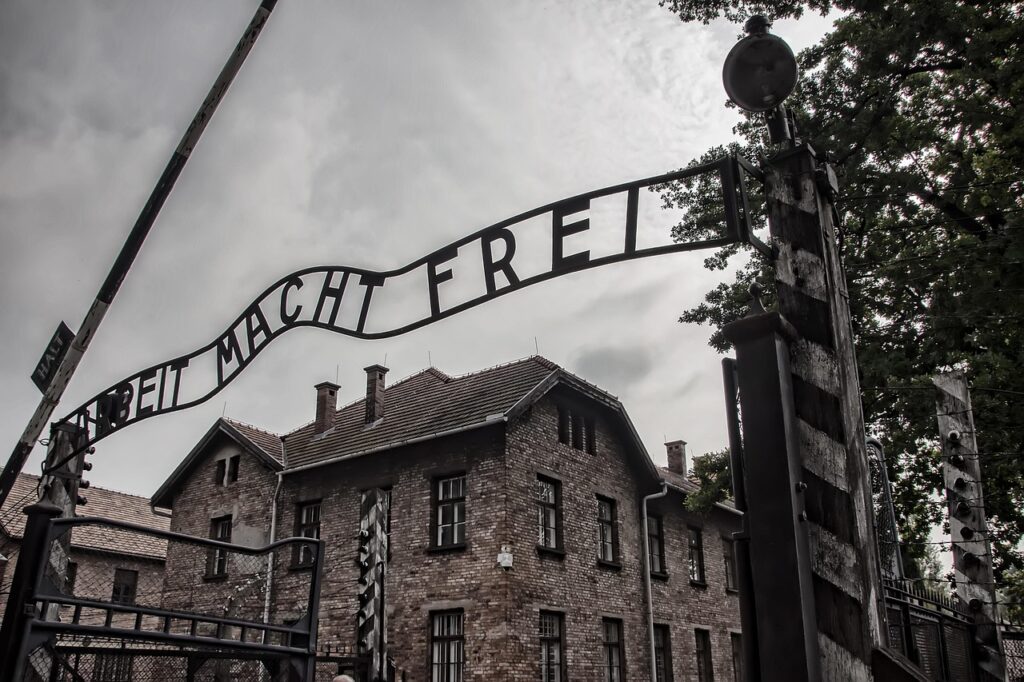
History is replete with scapegoats. Witches (usually women) were blamed for the Black Death in the Middle Ages as well as the evils in 17th century Salem, Massachesetts. (Within one year, 200 people in Salem were accused of witchcraft, 20 were executed.) Perhaps the most blatant example of scapegating in recent memory occured in Nazi Germany when Hitler blamed Germany’s economic problems mainly on the Jews. In essence he promised, “Get rid of the Jews, and Germany will thrive again!” Before it was over, 6 million human beings (mostly Jews) were systematically put to death in horrific ways. Throughout history, a common scapegoat has aways been immigrants who are accused of “polluting” the particular nation’s “pristine goodness.” Sometimes individuals have become scapegoats–such as Socrates, Marie Antoinette, and (some argue) even Jesus. More about that later.
Psychologists tell us that scapegoating has its roots in a phenomonon known as displacement. Psychologist Neel Burton, in Psychology Today writes, that displacement occurs when “uncomfortable feelings such as anger, frustration, envy, guilt, shame, insecurity are redirected onto another, often a more vulnerable person or group.” When this happens, those uncomfortable feelings are temporarily replaced “by a crude but consoling sense of affirmation and self-righteous indignation.” Just look at many of our mass shooters or assassins. If you read their “manifestos” you will often see how their scapegoating led them to the awful killing of people they considered “the source of our evil.”
How do we deal with this “deep-seeded impulse to scapegoat”? Here are a few ways:
+ by acknowedging scapegating’s existence in our contemporary world–and even acknowledging the tendency within ourselves.
+ by humbly acknowledging our own sinfulness. Let’s face it, most of you who read this blog are basically good people. But even good people can do bad things, make mistakes, be judgmental, be swayed by irrational thinking, or be selfish at times. How do we “atone” for these failings within ourselves? By making amends or asking for forgiveness–or by buying another goat?

+ by dealing in a healthy way with the inevitable tensions that come with being a human being and with trying to live in harmony with other human beings–some of whom are very different from ourselves. It takes only a few minutes to find a scapegoat for society’s problems and our personal problems. It takes a lifetime of hard work to strive to live and work in harmony with other flawed human beings–and with our own flawed self.
+ by learning to deal with our “uncomfortable feelings.” What do we do with our feelings of insecurity, shame, anger, sexual tension, frustration, fear, envy, guilt? Do we bring these to our prayer? Do we find some trusted others–counselors, spiritual directors, confessors, good friends–with whom we can discuss and deal with these feelings?
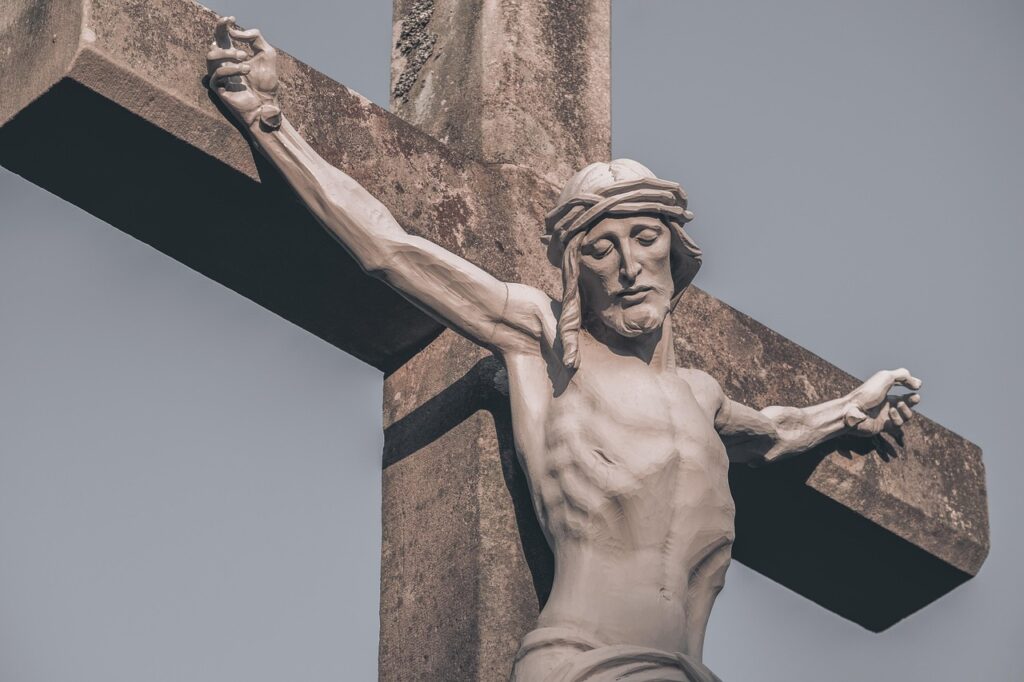
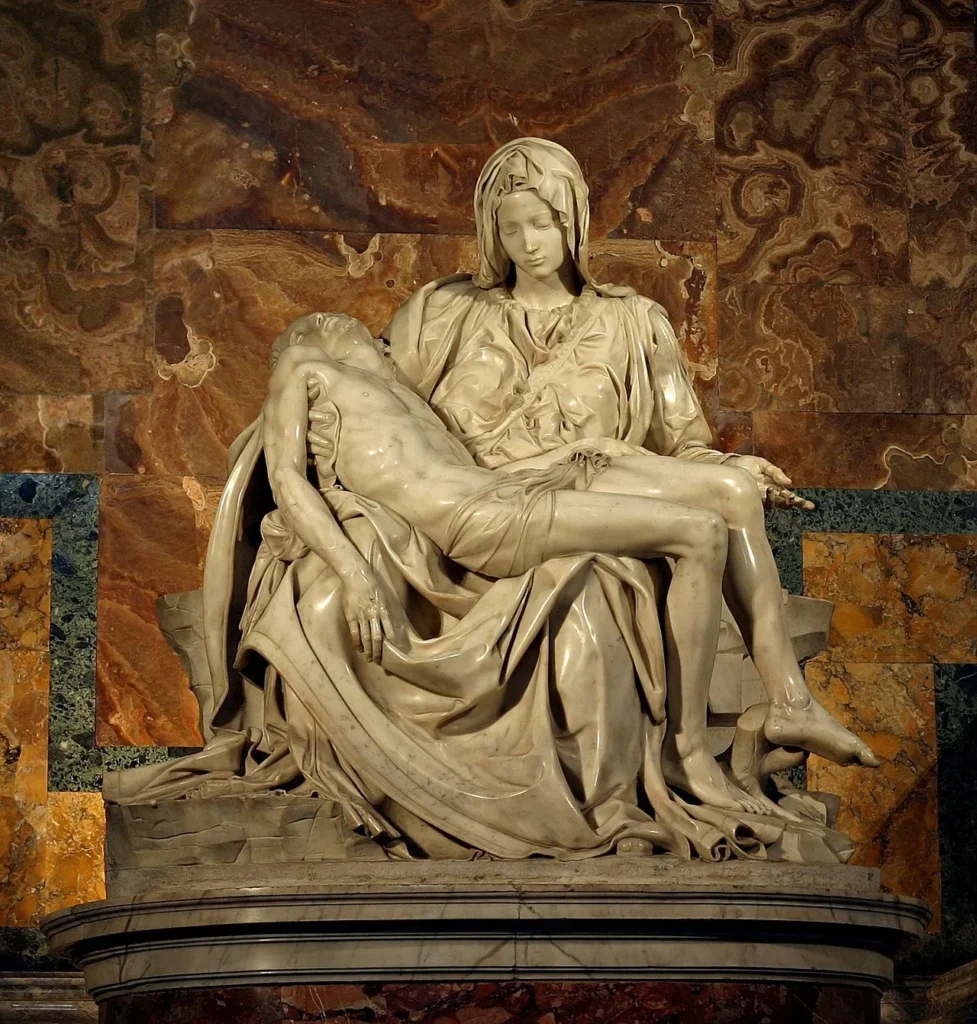
Fr. Ronald Rolheiser has written several columns on scapegoating. He says, “Christianity is the only religion which worships the scapegoat, the one who is hated, excluded, spat upon, blamed for everything, ridiculed, shamed, and made expendable.” But notice how Jesus responds to the terrible puishments being inflicted upon him. He doesn’t lash out against the perpetrators. He absorbs the evil and transforms it into new life–ultimately by forgiving the perpetrators. His mother Mary also “stands” by the cross and watches her son being put to death. Throughout the Gospel, Mary is shown “pondering” the events of her life. Says Rolheiser, “To ponder in the Biblical sense means to hold, carry, and transform tension so as not to give back in kind.” We see this response not only in Jesus and Mary, but others such as Mahatma Gandhi, Martin Luther King, Dorothy Day, Fr. Daniel Berrigan, Sr. Dorothy Stang, and many others.
My prayer for all of us is this:
Loving Jesus, help us to follow in your footsteps as we deal with the inevitable tensions of daily living. Let us be men and women of humility, not arrogance or pride. Help us to be mindful of our own failings and sinfulness, rather than projecting them onto others. May we find healthy ways to deal with the uncomfortable feelings that sometimes assail us–such as anger, frustration, envy, lust, guilt, shame, fear. Give us the love and courage it takes to do the hard work of working together to make our world a better place. And finally, we ask for your mother’s gift of pondering… that we may reflect on the events and happenings in our daily life, so that we may find your presence and life-giving actions within them. Amen.
For reflection:
Did anything stand out for you in this reflection?
Have you ever witnessed a person or a group being treated as a scapegoat?
Have you ever felt you were being treated as a scapegoat?
How do you deal with uncomfortable feelings?
************************************************************
We Sisters of Notre Dame will host our annual chicken barebcue and boutique on Setember 28 on the campus of NDCL in Chardon. Check our website (sndusa.org) for details. Come and join us and enjoy a delicious dinner and shop at our boutique. I will be at the Book Nook in the boutique (in the school cafeteria) from noon until 3:00. Sister Kathleen Glavich and I will be selling our books–some at a discount. Plus I’ll have a few of my “gently used” books I’ll be selling at drastically reduced prices. And both Sr. Kathleen and I will even be giving a few of our books away FREE.

****************************************************************
Here is a very simple song that asks for forgiveness. It’s called “Forgive Me Lord,” and it’s produced by Surgenor Music.,
(I am recommending only the video “Forgive Me, Lord.” I am not necessarily recommending the other videos that appear after this one. Discretion is advised.)
I invite you to leave a comment below:



25 Responses
Good morning, Melannie…
Good morning, all…
Another terrific and timely blog, especially now. Walt Whitman writes, “we contain multitudes.” To me, that is a call to empathy, for we too are the scapegoat, we too are the pre-judged, we too are the beaten. But Whitman’s words are also a call to humility, for we too can be that person who points the finger of accusation. So let us give our “multitudes” to Jesus and love tenderly, seek justice, and, to echo Saint Benedict, listen with the ear of our heart.
“Great Minds Discuss Ideas. Average Minds Discuss Events. Small Minds Discuss People.” Eleanor Roosevelt is often given credit for this quote.
Giddy up & God Bless!
Happy 81st Birthday Sr Melannie!
You referenced Fr Ron Rolheiser in yesterday’s blog and today an email summary of resentment and scapegoating arrived in my mailbox. It was from an original post from 2013:
https://ronrolheiser.com/handling-resentment-in-our-lives/#
I’m so very grateful Fr Rich introduced me to you and Fr Ron’s twice weekly reflections.
Giddy up & God Bless your 80s!
If we’re going to have peace, we must all belong.
Thank you, very timely message. Such a temptation to blame others. The song was perfect.
In this time of polarization in our country, we really need to take the words of this blog to heart. Thank you for your wise words.
Thank you for this timely message. The heartless focus on undocumented immigrants in our country certainly has made them a scapegoat. Bishop Rojas in San Bernardino has dispensed the Sunday obligation for those fearing immigration enforcement.
Typo – should be Gandhi
You’re right. I changed it. Thanks!
Sunday’s feast of the Exultation of the Cross allowed me to have the privilege and thus, lifetime memory of carrying a relic of the Cross Jesus carried to Golgotha,
On the palm of my opened right hand.
Before mass at Casa San Carlo, Dominican Father Scott held the relic and explained the history of the feast and how that Cross was obtained per St Helena.
He gave it to me, as sacristan and acolyte, to present it to all congregants to touch.
Our senior residence has many seniors from their 70’s to age 100 and more. Many of them kissed the relic crying, smiling, or gently rubbing it.
Jesus, my scapegoat, I am grateful that I had this honor and shall always treasure it!
Marilyn Woidat
Mary, the mother of Jesus, stood beneath the cross and wept . She did not accuse anyone; she did not point a finger at the executioners. She did not need a scapegoat. Blessings on all as we celebrate the feast of the Sorrowful Mother, Mary
Such good, wholesome and Grace filled writing. Thank You Sister Melanie!
The movie about Saint Maximilian is in Midwest theaters. It’s very worthwhile. https://www.triumphoftheheart.com/
We have movie tickets for Sunday night in our parish. Looking forward to the movie…
Hi Sr. Melannie
It’s been a while since I posted and want to thank you for another wonderful reflection. On today’s Feast of Our Lady of Sorrows, I am going to try and ponder and reflect upon things in my heart instead of reacting as I so often do. With all the hate and indifference we are faced with today, it helps to be quiet (in quiet and trust our strength lies). Thanks again for your much needed reflections!!
May God continue to bless you and all the Sisters of Notre Dame!
Always,
Nancy Frederico
Timely message indeed. So sad that we humans keep making the same mistakes and cruel judgements over and over again. But so provoking to remember Jesus sacrificed his life for the forgiveness of us all. Let us rejoice and celebrate that by doing the same – practice love, acceptance and forgiveness.
Anyone reading the news these days could assume that all the problems in our country can be blamed on immigrants, the “radical left” or the “woke” culture.
I wonder if those responsible for making these claims ever really look in the mirror? You have given us much food for thought! Thank you Sr. Melannie for such a timely topic.
PS. I love the definition of pondering by Fr. Rolheiser. What a wonderful example we have in Mary. Let us strive to imitate her pondering!
excellent topic! thanks so much Sister
Thank you, Sister, for the beautiful and very timely prayer. My heart breaks for the poor immigrants who are being scapegoated to appease the haters and bigots among the un-woke. You always help to start my week on a positive note. Bless you and all your Sisters of Notre Dame.
Very timely Melannie as our country’s leaders snipe at each other making each a scapegoat. Thank you for this thoughtful message.
Good morning, Sr. Melannie. It is so comforting to me when I read your blog and it matches up with what is heavy on my mind and heart. You put into words what is churning inside of me and do it with grace and elegance and on a positive note. I thank God for the ability you have to do this.
I have been talking “at” the television when the news comes on to relieve some of the frustration that I feel. I believe kindness matters and if those in authority were to be kind in making the changes needed we wouldn’t have the fears, anger, and pain.
I have always been interested in how the “leaders” in our government do what we elect them to do. Sadly, in recent years I don’t see any leadership like the statesmen of the past. I so want to send a copy of Profiles in Courage to all of our elected officials. I want them to remember, no matter the political party any of us are affiliated with, they are elected as a representative of the people and not a representative of any political party. I worry about the direction of this country and my prayers increase in relation to that worry.
“One nation under God” seems far away.
May God bless all those working for a better way.
This blog has made me recognize my own sinfulness and tendency to scapegoat groups of people. This was a deep reflection. The best thing to do with uncomfortable feelings is to sit with them; do not try to scapegoat them by reflecting on something/someone else. Sit with them and soon joy or peace will come.
I want to thank everyone who commented in today’s blog. I really appreciate your additions and particular “slants” on this important topic. I am always amazed at how some of you humbly reveal your own shortcomings here. Thank all of you for reading my blog and for enriching my reflection by your own comments given here! Melannie
Dear Sister Melanie, I was led to find your blog this morning after I read your reflection (yesterday’s) in my “Moments of Peace in the Presence of God” book of meditations. I saw that you were a Notre Dame nun and was curious to know if your order was related to the ND sisters who taught me in Omaha NE both in grade school & high school. I don’t think they hey are but I was delighted to find your blog and read your and read your article about scapegoating. It fit perfectly into my life and my personnel struggles at the moment. The forgiveness video was also welcomed. So thank you St Melanie for you good words and also our God who truly does work in mysterious ways.
Dear Patricia,
Thank you for your comment. No, my congregation of the Sisters of Notre Dame is not the same Notre Dame congregation in Omaha. Sorry. I’m glad you found the scapegoating reflection fitting for your current situation. Thank you for coming to my blog. I hope you stay! Melannie