
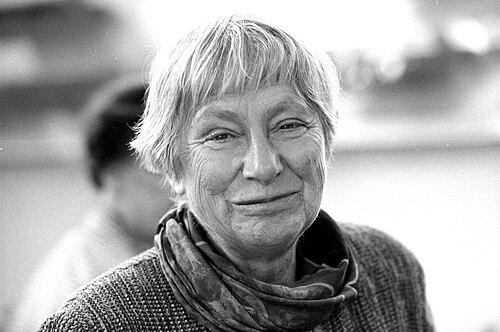
Up until a few months ago, I had never heard of Dorothee Soelle, a German theologian (1929-2003). Now I own one of her books (Essential Writings), I’m reading it enthusiastically, and I’m posting this blog about her! I thank Robert Ellsberg in the April issue of Give Us This Day for introducing her to me. To understand my sudden fascination with Soelle, let me begin with a little background on her.
Dorothee Soelle was fifteen when World War II ended. As the Nazi crimes became better known, she was filled with an “ineradicable shame”: the shame of “belonging to this people, speaking the language of the concentration camp guards.” Like many others of her generation, she pondered the great question: “How could this have happened?” And “If God is all-powerful, why didn’t he stop this?” At the University of Cologne, she majored in theology, philosophy, and literature, eventually earning her Ph.D. She became a university lecturer at Cologne while also becoming very active in the political issues of her day: the Vietnam War, the arms race, anti-semitism, sexism, and other forms of authoritarianism and oppression. From 1975-87 she also taught 6 months every year at the Union Theological Seminary in New York City.
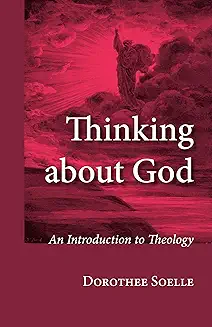
What was Soelle’s answer to the question, “If God is all-powerful, why didn’t he stop the atrocities of the Nazis–or all evils, for that matter?” Her answer was: because “God is not an all-powerful King.” This answer shocked some people, because that image of God as an all-powerful king was not only very popular, it was scriptural. She went on to say that God is not far removed from us. Rather, God is in our midst as “one who suffers in us, with us, and through us.” God is suffering along side of us. She viewed Jesus on the cross as the great example of God’s union with all who suffer political violence, oppression, trauma. Furthermore, she said, God needs our hands to heal what is broken in the world.
Soelle’s theology was an embodied theology, one deeply rooted in the world. Every morning she prayed with her Bible in one hand and a newspaper in the other. She always asked herself, “Where is God in the suffering of the world? And “What does love require of us in our times?” She, along with a few other like-minded friends, organized a weekly ecumenical service called “Political Evensongs.” These meetings were dedicated to prayer and lectures on contemporary social issues. Soelle believed God answered our prayers primarily by “inspiring action in our hearts and hands.“

Soelle criticized traditional Christianity’s idea of sin which confined sin mostly to personal morality. This limited view failed to recognize sin’s social dimension. She wrote, “Sin has to do not just with what we do, but what we allow to happen.” She had been appalled that Nazism arose in Germany, an essentially Christian country–mostly Lutheran and Roman Catholic. How could her fellow country men and women have gone to church every Sunday while simultaneously allowing their neighbors to be rounded up and shipped to extermination camps? (Remember, of course, that not all church leaders and ordinary citizens were silent. In Dachau alone, there were “clergy barracks” that held over 2,700 clergy. And countless non-Jewish neighbors also disappeared into the night for speaking out against Hitler and his policies and for haboring Jews. But some historians say such resistance was too little, too late.)
Solle wrote extensively about mysticism. She believed mysticism was not reserved for a few select people living in desert caves or monasteries. Rather, she “democratized mysticism” as a gift available to all. She defined mysticism not as a new vision of God, “but a different relationship to the world–one that has borrowed the eyes of God.” Soelle also believed that women have special insights to offer the primarily patriarchal theology and spirituality of her day. As the mother of four children, for example, she was well-acquainted with the pains of childbirth. She asked, what enables a woman to endure the labor pains of childbirth? And answered, it is her hope for the life of her child. So too, she believed our pain and suffering can be transmuted into giving birth to something new.
Some say we are known by the company we keep. Four examples of Soelle’s “company” include several Medieval female mystics such as Marguerite Porete (burned at the stake for heresy in 1310), Lutheran pastor Dietrich Bonhoeffer (hanged by the Nazis for treason in April 1945), Latin American Liberation Theologian Gustavo Gutierrez, and American “Creation Spirituality” theologian, Matthew Fox.
Susan Rakoczy, a South African professor of theology, called Dorothee Soelle “one of the most important spiritual-political figures of the 20th Century.” I’ll conclude this reflection with four more thoughts by this remarkable woman:
“God does not dominate. God accompanies.”
About excessive consumerism: “If my hands are fully occupied in holding on to something, I can neither give nor receive.”
“Joy, laughter, and delight are so powerful because, like all mysticism, they abolish conventional divisions.”
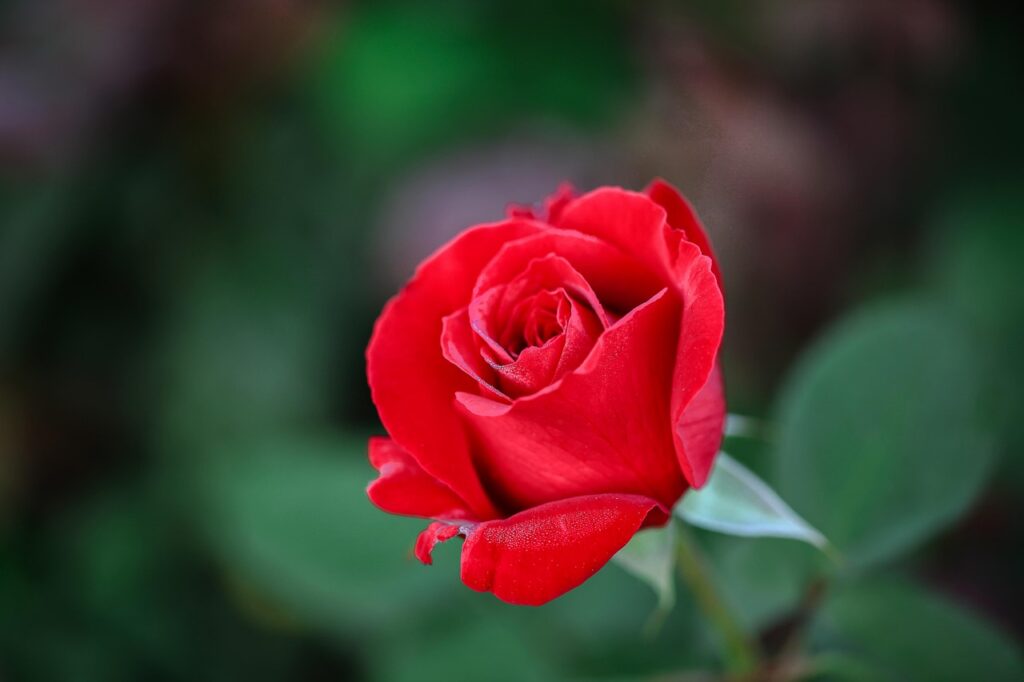
Some see “a miracle as an external intervention that suspends the laws of nature.” But Soelle says, “Mystical amazement, on the other hand, sees the original miracle in being itself, in creation, in a rose blooming.”
For reflection:
What is your initial reaction to this reflection? Positive? Negative? Somewhere in between? Can you explain why?
Does anything about Dorothee Soelle’s writings, resonate with your own beliefs? Does anything contradict what you believe? Does anything make you say, “Wow!” or “I never looked at it that way before.”
Do you ever pray with scripture placed alongside the news of the day? If so, what happens when you do? If you’ve never tried this, would you like to try this?
Does just being alive ever seem like a miracle to you? Have you ever experienced something in nature that you would readily call a miracle? If so, could you share that experience with us below?
Soelle often referred to St. Theresa of Avila’s prayer, “Christ has no hands on earth but yours.” Here is that prayer set to music and sung by John Michael Talbot, “St. Theresa’s Prayer.” I love this prayer/song so much, I use it for nearly all my retreats.
I invite you to share your thoughts below. Your fellow readers and I always enjoy reading the comments!


28 Responses
Good morning, Sr. Melannie…
Good morning, all…
Without going into detail, this Monday’s blog has been heaven sent. So thank you!
Two things: one, I have to read more Dorothee Soelle; two, “God does not dominate. God accompanies.” Her words echo those of the late, great Pope Francis, who preached a gospel of accompaniment, but her words also evoke chapter 11 in The Acts of the Apostles. In that chapter, Peter is chastised by fellow disciples for entering a house of uncircumcised people and sharing a meal with them. Peter’s response was, “The Spirit told me to accompany them without discriminating.”
Mystical and beautiful at the same time!
Thanks again, Melannie, for another positive start to a busy week. Love this idea of God walking among us. And I also have always liked the “Christ has no body but ours”. Also now I must add Dorothea Soelle to my list of people to read about.
Wow. Thanks for this insight……
Thank you Sister Melanie for this mornings post. I found much to dissect in it. So much to think about. I do believe I am not alone in wondering many times, “where is God” in the way things sometimes happen, especially tragedy. Greatly appreciated the musical selection as well.
Thank you for this post. I too come from German background and struggle with those same questions.
This also hit me: If my hands are fully occupied in holding on to something, I can neither give nor receive. Praying for the grace to “Let Go and Let God”.
Thank you for this thought provoking post. There is so much to glean from it as it has sweet gold nuggets to ruminate on and grow from.
The online newspaper “The Pour Over” (which is free) combines news, scripture and prayer. I have enjoyed discovering this. Food for thought…
Thank you for sharing this. I had never heard of Dorothee Sölle before, and I appreciate learning about her. I was especially struck by her question, “What does love require of us in our times?” That’s something worth praying about.
I believe God is all-powerful and also invites us to be His hands and feet in serving others.
This reflection gave me a lot to think about. Thank you for the introduction!
Thanks, sister Melannie: : you always make me think! And that’s a good thing!
About excessive consumerism: “If my hands are fully occupied in holding on to something, I can neither give nor receive.”
This quote struck me.
It seems like a type of paralysis.
Another example of an exceptional teacher being a lifelong learner. Thanks for sharing Dorothee Soelle’s wisdom, Sr Melannie!
It would be wonderful to hear her guidance for today, with a Bible app and a news app open on a phone.
I was moved by Dorothee’s comment: “Sin is not just what we do, it’s about what we allow to happen”. Profound and humbling. It confirms the fact that we have not as of yet arrived; we are pilgrims on a journey.
Blessings,
Father John
I think of Dorothy Day, too. Thank you for sharing. The John Michael Talbot version of Teresa of Avila’s is one of my favorites, too.
Could I have your permission to play this song at our church when I, as coordinator for our Food Pantry, am asked to give a talk once a year to our parishioners to help raise money to fund our food pantry. Our motto has always been “We have to SEE Jesus in every person who comes to our Food Pantry and BE like Jesus to each person. In other words, just like the song, we have to be His hands and feet and eyes and ears. This song would be perfect. Thank you for sharing. Mary Ann
After watching ABC News tonight, WOW, we need to pray very hard with our Bible and put our country in God’s hands.
Thank you for bringing Dorothy S. to our attention. We have much to learn from her insights. She was always linked in my mind with a theology of suffering.
She harnessed her feelings of national shame post WW2. Guess we can take a page from that.
Thank you for this blog. So many insights struck me too…God does not dominate, God accompanies. May we learn to do the same. Thank you for the insights and the music. You’re the best.
Thank you!
Thanks for another gem Sister Melannie especially in these time of chaos and uncertainty. “Sin has to do not just with what we do, but what we allow to happen” is so relevant for today. I will be calling my Senators later today about an issue.
I so enjoyed the writings….to be the hands and the heart of Jesus’ love
to be a companion on the journey
to be. a Christ-Bearer of humility , simplicity and deep caring
is to have a mystical heart. Thank you
Sister Ave,O.P.
Rabbi Kushner, in his sentinel book When Bad Things Happen to Good People (1981) grieved for the life and death of his son from Progeria (rapid aging), and he too concluded that God is not all powerful. That was a stunning statement for most but repeated over and over by authors who chronicled the meaning of suffering (see Albert Nolan’s book Redemptive Intimacy and Jim Finley’s videos from the Center for Action and Contemplation). Accompanying is a far better gift than control. It allows the Beloved to completely enter our hearts and to share it all with us. The good, the bad, the ugly, the painful, the ecstatic are what the gift of life is all about. And if seen this way, it’s all transformative. We become one with others and with God in the process.
G’Day , a day after receiving this most powerful and meaningful contribution from you yet.
Born in 1938 and being half German with relatives in Kappel Germany, I grew up being ashamed of my heritage. My father, Adolph left there alone at 19, as a draft dodger, to the home of his paternal uncle in Luverne , Minnesota.
During the WWII, the FBI questioned him In Chicago where we lived. Asking why he visited Germany in 1931, concerned he was a Nazi.
He loved America deeply and was a devout Catholic all his life ihere.
My entire education was in Catholic schools and my faith is demonstrated by my hands and feet vs. on my knees.
I am grateful for God’s presence in my life, And I too subscribe to. Give Us This Day and I thank you for this author’s work which I plan to read.
Marilyn
Good morning all,
I feel a bit breathless after reading and listening to everything and everyone! So much fills me to overflowing….I am familiar with her name, but knew nothing about her. I too am going to become more familiar with her and what she came to understand as truth.
In recent months, I have come to be certain of the fact that wherever I am is where God also is……so when we ask “Where is God in the middle of all the horror that is going on?” we must ask ourselves, what can I, under the guise of God’s hands and feet, do to make a difference? Plus, it is important to remember that the horror gets the headlines, while the the good things going on under the radar that is helping to bring about a better world, we never hear about. God is never just sitting there twiddling His thumbs, I believe He is quietly inviting us in numerous ways to be a part of the solution…..it seems we are in this together.
When we are moved, may we say “Here I am Lord”, I’m here to be your hands or feet….
The Prayer of St. Francis is one of my favorites, especialy by JMT
Mary
I totally agree with your comments about what gets headlines. We need to dig deeper, pray more earnestly and “keep the faith.” God’s always there but he needs us to be His hands and feet as the message says. It’s a bit daunting right now – if nothing else it’s prayer we can and must offer. Thank you to Sister Melannie for making us aware of this holy hero.
Thanks for writing about Dorothee, including her words of wisdom. I appreciate your ability to write reflective questions.
I’ve been sitting with, “Soelle believed God answered our prayers primarily by ‘inspiring actions in our hearts and hands.’” Yes! Yes!
And sometimes God answers our prayers by sending other people into our lives when are hearts are burdened and our hands are tired. And sometimes God answers our prayers in feeling and knowing God’s presence even though nothing changes and all we can do is accept the here and now.
Soelle also said that God was “not far removed from us.” It is helpful for me to think of God dwelling inside of me. “Not far removed” seems to far away for my liking.
And sometimes it seems like God is distant and not responding to my prayers.
If Saint MotherTeresa felt this distance, I guess I can sometimes feel it too.
I, too, never heard of Dorothee. When I read her quote, “God is not an all-powerful King,” I knew exactly what she was saying. God does not lord over us like some king on a throne, far removed from His people. That resonated with me.
To answer one of your questions, I often observe many miracles in nature. I am an avid bird watcher, which has led to an appreciation for birds and all others who visit my feeders–including squirrels! I have become rather fond of them. In watching the daily life of my backyard “neighbors,” I cannot help but marvel at how God provides even His smallest creatures with exactly what they need. For example, the fur of Eastern Gray Squirrels becomes thicker during winter. Their coats also become whiter in winter, helping to camouflage them in the snow. It’s amazing!
I so enjoy your blog and always find inspiration in your writing and your insights. I was surprised to see my longtime friend, Sr Susan Rakoczy, mentioned in your blog. We grew up in the 50’s- 5 houses apart in a Polish neighborhood in Detroit. We keep in touch to this day even though she became a nun and spent most of her life teaching theology in Africa. She is brilliant and has also written numerous books.
I’m thankful for the doctrine of the Mystical Body of Christ, for the parable of the Vine and its branches, for many sayings of Jesus, such as “Without me you can do nothing” and “You will do even greater things than I do” and “I am with you all days.” Dorothee Soelle gets the mystery of our heavenly union with him now on earth, doing God’s will.