
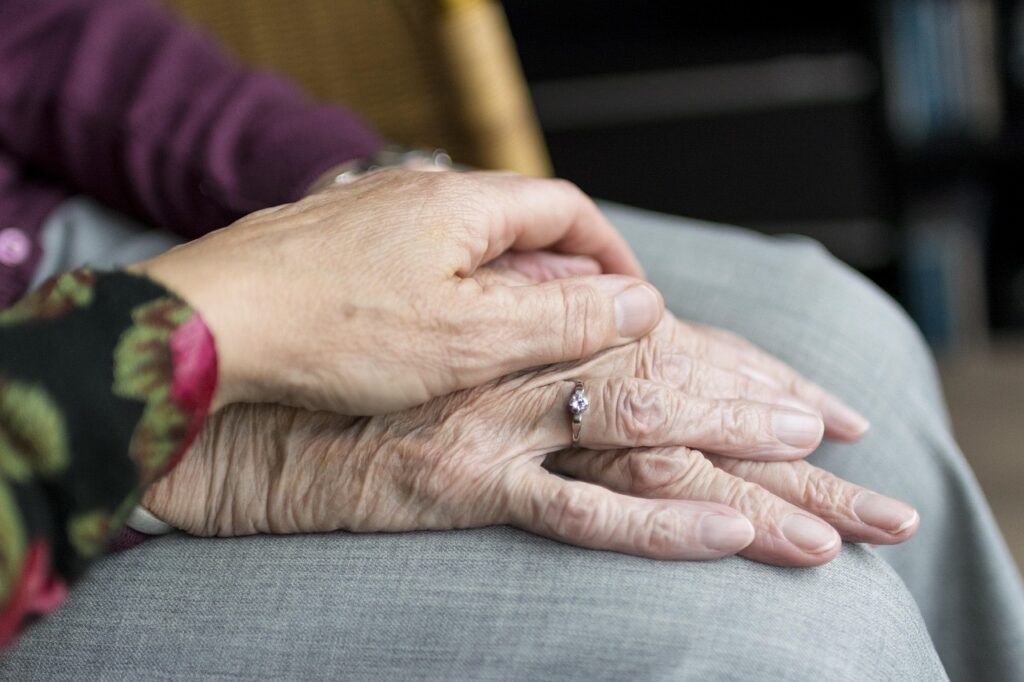
Today’s reflection focuses on caregivers–especially those individuals who are unpaid for providing care for loved ones with serious medical issues. In order to appreciate these caregivers, we need to look at a few statistics. In the US alone, there are 63 million families (1 in 4 adults) serving as caregivers for an adult or child with a medical condition, disease, or disability. The median age of these caregivers is 50 years; 3 out of 5 are women. About 29% support both elderly adults and children at the same time. These caregivers have been dubbed “the sandwich generation.”
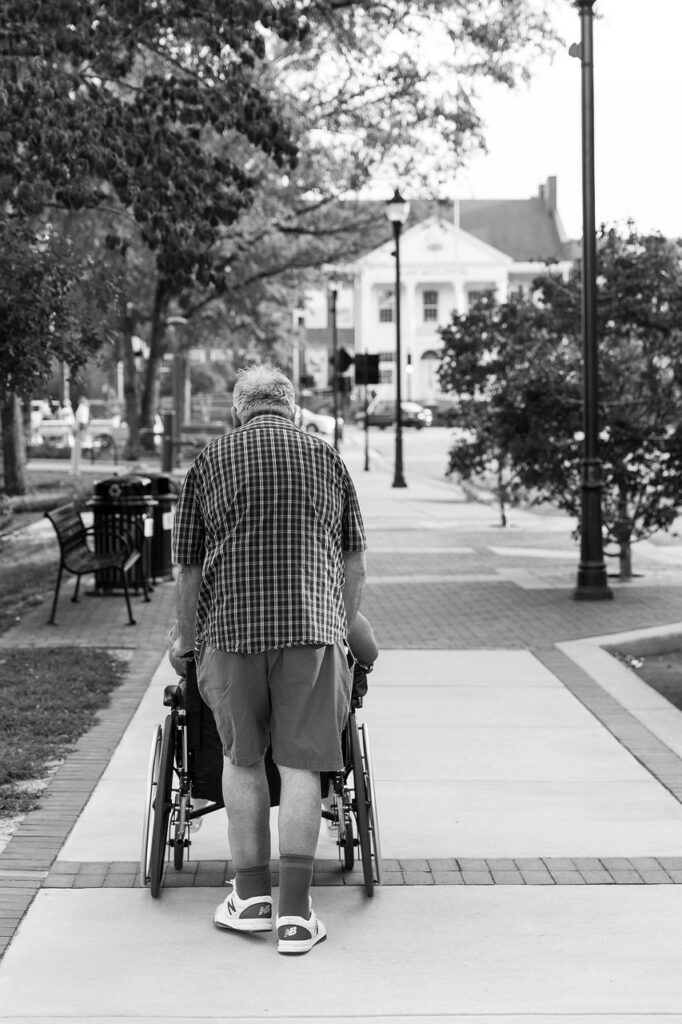
About 1 in 5 caregivers report their own health issues related primarily to stress. About 40% are trained to provide complex medical care–such as injections and wound care. About 50% report a severe financial toll involving debts or medical expenses. About 60% of family caregivers hold a job while simultaneously caring for a loved one. One more statstic: According to the AARP Public Policy Institute, unpaid family caregivers contribute an estimated $1.01 trillion in economic value annually to the U.S. healthcare structure. That exceeds the total U.S. Medicaid spending ($932 billion). Their contribution, however, often comes “at a severe personal cost.”
But these facts don’t begin to tell the human story of caregiving. As the investigative American journalist Paul Brodeur wrote, “Statistics are human beings with the tears wiped off.” So I’m offering a 5 min. video that tells the story of one family caregiver, a father (Greg) who cares for his ill adult son (Cory).
There are many resources online for support for caregivers. One website said the main needs for family caregivers are these:
1) educational resources on the specific health issues of their loved ones–for example dementia or cancer.
2) help for their emotional well-being. Some caregivers join a support group, seek individual counseling, rely heavily on a network of family members or friends, or even their parish or local resources.
3) caregivers need respite care for themselves. They need temporary relief from their caregiving role to attend to their own needs.
4) caregivers need financial and legal assistance.

What can we do to help our family caregivers? First, we can pray for them, for they are often bearing a heavy load. We can remember them in our petitions at Mass. We look at those four needs of caregivers listed above and see how we might help with one of those needs. Or we can ask them directly, “Is there anything I can do to help you?” Perhaps we can run small errands for them or stay with their loved one while they run a few errands. In Matthew 25:31-46 we Catholics find the basis of our traditional Corporal and Spiritual Works of Mercy. One of the corporal works of mercy is “Visit the Sick.” But newer translations today say “Care for the sick.” In a similar way, one of the spiritual works of mercy is “Comfort the Afflicted” which is sometimes translated “Support those who are suffering.” In this time in our history and in our society, perhaps we need to extend those two works of mercy by including, “And pray for and help take care of our caregivers.”
Let us pray:
Divine Caregiver, we pray for all caregivers–those who have devoted their lives to caring for the ill
and those who, due to circumstances, are providing daily care for their loved ones.
Give them strength, patience, wisdom, and tenderness.
Help all of us to find concrete ways we can encourage and support caregivers in their selfless devotion.
And we pray that all those in our midst who are ill in any way,
may be treated with the dignity, expertise, and compassion
they need and rightfully deserve as our brothers and sisters in Christ. Amen.

For reflection:
Did anything stand out for you in this reflection?
Have you been or are you currently a caregiver? Would you share a little of that experience with us below?
What do you think is the greatest challenge for a caregiver and the greatest support we can give them?
PBS has done a whole series of caregivers’ true stories. The videos are short and well-done. You might want to check out a few of them on the PBS website or YouTube.
PS: Thank you to our readers who came to our Chicken Barbecue last Sunday. It was wonderful meeting you!… I know we are having some glitches with my blog. Some readers tell me they don’t get the email on Monday saying that a new blog has been posted. Sometimes that email doesn’t come until late in the week. Just so you know, I post my blogs for Monday. You can search for my blog (using google, safari, etc.) on Monday or later in the week and it should be posted. Some readers say the blog won’t let them comment anymore. Other readers say they aren’t getting any readers’ comments. I will meet with our IT department shortly to address these issues, Thank you for your patience.
Our song today is “Loving God, Loving Each Other” by the Gaither Vocal Band. Sometimes we make Jesus’ teachings more complicated than they really are. This song reminds us of the essence of Jesus’ message given throughout his life–and especially to his disciples at the Last Supper:
I welcome your comments below!



37 Responses
A most fitting post. Several family and friends have had a spouse who have needed at home care for a injury or illness. Thank you for sharing, Sr Melanie! Giddy up and God Bless!
Barry, As you point out, most of us have family and friends who have served or are currently serving as caregivers. This reality touches many of our lives. Thanks for writing. Melannie
Good morning, Melannie…
Good morning, all…
I’m sure I speak for others when I say sometimes your blog is Heaven-sent. Or maybe just speaks to our current situations. I do not consider myself a full time caregiver, such folks are truly living saints, but these days I’d say I’m a part-time one. My mother is 94 years old, still living at home (a situation that may change soon), and these days beset by many ailments. In the past four years she’s broken both hips, an arm, and this year a fall resulted in several fractured ribs. Amazingly, she has come through all of this! But right now she is suffering from anemia and has had to have five blood transfusions in the past four months. Today I take her to an Urgent Care clinic to see about a cut she sustained on her shin that just won’t heal. Thankfully, I am not alone in this. My sister is an equal partner in trying to make our mother’s last years comfortable. Her mind is still sharp — thank God! — and she says her rosary every day, but often wonders why she’s still here. She told me yesterday this has been the worst year of her life. Please keep my mother in your prayers. Her name is Marion. Thank you.
John, Thank you for sharing your personal experience of being a “part-time caregiver.” I’m sure many of us can relate to your specific details in caring for Marion, your dear Mom. And yes, how fortunate to have your sister “bearing the load” with you. I’m sure our readers will say a prayer for your mother and her care givers. Thank you for your sharing (as usual!) Melannie
John thank you for sharing. My mom was also named Marion and passed away four years ago at the age of just a few days short of 91. In her final year she was diagnosed with ALS and her care was provided by myself and my two sisters, along with a part time paid caregiver. It was difficult as none of us were yet retired so we were dealing with work and babysitting my grandchildren as well as caring for mom. I look back on that time with mixed feelings but I feel blessed that I was able to spend much time with her leading up to her death and transformation to the next life. You and your sister as well as your mom are in my prayers.
I volunteer with Avow Hospice in Naples Florida. It is a blessing to me!
Jane, Im not surprised that you still manage to volunteer somewhere–even though neither of us are spring chickens any more. Your whole life has been directed toward loving–from your marriage to Deacon Ed, to your large family, to your many friends (I’m proud to say I’m one of them!) and to our church. You continue to surprise and inspire me! Melannie
Beautiful article and the song was
definitely meaningful.
Thank you going to a new place
to help with birthday bags for
schools and helping people.
Enjoy your day
Blessings
Kathy, I’m happy this little reflection seemed to speak to you. Thank you for being a faithful reader! Melannie
I have been a caregiver for my parents. Now just my Dad. It is a rewarding but challenging job.
Kathleen, You used very few words to describe a situation filled with very great love… And you are in touch with both the caregiving challenges and rewards. I appreciate your words! Melannie
Praying for caregivers really touched my heart! I just had surgery for an infected hip replacement. I am temporarily immobile having to hop with a walker and no pressure on my one leg. My wonderful husband is now my temporary caregiver. There have been some really challenging times trying to navigate this changed lifestyle. As you mentioned in your article we BOTH had to learn to do new things! It has taken a lot of love and patience! And I totally agree my husband has needed a break and so many family members and friends have helped us with him being able to have some time for him. We are blessed our journey is only about 6 months long. We need to pray for our caregivers especially those long term ones! May God bless them and and give them the strength and perseverance they need🙏
Cyndi, Thank you for saying a few words about caregiving from the perspective of one who is currently being cared for. I liked this sentence: “It has taken a lot of love and patience”–for BOTH of you. How fortunate that family members and friends are helping out. May your 6 month journey go well for your husband and for you! Melannie
Hello Melannie. Your post today points out a huge caregiver issue for which we should all pray about and do whatever we can to support. My dear friend of 40 plus years recently passed away after 4 1/2 years of being cared for at home by his wife of 69 years, with help from a loving, dedicated group of home health aides. Thankfully she has the means to afford that help but much of the burden she took upon herself. They were/are in their mid 90’s. It was touching and beautiful to witness the care she gave to him so patiently and lovingly. Caregivers of all types, professionals or family relatives should be acknowledged and prayed for daily. They sacrifice so much and need help and support also to persevere and take care of themselves too. I’m sure their reward in heaven will be great as they are greeted there at the end of their time too.
Loretta, Thank you for your example of the couple in their 90’s… You’re so right when you said, “Caregivers of all types, professionals or family relatives should be acknowledged and prayed for daily.” Melannie
Hi Melannie, thanks SO MUCH for this article. I have been doing a lot of work around aging in people with intellectual and developmental disabilities (I/DD) and their unpaid caregivers. This is the first generation of people with significant such disabilities to outlive not just their parents but their nondisabled siblings. Many of these siblings are not just “sandwiched” but triple caregivers (aging parents/adult sibling with I/DD/children)–some even additionally are employed as paid caregivers! The psychic, physical, and fiscal toll on people is great–and too often not acknowledged. Thanks for seeing them. And for sharing that sight with others.
Margaret, How nice to hear from you! I commend you for all the work you are personally doing around aging “in people with intellectual and developmental disabilities (I/DD) and their unpaid caregivers.” You shed light on their unique and often critical situation. You called our attention to the reality of “triple caregivers.” Comments like yours enrich this blog. Thank you for sharing your precious work with us! Melannie
Thank you for sharing this topic on your blog. As we get older, we know more and more people who have become caregivers. I find that many couples become caregivers for each other. It’s very hard on both. A Father’s Devotion was sad, but beautiful. Thank you for the song at the end. Have a good week.
Diane, I’m happy to have written about caregiving. A reader actually suggested the topic to me a while ago. (I’m always open to readers’ suggestions, by the way.) I too have seen couples “leaning on each other” in their final years… and I agree with you that the video of the father’s devotion was “sad, but beautiful.” There was so much love between them! Melannie
I miss reading the comments of other readers, especially John Hopkins.
I usually read this first thing Monday morning, and there may be 9/10 comments. I can imagine by end of day there are pages of comments so I understand why posting the sharing has stopped….. many were so insightful and poignant. Thank you for your columns.
Kathy, If you don’t see comments on my blog, then use a search engine such as google or safari to access my blog. The link in the email notification you receive might NOT have any comments, because it is sent out BEFORE there are any comments. I’ve contacted the people who are looking into this “glitch.” I will always welcome and post comments. I value what my readers have to say. Thank you for persevering! Melannie
Thank you so very much for this important and needed blog Sr. Melanie. I am sure that it will be a help to many. It helped me greatly.
Rita, I’m so happy today’s reflection helped you. I know it helped me when I was writing it! Melannie
Dear Sister Melannie,
Your decision to first provide statistics and then a moving video reminded me of an entry in the Encyclopedia Brittanica. The entry on poetry first described aging in technical, scientific terms and then, by way of contrast, a powerful excerpt from T.S. Eliot’s Four Quartets.
My father is 94 years old, and I live with him and serve as a caregiver. He had a stroke several years ago and is now dealing with dementia. It breaks my heart to see his decline, and I know that when he passes away I will be inconsolable. Thank you very kindly for pointing out the need for caregiver resources.
May the Lord bless thee and keep thee.
Ed
Ed, Thank you for your example of how the poet can say much more than mere scientific facts ever could… And I was deeply touched by your own example of being a loving caregiver for your dear father. “It breaks my heart” are the words I often said while caring for my elderly parents. Watching their gradual decline was so hard at times. You are witnessing it every day. I will certainly pray for you and your father… (Readers: Ed is a former student of mine I was privileged to teach in North Carolina quite a few years ago.) Melannie
I am currently a caregiver to my husband who had complete Kidney Failure on Easter Sunday 2025. I has been a rough year, but in my travels back and forth to hospital and doctor’s visits, I have found that there are many more people with more trying situations than ours. I don’t know what I would have done if not for my faith. It keeps pulling me through and I have relied on it heavily. Thank you for this post, it is very uplifting, and as you have stated, the very best thing one can do is to pray. Thank you!!!!
Toni, I really appreciated your story of currently being a caregiver. I’m sure others would agree with your words, “I don’t know what I would have done if not for my faith. It kept pulling me through…” I hope you can feel the prayers of all of us who have read your words. Melannie
Thank you, Sr. Melannie for highlighting the needs of caregivers along with caring for those they are caregiving. I became a caregiver for my husband at age 20 when he came home from the hospital after several months of hospitalization, surgeries and rehab after a terrible motorcycle accident. He was 22. We were so young. He was disabled for life with physical injuries and traumatic brain injury. He lived 31 more years. After 17 years, we divorced and became friends until he died in 2007. The separation was good counsel we received from a wonderful therapist who saw that friendship would be easier than marriage for us. Divorce is not good & felt awful but turned out to be what we both needed. God works in mysterious ways in spite of our flaws and mistakes. We both became stronger people of faith through the whole ordeal. Love does not die and it changes.
I married again in 2011 and after five years, my husband showed signs of mild cognitive impairment that turned into significant dementia that put me in caregiving mode again until his death in 2022. We both survived Covid in 2020, but it exacerbated his condition and caregiving options. His adult day program that gave us respite was closed and never opened again.
Most challenging for me was being married to two men who both of experienced significant neurological changes that were harder for me & family to cope with than physical diminishment. In both cases I wish I had taken better care of myself and offered more compassion, empathy and dignity to them as well as to myself. The losses for both are ongoing and difficult. Asking for help is imperative & we didn’t always do so or receive the help we needed. Long-term caregiving without respite results in caregiver loss of self and burnout or compassion fatigues that takes a lifetime to recover.
Advice to caring support people is to inquire not only about the one being cared for but also to give caregiver opportunity to talk about their experience. For years people would ask about Ken and his progress. Few asked about mine which was more spiritual and psychological but didn’t show in outward appearance. CAREGIVERS MUST ACKNOWLEDGE THEIR OWN NEEDS AND ASK FOR HELP. Caregiving a loved one may be the hardest and highest calling one could ever receive. I am an ordained minister and retired hospice chaplain, thanks to my caregiving opportunities.
Sorry for long post. It is healing to continue telling my story. Caregivers need to share their stories with good listeners!
Donna, Wow… what a beautiful story: the terrible accident at age 22… the severe injuries… the decision to divorce… “Love does not die and it changes”… your need for compassion, empathy, and dignity… the reminder that caregivers must acknowledge their own needs and ask for help… and “Caregiving a loved one maybe the hardest and highest calling one could ever receive.” I was overwhelmed by the beauty of your story–and your theme: God works in mysterious ways…” Thank you so much for writing, Donna! Melannie
There are so very many kinds of caregivers. One of my daughters-in-law works as a legal counsel for a group of forensic nurses who assist victims of violence and domestic abuse. The nurses offer solace, information, advice, care, support of every kind. That’s their sole job – they are on call all the time. All who care for those in need of any kind are doing God’s work and need our prayers. We just don’t often realize how many people do these things “in the background.” May all caregivers be blessed abundantly along with those for whom they care.
Thank you, Sister, for reminding us of angels on earth on this feast day of the Archangels.
Patt, Thank you for broadening our perspective on the various kinds of caregivers! There are many other kinds of caregivers–often “in the background.” Your comment is an example of how our readers enrich these reflections every week! Thank you! Melannie
How I enjoyed today’s post, dear Melannie! I can see no other comments today. I daresay I am not the only responder. Caregivers are such a special breed. My daughter cared for her father for 2 years. The toll it takes is never imagined until it happens. Thankfully, she is doing well after taking a year to recoup after his death. Hats off to all who care for others. Thank you for this wonderful post!
Michelle, I’m so happy this reflection spoke to you. The example of your daughter’s caregiving is a good one–reminding us of the toll caregiving can take on a person… and the need to take time to “recoup” afterwards. Melannie
Thank you,For I have been a Caregiver most of my life..I’m 68 and now I’m caring for my brother,I took care of my Mom .Back in 1992 my Dad was left at the hospital purposely by his Sister,I was going to School to get my Degree for Nursing..I had to stop and care for him..Etc.I’m grateful to God
Thelma, My godness! A caregiver for most of your life! And through it all, you can say, “I’m grateful to God.” You must be a very generous and faith-filled person. God bless you! Melannie
I agree that this blog is heaven sent. I currently care for my 97 year old mother. It is very difficult at times, but other times very rewarding. My mother currently lives in Independent Living in a large senior complex. My mother suffers from grief having lost my father 10 years ago and my two brothers 2 and 4 years ago. I am her only living child. About 5 years ago my mother tripped over a shopping basket left in the aisle of a major store. After that she could no longer drive and loosing her independence caused more grief. She is beginning to show signs of dementia and forgetting to take meds. She used to go to Mass several times a week but has stopped going completely now, saying “God has forgotten about me.” All her friends have past away and she also wonders why she is still here. I am now wrestling with whether I should move her to the assisted living facility on the same campus that she lives. I know that would be devastating to her and she doesn’t want to consider it. She also won’t let me have aides come to help her. Luckily, I am retired and live about 10 miles away, so I go almost daily. A woman in her building moved in a few months ago and has befriended her since others who she was friendly with when she moved into the complex have either past away or moved into assisted living. (The major downfall of a senior citizen complex is that everyone there is elderly.) I go by her apartment almost daily even if only for a couple of hours. I am blessed to have my mother still here and that gives me strength as well as morning Mass. Reading the posts shows that I am not alone on this journey and thank our Lord that I can continue to care for my mother. God bless you for your website.
Darlene, Thank you sharing your personal story with us. I’m sure it moved many people–as it did me. Your mother has reasons to grieve… At 97, she has experienced so many significant losses in her life. At the same time, she is so lucky to still have you. You are a devoted daughter and caregiver… I promise to pray for your mother and for you. Yes, remember that you are not alone… Thanks again. Melannie