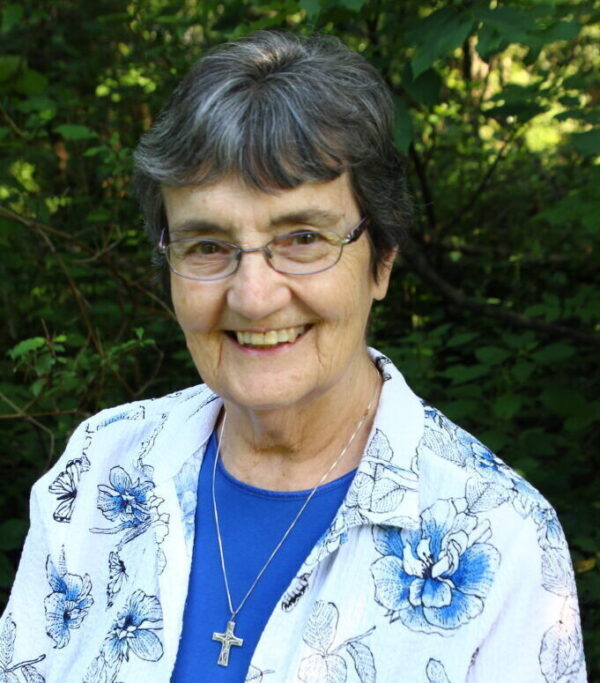
Erma Bombeck: American Humorist
One of my heroes is Erma Bombeck, the American humorist who entertained millions of us every week with her syndicated column, “At Wit’s End.” How this ordinary stay-at-home mom became a national comedian is a fascinating story.
Erma (nee Fiste) Bombeck was born near Dayton, Ohio in 1927. Her father, a crane 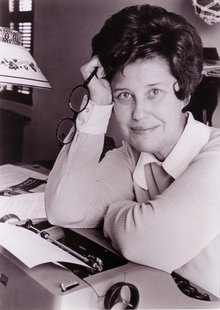 operator, died when she was only nine. As a little girl, Erma enjoyed singing and tap dancing. In school she was an excellent student and an avid reader. In junior high and high school, she wrote both serious and humorous columns for the student newspapers. After graduation she worked for a time for The Dayton Herald as a copygirl. Eventually she attended the University of Dayton, a Catholic college operated by the Marianist priests and brothers. Her English professor, Brother Tom Price, recognized her talent and encouraged her writing. In 1949, Erma graduated with a degree in English and became a life-long supporter of her alma mater.
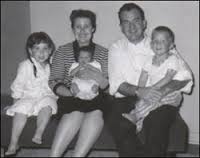
In 1949 she also became a Catholic and married Bill Bombeck, a fellow student and a veteran of World War II and the Korean front. Bill became an educator while Erma worked in public relations and other writing jobs. When they were told they would never have children, the couple adopted a little girl, Betsy, in 1953. A few years later, though, Erma gave birth to two sons, Andrew and Matthew.
Erma decided to put her writing aside and became a full-time, stay-at-home Mom. But in 1964 she began writing again—about something she knew very well: family life in suburbia. She was paid $3 for each of her columns for the local newspaper. But soon, her column was picked up by more and more newspapers until, in 1978, it was syndicated in 900 newspapers in the U.S. and Canada and read by over 30 million people. Erma became something of a national celebrity and started appearing on radio and TV. All the while she continued to chronicle life as a wife and mother. In the process, she made millions of us smile, laugh, and even cry.
Erma wrote, for example, “Marriage has no guarantees. If that’s what you’re looking for, go live with a car battery.” On choosing a spouse, she said: “People shop for a bathing suit with more care than they do for a husband or wife. The rules are the same. Look for something you’ll feel comfortable wearing. Allow for room to grow.” Of men, she wrote, “If a man watches three football games in a row, he should be declared legally dead.”
She had much advice to offer about raising children. “Never have more children than you have car windows… Never lend your car to anyone to whom you have given birth.” She dispensed her wit and wisdom on other topics as well: “Sometimes I can’t figure designers out. It’s as if they flunked human anatomy…Never go to a doctor whose office plants have died… Cats invented self-esteem.” On a more serious level, she wrote: “Worry is like a rocking chair. It gives you something to do, but it doesn’t get you anywhere… Our children need our love the most when they deserve it the least… When humor goes, there goes civilization.”
In addition to her column, Erma wrote 15 books, most of them best sellers. The titles reflect her sense of humor: The Grass Is always Greener over the Septic Tank, Just Wait till You Have Children of Your Own, and If Life Is a Bowl of Cherries, What Am I Doing in the Pits? One of the treasured books on my bookshelf is her book I Lost Everything in the Post-Natal Depression. That book might seem unusual for a nun to have, but one of my students, years ago, gave it to me. She had it personally inscribed to me by Erma. The inscription reads: “For Sister Melannie, I have made it through prayer and a sense of humor—in that order! Erma Bombeck.”
Erma was a breast cancer survivor. At age 20, she was diagnosed with a rare, genetic

kidney disease, a fact she kept private. For years, few people knew she had to have regular dialysis. Finally, in April 1996, she underwent a kidney transplant. Sadly, she died two weeks later from complications.
One of my favorite quotations of Erma’s is this one: “When I stand before God at the end of my life, I hope I would not have a single talent left, and could say, ‘I used everything you gave me.’” I think the world is a better and happier place because Erma Bombeck used all her talents in such a generous and loving way.
I chose a happy song for today. After all, we’re still in the Easter season. This is “Oh Happy Day” from Sister Act 2 starring Whoopi Goldberg. I hope it makes you smile and tap your feet!
What strikes you most about Erma Bombeck?
What did you think of the song?
Are there other humorists today that help us laugh at ourselves in a healthy and wholesome way?
"Come, We Have Room"
The Handmaids of the Sacred Heart are a group of eight Sisters living in Buenos Aires, Argentine. Like many of us, they watched in horror as the war broke out in Syria in 2011. Like many of us, they cried as they saw the images of thousands and thousands of refugees pouring out of Syria. Like many of us, they thought there was nothing they could do except pray.
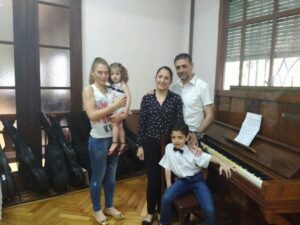
But then they did something many of us would not have dared to do. They took in a Syrian refugee family. As Sister Marialis Etchegaray explains, “We wanted to do more than just cry watching the news on TV.” They were also touched by Pope Francis’ message asking those in religious life, wherever possible, to open the doors of their institutions to those seeking refuge. The Sisters fixed up an apartment on the fifth floor of their school and petitioned to sponsor a family. And they got one.
“Their” family consists of Fadi Ali, 38, his wife Hanan, their two children, and Hanan’s sister. Prior to the war Ali was an agricultural engineer and his wife worked for a multinational telephone company. They were living a comfortable upper-middle class life. Then the war came. Though they lived in a “safe city,” no city was really safe from the war. For six years millions of Syrians have lived without water, electricity, gas, fuel, or medicine. When his job disappeared, Ali volunteered to help resettle displaced Syrians. He also represented his city during negotiations with the fighting factions. But eventually he sought a better and safer life for his family beyond Syrian borders.
Ali and his family arrived in Buenos Aires in March 2015. The adjustment was not easy. The realization that they were 8,000 miles from the rest of their family and their friends made them weep. For several months, Hanan refused to leave the apartment. She was terrified that bombs were going to rain down upon her and her family if she stepped outside. The Sisters patiently and lovingly helped the family through this major adjustment.
Ali eventually got a job with a government department devoted to creating public policy for aid to Syrian programs. The fact that he speaks Arabic, English, and Spanish helps him greatly in his work. Argentina is a country of many immigrants. As such, it tends to be more welcoming of refugees than many other countries.
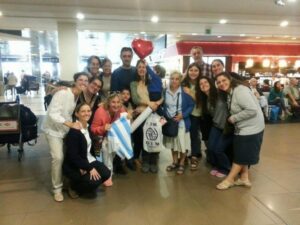
Of the Sisters, Ali says, “They treat us as friends, not as refugees.” Though he and his family are Muslim, he asked to pray in the same chapel where the Sisters had prayed for his family before they arrived in Buenos Aires. The Sisters, he says, “are the best followers of Jesus.”
Sister Constanza Di Primio says that refugees like Ali and his family are “living tragedies they did not choose.” She added, “They are not the war’s playwrights. The playwrights are the influential, who have economic or political interests, who expose human beings to a high risk of not just life or death, but of living in fear.”
Sister Constanza said that sponsoring a refugee family “turned out to be a fairly uncomplicated gesture…I want people to know that taking in a family is really within their grasp.”
Why did this small group of Sisters sponsor a Syrian refugee family? Says Sister Constanza, “I feel that God entrusted us, as a congregation, to be his innkeepers, to be the ones who say, “’Come, we have room.’”
I’d like to conclude this reflection with a pray that Ali composed and gave to the Sisters:

I based this reflection on an article by Soli Salgado in the “Global Sisters Report.” You can read the full article and other inspiring articles at: globalsistersreport.org.
The song is Marty Haugen’s “All Are Welcome.” Becoming a welcoming individual, a welcoming family, a welcoming parish, a welcoming nation is certainly a goal we strive for as we journey through life:
What do you think of this story and/or this group of sisters?
Do you know anyone or any group that has sponsored a refugee family?
I welcome your responses. They enrich my blog!
“Come, We Have Room”
The Handmaids of the Sacred Heart are a group of eight Sisters living in Buenos Aires, Argentine. Like many of us, they watched in horror as the war broke out in Syria in 2011. Like many of us, they cried as they saw the images of thousands and thousands of refugees pouring out of Syria. Like many of us, they thought there was nothing they could do except pray.
But then they did something many of us would not have dared to do. They took in a Syrian refugee family. As Sister Marialis Etchegaray explains, “We wanted to do more than just cry watching the news on TV.” They were also touched by Pope Francis’ message asking those in religious life, wherever possible, to open the doors of their institutions to those seeking refuge. The Sisters fixed up an apartment on the fifth floor of their school and petitioned to sponsor a family. And they got one.
“Their” family consists of Fadi Ali, 38, his wife Hanan, their two children, and Hanan’s sister. Prior to the war Ali was an agricultural engineer and his wife worked for a multinational telephone company. They were living a comfortable upper-middle class life. Then the war came. Though they lived in a “safe city,” no city was really safe from the war. For six years millions of Syrians have lived without water, electricity, gas, fuel, or medicine. When his job disappeared, Ali volunteered to help resettle displaced Syrians. He also represented his city during negotiations with the fighting factions. But eventually he sought a better and safer life for his family beyond Syrian borders.
Ali and his family arrived in Buenos Aires in March 2015. The adjustment was not easy. The realization that they were 8,000 miles from the rest of their family and their friends made them weep. For several months, Hanan refused to leave the apartment. She was terrified that bombs were going to rain down upon her and her family if she stepped outside. The Sisters patiently and lovingly helped the family through this major adjustment.
Ali eventually got a job with a government department devoted to creating public policy for aid to Syrian programs. The fact that he speaks Arabic, English, and Spanish helps him greatly in his work. Argentina is a country of many immigrants. As such, it tends to be more welcoming of refugees than many other countries.
Of the Sisters, Ali says, “They treat us as friends, not as refugees.” Though he and his family are Muslim, he asked to pray in the same chapel where the Sisters had prayed for his family before they arrived in Buenos Aires. The Sisters, he says, “are the best followers of Jesus.”
Sister Constanza Di Primio says that refugees like Ali and his family are “living tragedies they did not choose.” She added, “They are not the war’s playwrights. The playwrights are the influential, who have economic or political interests, who expose human beings to a high risk of not just life or death, but of living in fear.”
Sister Constanza said that sponsoring a refugee family “turned out to be a fairly uncomplicated gesture…I want people to know that taking in a family is really within their grasp.”
Why did this small group of Sisters sponsor a Syrian refugee family? Says Sister Constanza, “I feel that God entrusted us, as a congregation, to be his innkeepers, to be the ones who say, “’Come, we have room.’”
I’d like to conclude this reflection with a pray that Ali composed and gave to the Sisters:
I based this reflection on an article by Soli Salgado in the “Global Sisters Report.” You can read the full article and other inspiring articles at: globalsistersreport.org.
The song is Marty Haugen’s “All Are Welcome.” Becoming a welcoming individual, a welcoming family, a welcoming parish, a welcoming nation is certainly a goal we strive for as we journey through life:
What do you think of this story and/or this group of sisters?
Do you know anyone or any group that has sponsored a refugee family?
I welcome your responses. They enrich my blog!
The Question of a Lifetime
Many TV commercials end with a good question. One credit card company asks, “What’s in your wallet?” Another advertiser asks, “Are you paying too much for cable?” And many of us still remember with fondness the little old lady, staring at a competitor’s hamburger, and asking, “Where’s the beef?” (more…)
Porches
I’ve been thinking about porches lately. I did a little reading and reflecting and here’s what I came up with. First a definition. A porch is a covered shelter projecting from a building. Often it is not enclosed except for a railing—although some porches have latticework, screens, or even windows.
Front porches in the United States were very popular up until the 1950’s. Researchers say  the front porch has great cultural and historic significance. A front porch connected people to nature and fostered people’s love and appreciation for the outdoors. The porch also symbolized the American family. It was an outdoor living room where the family often gathered.
The porch was also a link between the private and public life of people. It encouraged interaction with the larger neighborhood. In cities, people often spoke to other families from their front porches or greeted their neighbors as they walked down the street. The porch helped to foster a sense of community.
But the front porch began to disappear after World War II. Its demise is attributed to three major factors: the car, air-conditioning, and TV. The increase in car traffic produced noise and exhaust fumes that drove people from their front porches and into their back yards. Cars also provided families with greater mobility. They could hop in their cars and go places instead of sitting on their front porch. The rise of air-conditioning also chased people from their hot porches to the cool interior of their homes. And finally TV lured people from their porches into their living rooms or dens.
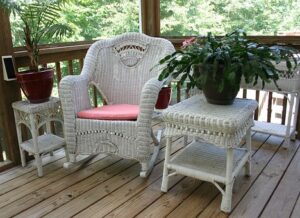 As I walk or drive around the older part of my town, Chardon, I see many old Victorian houses with huge porches. Some porches wrap around the house on three side. But newer (built after the 1940’s) and smaller homes, seem to have small front porches or no porches at all. I notice, however, that many of these homes have decks or patios in the backyard. Newer huge homes in this area often have large front porches, but I seldom see anyone sitting on them.
Growing up, I lived in a big yellow farmhouse built around 1890. Our house originally had a porch on three sides of the house, but two thirds of the porch was removed when my parents bought and remodeled the home in 1942. Still, the house retained three porches: a front porch off the living room, a side porch off the dining room, and a small enclosed back porch off the kitchen used mostly for storage. In the summer, my parents often sat on the front porch after supper. We kids sometimes joined them, usually sitting on the porch steps, talking, and watching the cars going down the road. It was a relaxing place to be. (The night before I left for the convent, I sat on that front porch with my parents for the last time. I cherish that memory.)
In her book, Ordinary Places, Sacred Spaces, Evelyn Mattern devotes a chapter to porches.  She says that front porches are significant for another reason than the ones I mentioned earlier. She says, “porches nurture self-expression.” She continues, “Those who can’t afford fancy flower pots, elegant trellises, and outdoor furniture find that painted kitchen chairs and ancient rockers do very well. Some of the poorest neighborhoods in the North and South have some of the prettiest, most flower-decked and vine-covered porches. They are places in the sun, places in the shadows, where we can dream what seems impossible indoors.”
What has been your experience of porches?
Do you have a porch now? If so, what does it look like? Do you use it? If so, when and how?
Do you regret the demise of front porches?
Do we have anything today that can foster what porches used to foster: love for nature, family togetherness, a sense of community, or self-expression?
Porches sometimes call us to slow down and rest. Here is a beautiful song by Brian Doerkson that reminds us that God regularly calls us to slow down and rest. It’s entitled “Enter the Rest of God” and features not only lovely lyrics, but also some stunning photos. My favorite line from the song is this: “live the unforced rhythms of grace.”
I invite you to share a few of your thoughts with us on this reflection and/or song…