Scars and the Healing Process
Two weeks ago I cut my finger on some broken glass. The cut was pretty deep, so I went to Urgent Care where I had to have three stitches put in. I have been watching the cut closely, marveling at the healing process that is occurring right before my eyes. As I watch I wonder: What exactly is my body doing to heal this wound? And: How does my body know what to do when I injure it? I certainly never taught it what to do.
The amazing truth is that the body has a built in repair mechanism. After skin or tissue is wounded, the body releases collagen to mend the damage. Collagen (a protein) reattaches the damaged skin. It also prevents blood from going out and bacteria from coming in. As the wound heals, it often forms a temporary crust (a scab) to protect the healing that is going on beneath it. When the healing is somewhat complete, the scab falls off and, depending on the severity of the wound, a scar appears.

Scars too are interesting. A scar is not the same as skin. Scar tissue, unlike skin, has no hair follicles or sweat glands. It is also less elastic than skin. Scars that occur in younger and tighter skin tend to heal less well. Older skin tends to heal better. (Finally, an advantage to getting older!) I’m including a short video at the end of today’s reflection that illustrates this healing process in clear, simple language. You might find it as interesting as I did.
Today I suggest you reflect on some of the physical scars you carry with you. I’m assuming most of you have some—especially from childhood. Where are your scars? How big or small are they? Do you remember how you got them? I, for example, have four scars on my left knee and leg. I remember distinctly how I got them: I was trying to ride with no hands on my new 24” powder blue bicycle. I was riding on our country road when I let go of both hands and promptly went crashing onto the side of the road. I remember hobbling home where my mother cleaned me up. I probably should have had stitches, but back in those days we seldom went to an emergency room when we got injured.

The scars recall a painful incident, yes. But they also recall that beautiful blue bike I got for my birthday. As the youngest child, I was used to getting hand-me-downs—clothes, ice-skates, and bikes. But on this particular birthday, my Dad took me to the store where I got to pick out a NEW bike—just for me! So the scars recall my parents’ love and how special that love made me feel.
When Jesus rose from the dead, his body still bore the wounds of the crucifixion. In fact, it was his scars that convinced Thomas that Jesus was really Jesus. But, like Jesus, we bear more than physical scars; we also bear psychological and spiritual scars. Broken
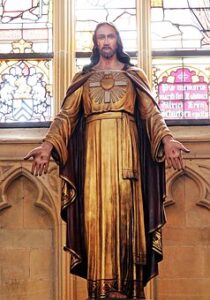
relationships, physical or psychological abuse, bitter disappointments, serious illness, the loss of a loved one, a significant failure, the daily struggle to do the right thing—all can leave us with internal scars. But if our physical body has a repair mechanism, might not our psyche and spirit have one too? In both instances, we might need time and help to facilitate the healing process. A doctor can stitch up a physical wound. A spiritual director, counselor, or good friend can help us to heal after significant trauma.
Someone has said, when we die, God will say to us, “Show me your scars.” God will be happy to see them. For our scars will show that we found something worth fighting for, something worth caring about, and something worth risking injury for. When we humbly show God our scars—especially the spiritual and psychological ones—we realize the beauty in them, that is, the lessons they taught us, the values they represent, the love they recall, and the wisdom they bestowed. Scars help us to appreciate anew the miracle of the healing process.
Our song is called “Healer” and it is sung by Kari Jobe:
Here is that second video entitled “How a Wound Heals Itself.” It takes about 4 minutes.
Is there anything you’d like to share with us on this topic? We welcome a response from you!
PS: Please keep in prayer my presentation at the Norbertine Center for Spirituality on April 29 and the retreat for the Sisters of St. Francis in De Pere, Wisconsin April 30-May 5. Thank you!
Celebrating National Poetry Month
April is national poetry month. In honor of poetry, I’d like to share four short poems with you. I’ll say a word or two about a few of them. I suggest you read the poems slowly and even aloud.
The first poem is by St. John of the Cross, translated by Daniel Ladinsky:
What Is Grace?
“What is grace,” I asked God.
And He said,
“All that happens.”
Then He added, when I looked perplexed,
“Could not lovers
say that every moment in their Beloved’s arms
was grace?
Existence is my arms,
though I well understand how one can turn
away from
me
until the heart
has wisdom.”
All that happens is grace? Really? All? That bad news from the doctor? That cherished relationship that is falling apart? That disturbing headline? All is grace? It is, the poet seems to be saying, if we really believe that “existence is God’s arms.” Hmmm. What could that mean? Even bad and disturbing things can elicit trust and love… The poem says it is so hard for us to believe that all is grace, that God understands how we can turn away from Him… Until our “heart has wisdom.” There’s consolation in those words and much to ponder is these few lines…
This second poem is just for fun (or is it?)…by Judith Powell:
Petition
God-man, enduring helplessness
on Adam’s tree,
help those whose daily cross is
enduring me!
And here’s one by the great Indian poet Rabindranath Tagore:
I slept and dreamt that life was joy.
I awoke and saw that life was service.
I acted and behold, service was joy.
Tagore says so much in so few words… This beautiful Hindu poet wrote many poems like this one that seem remarkably Christian. I guess we have to remember that we Christians don’t have a monopoly on love and joy and service, do we?…

And my final poem is one I really, really like… Maybe it’s because my own mother used to make her dumplings in a large wooden bowl… In fact, she had three wooden bowls. After her death, each “branch” of my family got one of those treasured, “holy” bowls… This poem is by Larry Schug.
Mixing Bowl
Her Red Wing crockery mixing bowl
was all I wanted
of my mother’s earthly possessions,
that magic place
where pies and cakes and cookies
enough to sate six boys
were conjured with a mixing
of sugar and cinnamon,
a swirling of milk and eggs,
sprinkles and spoonfuls and cupfuls
of flour and soda and salt.
Now that I do my own baking,
I treasure my mother’s mixing bowl
as a peaceful, sacred place,
a small clearing in a dark forest;
where I meet her again,
my fingers touch hers
as she guides my hands
through stirring and kneading.
When a recipe calls for water,
I add tears.
Yes, we meet our deceased loved ones in all kinds of places…especially in those things they used while on earth—a mixing bowl, a hoe, a table cloth, a lunch pail… When do you feel particularly close to a deceased loved one? The last two lines remind us that grief is a mysterious thing… we never “recover fully” when a loved one dies… Tears can well up unexpectedly at any time…
I hope you enjoyed celebrating National Poetry Month with me. What did you think of these particular poems? Do you have another favorite poem that you would recommend to us?
In keeping with the joy of the Easter season, I’ve chosen the song “10,000 Reasons” by Matt Redman. The last time I used this song was over two years ago. It continues to be a favorite of mine.
Do you have any thoughts you’d like to share with us? I welcome them!
The Turtle Story: A Reflection for Holy Week and Easter
I love the writings of Barbara Brown Taylor, a 65-year-old American Episcopal priest, professor, writer, and theologian. Her books include The Preaching Life, Altar in the World, and Learning to Walk in the Dark. In 2014, Time magazine named her on its annual list of the 100 most influential persons in the world. Currently she lives on a farm in northern Georgia with her husband Ed.
This is a true story she tells in Learning to Walk in the Dark. Somehow, for me, the story seems very appropriate for what we celebrate in our rituals during Holy Week and on Easter. Maybe you will get a similar feeling…
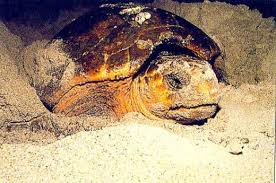
A few years back Taylor and her husband were exploring the dunes on Cumberland Island off the coast of southern Georgia. Her husband was looking for fossilized shark teeth. She was looking for sand spurs so she wouldn’t step on one. This meant they were both looking at their feet when suddenly they came upon a huge loggerhead turtle. She was alive—but barely. Her shell was almost too hot to touch. Immediately they knew what had happened.
During the night the turtle had come ashore to lay her eggs. When she finished her task, she looked around for the brightest horizon to lead her back to the sea. But she had mistaken the lights on the mainland for the sky reflected in the ocean, and she had gone 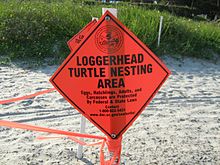 the wrong way. Now her flippers were buried in the sand and she was stuck, half-baked in the noonday sun.
Taylor began to bury the turtle in cool sand while her husband ran to the nearest ranger station. She writes, “An hour later the turtle was on her back with tire chains around her front legs, being dragged behind a park service Jeep back toward the ocean.” The poor turtle’s mouth was filled with sand and her head was so bent, Taylor feared her neck would break. But it didn’t. When they got to the edge of the water, the three undid the chains, gently flipped the turtle right side up, and “watched as she lay motionless in the surf.”

But gradually the waves began to bring her back to life. After a little while as the waves lifted her up, she pushed off with her back legs, and swam back “into the water that was her home.” Taylor concludes: “Watching her swim slowly away after her nightmare ride through the dunes, I noted that it is sometimes hard to tell whether you are being killed or saved by the hands that turn your life upside down.”
Some thoughts…
The paradoxes in this story… in order to be saved, the poor turtle has to undergo a nightmare of a journey that almost takes her life… In laying her eggs to bring new life into the world, she almost loses her own life in the process…
The story makes me reflect on all those individuals who have had to undergo nightmare journeys of their own—perhaps chemotherapy, bone marrow transplants, and painful treatments or surgeries of all kinds… At times they too must have wondered: am I being killed or saved?
And what about Jesus? Wasn’t his life turned upside down in Gethsemane? Doesn’t the crucifixion raise a million questions like these: Why did he have to die? How was he able to endure the injustice of it all, the mockery, the beatings, the torture, the pounding in of those nails, the hanging in the hot sun for three hours? And where was Abba during all of this?
I pray for those individuals right now who are enduring their own passions… those suffering from famine, wars, violence, racial injustice, human trafficking, religious persecution, natural disasters, abuse of all kinds, and the list goes on and on… And I beg God to be with them… and to move the hearts of good and generous people to aid them and give them comfort… and to move my own heart to reach out to someone in need…
And I pray for a greater realization of the power of the Resurrection… as we make our journey back to our true home, the open sea of God’s mercy and love…
And I wonder: Have you ever had a time when you thought it was the end, but it was a new beginning? An experience where life emerged from apparent death? Where goodness was born from apparent evil?
I chose an ancient hymn for our song today: “Christ the Lord Is Risen Today.” It was written in the 14th Century in Bohemia–where my ancestors came from! And, with this song, I wish you all a very Blessed Holy Week and a very Happy Easter!
Would you like to share any thoughts on Holy Week, Easter, or this reflection with us? We would love to hear from you!
PS: A big thank you for your prayers for last weekend’s retreat at the Franciscan Spiritual Center in Aston, PA. What a beautiful group of participants we had! Quite a few are readers of this blog. My next presentation is Saturday, April 29 at the Norbertine Center for Spirituality in De Pere, WI (920-337-4315). The presentation runs from 8:30 am to noon and is called “How Do I Know If I’m on the Right Path Spiritually?”
I will also be co-directing a retreat with Bishop Bob Morneau from April 30- May 5 for the Sisters of St. Francis of the Holy Cross. I ask prayers for both of these endeavors. Thank you!
Eleanor Roosevelt: Wife, Mother, Writer, Diplomat, First Lady
When Eleanor Roosevelt died, the New York Times obituary called her “one of the most esteemed women in the world.” In 1999 when a Gallup Poll asked Americans to rate the people they most admire in the 20th Century, she came in ninth. (She and Mother Teresa were the only women to make it into the top ten.) Today let’s take a brief look at this remarkable woman. (more…)
Let the Little Children Teach Us
The gospels tell us that Jesus loved children. When people were bringing their children to him to be blessed, his disciples rebuked them. But Jesus scolded the disciples, saying, “Let the children come to me.” Then “he embraced the children and blessed them, placing his hands on them” (Mk. 10:13-16).
(more…)