
An Advent Reflection on the Incarnation
Recently I read an article entitled “One of Us” in the December 2020 issue of U.S. Catholic. The author, Father Bryan Massingale, tells of a homily he once gave for the feast of Epiphany. In it he suggested that the magi’s gifts of gold, frankincense, and myrrh were not very practical. Maybe they should have brought baby formula, warm clothes, and diapers.

Two parishioners were visibly upset by his homily. Afterwards, one angrily said to him, “Baby Jesus didn’t need diapers!” Father Massingale says that perhaps the two parishioners’ reaction was a manifestation of one of the oldest and persistent heresies in the church: Docetism. This is the heresy that says Jesus was only divine. He was not really human, but only seemed to be human. This heresy, he says, stems from the “deep ambivalence, discomfort, and even embarrassment with the conviction that God has a human body and that human drives, desires, functions, and needs are the place of divine revelation and encounter.” (Italics are mine.)
What does it mean to say that Jesus had a real body? It means he ate, he pooped, he slept, he cried, he grew, he walked, he talked, he laughed, he sweat, he had sexual drives, he got tired, he needed human touch, he formed relationships with others, he experienced fear, he got angry.

Throughout its history, Christianity has treated the body “more as a problem than a resource for holiness.” Father cites our over-emphasis on the soul as well as our “profound suspicion and unease regarding human sexuality.” Yet, what we celebrate during Advent and Christmas is this: “God’s entrance into human history, into our life, into our very bodies.” Therefore, Father writes, how we treat the body–our own as well as that of others—is of “supreme religious importance.”
I am suggesting that this Advent we might want to pay more attention to our body—and the way we treat “it.” This begins by becoming more aware of our body throughout the day. Do we listen to its calls for rest, for healthy nourishment, for a more humane tempo, for quiet, for solitude, for companionship, for simple little pleasures? We can begin showing our love for our body by doing things such as these: getting enough sleep, giving or receiving a tender touch, eating our food more slowly and thoughtfully, driving less frantically, pausing for a hot cup of tea, stopping to gaze out a window, massaging our sore muscles, soaking our aching feet, smelling our shower gel, listening to our favorite kind of music.

Our body is holy. So too are the bodies of others. This belief gives rise to religious imperatives such as these: feed the hungry, clothe the naked, shelter the homeless, welcome the migrant, care for the sick, visit the imprisoned. To what extent have we incorporated these imperatives into our daily life? Who needs to be fed with food in my area, and who needs to be fed with my kind words? Who is imprisoned behind bars, and who is imprisoned by ignorance, illness, and fears that I might ease? How might I clothe someone in actual clothes and clothe them in dignity and respect by the way I relate to them? How might I be open to those who differ from me in age, gender, color of skin, attire, religion, sexual orientation, political leanings?

We are living during a pandemic. We have been strongly encouraged to wear masks, socially distance ourselves, wash our hands frequently, and refrain from gathering in groups larger than 10. For many of us, these simple directives can be very real “penances.” But, this Advent, let us also see them as expressions of our love and reverence for our own body and the bodies of others.
Try to be more aware of your body for a few days… what did you notice when you tried to do this?… How might you treat your body in a more mindful and loving way?
How do you try to live the religious imperatives spoken about in the second last paragraph?
What lessons has this pandemic taught you about your own body and the bodies of others?
I wish each one of you a very blessed Advent!
PS: Speaking of Advent, I am giving a virtual Advent retreat day, Dec. 12, from 9:30 am to 4:00 pm (Eastern time). It is entitled “Unwrapping the Gifts of Advent: Peace, Courage, Beauty, and Hope” and is sponsored by the St. Francis Center for Renewal in Bethlehem, PA. I’d love to see you then! Check their website for details: www.stfrancisctr.org.
I chose a lovely instrumental version of the Advent Hymn, “O Come, O Come Emmanuel” by the Piano Guys. The visuals are from the movie, “The Nativity Story.” The visuals emphasize the humanity not only of Jesus, but of Mary, Joseph, and the other familiar individuals in the Christmas story.
I invite you to respond below… if the problem with my blog has been fixed by the time this reflection is posted.
Thanksgiving Thoughts
As we Americans celebrate Thanksgiving Day, I would like to offer a few thoughts on thanksgiving itself. In doing so, I am going to refer to a homily sent to me by my good friend, Sister Marlene Vigna, a Mercy Sister from Rochester, NY who attended Indiana University with me many, many years ago. (Each “many” represents over 20 years!) Marlene will give her homily at an ecumenical Thanksgiving prayer service this week. I thank her for allowing me to quote from her beautiful words.
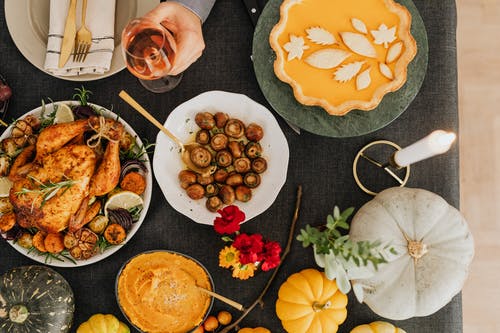
For me personally, Thanksgiving Day is one of my favorite holidays. The centerpiece of the day is not gift-giving; it is a meal. More accurately, it is people (often family and/or friends) gathered around a table for a meal. (Due to COVID, many of us will be denied gathering with our loved ones around the table this year. What a sacrifice this will be for us! But we know we make this sacrifice out of our love and concern for our loved ones and the whole wider community.) Thanksgiving is a day when we give thanks for the important things in life: family, friends, faith, freedom, and countless other blessings we have received.
In Marlene’s words, on this holiday “we recognize that life has a gift dimension which cannot be summoned or controlled.” That’s so true! The older we get the more we realize the “given-ness” of life, and how little control we have over anything, really. And on this holiday, we take time “to re-examine our priorities and recall what we treasure most.”

I’ve always admired people who “have a habitual disposition” for gratitude. When I was a child, when we pulled into our driveway after a day visiting with our grandparents or other relatives, I remember my mother saying out loud, “And we thank the Good Lord for a safe trip and a wonderful day.” The spirit of gratitude is diametrically opposed to the sense of entitlement (I deserve this “thing” because of who I am or what I did) and the sense of radical autonomy (I got this “thing” or I did this “thing” all on my own).
Some of us had gratitude drilled into us as children. How often did our parents ask us, when we received even the smallest of gifts, “What do you say?” Some parents even mandated the writing of thank you notes. Marlene tells of her own mother: “She taught us that ‘Thank you’ are the two most important words in the English language.” And she demanded that her children write prompt thank you notes. Says, Marlene, “For our mother, stalling on a thank you note was right up there with murder and adultery. She so drilled promptness into us as children that in our adulthood, we have been accused of writing thank you notes before the events happened or the gifts were received.”

How do we grow in the spirit of gratitude? Marlene suggests keeping a Gratitude Journal. At the end of each day, she jots down “5 gifts of that day.” Why? Marlene explains, “It makes consummate sense to keep track of the persons and things we cherish and to deepen our awareness of the frequent interventions of God into the ordinariness of our lived experience.” She adds, “There is something of grace in taking this daily inventory and affirming what might otherwise pass unnoticed.”
I agree fully with Marlene when she says, gratitude is “one of the loveliest of our human emotions.” And, “expressing gratitude is remembrance of our dependence on God and others, a confession of our humanity, and a way of recognizing that we do not walk alone.”
I wish you and your loved ones a very Happy Thanksgiving! On this day and every day may God bless you with every Good Gift!

For reflection:
Who are the PEOPLE who have enriched my life and growth?
What EVENTS AND CIRCUMSTANCES in my life have contributed to forming the best in me?
What THINGS have I received that I treasure the most? How might I share these things with others?
I’m offering two videos today. The first is the song “All Good Gifts” from the musical Godspell. The second is called “Thanksgiving Song” and is a clever non-romanticized picture of a contemporary family gathering for their Thanksgiving dinner.
“All Good Gifts”
“Thanksgiving Song” by Igniter Media:
Feel free to respond to this blog below:
Cooking as a Spiritual Practice
Today let’s reflect on cooking. We’ll begin with a few facts about cooking and end with some thoughts on cooking as a spiritual practice.

The precise origin of cooking is not known. But researchers say that roughly 2 million years ago, early human species tamed fire (a major feat!) and began using it to prepare their food. What was the first method of cooking? Probably roasting. One day some caveman or cavewoman threw a hunk of meat into a fire and presto! roasting was born! Later someone stuck a fish or bird onto a stick, held it over a campfire, and rotisserie cooking was invented.
Why do we humans cook our food? Here are five reasons: 1) to improve the taste, 2) to make it safer to consume, 3) to make it more digestible, 4) to improve its appearance, and 5) and to change its texture. The oldest known cookbooks were found in Mesopotamia. The tablets date back to 1700 B.C. and contain 25 recipes for stew–among other culinary treats. The oldest known meal was discovered in China along the Yellow River. It is a bowl of millet noodles that were prepared over 4,000 years ago.

Here are a few miscellaneous facts about cooking: There are 941,600 chefs in the world… During WWII, housewives donated their excess fat from cooking to the U.S. Army. It was used to create explosives… Americans spend about 27 minutes a day preparing a meal and four minutes cleaning up. That’s less than half the time spent in preparing a meal and cleaning up in 1965… What’s the difference between herbs and spices? Herbs are from the leaf of a plant; spices are from other parts of the plant such as the root (horseradish), seed (caraway), or bark (cinnamon)… In ancient Greece, the word “cook,” “butcher,” and “priest” was the same: mageiros. It shares its etymological root with the word “magic.”

Cooking is more than simply roasting or boiling something to eat. Over the centuries cooking has evolved into an art and even sometimes into a religious practice. Cooking demands our full attention and can be a form of meditation. Cooking a meal for another is an act of love and caring. Sharing a meal with others strengthens the bonds that unite us as family, as friends, as community. (Isn’t this one reason the pandemic is so difficult for us? It has prevented us from gathering and dining with those we love!)
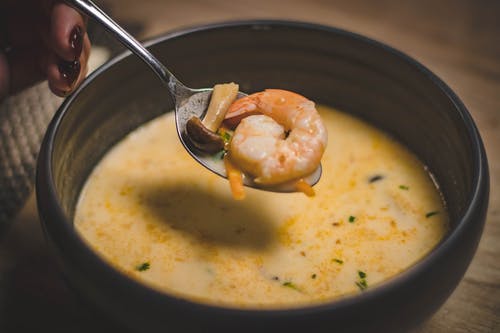
In his book, Heaven All Around Us: God in Everyday Life, Simon Carey Holt describes the powerful religious experience of leafing through his mother’s cookbook. He writes, “When I hold my mother’s recipes, I understand better who I am, where I am from, and, in part, who I aspire to be.” He even goes so far as to say, “This tattered old book is a testament to her priestly service… she served me and fed me…. In eating her food I was nourished, enfolded, forgiven, enriched.”

The Zen priest Edward Epse Brown has also written a book entitled No Recipe: Cooking as a Spiritual Practice. In it he points out the profound connection between cooking and the spiritual life. He writes, “Making your love manifest, transforming your spirit, good heart, and able hands into food is a great undertaking—one that will nourish you in the doing, in the offering, and in the eating.”
For reflection:
Did anything in this reflection touch you today? If so, what? Why?
Do you like to cook? If so, what do you like about cooking? If you don’t like to cook, what don’t you like about it?
Do you have any childhood memories that revolve around someone cooking something?
Have you ever experienced cooking as a religious experience? If so, what made it a religious experience for you?
PS: I’m giving a virtual Advent retreat Saturday, Dec. 12 from 9:30 am (Eastern time) to 4:00. It is sponsored by the St. Francis Center for Renewal in Bethlehem, PA. Check their website for details: www.stfrancisctr.org .
I felt compelled to select a Communion hymn for our video today. I chose one of my personal favorites, “Bread for the World” by Bernadette Farrell. May the words of this song be our prayer today in thanksgiving for the meal Jesus shares with us at every Eucharist. And a reminder that we must be bread for others.
Now it’s your turn to say something. Would you like to respond to the reflection, pictures, video, or to another responder? If so, please do so below. (As I write this, I’m not sure my blog will be fixed yet to accept your comments…)
The Unfathomable Love of God
Jesus gives us three parables about lost things: the lost sheep, the lost coin, and the lost son. Let’s focus on the first two parables. In one, the shepherd loses a sheep. He leaves the 99 others to seek the one that strayed. In the second parable, the woman loses a coin in her house. She madly searches everywhere for the coin, and when she finds it, she calls her neighbors over to celebrate her good fortune.
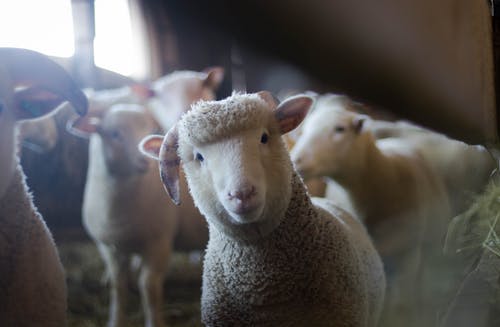
What strikes me immediately about both parables is this: how extreme the seeking is. The shepherd, for example, leaves 99 sheep defenseless while he traspes off to seek the single stray. I’m no shepherd, but to me his action seems pretty unreasonable—even reckless. What if a wolf came and attacked his flock while he was gone? What then? Wouldn’t it be far more reasonable for him to cut his losses and stay and protect the 99?
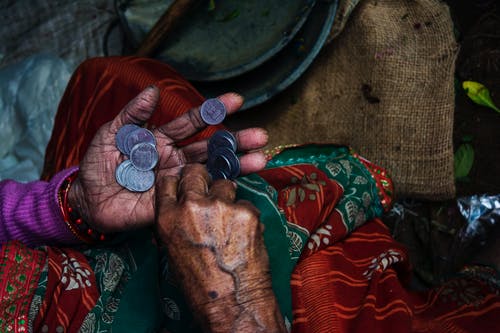
Then there’s the homemaker turning her house upside down seeking a lost coin. How much was that coin worth anyway? Jesus doesn’t tell us, but we sense it must have been worth a lot—at least to her. Why else, when she finds the coin, would she call her neighbors over to party with her?
For me, the extreme seeking and excessive celebrating are predicated on the value of the lost items—at least to the seeker. We might be puzzled by the value each seeker puts on a single item, one sheep and one coin. And if we understand that the shepherd and the homemaker are images of God, then what conclusions can we draw about God? One conclusion might be this: God values single things. God treasures distinct items. God loves things—even recklessly—in their particularity.
I see some other interesting corollaries here. First, God relates to things not as a group. God relates to things as individuals within the group. God detects each thing’s uniqueness. Second, God places an extremely high value on these lost things—so high that God is unreasonable in the seeking and is almost giddy with joy when the lost object is found.
If this is true, then what are some implications of this for us? One implication is that, in general, we too must love things in their particularity. When Linus in the Peanuts cartoon says, “I love mankind—it’s people I can’t stand,” we smile. Why? Because we know it’s easier to love the nebulous “mankind,” than it is to love some of the individuals who comprise “mankind”: the dishonest businessman, the annoying neighbor, this person so different from me.

Differentiating individuality within a group takes time and effort. That’s why we tend to categorize individuals. And when we do, we often draw dangerous conclusions: “All men are… all women are… All Blacks are… All whites are… All Muslims are… all Catholics are…. All Democrats/Republicans are… all old people are… ” Prejudice is alive and well in society because it’s simpler to put people into a groups rather than to get to know them and see them as individuals.

And finally, another insight these two parables give us is this: God’s love is utterly unfathomable! We ask, how can God possible love ALL the people in the world—in their particularity? How can God know and love you and me and every other person on the planet (not to mention those who have gone before us or will come after us.) We cannot imagine how—because our own love is often so restricted, conditional, reasonable, short-lived, safe.
And so we pray: God of unfathomable love, seek me in all the places I tend to hide. Give me the grace to see people not merely as members of a group, but as individuals. Help me to appreciate all things in their uniqueness and particularity. May I love more and more as you love all things: unconditionally, inclusively, uniquely, perseveringly. I ask for these graces through our all-loving Jesus and the power of his amazing Spirit. Amen.
For reflection:
Did anything in this reflection stand out for you? If so, what? Do you know why?
Have you ever experienced “unreasonable” or “reckless” love either as a giver or as a recipient?
Do you detect any prejudice in yourself? If so, towards whom or what? What might help you to rid yourself of some of your prejudice?
What helps you to appreciate God’s love?
PS: Let us pray for our president-elect Joe Biden and vice-president-elect Kamala Harris and all elected government officials that they made be guided by compassion, justice, wisdom, and integrity. And let us pray for one another that we may do our part to help in the healing process of our nation.
PS #2: Wednesday, Nov. 11, is Veterans’ Day. We pray for all Veterans: may we give them the help and support they need, and may we show our gratitude for their generous service to our country.
This song celebrates God’s “Measureless love.” Written in 1917 by Frederick Lehman, it is sung here by MercyMe with some beautiful photographs in the background.
I invite you to respond below (if my blog is accepting comments). If it’s not, I apologize again.
Our Whimsical God
If someone asked you to describe God, what words would you use? Loving? Powerful? All-knowing? Merciful? Just? Patient? Wise?
Would you ever choose the word whimsical? Maybe not. Whimsical is not the first word most people think of when describing God. But isn’t that word perfectly appropriate? I think so. To prove my point, I have chosen five synonyms for the word whimsical. For each word I will give examples of how God (and Jesus!) manifest each quality.

Playful: In the creation story in Genesis, God displays playfulness by speaking everything into existence. “Let there be light,” God says and then ends up creating millions and billions and trillions of stars. When it came to stars, God got carried away. Maybe star-creating was simply fun. In a similar vein, God did not create only one type of fish. No, God playfully produced trout, octopus, eel, brill, carp, zander, welk, red snapper, walleye, tuna, seahorse, orange roughy, grouper, perch, king crab, halibut, garfish, tilapia, shark, John Dory, oysters, flounder, the psychedelic mandarin dragnet, and… you get the idea, right? There are over 34,000 recognized species of fish in the world—with more being discovered every day! Creating fish must have been fun for God!
Jesus was playful too. One proof: He loved parties. Didn’t he work his first miracle at a wedding reception? Jesus also had the amazing ability to attract all kinds of people. If he had been a sourpuss or a keep-your-nose-to-the-grindstone sort of man, would so many people have flocked to him? In addition, Jesus said, “Unless you turn and become like children, you shall not enter the kingdom of heaven” (Mt. 18:3). And we all know, one of the chief qualities of children is their playfulness.

Imaginative. Imaginative people possess great creative powers and resourcefulness. When it comes to the Creator’s imagination, think penicillin and manure. Only an imaginative Creator could have hidden healing powers in mold. Only a resourceful Creator could have given manure the power to enhance fertility. As for Jesus, one way his imagination is shown is his use of metaphors for the Kingdom of God. He compared it to all kinds of things: a Wedding Feast, a dragnet teeming with fish, a tiny seed evolving into a lush tree, a grain of wheat bursting open with new life beneath the soil, and the undetected yeast causing the dough to rise.
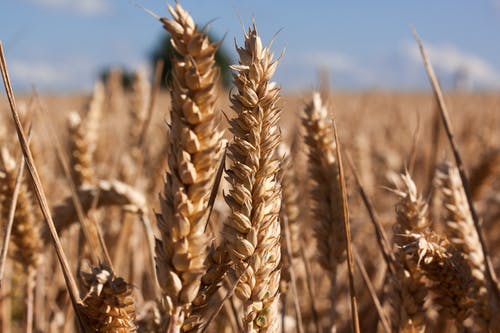
Unconventional. Whom did God choose to be his Chosen People? Not some powerful and numerous nation. No, God chose a small, insignificant group of people, the Hebrews. Whom did God choose to be the mother of Jesus? Again, a simple young girl from a podunk village called Nazareth. Similarly, Jesus was born not in a mighty palace with lords and ladies for company. No, he was born in a stable with a few farm animals as his “stable mates.” Jesus was unconventional in his teachings too. He did not say, “Love your friends; hate your enemies”—which would have been conventional wisdom. No, he said, “Love everyone—including your enemies.” How unconventional is that?
Fluid. Whimsical individuals know how to go with the flow. If it rains on their picnic, they dance in the rain. If snow prevents them from driving anywhere, they flap out snow angels in the backyard instead. When the dinosaurs were wiped out, God went with the flow. The death of the dinosaurs did not mark the end of animal life. In fact, their extinction allowed the small mammals (including our ancient ancestors) to flourish. God went with the flow when King Saul did not pan out as leader of the Israelites. He (unconventionally) selected the young shepherd boy, David, to rule instead.
Jesus went with the flow regularly. He did not wait to find perfect people to be his apostles. He went with the flow of ordinary humanity. He didn’t set up an office for the people to come to him. No, he went with the flow of daily life and met people in the marketplace, along the side of the road, on the shores of the Sea of Galilee, in the synagogue, at the village well, and in peoples’ homes.
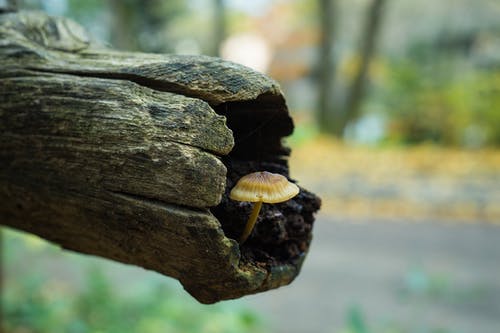
Entertaining: Whimsical individuals are entertaining and amusing. When my Dad was about 80, he told me one day, “I could never get bored with life. There’s so much to learn and experience.” Dad was close to nature his entire life. You could say, he was constantly being entertained by God’s whimsical handiwork—whether Dad was trying to grow Carpathian walnuts, or planting a pink dogwood in the side yard, or mushroom hunting in the woods, or simply admiring a beautiful sunset.Jesus was entertaining too. The proof? He was an excellent teacher. And as someone has wisely said, good teachers are part entertainers. Jesus entertained people especially with his stories—while, simultaneously, imparting unforgettable lessons. In his parable of the Good Samaritan, he amusingly makes the “bad guy” the “good guy.” He proclaims that the poor widow, by dropping her two small coins into the temple treasury, is the most generous giver of all. Other times he entertains with surprising statements: Behold the lilies of the fields… blessed are the poor… the last shall be first… turn the other cheek.
Did anything in this reflection speak to you today? If so, what and why?
What words would you choose to describe God or Jesus? Why?
Do you share any of the whimsy of God? If so, give a few examples of when you’ve been whimsical. How does being whimsical make you feel?
PS: As I type this, my blog is still not accepting responses. Honest, someone is working to resolve this problem. Meanwhile, I’m sorry for the inconvenience!
PS #2: I’m giving a virtual Advent retreat day on Saturday, Dec. 11 sponsored by the Franciscan Retreat Center in Bethlehem, PA. The theme is “Unwrapping the Gifts of Advent: Peace, Courage, Beauty, and Hope.” The retreat begins at 9:30 am (Eastern time) and ends at 4:00 pm. Click here for more details: https://stfrancisctr.org
We’re living through some very challenging times: a global pandemic, a vital election, natural disasters… As we continue to be united in prayer, we take a break from the headlines to enjoy a video of some fanciful flowers… I hope these flowers bring you joy as they nourish your trust in our Whimsical Creator, our Imaginative Jesus, and our Fluid Holy Spirit.
Please feel free to respond below to anything in this blog.