2021: The Year of St. Joseph
On December 8, 2020, Pope Francis published an Apostolic Letter called Patris Corde, in English With a Father’s Heart. In it he recalls the 150th anniversary of the declaration of St. Joseph as Patron of the Universal Church. He also proclaims the year of St. Joseph, from Dec. 8, 2020 to Dec. 8, 2021. What are a few of the things the Pope says about St. Joseph in his letter?
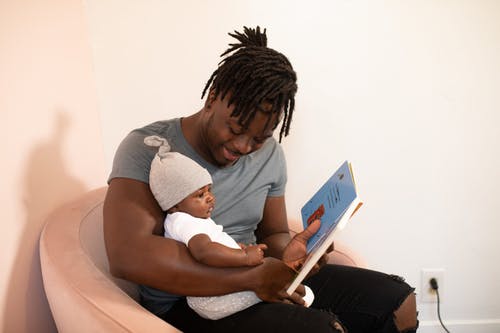
The Pope begins by highlighting Joseph’s ordinariness. He was an ordinary man, living in an ordinary time and in an ordinary place. Yet, he rose to the occasion by taking Mary as his wife and raising Jesus as his own. The Pope says, against the backdrop of a global pandemic, it’s important to underscore the importance of ordinary people who have risen to the occasion with love and courage to be of help to others. St. Joseph is like so many other people of our own day who go “unnoticed” and are “a daily, discreet and hidden presence” in our world, people who are helping to make this world a better place.

St. Joseph is the patron of many different kinds of people, says the Holy Father. He is the patron of husbands and fathers. He is also the special patron of those who have been forced to leave their homeland due to war, persecution, or abject poverty. Joseph also teaches us the value and dignity of work. He used his skills to make door frames for houses, tables and chairs for families, yokes for farmers’ oxen.
One of Jesus’ predominant images of God is Father, Abba. How did he come up with this central metaphor for God? It had to be not only his pondering of scripture, but also his experience of his own father, Joseph. Says Pope Francis, “Joseph was the earth shadow of the heavenly father.”
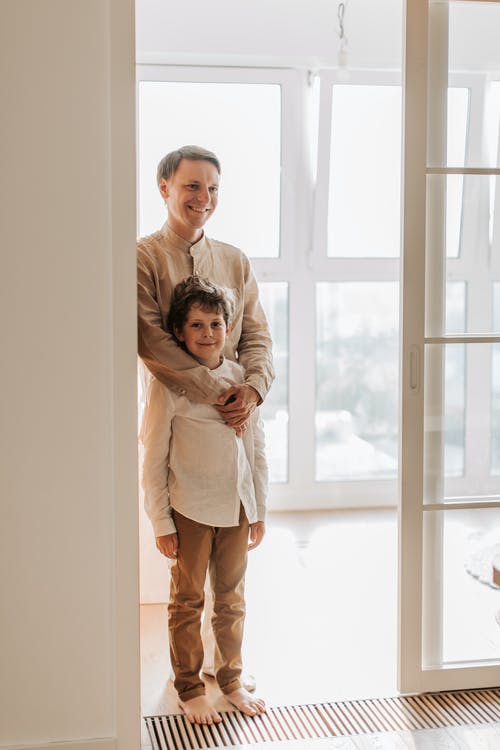
One thing that impresses me about St. Joseph is his humility. In many of the traditional paintings of the first Christmas, Joseph is often off to the side or in the background. Joseph did not have to be center stage. He was content to play a supporting role in the great drama of salvation. Being where God wanted him to be was more important than being where he wanted to be. Being faithful was more important than being popular or powerful.
Joseph’s life had more than his share of stress. The trip to Bethlehem was no walk in the park. It was an arduous trek across inhospitable lands with a young wife who was nine months pregnant. The flight into Egypt had to be even more traumatic. When we see the weary, fearful faces of today’s refugees, we catch a glimpse of what this flight must have meant for Joseph and Mary.
What enabled Joseph to handle these hardships and challenges in his personal life with such courage and grace? It was his faith in a God he believed to be both powerful and good. A God who was intimately involved in his life and in the life of the world. Joseph’s hope lay not in his own intellectual prowess, not in having the best religious and political leaders, not in finding the perfect human community. No, his hope lay in the mercy and fidelity of God.
Michael Card has written perhaps my favorite song about St. Joseph. It’s called simply, “Joseph’s Song.” The song captures Joseph’s apprehension and awe at the birth of Jesus. He muses over and over again, “How can this be?” as he beholds this little baby. We sometimes ask this same question under very different circumstances. We ask it when we witness injustices, divisiveness, violence, hatred, pain, and sorrow. But we also ask “How can this be?” when we witness our heroic medical professionals on the front lines of this pandemic… when we see strangers distributing food and clothing to those in desperate need… when we see ordinary people standing strong when being tempted to compromise their personal integrity.
Pope Francis includes a prayer to St. Joseph in his Apostolic Letter. That prayer ends with these words: “Blessed Joseph, to us too, show yourself a father and guide us in the path of life. Obtain for us grace, mercy, and courage, and defend us from every evil. Amen.”
Does anything stand out for your in this reflection?
What do you admire most about St. Joseph?
If you could meet St. Joseph in a park, and you could have a short conversation with him (both of you socially distant and wearing masks, of course!), what question(s) would you ask him? What do you think he might answer?
PS: As you know, my blog is “broken.” It hasn’t let you respond to these reflections for several months. But the good news is this: my community is in the process of launching a new website—of which my blog is a part. This means my blog should be “fixed” and up and running again—hopefully by April. I really look forward to reading your responses once again. I miss hearing from you! Meanwhile, thank you for your patience!
Here is Michael Card’s beautiful song. We ordinarily sing it at Christmas time, but I think it’s a good song for the whole year. The lyrics include these words: How could it be this baby in my arms… is the Son of God?… Father, I know this child is not my own… not of my flesh, not of my bone…But let this baby be the son of my love… Father, show me where I fit into this plan of yours… All my life I’ve been a simple carpenter… How can I raise a king?… The Son of God the angel said… how could it be?
Thank you for reading “Sunflower Seeds.”
"The Immortal Life of Henrietta Lacks"
I just finished reading a very riveting book entitled The Immortal Life of Henrietta Lacks. The book , published in 2010, is written by Rebecca Skloot, a science writer. Though it was her first book, it won dozens of awards and remained on the New York Times bestseller list for six years. It was even turned into a HBO movie starring Oprah Winfrey and Rose Byrne.
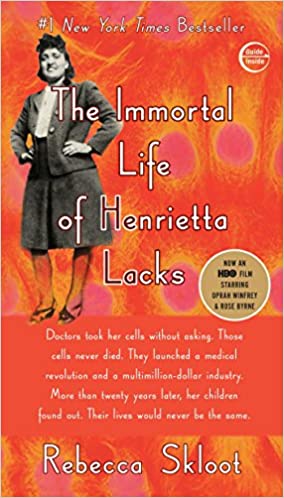
Immortal Life tells the incredible but true story of Henrietta Lacks, a Black woman born in 1920 in a poor tobacco growing area of Virginia. A wife and a mother of five, she eventually moved to Baltimore. Living in poverty with no health insurance, she had to wait in line at Johns Hopkins when she became very ill. She was accepted as a proverbial “charity case.” Once examined, Henrietta learns she has cervical cancer. While treating her, the doctors soon realize there is something highly unusual about her cancer cells: they not only survive outside the body, they grow very fast, doubling in size in only 24 hours. Without her knowledge or consent, the doctors harvest some of those cells to be used for medical research. After Henrietta’s death in 1951, her cells are sold to research facilities—eventually all over the world.
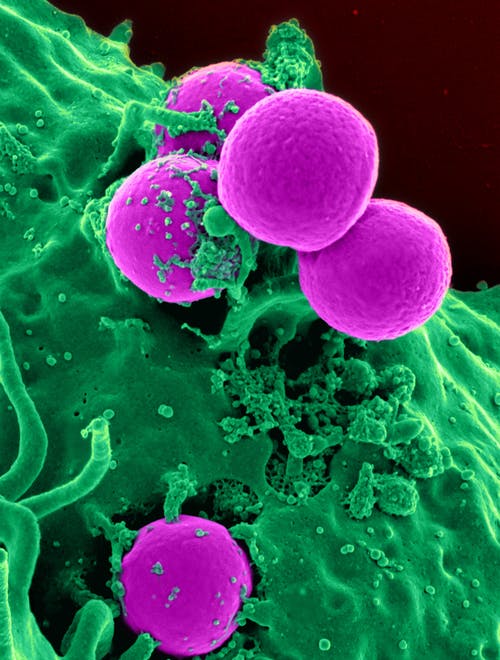
These HeLa cells (named for the first two letters of her first and last names) had a monumental impact on modern medicine. They played a crucial role in the development of the polio vaccine, cancer treatments, gene mapping, in-vitro fertilization, and the development of drugs for leukemia, influenza, Parkinson’s, and AIDS. In time, her cells spawned a multi-million dollar business—yet Henrietta herself was virtually unknown. Her family had no knowledge of any of this until, 20 years after her death, researchers came to them seeking to draw blood samples. The family was told only that their blood would be used “for cancer research,” so they agreed because they thought they were helping medicine.
When Rebecca Skloot became aware of HeLa cells, she was determined to tell Henrietta’s story. After several unsuccessful attempts to speak to her family, she finally won the trust of Henrietta’s daughter Deborah. For ten years Skloot worked tirelessly on the book interviewing not only Henrietta’s family, but also lawyers, ethicists, scientists, historians, and journalists. The result is this fascinating book. One review said the book is “part historical account, detective story, and ethical debate.” Another said it “navigates both the technical and deeply personal sides of the HeLa story with clarity and care.” The book also documents the crippling effects of poverty and the racism inherent in medical practices in our country.

But above all, it is the story of Henrietta and the Lacks family. In Skloot’s capable hands, their story comes alive with all its heartache, complex family dynamics, tragedy, and eventual redemption. If you are looking for an extraordinary true story that includes some of the hot-button issues of our own day—systemic poverty, racism, health care, medical ethics—then The Immortal Life of Henriette Lacks is the book for you.
For reflection:
Are you at all familiar with Henrietta’s story?
Did anything in this reflection surprise or intrigue you?
What has been your experience with modern medicine and our health care system?
PS: Today Monday we celebrate Martin Luther King Day in the United States. On Wednesday we will inaugurate our new president Joe Biden and new vice-president Kamala Harris. Let us continue to pray for a peaceful transition of leadership. I ask those of you who are not Americans to join us in this prayer. Thank you!
I was going to choose an American patriotic song for today. Instead, I chose a song that embraces all countries all over the world. It is called “This Is My Song.” The music is one of my favorite pieces, “Finlandia” by Jean Sibelius. The lyrics were written by Lloyd Stone. This version is set against beautiful pictures from many countries all over the globe. May this song/prayer encourage each of us to work for greater peace and justice wherever we may be.
Thank you for reading my blog!
“The Immortal Life of Henrietta Lacks”
I just finished reading a very riveting book entitled The Immortal Life of Henrietta Lacks. The book , published in 2010, is written by Rebecca Skloot, a science writer. Though it was her first book, it won dozens of awards and remained on the New York Times bestseller list for six years. It was even turned into a HBO movie starring Oprah Winfrey and Rose Byrne.
Immortal Life tells the incredible but true story of Henrietta Lacks, a Black woman born in 1920 in a poor tobacco growing area of Virginia. A wife and a mother of five, she eventually moved to Baltimore. Living in poverty with no health insurance, she had to wait in line at Johns Hopkins when she became very ill. She was accepted as a proverbial “charity case.” Once examined, Henrietta learns she has cervical cancer. While treating her, the doctors soon realize there is something highly unusual about her cancer cells: they not only survive outside the body, they grow very fast, doubling in size in only 24 hours. Without her knowledge or consent, the doctors harvest some of those cells to be used for medical research. After Henrietta’s death in 1951, her cells are sold to research facilities—eventually all over the world.
These HeLa cells (named for the first two letters of her first and last names) had a monumental impact on modern medicine. They played a crucial role in the development of the polio vaccine, cancer treatments, gene mapping, in-vitro fertilization, and the development of drugs for leukemia, influenza, Parkinson’s, and AIDS. In time, her cells spawned a multi-million dollar business—yet Henrietta herself was virtually unknown. Her family had no knowledge of any of this until, 20 years after her death, researchers came to them seeking to draw blood samples. The family was told only that their blood would be used “for cancer research,” so they agreed because they thought they were helping medicine.
When Rebecca Skloot became aware of HeLa cells, she was determined to tell Henrietta’s story. After several unsuccessful attempts to speak to her family, she finally won the trust of Henrietta’s daughter Deborah. For ten years Skloot worked tirelessly on the book interviewing not only Henrietta’s family, but also lawyers, ethicists, scientists, historians, and journalists. The result is this fascinating book. One review said the book is “part historical account, detective story, and ethical debate.” Another said it “navigates both the technical and deeply personal sides of the HeLa story with clarity and care.” The book also documents the crippling effects of poverty and the racism inherent in medical practices in our country.
But above all, it is the story of Henrietta and the Lacks family. In Skloot’s capable hands, their story comes alive with all its heartache, complex family dynamics, tragedy, and eventual redemption. If you are looking for an extraordinary true story that includes some of the hot-button issues of our own day—systemic poverty, racism, health care, medical ethics—then The Immortal Life of Henriette Lacks is the book for you.
For reflection:
Are you at all familiar with Henrietta’s story?
Did anything in this reflection surprise or intrigue you?
What has been your experience with modern medicine and our health care system?
PS: Today Monday we celebrate Martin Luther King Day in the United States. On Wednesday we will inaugurate our new president Joe Biden and new vice-president Kamala Harris. Let us continue to pray for a peaceful transition of leadership. I ask those of you who are not Americans to join us in this prayer. Thank you!
I was going to choose an American patriotic song for today. Instead, I chose a song that embraces all countries all over the world. It is called “This Is My Song.” The music is one of my favorite pieces, “Finlandia” by Jean Sibelius. The lyrics were written by Lloyd Stone. This version is set against beautiful pictures from many countries all over the globe. May this song/prayer encourage each of us to work for greater peace and justice wherever we may be.
Thank you for reading my blog!
A Lamentation for Today
The Book of Lamentations was written after the destruction of Jerusalem in 587 B.C. Its author, who remains nameless, laments the terrible destruction of the Temple, the city, and God’s Chosen People. The book’s tone is bleak, its descriptions vivid. The depictions of overwhelming suffering are coupled with an admission of the people’s sinfulness, that is, the part they played in their own destruction. But contained in the lament is a proclamation of a belief in God’s love and power, a belief rooted in the remembrance of God’s goodness in the past.
The Book of Lamentations, then, is not exactly a cheerful book. Perhaps that’s one reason we shy away from it. (When was the last time you read it?) Some people might think that prayers of lamentation are too “whiny,” too complaining—maybe even disrespectful of God. Nevertheless, there is a rightful place for this form of prayer in our spirituality. I was remined of this by a priest friend of mine recently. After a conversation concerning some of the gloom and doom of this past year—and especially the past few weeks, he suggested that, since I am a writer, I take some of my feelings of anguish, fear, and anger, and then compose my own prayer of lamentation akin to the ones found not only in this book, but elsewhere in scripture. (Even Jesus prayed in this form. See Mt. 23:37-38.)
So here it is: my lamentation which focuses primarily on COVID and a few other contemporary headlines.
O God, my God, where are you? Don’t you see us wallowing in pain and suffering? Don’t you realize we are on the brink of despair? Look around! COVID has disrupted everything we once knew as “normal.” It has taken away millions of our loved ones! Many of them are dying alone with no family member or friend to hold their hand or give them comfort. Can’t you see our overcrowded hospitals? Our medical workers being pushed to the edge? The refrigerated trucks parked outside our hospitals ready to receive more bodies? Our funeral homes overwhelmed with the number of our deceased?
Oh God, my God, where are you? Because of COVID, we must wear masks, constantly wash our hands, stay socially distant from one another, and refrain from hugs and handshakes… This is a real hardship for many of us. But far worse, millions of people have lost their jobs… countless businesses have been shuttered… people are lining up for hours just to get food for their families for another week… They live in constant fear of eviction. Oh God, just when I think things can’t get any worse, they do… How bad do things have to get before you help us?
And God, there is another virus besides COVID that is wreaking havoc among us. The plague of divisiveness is afflicting your people—especially in this land. Tell me, God, how did we get to this point where anyone who is not a member of our particular political party is an automatic enemy? Why have we become a people of “us” and “them”—and not a people of equal citizens all belonging to the same nation? How did the aisle in our Congress become a chasm so wide that very few of our elected officials can cross over it to the “other side”?

Oh, God, help us to see and repent of our sins–especially the national sins that were woven into the very fabric of our nation’s founding: our sins of racism and sexism in all their forms… Even today we continue to suffer the residual effects of these founding sins… We acknowledge too our sins of material greed which led us to believe that having more things is always better… our sin of disregard for other nations throughout the world whom we exploited many times for our own selfish gain… and we confess the terrible violence we have done and are still doing to our beautiful earthly home in the name of profit, expediency, and lust for power.
Of God, my God, you alone can bring healing to our broken world. You alone can give us the wisdom and direction to bring about the better world we all long for… Help us (help me!) to acknowledge how we are (how I am!) complicit in the sufferings that surround us. Give us (give me!) the courage and strength to work untiringly for the common good. Open our eyes (my eyes!) to our (my!) innate biases, prejudices, and blind spots. Stir us (stir me!) to always ask: “How are those who are the ‘least’ among us doing?” Cleanse our hearts (cleanse my heart!) of self-centeredness, pride, laziness, and hate. With your power and help, God, what is sick in our society, we can heal; what is divided, we can bring together again; what is broken, we can restore.
And above all, Beloved God, give us a renewed sense of hope for the future. Help us to endorse these beautiful words of Bryan Massingale, SJ: “The best way to predict the future is to help create it.” May we all become co-creators with you in fashioning a more just and beautiful future… Oh God, my God, you have been our help in ages past; we trust, even in this time of anguish and turmoil, you are our help today… and always. Amen.
For reflection:
Did anything resonate with you in this lamentation? Did anything bother you?
Why not try your own hand at writing a lamentation?
I chose a healing song today: “Cry of the Broken” by Hillsong Worship. To me it has some of the qualities of a lamentation.
Thank you for reading my blog, “Sunflower Seeds.”
Tales of the Weird and Wonderful
I spotted a book on display as I was passing through our library here the other day: Tales of the Weird by David Braun, editor in chief of National Geographic Daily News. Now, before I entered the library, I had told myself, “Don’t take out any more books, Melannie! You have two books already lined up to read—after you finish the two you’re currently reading!” But then I met the Sister in charge of the library and she said, “This book is fun!” And, although the two books I’m currently reading are quite good, they aren’t exactly fun. So, I signed it out.
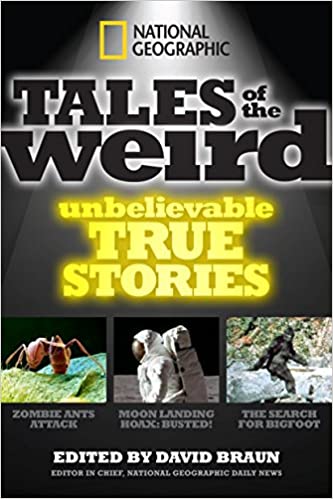
Maybe you could use a little fun right now. So I’ll begin by giving you a short quiz based on this book. It’s a tough one. If you get even a few correct answers, you’re doing great! After you take the quiz, I’ll give you the answers and explain them—if necessary. Ready? Put your thinking caps on…
- 1. In which country is the largest cave in the world? a) France b) United States c) Vietnam d) Russia.
- 2. In the 14th Century, about what percent of Europe’s population died from the bubonic plague (Black Death)? a) 5% b) 10% c) 30% d) 50%.
- 3. Using which part of the human body can researchers predict whether you are a morning person or a night owl? a) fingernails b) hair follicles c) ear lobes d) eye color.
- 4. In 2010, on New Year’s Eve, shortly before midnight, Arkansas wildlife officers got many reports of dead birds falling from the sky over Beebe, AR. What caused these 5,000 birds to die? a) they were being attacked by a flock of owls b) local fireworks woke them up and they began to fly into buildings, trees, etc. c) the loud music of a local rock concert caused them to panic d) they were overcome by the fumes from the town’s annual New Year’s Eve chicken barbecue.
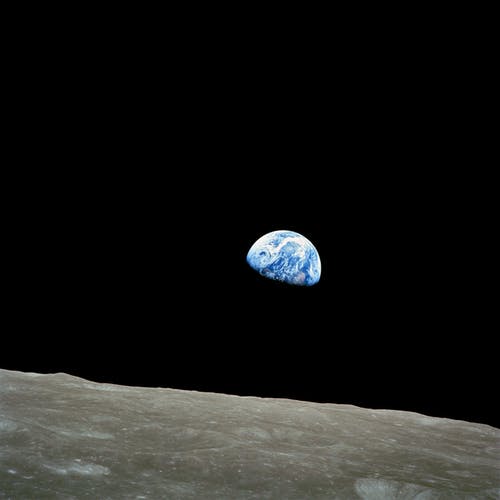
- 5. What is the #1 nuisance for astronauts who have done some space walks? a) runny noses b) runny eyes c) fingernails falling off d) hair loss.
- 6. Where are the world’s fastest moving muscles found? a) in crickets’ legs b) in the throats of song birds c) in hummingbirds’ hearts d) in the legs of Olympic sprinters.
- 7. What snacks have their origin in Native American cultures of North or South America? a) chewing gum b) chocolate c) popcorn d) all of the above.
- 8. Which of the following has facial recognition ability within its species: a) earthworms b) wasps c) bees d) monarch butterflies.
- 9. What object (believed to be the world’s oldest of its kind) did archeologists find in South Africa? It is 39,000 years old, organic, and is something often found in the bedroom. a) a mattress b) mosquito netting c) a hair brush d) a drum which was used as an alarm clock.
- 10. Who named the dwarf planet Pluto? a) the astronomer Edwin Hubble b) a NASA team c) an 11 year old girl d) Walt Disney.
Answers:
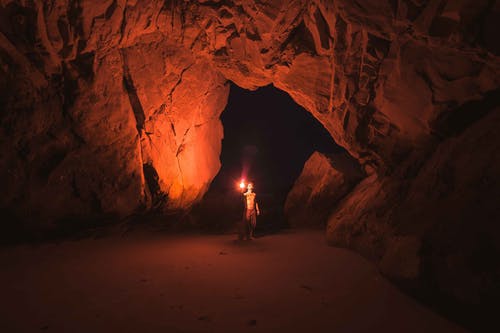
- 1. The world’s largest cave is the Son Doong cave in a remote Vietnamese jungle. It is almost 3 miles long and reaches more than 460-by-460 feet in some places. It has a river running through it as well as giant stalagmites and poisonous centipedes. The exciting news: there are almost certainly larger caves awaiting discovery.
- 2. The Bubonic Plague killed an estimated 25 to 30 million people in Europe between 1347-1352—or roughly 1/3 of the population. But in some cities it killed 50% of the population.
- 3. Researchers can predict whether you are a morning person or a night owl by studying your hair follicles. In short, the genes that control our body clock are found in our hair follicles.
- 4. Fireworks in the area flushed out the sleeping birds, causing them to fly at night, thus crashing into trees and buildings.
- 5. Space walking astronauts have reported that their fingernails have fallen off after their time walking in space. Fortunately, the fingernails grow back.
- 6. The fastest moving muscles are in the throats of song birds. Their vocal chords move a hundred times faster than a blinking eye!

- 7. Chewing gum, chocolate, and popcorn all have their origin in Native American culture.
- 8. Wasps are capable of facial recognition. They can differentiate between Harry and Walter, Winifred and Pearl, etc.
- 9. Archeologists unearthed the world’s oldest mattress in South Africa. It was the size of a double bed and could sleep a whole family. The mattress consisted of layers of reeds and rushes.
- 10. An 11-year-old school girl, Venetia Burney of Oxford, England named our ninth planet (now a dwarf planet). When Pluto was discovered in 1930, she told her grandfather that she thought it should be named Pluto after the Roman god of the underworld. He forwarded the suggestion to the Lowell Observatory and the name was chosen. (Disney’s dog Pluto was first named Rover when he debuted in 1930, but with the discovery of the ninth planet, Disney changed the bloodhound’s name to Pluto in 1931.)
How’d you do? Did you at least have fun? Do you know any other weird or wonderful tales/facts?
I chose two videos for today. The first one takes us on a ride through the universe. I found this video on the blog of a good friend of mine, Sr. Kathleen Glavich. Her blog is “Catholic Faith Corner.” The second is the song “All Things Bright and Beautiful” by the Cambridge Singers.
Video on the universe: This illustrates God’s incredible power, mystery, and artistry.
May the words and pictures of this video remind us of our Creator’s wild and wonderful imagination.
Thank you for reading my blog!