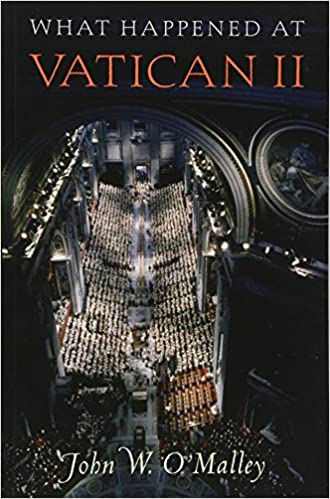
“What Happened at Vatican II?”
I recently plowed through Fr. John O’Malley’s large book What Happened at Vatican II? The word plowed is the operative word. The 380 page tome is a serious, scholarly, systematic overview of the Council, “the biggest meeting in the history of the world.” It took me three months of “off-and-on-again reading” to finish the book. Why did I persevere? Because the book was not only highly readable, it was also very, very interesting! Let me share a few facts/quotes from this book.
1. When the Council was convoked by Pope John XXIII, some bishops hoped it would be a one-session conclave of several weeks. Instead, the Council, including the preliminary and follow-up work, extended over four years! The actual four sessions began on October 11, 1962 and ended on December 8, 1965. An average of 2,860 bishops attended part or all of the four sessions. Vatican I, in contrast, had 750 bishops. In addition, there were periti (theology experts), secretaries, journalists, and between 50-100 “observers and guests.” The meetings were held in the nave of St. Peter’s Basilica. Despite its huge size (over 26,000 square feet), “it was barely sufficient to hold all the attendees.” (p. 23)
2. The Council consisted essentially of clerics, although a few laymen were invited as “auditors.” By the third session, 21 laymen were present and three of them actually addressed the Council. At this session, the first women were also invited as auditors, 7 laywomen and 8 women from different religious congregations. But no woman ever spoke at the Council.
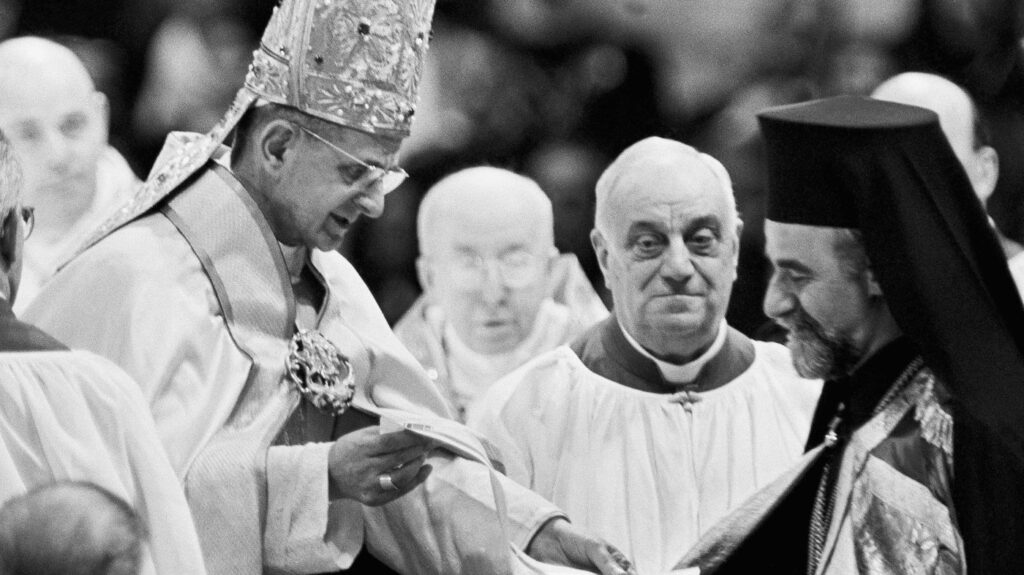
3. O’Malley vividly describes the heated discussions and disagreements among the Council fathers in areas such as the Church’s attitude toward the world, the Church’s place in the world, the relationship of scripture and tradition, ecumenism, religious liberty, papal authority, collegiality of bishops, the style and tone of the documents, to name a few. It was fascinating to hear both (or more!) sides to certain “hot button” issues. And it was amazing that consensus was eventually reached on so many of these issues. But not all, of course. For example, in the middle of the Council, Pope Paul VI took four topics off the table: birth control, celibacy, the reform of the Curia, and the mechanism to implement collegiality of the bishops.
4. Throughout the book, O’Malley shuns away from speaking of “liberals” and “conservatives.” Instead he uses the terms “majority” and “minority.” He says the so-called liberals “argued that their positions were more conservative than those of the conservatives because they were retrievals of traditions fundamental and ancient.” (p. 292)
5. The Council made clear that the Church “is in the modern world—not above it, not below it, not for it, not against it. Therefore, like everybody else in the world, the Church must assume its share of responsibility for the well-being of the world, not simply denounce what it finds wrong.” (p. 297)
6. O’Malley calls Vatican II “a language event.” He shows how the radical change in language from previous councils gave us a new vision of Catholicism. The Church went “from commands to invitations, from laws to ideals, from definition to mystery, from threats to persuasion, from coercion to conscience, from monologue to dialogue, from ruling to serving, from withdrawn to integrated, from vertical to horizontal, from exclusion to inclusion, from hostility to friendship, from rivalry to partnership, from suspicion to trust, from acceptance to active engagement, from fault-finding to appreciation, from prescriptive to principled, from behavior modification to inner appropriation.” (p. 307)
7. O’Malley makes some of the key figures of the Council come alive. For example, he contrasts Cardinal Alfredo Ottaviani, head of the most powerful body in the Roman Curia, with Cardinal Augustin Bea, a German Jesuit who was on “the cutting edge” of the latest scripture scholarship coming from the Protestant churches in Germany. Ottaviani, born into a poor family in Rome, spent most of his career in the Curia. He was “intelligent, shrewd, witty, and of unquestioned moral integrity.” Even while a Cardinal, he maintained an active ministry with the young people in Rome. The motto on his coat of arms was Semper Idem, “always the same.” O’Malley adds, “he was not used to having his authority challenged.” (p. 108)
In contrast, Bea’s experience was much broader. He had served as provincial superior for the Jesuits of Bavaria. He also studied Eastern philology in Protestant Prussia. In 1924 he began his career teaching at the Biblicum. O’Malley writes, “In his person he radiated an inner serenity that made him approachable and easy to converse with. It also generated respect for his opinions.” Bea, more than any other person, shepherded the Council through three of the most difficult and highly contested documents—on the Jews, on Religious Liberty, and on Divine Revelation. (p. 110)
8. “The sixteen final documents of the council… ran to over 300 pages… the documents of the Council of Trent (ran) to about 130 pages, and the documents of those two councils together almost equal the documents of the other 19 councils put together.” (p. 25)
I’ll conclude with these words by Peter Steinfels in the New York Times: “Father O’Malley has written one of the best and most needed books about the Second Vatican Council…. (it) is a story of bold confrontations, clashing personalities and behind-the-scenes maneuvers, all recounted in colorful detail…with plenty of cliffhangers.”
For reflection:
Did anything in this reflection stand out for you? If so, why?
Are you old enough to remember the Catholic Church before Vatican II? If so, what do you remember about it? Is there anything you miss? Anything you’re glad was changed?
What impact (if any) have the documents of Vatican II had on your personal spiritual life?
PS: I want to thank the Sisters of St. Joseph in Watertown, NY for their prayerful Zoom retreat. I am especially grateful to Sister Eamon for inviting me back to Watertown to facilitate this retreat and for playing my song/videos throughout the week. She was a great DJ! And thank you, my Sunflower community, for your prayers!
Vatican II had a tremendous impact on liturgy. Here’s a song that was obviously written post Vatican II, “God Has Chosen Me” by Bernadette Farrell. First it uses only a drum for accompaniment—no organ. Its refrain is “God has chosen ME,” thus highlighting each Christian’s personal vocation. Each of us (not just the clergy) is called “to give birth to a new Kingdom on earth,” by removing oppression…raising our voice “with those who have no power or choice.”
Thanks again for reading my blog!
Why Does Everyone Want Ashes?
Everyone seems to show up for ashes on Ash Wednesday (before Covid, that is). Some priests say there are twice as many people at daily Mass on Ash Wednesday than any other day. One priest, serving on a college campus, said that four times as many students came to Mass on Ash Wednesday than any Sunday!

Here’s a true story that illustrates the popularity of ashes. One Ash Wednesday, Father Rick Malloy, SJ, had just celebrated Mass in the Riverfront State Prison in New Jersey where he had had five times the normal number of attendees. He had distributed ashes to all of them. As he was walking across the prison yard to go home, a huge menacing-looking guy approached him saying, “Hey, Padre! Hit me!” At first, Father didn’t know what he meant. The man repeated, “Hit me with the ashes, Padre.”
So Father got out his container of ashes and began tracing a cross on the man’s forehead. “Remember you are dust…” Immediately a crowd of prisoners came and encircled the priest. They all wanted ashes, so he began to mark their foreheads one by one. Suddenly, all the sirens went off, the guards came running over with their rifles raised, and a booming voice over the loud speaker shouted, “Move away from the priest! Now! Do it now!” The prisoners began to move back, and the voice yelled, “Father, are you okay?” Father yelled back, “I’m fine! They just want ashes!”
So, why does everyone seem to want ashes? Someone has said, “Because they’re free! What else do we get from the church that’s free?” Others have said, “Because most Christian churches distribute ashes. It’s one ritual we have in common.” Still others might say, “Because getting ashes reminds us of our childhood. It’s nostalgic.” Or, “Anyone can receive ashes. There are no prerequisites. Just be a human being and you can get them.”
But I think there’s a deeper reason. One reason many of us line up for ashes is this: deep down we know we are sinners. In other words, we all innately know that we are not perfect. At times we are selfish… crabby… lazy… unkind… dishonest… greedy… impatient… hurtful… and the list goes on. Getting ashes is one concrete way we acknowledge our human sinfulness. And one way we let others know we’re sorry without even having to say any words.
I don’t know about you, but when I receive ashes on Ash Wednesday, I feel a real connectedness with others. As I watch others coming back with the ashes on their foreheads, I want to say, “I’m with you, Buddy!” Or “We’re all in the same boat!” I love it when I see a small child being carried back with ashes on her tiny forehead. I want to say to her, “Welcome to the human race, Honey! You may be innocent now, but eventually you too will learn why we get ashes on this day!”

On Ash Wednesday we acknowledge our need for forgiveness. We express our desire to be a better person than we are. We also admit that our days on earth are not infinite; they’re numbered. This Lent, as with every Lent, we have 40 days to pray for forgiveness—that we may both seek forgiveness for ourselves and extend forgiveness to others; to fast from selfishness in all its many forms; and to give alms generously to remind ourselves that all is gift. All. Even ashes!
Are you one of those people who want to receive ashes on Ash Wednesday? If so, why?
What might you choose to do this Lent to pray… to fast… to give alms?
PS #1: I ask your prayers for a Zoom retreat I’m doing for the Sisters of St. Joseph of Watertown, NY. The theme of the retreat is “How Can I Keep from Singing?” and it runs from Sunday Feb. 14 to Saturday Feb. 20. Thank you for your prayerful support.
PS #2: I want to remind you that my SND province is in the process of launching a new website–of which my blog is a small part. By April, my blog should be “fixed” and you will be able to respond to these posts again. I can’t wait to hear from you again! I’ve missed you!
Our song is called “With These Ashes.” It’s written by Gerald and Mary Chiusano. I hope the words speak to you today!
Thank you for reading my blog!
Love Wins: A Reflection for Valentine's Day
Someone once asked a scripture scholar if he could summarize the Bible in one sentence. The scholar replied, “I can summarize it in two words: “Life Wins.” I love that! I think of those two words every time I see a green shoot coming up through the muddy earth. Or a flower coming up in a crack in the sidewalk. Yes, I say, in the end, life does win.
But I think there’s a better two-word summary of the Bible: Love wins! I think of those two words when I hear Jesus saying from the cross, “Father, forgive them, they know not what they do” (Lk. 23:34). Or when I read Edwin Markham’s classic poem called “Outwitted”:
He drew a circle that shut me out—Heretic, rebel, a thing to flout.
But love and I had the wit to win: We drew a circle and took him in.
For Christmas, a friend gave me a book. (I wonder how she knew I loved books?!) It’s Love Is the Way by Bishop Michael Curry, presiding bishop of the Episcopal Church—the first African American to hold that position. Some of you might remember that he gave the homily at the wedding of Prince Harry and Meghan Markle. Through the lens of his faith, his ancestry (a descendent of slaves and the son of a civil rights activist), and his personal journey, Curry shows how America has come far since its founding, but how we still have a lot further to go.
I appreciated Curry’s slant on love. For example, he says the opposite of love is not hate; it’s selfishness. He claims that selfishness is the most destructive force in the universe; hate is only its symptom. He quotes Martin Luther King who said what we need is a “reverse Copernican revolution.” Far too many of us think of ourselves as the center of the universe. (I’m reminded of that little joke: How many narcissists does it take to change a light bulb? Just one. All he has to do is hold the bulb in place while the whole world revolves around him.)

But what other factors besides selfishness prevent us from reaching out in love to others? I think there are two big ones: fear and pain. As I watched the assault on the U.S. Capital, I found myself asking the rioters, what are you so fearful of that you would do such violence not only to a beautiful, revered, iconic building, but also to other human beings? When they were interviewed, some of the perpetrators expressed some very real fears. Some fear losing “their” country. Or they fear a new president they didn’t vote for or one they truly believe didn’t win the election. Or maybe they fear “invading caravans” of “aliens” or new laws that might impinge on their rights. Or they might be experiencing the most basic of all fears: the fear of losing control. So they tried to take control by force and violence.
Another factor that prevents us from reaching beyond ourselves in loving ways is pain. If you have a toothache or a migraine, it’s pretty hard to think of anything else besides your own pain. When in serious pain (whether physical, psychological, emotional, or spiritual), it’s hard to even notice other people let alone reach out to them in care and concern. So, in order to love, we must first tend to our fears and pain that can get in the way of our loving. As Parker Palmer has said, “Violence happens when we don’t know what to do with our suffering.”

We all have fears that can cripple our love. We’re afraid of people who look different from us, so we seek neighbors that look and think as we do. Or we’re afraid our kids will make bad decisions, so we turn into a tyrant to prevent them from making any decisions at all. We’re afraid of losing our money, so we turn into a miser, a Scrooge. In addition, we all have pain that, if unaddressed, can make loving difficult or even impossible. The pain of past abuse can prevent us from trusting others. The pain of a broken relationship can impede our ability to enter into new relationships. The pain of past misfortunes can turn us into a brooding Ahab.
Curry writes, “Love tells you how to direct the energy of outrageous faith. If hope and faith are the wind and sails, love is the rudder. It’s God’s GPS.” But how do we get in touch with God’s GPS? Says Curry, when making a decision, just ask yourself this question: “Is this just about me or is it about we? Does this decision serve only my unenlightened self-interest, or does it somehow serve the greater good?”

Valentine’s Day is a good day to reflect on the quality of our love. Can we use our fears and pains not to isolate ourselves from others, but as an impetus to connect with them? It’s a good day to reflect on the decisions we are making. Do they go beyond what’s good for me? Do they include what’s good for the we, that is, do they serve the greater good?
As I quoted earlier, the opposite of love is selfishness. Curry writes, “Where selfishness excludes, love makes room and includes. Where selfishness puts down, love lifts up. Where selfishness hurts and harms, love helps and heals. Where selfishness enslaves, love sets free and liberates.”
And so we pray: Loving God, may we, as individuals and as citizens of our country, become better lovers. Help us to make room for and include others… to lift up and help others… to heal and set others free. Trusting in your great love for us, may we work with you to make these words a reality: Love wins! Amen.
Did anything speak to you in today’s reflection? If so, what?
You might want to reflect on the questions in the third last paragraph.
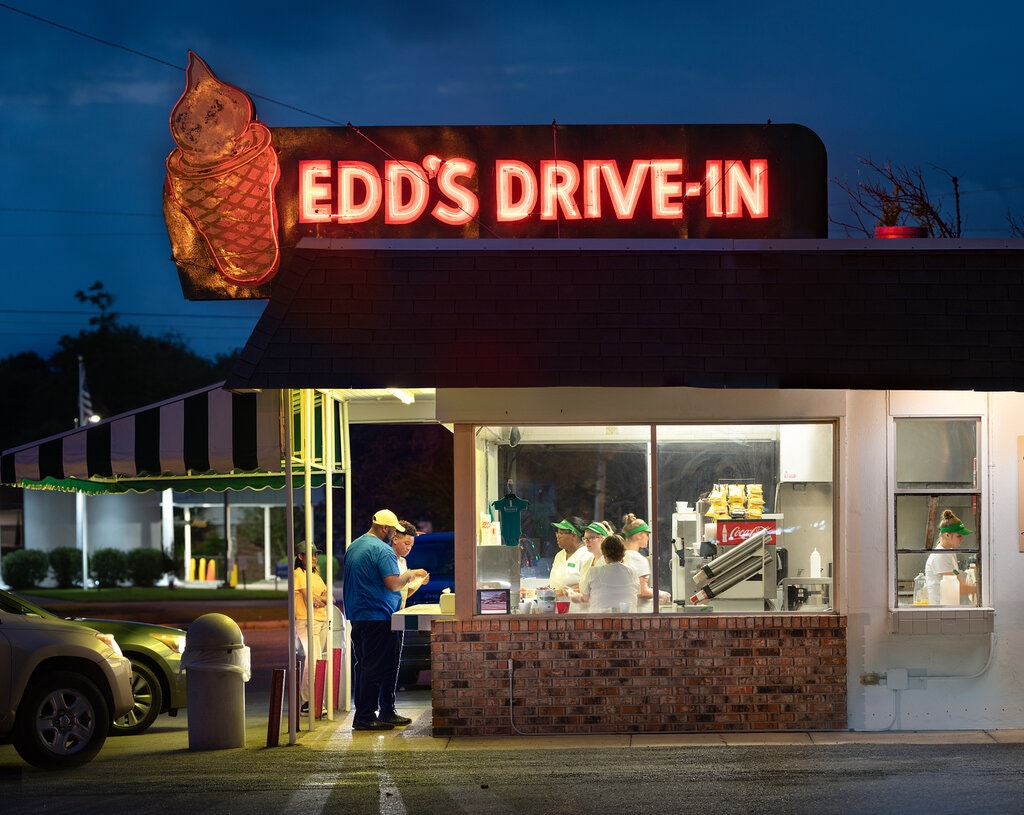
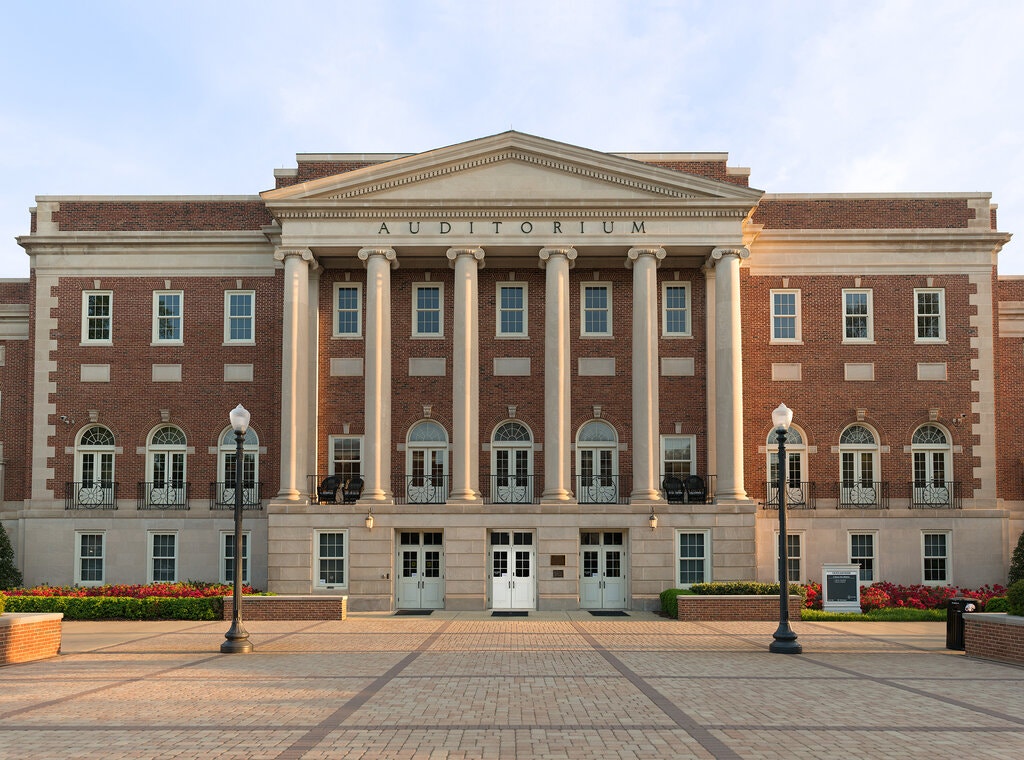
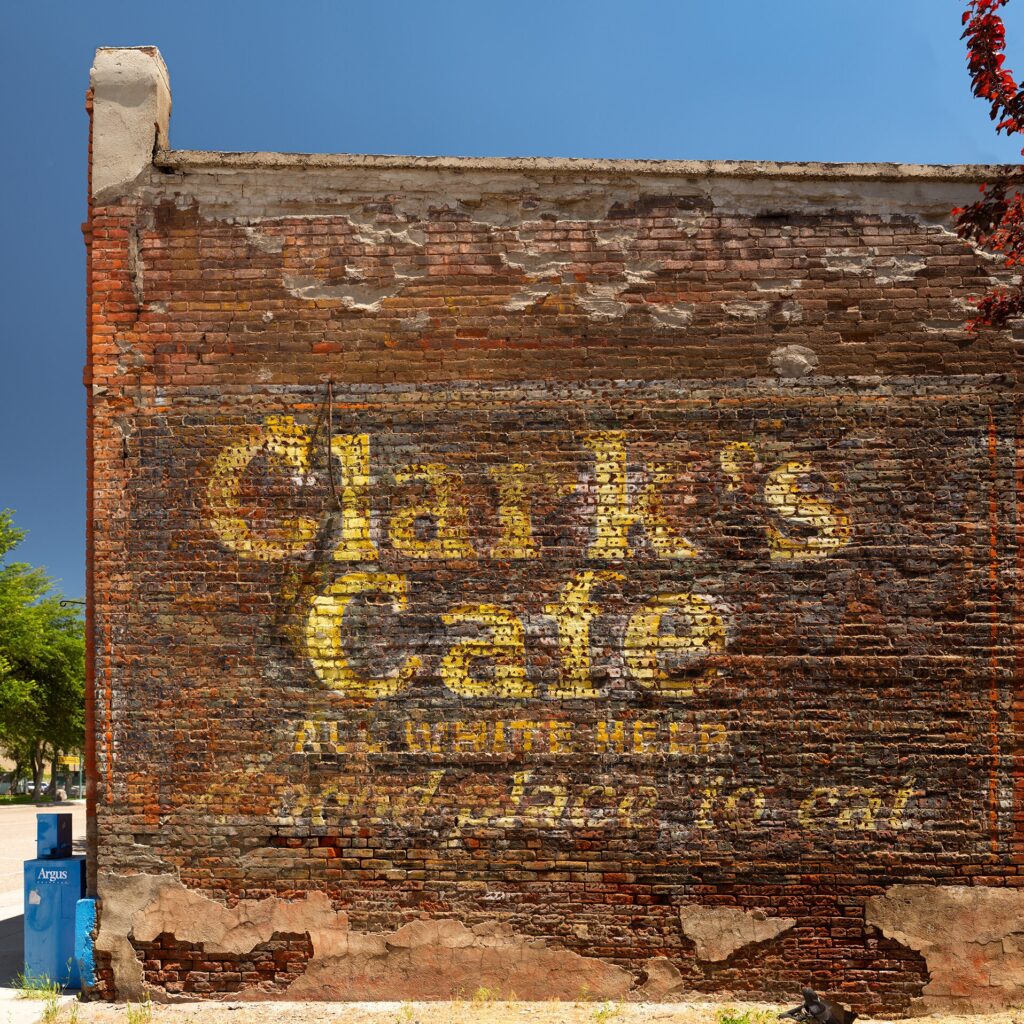
Speaking of love, February is Black History month. Prior to our music video, I’m offering you some special photos to reflect on. Vestiges of racism and oppression can still be seen in some of our architecture—if you know where to look. This series of photos from The New York Times is entitled “Hidden in Plain Sight: Ghosts of Segregation.” I hope they remind us that we have made considerable progress in this country, but we still have much further to go.





The title of our song today is the title of this reflection: “Love Wins.” It’s sung by Carrie Underwood.
Once again, I thank you for reading my blog!
Love Wins: A Reflection for Valentine’s Day
Someone once asked a scripture scholar if he could summarize the Bible in one sentence. The scholar replied, “I can summarize it in two words: “Life Wins.” I love that! I think of those two words every time I see a green shoot coming up through the muddy earth. Or a flower coming up in a crack in the sidewalk. Yes, I say, in the end, life does win.
But I think there’s a better two-word summary of the Bible: Love wins! I think of those two words when I hear Jesus saying from the cross, “Father, forgive them, they know not what they do” (Lk. 23:34). Or when I read Edwin Markham’s classic poem called “Outwitted”:
He drew a circle that shut me out—Heretic, rebel, a thing to flout.
But love and I had the wit to win: We drew a circle and took him in.
For Christmas, a friend gave me a book. (I wonder how she knew I loved books?!) It’s Love Is the Way by Bishop Michael Curry, presiding bishop of the Episcopal Church—the first African American to hold that position. Some of you might remember that he gave the homily at the wedding of Prince Harry and Meghan Markle. Through the lens of his faith, his ancestry (a descendent of slaves and the son of a civil rights activist), and his personal journey, Curry shows how America has come far since its founding, but how we still have a lot further to go.
I appreciated Curry’s slant on love. For example, he says the opposite of love is not hate; it’s selfishness. He claims that selfishness is the most destructive force in the universe; hate is only its symptom. He quotes Martin Luther King who said what we need is a “reverse Copernican revolution.” Far too many of us think of ourselves as the center of the universe. (I’m reminded of that little joke: How many narcissists does it take to change a light bulb? Just one. All he has to do is hold the bulb in place while the whole world revolves around him.)
But what other factors besides selfishness prevent us from reaching out in love to others? I think there are two big ones: fear and pain. As I watched the assault on the U.S. Capital, I found myself asking the rioters, what are you so fearful of that you would do such violence not only to a beautiful, revered, iconic building, but also to other human beings? When they were interviewed, some of the perpetrators expressed some very real fears. Some fear losing “their” country. Or they fear a new president they didn’t vote for or one they truly believe didn’t win the election. Or maybe they fear “invading caravans” of “aliens” or new laws that might impinge on their rights. Or they might be experiencing the most basic of all fears: the fear of losing control. So they tried to take control by force and violence.
Another factor that prevents us from reaching beyond ourselves in loving ways is pain. If you have a toothache or a migraine, it’s pretty hard to think of anything else besides your own pain. When in serious pain (whether physical, psychological, emotional, or spiritual), it’s hard to even notice other people let alone reach out to them in care and concern. So, in order to love, we must first tend to our fears and pain that can get in the way of our loving. As Parker Palmer has said, “Violence happens when we don’t know what to do with our suffering.”
We all have fears that can cripple our love. We’re afraid of people who look different from us, so we seek neighbors that look and think as we do. Or we’re afraid our kids will make bad decisions, so we turn into a tyrant to prevent them from making any decisions at all. We’re afraid of losing our money, so we turn into a miser, a Scrooge. In addition, we all have pain that, if unaddressed, can make loving difficult or even impossible. The pain of past abuse can prevent us from trusting others. The pain of a broken relationship can impede our ability to enter into new relationships. The pain of past misfortunes can turn us into a brooding Ahab.
Curry writes, “Love tells you how to direct the energy of outrageous faith. If hope and faith are the wind and sails, love is the rudder. It’s God’s GPS.” But how do we get in touch with God’s GPS? Says Curry, when making a decision, just ask yourself this question: “Is this just about me or is it about we? Does this decision serve only my unenlightened self-interest, or does it somehow serve the greater good?”
Valentine’s Day is a good day to reflect on the quality of our love. Can we use our fears and pains not to isolate ourselves from others, but as an impetus to connect with them? It’s a good day to reflect on the decisions we are making. Do they go beyond what’s good for me? Do they include what’s good for the we, that is, do they serve the greater good?
As I quoted earlier, the opposite of love is selfishness. Curry writes, “Where selfishness excludes, love makes room and includes. Where selfishness puts down, love lifts up. Where selfishness hurts and harms, love helps and heals. Where selfishness enslaves, love sets free and liberates.”
And so we pray: Loving God, may we, as individuals and as citizens of our country, become better lovers. Help us to make room for and include others… to lift up and help others… to heal and set others free. Trusting in your great love for us, may we work with you to make these words a reality: Love wins! Amen.
Did anything speak to you in today’s reflection? If so, what?
You might want to reflect on the questions in the third last paragraph.
Speaking of love, February is Black History month. Prior to our music video, I’m offering you some special photos to reflect on. Vestiges of racism and oppression can still be seen in some of our architecture—if you know where to look. This series of photos from The New York Times is entitled “Hidden in Plain Sight: Ghosts of Segregation.” I hope they remind us that we have made considerable progress in this country, but we still have much further to go.
The title of our song today is the title of this reflection: “Love Wins.” It’s sung by Carrie Underwood.
Once again, I thank you for reading my blog!
Quotations under M
It’s time to visit my quotation collection again. If you are familiar with my blog, you know I collect quotes—thousands of them. I jot them on 3 X 5 index cards and file them alphabetically. Currently I have seven drawers of quotes. Today, I’ll flip through the M’s and see what I come up with:
1. (Filed under man): Dostoevsky defined man (a human being) as “a being who could get used to anything.”
2. (Marriage): “Before you marry, keep two eyes open; after you marry, shut one.” Jamaican proverb
3. (Mary at her visit with Elizabeth): “The only scene in the entire gospel where two women meet and hold center stage. They were engaged in radical, subversive conversation and prayer that expressed their hope of changing the unjust structures of society…. Mary offers a perspective for perseverance and sets a definite agenda of what has to change: the entire world must be turned upside down.” Kathleen Coyle
4. (Meaning): “When through one person a little more love and goodness, a little more light and truth come into the world, then that person’s life has had meaning.” Alfred Delp, SJ
5. (Memory): “There are three kinds of memory: good, bad, and convenient. Anonymous
6. (Mercy) “Our faults are like a grain of sand beside the great mountain of the mercies of the good God.” St. John Vianney
7. (Merton): I have a whole pack of quotes from Thomas Merton. Here’s one: “Many poets are not poets for the same reason that many religious people are not saints: they never succeed in being themselves.”
8. (Ministry/Service): “The service we render others is really the rent we pay for our room on the earth.” Sir Wilfred Grenfell
9. (Miracles): “Where there is great love, there are always miracles.” Willa Cather
10. (Mistakes): “The mistakes we make are the best teachers in the world.” Richard Rohr
11. (Mistakes): “To get maximum attention, it’s hard to beat a good, big mistake.” Anonymous
12. (Morality): “What is right is often forgotten by what is convenient.” Bodie Thoene
13. (Mother): “God couldn’t be everywhere and therefore he made mothers.” Jewish proverb
14. (Music): “After silence, that which comes nearest to expressing the inexpressible is music.” Aldous Huxley
15. (Mysticism): “Mysticism is felt gratitude for everything.” Anthony DeMello, SJ
Did any of the quotes touch your heart today? If so, why?
Do you have a quote that could be filed under M in my quote drawers?
PS: Last week some of you couldn’t open my blog. But that problem was fixed last Wednesday. In case you missed last week’s announcement: my congregation is in the process of launching a new website for our entire USA province. It should be up and running by April. Then you’ll be able to respond again. I can’t wait! I really miss hearing from you!
It is appropriate that our song also begin with an “M.” It is “The Magnificat,” the song Mary sang at the visitation with Elizabeth (see quote #3 above). I found two beautiful versions with lyrics and I am offering both of them to you today. Take your pick or listen to both:
“Magnificat” composed by Todd Agnew and sung by Christy Nockels… with lovely pictures:
“Magnificat” performed by Koine from the album “Emmanuel Lux”…I found the melody hauntingly beautiful:
Once again, I thank you for reading “Sunflower Seeds.”