How Rich Are You?
In his book, Drink Deeply with Delight, Howard Hanger (an ordained Methodist Minister) shares a dialogue between a little girl and her mother at bedtime. The little girl asks, “Are we rich, Mommy?”
Her mother replies, “Why do you ask?” The little girl says, “Because the kids in kindergarten said it was cool to be rich. That rich people had more fun.”
Her mother says, “The children are absolutely right.” Then she adds, “But there’s a big problem with being rich. You gotta be rich in the right way.” Her mother goes on to explain some of the different ways you can be rich. “There’s money-rich, family-rich, laughter-rich, love-rich.” She asks her little girl, “Can you think of any other ways to be rich?”
The little girl says, “There’s friend-rich. And chocolate-chip-cookie-rich.”
——————————————————————————————————————–

I love that little dialogue. It took me back to my childhood when I became aware that some kids in school were richer than I was (and a couple seemed poorer). The fact that we weren’t materially rich always hit me at Christmas time. I would make a long list of the things I wanted, but I knew I wouldn’t get everything—or even the thing I wanted the most. One year I wanted a 22-inch Mary Hartline Doll the most. (She was the majorette on the TV show “Super Circus,” a popular kids’ show in the 50’s when I was a kid.) My mother gently tried to prepare me for the reality that I wouldn’t be getting that big doll I wanted. But on Christmas I did get a Mary Hartline Doll—only it was the 7-inch version. When I returned to school after Christmas, I learned that some of the girls in my class had gotten the BIG Mary Hartline Doll for Christmas. They were richer than I was. Or so I thought so back then.
But as I got older, I gradually became aware of how rich my growing up years really were. I was land-rich (on our small farm we had 22 acres of lawns, fields, and woods to play in.) I was parent-rich (both my parents loved us, took care of us, and loved each other too.) I was sibling-rich (I had an older sister and two older brothers—my constant companions to play with, learn from, and get into mischief with.) And I was pet-rich (dozens of cats, dogs, and parakeets populated and enriched my childhood.)

As an adult, I am now aware of my wealth in other ways. I am education-rich (from my James A. Garfield Elementary School years, through Regina High School and Notre Dame College years, and my graduate years at Indiana U. and Duquesne U., and all the many workshops, conventions, retreats, I’ve been privileged to participate in.) I am health-rich… faith-rich… friend-rich… ministry-rich… and the list goes on and on.

Today you might want to reflect on this question: What parts of your life make you rich? (As we prepare to celebrate Mother’s Day, some of you might say “I am mother-rich” … Or if you are a mother, you might say, “I am child-rich.”)
Then: how might you show your appreciation for the wealth you have received? For example, if you are sibling-rich you might want to connect with a sibling today. If you are friend-rich, call a friend you haven’t talked to in a while. Just tell them you were reflecting on how rich you are and THEY came to mind! If you are a-few-extra-dollars-rich, you might want to donate some of them to a food bank or some other organization whose mission you support. In whatever ways you find yourself rich today, give thanks to God—and share your riches with others.
PS #1: A Happy Mother’s Day to all you mothers out there! May your day be blessed with joy!
PS #2: Reminder: I’m giving a zoom retreat on HOPE May 24-29, sponsored by Heartland Center for Spirituality in Great Bend, KS. Check their website for details: https://heartlandspirituality.org. I hope to “meet” some of you then!
PS #3: Some of you received a post on Friday listing the last nine reflections on my blog. That post was a glitch… Sorry. As some of you noted, my new blog used a small font and light print. I found the way to remedy that. I hope you find the bigger and darker font easier to read. All the reflections are in this newer form.
The music and the words for this hymn go back to the 18th and 19th Centuries. The song is called “For the Beauty of the Earth” and is sung here by Audrey Assad. I like the visuals which highlight the riches of creation as well as the riches of family and friends.
I wish you many blessings today! And I hope some of you will share your thoughts on this reflection below.
Descendants of Slaves and Descendants of Their Jesuit Owners Form Historic Partnership
I enjoy watching the PBS program Finding Your Roots with host Henry Louis Gates. Each week the show traces the genealogy of famous living people: actors, politicians, artists, rock stars, journalists, athletes, etc. Each show is filled with surprises as the guests learn new things about their ancestry.
One week the show featured the Black actress, S. Epatha Merkerson, who played Lieutenant Anita Van Buren on Law & Order. (She appeared in 395 episodes, more than anyone else associated with the series.) Finding Your Roots traced her genealogy back to her great-great-great-great grandfather, a slave named Isaac Hawkins who was once owned by the Jesuit Priests of Georgetown University.
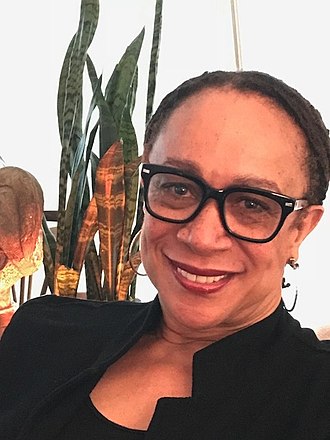
When Merkerson heard this news, she was understandably shocked. She asked in disbelief, “You mean Catholic priests owned slaves?!” The truth is, some did. So did a few orders of religious sisters. So did other “reputable institutions” like seminaries, dioceses, and other universities. (This historic fact of slave ownership by so-called “moral and upright people,” should give us pause to ask ourselves, “What injustices in our own day are we blind to? What injustices are we participating in and profiting from?)
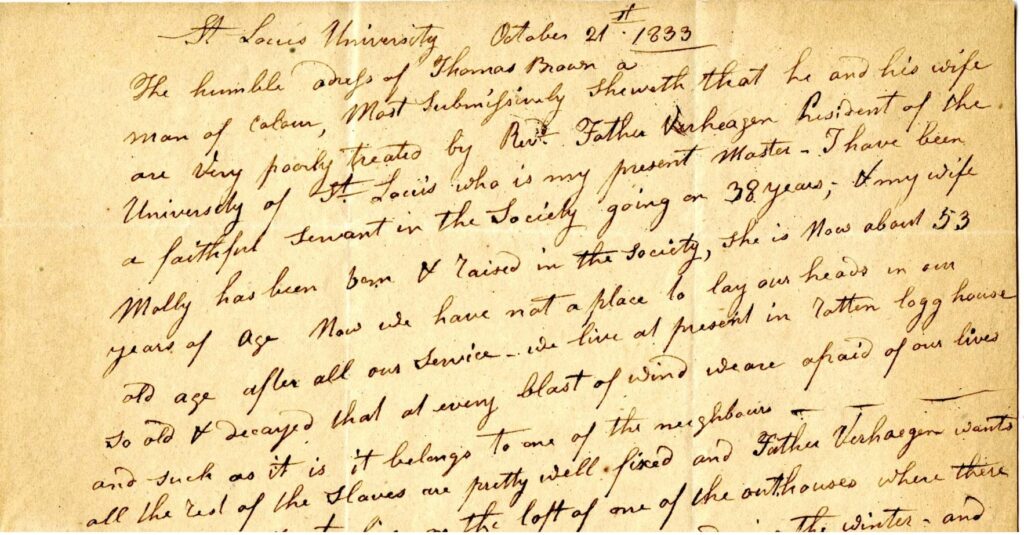
In this blog I will focus on the Georgetown Jesuits and the amazing steps they have taken to atone for their past sin of slavery. Before the Civil war, the Jesuits at Georgetown University owned slaves who worked in the vast tobacco fields the Jesuits owned in Maryland. The profit from the sale of the tobacco supported the Jesuit community and their mission of education, most notably Georgetown University. But when the value of tobacco plummeted, Georgetown was in serious financial trouble. So, in 1838 in order to save their university and support their community, the Jesuits sold 272 of their slaves to plantation owners in Louisiana. The Jesuits received $115,000 for the slaves, the equivalent of over 2.7 million dollars today.
Father Tim Kesicki, president of the Jesuit Conference of Canada and the United States, said, “Our shameful history of Jesuit slaveholding in the United States has been taken off the dusty shelf, and it can never be put back.” He added, “The lasting effects of slavery call each of us to do the work of truth and reconciliation.” The Jesuits, in partnership with the descendants of their slaves, have established the Descendants Truth & Reconciliation Foundation.
According to The New York Times (3-15-’21), the foundation has already raised $100 million dollars. Some of this money will be distributed as grants to organizations engaged in racial integration projects. Another part of the funds will support educational opportunities for the descendants of those slaves owned by the Jesuits. And the third segment will be given for emergency needs for the descendants who are old or infirm.
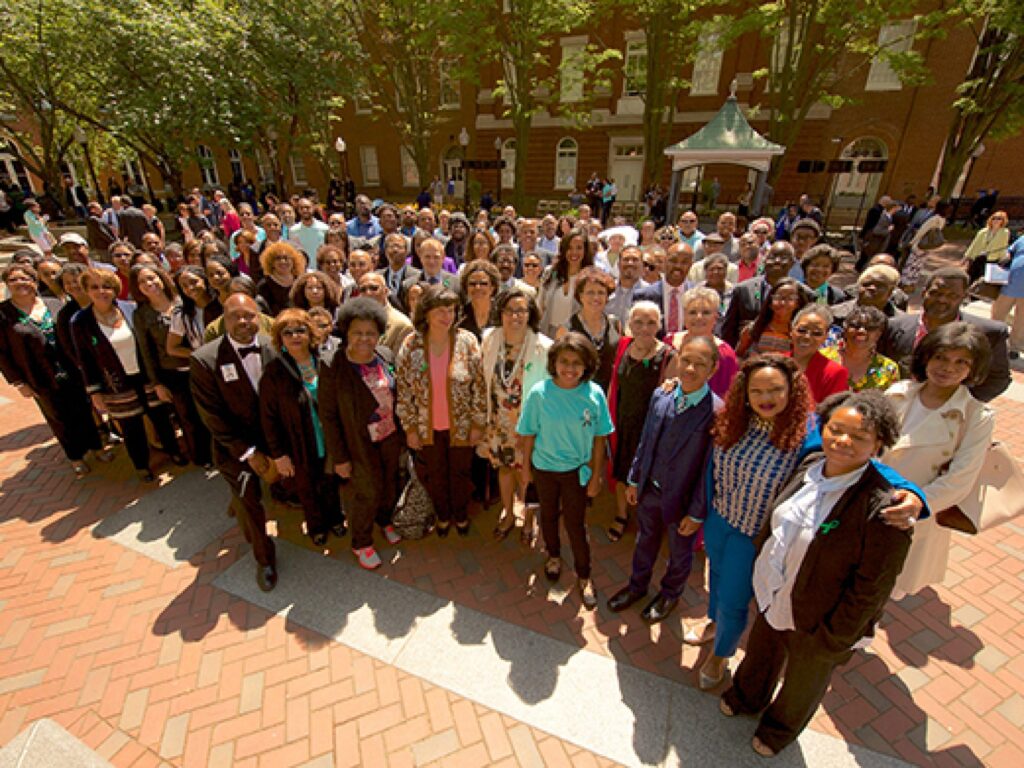
Over 5,000 descendants of the slaves have been identified by genealogists. The acting president of the foundation is Joseph Stewart, a retired corporate executive and descendant of Isaac Hawkins, mentioned earlier. He said, “Descendants and Jesuits have come together in the spirit of truth, racial healing, and reconciliation… Our partnership will pursue and support the creation of a new and abiding reality of love and justice for all members of our one humanity.”
Georgetown’s atonement for the sin of slavery goes beyond the Foundation itself. At Georgetown, two buildings, formerly named after two Jesuits involved in the sale of the slaves, have been renamed after two of the slaves: Isaac Hawkins Hall and Anne Marie Becraft Hall. (She was a pioneer in education and one of the first Black nuns in the U.S.) The university established Slavery Archives, created a department of African-American Affairs, and reviewed their hiring practices for new faculty. In addition, new courses have been added to the curriculum including one on Georgetown’s history and another on the connection between slavery and religion. The students at Georgetown have been actively involved in these efforts. In fact, a couple of years ago two-thirds of the student body voted to establish a student fee that would be contributed to Georgetown’s “reparation funds.”

Other organizations, in addition to the Jesuits, have set up reparation funds: the Religious of the Sacred Heart (who once owned 150 slaves in Louisiana and Mississippi), Princeton University, the Virginia Theological Seminary, and several Episcopal dioceses. Even JPMorgan Chase is making reparation for the part their predecessor bank, Citizens Bank of New Orleans, played in the sale of the Jesuit slaves. They are providing planning and advice as well as other services to the Foundation.
Writing to the descendants of the Jesuit slaves, Father Arturo Sosa, SJ, the Superior General of the Jesuits, said this: “Jesuit slaveholding in the United States, and in particular the sale of 272 enslaved persons from the Jesuits in southern Maryland to purchasers in Louisiana, was both a sin and a betrayal because the Society (the Jesuits) robbed your ancestors of their human dignity.”

Let us pray:
Loving God, Give us the courage to face the truth of our past history… Give us the humility to acknowledge our failures, our shortcomings, and our complicity with injustice… Give us the strength to do the hard work of reconciliation… Give us the love to see all others as our brothers and sisters in the same human family… May the power of your grace lead us to the joining of our hands, minds, and hearts in true unity. Amen.
(To take a virtual walking tour of sites related to the history of slavery on or near the Georgetown campus, go to: slaveryarchive.georgetown.edu. Once there, click on “The Price of Georgetown: A Walking Tour.”)
PS #1: I am leading a Zoom retreat sponsored by the Heartland Center for Spirituality in Great Bend, Kansas from May 24 – 29. The theme of the retreat is “Living with Hope in an Imperfect and Beautiful World.” I will give two conferences each day at 10:00 (CST) and 3:00(CST). For further details check their website: heartlandspirituality.org. It’s listed under preached retreats. Or call: 620-792-1232. I’d LOVE to meet some of you during this retreat!
PS #2: About my blog… We are still having a few glitches with our new website—and with our blogs. Some of you received my blog for Ash Wednesday last week! I have no idea how or why that post was sent out. But two important features have been reinstated on my blog: the “search box” (in the right upper corner) and the place where you can subscribe to my blog—also on the right side of this page. Let me know if you have any questions about my “new” blog. Thank you!
For reflection:
Did anything in this reflection touch you?
One historian said this partnership puts tremendous pressure on other institutions in the U.S. that share this history of slaveholding, to do something similar. Do you believe others will follow with similar steps toward reconciliation? Why or why not?
Is there any way you are participating in or profiting from an injustice? (For example: sweatshops, child labor, unjust hiring laws, etc.)
If there is one song that captures the Civil Rights movement it is “We Shall Overcome.” Here is Genie Deez’s 9 minute history of that song that I think you will find very interesting—especially the song’s link to a beloved 18th Century Catholic hymn.
You can leave comment to my blog below! I’m eager to hear from you again!
Oh, the Ostrich!
Every now and then, I like to reflect on one single aspect of God’s vast creation. In honor of Earth Day on April 23, I am focusing on the ostrich today. An article in the September 2020 National Geographic piqued my curiosity. It’s titled “Nobody’s Fool” and it was written by Richard Conniff.

The ostrich is the world’s largest bird. It is flightless. The male, with black and white feathers, stands 9 feet tall and can weigh over 300 pounds. The female, with brown feathers, is slightly smaller. Two outstanding features of ostriches are their knees and their eyes. Ostriches have double knee caps that may help them run so fast. They can run over 40 miles per hour and can sustain that speed for about ten miles. They have the largest eyes of any land animal—about the size of a billiard ball. Their keen vision coupled with their long neck (17 cervical vertebrae to our 7) enable them to spot trouble two miles away on the open plain.
And ostriches are always on the lookout for trouble. They have to be. As Conniff puts it, “Ostriches are basically oversize chickens in areas populated by hungry lions, leopards, hyenas, and cheetahs.” But don’t feel too sorry for ostriches. Beside their speed, they possess a powerful kick that can break the bones of predators. And on the biggest of their two toes, they have a claw that can disembowel a lion. Contrary to rumor, ostriches do NOT (I repeat) do NOT bury their heads in the sand. Perhaps this myth arose when someone spotted an ostrich standing and bent over while turning the eggs in her nest—and they thought she was hiding her head.

Unlike some birds that mate for life, ostriches (both males and females) are pretty promiscuous, mating with multiple partners in the same breeding season. If you’d ask them how they can justify such loose behavior, they would probably say, “It increases the diversity of our gene pool.”
Ostriches lay big eggs: about 6 inches in diameter and weighing about 3 pounds. In case you’d like to try one for breakfast, remember that one ostrich egg is equivalent to two dozen chicken eggs! Since ostrich nests are out in the open on the ground, they are hard to defend. Researchers estimate only about 10% of the nests are successful. When the chicks hatch after 42 days, they too are easy prey. In short, there’s considerable luck involved in raising chicks to adulthood.
Yet, ostriches are good parents. They have been seen fending off hyenas and standing guard between their chicks and a pack of baboons. In rain, both parents sit on the ground, spread their wings, and their chicks take shelter beneath them.

The wild ostrich population has declined drastically in the past 200 years due largely to the loss of habitat. Most of the surviving ostriches are on farms or game preserves. Life expectancy in the wild is 30-40 years, but in captivity, they can live to about 70 years. Some ostriches are still being raised for their feathers, meat (it’s supposed to be very lean), and leather.
Let me conclude with two fascinating facts you can use to impress your friends. First, if a friend asks you, “What’s the difference between ostriches and emus?” here’s your answer: Ostriches are from Africa, whereas emus (like the one in the Liberty Mutual Insurance ads) are native to Australia. Emus are smaller (about 6 feet tall, 130 pounds) and run about 30 miles per hour. Then to really impress your friends, add this: “Rheas are the South American cousin of emus and ostriches. They’re the smallest of the big flightless birds at 4 feet, and they also have three toes.”

Second fascinating fact: when the Titanic sank in 1912, the most precious cargo aboard was NOT diamonds or gold—but 12 cases of ostrich feathers valued at $2.3 million in today’s money. Why were they so valuable? Because those were the days when ladies of fashion all over the world wanted ostrich feathers on their hats!
St. Bonaventure, writing in the 13th Century, said this: to work up to loving God, begin with the simplest things of creation. “The Creator’s supreme power, wisdom, and benevolence shine forth through all created things.” Yes, even through the ostrich!
For reflection:
Did anything stand out for you in this reflection?
How do you see God’s “power, wisdom, and benevolence” shining forth through the ostrich?
Is there any other particular animal that reflects something of the Creator to you? If so, what and why?
PS: This week you still cannot respond to my blog! Hopefully the problem will be fixed by next week. I’m eager to hear from you once again—and so are my readers!
I want to thank our IT people for our province’s new website—and for helping me to to navigate the intricacies of my blog again!
I chose a nature song in honor of Earth Day. This song, by Kate Simmonds and Mark Edwards, is called “The Creation Song.” It’s a lovely blend of music with stunning visuals of creation, visuals that “demand” full screen viewing. My prayer for each of you: May you hear our Creator God speak the words of this song to you—yesterday…today…and forever…
Thank you for reading “Sunflower Seeds.”
Three Poems for April: National Poetry Month
As you may know, April is national poetry month. In honor of this month, I have selected three poems for you. The first is by one of our readers. The second is by a dear SND friend who passed away a few weeks ago. And the third poem is one of my own. I suggest you read all three poems slowly and aloud.

John Hopkins is familiar to many of you. He not only reads my blog faithfully, he also responds to it frequently. John is a high school English teacher from Massachusetts where he lives with his wife Kerry. They have three grown children. I have posted a couple of John’s poems on this blog in the past. This poem is from his newly published book, Celtic Nan, available on Amazon. John tells me the little girl who wrote the note in this poem is now 31 years old…
“Brid”
On a rainy May afternoon, under a prickly barberry,
the buried bird finally found its name.
For underneath the barberry, on a white piece of wet paper
resting on dark, damp pine mulch
were the words of children: “We love you Brid.”
All this remembrance and mourning,
all words and crayon hearts
were weighed down by half a brick, petals, and plenty of rain.
Killed a month ago by a cat, and then buried by a father,
Brid now flies only in the memory of the Watcher of fallen wings
and, of course, in the memory of children,
who suffer themselves to watch with Him.

*************************************************************

The Second poem is by Sister Alice Dugar, SND, who passed away on March 24. It is an “Ekphrastic poem,” that is, a poem inspired by a work of art. Alice reflected on a painting by Winslow Homer. It shows a farmer, recently returned from the war, cutting down a wheat field with a scythe. Here is Alice’s poem. It is untitled.
All day—the rhythmic sound of scythe approaches.
Life as we’ve known it—upright, rooted, sun-kissed to gold—
will soon be past, harvested to stubble.

And after that—what portends?
Can any promise of new life be ours?—No vision yet—
of life transformed
as flour,
as bread
as a child’s delight as she holds her mouth open
to receive the next jellied bite.

**************************************************************
Alice recently read my latest book of poems, Picking Strawberries. She marked a few of them that she particularly liked. Here is one she chose. It is based on Jesus’ parable of the treasure hidden in the field (Mt. 13:44). I think I know why Alice liked this poem: it describes how Alice lived her life: she bought the whole field…
“Buy the Whole Field”
First you must dig.
Then dig again. Don’t stop.
You might have to dig many holes.
Then deeper ones.
But when you hit the buried treasure,
You’ll know, you’ll know.
You’ll cry “Eureka!” or “Hallelujah!” or even “Yippee!”
But don’t stop there. Buy the field. The whole field
Not just the spot where the treasure is.
No, buy everything—the whole kit and caboodle!
The briar patch, the swales, the rocks,
the land where even a decent weed won’t grow.
You might look foolish to some, but you must buy it all,
for better or for worse.
Because that’s the way things work.
Invest everything. Don’t hold back.
You’ll see, you’ll see,
the treasure is worthy of all you have
and all you are!

I chose a poetic song by Carrie Newcomer called “The Only Way through Is in.” I dedicate this song to all who are in pain or who are experiencing debilitating illnesses of any kind… and to all those who love and care for them.
My congregation launched a new website on Monday, April 12. My blog is a part of that website. There are still a few glitches (like you didn’t get my blog early Monday, as usual.) We are still working on it. I thank you for your patience.
PS: April 15, 2021: you can now respond to my blog again! I’m eager to hear from you!
Easter Laughter
The Greek Orthodox Church has a fascinating tradition for the Monday after Easter. On this day, the faithful gather to trade jokes with one another. Why? Because they believe the greatest “joke” of all occurred on Easter Sunday: Jesus’ resurrection from the dead. In honor of that venerable tradition, I’m devoting today’s blog to humor. Here goes…
A thief who stole a calendar got twelve months.
A will is a dead giveaway.
When fish are in schools, they sometimes take debate.
When she saw her first strand of gray hair, she thought she’d dye.
Don’t worry about old age; it doesn’t last.
I’m reading a book about anti-gravity. I just can’t put it down.
(Okay, okay… I can hear a few of you groaning… So let’s move on…)

Once you get a certain age, what doesn’t hurt doesn’t work.
The older I get, the earlier it gets late.
I had my patience tested. It’s negative.
When one door closes and another opens, you are probably in prison.
When I say, “The other day,” I could be referring to any time between yesterday and 15 years ago.
When I ask for directions, please don’t use words like “east.”
When you ask me what I’m doing today, and I say “nothing,” it does not mean I’m free. It means I am doing nothing.
Sign seen in a veterinarian’s office: The doctor is in. Sit. Stay.
Sign over the scale at a doctor’s office: Pretend it’s your IQ.
I was visiting my daughter and I asked her for the newspaper. “We don’t get a newspaper. We’re saving trees. Here, use my iPad.” I can tell you for sure: that fly never knew what hit him!

Here are three bits of Irish wisdom:
1. Be nice to them on the way up. You might meet them on the way down.
2. Your feet will bring you to where your heart is.
3. Don’t see all you see, don’t hear all you hear.
How about something from the children.
A little girl said to her father after Sunday school, “Our teacher must be Jesus’ grandmother ’cause she talks about him all the time.”
After putting on some weight, a woman told her family she would be wearing a one-piece bathing suit instead of her usual two-piece. Her five-year-old son looked shocked. He asked, “Which piece are you going to wear, Mom?”
As a little boy and his mother were riding down the escalator, he asked, “Mommy, what happens when the basement gets full of steps?”
A pajama clad little girl said to her family, “I’m going to say my prayers now. Anyone want anything?”

A first grade teacher was teaching proverbs. She gave her students the first part of the proverbs and asked them to fill in the second half. Since most of the children were unfamiliar with the proverbs, here’s what they came up with:
Strike while the……. bug is close.
Don’t bite the hand that………. looks dirty.
You can’t teach an old dog new………. math.
The pen is mightier than the………. pigs.
A penny saved is……….. not much.
More wisdom from adults:
Did you ever notice that when you put The and IRS together, it spells “Theirs”?
Employment applications always ask who to call in case of emergency. I always want to write in: “an ambulance.”
Some people try to turn back the odometer. Not me. I want people to know why I look this way. I’ve traveled a long way and not all the roads were paved.
And finally, here’s a short prayer that might apply to some of us: “Lord, keep your arm around my shoulder and your hand over my mouth.”
I hope some of these brought a smile to your face. Today you might want to take stock of your sense of humor. If it’s running low, hear God saying to you today, “Lighten up!”
Happy Easter to All!!!
I’ve used this video before, but it’s perfect for today’s message, so I’m posting it again. It’s Handel’s “Hallelujah Chorus” made last year, at the beginning of the Covid pandemic, by the families at College Church in Wheaton, IL.
Thanks again for reading “Sunflower Seeds”!