A Prayer for When Life Doesn’t Make Sense
Sometimes life is good and faith is easy. Choose your image: the seas of your life are calm… the various components of your life are gently falling into place… the people around you are pleasant, agreeable, and kind.
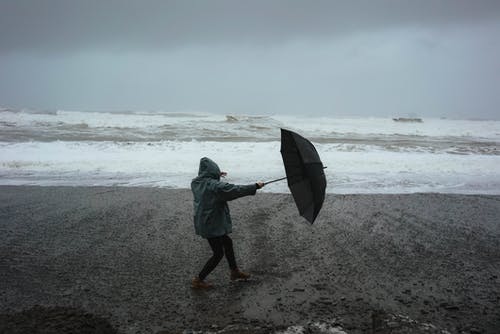
But sometimes life doesn’t make sense and faith is tough. Really tough. Things happen (or a single BIG thing happens) that (choose your image): knocks you off your feet… causes you to cry out “No! No!” in disbelief… raises the nagging question again, “How could a good God allow This Terrible Thing to happen?” This is a prayer for times like that.

“Prayer for When Life Doesn’t Make Sense”
I don’t get it, God… I just don’t understand… And I WANT to understand… I NEED to understand.
Just explain it to me. Help me to see how This Thing makes sense. I think I could accept it if it somehow made sense. If it was logical… fair… reasonable. If I could see a PURPOSE in it. Or, better yet, if I could see some GOOD in it… Some GOOD that This Thing will bring about… Some GOOD that outweighs the bad I can only see now… Some GOOD that makes This Thing not only permissible, but acceptable.
I’m hanging on, God. I’m hanging on to the end of a branch, and I’m pretty high up in the tree too… (Or) I’m clinging to my capsized canoe, and being tossed up and down by the waves… (Or) I’m reciting, “The Lord is my shepherd the Lord is my shepherd” again and again, words that used to give me comfort, but now seem hollow and empty.
All I have left right now, God, is faith. Pure faith. Or (more accurately) all I have left right now is my trust in you… in your wisdom… your goodness… your love. I’m trying to trust in you, God, but frankly my trust is wearing thin. Very thin. So thin I sometimes wonder if it exists at all.
So, here I am, God, begging, as I sometimes have to do. I’m begging you to help me. Help me to hang on. Give me the strength to face This Thing… to deal with This Thing… to endure This Thing. And give me direction. Help me to see what This Thing might mean for me… what it might be asking of me… what it might be calling me to do. As I ask for these things, I am thinking of Jesus, your son.
For in Gethsemane, Jesus too faced a BIG thing that made no sense… that knocked him to his knees: his looming death by crucifixion. It was there among the old gnarled olive trees that he uttered words that I imagine were similar to the words I am crying now: “Not this, God!… Not this!… Anything but this!” Jesus begged you his Father, “Let this cup pass from me.” But then he added those words I am trying to make my own, “Not as I will, but as you will” (Mt. 26:39)… Jesus was clinging to the only thing he had left: his unconditional trust in you. Because his trust in you was so deep, he could cry out with a loud voice even while hanging on the cross, “Father, into your hands I commend my spirit” (Lk. 23:46).
Loving God, I beg you now. Help me to make Jesus’ words my own. Help me to believe This Thing is in your hands… and so am I… and so are we all. Amen.
Our video today is Carrie Newcomer’s lovely song “Sanctuary.” She reminds us that God is our Ultimate Sanctuary. But God calls us to be a sanctuary for each other, especially in time of need. As you pray this song, ask yourself, “Who has been a sanctuary for me in my time of need?” And, “For whom have I been a sanctuary?” Toward the end of this video, you will see a flock of birds flying close together, forming beautiful and intricate patterns in the sky. This phenomenon is called “murmuring.” And it is fascinating to watch. Scientists don’t know why some flocks of birds (starlings, for example) do this. Is it a way of bonding? Is it intended to confuse predators? And HOW do they do it? Why aren’t they crashing into each other? The “murmuring of birds”… just another great mystery in our amazing world…
I invite you to respond below to this reflection…
PS: On the lighter side, a Benedictine friend of mine, Brother Ben, sent me the June page from an Appalachian calendar, “Simple Life Style.” Each day is dedicated to something—or even more than one thing. Here’s this weeks’ dedications: MON: Peace with Justice Day… TUES: Best Friends’ Day/ World Oceans Day… WED: Senior Citizen Day… THURS: Herb & Spices Day/ Ice Tea Day… FRI: Corn on the Cob Day… SAT: World Day Against Child Labor/ Knit in Public Day… SUN: Weed Your Garden Day/ Children’s Day.
Longevity and Transience
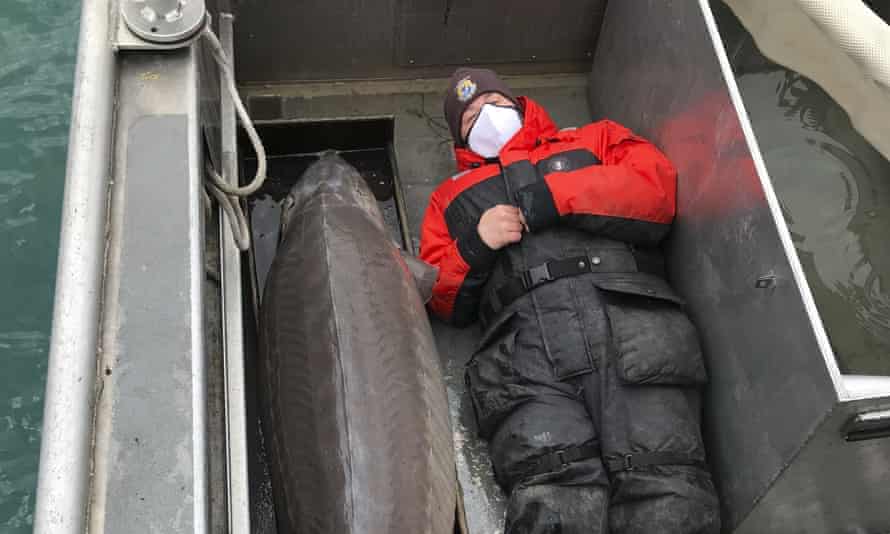
Recently biologists were tagging sturgeon in the Detroit River. The procedure was pretty routine. Catch the sturgeon in a basket, weigh, measure, tag, and release. Imagine their amazement when they hauled up a 240 pound sturgeon! She (yes, it was a female) was 6′ 10″ long with a circumference of nearly 4 feet! They estimated she was over 100 years old!
That news item got me to thinking about longevity and transience. What lasts and what passes away quickly? And what effect does longevity and transience have on us in our daily life?
Some things last a long time—like that lady sturgeon. But other animals live even longer. One particular koi fish named Hanako lived to be 226 years old. But that’s nothing compared to Greenland sharks which routinely live for 300-500 years. Their secret? They take life very slowly—swimming only .07 mph (a lesson for us speedaholic humans!) The oldest known clam lived to celebrate its 507th birthday. But the gold medal for longevity in the animal world goes to (drum roll please…) the jellyfish! They are almost immortal. If an adult jellyfish experiences injury or stress, he or she reverts back to its polyp stage and starts his or her life all over again!

Other things besides animals last a long time. Take plants. The oldest known tree is the Great Basin Bristlecone pine tree—4,852 years old. And there’s a certain honey mushroom in Oregon that is also thousands of years old. (Maybe its longevity can be attributed to its “sweet” name!) Some inanimate things on earth have lasted a long time too. The Grand Canyon is 70 million years old. Earth itself is 4.543 billion years old. But that’s short compared to the the oldest star in our galaxy, the Milky Way. That star is known as HE 1523-0901 (some astronomer should give it a name!) and it is about 13.2 billion years old.
But what things pass away quickly? In the animal world, a house mouse lives for year, a dragon fly 4 months, a worker bee 5 weeks (they literally work themselves to death—a lesson for workaholic humans), a Luna moth one week (it has no mouth so it can’t eat), and mayflies only 24 hours. Other things pass quickly. Cherry blossoms on a tree last about a week whereas daylilies (as their name implies) bloom for only one day before they begin to fade. And fireworks last for only a few seconds, just long enough to elicit a few “oohs” and “aahs.”

What effect does longevity and transience have on us? We could conclude, if it doesn’t last long, it’s not worth much. Sneakers from a discount store that last only one week are pretty worthless. But who can put a dollar value on a sunset that lasts for only a few minutes? We could also conclude, if it doesn’t last long, it’s worth more. The fact that the cherry tree blossoms are so short-lived makes them more precious than if they bloomed all year long.
Today you might want to reflect on how longevity and transience effect your life. Name some things that are transient and pass quickly, but you value very much: time playing with a grandchild… a walk with a friend… a hot cup of morning coffee… a short poem… a vase of cut flowers… a favorite line from scripture… a relaxing glass of wine… a cherished song… Then reflect on the things that have lasted a long time in your life that you value: a certain relationship… your health… a family heirloom… an old tree you pass by on your way to work… an old family photograph.
Let us conclude this reflection with this short prayer:
God of all time and space, I thank you for things that last and for things that pass away quickly. May I never take either of them for granted. Give me the grace to appreciate longevity and endurance. Help me to respect things and people simply because they have been around longer than I have and, therefore, they might have some wisdom to share with me.
At the same time, give me the grace to appreciate the transient, the passing, the fleeting. Help me to notice and treasure the things and people who come into my life for a short time and yet may leave a lasting impression. I ask for these graces through Jesus who appreciated the long lasting and the brief. He frequently hiked up into the age-old hills of Galilee… he admired the fleeting wildflowers bobbing in the fields… he enjoyed a good meal with all kinds of people—those he had known for years and those he had just met… and, the night before he died, he chose to pray in the garden among his long-time friends, the ancient olive trees of Gethsemane. Amen.
For reflection: I invite you to share with us some of the transient and enduring things you value. Just add a comment below.
Happy Memorial Day! Today let us remember and honor all those who died while serving in the Armed Forces. May we never forget the supreme sacrifice they and their loved ones made that we might have the many freedoms we experience today.
PS: A big thank you for your prayers for the virtual retreat last week sponsored by the Heartland Center for Spirituality in Great Bend, KS. And thank you to all the wonderful women who made the retreat! It was a privilege walking with you! I am especially beholding to Renee, Ann, and Brenda for inviting me and helping me out in countless ways!
It is Sunday night as I type this part of my blog. I just saw on the news that singer B. J. Thomas has passed away. He was 78. His most popular song was “Raindrops Keep Falling on My Head.” But he also had some popular Christian albums too. So I decided to play my favorite Christian song of his that he recorded many years ago: “I Need To Be Still.” When we think of prayer, we often think of giving ourselves time to love God. But in this song Thomas reminds us that prayer can be giving God time to love us!
I welcome your responses to the reflection, the pictures, or the song below! We all love hearing from you!
What Is God Doing All Day?
What do you picture God doing all day? Here are just a few possibilities.
God is watching us. We might have been told this as children. God was watching, so if you do something bad—like hit your brother or sister—God will see you. This turns God into something like a guard in a prison who is keeping an eye out for the least infraction of the rules. Or maybe we were told that God is watching over us—something like good parents watching their children playing in a sandbox in the park. God is watching over us with attentiveness, care, and concern.

God is leaving us alone. This answer to the question is a little like what Deism says about God. That God, like a highly skilled artist, created this incredibly fancy and intricate watch (the universe), wound it up, left it on its own, and went off to do something else.
God is loving. It’s one thing to say “God is Love” and quite another thing to say “God is loving.” The first conjures up an image of a big fat glob of love just sitting there. But the second implies love being expressed in specific acts or deeds. But if God is loving, whom is God loving? We humans are quick to answer: “Why, God is loving us, of course!” If we’re feeling particularly humble, though, we might say, “God is loving the entire earth community.” Or if we’re being broad-minded and inclusive, we might say, “God is loving the entire cosmos—the whole kit and caboodle, that is, the zillions and zillions of specific created forms we cannot even begin to imagine.”

God is dancing. I like what theologian Beatrice Bruteau says about God in her book Radical Optimism. She says God is a dancer. This is how she explains God’s relationship to all of creation: “The whole world is the Creator’s expressive gesture. God is in the world as the dancer is in the dance. The dance is the dancer, dancing.” That implies that God’s dancing sustains and directs the movement of the world. It also implies that God is having a good time.
God is giving birth. To answer the question, what is God doing all day, Meister Eckhart, a 13th Century German theologian said this: “God lies on a maternity bed giving birth.” I bet his answer shook up the establishment of his day! In his book Drink Deeply with Delight, the spiritual writer Howard Hanger says this about Eckhart’s words. “‘Waters shall break forth in the wilderness..’ sings out old Isaiah. God’s water is always breaking and giving birth to new life.”

There are many other ways we could answer the question, what is God doing all day. We could say: God is weeping… when we behold the world’s pain. Or God is comforting us… when we feel God’s consolation in our hearts … Or God is playing … when we behold the tiny buds on the trees and the wee green shoots coming up through the mud in spring… Or God is walking with us … when we suddenly have a sense of God’s presence in our lives.
Do any of these answers to the question “What is God doing all day?” resonate with you and your experience of God?
How would you answer the question?
PS: I ask your prayers for the virtual retreat on HOPE I’m giving this week hosted by the Heartland Center for Spirituality in Great Bend, Kansas. I know several readers of this blog are making it. I look forward to meeting you—at least virtually! Thank you all for your prayers.
Here is an unusual video using the photos by the French photographer Laurent Laveder. (I thank my friend Mary Fran for sharing this video with me.) The video suggests yet another answer to the question, “What is God doing all day?” OR, more accurately, “What is God doing all night?” Maybe God is playing with the moon… or maybe God wants us to play with the
moon!
Thanks again for reading my blog! I invite you to respond to this reflection below!
Hope and Worry
The other day I was reflecting on some of the differences between Hope and Worry. Here’s what I came up with.
Hope believes a better world is possible… Worry believes the world is getting worse.
Hope asks, How can I help?… Worry asks, What’s the use?
Hope trusts in God… Worry trusts in nothing.
Hope is afraid, but takes the next first step… Worry is afraid and just sits there.
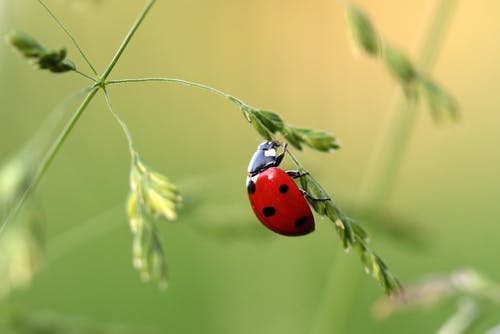
Hope knows God is always with us… Worry thinks God has abandoned us.
Hope says, I am only one, but I can do something…. Worry says, I am only one.
Hope evokes courage… Worry evokes timidity.
Hope energizes… Worry enervates.
Hope hangs on to Jesus’ promises… Worry asks, “What promises?”
Hope is joyful… Worry is cynical.
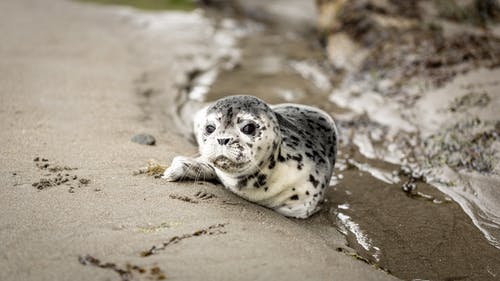
Hope says, “Hang in there.”… Worry says, “Give up already.”
Hope seeks out other hopeful companions… Worry hangs out with other worriers.
Hope asks, What can I do? … Worry worries.
Hope makes decisions… Worry worries.
Hope works hard… Worry worries.
Hope prays… Worry worries.
For reflection:
Do you agree or disagree with anything said about hope and worry in this reflection? If so, what and why?
Do any of the photographs speak to you today? If so, what are they saying to you?
Would you add anything to this reflection?
Do you find yourself anywhere in this reflection?
PS #1: If you have subscribed to my blog and you are NOT receiving it, please subscribe again on the right side of this page. You will receive an email that asks you to confirm that you want to subscribe. You must send that confirmation in to be a subscriber. Also, always check your junk/spam mail if you don’t see “Sunflower Seeds” in your inbox. And finally, the easiest way to access my blog if you are not a subscriber is to simply google melanniesvobodasnd.org OR google my name and “Sunflower Seeds.” Thank you!
PS #2: I ask your prayers for the virtual retreat on “Hope” that I will be leading May 24-28 at the Heartland Spiritual Center in Great Bend, KS. Many thanks!
PS #3: Happy Pentecost to all of you on Sunday! May the Holy Spirit come into our lives in whatever way we need the Spirit of God the most right now!
Hope prays. I chose this song because it exemplifies that great truth. It is an earnest plea for God’s help. The song is called “Earth to God” by John Rich. In using this song, I am not implying that God is somehow out there in outer space and far removed from what’s happening here on earth. On the contrary, I believe God is incarnate and active in our world—in creation, in humanity, and in our current world situation—including our global pandemic. But this song speaks to me because it humbly acknowledges our great need for God’s grace right now to lead us and give us strength…
I invite you to respond to this bog below. My readers and I enjoy hearing from you!
“Travels in Siberia”
For me, the word “Siberia” conjures up images of a vast expanse of wilderness, unbelievably frigid temperatures, and horrific prison camps (gulags) used by the Tsars and (even more ruthlessly) by the Russian leaders who followed the Tsars. (Personal note: My Grandmother Svoboda’s younger brother did not migrate to the U.S. but stayed in Bohemia where he was drafted into the army of the vast Austro-Hungarian Empire. During WWI, he was captured by the Russians and led off as a POW to Siberia where he died in one of those notorious prisons. Sadly, he met an early death in Siberia, so far from his village in Bohemia.) Siberia has always intrigued me, so when I came across Ian Frazier’s 500 page book, Travels in Siberia, on display in our library here, I eagerly took it out.
The opening pages of the book grabbed me. The map of Siberia at the beginning shows just how humongous Siberia is. It comprises eight time zones. Eight! And it makes up 1/3 of Asia and 1/12th of all the land on earth. The contiguous United States plus most of Europe would fit inside Siberia. Across the middle is the Russian taiga, the largest forest in the world. Frazier’s first sentence, though, surprised me: “Officially, there is no such place as Siberia.” He explains that there is no political or territorial entity that has Siberia in its name.

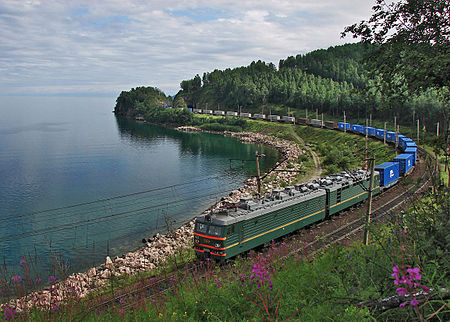
It took Frazier 16 years to write his book. During that time, he learned the Russian language and read just about everything on the history, science, economics, religion, and politics of the area we call Siberia. He also made five trips to Russia including his drive in the summer of 2001 across the entire 9,000 mile expanse—from the Baltic Sea to the Sea of Japan. He made the trip with two Russian guides, Sergei and Volodya, in an old Renault van that had the habit of catching on fire. The trek took five months and two days—often over terrible roads. When roads became non-existent, the men loaded their van onto the Trans-Siberian Railroad for a stretch. Part V of the book describes the shorter trip Frazier made in winter (starting in Nome, Alaska and traveling west) so he could experience a Siberian winter.
Along the way Frazier visited local museums, monuments (the Russians love to build monuments), and many natural wonders. The three men camped, fished, and ate local food. They encountered memorable people like the elderly woman sitting in a tiny shed in the middle of nowhere, guarding one of the railroad crossings for the Trans-Siberian railroad. When a train comes, she gets out of her shed and waves a red flag for the cars (if there are any) to stop. When the train passes, she stands on the tracks, looks both ways, and waves the flag for the cars (if there are any) to cross the tracks.
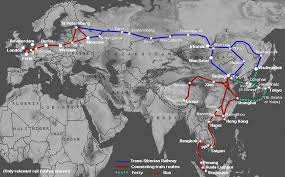
Frazier describes the beauty of some of the cities, mountains, forests, and lakes. And he also vividly describes the trash that is everywhere—littering the cities, crowding the roads, polluting the rivers. And then there are his encounters with the giant Siberian mosquitoes that are everywhere–and I mean everywhere. The men wear “beekeeper hats” and tuck their pants into their boots, but the mosquitos find them. When they try to eat their morning oatmeal, for example, dozens of mosquitos fall into their bowls—too many to remove!
Frazier tells of his many moods during the trip: his anger when their van keeps breaking down, his fears, his mistakes, his loneliness. He had a Satellite phone with him and used it occasionally to call his wife. One evening he was in such a foul mood, Sergei yelled at him, “Call your wife!” Which he did.
For me, the most poignant scene occurred the day the three men reached their destination, the Sea of Japan (the Pacific Ocean.) It was September 11, 2001. Cut off from all news that day, he called his wife in the evening. She told him about the World Trade Center. He was stunned. Later he told his two companions what had happened. They expressed their shock and sorrow. They attentively kept their eye on him as he retreated to his tent for a while. Afterwards he walked near the bay trying to process what had happened in his country so far away. The news of the attack soon got around to the people living in the area. Two days later, several men appeared with a freshly caught 9 pound salmon—a real luxury. They told Sergei to give it to the American as “a token of their sympathy for what happened in America.”
I agree with what many of the reviewers have said about Travels in Siberia. Critic David Remnick notes: “Frazier is a master of comic narrative, of landscape, of melding history and the current condition.” The Kirkus Review said: “It is a dense, challenging, dazzling work that will leave readers exhausted but yearning for more.”
For reflection:
Did you learn anything new or surprising in this reflection?
Have you ever travelled anywhere and felt enriched by your journey? If so, where did you go and how were you enriched?
What does a reflection on Siberia have to do with “everyday spirituality”? I’d be interested in your thoughts on this matter!
Today I am offering a 13 minute video from Australia’s version of “60 Minutes.” It’s called “Visiting the Coldest Town in the World,” and it takes us to Oymiakon (population 547) in central Siberia. The video tells (and shows!) just how cold it gets in the town, how cold it has to be to give the kids a free day from school, why many of the inhabitants actually prefer wintertime to summertime, and how you de-ice a horse! I found it fascinating. I thought you might too! (NOTE: -71.2 degrees Celsius is -96.6 Fahrenheit! 32 degrees Celsius would be about 89 degrees Fahrenheit.)
I welcome your responses below to the reflection and/or the video!