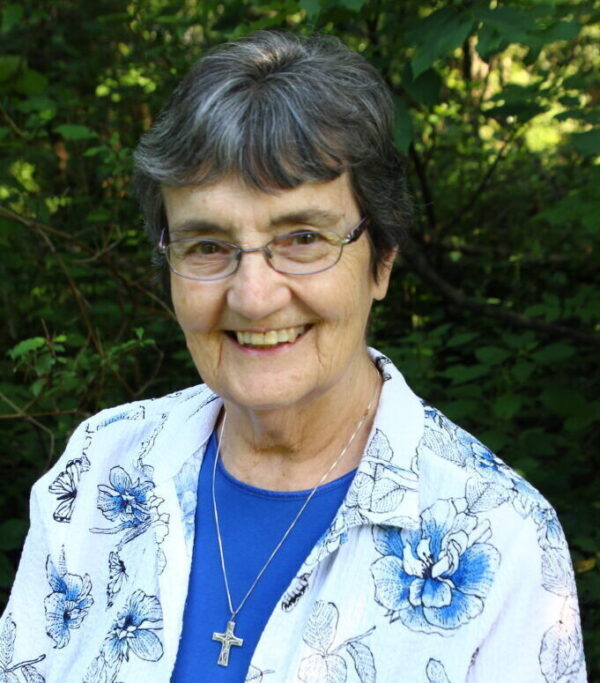
Rachel Held Evans
I have found a new favorite writer: Rachel Held Evans. Sadly, she died at age 37 in May 2019. But she left us with several excellent books. It’s hard for me to describe her, so I’ll let Fr. Ronald Rolheiser, OMI, do it for me. In his June 10, 2019 column he wrote: “… she was a young religious writer who wrote with a depth and balance beyond her years as she chronicled her struggles to move from the deep, sincere, childlike faith she was raised in to eventually arrive at a questioning, but more mature, faith that was now willing to face all the hard questions within faith, religion, and church.”
The book I just finished is Searching for Sunday: Loving, Leaving, and Finding the Church. In it she articulates her own “thorny relationship” with the church (Southern USA Bible Belt Evangelical Church). She tells a series of stories arranged around the church’s seven sacraments, carefully describing how she was led to a more adult faith and even eventually found a church (Episcopalian) in which she and her husband, Dan, could worship.
But let me allow her to speak for herself. Here are a few brief excerpts from this book:
1.”In the ritual of baptism, our ancestors acted out the bizarre truth of the Christian identity: We are people who stand totally exposed before evil and death and declare them powerless against love.” (p. 22)
2. She raises the question, what exactly did the first followers of Jesus have in common? “It certainly wasn’t shared belief that brought them together. Nowhere do the Gospels speak of converts reciting the ‘sinner’s prayer’ or signing a doctrinal statement or pledging allegiance to a creed… It wasn’t shared social status or ethnicity that brought Jesus’ followers together either…. it was a shared sense of need: a hunger, a thirst, a longing. It was the certainty that, when Jesus said he came for the sick, this meant Jesus came for me.” (pp. 91-92)
3. “It’s strange that Christians rarely talk about failure when we claim to follow a guy whose three-year ministry was cut short by his crucifixion.” (p. 112)
4. “Whenever we show others the goodness of God, whenever we follow our Teacher by imitating his posture of humble and ready service, our actions are sacred and ministerial. To be called into the priesthood, as all of us are, is to be called to a life of presence, of kindness.” (p. 116)
5. “This is what God’s kingdom is like: a bunch of outcasts and oddballs gathered at a table, not because they are rich or worthy or good, but because they are hungry, because they said yes. And there’s always room for more.” (p. 148)
6. “But there is a difference between curing and healing, and I believe the Church is called to the slow and difficult work of healing…. The thing about healing, as opposed to curing, is that it is relational. It takes time. It is inefficient, like a meandering river… Walking with someone through grief, or through the process of reconciliation, requires patience, presence, and a willingness to wander, to take the scenic route… the Church does not offer a cure. It doesn’t offer a quick fix. The church offers death and resurrection. The Church offers the messy, inconvenient, gut-wrenching, never-ending work of healing and reconciliation. The Church offers grace.” (pp. 208-209)
7. “Cynicism is a powerful anesthetic we use to numb ourselves to pain, but which also, by its nature, numbs us to truth and joy. Grief is healthy. Even anger can be healthy…. We have to kick the cynicism habit… We have to allow ourselves to feel the pain and joy and heartache of being in relationship with other human beings. In the end, it’s the only way to live.” (pp. 222-223)
8. “But lately I’ve been wondering if a little death and resurrection might be just what church needs right now, if maybe all this talk of waning numbers and shrinking influence means our empire-building days are over, and if maybe that’s a good thing. Death is something empires worry about, not something gardeners worry about. It’s certainly not something resurrection people worry about.” (p. 225)
Ronald Rolheiser concludes his column on Evans with these words: “Read her! Even more important, plant her books in the path of anyone struggling with faith or church.” He could also have said, “Write about her on your blog!”
For reflection:
Do any of Evans’ words strike a chord in your heart today. If so, which words… and why?
How would you describe the difference between the faith of your childhood and your faith now as an adult? What accounts for the difference?
Our headlines these past few weeks have been so disheartening, so disturbing: the surge in Covid, the situation in Afghanistan, the earthquake in Haiti, floods, fires, hurricanes, political divisions, and so on… Against such happenings, do you find any hope in Evans’ words?
PS: I will be speaking at the Lorain First Friday Club Forum on Friday September 3. My topic is “Hanging onto Hope in a Beautiful and Imperfect World.” The luncheon begins at 11:30 in the Spitzer Conference Center at Lorain Community College. My talk plus a question and answer session runs from noon to 1:00. The cost is $20 and it is open to all. Check their website for details: [email protected] or call: 440-244-0643. I hope to see some of you there!
Here is a simple yet beautiful version of John Michael Talbot’s “Create in Me” based on psalm 51. It is sung here by a group called Acapella. I am moved every time I see this video. For me, it captures that “shared need” of which Evans speaks… our shared hunger, thirst, longing… Let me know what you think of it…
I invite you to respond to any part of this reflection. My readers always tell me how much they appreciate your comments!
Three Pictures and a Video
Today’s blog consists of three pictures and a video. I thought all of them might delight and inspire you. I’ll tell the story behind each picture. Here’s picture #1:

Here is a picture of a sunflower plant growing in the vegetable garden in our main courtyard. (Special thanks to Sister Anne Marie for taking the picture!) Isn’t the plant magnificent and incredible? It has one stalk with about 15 sunflowers on it! I am 5′ 5″ but, as you can see, this plant dwarfs me! Here’s the story told to me by one of our gardening sisters, Sister Kathleen. Several sisters started this small garden in the courtyard. They planted peppers, melons, tomatoes, etc. But after a little while they noticed two sunflowers growing in the garden—sunflowers they did NOT plant. (Sister Louray insists that a chipmunk planted them!)
The gardeners decided to let the two sunflowers grow. In fact, they even “nurtured” them a little. And amazingly, both plants flourished. (The other one is tall too, but much shorter than this one. And it has only one large flower on it.) I think there are some lessons here about life, don’t you? About life being full of surprises… about OUR carefully ordered plans and how sometimes God seems to intervene with something amazing… How we plant the seeds, but God gives the growth… How often in life we get much more out of things than we invested in them… How we are called to nurture the living things around us—even those we may not have “planted”… And how those fifteen sunflowers at the top all receive their life and nourishment through that thick stalk. It recalls Jesus’ words, “I am the vine, you are the branches.” In this picture Jesus might be saying to us, “I am your stalk, and you are my sunflowers!”
Here is picture #2:

A friend was showing me some pictures on her smart phone. Suddenly this photo came up. I was fascinated by it. She explained where she had taken it. There’s a small town (population 10,000) in northeast Ohio called Louisville—in Stark County on route 44 near Canton. This work of art is entitled “Umbrella Alley.” It consists of over 200 brightly colored umbrellas suspended in one of the alleys in the heart of the downtown. The lead artist was Jeffrey Keirns. The art work was part of a project to bring people together from the Tri-State area and to welcome them to this small town. Chairs and benches line the alley, encouraging people to pick up some food, sit, and eat lunch while taking pleasure in the art. I imagine little kids (and BIG kids like you and me!) would enjoy this experience. The display is open 24/7 and it’s FREE. For more information, check out “Umbrella Alley” on the city’s various social media accounts
Picture #3:

I came across this picture while I was looking for something else. It immediately caught my attention. Maybe that’s because I LOVE fruit. In fact, I don’t think I ever met a piece of fruit I didn’t like! Gaze at the picture for a moment… Notice the berries, as in straw, blue, rasp, and black… Behold the array of citrus too: lemon, lime, orange, and grapefruit… Then there’s the kiwi cut in such a way as to showcase its hidden interior beauty… And don’t overlook the pineapple, mango, and peaches! A display of fruit like this leads me to spontaneously thank our Creator God for all the nutritious and distinctive treats God has provided for us for our time on our beautiful earth… Do you have a favorite fruit?
Did you like any of these pictures? Do you know why?
What sights or events have delighted or inspired you lately?
What gifts do you thank Our Creator for on a regular basis?
And now, here’s our video. As it often happens, I came upon this video while looking for something else. It’s called “57 Years Apart.” The subtitle is “a boy and a man talk about life.” I hope you enjoy it. It might inspire you to sit down and have a similar conversation with a child or grandchild. (The video has closed captions too. Just put the video on full screen to read them. Also, at the end of this video, you’ll see a similar one with a little girl and a woman. Just click it if you’re interested.)
Now it’s your turn. I invite you to respond to anything in today’s blog. I love to hear from you!
Quotes about Life
If you are a regular reader of my blog then you know about my quote collection. I have thousands of quotations saved on 3 X 5 note cards. I started keeping quotations when I was a college student. They came in handy when I was teaching and now I use them when I’m leading retreats, giving talks, and writing. Today I have visited the hundreds of quotes I have filed under the word “Life.” (It’s the word with the most cards!) I have chosen twenty to share with you. I hope you find these thought-provoking and prayer-provoking…
1. Most of us have an idea of how we think our days should go. We want nights of undisturbed sleep, regular meals and calm homes with a certain amount of order. But in our quest to keep order, sometimes we overlook the fact that some of the most important moments in our lives are unplanned. Through the cracks in our days often come life and love and moments of connection. Mary Beth Danielson
2. In times like these, it helps to recall that there have always been times like these. Paul Harvey
3. It is easier to reject a hurting world than it is to embrace it with compassion. Eugene Kennedy
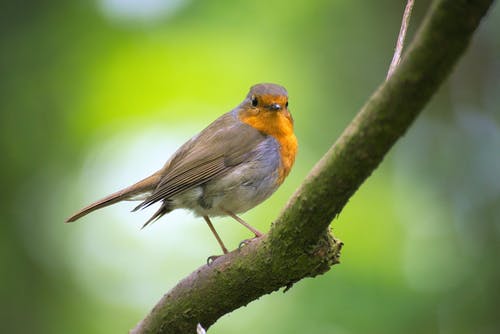
4. Seek not for fresher founts afar; just drop your bucket where you are. S. W. Foss
5. Just to be is a blessing, just to live is holy. Abraham Heschel
6. Just pray for a tough hide and a tender heart. Ruth Graham
7. A character in the movie Postcards from the Edge, sends home a postcard that says, “Having a wonderful time. Wish I were here.”
8. When the pond dries up and the fish are lying on the parched earth, to moisten them with one’s breath or damp them with spittle is no substitute for flinging them back into the lake. Don’t enliven people with doctrines, throw them back into Reality. For the secret of life is to be found in life itself—not in doctrines about it. Anthony de Mello
9. I was taught that the way of progress is neither swift nor easy. Marie Curie
10. One ought, everyday at least, to hear a little song, read a good poem, see a fine picture, and, if it were possible, to speak a few reasonable words. Johann Wolfgang von Goethe
11. Most of this world’s useful work is done by people who are pressed for time, or are tired, or don’t feel well. Douglas Smithall Freeman
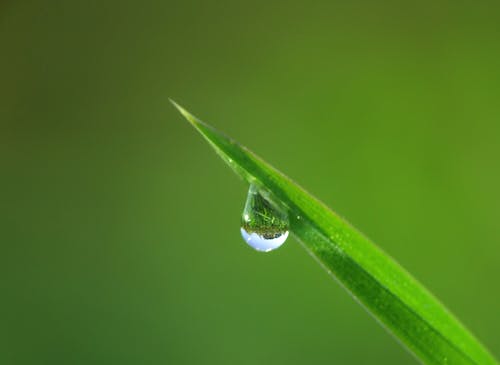
12. Though we travel the world over to find the beautiful, we must carry it with us or we find it not. Ralph Waldo Emerson
13. Compared with what we ought to be, we are only half awake. The human individual lives usually far within his limits; he possesses powers of various sorts which he habitually fails to use. William James
14. Life can only be understood backward, but it must be lived forward. Soren Kierkegaard
15. Every blade of grass has its Angel that bends over it and whispers, “Grow, Grow.” Talmud
16. The greatest sin is fear… The best day is today… The greatest mistake is giving up… The most expensive indulgence is hate… The most clever person is he who always does what he thinks is right… The best part of any religion is gentleness and cheerfulness… The best gift is forgiveness. Frank Crane
17. It is sad to grow old but nice to ripen. Brigitte Bardot
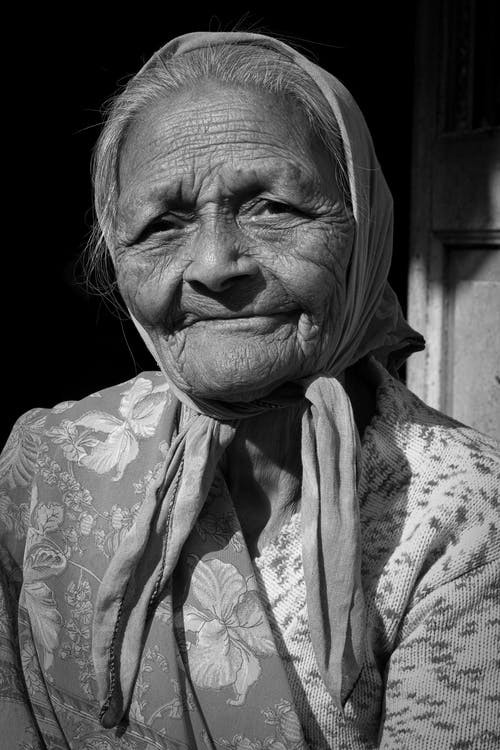
18. Life is precious not because it is unchangeable like a diamond, but because it is vulnerable like a little bird. To love life means to love its vulnerability, asking for care, attention, guidance, and support. Henri Nouwen
19. How we spend our days is, of course, how we spend our lives. Annie Dillard
20. Everything that happens to you is your teacher. The secret is to learn to sit at the feet of your life and be taught. Polly Berrien Berends
Did any of these quotes catch your attention? If so, which one(s)? Why?
Do any of the pictures give you pause? If so, which and why?
Do you have a quote on life that you’d like to share with us?
For today’s video, I chose Marty Haugen’s beautiful song, “Eye Has not Seen.” The lines that touched me today were these: “Come give us the mind of Jesus”…And “All our days are in your hands…” I hope this song and pictures speak to you wherever you may be at this time in your life.
Once again I invite you to respond to anything in this reflection.
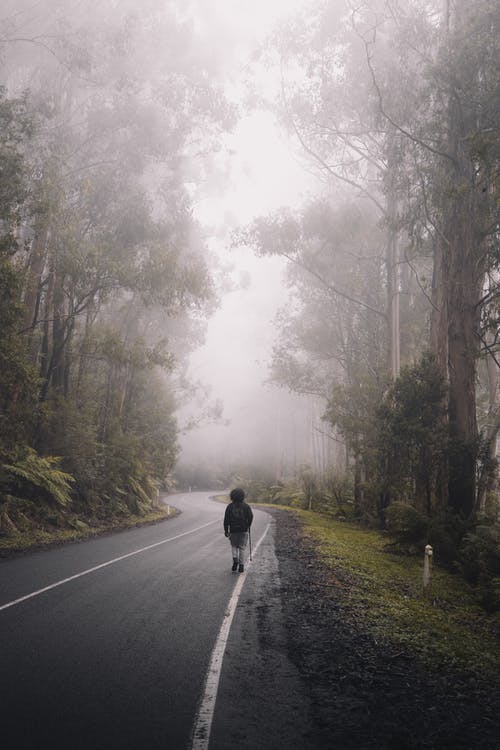
Wayside Shrines: Every Step Matters
I was thinking about wayside shrines the other day. You know, those small shrines or religious markers that dot the roadsides—especially throughout Europe. I saw some while I was visiting the Czech Republic with my parents and sister in 1995. Some of the shrines consisted of a simple crucifix within a box-like structure to help shield it from bad weather. Others were small chapels big enough for a few people to step inside and say a little prayer before continuing on their way. Some shrines were dedicated to Mary or to some other saint. St. John Nepomucene was by far the most popular in Bohemia. Most of the shrines were very old. And here was the surprising part: Some were adorned with fresh flowers. These little off-the-beaten-track shrines had fresh flowers. That means someone had put them there recently.
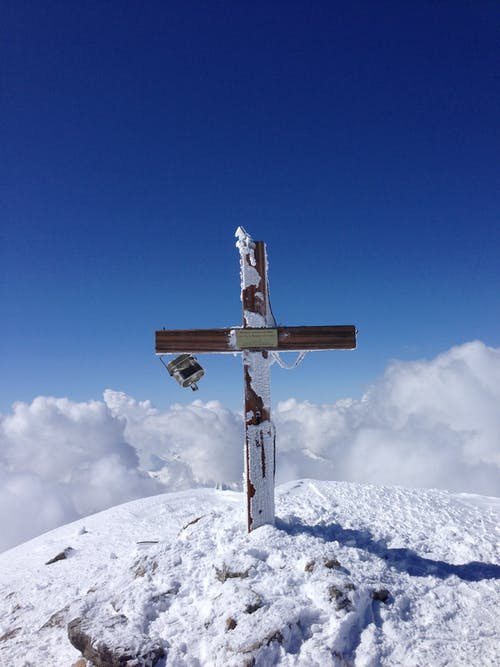
The flowers surprised me. Why? Because during the Communist occupation of Czechoslovakia (1948-1989), the Russians worked hard to stamp out religion. And, to a large extent, they succeeded–or so it seemed. They closed seminaries and many churches. When we attended Sunday Mass in one town in ’95, the presider was not a Czech priest. They were rare. Our priest was from Poland. The congregation consisted mostly of elderly people—predominantly women. And yet those wayside shrines had somehow managed to survive the Soviet crack-down on religion, and today anonymous believers still continue to adorn them with flowers.
(Footnote: Throughout the country, we saw many huge, garish monuments that the Russians erected to commemorate their “liberation” of Czechoslovakia in 1948. I saw no fresh flowers on those “shrines.” But our relatives took us to a small monument in honor of the American troops who liberated parts of the Czech Republic in the final days of the war in 1945. My father’s cousin, who was a teenager at that time, said, “We still remember with great respect and gratitude the American soldiers who really liberated us from the Germans.” And sure enough, in front of this “shrine,” there were several large bouquets of fresh flowers.)

We don’t have many wayside shrines in the United States today. Our belief in the separation of Church and State probably prevents people from putting up crosses or statues of saints along the expressway or roadside. Yet, I have seen many make-shift shrines along our roads and highways usually put there to mark the spot where someone’s loved one was killed in a car accident. I suspect such “shrines” are tolerated by the “authorities” for a certain amount of time before they are gently removed. I don’t know about you, but I always say a prayer for the deceased person(s) and their loved ones as I drive by one of these shrines.
Wayside shrines serve several important purposes. Making pilgrimages to holy places was a popular religious practice during the Middle Ages and later. Sometimes these wayside shrines told pilgrims they were on the right road. The shrines also provided a place for wayfarers to stop and rest and to offer a little prayer to Jesus or to the saint who was being honored. But for me, wayside shrines are symbols of several important truths. First, life is a journey. We are all on the road. And we are all on our way “home.” These wayside shrines also tell us that we can encounter Divinity wherever we may be on our journey—in large cities, in small towns, in the rural countryside, or in the proverbial “middle of nowhere.” And God walks with us whether we are just starting out, or we’re somewhere in the middle of our journey, or we’re nearing our final destination. And finally wayside shrines remind us that every step along our life’s journey matters. Every step is holy.
Have you had any experience with wayside shrines–or with any shrines? I welcome you to share that experience with us.
Does the image of “life as a journey” speak to you in any way? If so, how?
When are you most aware of the fact that every step of your life is holy?
PS: Thank you for your prayers for last week’s retreat at the St. Cyril and Methodius Sisters’ beautiful place in Danville, PA. I also want to thank Sister Jean for inviting me to lead this retreat and for taking care that the retreat ran smoothly. And thanks to Chris, their “IT Guy,” who orchestrated all the technology for the week–no small task! And finally, a BIG thank you for all who participated in the retreat. It was a privilege for me to walk with you throughout the week!
Our video is “Every Mile Mattered” by Nichole Nordeman. For me, the most intriguing line is: “Mercy always finds a way to wrap your blisters up in grace…” I hope you enjoy this.
I welcome you to share a response to this reflection, the pictures, or the video! I love hearing from you!
Celebrating Grandparents
Pope Francis has declared the fourth Sunday in July as World Day for Grandparents and the Elderly. The Sunday was chosen because it will always be close to the feast of Saints Joachim and Anne, Jesus’ maternal grandparents, which we celebrate on July 26. In honor of this day, let’s look at some of the reasons why grandparents are so important.
1. Grandparents can have a great impact on their grandchildren’s lives. Nine out of ten adult grandchildren say their grandparents have influenced their beliefs and value system. As writer David Dayler has said, “Perhaps the most powerful means of transmission of the faith is through the lived experience of those who have traveled the journey before us.”

2. Grandparents provide a sense of security. Although parents are largely responsible for giving their children a sense of security, grandparents can deepen and expand that sense. If children are in trouble, they know they can always run to grandma or grandpa.
3. Grandparents reduce stress. A 2014 study out of Boston College said this: “An emotionally close relationship between grandparents and grandchildren is associated with fewer symptoms of depression for both generations.”
4. Grandparents offer a link to children’s family history and culture. Grandparents often share valuable information with their grandchildren about their family origins, makeup, culture, customs, and faith traditions. The simple stories grandparents tell about the past help give their grandchildren a sense of history and belonging. And it is largely through their grandparents that children first learn that their parents were once children too.
5. Grandparents widen the circle of love for their grandchildren. If children feel loved by their parents, that’s wonderful. But that circle of love is expanded when they realize how much they are also loved by their grandparents. That prepares children for widening their own circle of love especially by forming friendships with others.
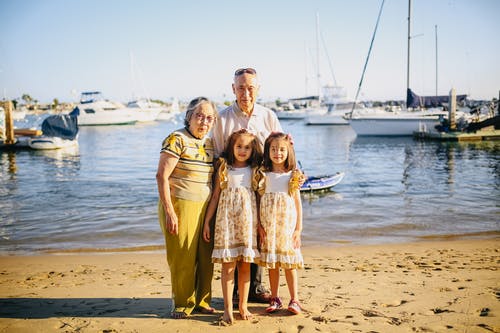
6. Parents are great learning-partners. Grandparents are often the best partners for helping their grandchildren discover the wonders of life. I am always amazed at the number of grandparents and grandchildren I see together in the park, at the beach, in science museums, at the zoo, at the botanical gardens, and even at Mass together. (That reminds me of this true story. A little girl went to Mass with her grandparents. She had seldom been at Mass before. When the priest and deacon walked up the aisle in the entrance procession, the little girl turned to her grandpa and whispered, “Which one is God?”)
7. Grandparents are an economic powerhouse. A recent MetLife survey found that grandparents spend an average of $1700 a year on their grandchildren. This money is often used to help pay for child-care, housing, and education. But, of course, grandparents also buy gifts for their grandchildren. What are the two most popular gifts? Clothing and books!
Here are a few more facts about grandparents. In the U.S., over 80 million people are grandparents. That is one-third of the adult population… The majority of grandparents are between the ages of 46-64… Grandchildren help grandparents too. They can boost cognitive performance in older persons, they can help build a stronger immune system in their grandparents, and they give their grandparents an incentive to work for a better future. After all, their grandchildren and great-grandchildren (etc.) will be living in the future we are creating now. And finally, grandchildren can expand grandparents’ knowledge. Many grandparents know, if you’re having a problem with your cellphone or the TV remote, just hand it to your grandchild!
Let’s conclude with a few quotations about grandparents:
“If nothing is going well, call your grandmother.” (Italian proverb)
“Grandfathers are just antique little boys.” (Anonymous)
“Grandparents make the world a little softer, a little kinder, a little warmer.” (Anonymous)
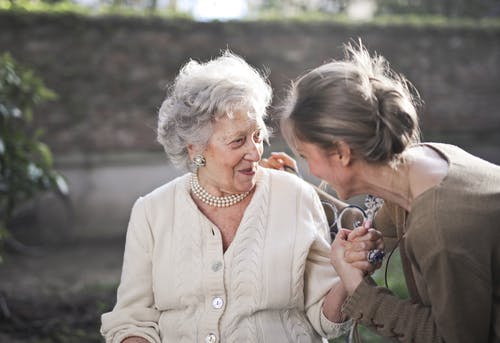
“Sometimes grandmas and grandpas are like grand-angels.” (Lexie Saige)
Reflective questions:
+ What do you remember most about your own grandparents?
+ If you are a grandparent, what has that experience been like for you?
+ Can you think of any other reasons why grandparents are so important?
PS: I ask your prayers for a retreat I will be facilitating at the St. Cyril Spiritual Center in Danville, PA from July 19-26. This is a blended retreat, both in-person and virtual. Thank you for your support!
I have two music videos today. The first is “In Color” written and sung by country singer Jamey Johnson. This tribute to his grandpa won the award for best country song in 2008. The second video is called “Grandma’s Hands” and was written and sung here by Bill Withers.
“In Color” by Jamey Johnson:
“Grandma’s Hands” by Bill Withers. Withers said this song was “the favorite thing I’ve written.” It tells of his Grandmother Calloway in rural West Virginia who really did look after unwed mothers in her area as well as her own family. I’ve written out the lyrics below the video.
Grandma’s hands clapped in Church on Sunday morning… Grandma’s hands played a tambourine so well….
Grandma’s hands used to issue out a warning. She’d say, “Billy don’t you run so fast… Might fall on a piece of glass… Might be snakes there in the grass…” Grandma’s hands.
Grandma’s hands soothed a local unwed mother… Grandma’s hands used to ache sometimes and swell… Grandma’s hands used to lift her face and tell her. She’d say, “Baby, Grandma understands… That you really love that man… Put yourself in Jesus’ hands.” Grandma’s hands.
Grandma’s hands used to hand me a piece of candy… Grandma’s hands picked me up each time I fell…Grandma’s hands, Boy they really came in handy. She’d say, “Matty, don’t you whip that boy… What you want to spank him for?… He didn’t drop no apple core.”
But I don’t have Grandma anymore… If I get to heaven I’ll look for Grandma’s hands.
+ Once again I invite you to respond to this reflection below. We all enjoy hearing from you!