When the Only Way Forward Is Through
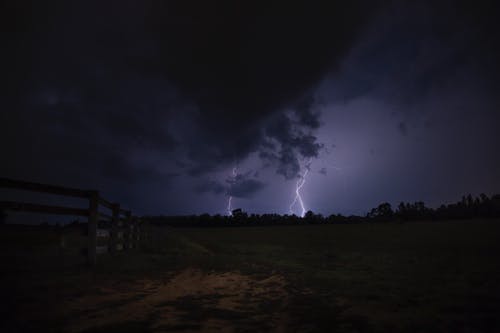
We all have times when the way forward seems difficult, frightening, or even impossible. What lies before us (choose your image) is a raging river, a towering mountain, a dark abyss. Perhaps you have suffered a major financial setback… or you’ve gotten some bad news from your doctor… or a relationship you treasured suddenly ends… or you are exhausted from being a caregiver… or a loved one dies… or you feel totally abandoned by God. You sense you can’t go forward, and so you begin looking for a way around this thing, or under it, or over it. You might even be tempted to just stay put or even to turn back. But sooner or later you realize: the only way forward is through.
Writer Max Lucado says that the word through is one of God’s favorite words. Scripture tells us that “God gets us through stuff,” he says. For example, God got the Israelites through the Red Sea (Ex. 14:22), through the wilderness (Deut. 29:5), and through the dark valley (Ps. 23:4). God got Mary and Joseph through the birth of Jesus in Bethlehem through their flight into Egypt, and through their trek back to Nazareth. God got Jesus through his public ministry, through his frustrations with his apostles, through his struggles with his enemies, and even through his arrest, trial, crucifixion, and death.
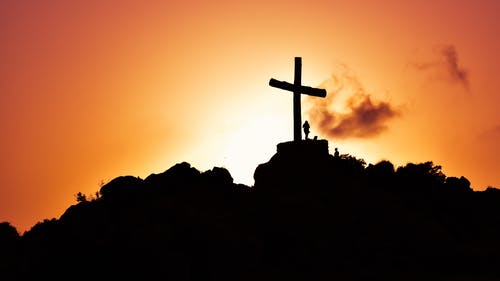
God gets us through stuff by reminding us that the way through will not necessarily be painless. And that’s okay. In fact it can be a good thing. Why do I say that? Because life presents us with many examples of pain leading to success, joy, newness, and life itself. As children, maybe we saw the pain of doing our homework lead us to success in school. Later in life we experienced or witnessed how labor pains produced a brand new life, a child. Or we saw how the pain of preparing for an athletic competition ended in victory. Or the pain of a knee replacement eventually led to carefree strolling. Or how the pain of a disagreement could eventually lead to the joy of a deeper relationship. Pain is not always an enemy. Often it can be the midwife of new life, new love.
God gets us through stuff also by sending us “angels” to help us. I’m not talking about heavenly angels (although I’m not dismissing them either). But I’m talking here about human angels who come to us in all kinds of forms: a supportive loved one, a good friend, a competent doctor, a caring nurse, a wise spiritual director, a loving child, a thoughtful co-worker, a kind neighbor, a prayerful parish community, and even a faithful pet. Or God sends an “angel” in the form of a song, a book, a scripture passage, or a “piece of beauty” in the natural world. But we must be ready to admit we need help and humble enough to accept it when it is offered.

And finally, there’s one more thing that helps us to cross raging rivers, climb high mountains, and venture into the dark abyss: The belief that God is always bringing about good. God can’t help it. It’s God’s very nature to continuously bring forth goodness, to always create more beauty, to forever pour out unending love. God is powerful, imaginative, and loving enough to bring about good—even from our pain and sorrow, our seemingly hopeless situations, and from the tangled messes of our lives. That’s why, when the only way forward is through, we can take that first step, trusting not in ourselves but in our Beloved and Bountiful God.
For reflection:
What have been some of the “rivers, mountains, or abysses” in your life that you have had to go through? What helped you to move forward?
Have you ever helped someone else through a really difficult time? If so, how did you help?
Today’s video is “Shoulders” performed by “For King and Country.” Maybe the song’s refrain can be our mantra for today as we say to God, “My help is from YOU!”
I gladly welcome below your comments, additions, and observations on today’s reflection:
Things I’ve Come Across Recently
Every now and then I like to list some “things” I’ve come across recently. These are things I’ve heard, seen, read, thought, or just wondered about. They’re in no particular order.
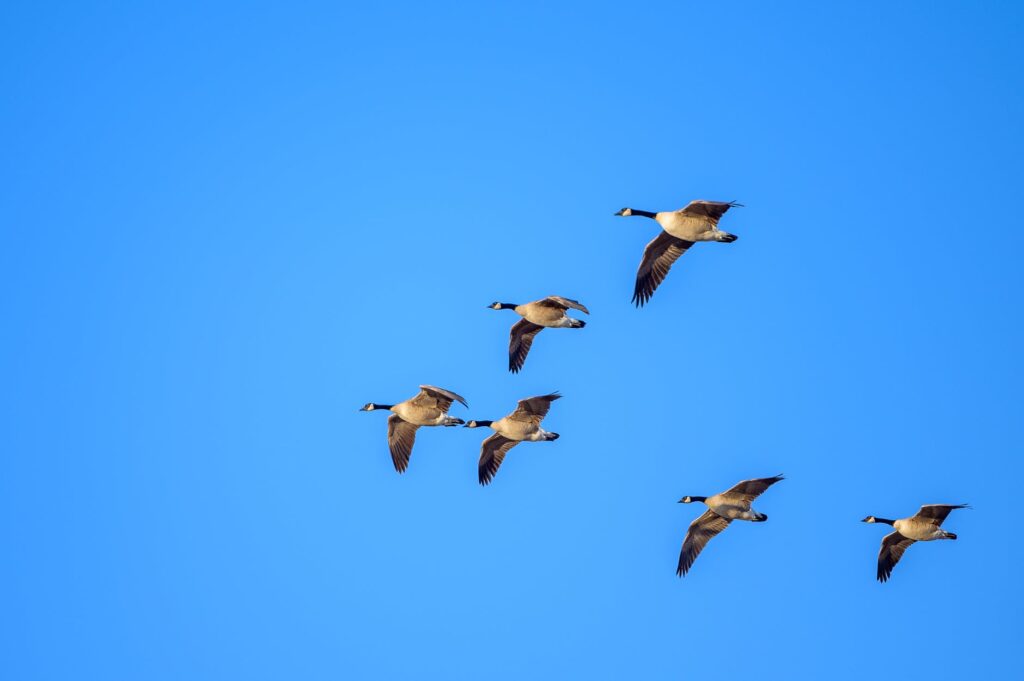
1. The other day I saw a flock of geese take off from a lake in a park. They made quite a bit of racket as they rose from the water wildly flapping their wings. As they got higher, they were highly disorganized—a haphazard bunch of individual geese honking at each other and, at times, almost crashing into each other. I spontaneously said to them: “You remind me of my country!” Later I thought, I could have also said, “You remind me of my Church!” But as the geese flew farther away and higher up, I could see the letter V emerging out of that squawking chaos. One goose soon assumed the role of leader, forming the tip of the letter V. Others began to fall in line—more or less. Their formation wasn’t a perfect V. There were stragglers. But soon the majority of the flock clearly resembled a V and moved forward together. And that gave me hope.
2. According to a Gallup survey analysis released in March 2021, 47% of Americans report belonging to a church, synagogue, or mosque. This is the first time in 80 years that Gallup data has shown membership dropping below the majority.
3. The U.S. bald eagle population has grown fourfold in the past decade, according to a March report from the U.S. Fish and Wildlife Service. (Go, Eagles!)
4. Speaking of animals, did you know: A snail can sleep for three years… A grizzly bear’s bite is strong enough to crush a bowling ball… It takes a sloth two weeks to digest its food… The heart of a shrimp is in its head… The oldest evidence of domesticated cats dates back 9,500 years… A group of ferrets is called a business…?
5. A study out of Harvard University discovered a way for you to feel more optimistic. Take two minutes a day to write a short positive message to someone close to you or someone who supports you. People who did this for 21 days scored significantly higher in optimism and life satisfaction.
6. Here are some quotes by Max Lucado, a favorite writer of mine: “Forgiveness is unlocking the door to set someone free and to realize you were the prisoner… Feed your fears and your faith will starve. Feed your faith and your fears will… No one can do everything, but everyone can do something… You are the only you God made.”
7. Andrea Demirjian has written a book entitled, Kissing: Everything You Ever Wanted to Know about One of Life’s Sweetest Pleasures. (You might be wondering why a nun would be interested in such a book! I plead the Fifth!) The author explains that our kissing, both giving and receiving, communicates our care and affection for people—whether it is a romantic affection or a filial affection for a family member or friend. Kissing can burn calories—although not many unless it is lengthy passionate kissing. Kissing can boost self-esteem. Kissing can also increase your heart rate and thus lower your blood pressure.
8. A recent study out of Harvard has shown that “Spirituality and a sense of awe seem to be hard-wired into our brains.” Another researcher in Philadelphia has concluded that religion or spirituality “is a very basic property of who we are as human beings.” The part of the brain these researches focused on is a region called the periaqueductal gray. A neurosurgeon at the Boston University School of Medicine has come to this conclusion: “…the brain devotes significant metabolic and neural resources/real estate to what we call religion or spirituality.”
9. Some of you know that my nickname is Dolly. So, my family calls me Dolly or Aunt Dolly. Recently Anne, the wife of one of my nephews, began typing a letter to me. When she typed “Hello Aunt Dolly,” her autocorrect changed it to, “Hell Aint Silly.”
10. My friend Bob always sends me his notes from books he’s read. What a gift those notes are for me! Here are two quotes by the American Quaker Douglas V. Steere. I think they are a good way to end today’s reflection: “Life is lent to be spent… Holiness is nothing short of a life of attention and the abandonment to the besieging love of God.”

Did anything here stand out for you or speak to you today—a word, a phrase, a thought? If so, what and why? Would you like to share this with us below?
ANNOUNCING: A VIDEO SURPRISE!
Here is a video that advertises my upcoming virtual retreat sponsored by the Sophia Center in Atchison, KS on Oct. 29-30. It is posted on their website, but I want to share it with you too. It features Donna Coleman, my contact person at Sophia Center, and me! I say just a few words about the upcoming retreat (about 3 1/2 mins.) So if you’ve never seen me in person, here’s your big chance! (I hope you’re not disappointed!) Of course, you can skip this ad if you want. There’s no obligation to watch it.
www.sophiaspiritualitycenter.org
Here is a simple, beautiful little song written by John Michael Talbot and sung here by Jesse Manibusan: “Open My Eyes, Lord.” In this prayer we ask to see Jesus’ face… to hear his voice… and to love as Jesus loves. Prayer doesn’t get much better than this…
I encourage you to respond below to this reflection. A few simple words are always appreciated!
Cell 101
One way I grow in my appreciation of who God is, is by regularly reading some good science books and articles. After all, theologians have taught for centuries that we can catch glimpses of our Divine Creator by observing, interacting with, and pondering the natural world. Some theologians went so far as to say: “Creation is our first scriptures.” That’s why, from time to time, I write about “science things” on this blog. Today’s topic is the cell. I got much of the information here from the book, What Is Life? by Paul Nurse, a winner of the Nobel Prize in Physiology or Medicine. I also culled a few other sources that my curiosity led me to. Here are some simple yet fascinating facts about the cell.
1. Paul Nurse calls the cell “biology’s atom.” That’s because everything that is alive is either a cell or is made up of cells. The word cell comes from the Latin cella meaning a small room or a compartment.
2. Cells can be teeny weeny or big. If certain single-cell bacteria could line up “shoulder to shoulder” (figuratively speaking, of course), then 3,000 of them would measure one-millimeter across. That’s about the thickness of your credit card! But cells can be big too. The next time you have an egg for breakfast, remember that the entire yolk is a single cell! In the human body, the largest cell is the female ovum or egg (which is smaller than the period at the end of this sentence) while one of the smallest cells is the head of a sperm. It is good to recall that every single human being was once a single cell—at the moment of conception.
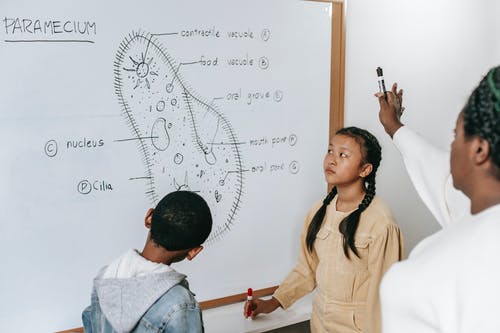
3. Microbes are single-cell organisms. They are the most numerous life forms on Earth. They live in every environment from high atmospheres to the depths of the Earth’s crust. Without them, life would come to a halt. The average adult human body has roughly 30 trillion human cells. For every one of these cells we have at least one microbial cell. Paul Nurse says: “You—and every other human being—are not an isolated, individual entity, but a huge and constantly changing colony made up of human and non-human cells.” These microbial cells live on us and in us, affecting such things as how we digest our food or fight off disease. For a typical human, the total weight of these cells in and on you is between 3-5 pounds! (Next time the nurse weighs me in the doctor’s office, I’m going to say, “Substract 5 pounds please. That’s how much my microbial cells weigh—and they are NOT me!)
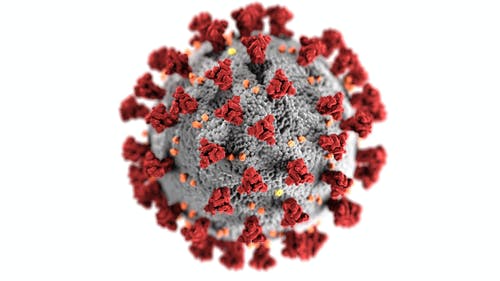
4. I was wondering how the coronavirus fit into all of this. This information is from Eric Mendalhall, professor of biological sciences at University of Alabama, Hunstville. A virus is an infectant agent consisting of a nucleic acid molecule in a protein coat. But a virus is not alive since it cannot perform the functions ordinarily attributed to living things. For example, a virus cannot multiply on its own. It requires a living host cell to begin to multiply. One virus is the coronavirus, a virus that usually infects mammals and birds. Six such viruses were identified before COVID-19—for example, SARS and MERS. But COVID-19 is by far the most infectious and most deadly of the known coronaviruses. Says Mandalhall, “Viruses can’t spread unless people help them to spread. If you don’t pass it on, the virus hits a dead end in its pseudo-life.” We all know the primary ways people can prevent passing the virus on. The main way is by getting vaccinated. Other ways to prevent the passing on of the virus is, of course, wearing masks, washing hands frequently, and not gathering in groups especially indoors. In short, COVID-19 needs one of your living cells to spread. (PS: In the 1918 flu pandemic, there was no vaccine against the flu virus. In fact, science back then didn’t even know the flu was caused by a virus! Also, COVID-19 is more infectious and causes more serious illnesses than the 1918 virus.)
5. The human brain has 80 billion cells. The human body has about 200 different kinds of cells—such as blood cells, bone cells, skin cells, nerve cells, fat cells, and so forth. Cells can live for a few days (like those in your digestive tract) or for a full year (like those in your pancreas.)
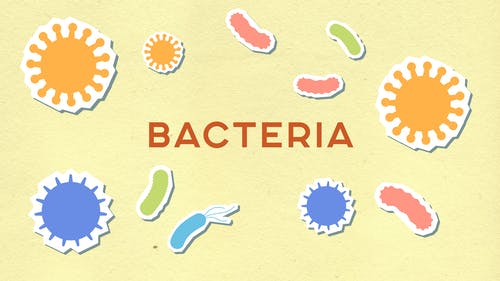
6. Each cell in your body contains your unique DNA, your specific genetic information necessary for directing cell activity. If your strand of DNA was stretched out it would be 6-8 feet long… Cells are constantly being born and dying. Except for your brain cells, 50,000,000 of the cells in your body will have died and been replaced with others—just during the time it took you to read this last sentence!
When you ponder the cell, what does it reveal to you about our Creator God? You might want to sit with that question for a bit. I will offer you just a few of my thoughts here:
What brilliance… what ingenuity… what power… what creativity… what imagination… what wisdom… what love God must possess… God is an artist… an engineer… a lover… the father, the mother of all living things… How alike we humans are on the cellular level. In other words, the deeper we go into each other, the more our oneness is apparent… At the same time, how unique every single human being is. Our DNA is our ID, our unique “name”… God is a lover of uniqueness… a promoter of diversity… the giver of all life. It seems fitting to close with this short prayer based on Psalm 139.
Loving Creator, Thank you, Thank you… for the creation of the cell… and for all the cells that make every living thing on Planet Earth. I thank you for the trillions of cells that form me. And thank you for the strand of DNA in every one of my cells that makes me, me. With the psalmist I pray: “You formed my inmost being… you knit me together in my mother’s womb… I praise you that I am so beautifully and wonderfully made.” Help me to treasure my unique and precious gift of life. Give me a greater reverence for all of life: the unborn, the young, the middle-aged, the elderly, the dying, the refugee, the bullied, the imprisoned. May I reverence birds and bees, otters and orcas, oak trees and blueberry bushes. And may I use my gift of life to serve you joyfully, my Beloved One, and my sisters and brothers all the days of my life. Amen.
* * * * * * * * * * * * *
PS: I will be giving a virtual retreat entitled “Spirituality: The Call to Holiness and Wholeness” Oct. 29-30 (Friday evening and Saturday). I’ve posted more information about this on this page on the right. (Just scroll up to read it.) Check there too for information on an Advent afternoon of reflection (virtual/in person) on Nov. 30 at the Franciscan Center in Tampa, FL. Thank you!
The video is “An Ode to Earth.” It’s labeled “A short tribute to earth and to the people who inhabit it.” The song, by Christopher Tin, is “Baba Yetu,” which is the Our Father in Swahili. It is performed here by the Soweto Gospel Choir. How appropriate for us to sing the Our Father after reflecting on the cell! The movie clips are from the BBC productions “Blue Planet” and “Planet Earth.”
I invite you to add a comment below. Your responses enrich my blog!
Three Poems, Three Lessons
Today I’m sharing three poems with you. The first two were written by friends. The last one is mine. I suggest you read these poems aloud and slowly.
The first poem called “Shapings” was written by Sister Doreen Strahler (1929-2020). A Sister of Notre Dame, she was an elementary school teacher and principal for many years. This poem is from her book A Buffet of Poems to Savor, Enjoy, and Pray (available on Amazon.com).
“Shapings”
“You’ve read that poem quite beautifully,”
my English instructor commended me.
I basked in the light and warmth of her praise
And read even better the following days.
My new music teacher would fuss and would fret:
“Will you watch your timing? No, it’s not right yet.”
The lessons which had been delightful before
Had suddenly become a pain and a bore.
Many long miles I have traveled since then,
with a poem in my heart and a poem in my pen.
But it’s a shame and a waste and I dare say a sin,
that I never more play with my old violin.

For reflection:
“Never underestimate the power of an encouraging word.” Have you ever personally experienced this maxim?
What do you think is the significance of the title of this poem?
*************************************************************************************************
The creator of this second poem wishes to remain anonymous. I will say only that this poet taught English for many years.
“Regret”
Loved wandered into my room today.
I was busy grading papers:
Literary analysis essays on some aspect of The Color Purple, I think.
Or was it a reflection paper on the utter isolation of Blanche in Streetcar?
I forget. But very important stuff, you know.
Love perched on my windowsill, right in front of me.
But I had to move from the desk over to the laptop to type.
Exams to prepare. Budgets to complete. Committee reports to finalize.
More. Important. Stuff.
When I finished
(but wait—am I ever finished with this oh-so-important stuff?),
I turned back to the windowsill.
Bare.

For reflection:
Has love ever “perched on your windowsill”? If so, what “form” did that love take?
What’s really important in your life right now? Do you ever have to let go of the important things for the really important thing?
Have you ever ignored something really important and now regret that you did?
*****************************************************************************************
Watching a loved one suffer is perhaps one of our greatest crosses—especially when we are powerless to relieve their suffering. At times like this, we often resort to simple touch, presence, prayer, and (of course) love. This poem is from my book, When the Blue Heron Flies.
“I Cannot Take Your Pain Away” (To Margaret)
I cannot take your pain away.
I cannot give you back your youth, restore your health,
or make your mind clear and sharp again.
I cannot fill the hollow of your loneliness.
I cannot say, “I know exactly how you feel,”
or “Everything’s going to be okay.”
But I can sit with you.
I can hold your hand if you want me to.
I can be silent or recite the words
we are both straining now to live:
“Yea, though I walk through the valley
of the shadow of death,
I will fear no evil: for Thou art with me.”
I cannot do your believing for you.
But I can and will continue to love you
forever.

For reflection:
When have you felt powerless to help a loved one in need? What did you do?
Has anyone ever helped you when they were powerless? If so, what did they do that helped you during your own time of pain and struggle?
Poems are not written to teach lessons—yet at times, they inadvertently do. Do any of this poems teach a lesson? If so, can you express that lesson in a few words?
PS: Today, October 4, is “World Animal Day.” Established in 1925, this international day celebrates all animals on our planet. It was set on the Feast of St. Francis of Assisi in 1929. This year’s theme is: “Forests and Livelihoods: Sustaining People and the Planet.” Let us pray and act in such a way that we show our appreciation for the diversity of all animals that share our world with us, homo sapiens.
The third poem speaks of Ps. 23, that great psalm of trust in God. I’m offering you a choice for our video today. Both are sung versions of Ps. 23. The first uses some lovely pictures in the background. It is sung primarily in two voices, male and female. The second is a version sung by John Silver. I find it somewhat haunting. The background is just sheep. Sheep eating, sheep standing, sheep following, sheep just being sheep.
Ps. 23 sung with two voices:
Jason Silver and sheep, sheep, sheep:
Feel free to add your response below to the poems, the pictures, the videos, or to someone else’s comment.
“They Have No Wine”
At the wedding feast in Cana, Mary notices that the wine has run out. The fact that she notices this, is in itself somewhat amazing. Amid the hustle and bustle of all those guests, the hum of steady conversation, the loud laughter, and the music and dancing, Mary notices this hidden detail: the wine supply is depleted. In her first century Jewish culture, such a situation bordered on the tragic. It meant that this festive celebration, with its traditional days of feasting, would be brought to an abrupt end—and an embarrassing end for the young couple and their families.
What does Mary do? She seeks out Jesus. Again, even this task wasn’t as simple as it sounds. For the guests would have been divided into two distinct groups: the men on one side and the women on the other. Mary would have to navigate to the other side of the crowd to find her son among all the other men. But she does this and soon she spots him—perhaps laughing with a few friends or even dancing. I see him a little surprised when he sees her. He stops immediately and goes toward her. Now what? he wonders. Is something wrong? What could have made her seek him among the men—in the middle of a party? Mary takes Jesus aside and speaks to him softly. He bends down his head to hers to hear her above all the noise.
And Mary says, “They have no wine.”
Her words are a simple statement of fact, a succinct summary of the situation. She doesn’t go into a lengthy explanation as to how this could have happened and who might be to blame. Nor does she need to tell him what an embarrassment this is for the families. He would know that. She doesn’t tell him how powerless she feels or how bad she feels for the two families. Her coming to him is ample evidence of both. And Mary doesn’t even tell Jesus what he should do. Even when he says to her, “My hour has no yet come,” she knew him well enough and trusted him enough to say to the servants, “Do whatever he tells you.”
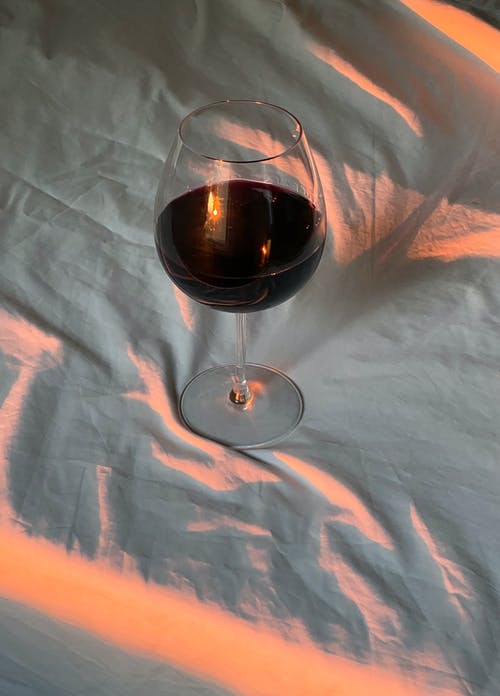
And we all know what happens next. The water is changed into wine. Or, as the poet Alexander Pope wrote so beautifully, “The conscious water saw its Master and blushed.”
In her book, More Hidden Women of the Gospels, Kathy Coffey writes that, in this story, “Mary also models the stance of prayer. Many words are not necessary; God understands the need.” There are times, I believe, where a simple statement of fact can be a very good prayer: “Mom’s sick… Our school is struggling… So many refugees… He needs a job… It’s hard for me to trust you, Jesus…” Sometimes even one word can be our prayer. These past weeks I’ve sometimes prayed with only one or two words: “Covid… Afghanistan… planet earth… Ida… Haiti… our children… our leaders…” Or I pronounce a single person’s name. Then I just sit with the word for a few moments, sometimes letting my heart ache, or eventually listening for what God may be calling me to do. Perhaps there’s something concrete I can do. Or maybe God might be calling me to greater trust, patience, awareness, love.
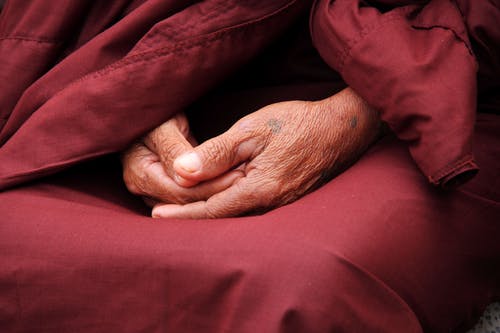
Kathy Coffey offers this suggestion: “Perhaps some complex dilemma you face now awaits resolution—maybe needing you to invite God, through prayer, to enter in. Try phrasing the situation in about five words, as Mary did for Jesus.”
At times when we pray, we might pour out our thoughts and feelings in an avalanche of words. And that’s fine too. But at other times, our prayer can be more like Mary’s “They have no wine.” And sometimes our prayer may even be wordless as we sit in God’s presence… in pain… in wonder… in grief… in fear… in joy… in thanksgiving.
For reflection:
Do you ever pray with few words? If so, how do you feel praying this way?
Have you experienced wordless prayer? If so, when and why does this kind of prayer arise in you?
Mary had to seek Jesus amid the crowd and the din. Does anything ever “crowd your life” or make so much “noise” that you find it difficult to find Jesus? If so, what do you do about this?
Our prayer today can be this beautiful video by Venture Worship. The song is called “New Wine.” As we go about our daily activities, perhaps our mantra can be the closing line: “Jesus, bring new wine out of me.”
As usual, I invite you to share your thoughts and comments below. We all like to hear what our readers are thinking and feeling.