Advent Reflection: The Virtue of Slowing Down
Theologian Doris Donnelly calls Advent “the most difficult season.” She writes, “For all the high drama that surrounds Advent, the truth is we have a hard time getting involved in its mysteries.” She suggest two reasons for this. First, society jumps the gun on Christmas. Retailers start even before Halloween to bombard us with Christmas ads. It’s hard to celebrate Advent with strains of “Rudolph” and “Frosty” running through our heads. Second, Advent is all about waiting, and waiting is a counter-cultural experience. Many of us don’t like waiting for anything—whether it’s for a piece of toast to pop up or a traffic light to turn green.
Several years ago I picked up the book In Praise of Slowness by Carl Honore. It gave me a greater appreciation of the value of slowness in everyday life. I now believe that intentional slowing down can even be a virtue. And it’s also a very appropriate practice for Advent the season of waiting: Mary and Joseph waiting for the birth of Jesus, the world waiting for the birth of our Savior, all of is waiting for the coming of the fulness of the Kingdom of God.
First, a clarification. There is nothing wrong with speed per se. If speed is appropriate for a particular activity, that’s fine. For example, if someone needs our immediate help, we’ll rush to get to them. If we’re in pain, we want speedy relief. But sometimes our love for speed goes too far, becoming (in Honore’s words) “an addiction, a kind of idolatry.” One tragic consequence of living a life of constant hurry is that it makes us live superficially. When we are always rushing about, we can easily fail to make real connections with the world and with one another. Says Honore, “All things that bind us together and make life worth living—community, family, friendship—thrive on the one thing we never have enough of: time.” When we slow down, we are making time for people and things that deserve our time and attention.
So here are some ways we might want to practice the virtue of slowing down this Advent:
+ Be mindful of the pace with which you do things—all things. Are you always in a hurry?
+ Try eating more slowly. Savor instead of gobble.
+ Try doing one thing at a time—instead of three or ten! (When was the word multitasking invented? You don’t have to look it up because I already did. The word multitasking first appeared in a 1965 IBM report talking about the capabilities of the latest computer! Fascinating! At times we probably have to multitask, but I’m suggesting we don’t make multitasking a goal in life.)
+ Pay attention to the individuals you meet regularly: your spouse, children, grandchildren, friends, co-workers. Look at them as if you are meeting them for the first time. Name one thing you appreciate about each one.
+ Slow down enough to notice nature… the color of the sky, the feel of the sun and/or wind on your face, the trees that share your world, the wildlife that you come across—dogs, cats, deer, birds, and even bugs.

+ Notice “strangers” you meet today—store clerks, the person who changes your oil, the letter carrier, the receptionist. After you leave their presence, can you remember what they looked like, what they were wearing, how they spoke? How did you speak to them—kindly or curtly?
+ Make time to really listen to the people you interact with today. Show by your facial expression you care.
+How fast do you drive?
+How fast are your reading this reflection? (To be honest, the very fact that you are reading my blog is a sign that you have made time in your busy day to try to nourish your spiritual life!)
+ Take a few minutes to speak with God, Jesus, the Holy Spirit, or a deceased loved one as you go about your day. Your prayer can be short and sweet like: “Thanks, God, for that beautiful tree… I’m worried about ___. But I trust in you… I need you, Holy Spirit… Jesus, I love you… Mom and Dad, thanks for giving me my love of nature… Honey, I really miss you.”
Let us pray:
Come, Lord Jesus! Come and slow me down. You made time to notice lilies bobbing, birds soaring, bread rising. You made time to dine with acquaintances, stroll along the shore of the Sea of Galilee, hike up into the mountains to pray. You made time to play with children, listen to peoples’ stories, share their joys and sorrows. This Advent give me the grace to slow down for people and for all things that are worthy of my time, attention, and love. I ask for this grace through Mary, the Pondering Disciple, your mother and mine. Come, Lord Jesus, come! Amen.
For reflection:
Is the practice of slowing down something you really need to do this Advent, or is it already a virtue you practice regularly?
What helps you to slow down and pay more attention to the people and things in your daily life?
On a scale from 1 to 10 (1 being not hard at all and 10 being very hard), how hard is it for you to wait?
Has the natural aging process affected your pace of living? If so, in what way?
PS: Just a reminder: I’m on retreat December 4-11 in Florida. I will be praying for all of you in a special way during this time. I ask for your prayers too. Thank you!
For our video today, I chose the ancient hymn, “O Come, O Come, Emmanuel.” This version by Enya is in English and Latin. I found it particularly moving. It helped slow me down…
I invite you to submit a comment to this reflection below. Even a word or two might be helpful for others. Thank you!
Prayer of Thanksgiving for All the Seasons of Life
Eternal God, O Timeless One,
You tell us: “For everything there is a season,
and a time for every matter under heaven” (Eccl. 3:1).
We thank you for all the times and seasons of our lives:
A time to be born and a time to die.
A time to be young and a time to be older.
A time to sow and a time to reap.
A time to laugh and a time to weep.

A time to do and a time to just be.
A time to stay and a time to leave.
A time to be together and a time to be apart.
A time to say hello, a time to say goodbye,
and a time to say hello again with no more goodbyes.
A time to say yes and a time to say no.
A time to hold on and a time to let go.
A time to say “I’m sorry” and a time to say “I forgive.”
A time to follow, a time to lead,
and a time when no one remembers who’s following or leading.
A time for darkness and a time for light.
A time to mourn and a time to celebrate.
A time to toe the line and a time to break the rules.
A time to plant, a time to uproot,
and a time to plant new seeds from what was uprooted.
A time for action and a time for waiting.
A time to ask, “What if?” and a time to bless what is.
A time to be hurt, a time to be held,
a time to be healed, and a time to simply behold.

Eternal God, O Timeless One,
we thank you for all the seasons of our lives,
and for all those who help to make
every season worth living. Amen.
I wish each of you a very Happy Thanksgiving! Thank you for reading my blog! I really cherish our “Sunflower Seeds Community!” God bless you all!
For reflection:
Did any phrases in the prayer stand out for you at this particular time in your life?
Would you add any lines to this prayer?
PS: I will be in Florida from Saturday November 27 until December 11. Next week I’ll be giving talks at the Franciscan Center in Tampa as well as Espiritu Santo Parish in Safety Harbor (See information on the right side of this blog.) I ask your prayers for these events. Then I’m making my annual retreat in Florida from December 4-10. I promise to hold all of you in my special prayer during this time. “Sunflower Seeds” will be posted as usual while I’m gone. I’ve written enough reflections to last until Dec. 20!
Today’s video is Josh Groban’s “Thankful.” Lines that stood out for me in this song: “We hope for what we still can’t see…there’s so much sorrow… we’re all connected… it’s up to us to be the change… there’s so much to be grateful for…”
I invite you to write a comment below…
Why Do We Put People into Categories?
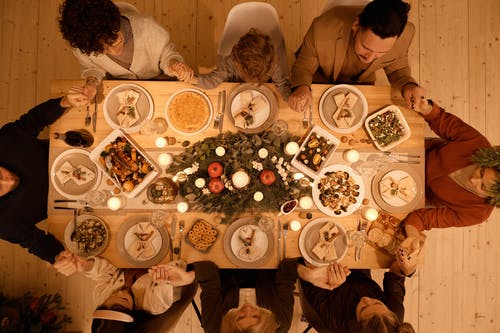
From the moment we are born, we are put into categories. Before gender reveal parties became a fad, someone at your birth would have announced, “It’s a boy!” Or “It’s a girl!” Later we found ourselves in other categories. We were put into Mrs. Toth’s first grade… we rode bus 13… we were in the Blue Bird reading group. As time went on, perhaps someone might have described us as a “tom boy,” a “brain,” a “jock,” a “nerd,” or even a “Cat’lick.”

We were not only put into categories by other people, we put other people into categories as well. We learned words like “old fogy,” “city slicker”, “jerk,” “bully,” and even ethnic or racial slurs. The question arises: Why do we put people into categories? One reason is relatively simple: Human beings are so diverse, so complex, so unpredictable, they can be terrifying. We classify them in order to make them less bewildering or less scary. By categorizing people, we make them more manageable, more controllable. There is a down side (and it’s a BIG one) to doing this. Every time we put people into categories, we put artificial limits on their individuality and uniqueness. Thus we run the risk of missing the truth of who they really are.
Have you ever heard someone say (or have you ever said) something like this?
“She’s a girl, she can’t throw a baseball.”
“He’s a Democrat. You know what that means!”
“He’s a man—what did you expect?”
“She’s a nun; she’s no fun.”
If we look at Jesus in the Gospels, we see that people tried to put him into categories too. When Philip excitedly tells Nathaniel about Jesus of Nazareth, Nathaniel asks, “Can anything good come from Nazareth?” (Jn. 1:45-46) … When the sinful woman anoints Jesus in the house of the Pharisee, the Pharisee thinks, “If Jesus were a prophet, he would know what sort of woman this is.” (Lk. 7:39) … Jesus’ enemies dismissed him as a “glutton” because he enjoyed food and drink… Even Jesus’ apostles tried to put Jesus into his proper place. When Jesus tells them he must go to Jerusalem and suffer and die, Peter says with gusto, “God forbid, Lord! No such thing shall ever happen to you.” (Mt. 16:21-22).

There is evidence in the Gospel that even Jesus struggled with putting other people into categories. When the Syro-Phoenician woman begs him to cure her daughter, Jesus, at first, refuses to do so because she is not of the house of Israel. But her spunky response to his refusal ends up altering not only his perception of her, but also his perception of himself and his entire mission! Most of the time in the Gospel, however, Jesus is shown refusing to put people into categories. He publicly praised the Roman centurion for his great compassion towards his servant and for his strong faith. He saw children not as non-entities, but as precious human beings who could teach adults a lesson or two about humility, innocence, and trust. Jesus refused to see women as second-class citizens. Rather he treated them with respect, offering them genuine friendship. Consequently, many women became Jesus’ closest and most loyal followers. Even on the cross, Jesus saw the thief being crucified next to him as “good” and gave him a promissory ticket for heaven.
What are some of the factors that prevent us from relating to individuals as individuals? The first two factors are time and energy. It takes time to get to know people. It takes energy too. It’s much simpler and quicker just to assume we know who people are—even without meeting them on a level where self-revelation has time to take place! Another factor that interferes with getting to know individuals as individuals is this: people are constantly changing. What was true about someone a year or ten years ago may not be true today. But it’s easier to keep people frozen in the past than to discover how they have changed and grown.
As Christians, we believe God knows us as individuals, as unique human beings, as one-of-a-kind-ers. If we are made in God’s image, then aren’t we also called to relate to others as individuals—as best we can? In fact, learning to relate to others as individuals has a name: it’s called love.
For reflection:
+ Name some of the categories you put people into… like old/young… inexperienced/wise… a certain racial, ethnic, or religious group… a certain occupation
+ Are there individuals in your life right now whom you have put into categories? Who are they? Why have you done this?
+ Have you ever experienced someone putting YOU into a category? How did that make you feel?
Here’s an old hymn written from the 19th Century: “There’s a Wideness in God’s Mercy.” The original version was written by Frederick W. Faber. It is sung here by Ed Bolduc. God doesn’t put people into categories because of the breadth of God’s point of view and the wideness of God’s love and mercy…
I invite you to write a comment below to anything in this blog today.
A Visit to My “Memory Storage Locker”
I rummaged through my “memory storage locker” in my head recently and found these three little stories to share with you today:
The Babysitter’s Mite
I used to babysit quite a bit growing up. I earned 50 cents an hour back then. One Saturday evening when I was about 13, I babysat three kids from 7:00 to 1:00. Six hours times 50 cents would be $3.00. But the couple was generous and gave me a crisp new five dollar bill. I was pleased as I tucked it into my jacket pocket. I was already contemplating what I could use it for. The next morning I wore that same jacket to Church. At Mass we had a guest homilist, a priest who served in a faraway mission somewhere. He vividly described the poverty in his mission and the work he and others were doing. I was deeply moved. After he spoke, our pastor said that the second collection would be given entirely to Father and his mission. I wanted to give a dollar or two, but all I had was that five dollar bill. When the collection basket came along, what did I do? I tossed the bill into the basket. As I did, I felt a little regret, but then my regret gradually eased, and I thought, “That was the right thing to do.”

**************************************************************************************************
What’s Wrong with God
As a writer of books, I seldom get written feedback from readers. So if my publisher ever forwards me a letter from one of my readers, I get excited. One day my publisher forwarded a letter from a reader in another state. It was brief: “Dear Sister Melannie, Your reflection #64 in Everyday Epiphanies changed my life. I just wanted you to know. Thank you.” And he signed his name. Of course, I wondered, “What in the world did I write there?!” So I got out the book and read reflection #64 (It’s reflection #45 in the 2013 edition of the book). Here’s what I wrote:
Sometimes I say to God, “You know what’s wrong with you?”
And God asks, “What?”
And I begin to enumerate: “You love too indiscriminately… You trust people way too much… You’re far too forgiving… And you’re entirely too patient!”
Having said that, I invite God to tell me what’s wrong with me. But all I hear God say is, “You know, Honey, I really get a kick out of you!”
Which only proves my point.

*************************************************************************************************
The Candy Bar Story
This true story comes from my teaching days. In the late 70s, I was teaching at Cardinal Gibbons High School in Raleigh where I had a pretty heavy schedule. I was also put in charge of the school’s candy bar drive that year. I asked some of my students to help distribute the boxes of candy, to record how many boxes each student requested and sold, and to count the money. At the end of the two weeks, when the records were tallied, we had made a decent profit to benefit the school. Everyone was happy including our new principal, Sister St. Colette. But about a month or so later, she called me into her office and handed me a brown envelope mailed to her. There was no return address. “I think you should see this,” she said. When I opened the envelope I found not only a note, but also about $40 in cash. The hand-printed note said this: “Here’s the money I stole from the candy bar drive. I’m sorry I took it. Please pray that we all can learn from our mistakes and do the right thing.”
We never learned who the student was. But his or her change of heart had a deep impact on me and my teaching. Throughout my years in the classroom, whenever I became disheartened by some of the poor choices a few of my students were making, I always remembered this particular student and reminded myself, “At times kids will make poor choices. But sometimes they will learn from them and choose to do the better thing, the right thing.”

Did any of these stories speak to you today?
Have you ever had similar experiences?
Is there a story from your “memory storage locker” that you would like to share with us below?
Our Christian tradition says there are basically four types of prayer: praising God, asking for help, giving thanks, and asking for forgiveness. Today’s video is the song “I’m Sorry” by Toby Mac. It is a lament, that is, a prayer that asks for forgiveness. In this song Mac recounts how, in the past, we Christians sometimes did terrible things in God’s name. We went astray from Jesus’ call to give and to love. At times we Christians were (and are!) complicit in some grave injustices. In this song we ask God’s forgiveness for any wrong we have done as individuals, as a Church, as a nation. And we beg: “Wake us up, Lord! Wake us up…”
PS: Thursday, November 11 is Veterans’ Day, a federal holiday here in the U.S. dedicated to all who have served or are currently serving in the Armed Forces. To honor this day, I’m offering the video below. It’s Tim McGraw’s “If You’re Reading This.” It features one veteran, Frankie Phillips, who didn’t make it home from Afghanistan. As someone said, “You can’t appreciate the ocean unless you appreciate a single drop of water.” So too, you can’t appreciate the toll of war unless you appreciate a single member of the Armed Forces. Let us pray for all of our veterans, especially those who didn’t come home and those who returned with devastating wounds that need our love and care…
I invite you to write a comment below. My other readers (and I!) always enjoy hearing from you!
November: A Time to Reflect on Death
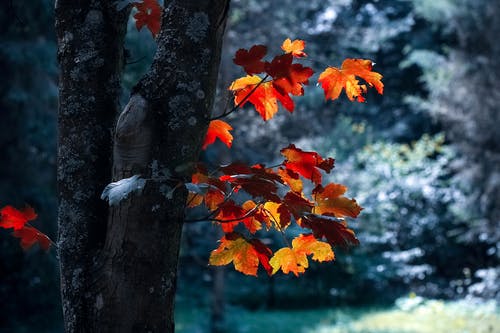
November is the month traditionally dedicated to reflecting on death. For those of us living in the northern hemisphere, this is an appropriate time to do this reflecting, for we are experiencing the season of fall. For us, the days are getting shorter, the temperatures are dropping, and the leaves are cascading from the trees. In the Church calendar, November 1 is the feast of All Saints, when we honor all those men and women who have gone before us in the faith—especially those not formally canonized. November 2 is called All Souls Day, the Feast of the Poor Souls, the Day of the Dead, or the Commemoration of All the Faithful Departed. We remember in special prayer all the deceased who are “awaiting their entrance into the fullness of heaven.”

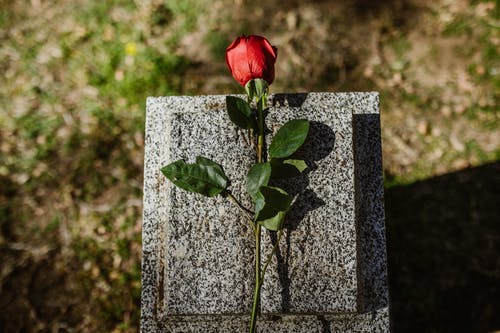
So today, let’s take a few minutes to reflect on death. As we know, nothing is more certain than the fact that we will die. Yet, for most of us, nothing is more uncertain than the time and manner of our death. In his Rule, the great St. Benedict counseled his monks “to keep death daily before their eyes.” (Rule 4.47) Was he suggesting something morbid? Not really. Perhaps Benedict believed what the poet Carlos Castaneda said about death: “Death is a wise advisor.”
How does our death advise us? Remembering our death can lead to a greater appreciation for the gift of life. Death reminds us how every single day is immeasurably precious simply because our days are limited. Anne Lamott writes: “My deepest belief is that to live as if we’re dying can set us free. Dying people teach you to pay attention and to forgive and not to sweat the small stuff.”
Death, paradoxically, is the ultimate mystery of life. What adds to death’s mystery is the fact that no one really knows what happens during death and after death. We Christians, of course, believe that death is the portal to everlasting life. But what exactly does that mean? Volumes have been written on what heaven is going to be like, but most are merely speculation. It’s good to keep before us the image Jesus used to describe heaven: a wedding reception. Wedding receptions are ordinarily times of joy, love, happiness, great food and drink, wonderful music and dancing, meeting old friends and making new ones, good conversation, and lots of laughter. If we truly bought into Jesus’ image of heaven, maybe we wouldn’t be so afraid of death.
To have some fear of death, of course, is only human. Even Jesus in Gethsemane was terrorized by his impending crucifixion and death. But sometimes the fear of death can lead to the denial of death. This happens when we refuse to think about death, talk about death, see a doctor, or even write a will—as if we were going to live forever.
Over the years, many people have said some wise things about death. I’ll close with a few I like:
1. “I think the dying pray at the last not ‘Please,’ but ‘Thank you,’ as a guest thanks a host at the door.” Annie Dillard
2. “The one who practices mercy does not fear death.” Pope Francis
3. “Death is not the enemy who puts an end to everything, but the friend who takes us by the hand and leads us into the Kingdom of eternal love.” Henri Nouwen
4. “When we die, we leave behind us all we have, and take with us all we are.” Anonymous
5. “When I stand before God at the end of my life, I would hope that I would not have a single bit of talent left and could say, ‘I used everything you gave me.'” Erma Bombeck
6. “Life should not be a journey to the grave with the intention of arriving safely in a pretty and well-preserved body, but rather to skid in broadside in a cloud of smoke, thoroughly used up, totally worn out, and loudly proclaiming, ‘Wow! ‘What a ride!'” Hunter S. Thompson
For Reflection:
+ Did anything stand out for you in today’s reflection—perhaps one of the quotes?
+ How often do you think about death—especially your own death?
+ Has death ever been a wise advisor for you? If so, in what way?
+ When you find yourself fearing death, does anything ease your fear?
PS: A big “Thank You” to all who made this past weekend’s virtual retreat sponsored by the Sophia Spiritual Center in Atchison, KS. Twenty of us explored together “Spirituality: The Call to Holiness and Wholeness.” The wonderful participants were from Kansas, Oklahoma, Missouri, Texas, Michigan, and Ohio. I was inspired by their backgrounds and their obvious goodness! And a special thank you to my contact person Donna Coleman for all she did to help make the retreat run so smoothly—especially by being my great DJ!
John Shea wrote, “The best way to prepare for death is to develop a capacity for surprise.” This hymn, based on St. Paul’s words in 1 Corinthians 2:9, echoes that sentiment. It’s called “Eye Has not Seen” and it’s written by Marty Haugen.
I invite you to write a comment below. Our readers (and I too!) love hearing from you.