Some Humor to Celebrate 10 years!
Today I’m finishing our celebration of the tenth anniversary of this blog by devoting today’s post to humor and laughter. I firmly believe that wholesome, healthy laughter is a sign of the presence of the Holy Spirit. I hope some of these 25 snippets of humor will cause you to smile, chuckle, groan, or maybe even laugh! Here goes:
1) I went to a psychic and knocked on her door. She asked, “Who is it?” So I left.
2) I told my suitcases that there would be no vacation this year. Now I’m dealing with emotional baggage.
3) What did the one ocean say to the other ocean?
Nothing. It just waved.

4) God gives every bird its food, but he doesn’t throw it into the nest.
5) One thing the discovery of the North Pole revealed is that there is no one sitting on top of the world.
6) Working in a mirror factory is something I can totally see myself doing.
7) Did you hear about the new restaurant called Karma? There’s no menu. You get what you deserve.
8) When everything is coming your way, you are in the wrong lane.
9) I got over my addiction to chocolate, marshmallows, and nuts. I won’t lie, it was a rocky road.
10) What do you call a pig with laryngitis? Disgruntled.
11) I lost my job as a stage designer. I left without making a scene.
12) A Roman Legionnaire walks into a bar, holds up two fingers, and says, “I’ll have five beers.”
13) A teacher took her second graders to the school Mass. When they got back to the classroom, she asked them if they had any questions about what they had seen or heard. One boy raised his hand and said, “At the beginning of Mass, why did father smell the altar?”
14) What do dentists call their x-rays? Tooth pics.
15) I went to buy some camouflage trousers yesterday, but I couldn’t find any.
16) Life is never so bad at its worst that it is impossible to live; it is never so good at its best that it is easy to live.
17) Wife: “Doctor, my husband always speaks during his sleep. What can I give him?” Doctor: “Give him a chance to speak when he is awake.”
18) The biggest cases of mistaken identity are among those individuals who have trouble remembering they are not God.
19) What do Alexander the Great and Winnie the Pooh have in common? They both have the same middle name.
20) Teacher: “What is an island?” Little girl: “An island is a piece of land surrounded by water except in one place.” Teacher: “What place is that?” Little girl: “The top.”
21) A third-grade girl came home from school and told her parents that Kyle Roberts had kissed her after school. Her mother asked, “How did that happen?” The girl replied, “It wasn’t easy—but three of my girlfriends caught him for me.”

22) Sometimes my greatest accomplishment is keeping my mouth shut.
23) Why did God make the man first? Because everyone needs a rough draft.
And finally, as an old English teacher, I couldn’t resist these two:
24) What do you say to comfort a friend who is struggling with English grammar? There, their, they’re…
25. My new Thesaurus is terrible. Not only that, it’s terrible.
Did any of these jokes tickle your funny bone? If so, which?
Would you like to add something short and funny?
Announcing the winners of our final contest!!
These three winners will receive a 20 minute phone call from Sister Melannie. (drum roll please):
1) Susan Bacher lives in Pittsburgh, PA. She’s been reading my blog for about 8 years. She said, “I have never won anything in my 73 years–so this phone call will be a blessing!”
2) Bonnie F. is from Yarmouth, ME. My blog has been coming into her inbox for 3 or 4 years. Bonnie is an artist. You can see some of her incredible works (baby sweaters, jewelry, cards, fused glass pieces) at: https://heronpointstudio.net.
3) Maggie Dumm, from Thousand Oaks, CA, has been reading “Sunflower Seeds” since the beginning. Her husband passed away in January ’21. He often gifted her with sunflowers, so the flower is very special to her. Maggie knows some of our SND’s in California—especially from her parish in Ventura.
A big thank you to all who entered the three contests. I had fun–I hope you did too!
PS: I ask your prayers for a virtual retreat I’m giving this Friday evening and Saturday sponsored by the Portiuncula Center for Prayer in Frankfurt, IL. Entitled “Living with Hope in an Imperfect World,” the retreat consists of essentially 3 sessions. It includes, prayer, input, handouts, videos, and discussion. All are welcome! For more details, check out the website: https://www.portforprayer.org.
In keeping with today’s light and celebratory tone, I have chosen two children’s videos you might enjoy. The first is a song about rhyming words. The second is a song about thanksgiving.
Bryant Oden has written a ton of clever songs for children. Here’s one of my favorites: “Before I Could Rhyme.”
This song is for children of all ages… including you and me. It’s called “Thankful” and it’s by Juicebox Jutebox.
I invite you to comment below. Don’t forget: You might want to share a short piece of humor with us too!
A Few Thoughts about My Blog
I can’t believe I have been writing this blog for ten years! Where has the time gone? Today I’ve decided to share a few thoughts with you about my blog.
First, a few facts. I posted my first blog on Monday, February 13, 2012. That reflection was entitled “Why Sunflower Seeds?” In it I introduced myself and explained why I chose this name for my blog: “Sunflower Seeds: Celebrating Everyday Spirituality.” Since then I have written more than 500 reflections. That number amazes me. My blog has generated over 11,300 comments from you, my readers. Officially I’m listed as having about 535 subscribers, but I question that figure. For example, last week’s blog drew 1,621 visitors on just Monday and Tuesday alone. That number is pretty typical for Monday and Tuesday. Perhaps I have many readers who are not subscribers. Not sure.
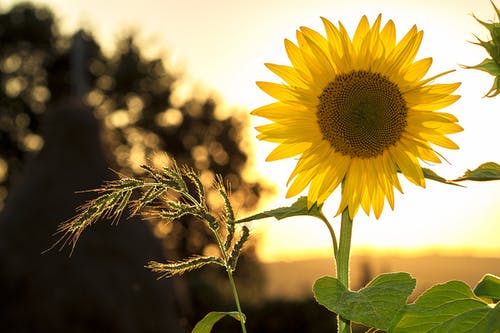
Writing a blog was not my idea. I always blame (or credit!) my friend and colleague, Sister Susan Wolf, SND, for turning me into a blogger. When she first proposed the idea to me, I was very reluctant. I came up with the usual excuses: I don’t know how to blog… I’m too old for this kind of thing… I’m too busy… what in the world would I write about every week? Susan’s persistence and guidance led me to give it a try. She recited the old maxim: “The Church must go where the People of God are.” And many of them (like you) are online. From the very beginning, I also sensed that writing a blog each week would somehow nourish my own soul. And it certainly has.
Readers are always telling me how much they enjoy the pictures and (even more) the videos I use. In the beginning I sometimes took my own pictures because I knew I couldn’t use copyrighted pictures. (I had heard the horror stories: someone posting a copyrighted picture on their blog and getting a bill for $10,000!) Then my friend Susan introduced me to Pixabay and Pexels. These websites (and others) offer free non-copyrighted photos. This is a way for photographers around the world to get their photos and names in circulation. To help them out, I try to give credit to the photographers beneath each photo. For the first 2 1/2 years, I didn’t use any videos. Then on October 6, 2014, I wrote “Why I Like the Piano Guys” and I attached one of their videos at the end. A couple of weeks later for Thanksgiving, I posted Josh Groban’s “Thankful.” The following week, for my Advent reflection, I used “Be Born in Me” by Francesca Battistelli. And I was hooked. The videos—whether music or otherwise—are now an integral part of each week’s reflection. Needless to say, I listen to a lot of songs searching for the “right one” each week. There are many, many good composers, singers, and musicians out there producing some incredibly inspiring videos. I’m grateful for what their creativity adds to my reflections.

Spam is a problem when you have a blog. My “Stop Spammers” system filters out profanities or (more often than not) people trying to sell their “stuff” through my blog. Within the past 10 years this system blocked 129,157 spammers. Unfortunately, it can occasionally block a comment from a legitimate reader.
One thing I like about blogging is the instant feedback I get. Nothing else I write gives me such immediate feedback. I also like it when I can engage in a brief conversation on my blog with a reader—or when two readers can talk to each other via my blog. Some readers comment frequently—almost every week. And that’s great. Some never comment—and that’s okay too. Some readers have become friends of mine even though I’ve never met them. Occasionally a former student of mine will respond on my blog. That’s always fun for me. (They’re probably surprised to learn that their old English and religion teacher is still alive!)
People often ask me: where do you get your ideas for your blog? First, I read a lot. I’m always clipping out articles or taking notes on things I read. I have several thick folders stuffed with potential topics for my blog. My own curiosity, struggles, joys, pain, worries, fears, and hopes are also sources for blogs. So is my personal prayer life. Last week’s reflection on the hands of Jesus, for example, grew out of my own praying with that particular scripture passage. Friends are helpful too. They send me all kinds of things—ideas, jokes, cartoons, videos, articles, book or movie recommendations. Or if I’m with a group of friends talking about something interesting, sooner or later one of them will say, “Hey, Melannie, you should do a blog on that!” I enjoy writing about a wide variety of topics. I write about all kinds of things, not just so-called “holy things” like scripture, theology, or prayer. But ordinary and extraordinary things I’ve gleaned from nature, science, history, the arts, and contemporary life. I like to include humor too. (I believe humor is one of the holiest things of all!)

As I celebrate ten years of blogging, my heart is filled with immense gratitude. I’m grateful for Sr. Susan for being so persistent and helpful… I’m grateful for my religious congregation who supports this blog as well as blogs by other sisters (their blogs are listed on the right side of this page)… I’m grateful for the technology that has the power to connect human beings all over the world like never before… I’m grateful to God for blessing me with the gift of writing… and for giving me the health and strength to use this gift in this unique way… I’m grateful for the life I’ve lived these many, many years… for the vast number of people I have come to know and love… and for the array of experiences I have had along the way. For it is precisely from my lived life that so many of these reflections flow… And finally, I’m grateful to each one of you, my “dear readers,” for your support, your contributions, and the beautiful witness of your own faith. Thank you! Thank you! Thank you! Amen! Alleluiah!
Announcing: Our Contest Winners!
Here are the three readers who won an Amazon $10 gift card (drum roll please):
1) Judith Lucyk lives in upstate New York. She’s been reading “Sunflower Seeds” for about two years. She and her sister read it together and then share their thoughts about it with each other.
2) Sister Jan Villemure is a Franciscan Sister of Charity living in Green Bay, WI. She taught science for 50 years and is now doing pastoral care for the elderly. She’s been reading “Sunflower Seeds” for about three years.
3) Kathy Lamont resides in Ridgeville, NJ but currently she’s a “snowbird” in Clearwater, FL. She’s been reading this blog for several years.
Announcing: The Final Contest!
This week I will give three winners a 20 minute phone call with me, Sister Melannie!
That’s right, if you’re a winner I will call you at a time convenient for both of us
and we can have a conversation together. This is not a spiritual direction session.
This is just a relaxing chat about things you and I might want to talk about.
We can ask each other questions and share whatever else we want.
To enter, write a comment below.
Be sure to include something like: I’d like to enter the phone call contest!
PS#1: Reminder: I will be giving a zoom retreat entitled “Living with Hope in an Imperfect World” sponsored by the Portiuncula Center for Prayer in Frankfort, IL. It consists of three sessions: Friday, Feb. 11 from 6:00 pm to 7:15 pm (Central time) and Sat. 10:00 am to 11:30 am (Central) and 1:00 pm to 2:15 pm (Central). It will include input sessions, handouts, music videos, sharing. All are welcome! Check out their website for further details.
Today’s video is a simple song of gratitude, “Give Thanks.” It was written in 1978 by a seminary graduate named Henry Smith. He was struggling to find work and suffering from an eye condition that eventually led to his partial blindness. During this time Smith took refuge in 2 Corinthians: 8:9 and composed this simple song. Years later, Don Moen, a young worship leader recorded the song, introducing it to the world. I’ve chosen this choral version with lyrics. The video is by Sonya Nancy.
I welcome you to comment on this reflection below:
The Hands of Jesus
Simon’s mother-in-law lay sick with a fever. They immediately told (Jesus) about her. He approached, grasped her hand, and helped her up. Then the fever left her, and she waited on them. (Mk 1:30-31)
He grasped her hand. How did it feel to have her hand grasped by the hand of Jesus? Did she sense strength in his hand? Did she feel any callouses? Did she detect softness and tenderness in his touch? This passage in the Gospel of Mark got me to wondering: How many times in the Gospels are Jesus’ hands mentioned? And what are they doing?
Jesus’ hands brought healing. One day a leper says to Jesus, “If you wish, you can make me clean.” And Jesus stretches out his hands, saying, “I will do it. Be made clean,” and the leprosy was cured immediately. (Mt. 8:2-3). Jesus restores sight to the blind man. He takes the man by the hand and leads him outside the village. (Imagine walking hand in hand with Jesus…) Then he puts spittle on the man’s eyes. When the man sees only vaguely, Jesus puts spittle on the man’s eyes a second time, and his sight is restored (Mk. 8: 23-25). Jesus cures the deaf man in a similar way (Mk. 7:31-35), putting his fingers in the man’s ears and even touching his tongue.
Jesus’ hands had the power to bring people back to life. When he meets Jairus’ 12-year-old daughter, he is told she is already dead (Mt. 9:25-26). But he takes her by the hand, and she arises. When he encounters the widow in Naim burying her only son, he is “moved with pity” for her. He stops the funeral procession, touches the coffin, and tells the young man to arise. The widow’s son sits up and begins to speak (Lk. 7: 11-17).
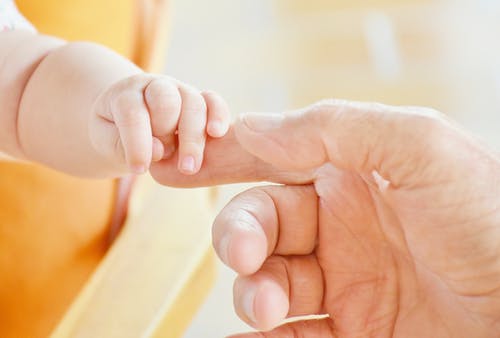
Throughout the Gospels, Jesus’ hands are seen doing other things as well. They bless and play with little children. When the accused woman is brought before him, Jesus’ hands write something mysterious in the sand. His hands help distribute bread to feed the hungry crowds, and they overturn tables and drive the money changers out of the temple. At the Last Supper, his hands wash the feet of his disciples, they break the bread, they dip a piece of bread and hand it to Judas his betrayer. In Gethsemane, Jesus’ hands are clenched in agony pleading with the Father, “Let this cup pass from me.” They heal the slave’s ear that Peter had severed with a sword. Then Jesus’ hands are bound by the soldiers as he is led away. And finally, before he was lifted up on the cross, Jesus’ hands were pierced with nails.
Even after his resurrection, Jesus’ hands are busy. When he first appears to his stunned disciples, his hands bless them with peace. A week later, Jesus invites Thomas to touch the wounds in his hands to convince him that he is really Jesus. Another time, he serves his apostles a barbequed breakfast on the beach, a breakfast made with his own hands.
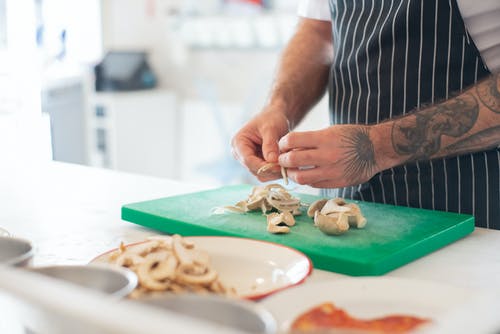
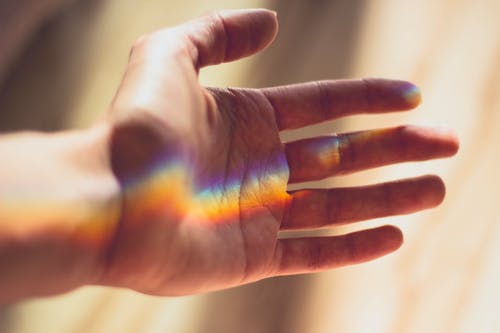
St. Teresa of Avila, said those famous words, “Christ has no body now but yours… no hands… no feet… no eyes… no voice but yours.” I’m suggesting you pay attention to your hands this week. Maybe spend a few moments just gazing at them and thanking God for them. Is any of your history reflected in your hands? As you have aged, have your hands changed? If so, in what ways?
You might want to notice the hands of others this week too. Watch children who are just learning to use their little hands. Observe the hands of workers such as construction people, mechanics, cashiers, people knitting or crocheting, cooks, hair dressers, doctors, your parish priest, teachers, the elderly.
And finally, reflect on some of the things you do with your hands on any given day. How do you use them, in imitation of Jesus, to bring healing, life, and love into our world? I welcome your comments below.
Announcing our Contest Winners!
Everyone who submitted a comment on last week’s blog was entered into a raffle to win an autographed copy of one of my books. We had over 100 comments last week–the most in the 10 year history of “Sunflower Seeds.” So, instead of picking three winners, I decided to pick FIVE! So here are the names of the five lucky winners (drum roll, please!):
Pat B. from Parma, OH. She chose the book “Picking Strawberries.” Pat’s been reading “Sunflower Seeds” for about 4 years, but has been reading my books longer, she said.
Jane McCarthy from Naples, FL. I’ve known Jane and her beloved husband Deacon Ed for many years. Jane’s been reading “Sunflower Seeds” since the very beginning.
Pat Dangelo from Ephrata, PA. Pat chose “The Lord Is My Shepherd” for her husband. She’s been reading this blog for about 10 years.
Adriana H. from Tacoma, WA. She chose “Hanging onto Hope” and has been reading this blog since 2014.
Maria Orlandini, OSF from Greenbelt, MD. Sister Maria chose the book “Picking Strawberries.” She said she made one of my retreats in Aston, PA a while ago. She’s been reading “Sunflower Seeds” for about four years.
Announcing this week’s contest!
This week I will award three $10 Amazon gifts cards. All you have to do to win, is to finish this sentence in 25 words or less: “I would like to win a $10 gift card because…” Your reason can be simple… serious… funny… erudite… creative… poetic… holy… or whatever. As I did last week, I will put your names in a basket and have one of my friends draw three names. Submit your comment by Saturday noon (Eastern time) January 29. Winners of the books this week are ineligible. Gift card winners will be announced next week! At that time I will announce our final contest. The prize is unusual. I came up with the idea while crawling out of bed one morning. It should be fun not only for the three lucky winners, but also for me! Stay tuned!
Our video today is the song “His Hands” written by Kenneth Cope and sung here by Jenny Jordan Frogley. Though the lyrics aren’t included, the visuals from the life of Jesus will help carry the words. The final refrain can be our mantra this week: “I will make my hands like those from Galilee.”
Please add your comment below to today’s reflection. Your additions and insights are most welcome! Then (if you want) enter the contest at the end of your comment.
The Desert Fathers and Mothers
Ever since I was a novice, I have been fascinated by the Desert Fathers of the early Church. Only later did I learn there were Desert Mothers too. Between the second and fourth Centuries, these men and women left their cities and fled into the desert to live their Christian faith. Interestingly, some did this just as Christianity was becoming the the official religion of the Roman Empire. Barbara Brown Taylor suggests a reason for this: “They had no confidence in the volatile mix of religion and politics, being pretty sure which one would rise to the top.”
These men and women spread out into the deserts of Egypt, Palestine, Persia, and Arabia. Some lived as hermits in isolated caves. Others dwelled in caves too, but formed larger communities with one another. They all possessed the same desire: to commit themselves totally (body, soul, mind, and will) to Jesus. In the words of Christine Valters Paintner, they were seeking “a growing intentional awareness of God’s presence.” They focused their energies on prayer, singing the psalms, living with others in harmony, and working simply—such as weaving baskets. The money they made from their work, they gave to the poor. They hoped their harsh penances (fasting, spending long hours in prayer, practicing silence, vowing celibacy, engaging in study) would lead to greater humility and gentleness toward others.
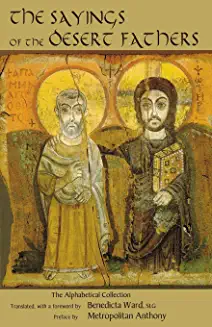
The Desert Fathers and Mother were also known for their wise and pithy teachings. Eventually these teachings were gathered into a book, The Sayings of the Desert Fathers. It contains 1,202 adages and stories attributed to 27 Abbas and 3 Ammas. I’ll share a few of these with you now.
It is better to eat meat and drink wine than to eat the flesh of one’s brethren through slander. Hyperechius
Go sit in your cell and your cell will teach you everything. Moses (Some say that the outer cell is a metaphor for the inner cell, that deep place within ourselves where we encounter our true selves, that is, our deepest feelings, desires, pains, and joys. In doing this, we often encounter God.)

All of us humans are in the image of God. But to be in his likeness belongs only to those who by their great love have attached their freedom to God. St. Diadochos of Photiki
“Remember, he who said, “Do not commit adultery” also said, “Do not judge.” Anonymous
Restrain the belly, the tongue, and anger, and your feet will not stumble over a rock. Amma Theodora of Alexandria
A young monk went to an elder monk and asked, “How many years will it take for me to become holy?” The old monk replied, “Ten years.” The young monk asked, “But what if I work really, really hard?” Said the old monk, “Twenty years.”
One day a group of thieves broke into an old monk’s cell. “Whatever you have,” they said, “We’ve come to take it.” Said the monk, “Take whatever you see.” The thieves did and then went on their way. But they forgot a little bag that the monk had. He grabbed it and ran after the thieves saying, “You forgot this! Take it!” The thieves marveled at the old monk. They brought everything back to him, did penance, and left saying, “Truly this was a man of God.”
Two monks went on a long journey. One day they came to a stream they had to cross. A beautiful young woman was standing beside the stream hesitating to wade across. One monk offered to carry her across so she wouldn’t get her shoes and robe wet. She accepted his offer. He lifted her up in his arms and waded across the stream with her. Once on the other side, he put her down. She thanked him for his kindness, and the monks and the woman went their separate ways. A few hours later, the monk who didn’t carry the woman across the stream said to the other one, “You never should have even looked at that woman back there—let alone carry her in your arms.” Said the other monk, “My dear Brother, I left that woman by the stream hours ago but you have been carrying her even till now.“

The Desert Fathers and Mothers went into the desert to encounter God in order to be transformed into a person of love. In this regard they are not that different from all of us who are striving to be transformed into the person of Jesus. Their penances may seem extreme. But ours can be extreme at times too. None of these monks ever had to give birth to a child, change a baby’s diapers, or try to calm a wailing baby at 2 o’clock in the morning. None of these monks had to broker peace between squabbling siblings, drive in rush hour traffic twice a day, and work to keep a marriage alive and healthy. None of these monks ever had to teach a classroom full of antsy third graders, raise a teenager, face the challenges of modern technology, do rehab after a knee or hip replacement, or worry about a potential nuclear disaster. The truth is, we have countless penances woven into the fabric of ordinary modern life that (hopefully) can help transform us into people of love too.
We also have “desert experiences” that can hasten this process of transformation. We know we are in the desert when our ordinary life is being stripped down to the essentials. Perhaps we have lost our job or are beset by serious illness. Or our home has been destroyed by fire, flooding, or a tornado. Or we have undergone a major move in our life, experienced the ending of a cherished relationship, or lost a loved one through death. Or, as Paintner says, maybe we are being forced “to let go of all the securities we cling to, even our images of God.” When we find ourselves in such circumstances, we might want to turn to these remote ancestors of our faith and simply pray, “Dear Desert Abbas, Dear Desert Ammas, pray for us…”
For reflection:
Did anything in this reflection speak to you today? If so, what?
What kind of experiences have you had that “qualify” for a desert experience? How did you survive the desert?
Name some of the modern penances that you encounter in ordinary living.
Do you know any other stories or sayings from the Desert Fathers and Mothers? If so, please share them with us below.
******************************************************************************************************
Announcing: Free Prizes!!!!
In honor of the 10th anniversary of “Sunflower Seeds” on February 12, I will be giving away free prizes to some lucky readers. This week I will award three of my books (autographed copies) to three readers. You can choose the book you want from the books I have on hand. To enter, all you have to do is submit a comment below (even a few words would suffice) by Saturday noon, January 22. I will announce the winners Monday, January 24. (If you comment more than once, that’s fine–but your name will be entered only once in the drawing.) Then I’ll announce the next contest. I am trying to think up some ways to show my appreciation to you, my “Sunflower” readers. Stay tuned!
I chose five minutes of instrumental music today set against beautiful photos of deserts. Sometimes we dismiss deserts as “wastelands without life.” But if we look more closely, we can see the many forms of life that have adapted themselves to the desert: plants, insects, reptiles, birds, and mammals who call the desert “home.” I hope you enjoy the beauty of the desert.
I encourage you to comment below. The more, the merrier!
Hidden Women of the Gospels
What happened to the daughter of Herodias after she received the head of John the Baptist on a platter? Did she ever dance again? Did the blind man, Bartimaeus, have a wife? If so, what did she think of her husband’s sudden ability to see? Was she overjoyed or disturbed? And if Zacchaeus had a daughter, did she climb up the tree with her dad to see Jesus that day? If so, what did she think of Jesus? The award-winning writer Kathy Coffey explores these questions and many more in her new book, More Hidden Women of the Gospels. (Coffey’s earlier book, Hidden Women of the Gospels, was a best seller.)
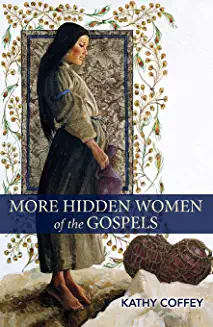
The book has been described as “a book of contemporary midrash.” Coffey ponders a story from the gospels and imagines what the hidden women were thinking, doing, and feeling. Such imaginings help us to dig deeper into these familiar stories and connect the characters to our own lives. Using this Midrash technique is another way of reading the scriptures that can be refreshing and inspiring. Let me share just one of the chapters with you here, the one on Mrs. Bartimaeus (Mk. 10:46-52).
When her blind husband, Bart, calls out to Jesus from the crowd, Mrs. Bartimaeus is embarrassed. In fact, she tries to shush her husband, thinking, “Why couldn’t he hide (his need) politely, as all the rest of us had learned to do?” When Jesus calls him to come forward, Bart throws aside his cloak and leaps toward Jesus. His wife wonders, “Was he crazy to think this guy might help him?” She can’t bear to see her husband being “shamed and disappointed in front of a crowd,” so she leaves and goes home. Only a little later does she hear of Bart’s healing.
That’s when she begins to worry about many things. Now that her husband can see, will he be disappointed in her? After all, she’s changed so much since he last saw her as a young woman. She’s put on weight, her hair is gray, her face is wrinkled. But when Bart appears at their door, he rushes toward her eagerly and draws her into his arms “as though I were his bride.” He kisses her hair, telling her how beautiful she is.
Despite her husband’s affection for her, Mrs. B. is still disturbed. When Bart was blind, he had made a decent living as a beggar. Now what would they do to support themselves? Would he expect her to start some sort of career? Furthermore, for years she had been her husband’s eyes. He had relied on her to get around. Now that he could see, would he still need her? She adds, “We had a system for coping; now he’d wrecked it.”
Over time, Mrs. B. gets used to her husband’s “wild enthusiasm for everything he can see.” He takes nothing for granted—vegetables, sunrises, the stars, the patterns in the clouds, and even insects. She says, “Part of me wishes he’d shut up, but another part wants to see everything as freshly as he does.” In the end, she is “tempted to echo her husband’s words to Jesus, ‘Master, I want to see.'”
In her commentary on the story, Coffey raises questions about our human resistance to change, the “cost” that is often involved in healing, and Jesus’ attention to individuals. At the end of the chapter, she has excellent questions for reflection and discussion.
In her introduction to the book, Coffey says she was pleased that her first book appealed across denominational and gender lines. The universal appeal of her stories recalls the words of Fr. Anthony de Mello: “…the shortest distance between a human being and Truth is a story.” If you are a human being and you are seeking Truth, Coffey’s book, More Hidden Women of the Gospels, might help you in your quest.

For reflection:
Did any words in this reflection stand out for you? If so, which ones and why?
Could you identify with any of Mrs. Bartimaeus’ thoughts and feelings with regard to her husband’s cure?
Did any of the pictures grab your attention?
Do you ever use the Midrash technique when you ponder the scriptures? If so, has it enriched your pondering?
PS #1: Some of you have asked about retreats and talks I will be giving. I will lead a virtual retreat sponsored by the Portiuncula Center for prayer in Frankfort, IL on Feb 11-12, 2022. Check the information at the right of this page and their website for details. As soon as I have finalized my other talks and retreats for this year, I will post them on this blog. I thank you for your interest!
The song today is a new one by Francesca Battistelli entitled “God Is Good.” Those three words were one of St. Julie Billiart’s favorite sayings. (Julie is the “Spiritual Mother” of my congregation.) It’s easy to say “God is good” when things are going our way. How much harder it is to believe those words when we’re experiencing major challenges or heart-wrenching losses in our lives. The song reminds us, “There is beauty in it all… you just have to look… God is with me through it all.”
I welcome you to write a comments below on anything that struck your fancy as you reflected on today’s post….
,