On the Stagecoach of Life, What Kind of Ticket Are You Holding?
In his book, World of Stories for Preachers and Teachers, William Bausch tells this little-known fact about riding in a stagecoach in the Old West. The stagecoach had three kinds of tickets: first class, second class, and third class. If you had a first class ticket, you could remain seated the entire trip, no matter what happened. If the coach got stuck in the mud, had trouble going up a steep hill, or even lost one of its wheels, you could remain seated inside the coach.
If you had a second class ticket, you could remain seated until there was a problem. In that case, you had to get out of the coach until the problem was fixed. Your didn’t have to help fix the problem. In fact you could stand around and watch as others worked on it. But if you had a third class ticket and something went wrong, you had to get out of the stagecoach and help fix the problem. In other words, the problem became part of your responsibility. This meant you had to help push the coach up the hill, or out of the mud, or even help repair a broken wheel.

We might ask ourselves, on the stagecoach of life, what kind of ticket am I holding? A first class ticket? That means if there’s a problem, I don’t have to do anything about it. A second class ticket? That means I can stand around and watch while others work on life’s problems. Or a third class ticket? That means when something goes wrong on the journey of life, I try to help. I sense it is partly my responsibility to do something about what’s wrong.
I believe that Jesus bought his disciples (and that includes us!) third class tickets for the stagecoach of life. He makes this very clear in his unforgettable parable called “The Good Samaritan” (Lk. 10:29-37). Most of you probably know the story by heart. A certain Jew was on his way down from Jerusalem to Jericho when he was mugged by robbers. They stole his money, beat him, stripped him, and left him half dead. A priest happened by, saw the man lying on the side of the road, and crossed to the other side and went on his way. Then a Levite also chanced by and he did the same thing. But when a third traveler happened by, he was “moved with compassion at the sight.” His compassion is all the more remarkable, because the man is a Samaritan, a traditional “enemy” of the Jews. The Samaritan stops, bends down, cleanses the man’s wounds, bandages them, lifts him on his own animal, and takes him to a nearby inn. He pays the owner generously to care for the man until he returns, saying, “If you spend more than what I have given you, I will repay you on my way back.”
Wow! Talk about holding a third class ticket! That Samaritan saw a big problem–which in a way was not his responsibility. He didn’t know the victim. He wasn’t a doctor. And the victim was not even a Samaritan, one of his own people! Yet he put aside his own plans to stop and care for him. And he extends his care into the future. And, at the end of the story, Jesus adds, “Go and do likewise.” He holds up this Samaritan as a model for discipleship. We, his followers, must have a sense of responsibility for our personal problems, yes, but also for those that lie beyond our own life, our family, our local community, our own country. It’s as simple and as challenging as that!

Today we might want to reflect on our sense of responsibility. Begin by giving yourself credit for all you are already doing. (I’m guessing you are already a pretty responsible person and a person of faith. Why else would you be reading a blog subtitled: “Celebrating Everyday Spirituality”?) Take a few moments to list (even in your mind) some of the ways you show you are responsible for things and people beyond yourself. Count things like: getting out of bed in the morning… caring for your kids or grandkids… putting in an honest day’s work… praying for the needs of others… taking care of things you use… paying taxes… contributing to your parish… doing a favor for a neighbor… feeding the birds… staying informed about important issues…

Then we can reflect on those times we shirk our responsibilities. Those times we come up with all kinds of excuses not to help out when we could. Remember, the priest and Levite probably had some very good reasons not to stop and help. But, then again, the Samaritan probably had some good reasons not to stop and help too—but he did! What made the difference?
The old maxim says, “There’s no such thing as a free lunch.” We could add, there’s no such thing as a free ride either! As we journey through life, being attentive to the needs of others—even when it is inconvenient—is part of “our ticket” for following Jesus! Amen!
For reflection:
Who taught you responsibility? How did they teach you?
The pandemic has challenged our sense of responsibility for one another. In what ways have we met that challenge? In what ways have we fallen short?
Has anyone ever gone out of their way to help you—especially a stranger? How did that experience make you feel?
*****************************************************************************************************
PS #1: Thank you for your prayers for our first Provincial Chapter as one SND-USA province. It was good to meet (or re-meet) so many SND’s from our four areas: Chardon, OH; Covington, KY; Thousand Oaks, CA; and Toledo, OH. Our meetings went well. We prayed together, played together, had some worthwhile discussions, voted on proposals, and elected 8 delegates to our General Chapter in Rome in September. Thank you for your prayerful support!
PS #2: On February 13 we will celebrate the 10th anniversary of “Sunflower Seeds.” I can’t believe I’ve been writing this blog that long! I plan to celebrate with you by giving away some of my books (and a few other surprises) to a few lucky readers. Details will be coming soon. Stay tuned… Meanwhile, I thank YOU for following “Sunflower Seeds.” If I didn’t have readers like you, I would have stopped writing this blog a long time ago!!!
I looked for a song based on Matthew 25, Jesus’ parable of the Last Judgment. Although I used this song once before, I’m using it again here because it fits so well with today’s theme. I couldn’t find a version with the lyrics, but the chorus is: I was hungry… thirsty… lonely and afraid… I was crying and no one heard me, I was dying and no one came. Make sure you listen to the whole song because it ends on a positive note: “I was hungry, and you fed me… I was lonely, and you called my name… I was crying and you heard me… I was dying when you came.” Here is “The Matthew Song” by Broadway.
Please share your thoughts, reactions, and additions below. We all love hearing from each another!
What’s New?
In T. H. White’s book, The Once and Future King, Merlin the magician offers this advice to a despondent King Arthur: “The best thing for being sad is to learn something.” It’s good advice whether you’re sad or not. In fact, I think it is good advice for maintaining a healthy spirituality too. As we begin this new year together, let me share a few new things I’ve learned recently. Here goes—in no particular order.

The Blue Whale: (Warning: I’m going to use a lot of exclamation points in this paragraph! See?! I warned you!) Blue whales are the largest living animal on our planet. They are larger even than most dinosaurs! They average 80-100 feet in length (that’s the height of a ten story building!) and can weigh over 200 tons (that’s 30 elephants!) Their heart alone weighs 400 pounds! and is the size of a golf cart! On the surface of the water, the blue whale’s heart beats 25-37 times a minute. But when they dive, they can slow down their heart rate to 2 beats a minute! Blue whales have the largest babies in the world. They weigh about 8,800 pounds at birth and are 28 feet long! They gain 200 pounds a day just feeding on their mother’s milk! Adult whales live on krill—about 9,000 pounds of it per day! These beautiful creatures are loud too. Their call reaches 188 decibels, louder than the loudest jet engine! Their life span is between 80-90 years. Once hunted almost to extinction in the 19th Century, they are still listed as endangered with an estimated 10,000 to 25,000 left in the wild.
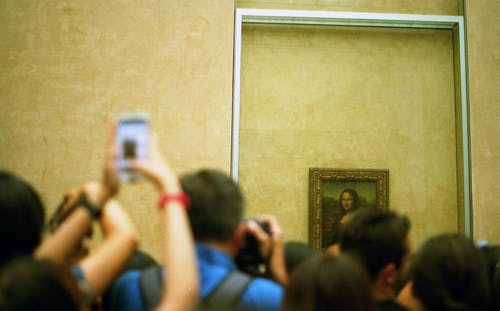
The Mona Lisa: It took Leonardo da Vinci a long time to paint the Mona Lisa. The painting started out as a simple portrait of a wealthy Italian’s wife (her name was Lisa; the “mona” is a title of respect comparable to “madam.”) But the man who commissioned the portrait never got the painting. Da Vinci kept it and continued working on it—for 16 years! (In between he was creating prototypes for the helicopter, the Sherman tank, and a self-propelled car!) His aim was to create the “perfect painting.” Over the years he kept adding layers and layers of paint until he felt he “got it right.” Most art critics and art historians agree that the Mona Lisa is as close to perfection as a painting can be. In Da Vinci’s later years he moved from Italy to France, crossing the alps on a horse or donkey and taking three paintings with him—one of which was the Mona Lisa. I cringe at the thought of his carrying this priceless painting over rugged mountains while astride a donkey! For more fascinating information on da Vinci, check out the PBS documentary on “NOVA”: “Decoding da Vinci.” That’s where I got this information.
A Title of a Book: Here is one of the longest titles of a book, written by George Hadley in 1794: Argal; or, The Silver Devil, Being the Adventures of an Evil Spirit, Comprising a Series of Interesting Anecdotes in Public and Private Life, and Which the Demon Became Acquainted in Various Parts of the World, During His Confinement in the Metalline Substance to Which He was Condemned. Related by Himself. In Two Volumes. Are you tempted to read it? (Thank you to my friend R. for sharing this information with me!)
Weather Facts: At any given time there are 1800 thunderstorms in progress over the earth’s atmosphere… An inch of snow falling on 1 acre of ground is equivalent to 2,715 gallons of water… A cubic mile of fog is made up of less than a gallon of water… Meteorologists claim they are right 85% of the time. (Once again, I thank my friend K. for teaching me these things through a book she gave me.)
Surprising facts about the Church. Father David Meconi, SJ has written a book entitled 101 Surprising Facts about Church History. I have not read the book, but I checked it out on Amazon because Fr. Dave was a Jesuit novice when I ministered in the Jesuit novitiate in Detroit in the ’90s. In the blurb for the book, I learned these surprising facts: 1) The first prototype of today’s robots was found in a medieval monastery. 2) Many kinds of food and drink have connections to the Church—including cappuccino and pretzels. 3) The Church has patron saints for just about anything—including headaches, hangovers, ugliness, and television.

Psalm 41. Sometimes we find something new in the old and familiar. I was praying Psalm 41 the other day and came across these two lines: “(You) the Lord will help them on their bed of pain; / in their sickness, you tend even to their bedding.” Imagine! When we are sick in bed, God fluffs our pillows and straightens our bed sheets! What a beautiful image of God as caregiver! (I thank my friend D. for drawing my attention to these verses.)
Original Hunger. I just started reading In the Sanctuary of Women by Jan. L. Richardson. Early in the book she challenged me to read chapter 3 of Genesis not simply as the story of original sin. But to re-envision it as the story of original hunger. Richardson concludes this section with this lovely short poem. Her words are my wish for all of you for this new year:
“May your longings lead you far
and farther still
toward the place where what you desire
can be met only by God.”
A Blessed New Year to All!
PS: Our U.S. Province of the Sisters of Notre Dame will be convening our provincial chapter December 28-30 in Covington, KY. About 75 delegates will meet to appraise our current living of our charism, to give direction for our future, and to elect delegates to our General Chapter in Rome in 2022. I ask your prayers for this meeting. Thank you very much!
I looked for a song that was appropriate for celebrating the New Year. This one by Steven Curtis Chapman seemed like a good choice. It’s called “Be Still and Know” and is based on Ps. 46:10: “Be still and know that I am God.” If we have suffered a significant loss during this past year, or have any regrets for the year, or if we have any fears for this coming year, then the words of this psalm can help quiet our minds and hearts by encouraging us to trust in God’s unending love for all of us.
Please feel free to respond to this reflection in any way! Your comments are always welcome!
Christmas: A Celebration of Smallness
Christmas is a celebration of smallness. It proclaims small is beautiful… the lowly is honorable… the ordinary is extraordinary.
Just look at the major characters of the Christmas story. First, there’s Mary, a young girl (about 13 years old) from a small backwater town called Nazareth. Then there’s Joseph, her husband, a lowly carpenter. And where is Jesus born? Not in the huge city of Rome or Jerusalem, but (as the Christmas song says) in the little town of Bethlehem. And our first glimpse of “the Son of the Most High” is a squirming newborn lying in a manger. The first visitors to pay him homage are not Roman rulers or dignitaries, but a scruffy band of ordinary shepherds with their ordinary (and smelly!) sheep.
Small. Lowly. Ordinary. These are not exactly the watchwords of our day. On the contrary, ours is a world that says bigger is better, that admires immensity, that overuses prefixes such as mega, super, ultra. Ours is a world where fame and fortune, for some, are the main goals in life. Ours is a world that glorifies power and rewards audacity and even arrogance. Perhaps we need more than ever to hear this particular message of Christmas: the call to celebrate the small.

Throughout his adult ministry, Jesus showed us how to live this way. He chose for his disciples mostly ordinary and insignificant individuals. Although he preached to all, he directs his message especially to the meek and lowly. He compares the Kingdom of God to a tiny mustard seed, and he tells his followers they must become “as little children.” Finally, he says of himself, “I am meek and humble of heart.”
This appreciation of smallness and lowliness will instill in us respect for all the forms that smallness may take in our lives: inexperience, powerlessness, marginalization, vulnerability, incompleteness. And respect for “small people” in our midst: the unborn, children, the elderly, the refugee, the poor. We might ask ourselves questions such as these: How concerned am I for the children of our world? How attentive am I to their needs? How do I respond to the poor, the sick, the homeless, the abused, the physically or mentally challenged, those denied their legal rights, the imprisoned?

Other questions to ask: How do I respond when I experience smallness and lowliness within myself? Am I patient with my human failings? When I experience my powerlessness, do I throw up my hands in despair, or do I reach out my hand for the ever-ready hand of God? Am I attentive to the ordinary? Do I appreciate the familiar, the normal? In the midst of my daily struggles, do I thank God for the beauties of my everyday life?
St. Paul not only accepted his lowliness, he boasted about it. To the Corinthians he wrote these mysterious words: “If I must boast, I will boast of the things that show my weakness.” Why? Because St. Paul heard and believed these words of Jesus: “My grace is sufficient for you, for power is made perfect in weakness.”
Let us pray:
God, Source of all Love, we thank you for the gift of smallness… lowliness… and ordinariness. Help us to see them as central to the Christmas story. Give us a greater attentiveness to the blessings of everyday life: the familiar individuals we interact with every day… our commonplace surroundings… our quotidian activities… our unremarkable deeds… our normal joys and struggles. Help us to accept our own failings and weaknesses, relying on your grace alive within us. Your Son Jesus came into our world in a quiet and unassuming way. He taught us to be attentive to the Divine within our midst. This Christmas, we ask for all these graces, for we truly believe that your power and goodness are at work today within us and our entire Earth Community. Amen.
Merry Christmas to all!
May the simple joys of Christmas be with you today and throughout the year!

Did anything really speak to you in today’s reflection? If so, what? Do you know why?
What are some of the “small and ordinary” things in your daily life that you really appreciate? How do you show your appreciation?
I have two videos today: a Christmas song and a song in honor of a friend who recently passed away.
Video #1: This Christmas song, “Joseph’s Lullaby,” by MercyMe celebrates smallness in a way. This version, with the pictures of babies, reminds us that Jesus came as a real baby. The song is sung from the perspective of Joseph, the lowly carpenter who calls the child “my son.”
Video #2: This song is in memory of my friend, Father Don Cozzens, a priest of the Cleveland diocese. I knew Don for about 40 years. We shared a lot in common including the ministries of teaching, formation work, and writing. I recommend three obituaries on these websites: America Magazine (Dec. 13, 2021 issue), The New York Times, and John Carroll University where Don taught and served in many other capacities.
This song was one of Don’s favorites, Dan Fogelberg’s “The Leader of the Band.” Years ago Don told me he loved this song because it captured something of the relationship he had with his own Dad. As I listen to the song now, I think some of the lyrics capture Don himself: “a quiet man… his gentle means of sculpting souls…” And some words capture what we, his many friends, are probably saying to him today: “(you) gave me a gift I know I never can repay… (your) song is in my soul… thank you for the music and your stories of the road…” And, Don, “I don’t think I said ‘I love you’ near enough…”
I invite you to add a comment below. We all enjoy hearing from you—no matter how small and ordinary you think your words may be!
Good Prayer Is Incarnational
Several years ago I was asked to give a talk about some of the qualities of good prayer. One quality I spoke about was this: Good prayer is incarnational.
I began with this story told to me by a Deacon in Maine. One morning his son Zachary, age 5, was sitting at the kitchen table eating his cereal and gazing out the picture window into their spacious backyard. He asked his mother, “Mommy, where is God again?”
She said, “God is everywhere, Zach. God is in the trees and the flowers and on the deck.”
He asked, “Is God under the deck?”
“Yes,” she said. “God is under the deck too. And the best part of all, God is in you and God is in me.”
Zachary thought for a moment, and then he said, “Wow! That’s a lotta God!”

Good prayer celebrates the presence of that “lotta God” in our lives. As Catholics, we believe that God is present in a special way in the bread and wine at every Mass. But there’s so much God, God is also present in the proclaimed Word, the homily, the prayers, the singing, the silence, and (most importantly) in the people gathered to celebrate Mass.
But God is present beyond the Eucharistic table too. God is present in all people, the ones who delight and help us as well as the ones who annoy us and try our patience. The ones who look and think as we do, and the ones who look and think so differently from us, they scare us. God is present in creation, in our air and sunlight, our trees and squirrels, our crickets, whales, oceans and stars. And God is present in the historic events taking place right now: the global pandemic, the countless men and women serving those in need, our country’s strivings for racial equality, our efforts to curb the pollution of our planet, the current world-wide refugee crisis, and so forth.
God is present in our world, then, not merely theoretically, but concretely. God is present incarnationally. A corrolary of this fact is this: our prayer must be incarnational too. In the words of Father Ronald Rolheiser, we have “to put some skin” on our prayer. But how do we do that?
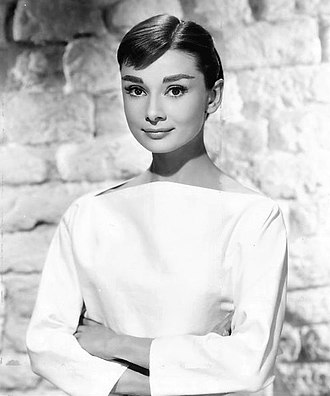
Recently I saw a movie about Audrey Hepburn. I was familiar with her great acting ability and her beauty, but I didn’t know about two traumatic events she suffered as a child in Europe during World War II. First, her father abandoned her when she was about 9. One day he just got up and left. She never saw or heard from him again until many years later as an adult. And second, she experienced that horrific winter of ’44 when millions of people in Europe (many of them children) had little or no food.
At the height of her fame, Hepburn left movie making for ten years. Why? Because the glamorous Hollywood life kept her apart from her children. In a way, being a “movie star” was causing her to abandon her children. So she walked away from that glamorous life. In her final years, Hepburn became the spokesperson for UNICEF, using her fame to raise millions of dollars for starving children all over the world. The movie didn’t talk about Hepburn’s prayer, but to me she is an example of someone who put skin on her deepest concern, namely, needy children.

We are called to pray for ourselves, our families and friends, our country, and our world. But we must put some skin on those prayers. If we pray about the health of our planet, what specific actions are we taking to help heal our planet? If we pray for the lonely, is there someone whose loneliness we can ease–perhaps through a simple phone call? If we pray for overworked parents, are there any parents we can help and support in some way? If we pray for world peace, how can we bring peace into our own little world by the way we listen, the way we speak, the way we do daily chores, and even the way we drive? If we pray for our political leaders, can we also write to them to thank them for their service or to call their attention to issues close to our hearts?
Advent is a time when we celebrate the mystery of God’s Incarnation in the person of Jesus. As such, it is a most fitting time “to put some skin” on our prayer through small acts of attention and love.
For reflection:
Did anything in this reflection speak to you today—especially any words or any of the pictures?
Can you think of some ways you are trying to put some skin on your prayer?
Would you add anything to this reflection?
PS: Dear readers all, I’m still having problems with my mailing list. It is NOT working properly, so most of my subscribers are NOT getting my blog on Monday. Our IT staff is working on the problem. For now, you might have to google my blog in order to read it. Google the address: www.melanniesvobodasnd.org OR simply google my name and “Sunflower Seeds” and it should come up. I apologize for this inconvenience.
Our song today is Bernadette Farrell’s beautiful “Love Goes On.” It reminds us that love must be incarnational too!
Please feel free to comment below. Your words can enrich my blog!
The Wit and Wisdom of Humanity
In my collection of quotations, I have a whole section on proverbs. In addition, I have many quotes under “humor.” Today I’d like to share some of these brief maxims that show our humanity’s collective wisdom and wit. Many of these quotes are anonymous.
1. The world is full of kind people. If you cannot find one, be one.
2. The past is a guidepost, not a hitching post. Thomas Halcroft
3. Patience and the mulberry leaf become a silk robe. Chinese Proverb
4. Success in marriage is more than finding the right person. It’s becoming the right person.

5. Manners are minor morals.
6. Everyone is ignorant, only on different subjects. Will Rogers
7. A lie travels around the world while the truth is putting on her shoes. French Proverb
8. We could learn a lot from crayons. Some are sharp, some are pretty, and some are dull. Some have weird names and are different colors, but they all have to live together in the same box.

9. Some mistakes are too much fun to make only once.
10. Drive carefully. It’s not only cars that can be recalled by their Maker.
11. Always read stuff that will make you look good if you die in the middle of it. (Some of my nun friends and I have considered placing a holy book on our nightstand–with a bookmark in the middle of it. If we die during the night, we’ve appointed a friend to secretly come in and remove the murder mystery we were really reading!)
12. Never buy a car you can’t push.
13. Since the early bird gets the worm, sleep late.
14. Save the earth…. It’s the only planet with chocolate!

15. If you wish to know what a man is, place him in authority. Czech Proverb
16. A well-adjusted person is one who can play cards or golf as if they were games.
17. Bad news goes about in clogs, good news in stocking feet. Welsh Proverb
18. A good conversation is better than a good bed. Ethiopian Proverb
19. Many a shabby colt makes a fine horse. Irish Proverb
20. The best preacher is the heart; the best teacher is time; the best book is the world; the best friend is God. Hebrew Proverb

For reflection:
Did any of these proverbs or quotes speak to you today? If so, which one(s) and why?
Would you change or modify any of these proverbs to reflect more accurately what you believe?
Would you like to add a proverb or bit of wisdom to this list?
PS #1: Just a reminder that I am on retreat this week in Florida… and I’m holding all of you in special prayer…
PS #2: I want to send out a big THANK YOU to all the people I met last week in Florida. Thank you especially to Sr. Christina, Maureen, and Karen at the Franciscan Center in Tampa for inviting me to give a mini-Advent retreat there—and for helping to make things run so smoothly. The Center is a lovely and prayerful place located right on the Hillsborough River. And thank you to the folks at Espiritu Santo Parish for inviting me back to one of my favorite parishes! Special thanks to Katie for putting together such a beautiful Advent Service, to Fr. Len for his leadership and warm welcome, and to Sisters Donna and Renetta for their hospitality and friendship! And last but not least, thank you to all who attended these Advent presentations either in person or online!
PS #3: And finally, if you’re reading this on Monday Dec. 6, Happy Feast of St. Nick! Perhaps (if you’ve been good…) he left a little treat for you in your shoes during the night!
And now here’s an Advent song entitled “Come Now, O Prince of Peace” written in 1988 by a Korean composer named Geonyong Lee. It is performed here by the choir of St. Mark’s Lutheran Church in Winnipeg, Manitoba in Canada. For me, this song captures one of the main themes of Advent: our intense longing for peace. Phrases that really touched my heart were these: “Make us one body… reconcile all nations… Come, God of love… Come set us free…” The solo violin, the repetitive sounds of the piano, and the stark images all contribute to the haunting and mystical tone of this short Advent hymn… Let me know what you think of it.
Please consider responding to today’s blog below. You’ll make me and my readers happy!