Is Being Pleasant a Virtue?
Is being pleasant a virtue? That’s the question I asked myself recently after interacting with mostly pleasant people all day. Those people include my fellow Sisters of Notre Dame. My experience has been that we are, as a group, basically pleasant women. It also includes the employees of this apartment complex I now live in. (NOTE: A few weeks ago I moved into another building on our large SND campus—an apartment complex that is part of Notre Dame Village here in Munson Township.) Here I frequently bump into other residents, housekeeping people, food service personnel, and maintenance workers—and they too are pleasant. Recently I went into a drug store where I asked a clerk who was stocking shelves where I could find a certain item. She not only told me where I could find it, she stopped what she was doing and took me to the exact place where my item was. And she did this very pleasantly—even cheerfully.

Being pleasant isn’t automatic. When I was a novice, another novice accused me of “being born with happy genes.” Although we may be predisposed to being pleasant by genetics or upbringing, sooner or later, after we’ve experienced some “major thwacks” in life, we realize we have to cultivate pleasantness as a general policy. I look upon pleasantness as the oil that lubricates interpersonal relationships. Or as the soothing lotion that smooths away our rough edges. Or as the light fragrance that permeates the atmosphere, putting everyone in a slightly better mood.
Heaven knows there are plenty of good reasons NOT to be pleasant. Just read the news headlines. Or perhaps there are physical conditions that get in the way of being pleasant: headaches, arthritis, indigestion. Other factors that can suffocate pleasantness are worries about loved ones, trouble at work, strained relationships, financial problems, fear of the future, feelings of inadequacy—and the list goes on.

I’m not saying we must always be pleasant. Everyone is entitled to a crabby day every now and then. Even Jesus wasn’t pleasant all the time. He was impatient with the obtuseness of his disciples. He railed against the scribes and Pharisees on more than one occasion. And certainly he was far from pleasant when he drove the money changers from the Temple—while wielding a whip, no less. There are situations that demand that we NOT be pleasant; for example, when we see someone being mistreated or when we witness a grave injustice. During my teaching years, I sometimes had to put on my not-so-pleasant-face when confronting a student about his or her behavior. (More than once, such a student said to me: “You’re a nun! You’re supposed to be nice!”)
I look upon pleasantness as the little sister of love. A pleasant demeanor becomes an incarnation of the love we profess as Christians. As a virtue, it can be “practiced” our entire life–even when we may be confined to a health care center. Case in point: the other day I was walking through our health care center and I met one of our oldest sisters, Sister Ronauld. She was being pushed in her wheelchair by one of our aids. The three of us greeted each other pleasantly. Then I asked sister directly, “And how are you today, Sister?”
She smiled broadly and said, “I am having a very good day.” Then added, “How about you?” I said I was having a very good day too, and added, “Especially now—because I’ve met you!” Later I reflected on her words. How could she—objectively speaking—be having a very good day? After all, she’s 96! She’s in a wheelchair. She has to depend on others to go just about anywhere. And she needs help with all of her personal needs. And yet she can still be such a pleasant woman. I have never lived with her, but those who have tell me, “She was a joy to live with.” Pleasantness, then, was not a virtue she decided to practice when she turned 90. It was probably a virtue she lived her entire life.

Let us conclude this reflection with this little prayer:
God, source of all love, help me to be a more pleasant person—especially in my daily interactions with others: those I live with, I work beside, I serve or who serve me, and even total strangers I encounter on any given day. Keep me more mindful of my demeanor, my facial expression, my choice of words, and the tone in which I speak them. If I encounter a situation that demands that I NOT be pleasant, give me the courage to speak and act on behalf of others. May I always remember that being pleasant is a part of the love that you are calling me to extend to others. And finally, I thank you for all the pleasant people I will encounter today. Amen.
For reflection:
On a scale of 1-10 (10 being the highest) where do you rate your pleasantness?
Can you recall some situations when you felt called NOT to be pleasant? If so, describe one of those times.
I said pleasantness is the little sister of love. Is she also the little sister of faith? Explain your answer.
I chose three SHORT videos for today. The first is a Eucharistic song entitled “Many and Great.” It’s written by Fr. Ricky Manalo, a Paulist priest who currently teachers at Santa Clara University, a Jesuit University in Silicon Valley, CA. He’s written some beautiful new liturgical music (some with Asian overtones) and has won numerous awards. The second video is a 4 minute interview with Fr. Manalo entitled “Praying at the Piano.” And the third, is a beautiful version of Ukraine’s National Anthem.
“Many and Great” by Fr. Ricky Manalo:
“Praying at the Piano,” interview with Fr. Ricky Manalo:
Here is the National Anthem of Ukraine sung by Zlata Ognevich. The photos highlight the beauty of this country… before the war…
I invite you to comment below on anything regarding today’s reflection.
What Do You Do Besides What You Do?
Barbara Brown Taylor, an Episcopal priest, tells this story in her beautiful book, An Altar in the World. At one time she used to meet regularly with other Church ministers of various religious denominations. She describes a Baptist minister who was exceptionally busy. Besides preaching three sermons a week, he had to keep his medium-sized church going. When he was in his office, he was bombarded by people asking to see him. Taylor writes, “What saved this guy, as far as I could tell, was the clown outfit in his closet.” On his day off, he would don his clown outfit—complete with orange wig—and make people laugh in nursing homes, hospitals, and charity benefits.

One day as the Baptist minister was describing his latest clown gig, the Presbyterian minister interrupted saying, “I just figured out what I was missing… All of you do something else besides church.” Says Taylor, “He was absolutely right. The Methodist was a volunteer fireman. The Catholic taught Italian at a community college. I wrote books.” She concludes, beside their main ministry, they all had found something else they could do—and liked to do. My question for you today is: “What do you do besides what you do?” In other words, besides your main work in life, your vocation or avocation, what else do you do?”

I was thinking of some of the Sisters I live(d) with. Sister J. is an administrator at a high school, but she also loves to bake. Recently she made four apple pies for a meeting she was a part of. (Lucky attendees!) Sister D., a primary teacher, now directs our bell choir in addition to making the best jam in the world—especially strawberry! Sister R., also a primary teacher, adds beauty to our living space by creating lovely bulletin boards in our halls for every season. Sister MS, a high school English teacher, plays the flute for our special Masses and is an excellent photographer. Sister R., who taught high school religion and science, now mentors incarcerated teenage girls and also serves in the clowning ministry. Sister B., who has worked for years in finance offices in schools and in our congregational offices, also gives presentations on human trafficking. And then there was Sister K., who served in India for 40 years. In her final years as a resident in our health care center she tended an herb garden.
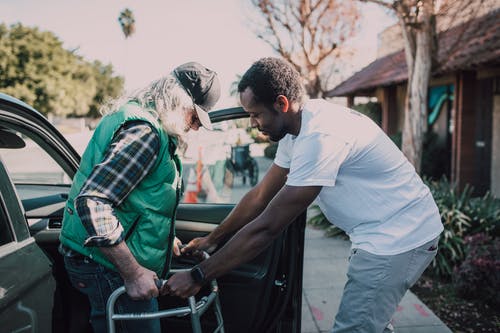
Here are a few other examples of people I know who do other things besides what they do: My Dad, a tool and die maker, was also an avid mushroom hunter and a lover of classical music. My brother John, owner of a welding and fabricating business, engaged in competitive trap shooting and also flew a biplane on weekends. I once knew a priest, the head of a religious congregation, who tinkered with the community cars on his day off. Then there’s an award winning writer who babysits her grandchildren regularly… and Sister J. the finance person at an elementary school who repairs old religious statues, giving them new life… and the computer professional who makes his own beer.
I’m suggesting that we think of our vocation within a larger context. The word vocation comes from the Latin vocare which means “to call.” As Christians, our fundamental call is to love God and our neighbor as ourselves. Taylor adds this thought: No matter what we consider our vocation to be (marriage, the single life, the consecrated life… father/mother, teacher, businessperson, lawyer, homemaker, IT professional, farmer, truck driver, clerk, cook, nurse, pastoral minister) we all have “the vocation of becoming fully human.“ She defines “fully human” as “learning to turn my gratitude for being alive into some concrete common good.” I like that! I also think turning our gratitude for being alive into some concrete common good is an excellent “practice” for Lent!
Here’s what those “Lenten practices” might look like for us: Meeting or zooming with a friend for lunch… learning to do something new—like play a musical instrument (I just heard about a 66-year-old grandfather who’s learning to play the accordion to pass on his Polish heritage to his grandchildren)… volunteering at the parish fish fry… listening to some good podcasts like Bishop Robert Barron’s “Word on Fire” or Krista Tippet’s “On Being”… watching just about any program on PBS—nature, science, history, the arts… playing games with friends or family… educating ourselves on a vital issue of our times.
For reflection:
What activities do you do to balance your main work?
Do they help you to do your “main work” in a more healthy and loving way?
How might you turn your “gratitude for being alive into some concrete common good” this Lent?
PS: On Ash Wednesday I was part of a Lenten retreat day at the Sisters of Notre Dame center in Covington, KY. I was surprised and edified that over 130 people came to this retreat day from 9:00 to 2:00. The day consisted of talks, prayer, reflection time, Mass, lunch, and time for confessions. I want to thank Sister Dennise for inviting me. I also want to thank all the workers who made the day run smoothly—plus all beautiful individuals who came!
Once again I offer you two videos…
The first is a powerful new song by Joy Zimmerman, a talented young woman from Kansas. It’s called “We’ll Hold the Light for You.” It’s Joy’s tribute to first responders of all kinds: EMT personnel, health care workers, police officers, fire fighters. The second is a prayer for world peace. One of my favorite hymns, “This Is My Song,” it is based on Sibelius’ “Finlandia.”
Joy Zimmerman’s “We’ll Hold the Light for You”… as we thank all first responders for their dedication to all of us….
Let us pray the words of “This Is My Song” especially for our brothers and sisters in Ukraine… The lovely photos here are from countries all over the world. See the lower right hand corner of each photo…
You are invited to write a comment below. My other readers and I enjoy hearing from you!
Lent Is a Time to Meet Jesus—Again.
When I was going on my annual retreat this past December, an SND friend gave me a book saying, “You might enjoy this.” The book was The Diary of Jesus Christ by Bill Cain, SJ. I confess, I was not drawn to the title. I tend to avoid books that put a lot of words into Jesus’ mouth that aren’t in scripture. But I thanked my friend, and tucked it into my suitcase.

Two days into retreat, I thought I’d give the book a try. I saw that the forward was written by Greg Boyle, SJ, the author of Tattoos on the Heart, an incredible book. (I wrote about that book on my blog in 2013. You can access that blog by going to the search box in the upper right side panel and typing in “Tattoos on the Heart”). Then I read the first chapter of Cain’s book—and I was instantly and delightfully “blown away.” I’ll share the first chapter with you, and then say a few more things about the book.
In chapter one we meet Jesus (Joshua) as a nine-year-old boy. At that age, he says, he wanted to be a rabbi. His motivation, however, wasn’t too spiritual. “Carpentry looked like a lot of hard work,” he says. But there was a problem with his wish to be a rabbi: their particular village rabbi never looked happy. In fact, Jesus thinks the happiest man in the village is the baker named Osiris. Everyday he would carry a big yoke on his shoulders from which hung two large baskets filled with all kinds of breads. He went from house to house cheerfully peddling his breads. Osiris always made people laugh—especially the women, including Jesus’ mother, Mary.
The baker, though, was a foreigner, an Egyptian. Although he was treated decently most of the year, at Passover time, “he was looked upon with suspicion.” One day, Jesus asks him, “Osiris, why did you keep us in slavery?” He replies, “Do I look five hundred years old that I kept you in slavery?”
Jesus says, “You know what I mean. Why did your people keep my people in slavery?” The baker replies “bitterly”: “Go ask your God why he killed our children to set you free. Go ask if that was fair.”
The two of them sit side by side in silence for a while. That’s when Jesus realizes, “I had no future as a rabbi.” He says to Osiris, “I don’t think I’m a very good Jew. I don’t think I could believe in a God who kills children.”
And Osiris says, “Joshua, I don’t think I’m a very good Egyptian. I don’t want to be a part of any people that could keep slaves.”
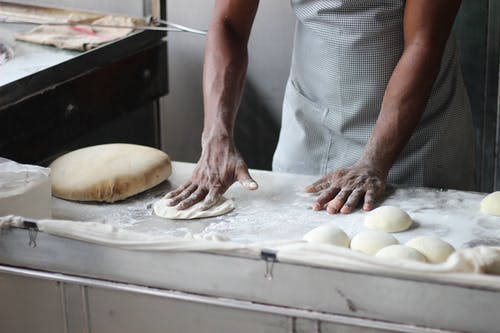
Again, silence. Then Osiris says, “Let’s not be sad. Put on the yoke and let’s sell the bread together.” Jesus dons the yoke and is shocked by how heavy it is. Osiris encourages him, “Once you sell the bread, it gets lighter.” And the two of them go through the village, “laughing and chatting” and selling bread.
The last two sentences in the chapter touched me deeply. Says Jesus: “That’s when I knew what I really wanted to be. A baker.” My mind instantly jumped ahead to images of Jesus telling the parable of the grain of wheat, comparing the Kingdom of God to yeast, feeding the thousands on the hillside, and breaking the bread at the Last Supper.
In this imaginative book we see Jesus interacting with his parents. Mary, a practical, down-to-earth woman, always sang songs to Jesus when he was growing up. One in particular he liked, a song about the mighty being being cast down from their thrones and the hungry being filled with good things. At twelve, Jesus sees people begging for food in the marketplace and is troubled. One day he gets an idea. He sings his mother’s song loud and clear, and people toss coins into his hat. With that money, he buys food for the hungry around him. But one day, a Roman soldier hears his song, picks him up, pins him against the wall, and demands to know, “Who wrote that song? Tell me who he is!” It is then that Jesus realizes how subversive his mother’s song was, how threatening to the mighty Romans who ruled his country. Later, when he gets home, he asks his mother, “Who are you?” And then adds, “Are you the Messiah?”
I loved Jesus’ relationship with Mary Magdalene. She is not Jesus’ lover (as some have portrayed her), but she is one of his best friends—and best advisors. It is she who helps Jesus select his twelve apostles. She knows men, she tells him, and warns him about Judas Iscariot and even Peter. But after Jesus picks the twelve, he senses that Mary is very upset about something. Later, and in private, he asks her if something is wrong. And then adds, “Are you angry that I didn’t choose you as one of the twelve?” She says, “I am angry that it didn’t cross your mind… And, to be fair, I am angry that it didn’t cross mine.”

The book tells the familiar Gospel stories in fresh and imaginative ways. It offers new insights into who Jesus is and what it means to be his disciple in today’s world. I found myself saying, “This is the Jesus I want to know—and love better!” Lent is a good time to get to know Jesus better—by pondering the Gospels or maybe even a book that focuses on him. Besides Cain’s book, I suggest these: Jesus: A Gospel Portrait by Donald Senior; Meeting Jesus Again for the First Time by Marcus Borg; Jesus of Nazareth by Pope Benedict XVI; He Was One of Us by Rien Poorvliet; The Catholic Companion to Jesus by Sr. Kathleen Glavich; Jesus: A Gospel Portrait by Henri Nouwen; and the book I’m going to read this Lent Consider Jesus by Elizabeth Johnson.
Do you have any suggestions for meeting Jesus again this Lent—any books, films, music, poetry, art? I invite you to share some of the things that have helped you “to meet Jesus—again.”
I wish each of you a blessed Lenten journey! May we all come to know and love Jesus more and more during this holy season!
PS: I thoroughly enjoyed my phone calls with the three winners of the contest two weeks ago: Bonnie (Yarmouth, ME), Susan (Pittsburgh, PA), and Maggie (Ventura, CA). I received so much from these “chats” with “real readers” of this blog that I hope to have another raffle one of these days!
I’m offering three videos for you. The first is Michael Card’s song, “The Nazarene.” I chose the version with the lyrics shown on a plain brown background so we can focus on the words… The second is a 19 minute interview with Bill Cain conducted by Robert Ellsberg, head of Orbis Books and author of All Saints. He also writes the “Blessed Among Us” reflection in Give Us this Day. Being in the presence of these two “Blessed” men—one a priest the other a layman…and both great writers—is well worth your 19 minutes… And for the third video, in view of current world events—especially in Ukraine—I’m offering St. Francis’ Prayer for Peace.
“The Nazarene”: The line that moves me is this: Jesus “was so unlike any other man and yet so much like me.”
Robert Ellsberg’s interview with Bill Cain, SJ:
As we pray for peace in our world, let us remember that peace begins with each one of us. Here is St. Francis’ prayer, “Make Me a Channel of Your Peace” sung (appropriately) by a young girl.
I welcome your comments below on anything related to today’s reflection…words… pictures…videos… and any additions. Thank you!
So What?
Sometimes when I read a passage from Scripture, I pause for a few moments and ask myself, “So what?” In other words, what does this passage or this verse have to do with me at this particular time in my life, in this specific place, and in my current circumstances?
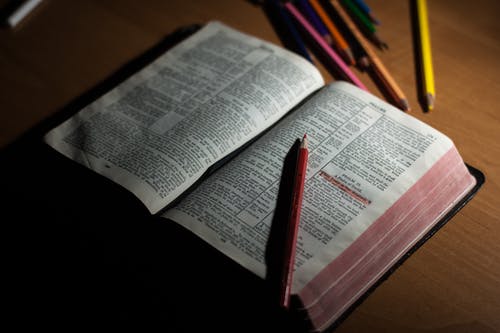
I remember my scripture professor at Duquesne (who eventually became a dear friend) Father Demetrius Dumm, OSB, telling us that it’s tempting to focus on scripture passages we like and we find consoling: “The Lord is my shepherd… fear not, little flock… Behold, I am with you always… consider the birds of the air and the lilies of the field…” It’s okay to have some favorite scripture verses to bathe in from time to time. But we must not shy away from other scripture passages we may find confusing, challenging, or even disturbing. For the truth is, almost all scripture passages have implications for me—for the way I live my life and my faith. They are calling me to do something—even if that “doing” may be largely interior: change your attitude… show your appreciation more… don’t be so judgmental… expand your love… trust God… forgive.
Here’s an example of what I mean. In Romans 8:14 we read: “For those who are led by the Spirit of God are children of God. For you did not receive a spirit of slavery to fall back into fear, but you received a spirit of adoption, through which we cry, Abba, ‘Father!'” So what? What are some of the implications of these words for me, or, for us? To discover that, I might ask myself questions such as these: What does it mean to be a child of God? If I really believed I was God’s child, would I think, act, or live any differently? If so, how? What does it mean to be “led by the Spirit of God”? Are there ways I can predispose myself to God’s Spirit? Daily prayer… pondering scripture… slowing down? What other kinds of spirits can I allow to lead me—the spirit of self-centeredness… consumerism… convenience… pride…? Does fear characterize my faith? If so, what are some ways I can become less fearful—and more free?
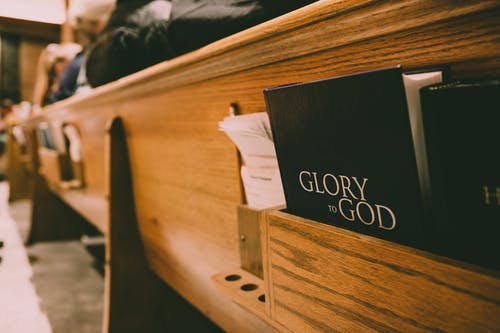
This “So what?” is the challenge of every homilist. After listening to the readings at Mass, the congregation sits down—except for the homilist. He (in our Catholic Church the homilist is still almost always a “he”) is entrusted with offering at least one answer to the question, “So What?” Depending on the readings, there are probably many answers to that question. The homilist doesn’t have to address all the possible implications. Just one or two that apply to this particular congregation, at this time, and in this place. Needless to say, giving a homily is a daunting task—especially to do it Sunday after Sunday or day after day. Little wonder most homilists struggle. Yet, I have known many of them who have risen to the challenge. Here are the names of a few priests and deacons in my life who were or are good homilists : Demetrius, Gary, Bob, Mark, Tim, Ed, Larry, Don, Norm, and Tom. (Fr. Tom, I know you’re reading this. I don’t think I thanked you enough for your homilies…)
Here’s a practice to demonstrate how daunting it is to give a good homily. (I do this practice regularly.) Before Mass or even after Mass, YOU give the homily based on the readings for that particular day! You can actually jot it down or simply plan it in your head. What word or words would you focus on? What would you say to the People of God sitting in the pews waiting for you to give them some nourishment? Always remember the people to whom you are speaking. Your homily should give evidence that YOU are one of those people of God! And YOU are walking the journey of faith with them.
Okay, you’ve read this reflection. Now answer the question: “So what?”

Further reflection:
Have you heard some good homilies lately? If so, what made them good in your opinion?
What are some characteristics of homilies you would say are not very good?
Have you ever had to give a homily? If so, what was that experience like for you?
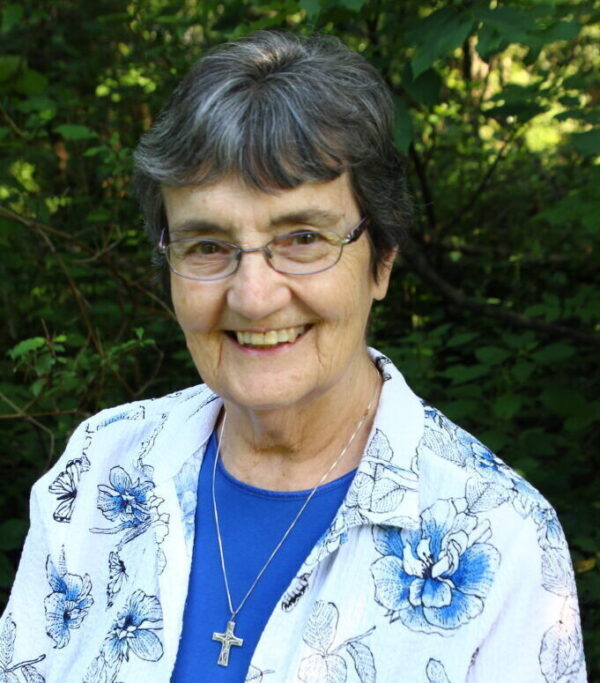
PS: Good news! Our IT staff has solved the problem regarding subscribers not receiving “Sunflower Seeds” on Monday or not at all. During the process, I learned something. I thought we had about 450 subscribers. But I learned we have over 4,600 subscribers! Wow! I was shocked—and very grateful to all of you! Starting with this reflection, if you are a subscriber, you should be getting “Sunflower Seeds” every Monday in your email. (If not, let me know by clicking on “contact” at the upper right of this page. Type in your name and email. Then skip down to the message and type your message there.) I want to thank our IT staff for solving this problem for all of us! Also, you may have noticed that I updated my picture on top of the sidebar too. I want to thank my good friend, Sister Mary Seton, for her photographic expertise.
I chose the song “Word of God” by MercyMe for today. I love the words–especially “Pour down like rain…” and the lush green visuals. It’s a great paradox that the Word of God will eventually lead us to a place where no more words are necessary…
I welcome you to comment below on anything in this reflection!
Grieving: The Other Side of Loving
(I am posting this early, hoping you might receive it by Valentine’s Day…)
This is my Valentine’s Day reflection. I had to make that clear, because when you saw the word “grieving” in the title and when you are actually reading this reflection, you might question: “What does this have to do with Valentine’s Day?” But, by the time you’ve finished reading this, I hope you will know the answer to that question.
Major Steven Beck, U.S. Marine Corps, was a CACO, a casualty assistance call officer. His duty was to inform a spouse or parents that their Marine had been killed. (I found this information from a Washington Post column [July 6, 2008] in George F. Will’s new book, American Happiness and Discontents. In this column, Will quotes from Jim Sheeler’s book, Final Salute: A Story of Unfinished Lives.)

The manual for CACOs says, “It is helpful if the (next of kin) is seated prior to delivering the news…. Speak naturally and at a normal pace.” Writes Will, “Sometimes, however, things do not go by the book.” Doyla Lundstrom, a Lakota Sioux, was away from her house when the two men in uniform appeared at her door. She had two sons serving in Iraq. One was a Marine, one a soldier. When she heard they had come, she quickly called her husband and screamed into her cellphone, “Which one was it?” It was the Marine.
Military personnel deployed in war zones, often leave behind “just in case” letters. Army private First Class Jesse Givens of Fountain, CO, wrote: “My angel, my wife, my love, my friend. If you’re reading this, I won’t be coming home… Please find it in you heart to forgive me for leaving you alone.” To his son Dakota: “I will always be there in our park when you dream so we can still play together… I’ll be there in the sun, shadows, dreams, and joys of your life.” To his unborn son: “You were conceived in love and I came to this terrible place for love.”
According to the Watson Institute at Brown University, the U. S. Military lost 7,057 men and women “in post-9/11 war operations.” That figure was from 2021. Another ominous statistic is this one: There have been 30,177 suicides among U.S. service members and veterans of the post-9/11 war operations. As terrible as those figures are, the fact remains that in the waning years of the “war operations,” in the words of one Marine, “the nation has changed the channel.” Many of us almost forgot that a war was going on and that thousands of individuals and their families were paying the ultimate price. Only occasionally did the nation get a glimpse of that price: every time they saw on the news or witnessed in person a flag draped coffin being escorted home.
In his book, Sheeler vividly describes one incident. A Marine CACO was on a passenger plane escorting a fallen warrior home. Another passenger, noting the uniform, asked if he were coming home from the war or was he going to the war. The CACO, a sergeant answered with the words he was taught to say: “I’m escorting a fallen Marine home to his family from the situation in Iraq.” Yes, the “situation”…
Sheeler writes:
“When the plane landed in Nevada, the sergeant was allowed to disembark alone. Outside a procession walked toward the cargo hold. The airline passengers pressed their faces against the windows.
From their seats in the plane they saw a hearse and a Marine extending a white-gloved hand into a limousine. In the plane’s cargo hold, Marines readied the flag-draped casket and placed it on the luggage conveyor belt.
Inside the plane, the passengers couldn’t hear the screams.”
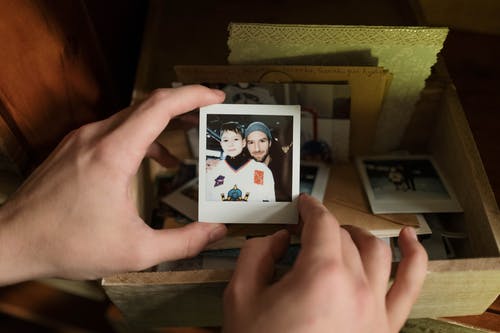
George Will concludes his column with the story of Sarah Walton, his assistant. When the army CACO came to her Arlington home, Sarah was not there. She had rarely forgotten the rule that a spouse of a soldier in a combat zone is supposed to tell the army when he or she is away from home. It took a while for the Army to find Sarah in her parents’ home in Richmond. Her husband, Lieutenant Colonel Jim Walton, West Point Class of 1989, was killed in Afghanistan. Writes Will: “This week he will be back in Arlington, among the remains of more than 300,000 men and women who rest in more than 600 acres where it is always Memorial Day. This is written in homage to him, and to Sarah, full sharer of his sacrifices.”
Why am I posting a reflection like this on Valentine’s Day? Shouldn’t I be writing about red roses, heart-shaped candy boxes, or God’s great love for us? I chose this topic of grieving because grieving is the other side of loving. Paradoxically, it is often the depth of our grieving that gives us a hint of the depth of our loving. When we grieve the loss of a loved one, regardless of the circumstances or even when the actual loss occurred—yesterday…last month… a year ago… 20 years ago—we’re witnessing to the mystery, power, and beauty of human loving. More specifically, through our grieving, we are saying:
Loving is the greatest power we possess…
Loving is the most important thing we do in our life…
Loving is the most challenging thing we do in our life…
Loving bestows upon us our greatest joys….
Loving, sooner or later, calls us to our greatest sacrifices…
Loving is fun… surprising… beyond reason… impossible to put into words…
Loving is the greatest gift we have been given by our Beloved God from whom all blessings flow…
And when the object of our loving is taken away from us through death, we grieve… in our own way… we grieve.
But for those of us who are Christian, we believe that one day our grieving will be turned into rejoicing. We believe that when Jesus danced out of that tomb on Easter morning, he somehow took all of us with him. So even when we are immersed in our grief, we can simultaneously believe we will see our loved ones again. Or, in the words of the poet John Shea, we believe that “the laughter of reunion leaps on the far side of loss.”

For reflection:
Did anything in this reflection touch your heart? If so, what? Why?
What has your own experience of grief revealed to you about loving?
Do you think we all, regardless of age or health, should write “just in case” letters to our loved ones? Explain your answer.
How are you celebrating Valentine’s Day this year?
PS: (I’m writing this Sunday, Feb. 13): Thank you for your prayers for this past weekend’s zoom retreat sponsored by the Portiuncula Center for Prayer in Frankfurt, IL. I enjoyed meeting some “old” friends (Sisters Elona and Melanie) and meeting new friends–including a number of readers of this blog. I also want to thank the three wonderful women who made this retreat possible: Sr. Mary Lou, director of the Center; Sr. Janice, program coordinator; and Megan, our IT professional who helped make everything run smoothly!
Happy Valentine’s Day to each one of you… and to your loved ones too!
I chose this 2016 video of a song from 1962: “Where Have All the Flowers Gone?” Written by Pete Seeger and Joe Hickerson, it is performed here by the Kingston Trio.
I encourage you to consider writing a comment below. I know my readers (and I!) really appreciate this sharing.