A Hall of Fame Speech that Inspires Hope
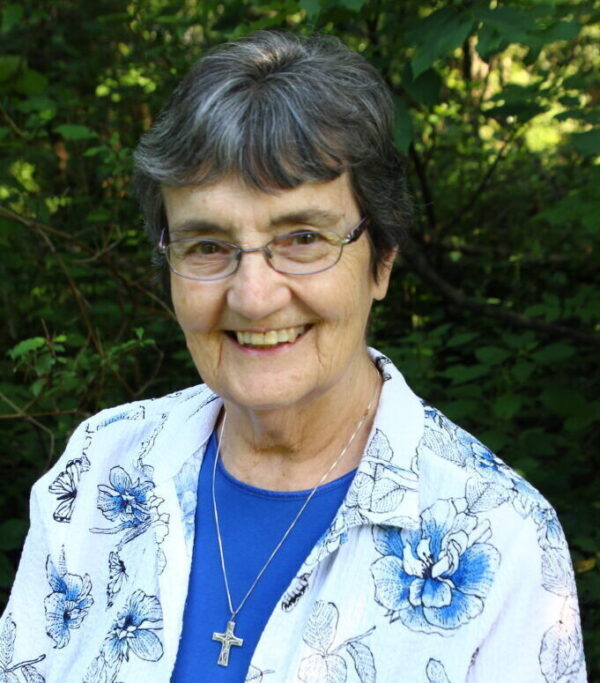
I am always looking for signs of hope in the world. Sometimes I don’t have to look very far; they just fall into my lap. Here’s one: The acceptance speech of a former student of mine who was recently inducted into the North Carolina Media and Journalism Hall of Fame. His name is John Drescher and he graduated from Cardinal Gibbons High School in Raleigh in 1978.
First, a few words about John. I taught John religion and English in his senior year. Gibbons was small back then. Total enrollment: 217. (Now Gibbons has an enrollment of 1570!) One of my goals my second year there was to re-start the student newspaper. I had an understanding principal, Sister Colette (now Joanne), who allowed me to create and teach a one-semester journalism course. I had about 8 students—one of them was John. He became the first editor of the revived newspaper while simultaneously doing much of the photography for the school yearbook and playing on the soccer and baseball teams. After graduating and enrolling at UNC-Chapel Hill, John became editor of the The Daily Tar Heel. Later, while doing graduate work at Duke University, he served on the board overseeing The Chronicle. After that, his journalism career really took off. He served as a reporter for Raleigh’s News & Observer as well as The Charlotte Observer. John eventually became editor of the N&O that investigated critical issues such as nonprofit hospitals, dangerous working conditions in chicken processing plants, and corruption in government.
John’s talents did not go unnoticed. He eventually received a call from The Washington Post and was hired to join their national politics investigation team, editing several exclusive stories about President Donald Trump. Recently he retired from The Post and now writes for and edits The Assembly, a new digital magazine for North Carolina. John and his wife Deanna have three adult daughters.

Here’s John’s acceptance speech:
I’m honored to enter this Hall of Fame with such a distinguished class. It’s prompted me to think of all the great colleagues I’ve had over the years in Raleigh, Charlotte, Washington, Columbia, and where it all started for me, here at The Daily Tar Heel. It’s a thrill to see so many of my former colleagues here. I could never properly thank all of them, but there are two here tonight whom I would like to mention.
The first is Melanie Sill, who brought me back to North Carolina 20 years ago as managing editor of The News and Observer, and who always set a high journalistic standard. The second is Orage Quarles, who elevated me to executive editor when Melanie departed for California. Orage was a terrific publisher who understood and supported good journalism, and I’m grateful for the opportunity he gave me.
I’d also liked to thank me wife, Deanna. Being married to a daily news journalist is like being married to the mob. Once you’re in, you’re all in. No time is sacred—not weekends, not holidays, not birthdays, not vacations. But Deanna has always handled my calls to duty with patience and grace, even when I didn’t deserve it, which was often. (Pause)
I was asked recently if there was a moment that stood out in terms of its influence on me as a journalist. And there is. In September 1991, when I was a reporter for The Charlotte Observer, a huge grease fire erupted in a chicken-processing plant in the small town of Hamlet. The plant was a primitive death trap with locked exit doors and no sprinkler system. Twenty-five people died, 49 children were orphaned, and others were grievously injured. Some of them still suffer today, including Annette Zimmerman, who recently had yet another surgery on her spine to repair the damage from that day 30 years ago.
I was part of a team of reporters who covered the initial daily news, and then pursued follow up stories for several months. North Carolina journalists did a great public-service work. They showed that various government agencies had let their guard down, and allowed a completely preventable tragedy to occur. The plant was 11 years old, but it had never been visited—not once—by a government safety inspector.

We’re here tonight to honor individuals, and those of us being recognized are grateful. But more importantly, we’re here to honor the power of public-service journalism. After journalists reported on the failures that led to the Hamlet fire, state government rallied itself in a way that it rarely does, and produced long-overdue workplace safety measures. I wish I could say that 30 years later, these measures were keeping North Carolina workers safe. But sadly, the number of inspectors and inspections are down, and other indicators are moving in the wrong direction. (pause)
When we turn our eyes away from the people who do the toughest, dirtiest, most dangerous, and lowest-paying jobs, the result—as we saw in Hamlet—is always bad. Journalism has many roles, but one of them is to shine a light into places that we might not want to see. (Pause)
It’s a difficult time to be a journalist. We’re having to invent a new financial model, and politicians with base instincts are working to divide the country and turn the people against us. We must persist. As Marty Baron, the former editor of The Washington Post, said after attacks from a politician, “We are not at war. We are at work.” To the hard-working journalists of this state and across the country, I say, “Stay at it.” The people are depending on you, whether they recognize it or not.
Thank you for this honor, and may North Carolina’s best journalism be ahead of us.
**************************************************************************************************
I mentioned John did most of the photography for the ’78 yearbook. After he graduated, he presented me with a small yearbook he created for me. It consisted of pictures from the REAL yearbook with my head superimposed on some of the students. Here’s a picture of John (on the left) with his fellow soccer player Mike on the right—only Mike is wearing my head! Note John’s caption.

For reflection:
Is there anything in today’s reflection that stands out for you?
Is there anything you would like to add?
What are some of your feelings/thoughts with regard to journalists?
(I want to thank my friend Sister Barb D. for helping me transfer the special yearbook picture to this blog.)
As we Americans celebrate Memorial Day this year, our hearts are heavy with the recent news of more mass shootings in our country—especially in Buffalo, NY and Uvalde, TX. May these horrific events cause us to ask the right questions about the state of our nation, and may they call us to responsible action. Memorial Day is dedicated to all those individuals who gave the ultimate gift, the gift of their lives, that others may live in freedom and peace. May all of us continue to work for “liberty and justice for all”—as articulated in our Pledge of Allegiance. This Memorial Day I have chosen this unique and beautiful version of our National Anthem, sung by hundreds of teenagers in Kentucky. This story was reported on CBS news. It moved my heart. I hope it moves yours too.
.
I encourage you to respond to this blog below. We all enjoy hearing from you very much!
“Braiding Sweetgrass” and the Grammar of Animacy
I’m reading another fascinating book recommended to me by one of my nephews, John Hartman. It’s titled Braiding Sweetgrass by Robin Wall Kimmerer, a botanist and member of the Citizen Potawatomi Nation. In her book, she blends her scientific knowledge with her indigenous wisdom. The result is (as one reviewer said) “A hymn of love to the world.”
In today’s blog, I will focus on one chapter she calls, “The Grammar of Animacy.” First, some background. When missionaries went to educate Indian populations, they were directed by their governments to forcibly assimilate the native peoples into “our culture.” This often meant ripping children from their families and herding them into large institutions where they were stripped of their names, clothes, and language. The motto for some of these boarding schools was: “Kill the Indian, save the man.” Certainly this practice ranks as one of the most shameful in U.S. and Canadian history (as well as other countries).

At midlife, Kimmerer decides to learn her native language Potawatomi. Sadly, there are only about nine native speakers left. During her lessons, she realizes anew that language has a profound affect on how we view the word. She also appreciates that every language has its beauties as well as its limitations. And finally, what we have words for and how we express ourselves, often tell us what we value and what we do not.
One day, while walking in the woods, Kimmerer comes upon a mushroom that was not there the previous day. She is in awe of how this mushroom pushed up through the heavy layer of dead leaves overnight! She learns that Potawatomi has a word for this phenomenon: puhpowee. Translated into English it means “the life force which causes mushrooms to push up from the earth during the night.” She was surprised to learn this, adding, “In all its technical vocabulary, Western science has no such term, no words to hold this mystery.”
She compares Potawatomi with the scientific language she knows so well. She writes, “Science can be a language which reduces a being to its working parts. It is a language of objects.” In contrast, Potawatomi is a language of subjects. She quotes Fr. Thomas Berry, “…we must say of the universe that it is a communion of subjects, not a collection of objects.” European languages often refer to nouns as animate or inanimate. But in her native language, nouns and verbs can both be animate and/or inanimate. A bay can be inanimate if the water in the bay is dead. But the bay can also be animate because it could become a river, waterfall, or ocean. This distinction affects which pronouns we use.

In English, if we see our grandmother stirring something on the stove, we would never say, “Look, it is making soup.” Our grandmother is not an “it.” An it in English is often inanimate or at least a non-person. But what if we came across a maple tree and, instead of saying, “It is beautiful!” We said, “She is beautiful!” Says Kimmerer, by saying she, we might not be so ready to reach for the chainsaw. In Potawatomi, beings are imbued with spirit. So “things” like sacred medicines, songs, and even stories, are all animate. The list of inanimate things in her language is very small and usually refers to things made by people. So if we see a table, we might ask in Potawatomi, “What is it?” But if we see an apple, we would ask, “Who is that being?”
Throughout the chapter, Kimmerer points out some other differences between the two languages. In English, only 30 percent of words are verbs, but in Potawatomi, 70% are verbs. Her native language has many words for thank you, but no word for please. This absence caused some missionaries to label the native language as crude—and by extension, the native people as crude. But there’s a deeper mystery here. When we ask for more potatoes or for someone to pass the salt in Potawatomi, we do not need to say please. The underlying cultural assumption is this: All food “was meant to be shared; no added politeness needed.”
In showing some of the subtleties of the Potawatomi language, Kimmerer points out the humor of language. She says of Potawatomi, “Even a small slip of the tongue can convert “We need more firewood” to “Take off your clothes.” When struggling to speak Potawatomi, Kimmerer says, to a native speaker she would sound like this: How are you? I am fine. Go to town. See bird. She says, “I would sound like Tonto’s side of the Hollywood dialogue with the Lone Ranger.” She and the other students in the class sometimes filled in the gaps in their Potawatomi with their high school Spanish. They dubbed their new language Spanawatomi!
The very titles of the chapters in Braiding Sweetgrass hint at the richness and beauty of this book: “The Council of Pecans,” “Allegiance to Gratitude,” “Asters and Goldenrod,” “Sitting in a Circle,” “Epiphany in the Beans.” For me Kimmerer’s book is magical. I’m so grateful my nephew recommended it to me. Now I’m doing the same for you!

For reflection: Did anything in today’s blog stand out for you? If so, what and why?
Do you know a second language? If so, do you see differences between this language and your native language? Did learning another language reveal anything to you about your native language?
If we saw trees, African Violets, robins, and ants—as well as inanimate things like rocks, rivers, and soil as “persons” and referred to them as “who,” what effect might that have on our view of the world?
Can you give any examples in English of how our words influence the way we think? Or how the words we choose reveal our attitude to what or whom we are talking about? (Be attentive to the words used during political campaigns…)
PS: I ask your prayers for a zoom retreat I’ll be giving this week to the Sisters of St. Francis of Perpetual Adoration located in Colorado Springs, CO. It runs three days: May 24-26. Thank you for your prayers!
For today I chose a 5 minute video called “Tribute to Mother Earth.” It consists of Native American instrumental music set against a background of nature photography. There are no words (This post already contained enough words…) Instead, just relax and enjoy the beautiful music and the visuals.
I invite you to respond below to this reflection.
Four Thoughts on Happiness
I’ve been reflecting on happiness lately. Here are four thoughts I’d like to share with you—and then solicit your thoughts on happiness.
1. God wants us to be happy—in this life.
I’m old enough to remember the old Baltimore Catechism that presented the faith in question and answer form. One of the first questions was this: Why did God make you? The correct answer (which we kids memorized back then) was this: To know Him, love Him, serve Him in this life, and be happy with Him in the next. I appreciate the “know Him, love Him, serve Him” part. But I don’t like the implication that we will be happy only in the next life.

If I am seeking to know, love, and serve God in this life, won’t that bring me a certain level of happiness in this life—even if my life is imperfect or challenging? Finding meaning in life through the Gospel, I believe, can lead to a deep sense of happiness. After all, if we Christians are staking our lives on the Good News, how could we be anything but basically happy people?
2. Happiness is a pathway, not a destination.
As children we may have thought, “If I get a bike for Christmas, I’ll be completely happy!” And if we did get the bike, what happened next? Sooner or later, we began to feel discontent again. That bike did not satisfy our craving for happiness. As we grew older, perhaps we tried to find happiness in other things: getting good grades in school, finding a good job, marrying the right person, having a fine family. Although all these achievements can bestow a certain amount of happiness, none satisfies us completely. That’s because happiness in this life is not a once-and-for-all achievable goal. It is a manner of living. It is not a destination; it is a pathway. For us Christians, happiness is a manner of living based on the life and teachings of Jesus.
3. Happiness is rooted in our identity.
Who are you? The answer to the question lies at the heart of happiness. We Christians believe we are children of a loving God. We are brothers and sisters of a Jesus who triumphed over sin and death. We are temples of the Holy Spirit filled with God’s own goodness and power. If we truly believe this, then the underlying pulsation of our life will be happiness.

This doesn’t mean we will always be smiling. It doesn’t mean things will always go our way. It doesn’t mean life will always make sense to us. But it does mean that the knowledge of our relationship to God allows happiness to co-exist with doubt, pain, and sorrow. In fact, no matter what negative human emotions we may be experiencing—such as fear, anxiety, confusion, or dread—we can still have happiness in the deepest level of our soul. How can this be? Because, no matter what is happening to us, our loved ones, and the world community, we trust that everything—every thing!—is in God’s loving hands.
4. Happiness depends on how we see.
Pope Francis has written much about happiness. In fact, one of his books (a collection of his homilies) is titled Happiness in This Life. In it he says he sometimes lets children ask him questions. One girl asked him, “Where do you see God?” The Pope replied, “I try to meet God in every circumstance of life.” He described trying to see God in the Bible, in the Sacraments, in his work, and in people. Happiness, then depends not so much on the particular circumstances of our life. It depends much more on how we see our particular circumstances. If we find ourselves joy-less and miserable, maybe we don’t need to radically change our circumstances. (Sometimes we can’t.) But we may need a new pair of glasses so we might see what’s good about our lives and how God is active and alive even in these particular circumstances. In troubling times, God might be calling us to greater patience, humility, and trust.

Let’s conclude this short reflection with this prayer:
A Little Prayer for Happiness
God, I want to be happy. And I believe you want me to be happy too—not only in eternity, but also in this life. Keep me connected to the Good News of the Gospel. May the life and teachings of Jesus guide my actions and choices. Help me to see that happiness in this life is not a destination. It is a pathway. Happiness depends less on what I have in this life and more on the manner in which I am living this life. Give me a deeper sense of my identity as your child, as a sister or brother of Jesus, as a temple of the Holy Spirit. And finally, my Gracious God, help me to see. Give me eyes to find you in the circumstances of my everyday life—whether those circumstances seem nice, neutral, or negative. Lead me to trust that everything—myself, my loved ones, the entire earth community, and world events—are all somehow being held in your loving hands. Amen.
For reflection:
Did anything stand out for you in this reflection?
Do you have any thoughts about happiness that you would add?
Are you happy?
Today I chose an old hymn “How Can I Keep from Singing?” written in 1860. I’ve used this song as the theme of some of my retreats. This version of the hymn is done by Keith & Kristyn Getty. The Getty’s are a popular couple who have written and produced many beautiful contemporary Christian songs. They divide their residence between Northern Ireland and Nashville, TN. They are the parents of four daughters: Eliza Joy, Charlotte, Grace, and Tahlia. May this old traditional hymn strengthen us in our faith today.
As I always do, I welcome your comments below!
This & That
(Note: I’m posting today’s blog on Sunday, May 8, hoping my subscribers will get it earlier in the week.)
If you’ve been reading my blog for a while, you know that every now and then I like to share a few short things I’ve come across recently. I sometimes call these reflections “This & That.” Here’s one for today:
Meatless Mondays
Have you heart about meatless Mondays? It’s a global movement encouraging people to reduce meat in their diet for their own health and for the health of our planet. The message is simple: skip meat one day a week. Although Monday was chosen, it can really be any day of the week. Eating less meat and more healthy plant-based foods can reduce the incidence of chronic preventable diseases (such as obesity and heart disease) and preserve precious land and water resources which can combat climate change.
If every American stopped eating meat one day a week for a year: 1.4 billion animals would be spared, which (according to the EPA) would also lower the emission of greenhouse gases by the equivalent of ten billion charged smartphones. By skipping meat one day a week, Americans could save about 100 billion gallons of water, 70 million gallons of gas, and 3 million acres of land.

There are many websites with recipes for meatless Mondays. I liked this one because it offers 25 plant-based recipes for things such as vegan sloppy joes, teriyaki stir fry veggies, loaded quinoa tacos, sweet potato chili:
https://www.acoupleofcooks.com
If you want to know more about Meatless Mondays go to: https://mondaycampaigns.org
*************************************************************************************************
Daily Facts
For Christmas a friend gave me a calendar that features a “strange fact” for everyday. Here are a few things I’ve learned from that calendar:
The Pacific Ocean is larger than all land masses on Earth combined.
Three dogs survived the sinking of the Titanic.
The shortest war in history lasted only 38 minutes. (I looked it up. It was the Anglo-Zanzibar War of 1896.)
More people are killed by selfies than by sharks.
**********************************************************************************************
A Note to Me from God
Years ago I made a one day retreat for our high school faculty. At the end, we were encouraged to write ourselves a note from God. The directions said, “Based on what we talked about, what would God say to you?” We were given the blank side of a 3″ X 5″ holy card to write our note on. By chance I came across my note last week as I was rummaging through a folder looking for something. The note somehow seems timely, so I’m sharing it with you:

March 10, 1985
Dear Melannie,
Take time each day to think… to wish… to create… to dream… to play… to dance… to wonder.
You will find me not only in your ideas, but also in your feelings and fantasies.
I love you and want you and like you—for more than the things you do for me.
Trust me. All will work out for the best in the end. Hope.
Love,
God
*********************************************************************************************
How Welcoming Is Your Parish?
This is a “welcome card” that is distributed to visitors and new parishioners at a parish in Florida. (I can’t verify the parish yet, but I’m working on it.)

“All Are Welcome”
We extend a special welcome to those who are single, married, divorced, gay, filthy rich, dirt poor, y no habla Ingles. We extend a special welcome to those who are crying newborns, skinny as a rail, or could afford to lose a few pounds. We welcome you if you can sing like Andrea Bocelli or, like our pastor, who can’t carry a note in a bucket. You’re welcome here if you’re “just browsing,” just woke up, or just got out of jail. We don’t care if you’re more Catholic than the Pope, or haven’t been in church since little Joey’s Baptism. We extend a special welcome to those who are over 60 but not grown up yet, and to teenagers who are growing up too fast. We welcome soccer moms, NASCAR dads, starving artists, tree-huggers, latte-sippers, vegetarians, junk-food eaters. We welcome those who are in recovery or are still addicted. We welcome you if you’re having problems, or you’re down in the dumps, or you don’t like “organized religion.” We’ve been there too. If you blew all your offertory money at the dog track, you’re welcome here. We offer a special welcome for those who think the earth is flat, work too hard, don’t work, can’t spell, or came because Grandma is in town and wanted to go to church. We welcome those who are inked, pierced, or both. We offer a special welcome to those who could use a prayer right now, had religion shoved down their throat as a kid, or got lost in traffic and wound up here by mistake. We welcome the flexible, the inflexible, tolerant & intolerant, those who laughed as well as those who gasped at this welcome card. We welcome tourists, seekers, doubters, bleeding hearts, and you!
*********************************************************************************************
For reflection:
1. Have you heard about Meatless Mondays? Are you trying to reduce meat in your diet?
2. Did any of those calendar facts surprise you?
3. If God wrote you a note today, what might it say?
4. What was your reaction to the “Welcome Card.” Did you smile, laugh, gasp, become uncomfortable, confused, or angry, or what?
Our song for today features a singer new to this blog: Cathy A. J. Hardy. (I thank one of our Canadian readers, Lois in Saskatchewan, for introducing her to me!) Cathy is a singer, songwriter, retreat director who lives in Mission, British Columbia. She is also the mother of two grown daughters. This song is called “I Am with You… Here” May you hear the Resurrected Jesus speak these comforting words to you today—no matter what kind of a “here” you may be experiencing right now.
I invite you to share a comment below on anything that touched you in today’s reflection—or share your answer to any of the questions for reflection. My readers are always telling me how much they enjoy reading the comments! Thank you!
Everyday Mysticism and a Green Pepper
Sometimes when we think of mystics, we think of individuals who had extraordinary religious experiences. They heard God’s voice. They saw angels. They levitated three feet above the ground. They lived for 30 years solely on Cheetos. (Okay, I made up that last one.) But some did live solely on bread and water. Notice, when describing mystics, I even used the past tense—as if all mystics died before the 21st Century. Surely, in modern times most mystics would be medicated. Doctor to mystic: “I notice you’re floating three feet above the ground? We have a pill for that.”
It was the noted 20th Century Jesuit theologian Karl Rahner who wrote, “In the days ahead, you will either be a mystic or nothing at all.” Theologians have been arguing for years what he meant by that. But many agree on one thing: For Rahner, being a mystic was not reserved for the spiritually elite. It was something available to all, because, as Rahner believed, the Divine is accessible to all. Mysticism then was not something restricted to desert caves, monastery cells, or convent chapels. No, it could be found in kitchens, office cubicles, and local grocery stores.

What exactly is meant by the word mysticism? For our purposes here, this definition by Kaya Oakes will suffice. Mysticism is “a transcendent experience of an encounter with God” (America Magazine, December 17, 2020). According to Oakes, a mystical experience could happen, for example, while experiencing nature, hearing a favorite song in a new way, or having a deeper and more honest conversation with a loved one. Mysticism is not confined to Christianity either. It runs deep in other faiths, such as Jewish, Buddhist, and Muslim traditions.
For me, I have always thought of mysticism as seeing something as it really is. Often coupled with this seeing, is the realization of our connectedness with all that is. A mystical experience also bestows a sense of profound appreciation for the inherent mystery, goodness, and beauty of which we are a part. Mystical experiences are most often filled with joy—even ecstasy. The Divine is often sensed as both very near and very far beyond us.
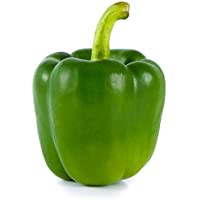
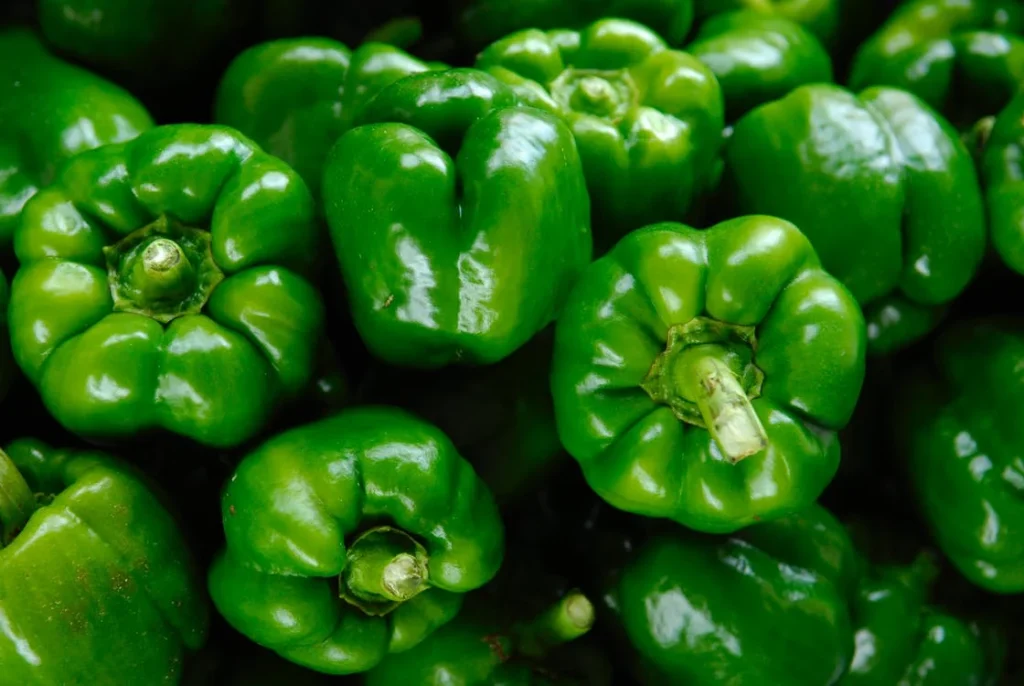
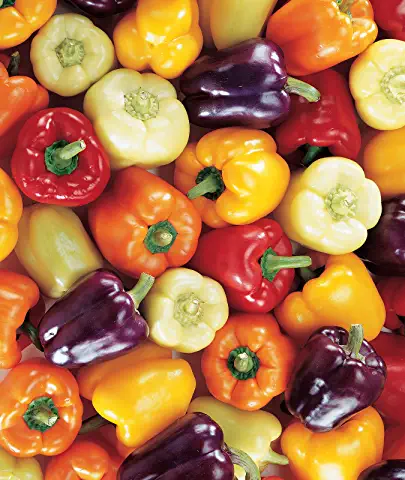
That brings me to green peppers. I sometimes make my mother’s recipe for ground meat, tomato sauce, and elbow macaroni. She called it “Mess,” and several generations of our family have been raised on this dish. (It’s inexpensive and easy to make.) I get excited when I make it, not only because I feel connected to my mother when I do. But also because the recipe calls for a green pepper—sometimes called a bell pepper. That means I have to go to the grocery store and visit the pepper bin. Is there anything more beautiful than a display of green peppers? As I approach the pepper array, I take a moment to gaze at their deep green color, their shiny surface, their gentle inviting curves. I can almost hear the peppers’ tiny voices crying out to me, “Touch me! Touch me! Take me home with you!” So I begin my selection. I handle each pepper carefully, even reverently, seeking the perfect size, firmness, and color. Then I finally select “my” pepper. It’s “my” pepper not because I’m going to pay for it. No, it’s “my” pepper because I picked it out from all the others. It’s become The Chosen Pepper.
When I get it home and start to make my Mess, I rinse the pepper in cold water. Then, on the cutting board, using a sharp knife, I halve it. As the two pieces fall onto the board, I sniff its familiar earthy aroma. Then I take a moment to gaze at the tiny, ecru-colored seeds nestled in the hollow chamber. There are zillions of them! (I exaggerate their number, I know, but I find it hard to curb my excitement!)
I wonder: why are the seeds ecru—and not brown or black like so many other seeds? I’ll have to look that up somewhere. For now, I just appreciate their beauty as I pick one up (easier said than done) and admire it. Just think, I muse, inside this tiny seed is not merely a future pepper, but a future pepper plant! Locked inside each seed, is the genetic code to reproduce itself—that is, to extend itself into the future. Now who came up with that idea? Who makes it all possible? How? And (more importantly) WHY? Was the Divine Creator so enthralled with the sight, feel, smell, and taste of the first pepper that she decided peppers deserved a future—so she devised this ingenious way to keep peppers (and everything else of value) going into the future?
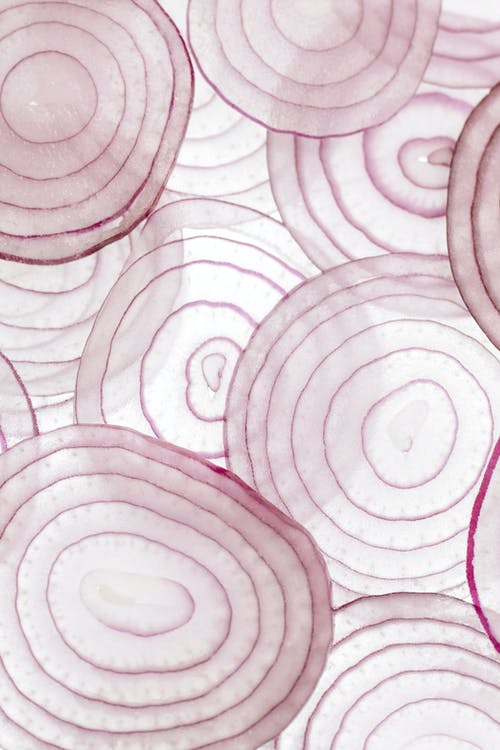
I dice my pepper and saute it in a little oil. That’s what my mother’s directions say. “When soft,” I’ll spoon them out. Then I cut up a “medium onion” and saute that too. (Have I mentioned how excited I get over onions—their vast variety… their perfectly formed concentric circles when you slice them… their translucence when you hold a slice up to the light? Don’t get me started…)
I will continue to make the “Mess” and eventually dine on this cherished family recipe… alone or perhaps with a couple of friends… And here’s the best part: That beautiful chosen pepper will become part of me! How cool is that?
Some people think a mystical experience has to be extraordinary. But I believe many of us are mystics of the everyday. Just ask yourself:
+ What do I get lost in?
+ What takes my breath away?
+ Where do I experience goodness and beauty?
+ What gives me the sense of my connectedness to the cosmos?
+ What makes me feel the nearness and beyondness of God?
PS: I know some of you might be asking, “Can you share the recipe?” So here’s my mom’s recipe … in her own words… typed on an old Royal portable typewriter… on a 3″ X 5″ file card, now slightly bent and stained:
Mom’s Mess
Cut up 1 medium green or red pepper. Saute in skillet with a little oil. When soft, spoon out. Cut up 1 medium onion and put in same skillet and saute until transparent. Put the pepper back into the skillet with 1 lb. fresh ground meat. Add a teaspoon of ground paprika, tsp. of salt & 1/4 tsp. pepper. Brown the meat real good. Add 1 10 oz. can tomato soup. Boil 1/4 lb. elbow macaroni. Drain and add to meat mixture. Mix well. Serve.
The song today is a 17th Century poem by George Herbert, a Welsh poet who was thought to be a mystic by many. It is called “Love Bade Me Welcome” and is a dialogue between the poet (the soul) and God (Love). Love invites the soul to come in to the banquet, but the soul, aware of his sinfulness, hesitates. He feels unworthy, until Love speaks of the one “who bore the blame” (Love/Jesus). The poem ends with Love (God) actually serving the soul. In three simple stanzas, the poem demonstrates the gentle invitation of God (Love) to the human soul, the admission of our sinfulness, the forgiveness of sins through Jesus, Love’s presence in the Eucharist, and God as the Host of the Eternal Banquet.
Dear Subscribers: I know there is a major problem with my blog. I suspect most of you are NOT receiving my blog in your mail. Even I am not receiving mine! I have notified our IT personnel about this problem several times. They assure me they are trying to fix the problem. Meanwhile, I apologize for the inconvenience this is causing you. The quickest way to access my blog is to google “sunflower seeds” and my name. It comes right up for me.
PS: I received my blog in my email Thursday afternoon. I trust many of you received yours about the same time.
I invite you to write a comment comment on anything that struck you in today’s reflection—the words, the photos, the video. We all love hearing from you!