
A Mother's Apron
When I was growing up, my mother wore an apron every day. She donned it early in the morning and didn’t take it off until the kitchen was cleared after supper. She did everything in an apron. She stoked the coal furnace, made us breakfast, washed clothes, cleaned the house, picked green beans, made dumplings, and even fed the chickens–all while wearing an apron. She wasn’t the only woman who wore an apron back then. In the 50’s and early 60’s, many a “housewife” wore one.
I was wondering: Why do we wear aprons anyway? We wear them because life can get messy. Aprons shield us from the dirt, dust, spills, and spots that are an inevitable part of engaging with life. We wear aprons to protect ourselves–especially while serving others. An apron says, “You sit down and relax. I’ll take care of that.”

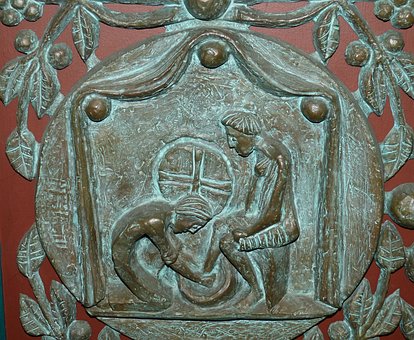
On the night before he died, while dining with his friends, Jesus tied a towel around his waist. He made a make-shift apron. Then he bent down and proceeded to wash the feet of his disciples, a task ordinarily assigned to a servant or slave. As someone has said, “Jesus donned an apron and redefined success.” I like that. It means Jesus didn’t define success as power or material wealth or worldly achievement. For Jesus, success was service. It was all about wearing an apron.
But it’s more than merely wearing an apron and serving another. It’s HOW we serve that’s important. If you have ever had a waitperson who was crabby, impatient, distracted, or inattentive once the food was served, you know what I’m talking about. HOW the food is served is as vital as the food itself. So too, HOW we serve others is as important as the service we provide.
When a man is made a bishop, he is given two symbols of his new office: a miter (the hat) and a crosier (the shepherd’s crook.) Someone has suggested that maybe every new bishop should also be given an apron to remind him that being a bishop is essentially about service. (When a friend of mine was made bishop a few years back, I sent him an apron. It was a bright red, heavy-duty apron. On the bib was written in thick black letters: REAL MEN WEAR APRONS!)
When my mother died, I took one of her aprons. So did my sister. So did some of the other women in my family. Now before I don my mother’s apron, I kiss it reverently—just as a priest vesting for Mass kisses the stole he drapes around the back of his neck. My mother’s apron is holy. It is one of the most sacred things I own. It was what she wore all those years as she joyfully served her way into eternity.
Does (did) your mother/grandmother wear an apron? Do you ever wear an apron?
Do you know someone who serves people well? How does their service make the people feel? If you have ever experienced “poor” or “bad” service, how did it make you feel?
What individuals in our current society need our service most?
PS: A big thank you for your prayers for last weekend’s retreat conference in Myrtle Beach, South Carolina. I was impressed and inspired by the many people I met there–especially the Sisters and lay men and women who are serving so selflessly in this lovely state!
I reached back in time for today’s song: “We Are Made for Service” by the Dameans.
I invite you to respond below to this reflection and/or song:
A Mother’s Apron
When I was growing up, my mother wore an apron every day. She donned it early in the morning and didn’t take it off until the kitchen was cleared after supper. She did everything in an apron. She stoked the coal furnace, made us breakfast, washed clothes, cleaned the house, picked green beans, made dumplings, and even fed the chickens–all while wearing an apron. She wasn’t the only woman who wore an apron back then. In the 50’s and early 60’s, many a “housewife” wore one.
I was wondering: Why do we wear aprons anyway? We wear them because life can get messy. Aprons shield us from the dirt, dust, spills, and spots that are an inevitable part of engaging with life. We wear aprons to protect ourselves–especially while serving others. An apron says, “You sit down and relax. I’ll take care of that.”
On the night before he died, while dining with his friends, Jesus tied a towel around his waist. He made a make-shift apron. Then he bent down and proceeded to wash the feet of his disciples, a task ordinarily assigned to a servant or slave. As someone has said, “Jesus donned an apron and redefined success.” I like that. It means Jesus didn’t define success as power or material wealth or worldly achievement. For Jesus, success was service. It was all about wearing an apron.
But it’s more than merely wearing an apron and serving another. It’s HOW we serve that’s important. If you have ever had a waitperson who was crabby, impatient, distracted, or inattentive once the food was served, you know what I’m talking about. HOW the food is served is as vital as the food itself. So too, HOW we serve others is as important as the service we provide.
When a man is made a bishop, he is given two symbols of his new office: a miter (the hat) and a crosier (the shepherd’s crook.) Someone has suggested that maybe every new bishop should also be given an apron to remind him that being a bishop is essentially about service. (When a friend of mine was made bishop a few years back, I sent him an apron. It was a bright red, heavy-duty apron. On the bib was written in thick black letters: REAL MEN WEAR APRONS!)
When my mother died, I took one of her aprons. So did my sister. So did some of the other women in my family. Now before I don my mother’s apron, I kiss it reverently—just as a priest vesting for Mass kisses the stole he drapes around the back of his neck. My mother’s apron is holy. It is one of the most sacred things I own. It was what she wore all those years as she joyfully served her way into eternity.
Does (did) your mother/grandmother wear an apron? Do you ever wear an apron?
Do you know someone who serves people well? How does their service make the people feel? If you have ever experienced “poor” or “bad” service, how did it make you feel?
What individuals in our current society need our service most?
PS: A big thank you for your prayers for last weekend’s retreat conference in Myrtle Beach, South Carolina. I was impressed and inspired by the many people I met there–especially the Sisters and lay men and women who are serving so selflessly in this lovely state!
I reached back in time for today’s song: “We Are Made for Service” by the Dameans.
I invite you to respond below to this reflection and/or song:
Videos for the Feast of All Saints
On November 1 we celebrate the feast of All Saints. In honor of that feast, I have a little treat for you: four very short videos (about 2-3 mins. each) on four individuals who are canonized saints or are in the process of being canonized. The videos are based on the book, The Blessed Among Us, by Robert Ellsberg who writes regularly for the monthly publication, Give Us this Day published by Liturgical Press. (Robert Ellsberg was featured on last week’s blog.)
The first blessed among us is Sister Dorothy Stang (1931-2005) a Sister of Notre Dame de Namur originally from Dayton, Ohio who was killed while working with the poor in the Amazon River area. Let us pray to her for the current efforts being made to preserve the rainforest which she so dearly loved.
We go back to World War II for our second blessed person, Franz Jaggerstatter (1907-1943), a simple husband and father in Austria who refused to take the Nazi oath to the Fatherland and to serve in Hitler’s army. He was executed for his decision.
Our third blessed person lived in the 12th Century. She is Hildegard of Bingen (1098-1179). This fascinating woman was a Benedictine Abbess, mystic, artist, poet, musician, and even a pharmacist. Pope Benedict XVI named her a Doctor of the Church.
Our final blessed person is Pope John XXIII (1881-1963). Elected pope at age 77, John XXIII was expected to have a short and uneventful papacy. But he surprised the Church and the world by invoking an ecumenical council to let a little “fresh air” into the church.
Did anything stand out for you about any of these individuals? How are they different from one another? What do they have in common?
PS: Please pray for the Collaboration for Ministry Initiative Conference in Myrtle Beach Nov. 1-3. The conference welcomes all the Sisters serving in the state of South Carolina. (The state is one diocese.) I will be giving three presentations. Thank you!
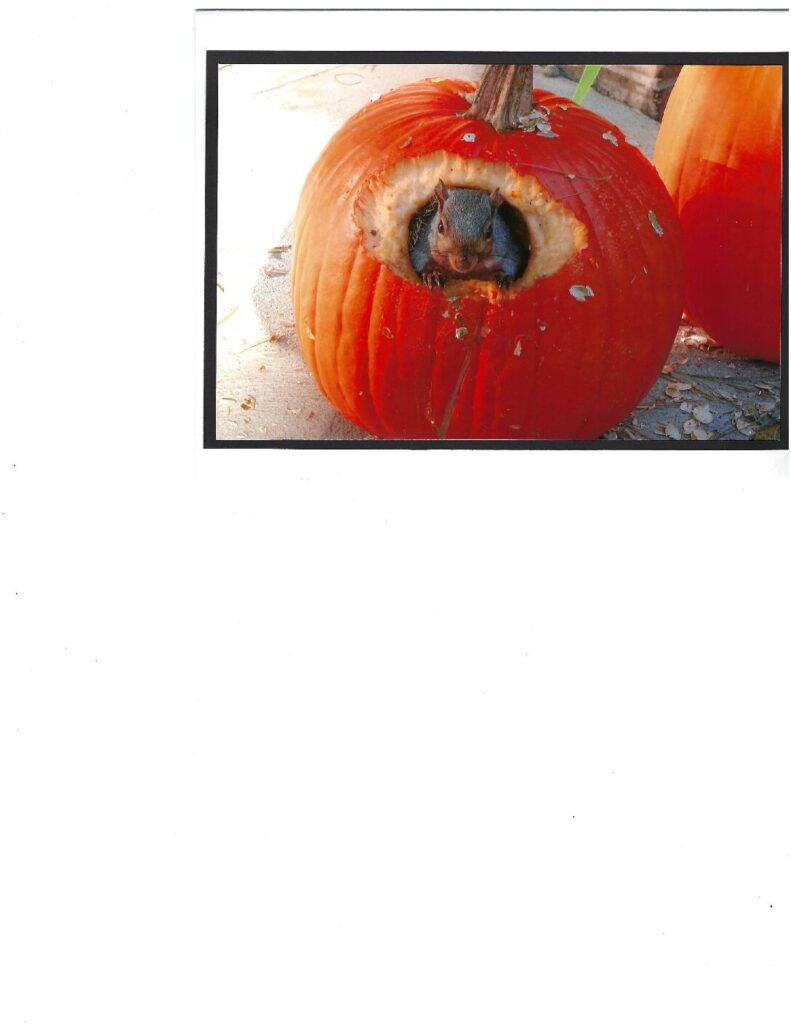
And here’s a little Halloween treat for you, a photo taken by Sister Elona, a Medical Missionary from Philadelphia. This squirrel ate his way into this pumpkin and then posed for this picture!
I invite you to share your thoughts below. We all enjoy hearing from you!
A Few Words about Whistleblowers
This reflection is based primarily on two sources: 1) an article by Heidi Schlumpf in the National Catholic Reporter (Oct. 2, 2019) on Robert Ellsberg, the son of Daniel Ellsberg who “blew the whistle” on the Pentagon in 1971; and 2) an article in the Cleveland Plain Dealer (Oct. 13, 2019) by Tom Mueller, author of Crisis of Conscience: Whistleblowing in the Age of Fraud.
First, a definition. Whistleblowing (according to Ellsberg) is “truth-telling.” It is the reporting of fraud, criminal behavior, or other illicit activity. It is motivated not by personal gain, but by a sense of loyalty to a higher public good. The whistleblower often pays a high personal price for his/her reporting—being labeled a traitor or snitch, losing one’s job, or even being convicted of a crime. Daniel Ellsberg knew if he was convicted of espionage, he would probably be sentenced to 115 years in prison. Later it was also learned that the White House had a plan to “incapacitate” Daniel Ellsberg.
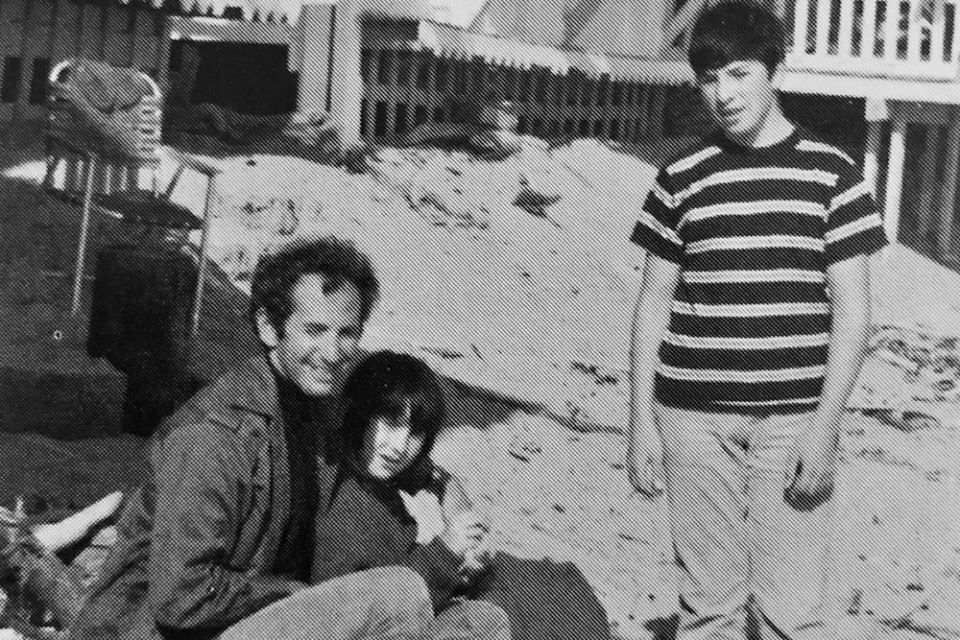
But let’s start at the beginning. As some of you may recall, in 1969 Daniel Ellsberg “blew the whistle” on the Pentagon and the Nixon and previous Administrations by photocopying thousands of pages of secret reports that showed the true story of the military build-up in Vietnam and revealed the lies being told to Congress and to the American people. At one point he invited his teenage son to help him with the copying. Why? Says the younger Ellsberg, “He wanted me to be a witness to what he was doing.”
Daniel Ellsberg tried to give the papers to Congress, but no one wanted them. So he gave them to The New York Times which began publishing excerpts on June 13, 1971. The Nixon administration immediately got a court injunction to stop the Times. On June 18, The Washington Post began publishing excerpts. In a 6-3 decision, the U.S. Supreme Court ruled in favor of the news media and the First Amendment. The so-called “Pentagon Papers” led to the end of the war and the eventual resignation of President Nixon.
Other examples of whistleblowers abound. For his book, Tim Mueller interviewed over 200 of them: individuals who blew the whistle on the tobacco industry, the sexual abuse crisis in the Catholic Church, lead-laced water in Flint, Big Pharma, corner cutting at Boeing, etc. He writes, “Whistleblowing becomes necessary when organizations become more interested in silence and loyalty than in ethics or public welfare, or when government watchdogs have been muzzled or euthanized.”
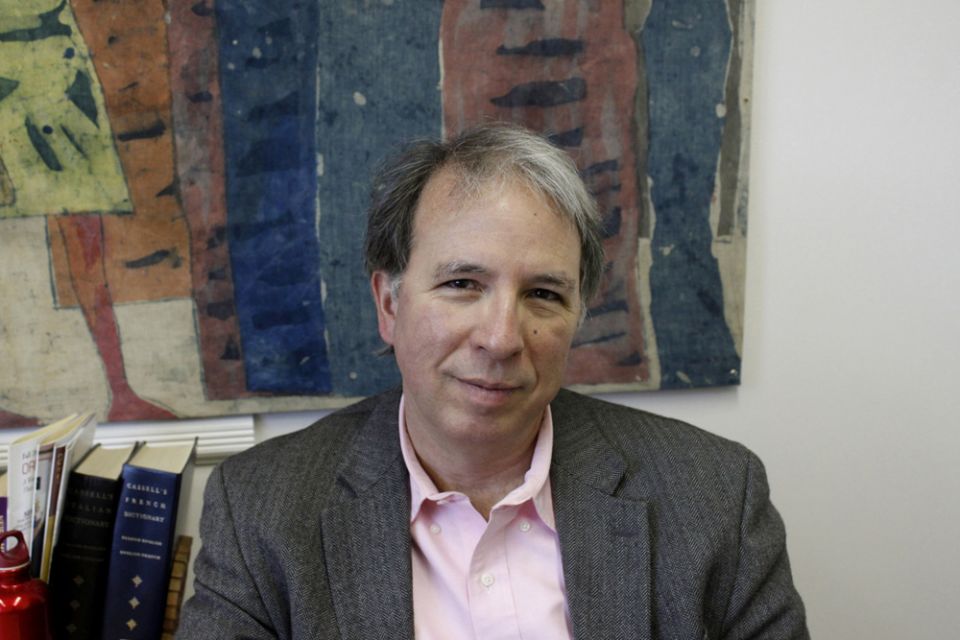
Why is there an increase in whistleblowing? Mueller cites two factors: “institutional corruption and normalized fraud. If our private and public institutions were healthier, we wouldn’t require singular acts of courage to halt wrongdoing.”
Robert Ellsberg makes two other points worth mentioning here. First, he says, “Public servants take an oath of loyalty to the Constitutions, not to any individual leader.” And secondly, he cites this question raised by his father (who is now 88): “Has more damage been done, more lives put at risk, because people revealed the truth, or by keeping secrets?” That’s a good question to ponder.
And, finally, Ellsberg summaries his father’s legacy in these words: “All it takes is the power of one.”
Prayer: Loving God, give us a renewed appreciation of the truth and the power of one. Give us greater courage when we are asked to pay a price for our beliefs and ideals. And give us an expansive love, a love that cherishes and works for the common good of all. Amen.
Is there anything in this reflection that touched you or moved you? Did any words or phrases stand out for you?
Can you cite any other examples of individuals who demonstrated “the power of one”?
PS: A BIG thank you for your prayers for last weekend’s retreat at the Franciscan Spiritual Center in Aston, PA. And a special thank you to the 32 wonderful and inspiring individuals who participated. I’m also grateful to Sisters Angela, Julie, and Karen for their invaluable assistance!
Here is the song, “The Power of One,” sung by the country music duo, Buffy Lawson ad Kristy Osmunson. This first version has powerful images. The second version has the lyrics.
I invite you to respond below to the reflection and/or the song. My readers tell me how much they look forward to reading the responses each week!
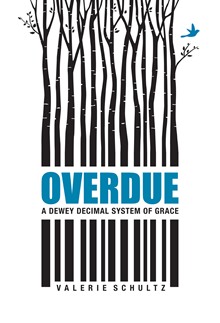
"Overdue" by Valerie Schultz
Valerie Schultz and her husband thought they had volunteered for their parish’s St. Vincent de Paul chapter. But through some fluke, their names were listed under the new detention ministry instead. The result of that fortunate mistake is her new book, Overdue: A Dewey Decimal System of Grace in which she shares some of her experiences during her fourteen years as a prison librarian. (Published by Liturgical Press)
At first Schultz was afraid to volunteer in a prison. She had seen too many movies about prison inmates. But over time she learned that inmates were “just folks–young, old, short, tall, thin, stout, bald, well-coiffed, English-speaking, Spanish-speaking, outgoing, shy, articulate, silent, funny, stern.” Some inmates were dangerous, some were gentle; some were filled with hate, but many were kind. In short, they were similar to the non-incarcerated population.

Schultz creatively divides her book into chapters based on the Dewey Decimal system. In chapter one she gives brief descriptions of some of the inmates, concealing their identities by never using their real names and by altering some of the facts about them. Soon a picture emerges about the “normal” inmate. Normal inmates, for example, have had bad childhoods–extremely bad ones filled with horrific childhood experiences. Many grew up in poverty, had never met their fathers, never learned to read, never got a birthday present, never had a home address. It’s easy to see why membership in a gang would be so attractive to many of them.
Addiction too was a part of most inmates’ lives. Many, many crimes are the result of drugs and alcohol. Another experience inmates share is this: they often have no identity except the crime for which they are imprisoned. Schultz raises the question: How would you like your identity to be reduced to the worst thing you ever did in your life–as if nothing else matters. What’s worse, your awful deed is the only thing that is known about you.
Here are a few insights gleaned from Schultz’s book:
When she led Communion services in prison, she was surprised how often the inmates prayed for their victims and the families of their victims.
She found a “Congress of World Religions” in prison: Catholics, Protestants, Muslims, Mormons, Jews, Hindus, Buddhists, Druids, Odinists, Native American Spiritualists, Wiccans, Satanists, and Atheists.
Schultz narrates sad stories of inmates paroled and returning to prison again shortly afterwards. But there are encouraging stories of former inmates doing well, the growing interest in prison reform, of dedicated staff members and volunteers, of the increase in transitional housing for parolees. As a writer, I was especially interested in the newsletter she started in which inmates could share their prose, poetry, and art.

Throughout the book, Schultz never romanticizes the prison or its inmates. She is always fully aware that many of the inmates committed terrible crimes. At the same time she claims she found God within the those prison walls, saying, “God was palpably everywhere.” The motivating force behind her ministry is something Fr. Gregory Boyle said. He’s the author of Tattoos on the Heart which I wrote about on this blog a few years back. Boyle said, “Bring love where none exists.” Schultz writes: “I think of those five words as a mission statement for life.” I agree. No matter our age or circumstances, aren’t we all just trying to bring a little more love into the world?
Fo reflection:
Did anything stand out for you in today’s reflection?
Are any of you involved in jail or prison ministry? If so, is there something you could share with us about your ministry?
PS: I ask your prayers for the retreat I will be facilitating at the Franciscan Spiritual Center in Aston, PA this weekend, Oct. 18-20. Thank you very much!
PS #2: Special thanks to the prayer group (7 women and 3 men) in Willoughby Hills, OH who are reading and praying with my book on hope. They invited me to one of their sessions this past week and I was very inspired by their discussion and their prayer.
“I was in prison and you visited me.” These words are found in Matthew 25. Here is a beautiful song called “Matthew 25 Song” by Sherri Youngward. There are no printed lyrics but the refrain is: “You were hungry…thirsty… lonely and afraid… You were crying and no one heard you. You were dying and no one cared.” The final refrain is a positive one. “I was hungry, but you fed me… I was lonely, and you called my name… I was dying, and you came.”
As usual, I invite a response from you below!