The Certainties and Upheavals of Life
As we embark on a new year, it is good to take a few minutes to reflect on the essential mystery of life. We begin our reflection with this classic definition of religion: mysterium tremendum et fascinans, a mystery both disturbing and fascinating. Could we not say that life itself is a mystery both disturbing and fascinating?
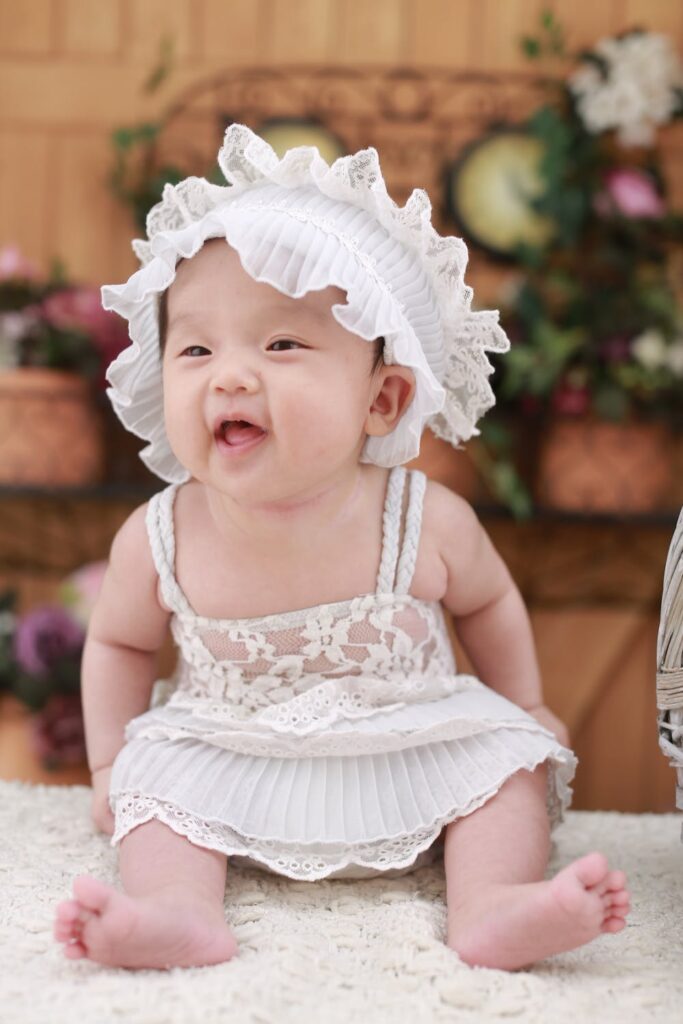
When we see the smiling face of a small child, we are fascinated. When we experience a chance encounter that evolves into a life-long relationship, we are fascinated. When God feels very close to us, we are fascinated.
But when things don’t go as planned, we are disturbed. When we see a loved one in pain, we are disturbed. When God seems distant or absent, we are disturbed. Uncertainty can be so difficult for us, we sometimes take refuge in the familiar and the known. One family therapist put it this way: “Most people prefer the certainty of misery to the misery of uncertainty.”
In her beautiful book, When the Heart Waits, Sue Monk Kidd says that a certain amount of insecurity or disturbance is not only inevitable in life, it is good for us. She writes: “Creativity flourishes not in certainty, but in questions. Growth germinates not in tent dwelling, but in upheaval. Yet the seduction is always security rather than venturing out.”
Kidd goes on to say that total security, however, eliminates risk. “And where there’s no risk, there is no becoming; and where there’s no becoming, there’s no real life. The real spiritual sojourners–the ones who touch the edges of life as well as the center–are people who risk, who let go.”
One of the clearest examples of a real spiritual sojourner was Mary at the Annunciation. She says to the angel, “Let it be done unto me according to your word.” Talk about risk! In saying those words, Mary let go of her old life and embraced a daring (and scarey!) new life. She utterly abandoned herself to the mystery of God’s designs.

As we bid farewell to 2019 and begin a new year, we do not know what lies ahead for us. This can be both fascinating and disturbing. We may be disturbed when we realize how little control we have over anything–our health, work, finances, loved ones, and current world situations. Such a realization can instill terror in our hearts and tempt us to retreat into a cave of our own making.
Father Ronald Rolheiser, many years ago, made a retreat under the direction of an elderly sister. He admits he tended to make cosmic tragedies out of ordinary setbacks. Sensing this, the sister gave him this little proverb: “Fear not, you are inadequate!” Rolheiser said, “It is healthy, humbling, and uplifting to accept the fact that we are not God and that we are not asked to be.” (On more than one occasion, I have had to remind myself: “There is only one messiah. And the messiah’s name is not Melannie!”)
Let us face the New Year, then, not with fear and trembling, but with hope and joyful fascination, trusting in our loving God who is the God of the past, the present, and the future.
I wish a very blessed and happy New Year for you and your loved ones!
How comfortable are you with uncertainty, ambiguity, and mystery in your life?
To what extent do you agree or disagree with the words of Sue Monk Kidd?
What are some of the risks you have taken in life? Did any of these risks result in greater growth and life for you?
PS: I will be making my annual retreat Jan. 4-12, and I ask for your prayers. During this week, I promise to hold all of you in my special prayer. I worked ahead so you’ll receive my blog as usual on Jan. 6. Thank you and God bless you!
The song for today is an “oldie but goody.” It is “The Love of God Will Rise Before the Sun” by the Dameans. The refrain is one I sing often–especially if I am worried about something in the future. The words are:
I know nothing of tomorrow except the love of God will rise before the sun (2x).
Nations shake and earth may quake and storm clouds tend to gather, troubles seem as dark as night. Shades of gloom and threats of doom I see; but I would rather watch the darkness fade in morning’s light. (refrain)
Come along and sing a song and fill the world with laughter. Trust in Him who’s worth the trust and then, with heads held high against the sky, we’ll take what comes and after smile to feel the warmth of love again. (refrain)
If you care to respond to anything in this reflection or share some of your thoughts on the new year, please do so below.
Three Christmas Songs for You
As I promised last week, here are three Christmas songs for you. May they add to your Christmas celebration!
The first song is “When Love Was Born” by Mark Schultz. I appreciated this song for its reverent gentleness.
The second Christmas song is “Son of God” by Michael Smith. This beautiful song includes a choir and lovely visuals.
The third song is “O Holy Night” performed beautifully by Celtic Woman.
Once again, Merry Christmas to All!
"And the Word Became Flesh"
This is a meditation on the Incarnation that I wrote last Christmas for Give Us this Day, published by Liturgical Press. It is my Christmas card to all of you, the dear readers of this blog.
And the word became flesh.
What does that mean?
It means God in carnus, conceived in a woman,
implanted in a womb.
It means composed of the basic elements of the cosmos.
It means embedded within earth’s community of beings.
It means a unique DNA… and muscles, lipids, neurons, blood, bone.
It means a brain, lungs, a digestive tract, a beating heart.
It means being born of a woman, a mother, Mary.
And the Word became flesh.
It means the Divine became human,
The Eternal entered time,
The Omnipresent submitted to the confines of specific places.
The Beyond-the-Beyond, was now here, now now.
The Almighty became weak, vulnerable, helpless.
Sovereignty was transformed into lowliness.
The Thundering Voice on Sinai, now an infant’s whimper, now a piercing Waah!
The Self-Existent One, now a suckling at a mother’s breast.
The Always Was, now part of the ever-changing-is.
The Ancient of Days, a newborn.
The Invisible, now clear as day.
The Totally Other, now one of us.
The Transcendent One, Now Emmanuel,
God-with-us, God-for-us, God-among-us, Jesus.
Then and now. There and here. Yesterday. Today. Tomorrow.
And what is our response to this event ungraspable?
A breathless, Wow!” Then, “O Come let us adore him!”
PS: I will not post a reflection next Monday, December 23. But I will post three Christmas songs for you. My next regular reflection will be posted December 30.
Our song is “Noel” by Chris Tomlin, featuring Lauren Daigle as the vocalist. This simple yet powerful song captures some of the amazement and wonder of the real meaning of Christmas.
If you care to respond to this reflection and/or song, please do so below. We all love hearing from you!
“And the Word Became Flesh”
This is a meditation on the Incarnation that I wrote last Christmas for Give Us this Day, published by Liturgical Press. It is my Christmas card to all of you, the dear readers of this blog.
And the word became flesh.
What does that mean?
It means God in carnus, conceived in a woman,
implanted in a womb.
It means composed of the basic elements of the cosmos.
It means embedded within earth’s community of beings.
It means a unique DNA… and muscles, lipids, neurons, blood, bone.
It means a brain, lungs, a digestive tract, a beating heart.
It means being born of a woman, a mother, Mary.
And the Word became flesh.
It means the Divine became human,
The Eternal entered time,
The Omnipresent submitted to the confines of specific places.
The Beyond-the-Beyond, was now here, now now.
The Almighty became weak, vulnerable, helpless.
Sovereignty was transformed into lowliness.
The Thundering Voice on Sinai, now an infant’s whimper, now a piercing Waah!
The Self-Existent One, now a suckling at a mother’s breast.
The Always Was, now part of the ever-changing-is.
The Ancient of Days, a newborn.
The Invisible, now clear as day.
The Totally Other, now one of us.
The Transcendent One, Now Emmanuel,
God-with-us, God-for-us, God-among-us, Jesus.
Then and now. There and here. Yesterday. Today. Tomorrow.
And what is our response to this event ungraspable?
A breathless, Wow!” Then, “O Come let us adore him!”
PS: I will not post a reflection next Monday, December 23. But I will post three Christmas songs for you. My next regular reflection will be posted December 30.
Our song is “Noel” by Chris Tomlin, featuring Lauren Daigle as the vocalist. This simple yet powerful song captures some of the amazement and wonder of the real meaning of Christmas.
If you care to respond to this reflection and/or song, please do so below. We all love hearing from you!
Border Crossings
Borders are significant places. They come in all shapes and sizes. A border can be a doorway, a gate, a fence, a street, a river, a wall, or a line drawn in the sand.
Scripture is filled with stories of individuals who crossed borders. At the prompting of God, Abraham left the security of his native land, Ur, and crossed many borders until he came to the land of Canaan. Years later, the Hebrews, under Moses’ leadership, crossed the Red Sea in their quest for freedom. Later still, their descendents crossed the Jordan River into the Promised Land.
In today’s world, we are all too familiar with stories of people risking their lives to cross a border. We see pictures of crowds of people gathered at our U.S. southern border. Or we see the small boats crammed with refugees fleeing their war-torn countries in the Middle East for a new life in Europe. Sometimes they are successful. Sometimes they are turned away. Sometimes they die trying to cross a border.

The seasons of Advent and Christmas celebrate a border crossing of another kind: the Incarnation. As the writer Rebecca Douglas has said, at the Annunciation, God, through Mary, “stepped over the line not only between heaven and earth, but also between divinity and humanity.” Unfortunately, we sometimes take this incredible mystery for granted. We fail “to quake at the inbreak of God Almighty,” writes Brennan Manning, “and we rob Christmas of its shock value.”
Jesus was a border crosser both by his life and teachings. He crossed the borders of convention by freely associating with all kinds of people: men and women, rich and poor, Jew and Gentile, young and old, healthy and sick. He challenged his followers to cross borders too. The command “Love one another” means to reach across the often invisible borders that divide us. It means to put an end to the divisions that separate us. It means to tear down the barriers we have constructed–often out of fear–between ourselves and the stranger or the unknown.
We know we might be refusing Jesus’ invitation to be a border crosser if we find ourselves saying or thinking things like these: “But this is the way I have always done things… I’m too old (too tired, too busy) to change… Those people are not like me at all… I am not responsible for anyone except myself and my family… Please don’t give me any new information. I am comfortable with what I already know…”
On the other hand, we know we might be a border crosser if we say or think things like these: “May I help you?… What are you going through?… I’ve never done anything like this before… May I tell you my story?… We’re more alike than I ever imagined…I’m beginning to see things differently now…”

This Advent, may our prayer be: O Jesus, Incarnate One, you stand at the edge of our borders, at the walls we have constructed mostly out of fear, and you say, “Cross over!” But we say, “I can’t. I’m too afraid.” You say, “I will be with you.” Loving Jesus, help us to be border crossers like you. Help us to move freely from here to there, from the familiar to the new, from safety into the unknown. Give us the strength for doing the hard work of real loving. Help us to befriend all kinds of people–not just people who look and think as we do. Give us the courage to invite others into the sacred space of who we are. And finally, this Advent, we thank you for becoming one of us and showing us the way to true freedom, happiness, and oneness with you and with each other. Amen.
What borders have you had to cross in your life?
Have you ever found yourself saying or thinking one of the things in the last two paragraphs (before the candles and prayer)? If so, what was the occasion? How did you feel as you said it or thought it?
What are some of the borders in today’s world that Jesus is challenging us as individuals and a church community to cross?
PS: I am away this week for a week of intense and uninterrupted writing. I will be working on my next book. I ask for your prayers for this “holy time.” Thank you! (Next week’s reflection will be posted on Monday as usual.)
Our song today is the ancient Advent hymn, “O Come, O Come Emmanuel.” This is a beautiful instrumental version by the Piano Guys, with piano and cello. For me, this hymn captures humanity’s longing for peace, oneness, and love.
I invite you to respond to this reflection below.
O