
Praying beyond our Windows
The Talmud says, “Never pray in a room without windows.” I don’t think we have to take this injunction literally. But I do think we must follow the deeper implication of these words and always pray expansively, that is, with the larger world in mind.

In her book, The Breadth of the Soul: Reflections on Prayer, Sister Joan Chittister, OSB, writes: “We do not pray in order to escape the world around us. We pray with one eye on the world so that we can come to understand what is really being asked of us here and now, at times like this, as co-creators of the universe.”

This is precisely what we do at our prayers of petition at Mass. Yes, we may begin by praying for the particular needs of our parish community: for blessings on our parish festival, for those making their First Communion, for the sick of the parish. But we always make our prayer more expansive by praying for the wider needs of our nation and our world: for our Holy Father, for those suffering from natural disasters, for those working to end human trafficking, for blessings on our upcoming elections, for world peace.

By doing this we are reminded that we are part of that greater world. We are all connected. As such, God is urging us to do something, that is, to find ways—no matter how small or large—to incarnate the Gospel in our time and place. Good prayer eventually moves us to action. That’s why, at the end of our personal prayer, it is good to ask ourselves, “Now what?” or “So what?” or “What might God be inviting me to do today?”
Good windows let us see beyond the walls of our room, our home, our own little world. They also let in sunlight and fresh air and sometimes cold and rain. At the same time, windows frame what we see. They can help us to focus. But we must remember that what we see out a window is always a limited view, a view shielded from the outside sounds and natural elements. Sooner or later we must risk stepping out beyond our windows.
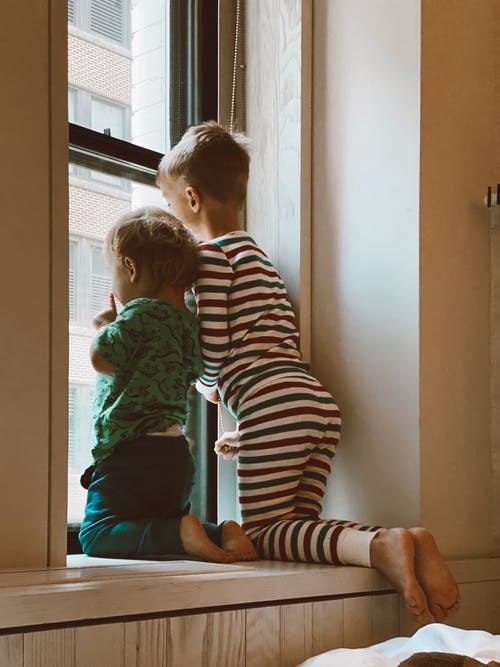
What helps you to keep the larger world in mind when you pray?
Do you ever feel like “co-creators of the universe” with God?
Pay attention to the prayers of petition at Mass this week. Were any needs of the larger world included?
Another way to pray is with a daily newspaper or with a news website. Do you ever use these in your personal prayer?
Our song today is “There’s a Wideness in God’s Mercy.” The words were penned by Frederick W. Faber (1814-1863) an Anglican who converted to Catholicism in 1845 under the influence of his good friend, John Henry Newman. After his conversion, he composed 150 hymns for the Catholic Church. The music for this version was written by a contemporary American composer of the Baptist tradition, Mary McDonald. This video contains the sheet music with the words. I enjoyed following along and singing along. Yes, windows can expand our vision; hopefully they can also lead us to an ever-widening love and mercy “in the likeness of our Lord.”
Please add a response below–to the reflection, the pictures, or the song. We’d love to hear from you!
Behold the Platypus!
NOTE: As you know, in recent months Australia has been plagued with massive fires. At least 28 people have died, thousands of homes have been destroyed, billions of animals have perished or lost their habitat, and millions of acres of trees and plants have been destroyed. Let us continue to pray for this beautiful country. Before those fires started, I wrote today’s reflection. I dedicate it to now to this unique and precious country.
Jesus often said behold. He said, “Behold the lilies of the field… Behold the birds of the air… Behold people casting money into the temple treasury… ” Behold means look, observe, pay attention to.
Today I say to you: Behold the Platypus! Really take a good look at this unusual animal that has been labeled bizarre, quirky, and wacky. First, a few facts. The platypus is an animal that has a duck bill, beaver tail, and otter feet. When European researchers first examined a preserved platypus in 1799, they thought it was a hoax–that someone had sewn three animals together!
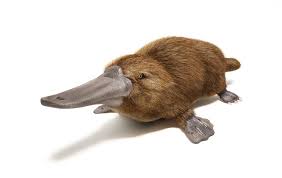
Now, before we go any further, I must say something about the plural of platypus. Most people say platypuses, platypus, or platypi (as if the word had Latin origins). But platypus means flat feet in Greek so some say the plural should be platypodes, following the Greek rule for forming plurals. I know, I know: this is probably more information than you wanted to know, so let’s get back to the actual fascinating animal.
Platypuses are found only in eastern Australia and Tasmania. They are mammals. Kind of. The females lay eggs. They do lactate, but they have no nipples. Instead they secret their milk through pores in their skin. The milk gathers in grooves where the young platypuses lick it up. Platypuses and their ancestors have been around for over 80 million years, so this arrangement seems to work fine for them. They are also completely carnivorous, eating crayfish, insect larva, worms, shrimp, and such. They spend a lot of time in the water and are excellent swimmers. Their webbed feet help with that. On land, they aren’t very graceful because they actually walk on their knuckles!
Here’s another peculiar fact: Platypuses have no teeth and no stomach. When they eat, they take in small stones and gravel to help chew and digest their food while it’s in their mouth. They’re so efficient, they have no need of a stomach. Their food goes into their esophagus and then directly into their intestines.
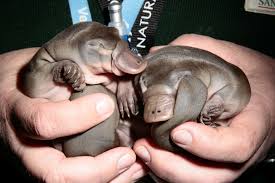
Platypuses close their eyes when they swim. How do they find their food, you might be wondering? They sense their prey through electrolocation. In addition, the males have a spur on the hind foot that delivers venom. This venom could kill a small animal and cause humans severe pain. The male uses this weapon mostly while fighting other males to win the affection of a lady platypus (a platypa, if you follow the Latin rule for feminine nouns.)
At one time platypuses were almost hunted to extinction for their beautiful, dense fur. Now they are protected–and even celebrated. They serve as a national mascot in Australia and their image is on the reverse side of an Australian 20 cent coin. Lest you think they have an easy life, however, their predators include hawks, owls, snakes, eagles, and crocodiles. When disturbed, a platypus will emit a low growl–like some people I know–including myself, on occasion!
At this point (if you’ve persevered in reading this!), you might be wondering: What’s your point, Melannie? What’s this have to do with everyday spirituality? Actually I have 3 points: 1) The platypus demonstrates that there’s no limit to God’s imagination and creativity. 2) You can’t put the platypus into a category–yet how often do we put people into categories: man/woman, holy/heathen, Democrat/Republican, native/foreigner, friend/foe? 3) And finally, we are called to respect all of creation–so let’s make room for the platypus on our long list of God’s marvels!
Is there anything in this reflection that surprised or intrigued you?
Are there other living or non-living things in creation that you find fascinating? What are they and why?
What can help us NOT to put people into categories?
I know I have some Australian readers. Do you have anything to say about your platypuses?
Our song today is Toby Mac’s “Everything.” It’s an upbeat prayer about seeing God’s love in everything–(dare I say, even in the platypus?)
I invite you to respond to this reflection and/or song below. Don’t be shy!
Retreat Jottings
Last week I told you I would share a few thoughts from the retreat I made January 4-11. Here are some jottings from my journal—in no particular order.
A few days before I left for retreat, I “chanced upon” this quote from St. Isaac the Syrian who died in 7th Century Nineveh: “Enter eagerly into the treasure house (the heart) that lies within you, and so you will see the treasure house of Heaven. For the two are the same, and there is but one single entry to them both. The ladder that leads to the Kingdom (of Heaven) is hidden within you, and is found in your soul. Dive into yourself, and in your soul, you will discover the rungs by which you are to ascend.” I kept returning to these words throughout the week as I kept diving into my soul.

Another anchor for my retreat were these words by Sister Joyce Rupp: “You do not always have to be producing, creating, harvesting. Learn to be idle. Learn to rest.” (Sometimes I have to work hard to be at rest!) A third anchor for my retreat were these words from a very good friend. She said, “Just let your retreat unfold, Melannie.” I focused on that word unfold as I tried to let God take the initiative during the week.
A few months ago, I meditated on the 99 names for Allah in the Islamic tradition. I didn’t have those names with me, so I decided to come up with my own list of 99 names for God. I ended up with about 75. Not all the names are original to me, of course. Some are part of our venerable Judeo/Christian tradition. Here are a few of the names for God on my list:
Sweet One… Almighty One… My Beloved… Source of All Goodness… Comfort… Goad… Oasis… Comedian… The One to Whom Everything is Tending…
Unending Patience… Perpetual Persistence… Bread of Life… Life-giving Water… Best Friend… Humble One… Hiding One… Revealing One… Unending Movement… Primeval Flow… Divine Tuning Fork…
Breast of My First Nourishment… Grandma/Grandpa… Wise Farmer… Bridge Maker… Pathfinder… Life-long Traveling Companion… First Responder… My Ageless Playmate… Impenetrable Mystery… Lifeguard… Healer… My Primary Care Giver… Home…
With each name, I asked these questions: If God is this, then who am I?… If God is this, then how do I live my life?

And finally, I heard this true story from a priest on Epiphany. He was celebrating Mass on Christmas Eve. When he got up to give the homily, he noticed a 3-year-old boy squirming on his mother’s lap. The priest knew the boy and his mother. Suddenly the little boy broke free, ran up to the priest, raised his arms, and the priest picked him up. The boy excitedly pointed to the tabernacle and said, “Jesus! Birthday! Jesus! Birthday!” The priest said, “Yes, today is Jesus’ birthday.” The boy squirmed out of the priest’s arms, ran over to the bells that are rung at the Consecration, picked them up and rang them enthusiastically. The congregation smiled as the boy ran back to his mother’s lap. The priest stood there for a moment and then said, “Well, I’m done here. We just had our Christmas homily.” And he sat down.
For reflection:
Does anything stand out for your in these jottings? Do you have any favorite names for God that you’d like to share with us?
The video today is a short meditation on “The Ocean of God’s Love.” If you are living in the northern hemisphere, you are probably experiencing winter. Maybe you even have ice and snow. I thought you might enjoy this short video…
I invite you to share your responses below. We love hearing from you!
Five Talents for Daily Living
When we hear the word talents, we often think of the ability to do extraordinary things: play the piano or violin with great skill, hit a 405 ft. home run, write prize-winning poetry, win five Academy Awards, lead a major business or organization successfully, perform complex brain surgery.
But there are other talents I admire that may not be as obvious or as showy, but are, in the long run, more important for daily living. In fact, these talents often make extraordinary talents possible. Here are five of those talents.
Patience. Patient people are good at waiting. They do not need to see immediate results of their labors. Closely aligned to patience are these satellite talents: self-discipline, calmness, tolerance, perseverance. People who need the most patience (in my humble opinion) are parents, teachers, farmers, and anyone who is ill.

Pleasantness. Pleasant people are just plain nice, that is, they are enjoyable to be with. Satellite talents include friendliness, approachability, kindness and consideration for others. Being pleasant consistently demands energy and self-forgetfulness. There are times, of course, when we should be upset and even angry–especially in the face of injustice. But consistently pleasant people are an asset to any family, workplace, and community. They incarnate the Golden Rule.
Being a life-long learner. Learners know they don’t know it all. That’s why they are always seeking new information, insights, and answers. (The fact that you read this blog is a good sign that you have this talent!) Learners are not set in their ways, for new knowledge often results in change–change in attitude as well as behavior. And change, for most of us, is not easy. Satellite talents include humility, curiosity, the ability to listen well, and daring.
Belief in a loving and challenging God. Faith in a Divine Power who is both loving and challenging is a vital component of a healthy spirituality. We need faith in a God who is absolutely loving–regardless of the unloving things we may do. At the same time we need faith in a God who challenges us, who constantly calls us to greater love and compassion for others. Satellite talents would be prayerfulness, hopefulness, and trust.

Humor. In a crowded room, I naturally tend to gravitate toward individuals with a good sense of humor–especially if that humor is coupled with love for others and for life itself. My best friends all make me laugh. In fact, I think we hone each other’s sense of humor. Satellite talents are broad-mindedness, playfulness, and joy.
For reflection:
Look over the five talents. Which ones do you already have–at least to a significant extent?
Which one(s) might you be called to develop more?
Did Jesus have these five talents?
Which other talents would you add to this list? Why?
Do you know anyone who possesses these talents to a great extent? Who?
PS: Thank you for your prayers for my annual retreat. I got back Sunday evening after spending a week in Florida on the Gulf. It was a beautiful and rich experience. As I promised, I remembered all of you in my prayer. In a future blog, I’ll share a few thoughts on the retreat.
I’m offering two videos today. The first is a song; the second a 4 minute movie. The song is entitled “We All Have Gifts to Share,” written by Susan Kay Wyatts. This song is often sung by school choirs.
The second video is called “With a Piece of Chalk.” This video really touched my heart. At first it might seem like a movie about bullying. But I think it goes deeper than that. I’d be interested in what you felt/thought about it.
Please respond to this reflection and/or the videos below. We would love to hear from you!
Fun with the English Language
Today I thought we could have some fun with the English language. Let’s begin with a short quiz. Since the answers are tough, I’m giving you some hints. The correct answers will appear later in the reflection.
- English is the second most spoken language in the world. Which language is first?
- What is the most common adjective used in the English language. (Hint: it’s not a bad word.)
- What are the two most common words used in English? (Hint: They are pronouns.)
- What is a “mouse potato”? (Hint: you are probably one right now!)
- What is the shortest grammatically correct sentence in English? (Hint: It has 2 letters.)
- What is the word “goodbye” derived from?
- Which word in English has the most definitions? (Hint: it has 3 letters and can be a verb, adjective, and noun.)
- What is the most commonly used letter in English? (Wheel of Fortune contestants often buy this vowel!)

Here are a few more fun facts about the English language. About 840 million people speak English as their first language. It is the second most spoken language in the world today–after Mandarin. In the United States there are about 24 dialects of English spoken. This is why someone from Upper Michigan might have trouble understanding someone from southern Alabama–and visa-versa. But radio, television, and our mobility have done much to “equalize” our English.
Here are the other answers to the questions: 2) the most common adjective: good, 3) the two most common words: I and you, 4) a “mouse potato” is someone who sits at a computer a lot–it’s akin to “couch potato.” 5) the shortest sentence: Go. (But “Be” could be a sentence too!) 6) the word “goodbye” is derived from “God be with you.” I like that! 7) the word with the most definitions: set. 8) the most commonly used letter is e. How did you do?
A few more fun facts about English. There are seven ways to spell the long “e” sound. This sentence contains all seven of them: He believed Caesar could see people seizing the seas.
Interestingly, on the federal level, the United States does not have an official language. But 32 states have declared that English is the official language of their state. (My state, Ohio, is not one of them. Making English the official language was part of the “English-Only Movement” in the U.S.) Some languages beside English have been given special status by some states: French in Louisiana and Cherokee in Oklahoma, for example.

Why is English so widely spoken in the world? Here are three contributing historic factors: The vastness of the British Empire, the rise of the U.S. as a world power after World War II, and, of course, the birth of the internet. Today 80% of the information stored on computers worldwide is stored in English. English is also the official language of air travel for pilots and control towers.
I’ll close with this fact: there are roughly l million words in the English language. A new word is added to the dictionary every 2 hours! But the average English speaker knows only about 20,000 to 30,000 words. Maybe we all should invest in a new dictionary and learn a new word at least every day!
Did anything stand out for you in this reflection? Is English your first language? If so, are you fluent in any other language? If English is not your first language, was it challenging to learn English?
Speaking of language…
Today’s song is “Love in Any Language” sung by Sandi Patty. While different languages can separate us, it is the language of the love in our hearts that can unite us as a world community.
I welcome your response to this reflection and/or song. My readers and I always enjoy reading the responses!