Celebrating Easter Seeds, 2020
In his book, Taking Flight, Anthony de Mello tells this story. A woman goes into a store and finds God behind the counter. She asks, “What do you sell here?” God responds, “Everything your heart desires.” So she immediately asks for peace, love, freedom from fear, and happiness for all of humanity.” God smiles and says, “I’m afraid you misunderstood. We don’t sell fruits here. Only seeds.”
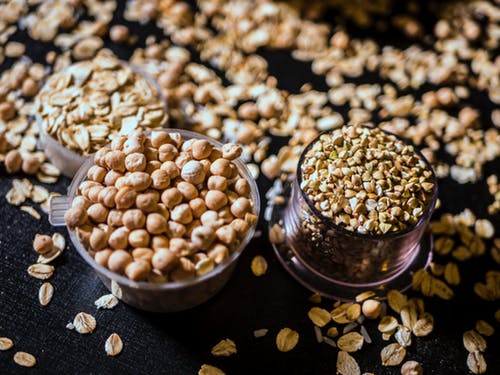
Only Seeds. What a beautiful reminder for all of us as we celebrate the central Mystery of our faith: the Resurrection. Notice, I capitalized the word because it refers to the Resurrection of Jesus. But writer Kathy Coffey suggests we all experience “small r” resurrections in our lives. She challenges us to name some of those resurrections so we might appreciate the “big R” Resurrection of Jesus.
What are some of our “small r” resurrections? Here are a few examples. Perhaps you and your spouse went through a “rough patch” in your marriage, and you came out of it better and even more committed to each other. Or maybe you see the ultrasound of your grandchild or you notice a teenager, whom you thought was self-centered, suddenly doing a very kind and unselfish thing. Or you see a friend working hard to curb her negatively or you notice people are checking on their neighbors more often these days. Or maybe you feel a stirring in your own heart to make more time for prayer or to get involved with a current issue you feel strongly about.
Easter 2020, for many of us, is unlike any other Easter we have probably celebrated. During the very week when many of us feel drawn to Church, we were being asked to stay away. Who would have thought? This Easter we had no Holy Week services (except perhaps online), no people to gather with for worship, no organs, no pianos, no choirs, no Easter lilies, no Easter dinner gatherings.
This deprivation of many of our usual signs and rituals for Easter, challenges us to look more carefully for the seeds of resurrection in our personal lives. This deprivation also calls us to notice these seeds of the resurrection in our local community, our state, our country, our world. Can you name at least one seed in each of these places?
When we ask God for peace, love, freedom from fear, and happiness for all humanity, we want God to give us fruits. But instead, God gives us seeds for everything our hearts desire. Getting seeds is more challenging than being handed fully ripened fruits. It means we are entrusted with bringing these seeds to eventual fruition. We must plant the seeds in good soil, water them with care, and pull the weeds that we know are certain to grow along with them.
How do we plant these seeds in our lives? There are many ways. Here are just a few. We plant the seed of peace by our calm and patient manner. We plant the seed of love by our attention and kindness to others. We plant the seed of freedom from fear by our daily prayer and trust in God. And we plant the seed of happiness for humanity by fully embracing our kinship with the entire Earth Community.
A question I’ve heard a lot recently is this: “Will this pandemic change us for the better?” I certainly hope so! Do you see any seeds of change in yourself because of the experience of this pandemic?
1) How was your celebration of Easter this year?
2) What are some of the desires of your heart? How might you plant the seeds for these things in your daily life?
3) How might COVID-19 change us for the better? Have you seen any evidence of this in your life and the life of your area, country, our world?
I wish you all a very Happy Easter–one filled with many seeds of resurrection!
I’m giving you two songs today. The first is a traditional Easter song by the Joslin Grover Choral Society entitled “Christ the Lord Is Risen Today.” The second is a contemporary Easter song by Kari Jobe called “Forever.” Take your pick—or listen to both of them! At the end is a short video called “Bird Song Opera.” It’s the songs (and noises) birds make synchronized to Mozart’s “The Magic Flute.” (Thanks to Kathy for alerting me to this video.)
“Christ the Lord Is Risen Today”:
“Forever”:
“Bird Song Opera”:
I invite you to respond below. We all love hearing from you!
History Can Encourage and Guide Us
Whenever I get discouraged by news headlines and problems of all kinds, I not only pray more earnestly, I also grab a good history book. For I am a firm believer that history can both encourage and guide us. (My minor in college was History and Government.)
Recently I saw an interview with historian Doris Kearns Goodwin about her book Leadership in Turbulent Times. I was so intrigued, I bought the book! Goodwin said three of our greatest U.S. presidents lived during extremely turbulent times: George Washington (Revolutionary War and Founding of the Nation), Abraham Lincoln (Civil War), and Franklin D. Roosevelt (The Great Depression and World War II.)
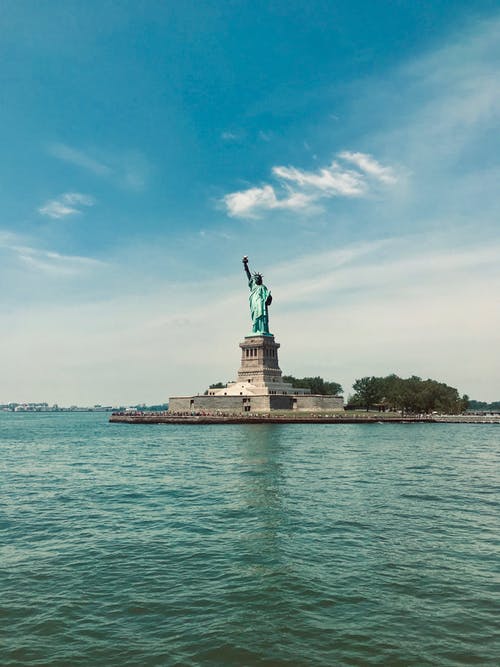
She stressed that people who lived during these turbulent times experienced “enormous anxiety,” because they didn’t know how things were going to turn out. It’s understandable for us, during this time of major upheaval (COVID-19, political divisiveness, extreme financial insecurity, ever-present racism, etc.) to be experiencing enormous anxiety too. But leaders and citizens in the past, faced their immense challenges together. Kearns focused on FDR, saying the personal qualities that helped make him such an effective leader were these: his empathy, his acknowledgement of his mistakes, his grasp of the situation, and his reputation for trustworthy communication.
FDR involved all citizens in making sacrifices for the common good. He called for rationing of food and other goods. For example, citizens were allowed one cup of coffee a day. When rubber became scarce, he asked women to donate their old girdles, and kids their rubber toys. Immediately, tons of rubber were collected for the war effort. He emphasized that every citizen had a part to play. In our current crisis, we too are being asked to make certain sacrifices. We suspect even more might be asked of us. How are we responding?
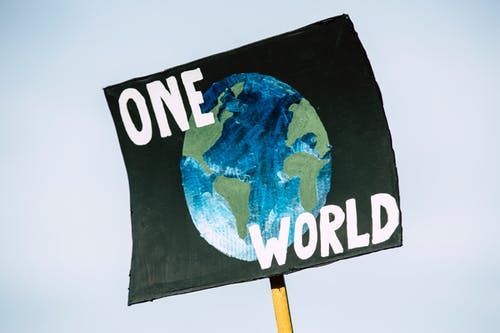
I read a another good article on the importance of a historical perspective. Frederick E. Hoxie, professor emeritus of history at the University of Illinois, writes, “There are other moments in our past that were similarly dark” to our own times. (He wrote this before COVID-19.) Here are two of his examples.
Concerning racism: March 1857. Chief Justice Roger Taney announced in the Dred Scott Decision that African-Americans could never be citizens. President James Buchanan and his fellow Democrats applauded the decision. The newly formed Republican Party despaired.
Concerning journalists: January 1890. Jacob Riis published How the Other Half Lives, “a searing portrayal of human poverty” using intimate photos of New York Tenement life. (Go to “mymodernmet Jacob Riis photographs” to see some of the actual photos. They’re incredible.) While the book shocked people, it would take many years before any meaningful reform would occur. Why? Because most politicians at that time were more interested in operating their political machines and winning partisan battles over tariffs and the gold standard. While millions languished in poverty, the rich enjoyed their “privileged lives” with no wage and labor laws, no public health standards, no environmental controls, and no federal income tax.
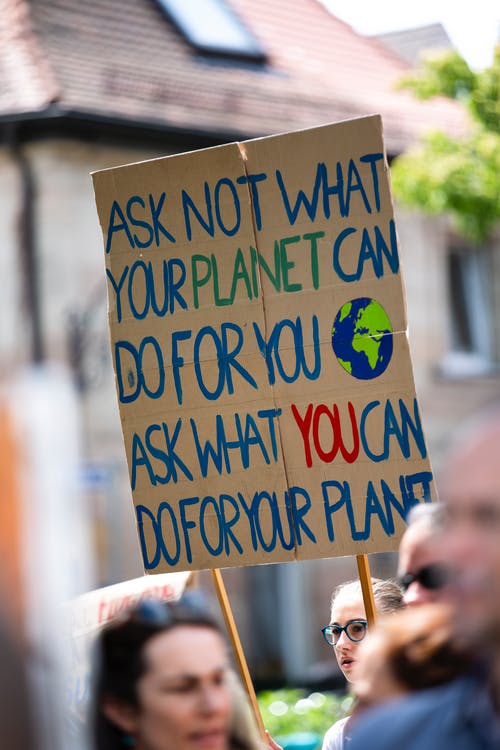
Hoxie writes, “Today we see echoes of these sad times–indifference to poverty and mounting environmental crises, combined with political paralysis.” (And now COVID-19.) We might think these examples suggest we wait for a great man or woman to come and save us. But, Hoxie argues, these periods of reform “were set in motion by thousands of people who demanded an end to apathy and despair, and called for specific changes and innovations to improve public life.” Such public action also relied heavily on free speech and a free press.
We Christians embrace a faith that is constantly challenging us to look beyond our own individual lives to the lives of our brothers and sisters around the corner as well as around the world. What’s more, we believe our God is active and alive in human history—and in us—to bring about a better world. The worst thing we can do is despair. The best thing we can do is pray and then do something specific–large or small–to help bring about that better world for which we long.
What other lessons can we learn from history that could help us now? Do you see God at work in today’s world? If so, where and how?
After the song, I am putting the link to a 4 minute video put out by the Jesuits. It is Fr. Arturo Sosa’s short reflection entitled “What Part of the Path to God Does COVID-19 Show Us?” Fr. Sosa, originally from Venezuela, is the Superior General of the world-wide Society of Jesus.
The song today is Phil Wickman’s “Living Hope.” He reminds us that for us Christians, hope is a person: Jesus Christ.
Here is the link to Fr. Sosa’s short reflection. Closed caption is available. It is also available in Spanish.
https://sjcuria.global/en/more-other-news/1049-covid-19-discerning-a-path-to-god
I welcome your responses below. The Spirit can speak through all of us.
April: National Poetry Month
April is National Poetry Month. I have selected three poems to celebrate this wonderful form of writing. All the poems have a Spring and Resurrection theme. I hope you enjoy them.
The first poem is by one of our readers (and frequent responder) John Hopkins, a high-school English teacher who lives in Massachusetts. In this poem he captures some of the simple delights of our earthly life.
I’ll Admit, Lord,
there will be some things I’ll miss:
the slow drip of coffee in the morning
with a pinch of cinnamon in the grounds;
the salt on my over-easy eggs, sourdough toast lightly buttered,
the gentle push and separation of that day’s paper.
I will miss walking on humid days, the sweat gradually emerging
under my ball cap as I stride along,
the sudden cool when I doff the cap upon entering a canopy of shade,
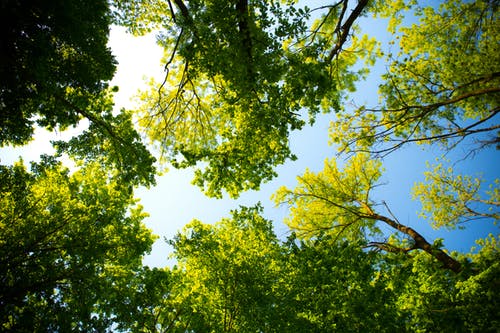
a sudden breeze passing through the numbered hairs I have left.
I will miss sitting on the couch in the evening,
my wife’s foot in my hand, watching our latest obsession
before clicking to see how the Red Sox are doing, staying if they’re ahead.
I will miss the lattice of gold inside the bloom of a rhododendron,
the cooling declaration of an August thunderstorm,
the smell of a neighbor’s wood stove in November,
the sight of our backyard Mary statue up to her neck in snowdrifts,
the sight of her amid the irises.
I will miss the resurrection of things
and hope— please, please, Lord?— for the one to come.
______________________________________________________________
This second poem is by Sister Doreen Strahler, SND, whose poetry I have featured before. Sister is a retired educator and lives at our provincial center in Chardon, OH.
I Saw Spring Today
I saw spring today, snow piles were almost gone.
I saw spring today in a robin on the lawn.
I saw spring today, crocuses popped their heads.
I saw spring today in sprouts in daffodil beds.
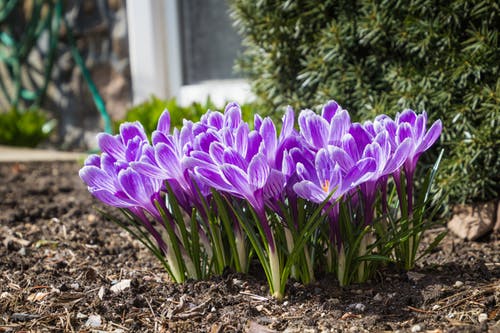
I saw spring today. I heard the children laugh.
I saw spring today, bikers crowding the path.
I saw spring today, warm winds stirred the air.
I saw spring today in weather fresh and fair.
I saw spring today, but I’m wise enough to know,
as I saw spring today, tomorrow I may see snow.
_______________________________________________________________
The final poem is one of my unpublished poems. It’s based on a story a man shared with me a few years back about the death of his mother.
Utopia
His 88-year-old mother died suddenly.
She was found at noon, still in her nightgown and robe,
slumped over in her favorite living room chair.
A half a cup of cold tea sat on the small table beside her.
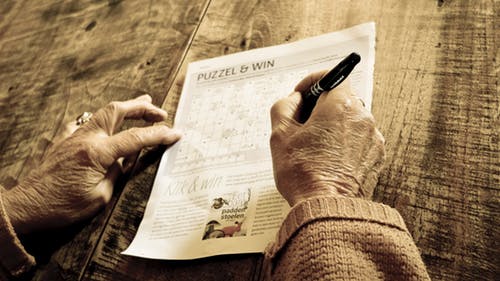
The day’s crossword puzzle rested on her lap,
and a pen was on the floor next to her tiny slippered feet.
Evidently she had been trying to come up with
a six letter word (second letter T) meaning “ideal place,”
when the Angel of Death sneaked in,
gently tapped her on the shoulder,
and whisked her home.
________________________________________________________________
Do any of these poems speak to you? If so, why?
What are some of the simple delights of our earthly life that you enjoy?
Do you ever pray with poetry? If so, do you have any favorite poems, poets, or books that you would recommend for us?
PS: I’m recommending a free 95 min. youtube movie for you which I really liked. It’s called “Life in a Day,” and I put it after our song for today. You might want to view it at your leisure this week some time.
For me, COVID-19 has underscored the oneness of our entire earth community. This song by Peter Mayer celebrates this great truth. It’s entitled “Blue Boat Home.” During this critical time, the pictures of our beautiful blue planet sailing in space bring tears to my eyes…
Please feel encouraged to respond below to anything in this reflection–the words, the pictures, the song… I want to thank you again for your responses to my blog each week. I really look forward to your insights and additions!
The movie I suggest for you is called “Life in a Day,” a 95-min. documentary filmed by thousands of people all over the world on a single ordinary day, July 24, 2010. For me, it celebrates humanity’s connectedness as well as our diversity. Let me know what you think of it.
So, How Are You Doing?
The Coronavirus continues to spread all over the world. Each day there are more restrictions: closed schools, churches, restaurants, bars, libraries, hair salons; no sports; no gatherings of more than 10 (last I heard); weddings, elective surgeries, vacations, elections, tax deadlines, all being put on hold. And now we practice “social distancing” and “self-quarantine” as we check anxiously for the latest update–which seems to change for the worse hourly.

My question is this: How are you doing with all of this? How are you feeling–fearful, angry, frustrated, depressed, vulnerable, confused, bored, numb? What do you think of the slower pace of life this crisis has forced upon many of us? Has your prayer been affected by the virus? Is it more earnest, more difficult, more expansive, more sincere, more bewildered? What do you miss most: social interactions, your normal schedule, greater financial security, going out to eat, going to church, watching sports?
Do you see any good things happening as a result of this pandemic? If so, what? I have a sticker on my community car that says: Kindness is contagious. I didn’t put it there, and sometimes I want to remove it. (Too much pressure!) But I strongly believe what it says. COVID-19 has resulted in a lot of kindness going around. Have you noticed it too? Our Ohio Governor, Mike DeWine, suggested we might even use this time to write letters to family and friends. His audience snickered a little. He defended his remark. “Yes,” he said. “People still like to get letters!” How true–especially anyone who is isolated or not online.

I’d like to pass on this beautiful poem by Rev. Lynn Ungar, an ordained minister of the Unitarian Universalist Church. This poem, entitled “Pandemic,” has spread around the world via the internet—faster than the coronavirus! So, you may have already seen it. I tracked down a website where you can read more of Ungar’s poems: https://www.uua.org/offices/people/lynn-ungar
“Pandemic” by Rev. Lynn Ungar
What if you thought of it
as the Jews consider the Sabbath–
the most sacred of times?
Cease from travel.
Cease from buying and selling.
Give up, just for now,
on trying to make the world
different than it is.
Sing. Pray. Touch only those
to whom you commit your life.
Center down.
And when your body has become still,
reach out with your heart.
Know that we are connected
in ways terrifying and beautiful.
(You could hardly deny it now.)
Know that our lives
are in one another’s hands.
(Surely, that has come clear.)
Do not reach out your hands.
Reach out your heart.
Reach out your words.
Reach out all the tendrils
of compassion that move, invisibly,
where we cannot touch.
Promise this world your love–
for better or for worse,
in sickness and in health,
so long as we shall live.

PS: If you’re looking for Mass, try your local diocese for Mass online or EWTN. Bishop Robert Barron (and another priest) of Los Angeles celebrate Mass online: Go to “Word On Fire daily Mass.” You can access Mass throughout the day. I’ve also tried several parishes in my area too. Check their websites: Church of the Resurrection in Solon, OH, St. Ambrose in Brunswick, OH, and St. Helen’s in Newberry, OH.
Also: there’s a little treat at the end of this blog.
Our song today, “O God, Our Help in Ages Past,” was written in 1708 by Isaac Watts. It’s a paraphrase of Psalm 139. I chose an “oldie” to link us to our ancestors of the faith (both Christian and Jewish) who, amidst their hardships and trials, trusted in God’s love and providence.
The Little Treat: If you need a break from all the heavy news, I suggest you view a short video of baby goats frolicking in their pajamas! For some reason, I couldn’t embed it or provide the link. But just google “youtube baby goats in pajamas” and several videos come up. Click the one that is 2 mins. and 58 seconds long entitled “The Greatest Goat Kid PJ Party Ever!” The kids live at SUNFLOWER Farm Creamery in Maine. They sometimes wear pj’s at night to keep them warm. For me, there’s no surer sign of spring on a farm than baby animals!
I gave you lots of questions to reflect on today… plus a beautiful poem, a song, a baby goat video… I welcome your responses below.
Letter to THE Flower Maker
My Breck’s spring flower catalog came the other day. The 60 pages of beautiful colorful flowers of all kinds delighted my eyes and heart. It also inspired me to write this letter to THE Flower Maker…
Dear Flower Maker,
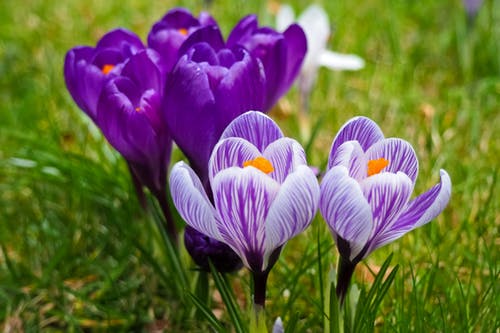
I have never written to you before–even though I have enjoyed your amazing artistry since I was a little child. My main question for you is this: How do you do it? How do you come up with all those ideas for the zillions of flowers you’ve made for our world? Even coming up with the ideas would be incredible. But then you bring those ideas to actual life! And not just once–but again and again! Year after year after year! Wow!
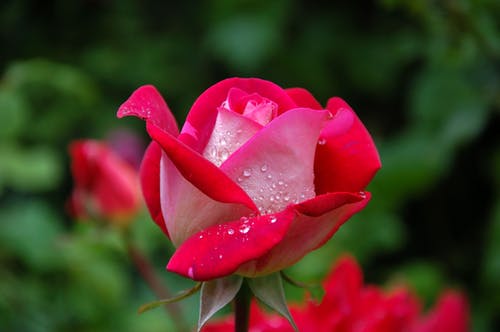
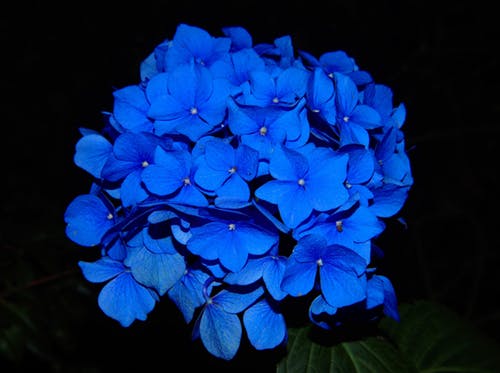
Let me tell you what I like most about your flowers. First, the colors!!! I think you’ve succeeded in making flowers in every color imaginable–from a pure white Hellebore to a deep purple Iris, from a fuschia Japanese Bottlebrush to a bright blue Hydrangea, from a vibrant yellow Daffodil to a flashy orange California Poppy, from a rich green Siberian Bugloss to delicate pink Cherry Blossoms–and every color in between. And then you mix and match and blend and swirl the colors in so many surprising and delightful ways.
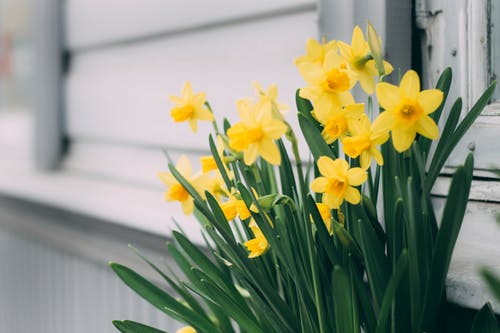
I am amazed at the shapes and sizes of the flowers you make too: from the tiny white bell-shaped Lily of the Valley to the Giant Dinnerplate Dahlia with its lush layers of pink, yellow, or purple petals.
And then, of course, all those fragrances! How did you ever create such an array of distinct, pleasurable, and unforgettable scents? Just saying their names conjures up their beautiful fragrances in my nose: Gardenia… Rose… Jasmine… Sweet Pea… Wisteria… Lily of the Valley… Plumeria… Magnolia… Honeysuckle… Peony… Lilac… and the list goes on.
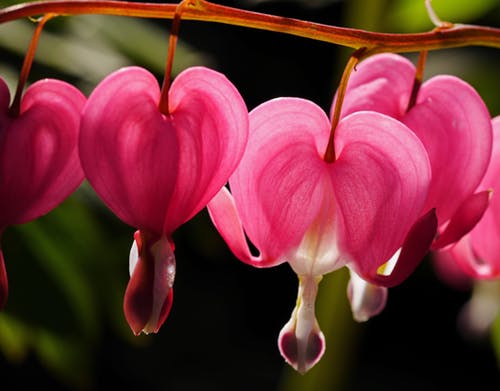
I know the colors, shapes, and fragrances often serve a purpose: they attract bees, butterflies, birds and other creatures whose presence pollinates the flowers, thus insuring their reproduction. But, Dear Flower Maker, didn’t you go a little overboard? Aren’t some flowers far more beautiful than they need be? Take the Columbine… the Bleeding Heart… the Dogwood… the Queen of the Prairie… and the Orchid. Someone said that you are “inordinately fond of beauty.” I think your array of flowers proves that!
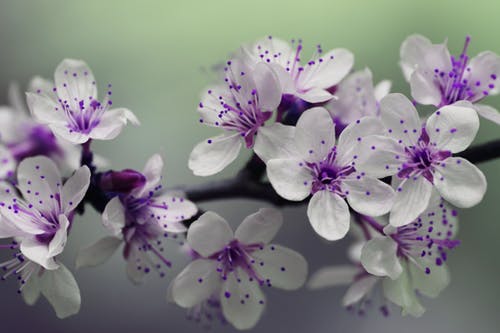
So, my Dear Flower Maker, what I’m trying to say is this: Thank You! Thank You! Thank You for all the flowers you’ve made to beautify our earthly world. I love them! May we humans never take them for granted! May we continue to cherish their beauty which bestows such pleasure and lifts our spirits. May we gratefully use their beauty to adorn our homes and our yards. May we borrow their beauty to express our love for one another–and our love for You. Thank you again, Dear Flower Maker… And keep up your beautiful, beautiful work!
For reflection:
Are flowers a significant part of your life? Do you grow any or use them in your life?
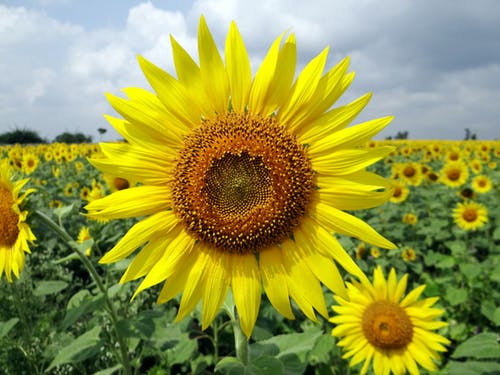
Do you have any favorite flowers? If so, which one(s) and why? Did any of the pictures of the flowers touch your heart today?
Would you like to say anything to THE Flower Maker?
PS: During Lent, we often choose our sacrifices. But this year, our sacrifices have chosen us–in the form of the coronavirus… Let us offer this short prayer: Creator God, be with us during this world-wide health crisis. Help us to do what we have to do to curb the spread of this virus. Bless our health care professionals, our researchers, our community and government leaders. Bless those already infected with this illness. We pray too for those who have died and for their loved ones. Help us to embrace the personal hardships this pandemic may lay upon us. May we, as a world community, work together, putting aside all selfishness, feelings of superiority, and divisiveness. Keep always before us the great truth that this pandemic underscores: we are all part of One Earth Community no matter who we are or where we live. Amen.
I found a lovely little song by Jaci Velasquez, an actress and Christian and Latin pop singer. It’s called “Flower in the Rain.” For me, the song has overtones of Lent and Easter as well as Psalm 139. And the background pictures are simply gorgeous!
I invite you to share your thoughts below on this reflection, the pictures, the song, or the other responses…