Does Anyone Die Alone?
One of the heart-breaking consequences of the current pandemic is that many people cannot be with their loved ones at the time of their death. Those left behind often suffer great anguish because their loved ones died alone. Their stories raise a bigger question: Does anyone die alone?
The obvious answer seems to be yes, for some people do die with no one else physically present with them. But, does that mean they die alone? To answer that question, I interviewed four women with years of experience ministering to the dying and their families in hospitals, nursing homes, private homes, hospice centers, and (in a few cases) even by the side of a highway. The women are Marla (with 20 years experience) and three Sisters of Notre Dame, Donna (22 years), Helen (9 years), and Gail (26 years). I found their experiences and insights extremely valuable—so much so that I will devote two blogs to the topic of death and dying. After all, how can we be living during a pandemic without reflecting on the reality of death?
When I posed the question, “Does anyone die alone?” to my four friends, Gail immediately responded with another question: “Are we ever really alone?” It’s a good question. If we as Catholics/Christians believe that God is with us throughout our entire life, then why would we think that God/Jesus/the Holy Spirit would not be with us as we are dying—whether we are alone or not?
Years ago there was a TV program called Touched by An Angel. It starred a trio of angels: Monica (Roma Downey), Tess (Della Reese) her supervisor, and Andrew (John Dye) the angel of death. Andrew was not someone to be terrified of. Instead he was a smiling, kind, and gentle young man who described his job as “bringing people home.” When people lay dying, many times alone, Andrew was with them, often taking their hand or actually holding them. All the while he assured them that “God loves you so much” or “You have nothing to be afraid of.” He helped people die, that is, he walked beside them into their new heavenly life, represented by a bright white light.
But what if there is no gentle angel of death? Is there anyone else present (besides God!) to help the dying person transition to eternal life? Helen said that when she is with someone who is actively dying, she often senses that the deceased loved ones of the dying person are also present in the room. The other three agreed. Helen said, their deceased loved ones are “encouraging the person to ‘let go’ and ‘come.'” Some dying people actually talk to a deceased spouse, parent, or other loved one—even though no one else in the room sees them.
A beautiful poem by Henry Van Dyke expresses this idea and is often used at wakes and funerals. The poem ends with these words: Just at the moment when someone at my side says, “There, she is gone!” there are other eyes watching her coming, and other voices ready to take up the glad shout, “Here she comes!”
Donna said, “Sometimes the dying seem to choose to die alone.” Marla, Gail, and Helen agreed. They all told stories of family members keeping vigil with their loved one for hours or even days. Some families take shifts around the clock so their dying loved one is never alone. But when the one keeping vigil leaves the room only for a minute (perhaps to go to the bathroom) and returns, their loved one has died. When this happens, Marla consoles families by saying, “Maybe your mother (father, husband, wife, grandparent, sister, etc.) loved you so much, she (he) couldn’t let go of life in your presence. So she waited to be alone to die.”
These words are not meant to mitigate the suffering people experience when denied access to their dying loved ones. My heart goes out to them. At the same time, we must remember that despite all we know about death, death still remains an unfathomable mystery.
But if we, throughout our lives, have repeatedly placed our own life and the lives of our loved ones into God’s loving care, then we must trust that God will be embracing us and our loved ones at the moment of death. Then we will face death in the same way we have faced all the fears, trials, uncertainties, and unknowns of our life: with deep faith and complete trust in the God who loves us more than we can imagine.
Next week’s reflection on death and dying will hone in on some ways to be with the dying, plus some thoughts on our own death. I want to thank Marla, Donna, Helen, and Gail for sharing their years of experience with us. I asked them for the names of some books that they found helpful in their ministry. Here are their suggestions:
Let Someone Hold You by Paul Morrissey, hospice priest (Donna); The Grace in Dying by Kathleen Dowling Singh (Marla); Being with Dying by Joan Halifax (Gail); Grieving with Hope by Samuel Hodges and Kathy Leonard (Helen); (and my suggestion) Send My Roots Rain: A Companion on the Grief Journey by Kim Langley.
Did anything in this reflection stir your heart?
PS: Announcement: I will be giving a “Zoom retreat” sponsored by the King’s House Retreat and Renewal Center in Belleville, IL from July 13-20, 2020. This is my first Zoom retreat, so I’m excited about it. This means you can stay at home and tune in to the 2 conferences each day with the other retreatants. I will be at home too! See the retreat center’s website for details.
I am offering two videos today. The first is “How Great Thou Art,” sung here by Chris Rice. This 1885 hymn is often sung at funerals. The second is a short video about Peyo, a therapy horse who comforts the sick and dying.
“How Great Thou Art” Sung by Chris Rice:
Peyo, the therapy horse… I thank my friend, Fr. Rich of Pittsburgh, for sending me this video:
Do you have any thoughts or responses to today’s reflection or videos? If so, please respond below.
Three Very Different Mothers Who Became Saints
Today I wish all mothers a belated Happy Mother’s Day! In honor of mothers everywhere, I’d like to focus on three mothers who are saints in the Catholic Church: Saints Monica, Zelie Martin, and Dorothy Day. (Dorothy is not formally canonized yet, but the process has started.)
St. Monica (331-387) St. Monica was born in what is now Algeria in North Africa. The daughter of devout Christians, she was given in marriage to Patricius, a Roman pagan with a violent temper and a penchant for adultery. He also had a cantankerous mother who moved in with them. Monica could have turned into a bitter and angry woman, but she didn’t. In fact, she exemplified Christian love and joy so much, both her husband and mother-in-law eventually become Christians.
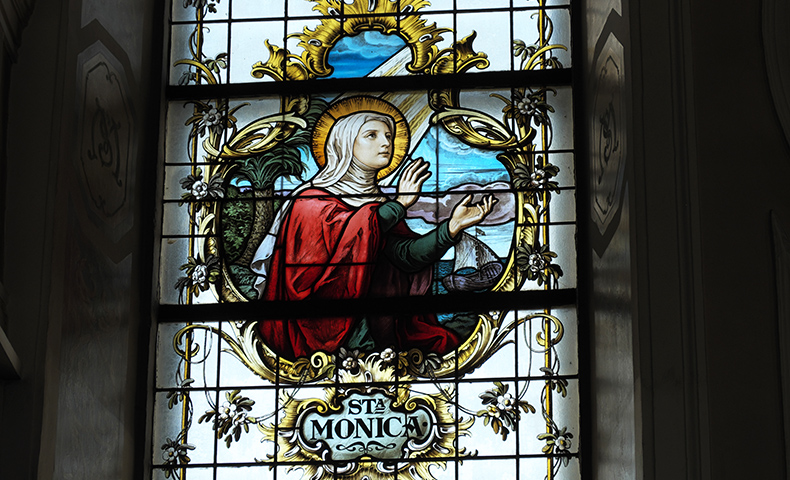
Monica had three children who survived infancy: sons Augustine and Navigius, and a daughter Perpetua. It was her eldest son, Augustine, who caused her the most grief. He led a very wayward life, even fathering a son “out of wedlock.” For a while, Monica refused to let Augustine eat or sleep in her house. But one night she heard a voice in her heart say, “Stay close to your son.” So Monica changed her closed-door policy. Later, when Augustine secretly sailed to Italy, Monica got on a ship and followed him there. Once she visited a Bishop for advice, sobbing as she told him about her son. The bishop told her, “The child of such tears shall not perish.”
Monica found strength in his words. In time Augustine was converted and became one of the greatest saints, teachers, and writers of the church. For centuries Monica has been an example of persevering love and prayer. Like all good mothers she learned to entrust her children to God’s loving care.
St. Zelie Martin (1831-1877). Zelie was 26 when she passed Louis Martin, 34, on a bridge in her French town. She was immediately impressed by him, and later claimed an inner voice said to her, “This is the man I’ve prepared for you.” But it was Louis’ mother who actually met Zelie first in a lace-making class, and she introduced her to her son. The couple was married and began a happy life together–despite their trials. Zelie bore nine children, but four of them died before the age of six (the youngest was named Melanie.) The other five—all girls—eventually became nuns. Therese (the Little Flower) is canonized. Her sister Leonie’s canonization is in process.
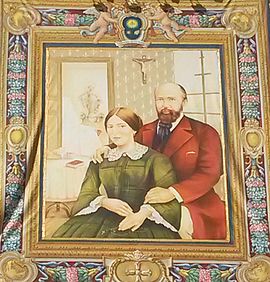
Louis, a monastery “reject” (because he didn’t know Latin!), was a jeweler and watchmaker who loved nature, was drawn to prayer, and enjoyed fishing. His wife was also a remarkable woman. A skilled seamstress, she ran her own lace making business, eventually employing 15 other women who worked in their own homes. She was deeply devoted to Louis. Once he was gone for several weeks on a pilgrimage. Zelie’s letter to him includes these touching words: I am with you all day in spirit. I love you with all my heart, and I feel my affection doubled by being deprived of your company. I could not live apart from you. Zelie died in 1877 of breast cancer. She was 46. Louis died in 1894 after suffering two paralyzing strokes. Zelie and Louis were canonized by Pope Francis in 2015, the first married couple in history to be canonized together. (Hopefully, not the last!)
Dorothy Day (1897-1980). Dorothy Day, not yet a Catholic, was a Brooklyn journalist and social activist. As a young woman, she had several men in her life. Her first relationship ended with an abortion, a decision she later greatly regretted. She married her second boyfriend in a civil ceremony, but the relationship did not last. Then Dorothy fell in love with Forster Batterham, another social activist. The two of them had a daughter, Tamar. Dorothy was delighted. He was not. During this time Dorothy became very interested in the Catholic church. Her interest in religion angered Forster. When she was baptized in 1927, he refused to attend the ceremony.
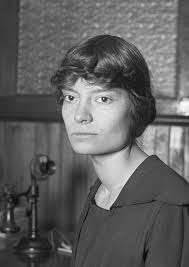
Dorothy desperately wanted to marry Forster and wrote him many beautiful, passionate letters. But Forster refused and their relationship ended, leaving Dorothy a single mom. She tried to focus on her daughter, her newfound faith, and her love and action for the poor. Keeping that balance was not always easy. In time she co-established the Catholic Worker movement which combined direct aid to the poor with nonviolent direct action on their behalf. Today there are more than 200 Catholic Worker communities around the world carrying out her legacy.
Dorothy is a model for integrating personal prayer, service, and activism in defense of those who are forsaken in any way. Over the years she participated in numerous demonstrations and was arrested many times. She was deeply devoted to the Catholic Church while simultaneously challenging that Church to practice what it teaches. Her writings and actions were sometimes controversial. If you want to know Dorothy better, I suggest: 1) her autobiography, The Long Loneliness; 2) Dorothy Day: Selected Writings by Robert Ellsberg; and 3) Dorothy Day: The World Will Be Saved by Beauty by her granddaughter, Kate Hennessy.
Did any of these stories strike you today? If so, which one?
Is there a particular mother you know who is “saintly”? Why do you think so?
If you are a mother, what has been your greatest challenges and your greatest joys?
Our video today is a virtual choir singing “Salve Regina,” a hymn to Mary, our Mother. Written in the Middle Ages, this ancient hymn will be sung in the original Latin by a choir of Carmelite nuns and friars from all over the world. I have included an English translation of the prayer below the video.
Hail Holy Queen, Mother of Mercy, Hail our life our sweetness and our hope… To thee do we cry, poor banished children of Eve… To thee do we send up our sighs, mourning and weeping in this value of tears… Turn then, most gracious advocate, thine eyes of mercy toward us… And after this our exile, show unto us the blessed fruit of thy womb, Jesus… O clement, O loving, O sweet virgin Mary.
Please write a response below if you wish!
Time for a Laughter Break
Those of you familiar with my blog know that every now and then I like to devote a day to humor. Today is one of those days. So here are some jokes, funny sayings, and what-have-you’s that I hope will brighten your day!
Let’s begin with some “punny” definitions. (Did I already hear a groan?)
How does Moses make tea? Hebrews it.
I tried to catch some fog, but I mist.
England has no kidney bank, but it does have a Liverpool.
The toothless termite walked into a tavern and asked, “Is the bar tender here?”
What washes up on tiny shores? Microwaves.
What’s the difference between a hippo and a zippo? One is really heavy, the other is a little lighter.
What do you call a super articulate dinosaur? A Thesaurus.
What do you get when you mix alcohol and literature? Tequila Mockingbird.
I stayed up all night to see where the sun went, and then it dawned on me.

Okay, okay, I can hear your groans. So let’s move on to some philosophical thoughts:
If you can’t be kind, at least have the decency to be vague… The older you get, the tougher it is to lose weight, because by then your body and your fat are really good friends… If Wal-Mart is lowering prices every day, how come nothing is free yet?… Some mistakes are too much fun to make only once… Just when I was getting used to yesterday, along came today… A truly happy person is one who can enjoy the scenery on a detour… Happiness comes through doors you didn’t even know you left open.
And now for some Latin. Yes, Latin. I had four years of Latin in high school. That was many, many, many years ago. (One “many” equals 20 years!) Is there anyone else besides me who studied Latin? If so, here are some Latin Bumper Stickers you might enjoy: Sona si Latine loqueris. Honk if you speak Latin… Noli me vocare, ego te vocabo. Don’t call me, I’ll call you… Prescripto in manibus tabellariorium est. The check is in the mail… Purgamentum init, exit purgamentum. Garbage in, garbage out… Da mihi sis cerevisiam dilutam. I’ll have a light beer… Die dulci fruere. Have a nice day!
Okay, we’ll go back to English. The old convent van was getting old so the Mother Superior called a car dealer and asked what a new van would cost. He said gently, “Are you sitting down, Sister?” She replied, “I’m kneeling, Mr. Smith.”
George wanted a pet but he also wanted a bargain. He asked the pet shop clerk, “Do any of your dogs go cheap?” The clerk replied, “Oh no. Our canaries go ‘cheep.’ Our dogs go ‘woof.'”

The family was talking about nose jobs. Their little girl looked confused and asked, “Where does the doctor get the new noses to replace the old ones?” Her father replied, “They have a place that makes them. It’s called the ‘olfactory.'”
Two women were looking at greeting cards. The one said to the other, “I’m looking for a card that says, ‘Your love is priceless’ for under $5.”
The elderly man was renewing his driver’s license. Because of his age, he had to take the driving part again. He came to a stop sign, looked left, and then went through the intercession. The instructor cried, “You didn’t look right!” The man replied, “That’s my wife’s side.”
Did you know that you have the right to remain silent even when you’re not being arrested?
Is ignorance or apathy destroying this country? Answer: I don’t know and I don’t care!
I saw an ad for burial plots, and I said, “That’s the last thing I need!”
And finally: You don’t stop laughing because you grow old. You grow old because you stop laughing.

Okay… did and of these make you smile?
What helps you to hang on to your sense of humor during these very serious times?
Do you have any joke, pun or funny story you’d like to share with us?
We are still in the Easter season. Hence, I chose an excerpt from Handel’s Messiah, the incredible “Hallelujah Chorus.” The audio is from College Church in Wheaton. The video was done by a group of families praising the Risen Lord this Easter–and having fun doing it!
I invite your comments below! Don’t be shy!
Where Do You Pray?
In his book, Wrestling with God, Ronald Rolheiser says, “God has given us two churches:” Physical holy places/ holy buildings and the holy place within each of us.
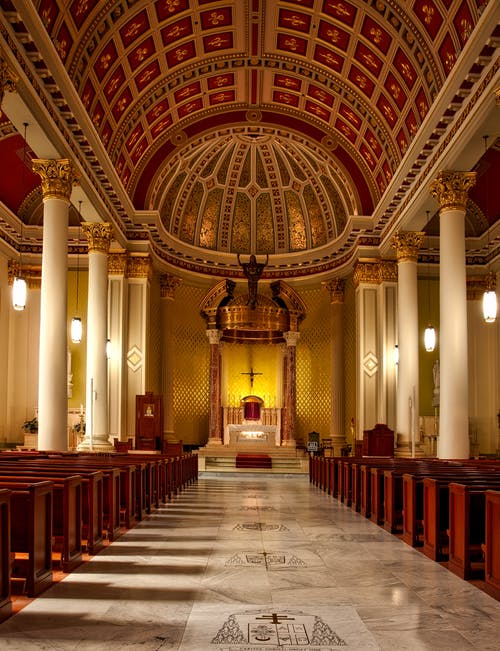
The first church consists of actual churches, cathedrals, temples, synagogues, mosques, shrines and such. The second church is where Jesus told the Samaritan woman at the well where she could pray: that holy place within her. Many of us worship regularly in an actual church–perhaps our local parish. On occasion we might even go to a shrine or Cathedral. But many of you reading this, also pray in that holy-place-of-who-you-are. You can do this alone at your kitchen table, while strolling in a park, or even when lying alone in a hospital bed.
But I would like to suggest two other “churches”: creation itself and our daily life. I suspect more people pray in the “Cathedral of Creation” than anywhere else. When they stand atop a mountain, gaze at a beautiful lake, or inspect the tiny green shoots coming up through the mud, they spontaneously express their wonder or gratitude to the God-Force-Power-Author responsible for such goodness. That is great prayer.

St. Augustine wrote, “If one has an eye for it, creation is a sacrament.” A sacrament! That means that God’s grace can come pouring into us through a mountain, a daisy, a tree, a bee. Pope Francis would agree. He wrote, “Soil, water, mountains: Everything is a caress from God.” Often the beauty and mystery of creation leads us to connect spontaneously with the Author of All.
Our daily life, to me, is another church in which we can pray. This means we pay attention to what is happening in our lives and we ponder those people, happenings, and situations. These can be major things–like this pandemic we are experiencing right now, a troubled relationship, our personal health issues, a special family celebration, the fidelity of a loved one, worry about the future. Or these things can be smaller everyday things like sipping our morning coffee, folding clean laundry, filling our gas tank, working in the yard, doing a crossword puzzle, talking to a friend, reading a good book, going to bed. As Barbara Brown Taylor says, God speaks to us “in the language of our lives.”
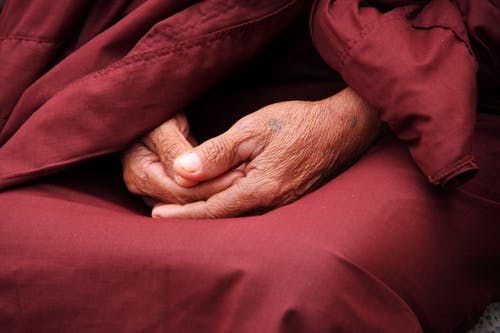
And so, let us pray: Creating God, thank you for all the places you have given us to nourish our prayer. The churches, chapels, and shrines that lift our minds and hearts to you with their vastness or coziness, their ornateness or simplicity, their silence or song. Thank you for that holy-place-of-who-we-are where we meet you dwelling within our very selves. Thank you for your marvelous creation–for its beauty and mystery, its power and fragility, its immensity and teeny-weeniness, its diversity and interconnectedness. And finally, thank you for the gift of daily life, those times of routine and interruptions, ambiguity and clarity, choosings and surrenderings, teachings and learnings, the expected and the surprising. And please, Beloved Author of All, give us the grace to find you present in the whole of our lives. Amen.
Where do you pray?
Have you ever been in a particular building (church, chapel, cathedral, synagogue, mosque, shrine) and the place itself moved you to prayer?
Are there particular aspects of nature that nourish your prayer?
Which of the four “churches” listed here (actual buildings, your inner-being, nature, your daily life) nourishes your prayer the most?
Can you give examples or evidence that Jesus prayed in these four “churches”?
PS: The popular spiritual writer, Sister Macrina Wiederkehr, OSB, passed away last week. Her good friend, Sister Joyce Rupp, was able to be with her during her final days. Macrina’s death is a great loss to all of us who were nourished by her words. Let us pray for her, her family, and her Benedictine community at St. Scholastica Monastery in Fort Smith, Arkansas. (I devoted my Nov. 18, 2019 blog to Macrina’s newest book, The Flowing Grace of Now. If you’d like to read it just go to the search box on the right and type in her name or The Flowing Grace of Now it should come up.)
PPS: On another level, with the help of my good writer-friend, Sister Kathleen Glavich, SND, I have re-published two of my books that were out of print: When the Rain Speaks and Traits of a Healthy Spirituality (my “best-seller”). Both books are now available on Amazon.com. Look for the 2019 and 2020 editions.
During this time of staying at home and social distancing, I offer you two music videos: Matt Maher’s beautiful song “Love Will Hold Us Together” and the orchestra from Rotterdam, Netherlands playing Beethoven’s “Ode to Joy”—all the members playing from their homes.
A virtual orchestra playing Beethoven’s “Ode to Joy”:
I invite you to respond below to anything in this blog–the words, pictures, or music. We all love hearing from you!
Quotes (and more!) for Earth Day 2020
Wednesday April 22 we celebrate the 50th anniversary of Earth Day. The day began in the U.S. in 1970 as a response to the environmental crisis. On that day, 20 million Americans (10% of the population) took to the streets and college campuses in hundreds of cities to protest the country’s disregard for the planet. In the U.S., Earth Day eventually led to the Clean Air, Clean Water, and Endangered Species Acts. Today more than 193 countries celebrate Earth Day.

In honor of this day, I reached into my “Quotation Files” and selected 15 quotes on nature and the earth from a variety of authors for your reading, pondering, and enjoyment.
1. Every natural object is a conductor of divinity. John Muir
2. A wrong attitude toward nature implies, somewhere, a wrong attitude toward God. T.S. Eliot
3. To walk in nature is to witness a thousand miracles. Mary Davis

4. Everything about a hummingbird is a superlative. Tom Colazo
5. The sun, with all those planets revolving around it and dependent on it, can still ripen a bunch of grapes as if it had nothing else to do. Galileo
6. Some birds migrate thousands of miles—and they weigh so little, they could be mailed for a single first-class stamp! Unknown
7. The environment, after all, is where we all meet, where we all have a mutual interest. It is one thing that all of us share. Lady Bird Johnson
8. We might be saved by a flower, a pebble, a bird, a thunderclap. Anything can bring us a message from Heaven. Anything can wake us up to life right here and now. Thich Nhat Hanh
9. A healthy ecology is the basis for a healthy economy. Claudine Schneider

10. The sheer roaring of energy of things is stunning, miraculous, holy, a prayer, inexplicable, I give up. There is no word eloquent enough for the vast passion of living things. Brian Doyle
11. The beauty of the natural world lies in the details. Natalie Angier
12. We delight in the beauty of the butterfly, but rarely admit the changes it has gone through to achieve that beauty. Maya Angelou

13. Theologians are wise to close their learned tomes at times and reopen the book of nature. Theology’s heartbeat is the miracle of our own existence. Forrest Church
14. Those who contemplate the beauty of earth find reserves of strength that will endure as long as life lasts. There is something infinitely healing in the repeated refrains of nature—the assurance that dawn comes after night, and spring after winter. Rachel Carson
15. The care of the Earth is our most ancient and worthy and, after all, our most pleasing responsibility. To cherish what remains of it and to foster its renewal is our only hope. Wendell Berry

+ Do any of the quotes touch you today? If so, which one(s) and why?
+ Did any of the photos today capture your attention? Which one(s)? How did it (they) speak to you?
+ Do you celebrate Earth Day in any way–on the actual day or throughout the year? If so, I invite you to share some of your ideas with us.
I’m offering two short videos today. The first is a 5 1/2 minute nature video entitled “Beautiful Nature Around the World.” The music is “Conquest of Paradise” by Vangelis. The second video is about an old elephant who likes classical music. After the videos, I’m including a lovely prayer/poem during this time of Covid-19…
Ampan is an 80-year-old female elephant who is almost blind. She lives in a rescue reserve in Thailand. She has developed a fondness for classical music, including Debussy’s “Clair de lune.”
And finally, this short prayer/poem, entitled “When This Is Over,” is by Laura Kelly Fanucci from the Catholic Health Association:
When this is over… may we never again take for granted… a handshake with a stranger… conversations with neighbors… a crowded theater… Friday night out… the taste of Communion… a routine checkup… the school rush each morning… coffee with a friend… the stadium roaring… each deep breath… a boring Tuesday… life itself.
When this ends, may we find… that we have become more like the people we wanted to be… we were called to be… we hoped to be… And may we stay that way—better for each other because of the worst.
I welcome your responses to the quotes… the pictures… the videos… the prayer/poem.