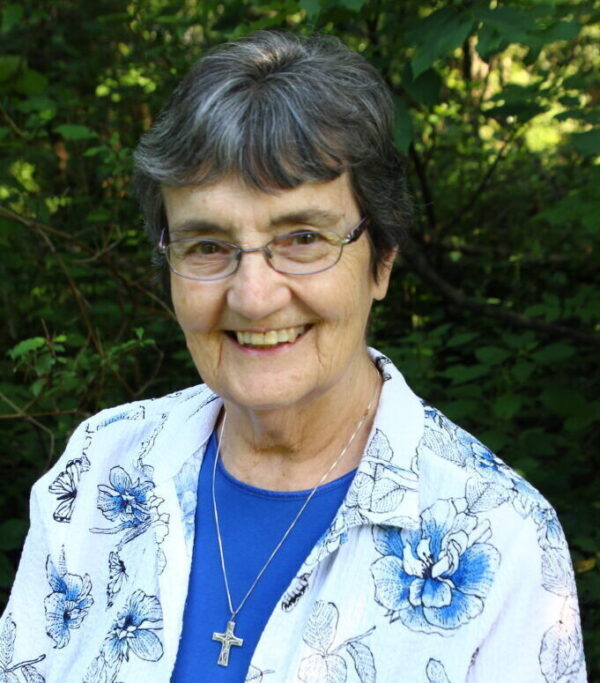
My Dad
In honor of Father’s Day, I’m writing about my father. My Dad, John Svoboda, was born in 1914 in Cleveland, Ohio. His parents, John and Anna, were immigrants from Bohemia. Their first child, a little girl, was stillborn. My Dad was born a year later, followed by five other children: Helen, Jim, Charlie, Alice, and Henry (Hank).
The family lived in St. Adalbert Parish on the city’s east side. They spoke only Bohemian at home. Dad said he learned English “on the streets” playing with the other kids. His first grade teacher was Sister Maron, a Sister of Notre Dame. Amazingly, she taught her first graders how to read and write in two languages: English and Czech.
Dad attended East Tech High School where he played nose tackle for the football team that won two senate championships. For a very short time, the Olympic track star, Jesse Owens, was on the team, before the track coach, seeing his incredible talent in track, yanked him off the football team lest he get injured.
Dad graduated in 1932 during the dark days of the Great Depression. Though he longed to go to college, that was impossible. His Dad, a carpenter, could find little work, so Dad had to help support the family of eight. Fortunately, he got a job in an auto parts store, working 60 hours a week for $12. As conditions worsened, his pay was cut to $9 a week. Dad dutifully handed his paycheck to his mother each week and she gave him 50 cents for himself.
Prohibition was repealed in 1933. The next year Carling Brewery Company opened and advertised for “young, tall, strong men” to work the assembly line. My Dad fit the bill. He was young—20; tall—6′ 4″, and strong—about 230 pounds worth. He worked at Carling’s 12 hours a day, 7 days a week, 364 days a year. Those first years, he got only Christmas off. When we asked Dad how he endured such a grueling schedule he said, “I considered myself lucky to have a job.” His paycheck was so big (about $75), no local bank could cash it. A kind (and honest!) neighbor who worked at the bank downtown, got it cashed for Grandma.
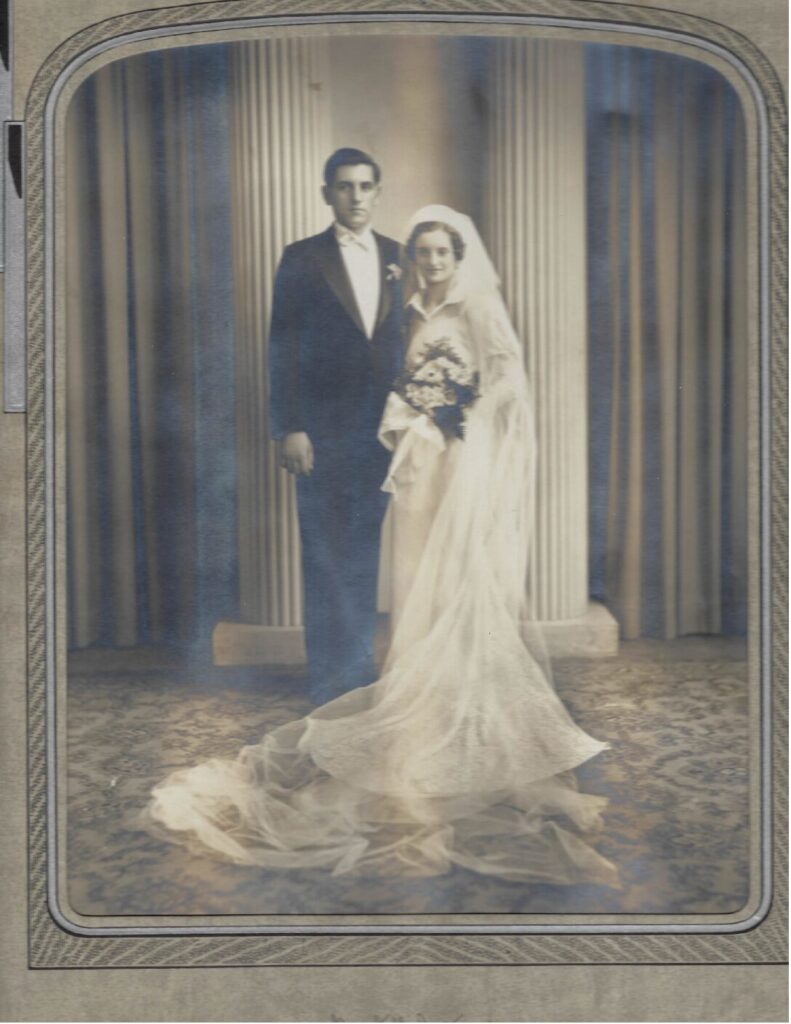
In 1933 John began dating Millie Mach from St. Procop’s, a Bohemian parish on Cleveland’s West Side. John courted Mom via the streetcar that ran beneath the high level bridge spanning the Cuyahoga River. They were married in 1937. A year later they had their first child, Frankie, named after my mother’s father. Although the baby looked healthy, sadly he died 3 days later. For the wake, my Mom was still in the hospital. My Aunt Alice, a teenager at the time, remembered Dad sitting in their living room and receiving callers with the little white casket on his lap.
Within six years, Dad and Mom had four more children: Mary Ann, John, Paul, and Dolly—that’s me. (I always say, they saved the best till last!) Meanwhile, in 1941 Dad quit the brewery and began to work as an apprentice for Thompson Products in Euclid. Soon he became a highly skilled tool and die maker. Dad could fix just about anything—cars, washing machines, lawn mowers. If he couldn’t get the parts he needed, he made his own. During WWII, he helped make the machines that made the airplanes for the war.
In 1942 John realized a life-long dream. He and Mom bought a small farm in rural Willoughby Hills. They got an old farmhouse, a barn, a chicken coop, and 22 acres for $6,000. Within a year Dad bought a few white Embden geese and began experimenting with hatching eggs. Soon he had several hundred geese and the Golden Goose Farm was “hatched.” We raised geese for the ethnic neighborhoods of Cleveland. We also shipped live geese all over the country. Farmers in Mississippi even used our geese to weed their cotton fields. While running the farm with my Mom, Dad continued to work often 10 hours a day at Thompson.
It’s hard to capture my father in words. He and Mom were married for almost 66 years. He always teased her that he had signed the marriage license with a pencil, but we knew he had signed it with his life and love. As a father he was gentle, steady, and strong. He took delight in being a dad and, years later, a grandpa and great-grandpa. He made it easy for us kids to believe in the image of God as a father. He was an avid gardener, growing traditional crops like corn, beans, and tomatoes—as well as unusual things like figs, kiwi, and Carpathian walnuts. He was an expert when it came to mushrooms, knowing their names in Latin, English, and Czech.
Dad tended his orchard and vineyard, and enjoyed making wine and brewing beer. He had a passion for reading and love for classical music. Our house was filled with the strains of Beethoven’s Fifth, Tchaikovsky’s 1812 Overture, Dvorak’s New World Symphony.
Dad was a man of deep but humble faith. Through some very rough times, he proved to be a man of profound personal integrity. At our large family gatherings, he was a tall reserved presence. Family and friends came to him seeking advice on gardening, building, and machinery as well as counsel for personal problems. He was truly a sage.
Dad was not perfect. He regretted working those long hours that kept him away when we were growing up. He also took a long time to make decisions—whether he was choosing a wife or buying a new radio or car. But all his shortcomings are overshadowed by his goodness and love.
The last month’s of Dad’s life were difficult for him and all of us. We watched helplessly as this once robust man diminished before our very eyes. Those last days, when I brought him Holy Communion at home, he mustered up the energy to pray the Our Father with Mom and me. Then he stretched out his large hands to receive the Sacred Bread that had sustained him his entire life, through times of darkness and light, turmoil and peace, pain and joy. On this Father’s Day, I thank God for my Dad—for the blessing of being loved by him and for the privilege of loving him in return.
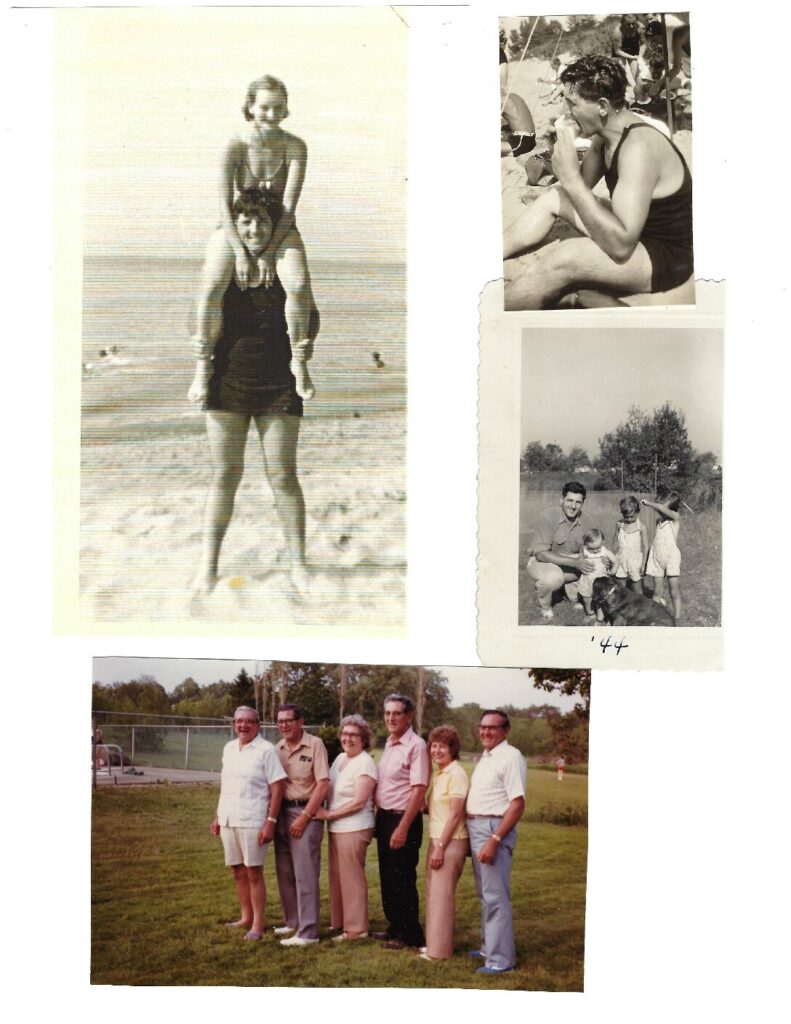
Did anything stand out for you in this reflection?
Would you like to share something about your father with us today?
Happy Father’s Day to all you dear Dads out there!
Today I chose an old song by a very young Amy Grant called “Father’s Eyes.” I played this song for my Dad on his 70th birthday. I believe I inherited much of my basic attitude toward life from my father and my mother.
Please feel free to respond to today’s post below.
Let's Talk about the Stars
Today we’re going to talk about the stars. (This reflection is not an escape from the current headlines. It’s a realignment of our perspective.) We’ll review a few fascinating facts about the stars, say something about THE Star Maker, note a few stars in the Bible, and conclude with a short prayer.
How many stars are there? Astronomers say there are roughly 1 billion trillion stars in the “observable universe.” Written out, that number looks like this: 1,000,000,000,000,000,000,000 stars! There are more stars in the universe than there are grains of sand on planet earth. Let’s face it: When it came to making stars, our Creator really got carried away!

How big are the stars? The white dwarf stars are about the size of earth. Our sun, an “average star,” is 1 million times bigger than earth. The supergiant stars are more than 1500 times larger than our sun! (I can’t help but use a lot of exclamation points in this reflection! Bear with me! I get excited writing about this stuff!) The largest star is WOH G64. (Note: Some stars are identified by numbers and letters. You try to come up with 1 billion trillion different names!)

How old are the stars? They average between 1 billion to 10 billion years old. The oldest (so far) is HD 140283, nicknamed Methuselah, which is over 14 billion years old. Stars are born and stars die. Our sun is 5 billion years old. It will die in about 5 billion years. The really big stars seem to live fast and die young.
When stars die, they create “super novas,” that is, astronomical explosions that send their “star stuff” out into the universe. In that “stuff” are the essential building blocks of life: carbon, hydrogen, nitrogen, oxygen, phosphorous, and sulfur–or CHNOPS, for short. We humans are made of this “star stuff.” So are chipmunks, oak trees, and amoebas. We can say that the elements that make up our body were present in those earliest exploding stars!
What do stars reveal about God, their Maker? God is bigger, more powerful, more creative, more mysterious, more ingenious, more intelligent, more dynamic, than we can ever imagine! In short, God is unfathomable! If we ever think we have finally figured out who God is, we are wrong. We should be naturally terrified of a God such as this. But Jesus came to planet earth and revealed that God is essentially Someone who loves us immensely and wants to share life, goodness, and beauty (such as the stars!) with us.

Stars are found in many places in the Bible. God took Abraham outside one night, directed his attention to the stars, and promised that Abe would be the father of a nation as numerous as the stars. Psalm 8 sings of the beauty of the heavens and the moon and the stars. It was a mysterious star that led the Magi to Jesus, the newborn King. Jesus often prayed at night. He must have often gazed up at the stars during his prayer—the same stars we gaze at in wonder today.
Let us pray: O Maker of the stars (and everything that is!) we thank you! We thank you for the gift of existence… the gift of life.. the gift of being part of such a lively, fascinating, mysterious, and beautiful world. We thank you for giving us Jesus who, over and over again, assured us of your tender love for us… your watchful care of us… and your forgiveness of our sins and failings. When we feel lost, overwhelmed, ashamed, or afraid, may we gaze upon your stars and be reminded of your unfathomable love, power, and goodness. Give us a share of that Love… show us the changes we must make to love others as you love us… help us in our struggles to live together in peace and harmony as one earth community… and give us the courage to be people of hope, people who believe that a better world is not only possible, it’s on its way! We ask for these graces through Jesus and the power of his Amazing and “Stellar” Spirit. Amen.

Is there anything in this reflection that caught your attention?
Do you look at the stars regularly? If so, why? If not, why not?
Do you ever pray with the stars?
PS: I will be giving a live Zoom retreat July 13-19 sponsored by King’s House Retreat Center, Belleville, IL. The retreat will include 12 presentations by me: Monday July 13 – 7:00 pm; July 14 – July 18 – 9:00 am and 3:00 pm; Sunday July 19 – 9:00 am. All times listed are Central Time. There will be handouts every day, music, and videos. I hope to incorporate some sharing time too. For a description of the retreat, click “events” at the top of this page. For details about cost and registration, go to King’s House Retreat Center’s website or call them at (618)-397-0584. I hope to be zooming with some of you!
Our song is called “Stars” by the Christian Rock Band “Skillet.” The band, originally formed in Memphis, TN now has several members who hail from Kenosha, WI.
I invite you to respond to this reflection below:
Seeking God in the "Land of Unlikeness"
The poet W. H. Auden has written a beautiful poem called, “For the Time Being: Xmas Oratorio.” In it he suggests that we should seek God in three unusual places. One of those places is the Land of Unlikeness.
He’s saying, I suggest, that we must seek God in people, places, and circumstances that are unlike ourselves, that is, in things that are different from ourselves, unfamiliar to us, or even toward which we feel a natural aversion.

I chose this topic for my blog about a month ago and I even wrote a reflection on it. But the events of this past week made me rewrite what I had written. What events? In the U.S. the deaths from Covid-19 passed the grim mark of 100,000. The U.S. unemployment rate reached 14.7%, a record high. The brutal killing of George Floyd shocked and outraged millions of Americans. That killing sparked mass protests across our country with many of them erupting in death and violence.
Talk about the Land of Unlikeness! What’s there to like about the place we find ourselves at this moment in our history? Some of us may be so repulsed by what is happening around us, we may want to withdraw from this land. We may want to retreat to a place more to our liking, a place that is safer, more peaceful, more comfortable.
This current world reflected in our headlines raises all kinds of disturbing questions like: Why is all of this happening now? What can we possibly do to restore peace? How can we insure greater justice for all? Where are we heading as a nation? And where is God in all of this?
I think Auden’s answer to that last question is this: God is here. Yes, God resides even in this land of unlikeness. We must seek and find God in the the confusion, anxiety, intrepidation, and uncertainty that surround us.

Years ago I stumbled across this phrase: “the tyranny of personal preference.” That’s powerful! Our world becomes small if we surround ourselves only with people and things to which we are naturally drawn. If we do, then we miss out on a lot of personal growth and even breadth of vision. More importantly, we miss finding God in places we never thought to look.
What would Jesus say about seeking God in the Land of Unlikeness? Wasn’t the Incarnation itself a venture into the Land of Unlikeness for Jesus? As John says in the prologue to his gospel, “And the word became flesh and made his dwelling among us.” One translation says, “he pitched his tent among us.” Talk about unlikeness!
During his earthly life, Jesus often entered the land of unlikeness. He befriended men and women, the wealthy and poor, the healthy and sick, Jew and Gentile. He heaped praise even on a Roman soldier, enjoyed children, and respected the elderly. From the stories and imagery Jesus used in his teachings, we know he hung out with farmers, shepherds, housewives, builders, mothers and fathers—many unlike himself in significant ways. His encounter with a feisty Syro-Phonecian woman even caused him to broadened the scope of his mission.
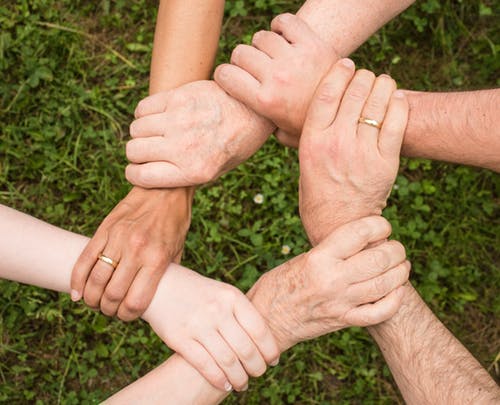
And then there’s Jesus’ greatest teaching: Love one another—even your enemies. Often individuals become our enemies when we cannot see any likeness between them and ourselves. In extreme cases, we can even dismiss them as “monsters,” that is, as individuals who do not share our common humanity.
Toward the end of his life, Jesus chose to go to Jerusalem, the Land of Unlikeness, even though his own apostles urged him not to go. In Gethsemane he begged the Father to “remove this cup,” that is, to take away the horrific death he was facing. But Jesus did not run away. Trusting his Father’s love completely, he stood and faced his executioners.
Our current headlines have thrust us into a Land of Unlikeness. But our faith tells us that even this land has many graces for us. One of the most obvious graces is this: A renewed realization and appreciation of these truths: we share this world together… we are all interconnected… and we are all part of one common humanity. These truths are stronger and deeper than all our unlikenesses.
Let us pray: Jesus, we ask for the grace to find you in the Land of Unlikeness. Free us from the “tyranny of personal preference,” especially when love or duty calls us to greater selflessness and freedom. May we welcome people into the sphere of our lives who are unlike us in significant ways. May we face adversity and hardships with your courage and trust in God. May we do the never-ending work of securing justice for all. During this time of unlikeness, may we be open to personal growth, change, and the broadening of our perspective on life. We ask for these graces through the power of your Boundless, Persistent, and Daring Holy Spirit. Amen.
+ What are some of your thoughts and feelings about our current headlines? Does anything give you hope?
+ What effect does the current national and global situation have on your prayer?
+ Can you say in a few words what gave Jesus the ability to face his crucifixion?
We just celebrated the feast of Pentecost. I chose a very gentle Holy Spirit song by CeCe Winans, “Holy Spirit Come and Fill this Place.” Let us ask the Spirit to fill “this place,” that is, to fill our hearts, our churches, our cities, our world.
I warmly welcome you to respond below to this reflection, song, or someone else’s response. My readers and I value your comments!
Seeking God in the “Land of Unlikeness”
The poet W. H. Auden has written a beautiful poem called, “For the Time Being: Xmas Oratorio.” In it he suggests that we should seek God in three unusual places. One of those places is the Land of Unlikeness.
He’s saying, I suggest, that we must seek God in people, places, and circumstances that are unlike ourselves, that is, in things that are different from ourselves, unfamiliar to us, or even toward which we feel a natural aversion.
I chose this topic for my blog about a month ago and I even wrote a reflection on it. But the events of this past week made me rewrite what I had written. What events? In the U.S. the deaths from Covid-19 passed the grim mark of 100,000. The U.S. unemployment rate reached 14.7%, a record high. The brutal killing of George Floyd shocked and outraged millions of Americans. That killing sparked mass protests across our country with many of them erupting in death and violence.
Talk about the Land of Unlikeness! What’s there to like about the place we find ourselves at this moment in our history? Some of us may be so repulsed by what is happening around us, we may want to withdraw from this land. We may want to retreat to a place more to our liking, a place that is safer, more peaceful, more comfortable.
This current world reflected in our headlines raises all kinds of disturbing questions like: Why is all of this happening now? What can we possibly do to restore peace? How can we insure greater justice for all? Where are we heading as a nation? And where is God in all of this?
I think Auden’s answer to that last question is this: God is here. Yes, God resides even in this land of unlikeness. We must seek and find God in the the confusion, anxiety, intrepidation, and uncertainty that surround us.
Years ago I stumbled across this phrase: “the tyranny of personal preference.” That’s powerful! Our world becomes small if we surround ourselves only with people and things to which we are naturally drawn. If we do, then we miss out on a lot of personal growth and even breadth of vision. More importantly, we miss finding God in places we never thought to look.
What would Jesus say about seeking God in the Land of Unlikeness? Wasn’t the Incarnation itself a venture into the Land of Unlikeness for Jesus? As John says in the prologue to his gospel, “And the word became flesh and made his dwelling among us.” One translation says, “he pitched his tent among us.” Talk about unlikeness!
During his earthly life, Jesus often entered the land of unlikeness. He befriended men and women, the wealthy and poor, the healthy and sick, Jew and Gentile. He heaped praise even on a Roman soldier, enjoyed children, and respected the elderly. From the stories and imagery Jesus used in his teachings, we know he hung out with farmers, shepherds, housewives, builders, mothers and fathers—many unlike himself in significant ways. His encounter with a feisty Syro-Phonecian woman even caused him to broadened the scope of his mission.
And then there’s Jesus’ greatest teaching: Love one another—even your enemies. Often individuals become our enemies when we cannot see any likeness between them and ourselves. In extreme cases, we can even dismiss them as “monsters,” that is, as individuals who do not share our common humanity.
Toward the end of his life, Jesus chose to go to Jerusalem, the Land of Unlikeness, even though his own apostles urged him not to go. In Gethsemane he begged the Father to “remove this cup,” that is, to take away the horrific death he was facing. But Jesus did not run away. Trusting his Father’s love completely, he stood and faced his executioners.
Our current headlines have thrust us into a Land of Unlikeness. But our faith tells us that even this land has many graces for us. One of the most obvious graces is this: A renewed realization and appreciation of these truths: we share this world together… we are all interconnected… and we are all part of one common humanity. These truths are stronger and deeper than all our unlikenesses.
Let us pray: Jesus, we ask for the grace to find you in the Land of Unlikeness. Free us from the “tyranny of personal preference,” especially when love or duty calls us to greater selflessness and freedom. May we welcome people into the sphere of our lives who are unlike us in significant ways. May we face adversity and hardships with your courage and trust in God. May we do the never-ending work of securing justice for all. During this time of unlikeness, may we be open to personal growth, change, and the broadening of our perspective on life. We ask for these graces through the power of your Boundless, Persistent, and Daring Holy Spirit. Amen.
+ What are some of your thoughts and feelings about our current headlines? Does anything give you hope?
+ What effect does the current national and global situation have on your prayer?
+ Can you say in a few words what gave Jesus the ability to face his crucifixion?
We just celebrated the feast of Pentecost. I chose a very gentle Holy Spirit song by CeCe Winans, “Holy Spirit Come and Fill this Place.” Let us ask the Spirit to fill “this place,” that is, to fill our hearts, our churches, our cities, our world.
I warmly welcome you to respond below to this reflection, song, or someone else’s response. My readers and I value your comments!
Stories about Death and Dying
Last week I wrote about dying alone. This week I’ll share a few additional thoughts on death and dying, mostly in story form. I’m posting this on Memorial Day, the day we Americans remember in prayer and gratitude those men and women who died while serving our country in the U.S. military. As I did last week, I’m basing this reflection on my interviews with four friends who have ministered to the dying and their families for many years. Those friends are Marla, Donna, Helen, and Gail.
Gail said, “Death is as unique as the individual who is experiencing it.” Some individuals give clear directives about how they want to die, saying or writing things like this: “I want my family and close friends with me, if possible… I will spend quality time with my family and friends before the actual event of dying… I want to be alone with God when I die.” Some individuals even help plan their own funerals.

Marla told the story of a man who struggled with alcohol for years, before joining AA. He eventually ran AA meetings and served as a sponsor for many. Shortly before he died, he sent for Marla. When she entered his home, she found an elderly, white-bearded man sitting at the foot of his bed, a man he had sponsored in AA. I thought it was significant that Marla (his pastoral care minister) and his “AA Brother” were two people the dying man wanted to see as he neared his heavenly home.
Helen’s father was in a small residential home. One morning, a nurse came in and asked him what he wanted for breakfast. Her father enthusiastically described in detail what he wanted: two eggs sunny-side up, two strips of bacon, a small glass of orange juice, two pieces of rye toast buttered, and coffee with cream. When the nurse returned with the breakfast 20 minutes later, Helen’s father was dead. Some people slip into eternity very quickly and unexpectedly–even minutes after ordering a hearty breakfast.

How can we support our loved ones when they are dying? All four pastoral ministers said, “Don’t wait until someone is dying to say what you need to say to them—like ‘I love you,” or asking their forgiveness for something, or telling them how much they mean to you.” Donna also said that sometimes we have to give our loved one permission to die. The others agreed. One elderly man was dying for days at home and was extremely restless. When his wife of many years finally gave him permission to die, his restlessness subsided and he died shortly after. Donna also said, “We don’t have to use a lot of words when someone we love is dying. Touch becomes more important than words. Hold their hand… stroke their forehead—whatever you feel comfortable with.” She added, “And don’t be afraid to share your tears with them.”
A primary teacher was dying at home. Gail came twice a week to pray with her. The woman asked Gail if they could use the children’s book, Oh, the Places You’ll Go” by Dr. Seuss. The book ends with, “Your mountain is waiting. So… get on your way!” Says Gail, “That was one of the most unique prayer times I ever shared with someone who was dying.”

If we can’t be physically present with someone who is dying, we can always send a card, call them on the phone, or use Facetime, Zoom, or some other way to connect with them. And remember, praying for someone who is dying is another way of being with them.
Marla told the story of a woman dying at home. Her beloved cat used to jump on her bed. But, as the woman neared death, the cat’s weight on the bed caused her physical pain. So her son put the cat in the basement. After the woman died and the funeral directors removed her body, Marla suddenly heard the cat meowing at the basement door. When she opened it, the cat bolted into the woman’s room and onto her bed. Then the cat began to wail—not simply meow. “It was a howling unlike anything the family had ever heard before,” said Marla, “and it lasted for quite some time.” Marla believes the cat knew the woman had died and was mourning her loss.
Gail shared this story from the writer Robert Wicks in Touching the Holy. In an old cemetery somewhere in the U.S. there are two gravestones next to each other. One is a “large imposing marker” for a famous general. It lists all the battles he won and his many accomplishments. The other is a small stone for a young woman who died at 21. The inscription reads, “Everywhere she went, she brought flowers.” We do not need to fret over when, where, and how we will die or what we will be remembered for. All is in God’s hands. Instead let us live our lives in such a way that we bring the flowers of love, beauty, and goodness into other people’s lives simply by being who we are.
Is there anything in this reflection you would like to respond to?
Have you had any experiences with death that you would like to share with us?
What are some of your thoughts about your own death?
Our song today is “Remember Me,” a beautiful song written by Deborah Govenor. How blessed are we Christians, for we have Jesus… we have the Eucharist… we have his resurrection and his promise of eternal life…
I welcome you to share your thoughts below. Thank you!