"The Worst Hard Time" by Timothy Egan
I just finished an incredible book: The Worst Hard Time by Timothy Egan. Written in 2006, the book tells “the untold story of those who survived the Great American Dust Bowl.” You might be asking, “Why read such a depressing book during a global pandemic, Melannie? Couldn’t you pick something more upbeat?”
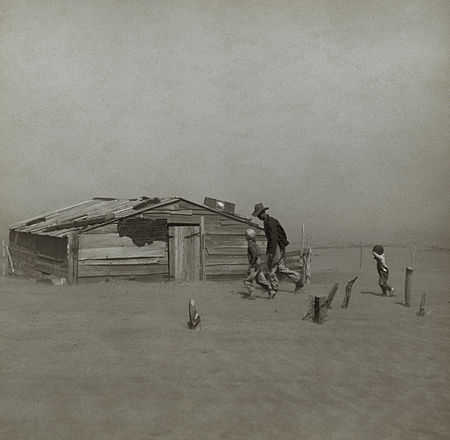
I read it for two main reasons. First, Timothy Egan, whose research is exemplary, makes history come alive. He puts you into the story. Second, I was hoping this true story about “a worst hard time” in American history could shed a light on the current “worst hard time” we are living through.
First, a few facts. The Dust Bowl affected 100,000,000 acres in primarily five states: Texas, Oklahoma, New Mexico, Colorado, and Kansas. It was caused by both natural and human-made factors. By nature, that area was subject to regular drought and constant high winds. For thousands of years, though, the prairie grass had evolved to anchor the topsoil in the vast expanse. The human factor that caused the Dust Bowl was this: farmers, at the urging of the government, began plowing under the prairie grass to grow mainly wheat. In the 1920’s, the so-called “wet years,” American farmers grew more wheat than the world had ever seen.
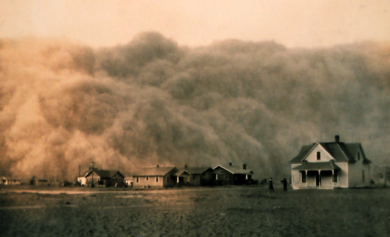
Then in 1929 the Great Depression hit. The world market for wheat dried up, and that record crop of wheat mostly rotted in storage bins. Next came the drought. From 1930-1941 hardly any rain fell in the area. Consequently, the naturally occurring winds began to peel off the topsoil and carry it away. Egan describes one of the worst “black blizzards” in May 1934: People looked northwest and saw a ragged-topped formation on the move, covering the horizon. The air crackled with electricity. Snap. Snap Snap. Birds screeched and dashed for cover. As the black wall approached, car radios clicked off, overwhelmed by the static. Ignitions shorted out. Waves of sand, like ocean water rising over a ship’s prow, swept over roads. Cars went into ditches. A train derailed.
Egan continues: The storm carried twice as much dirt as was dug out of the earth to create the panama canal. The canal took seven years to dig; the storm lasted a single afternoon. That storm was two miles high and traveled 2,000 miles. It carried dust to Chicago, Cleveland, Buffalo, and New York City. The prairie dirt enshrouded the State of Liberty and dusted ships that were 300 miles from shore. It covered the U.S. capitol, getting the attention of Congress and the American people to the catastrophe occurring on the plains.
Egan focuses on particular families, many who stayed and managed to survive. Some of the people he interviewed were teenagers at the time. Through countless interviews and even diaries, Egan humanizes the story. You admire the people’s strength, their hard work, their watching out for one another. The dust that surrounded them was deadly. Many suffered coughing spasms, asthma, shortness of breath, bronchitis, influenza. “Dust pneumonia” killed hundreds, especially infants, children, and the elderly.
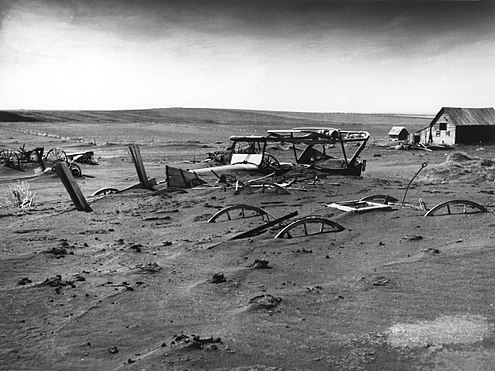
The dust was everywhere. It was impossible to keep it out of their homes. It covered floors, curtains, tables, dishes, bedding, cribs. At times the sand was so deep outside (ten feet or more), it buried fence posts, cars, and even houses. Farmers could grow nothing. Much of their livestock starved to death. When the people’s food ran out, some survived by eating canned tumbleweed.
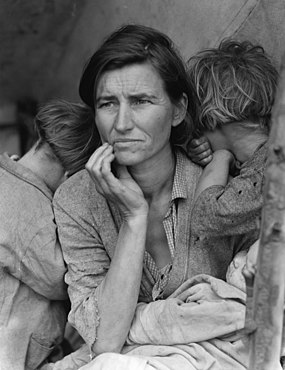
What light did the book shed for me on contemporary times? Three things. One critic wrote, “The Worst Hard Times is a powerful cautionary tale about the dangers of trifling with nature.” I wondered, have we learned that lesson or are we currently creating other environmental disasters? Who is making the decisions and laws to protect our environment? Second, the book describes the courageous journalists who went to the area and were totally horrified by what they saw–especially so many American families living in holes in the ground and on the verge of starvation. Their powerful writing and incredible photographs brought the disaster to the attention of the American people and the government. I found myself cheering for our free press.
And third, I marveled at the immediate and specific action the government took to try to bring relief. FDR’s New Deal addressed some of the key issues of the Depression and the Dust Bowl. Remember, in 1930 there were no unemployment benefits, no social security, no food stamps. The New Deal, though not perfect, immediately began to provide relief for the people and to explore ways to restore the land—following the latest scientific research. When FDR visited the area in July 1938, he was welcomed as a hero. Ironically, the day he arrived in his open car and stood on the outdoor stage to give his speech, it rained! But the rain didn’t seem to dampen his spirits nor anyone else’s.
USA Today called Egan’s book “a great read.” I couldn’t agree more. The book also made me wonder: In the future, who will write the definitive book about our current hard times? What will the book say about us, the people who lived during this age of the Covid-19 pandemic?
Did anything in this reflection strike you?
Do any of the photos give you pause?
Do you think we’ve learned lessons to prevent environmental disasters–or are we creating other environmental disasters right now?
Suggestion: Appreciate and give thanks for every drop of water you use today.
Water is a powerful symbol in our faith tradition. It recalls our Baptism and Jesus’ promise to give us Living Water. This song celebrates water. It’s called “Holy Water” and is sung by We the Kingdom.
Please feel free to respond below to this reflection, the photos, the video, or the responses of other readers.
This and That
Today I’m posting eight short pieces I call “this and that.”
1.“Ask Marilyn” is a weekly column by Marilyn vos Savant. Once she asked her readers to write a sensible, 100-word paragraph without repeating any words. More than 5,000 replied. Most relied on lists and really weird constructions. But here’s the winning paragraph by Jon Murie of Milford, MA:
Trying to type one hundred distinct words in a single paragraph is really tough. If I cannot repeat any of them, then probably those with many letters should be used. Maybe some readers will utilize dictionaries, thesauruses (thesauri?) or possibly encyclopedias, but my preference has always been that gray matter between your ears. Seriously, Marilyn, challenges such as this require skills beyond math, science and physics. So, what do you ask: reading comprehension, writing ability, good old-fashioned elbow grease? Scientists don’t care about structure; they want results. Hey, look! Only eleven more left! Five, four, three, two… done.
***********************************************************

2. From How Good Do We Have to Be by Harold Kushner: Boston Globe columnist Linda Weltner makes this point in a story she tells. She remembers sitting in a park watching children at play. Two children get into an argument, and one says to the other, “I hate you! I’m never going to play with you again!” For a few minutes, they play separately, and then they are back sharing their toys with each other. Ms. Weltner remarks to another mother, “How do children do that? How do they manage to be so angry with each other one minute, and best of friends the next?” The other mother answers, “It’s easy. They choose happiness over righteousness.”
************************************************************
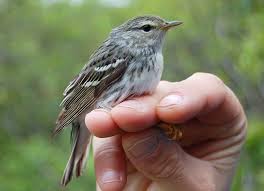
3. From “Earthweek: Diary of a Changing World”: The epic migration of a tiny bird was tracked as it traveled 12,400 miles back and forth between Alaska and the Amazon. The 0.4-ounce blackpoll warbler was observed taking 18 days to fly from Nome, Alaska, to the Atlantic coast of the Carolinas, where it rested and fattened up for almost a month. The bird then endured a non-stop 2.5-day flight across open water of the Atlantic toward its wintering grounds in South America.
*************************************************************
4. The longest word in the English language has 189,819 letters. It’s the technical name of a protein, which lists its entire amino acid sequence and would take about 3 1/2 hours to say aloud. (And you thought supercalifragilisticexpialidocious was long!)
*************************************************************
5. Will O’Brien’s 16-year-old daughter was talking about getting a tattoo. She already knew her father’s “law”: No tattoos before 18. When the family pressed her into telling what her tattoo would be and where on her body would it be, she said, “I want it on my wrist, and I want it to say ‘I will always love you’—in Dad’s handwriting.” She explained: she wanted to be able to glance at this reminder whenever she needed it.
***************************************************************
6. You can’t hum while holding your nose. You just tested it, didn’t you? You might be able to get a note or two out, but good luck with trying to hum a full song. Normally when you hum, the air is able to escape through your nose to create the sound and, of course, it can’t do that when you’re holding your nose.
**************************************************************
7. Short pieces of wisdom: Prayer: don’t give God instructions—just report for duty… God promises a safe landing, not a calm passage… Quit griping about the church; if it was perfect, you couldn’t belong… If God is your co-pilot, switch seats… When you get to your wit’s end, you’ll find God lives there.
**************************************************************
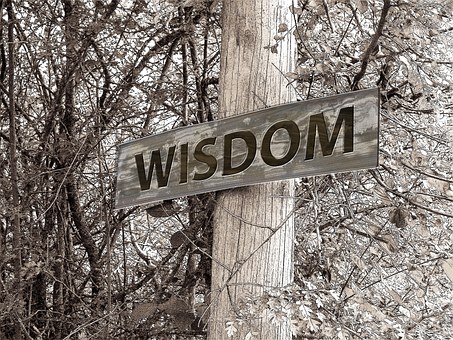
8. And finally, the humorist Erma Bombeck, wrote “If I Had Life to Live Over Again” shortly after she was diagnosed with cancer. Here are a few of her words:
If I had life to live over again, I would have talked less and listened more… I would have burned the pink candle sculpted like a rose before it melted in storage… I would have cried and laughed less while watching TV and more while watching life… I would have taken time to listen to my grandfather ramble on about his youth… There would have been more “I love you’s” and “I’m sorry’s”… But mostly I would seize every minute… look at it and really see it… live it… and never give it back.
Did any of these short paragraphs touch you today? If so, which one(s) and why?
If you decided to get a tattoo, where would it be and what would it be or say? (If you already have one, where is it and what is it or what does it say?)
If you had life to live over again, what are some of the things that would be on your list?
I chose one of my favorite songs by Mercyme: “Word of God Speak.” It gently reminds me that prayer is mostly being still… being with… and listening… May you find God today in your place—whatever that place is for you today…
As usual, I invite you to respond below to anything in today’s post. We love hearing from you!
We're Moving…
As many of you know, I live with two other sisters: Sisters Sandy and John Paul. The three of us are moving to our provincial center property in Munson Township in a few weeks. First, a little background.
The three of us have lived in this house together for about 15 years. This is the longest I have ever lived in one place since I entered the convent in 1962. Though the provincial center is only 7 miles away, it is a different world from this one. Here I live with only 2 sisters, in a house, in a neighborhood, in a parish. In my new home, I will return to “institutional style living” in sprawling buildings that house 171 sisters (now including me).
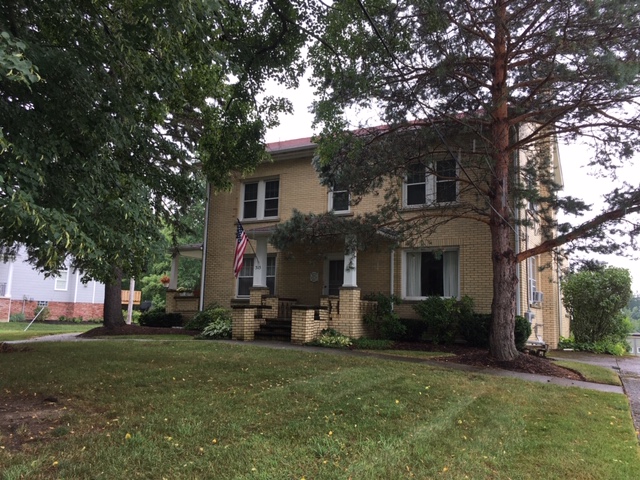
My head tells me it’s time to move–for several reasons including the condition of this house. But my heart has yet to fully embrace the idea. It says things like, “But you love this old house… and look at your beautiful neighborhood with all those huge maple trees and Victorian houses… And what about your wonderful neighbors: Matt and Drew, Kate, Karyn and Jeff, Dave, Bill and Louise?..
“And what about this parish where you’ve received so much spiritual nourishment over the years… and where you buried your parents and your brother? … And where you’ve come to know so many good, prayerful, and caring parishioners?… And won’t you miss the square in Chardon, with its stately old courthouse that can be seen miles away?… And won’t you miss all those trips to the grocery store, postoffice, library, and nearby parks? And the yard graced with lilacs, lilies-of-the-valley, and peonies?… And what about the Maple Festival–especially that parade that sometimes brought tears to your eyes—especially when the veterans led the way with their flags, and the first responders inched along in their bright red fire trucks?

This house has a long history. According to courthouse records, the original land was purchased in 1843 by Pardon Wilbur. (Don’t you just love his first name?) In 1848, he sold a 19 acre parcel to a woman named Prudence White. (Another quaint name!) It was she who built the original house. I wonder: how did a woman—in that era—manage to buy land and build a house? Though we could find nothing about her, we proudly display her name on the plaque on our front porch.
Over the years, the house was expanded and updated and was home to many families. But in 1952, the diocese of Cleveland (under Bishop Hoban) bought the house and the land for St. Mary’s Parish, established in Chardon in 1909. In 1961, the parish opened an elementary school, grades 1-4, with 171 students. The staff consisted of 3 Sisters of Notre Dame and 2 lay teachers. On August 14, 1962, four Sisters moved into this house that the parishioners had renovated for them.

Over the years, I have written a lot about letting go. But it’s one thing to write about it and another thing to live it. I find myself going through all kinds of emotions, from: “Moving is no big deal, Melannie. People move all the time. Get over it! Besides, consider yourself extremely lucky. You have another home to move into—with many wonderful people too! What about all those people today facing eviction or experiencing homelessness? And didn’t Jesus himself say, ‘Make your home in me’?”

But another part of me says, “This house is more than a house. It’s a holy place. It has housed not only physical bodies; it has housed hopes… dreams… prayers… fears… joys… sorrow… laughter… and love.” And so I take all my jumbled emotions to prayer and say something like this:
My Sweet Beloved God, thank you for this house I have called home for 15 years. Thank you for the shelter it has provided for me. Thank you for its beauty, its homeyness, its history, its quirks, its mystery. I thank you too for Sandy and JP who have shared so much life with me in this holy place: good times, hard times, sad times, fun times… and all those blessed ordinary times that comprised so much of our time together. Give me the strength to let go of what was, so I may reach for what is yet to be. May I move into my new home with trust, hope, and gratitude. For I firmly believe, wherever I will go, you are already there with arms open wide to welcome me. Amen.
Reflection questions:
Did any words in this reflection touch your heart today? If so, which? Do you know why?
What has been your experience of moving? Hard or easy? Rare or frequent?
What helps you to let go of places, situations, loved ones, and even your own will?
PS: I will be giving a Zoom retreat “Hanging onto Hope” Oct. 2 and 3 sponsored by Mount St. Joseph Retreat Center in Maple Mount, KY. The retreat begins Friday evening and ends Saturday afternoon. It includes conferences, sharing sessions, prayer, handouts, music, videos. The cost is $60. See Mount St. Joseph’s website for further details. It would be fun meeting some of you via zoom!
Lea Salonga is a Filipina singer/actress best known for her Tony Award winning role in Miss Saigon. She was also the singing voices for two Disney princesses, Jasmine and Mulan. May this song, “The Journey,” remind us that our journey of life begins and ends in God’s love.
Would you like to respond to anything in this reflection or video? If so, please do so below. We would love to hear from you!
Why Is There So Much Good in the World?
Does the title of this blog surprise you? Did you think the word good was a mistake? Did you think, “Surely, she meant evil“?
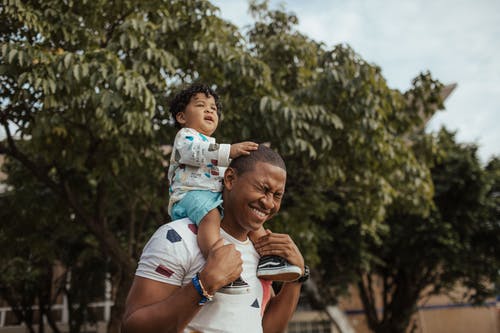
No, the title is not a mistake. It refers to something I read years ago by M. Scott Peck, well-known writer and psychologist, author of that wonderful book, The Road Less Travelled. He said that throughout his life-long career as a practicing psychologist, many of his clients asked him, “Why is there so much evil in the world?” But NOT ONE PERSON ever asked him, “Why is there so much GOOD in the world?”
His experience raises the question: Why are we more apt to dwell on what’s wrong in the world and in our personal life, rather than on what’s right in the world and in our personal life? Why do the news media focus on vice rather than virtue, on corruption rather than honesty, on crime rather than good works? One reason they do, of course, is to call our attention to what needs “fixing” in our society. In addition: we tend to find evil intriguing. For example, in John Milton’s epic, Paradise Lost, many critics and readers find Satan a more fascinating character than the angels and even God! Evil seems to attract and captivate.

But shouldn’t goodness do the same thing? Instead of wondering why so many people are crabby, shouldn’t we be amazed that so many people are pleasant day after day? Instead of noticing how rude some individuals can be, shouldn’t we be in awe of the kindness we encounter everyday—people speaking respectfully to others, opening doors for one another, helping children or the elderly, giving generously of their time and money, or simply smiling? (One negative consequence of wearing masks: not seeing smiles!)
We must not deny or ignore what’s wrong in the world. At the same time, we cannot afford to allow what’s wrong to overwhelm us. So we must, on a regular basis, notice and appreciate the goodness and beauty we encounter every day. Perhaps at prayer we can start a list: “What’s right with my life right now” or “What’s good in our world” or “Things I am grateful for today.” Then maybe we can share with others the goodness we experience in our families, workplaces, neighborhoods, parishes, and larger communities.

As you know, I love history. Why? Because history gives us a perspective on the present. Here are a few pieces of good news based on a historic perspective:
In 1970, barely half the people in the world were literate. Today 86% of the world’s population is literate (males 90%, females 82.7%)… For centuries slavery was a common global practice. Even in the first decades of the United States, slavery was supported and protected by law. Today, slavery is outlawed in most of the countries in the world… Today in many countries, children are more protected by laws than ever before in history… From 1980 to today, global access to water increased from 58% to 91%… In 1962 there were 9,214 protected nature reserves in the world. Today there are over 200,000.
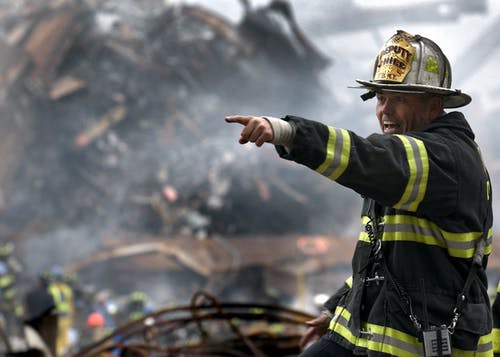
Citing examples of good news must not lead to complacency. Though slavery was outlawed in 1863 in the U.S., some states enacted laws to discriminate against “former slaves.” The recent global demonstrations against racism attest to the fact that we are still dealing with residual injustices of slavery and its aftermath. Similarly, though we’ve increased the number of protected nature reserves worldwide, we need to improve their quality and biodiversity.
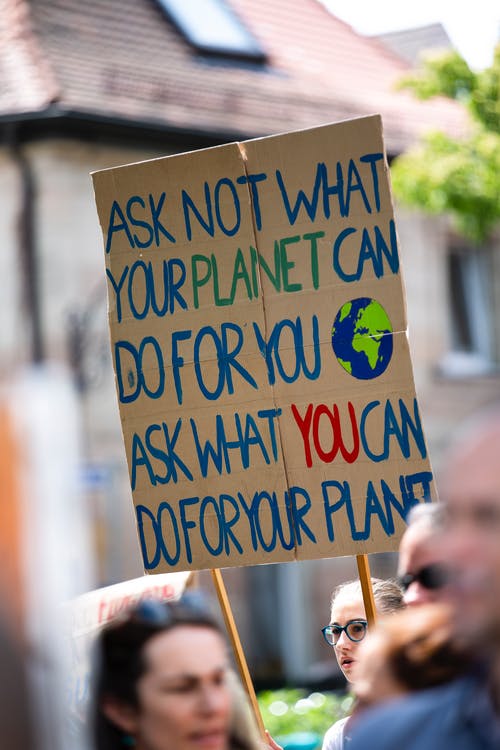
As Christians, our faith is based on the everlasting Good News of God’s unfailing love for us. During this time of so much bad news, we must not forget in whom our faith resides. So, this week take time to notice, pray over, contribute to, and talk about some of the good things in your life and our world.
For reflection:
What are some of the things that are good and right in your personal life and in the larger world?
Do you ever feel the need to take a break from the bad news you see and hear everyday? If so, how do you take your break?
Jesus encountered a lot of bad news during his life. What things did he do to not let bad news overwhelm him?
Our song today is an old hymn (written in 1864) called “For the Beauty of the Earth” sung here by the Mike Curb Congregation. Enjoy the words, the voices, and the pictures!
I welcome you to share some of your thoughts with us today!
A Meditation on a Barn
A while ago, one of our readers, Joe Masterleo, sent me one of his poems entitled “A Barn.” I really liked it and thought you might enjoy it too–especially those of you who, like me, actually had or currently have a barn in your life. Joe lives with his wife Ruth in Jamesville, NY. He is a clinical social worker specializing in faith-based counseling. Here’s Joe’s poem that captures “the spirit of every barn.” I found some beautiful pictures (on pexels) that also capture that same spirit.
“A Barn” by Joe Masterleo
A barn is a cathedral, long and wide; a monument to the countryside;
made of stone, steel, and wood; plain and steady, and misunderstood.
Peppering hillsides high and low, with weathervane and silo;
a structure that is seasoned or old, giving shelter from rain and cold.
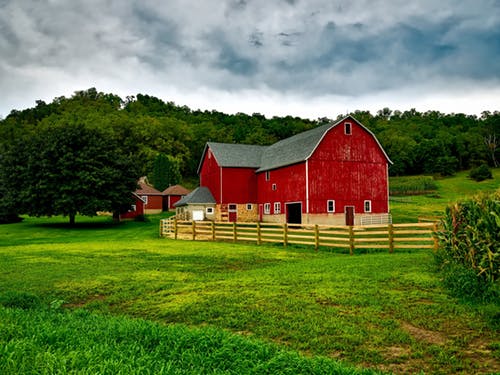
A place of lofts, beams, and stalls, few windows and overalls;
where life is teeming, born and bred, with much to do and little said.
Rugged dwellings and simple decors, strange odors and dirty floors;
a home for cats, birds, and owls, dirty hands and no towels.
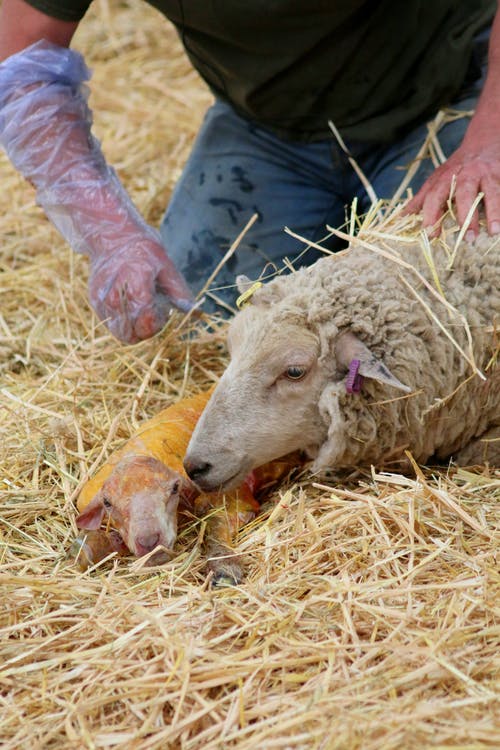
A garage for tractors, wagons, hay, and little time to get away.
A storehouse for a season’s crop; a place to chat when neighbors stop.
A workshop open at all times; a source of grunts, snorts, and whines.
Where hens gather and roosters crow, and livestock huddle at ten below.
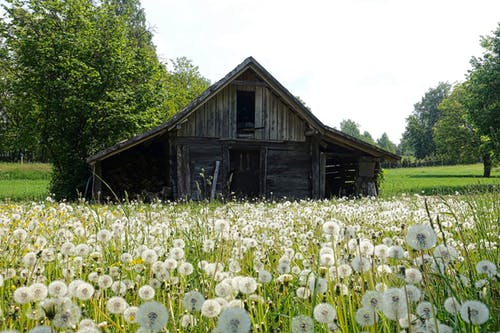
A place for forks, shovels, and wrenches, or odds and ends on tool benches;
oil cans, saws, rusty nails, milking stools and water pails.
a symbol for all work and toil; a place to change the tractor oil.
Where moms and dads and kids pitch in, with neighbors, friends, and next of kin.
Where boys become men, forge and hammered, disciplined and mild-mannered.
A place to labor night and day, to keep the creditors away.
Where workers are steadfast and able, making provision for their table.
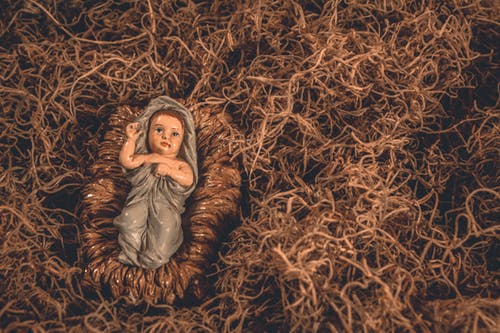
A common shed much overlooked, where God was born when rooms were booked.
The sacred temple of every farm, a nation’s mainstay, and right arm.
For reflection:
Did any of the words, images, pictures speak to you today?
Here are some facts: In 1850, 64% of the U.S. population lived on farms; in 1920 it was 30.2; in 2008, it was less than 2%. Have we “lost” anything as a people with this decline?
Have you had any experiences with barns that you would like to share? Do you have an experience with farming or farmers that you would like to share with us?
PS: I will be giving a Zoom weekend retreat, Oct. 2-4 sponsored by Mount St. Joseph Conference and Retreat Center in Maple Mount, KY. The weekend is entitled “Holding onto Hope” and runs from Friday evening to Sunday lunch. You can attend in person (single occupancy $190, commuters $90) or online ($60). Check out their website for more details: ursulinesmsj.org.
I’m giving you a choice of three videos that celebrate farmers and farming. The first is a country song by Luke Bryan, “Here’s to the Farmer.” Next is a short piece by Paul Harvey (remember him?) called “So God Made a Farmer.” And finally, there’s “God Made a Farmer’s Wife,” in honor of a real farmer’s wife’s 90th birthday.
Here’s to the farmer:
Paul Harvey’s “So God Made a Farmer”:
“God Made a Farmer’s Wife,” a tribute to a real farmer’s wife:
I invite you to respond below to anything in today’s blog.