“My Hummers Are Back!”
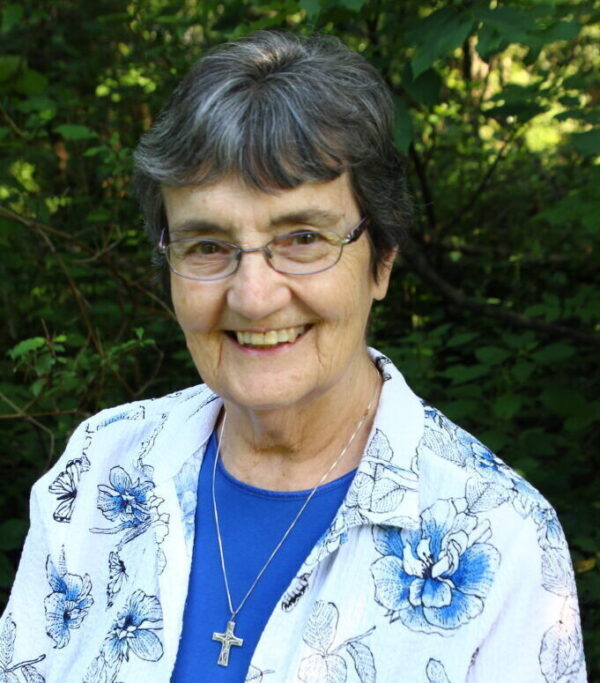
Years ago, my mother would often call me in early May and announce, “My hummers are back!” Notice Mom didn’t say, “The hummingbirds are back.” She said, “My hummers are back.” Mom loved her hummers and always hung her hummingbird feeder in her back yard at the end of April. Then she waited in joyful anticipation to spot the first returnee—usually around Mother’s Day.
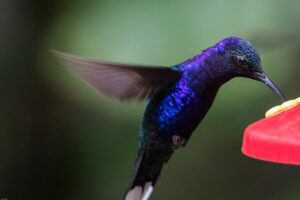 This past week, the June/July issue of Birds & Blooms arrived. It features hummingbirds. So I took that as a sign to devote today’s blog to hummingbirds. Let’s begin with a few facts. There are over 300 species of hummingbirds. Some are teeny: .08 of an ounce. Others are “big”: .7 of an ounce. Hummingbirds beat their wings 80 times per second. Amazingly, they can fly left, right, up, down, forward, backward, and even upside down! This maneuverability requires a strong heart. A hummingbird’s heart is 20% of its weight and it beats 1,260 times per minute. Compare that to our human heart. A person weighing 175 pounds has a heart that is 0.3% of their body mass and it beats 72 times per minute.
Hummingbirds need a lot of nourishment to stay active and alive. They typically eat nectar, tree sap, insects, and pollen. Even their long tongues are fast. They can lick 13 times per second. Hummers need to eat eight to ten times their weight each day! If you required that much food, how many pounds of food would you have to eat in a day?!
Hummingbirds are found only in the Western hemisphere, from southeastern Alaska to the tropics. Interestingly, they cannot walk or hop. Their feet are used only for perching. If they are perched on a twig and want to move over a bit, they can’t scoot over. They have to fly to move over.
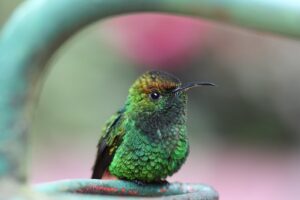 The gestation period for hummingbirds is 13-22 days, depending on the species. The female lays 1-3 eggs in a nest the size of a thimble or shot glass. The nest is usually made from saliva and spider webs. The female is totally responsible for raising the young. I don’t know what the males do with all their free time! The young birds fly in 18-30 days. Hummingbirds are very territorial and have been seen chasing even large hawks from their territory.
Decades ago, the major threat to hummingbirds was the human species who killed them for their incredibly beautiful feathers. Today the greatest threat is still humans who are destroying their habitat at an alarming rate. But there is hope. So many people love hummingbirds, that many of them hang feeders and plant flowers in their yard to attract and support this amazing little bird.
I have two videos for you today. This first one (a little over 2 minutes in length) is called “The Hummingbird Whisperer” and it tells of a researcher and photographer’s love for hummingbirds. I chose this one because I feel to appreciate hummingbirds, we must see them in motion. I also appreciate the young woman’s enthusiasm for hummers!
The second video is Peter Mayer’s beautiful “Everything Is Holy Now.” I have used it before, I know, but it seems so appropriate for this topic. At the end, he compares a little chirping bird to a scripture verse!
Did anything touch you or surprise you in this reflection?
Have you had any experiences with hummingbirds that you would like to share with us?
Is there anything else in creation that you think of as one of Mother Nature’s jewels? We’d love to hear from you!
Mary's Annunciation
Since the month of May is traditionally dedicated to Mary, I thought I would say a few words about from the story of the Annunication: Luke 1:26-38. I will focus on three aspects of this story that have implications for our own lives.
First, the story take places in a real time and in a real place. It takes place during the reign of Caesar Augustus in a town in Galilee called Nazareth. Our own story today takes place in a real time and a real place. Mary’s world, though far back in time and far away in place, was not altogether different from our own. It was a world of uncertainty, hard times, divisions, political corruption, unequal distribution of wealth, militarism, violence, and gross injustices of all 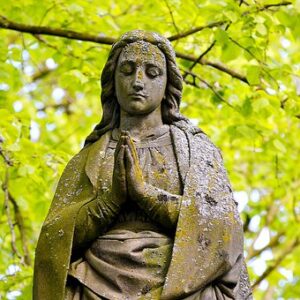 kinds. It was also a world of joy, supportive families, good friendships, charity, and strong faith. Mary, like us, was limited by time and space. She could do only so much with her one precious gift of life. She didn’t know the future either, but she trusted “the unknown future to a known God.”
Secondly, the Annunication tells us that, when the angel appeared to Mary, Mary was much perplexed by the angel’s words. Other translations say she was puzzled or even greatly disturbed. Why? Mary didn’t know what was happening. She wasn’t given a script for her life. There was no heavenly director tell her: “Now, Mary, you kneel over there, and when Gabe comes in, look surprised.” No, Mary had to “ad lib” the role she was playing in God’s plan—just as we “ad lib” our role in God’s plan too! Furthermore, like Mary, we have times in our lives when we’re greatly disturbed, when life doesn’t make sense. Can we, like Mary, trust that even the apparent absurdities in life are somehow being held in the hands of a loving God?
And thirdly, the story of the Annunciation tells us: Mary pondered. She reflected on the words the angel spoke to her. The etymology of the word “ponder” is interesting. It is related to the word “pendulum.” A pendulum is something that swings back and forth. The word ponder means, then, to go back and forth and back and forth before choosing or deciding. The word implies that Mary carefully weighed things. She didn’t jump to conclusions. She thought about things and could patiently live with a certain amount of uncertainty in her life. What about us? Do we take time to reflect on the choices life sets before us?
Over 60 years ago, the British writer Caryll Houselander, said this of Mary: “We shall not be asked to do more than the Mother of God… What we shall be asked to give is our flesh and blood, our daily life… To surrender all that we are, as we are, to the Spirit of Love in order that our lives may bear Christ into the world.”
Let us pray to Mary:
Mary, keep me rooted in the real world,
for it is in the real world that God is bringing about the work of Salvation.
When I am experiencing disturbances and perplexity,
give me patience and strength.
Help me, like you, to ponder the choices life sets before me…
Help me, like you, to entrust the unknown future to a known God…
And may I surrender all that I am to the Spirit of Love
that my life may bear Christ into my time, my place, and our world. Amen.
Are there any words or phrases that stand out for you in today’s reflection?
Today’s video is “Hail Mary, Gentle Woman” sung by the Daughters of St. Paul.
Do you have any thoughts on Mary or today’s reflection? If so, please share some of your ideas below.
Mary’s Annunciation
Since the month of May is traditionally dedicated to Mary, I thought I would say a few words about from the story of the Annunication: Luke 1:26-38. I will focus on three aspects of this story that have implications for our own lives.
First, the story take places in a real time and in a real place. It takes place during the reign of Caesar Augustus in a town in Galilee called Nazareth. Our own story today takes place in a real time and a real place. Mary’s world, though far back in time and far away in place, was not altogether different from our own. It was a world of uncertainty, hard times, divisions, political corruption, unequal distribution of wealth, militarism, violence, and gross injustices of all kinds. It was also a world of joy, supportive families, good friendships, charity, and strong faith. Mary, like us, was limited by time and space. She could do only so much with her one precious gift of life. She didn’t know the future either, but she trusted “the unknown future to a known God.”
Secondly, the Annunication tells us that, when the angel appeared to Mary, Mary was much perplexed by the angel’s words. Other translations say she was puzzled or even greatly disturbed. Why? Mary didn’t know what was happening. She wasn’t given a script for her life. There was no heavenly director tell her: “Now, Mary, you kneel over there, and when Gabe comes in, look surprised.” No, Mary had to “ad lib” the role she was playing in God’s plan—just as we “ad lib” our role in God’s plan too! Furthermore, like Mary, we have times in our lives when we’re greatly disturbed, when life doesn’t make sense. Can we, like Mary, trust that even the apparent absurdities in life are somehow being held in the hands of a loving God?
And thirdly, the story of the Annunciation tells us: Mary pondered. She reflected on the words the angel spoke to her. The etymology of the word “ponder” is interesting. It is related to the word “pendulum.” A pendulum is something that swings back and forth. The word ponder means, then, to go back and forth and back and forth before choosing or deciding. The word implies that Mary carefully weighed things. She didn’t jump to conclusions. She thought about things and could patiently live with a certain amount of uncertainty in her life. What about us? Do we take time to reflect on the choices life sets before us?
Over 60 years ago, the British writer Caryll Houselander, said this of Mary: “We shall not be asked to do more than the Mother of God… What we shall be asked to give is our flesh and blood, our daily life… To surrender all that we are, as we are, to the Spirit of Love in order that our lives may bear Christ into the world.”
Let us pray to Mary:
Mary, keep me rooted in the real world,
for it is in the real world that God is bringing about the work of Salvation.
When I am experiencing disturbances and perplexity,
give me patience and strength.
Help me, like you, to ponder the choices life sets before me…
Help me, like you, to entrust the unknown future to a known God…
And may I surrender all that I am to the Spirit of Love
that my life may bear Christ into my time, my place, and our world. Amen.
Are there any words or phrases that stand out for you in today’s reflection?
Today’s video is “Hail Mary, Gentle Woman” sung by the Daughters of St. Paul.
Do you have any thoughts on Mary or today’s reflection? If so, please share some of your ideas below.
Barry Lopez: Nature Writer–and Much More
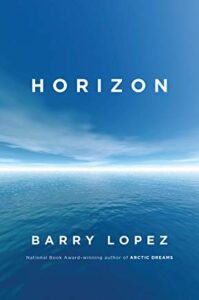
It is hard to categorize the writer Barry Lopez. He has been labeled an essayist, novelist, humanitarian, environmentalist, ethicist, and “the nation’s premiere nature writer.” In his award-winning books, Arctic Dreams and Of Wolves and Men, he synthesizes personal observation, science, and indigenous ways of knowing. This reflection is largely based on an article on Lopez in America Magazine (Spring 2019) entitled “Ethical Landscapes: The Literary Terrain of Barry Lopez” by Vincent Miller.
Lopez, born in 1945, lived his early life in California and New York. He
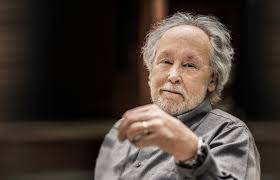
received a Jesuit education at Loyola School in Manhattan and then attended the University of Notre Dame. He considered entering the Jesuits and, later, the Trappists, but he sensed this was not his calling. Although Lopez values the education he received, he also sees its limitations: it was almost exclusively based on the Western tradition. When he later lived in the Nanamuit Eskimo village, he wondered why these people’s notions of justice and their insights into the natural world “were never mentioned in the good schools I attended?”
For the past 50 years Lopez has lived in a remote area in Oregon where elk freely roam and where the dense Douglas fir rain-forest forms part of his backyard. He has also traveled extensively, having visited over 80 different countries. Here are a few of his key ideas:
* Americans have traditionally glorified the individual hero. He suggests it is “now the time for communities to become heroic.”
* The Calvinist tradition sees the natural world in opposition to sinful humanity. Lopez has tried to unite nature, community, and justice—in the tradition of Catholic individuals such as Peter Maurin, Cesar Chavez, and Dolores Huerto. He writes, that “the exclusion of landscape from the moral universe” constitutes a sin.
* He raises the question: why a “narrow group of people” with their limited way of knowing are “sitting at the tables of decision-making” that effect all of us? How can we include individuals (like indigenous peoples) in the decision-making process?
* Lopez says we need true “elders” as opposed to the traditional single charismatic leader. The leader’s motto is “follow me” whereas the elder’s is “no one left behind.” Elders are characterized by their inclination to listen more than speak, their capacity for empathy to understand what others are thinking, and their concern for the common good. (I thought: are these the qualities we look for when choosing our leaders?)
* As we head toward an ecological disaster, Lopez wonders “whether an 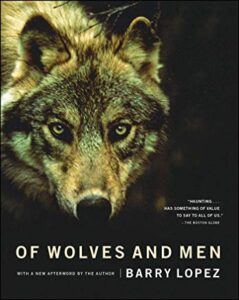 unprecedented openness to other ways of understanding this disaster is not, today, humanity’s only life raft. Whether cooperation with strangers is not now our Grail.”
Let me conclude this reflection with a few more quotes from Barry Lopez:
+ “We cannot, of course, save the World because we do not have authority over its parts. We can serve the World though. That is everyone’s calling, to lead a life that helps.”
+ “Everything is held together with stories. That is all that is holding us together, stories and compassion.”
+ “Have we come all this way, I wondered, only to be dismantled by our own technologies, to be betrayed by political connivance or the impersonal avarice of a corporation?”
+ “The most intelligent thing we can do is love, not reason.”
For reflection and sharing:
Is there anything that stands out for you in this reflection? If so, what? Do you know why?
Have you read any of Lopez’s writings? If so, what have you read and what is your reaction to his writing?
What role does “landscape” play in your moral living?
How might you become more open to “other ways of knowing”?
PS: Thank you for your prayers for last week’s retreat at St. Mary-of-the-Woods. Over 100 Sisters of Providence made the retreat. They were beautiful women in every way! Special thanks to Sister Judy for inviting me to come and for taking care of so many of the details.
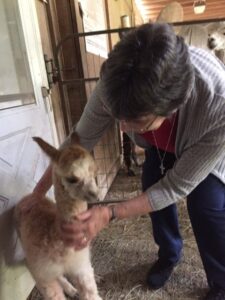
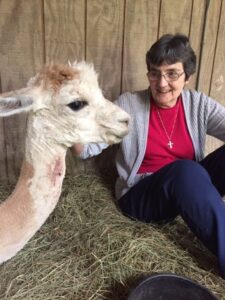
A Treat: The Sisters have about 40 alpacas. While I was there one of them, Cecilia, gave birth (via Caesarean) to a little girl. I saw the cria (baby alpaca) when she was only 8 hours old. Here are two pictures of me with baby… and with mamma… Thank you, Sister Mary, for taking me to see these two precious alpacas–and for taking these pictures!
Here’s a beautiful piece of music by Kevin Kern entitled “Remembering the Light.” With lovely pictures, this video (at least for me) exudes peace and elicits my wonder and gratitude for our earthly home.
I would love to hear from you. Please share some of your thoughts with us below. Thank you!
Sacred Ambiguity
In my book, Traits of a Healthy Spirituality, I said that one of the signs of a healthy spirituality is the ability to live graciously with a certain amount of ambiguity in our lives. By ambiguity I mean uncertainty, lack of clarity, indefiniteness, doubt. At times we may even experience ambiguity with regard to our faith.
Poet and author, Kathleen Norris, is the author of several wonderful books, including Dakota and The Cloister Walk. She writes of her own conversion to the faith. One day she visited a Benedictine Abbey and was drawn to the prayerful services there. Eventually she began attending the liturgy of the hours. But she assumed that her personal 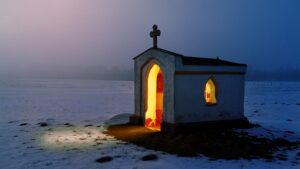 doubts “were spectacular obstacles to faith.” She confided in an elderly monk who told her that her doubts were “merely the seed of faith, a sign that faith is alive and ready to grow.” Our doubts and uncertainties with regard to our faith, then, are often calls to live our faith on a deeper and more authentic level.
In the gospel, the people who had no doubts were the Pharisees who had run-ins with Jesus. They were absolutely certain about their faith. They had all the answers. For them, everything was black and white, good or evil, right or wrong. There were no “gray areas,” no “in betweeness.” Consequently these Pharisees could tolerate no ambiguity. No wonder Jesus drove them crazy with his interpretation of the Sabbath, for example, with his socializing with sinners and women, and with some of his attitudes toward prayer and fasting.
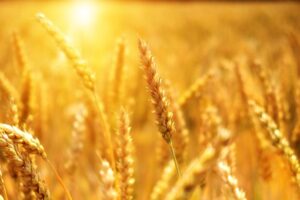
Jesus even told a parable about being comfortable with ambiguity: the parable of the wheat and the weeds (Mt. 13:24-30). The workers on a farm inform the landowner that weeds are growing among the young stalks of wheat. The workers suggest they immediately stomp into the field and pull up all the weeds. But the owner says, “Hold your horses!” (That’s a free translation.) “In your eagerness to get rid of the weeds, you might pull up some of the precious stalks of wheat!” He urges patience. “Let them grow side by side a little longer,” he says. “Then when we can clearly differentiate between the weeds and the wheat, you can go into the field and pull out the weeds.”
Jesus not only told a parable about living with ambiguity, he himself lived with considerable ambiguity throughout his life. As a twelve-year-old boy he was certain it was all right for him to stay behind in Jerusalem for a few days. After all, he was spending that time in the Temple. Only when he was discovered by his anguished parents and scolded by them, did he realize how insensitive and “lacking in wisdom” he had been. Early in his public ministry he endured the uncertainty of his mission. Was he to go around curing people of their illnesses? Was he sent only to the Jews? Was he supposed to lead the people against the Romans as so many were assuming he would do? As he saw his enemies growing in their hostility towards him, was he supposed to back down, flee, fight, or surrender?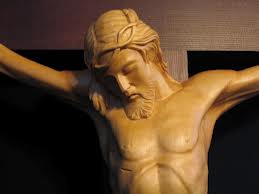
In my retreat work, I talk with a lot of individuals who struggle with doubts and uncertainty. I usually suggest that this is a good sign. Their faith is alive–and it is ready to grow. The faith that sustained them in the past needs to develop more to sustain them in the present… Faith is a living relationship, ever changing, ever growing… Their understanding of who God is is constantly evolving. It is never “finished” or “final.”.
May our prayer today be something as simple as this: Loving Jesus, help me to live more graciously with ambiguity, uncertainty, and doubt. May they lead me to ever greater trust in you. Amen.
*******************************************************************
With regard to your faith, what are you certain of? What are some of the ambiguities of your faith?
How has your image of God evolved over the years? In other words, who was God to you when you were a child? a teenager? a young adult? middle aged? today?
PS: I ask your prayers for a retreat I’m giving for the Sisters of Providence at St. Mary-of-the-Woods in Indiana from May 5-10. They tell me over 100 women will be on this retreat entitled, “How Can I Keep from Singing?” I appreciate your prayers!
Our song today is “The Point of Arrival” by Carrie Newcomer. The song sings of doubt… endings… letting go… and arrivals. One of my favorite lines is, “There’s a faith that’s only found in doubt.” Let me know what you think of it…
Do you have anything you’d like to add to today’s blog? If so, please response below.