Celebrating Books
I just read The Yellow-Lighted Bookshop by Lewis Buzbee. The book, subtitled a memoir and a history, is a celebration of bookstores—from ancient times to the present. Today’s reflection is a mini-celebration of books, inspired by Buzbee’s book.
What makes books so wonderful? First, they are durable. When you borrow a book from the library, imagine how many other people have read 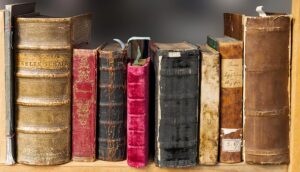 it before you, and how many will read it after you. That means dozens, hundreds, or even more people will be reading this particular book you have in your hands! Or you yourself can read the same book again and again, and the book is not depleted. Books are flexible. You can take them anywhere. They require no electricity. They won’t crash or freeze. If the spine breaks and the pages begin to fall out, just grab a rubber band to hold them together. Unlike shoes and clothing, books never go out of style either.
Books are democratic. As long as you can read, you can enjoy books—no matter your age, gender, occupation, social status, religion, political leanings, or language. Reading a book is ordinarily done alone. But if the same book is read by others, it can stimulate lively discussion among its readers. Books are different from movies. Movies present images on a screen. Books create images inside your head. To me, this phenomenon is the real magic of reading.
Neurologists tell us books are good for the brain. When we watch a movie or TV, our eyes remain idle, focused straight ahead. But when we read, our eyes move back and forth across the page. This physical movement supposedly stimulates our brain. Buzbee says a book is a “Stairmaster of the mind.”
Books are powerful. Harriet Beecher Stowe’s Uncle Tom’s Cabin is sometimes credited with laying the groundwork for the Civil War. The book was not a treatise against slavery. It was a story of a particular slave, a story that showed the cruelty and inhumanity of slavery.
Books can be so powerful that, throughout human history, government

leaders have often banned or burned certain books. One of the most famous book burnings was carried out in Germany and Austria by the Nazis in the 1930’s. Other famous book burnings occurred in China, the Mayan civilization, and ancient Alexandria. (See Ray Bradbury’s novel Fahrenheit 451 to learn more about book burnings. The title is the temperature needed to burn a book!) Even our Catholic Church had the Index, a list of forbidden books. It ceased in 1966.
A current confirmation of the power of the written word was Time magazine’s decision to choose journalists as their Person of the Year. All the journalists on the four different covers were either killed or are in prison for what they wrote. Every despot knows, control books and the news, and you control the minds of your citizenry.
A few more facts about books:
+ There are 2.2 million books published annually in the world. In the U.S. between 600,000 and 1 million books are published each year. Most of those books will sell less than 250 copies. Half the books published in the U.S. are self-published.

+ Research shows that Americans read a mean average of 12 books a year. But that number is inflated by avid readers. Americans read a median average of four books a year.
+ Let’s say you buy a book for $25. Where does that money go? On average, the author makes $1.88; the printer $3.00; the publisher $8.87; and the bookseller $11.25. If an author has an agent, the agent earns 10% to 15% of the author’s share. The publisher and bookseller earn a larger share of the money because of all their costs: payroll, rent, supplies, etc.
+ Unless you write a best seller (like Michelle Obama recently did!), you will not get rich writing a book. Most successful writers have other jobs to supplement their writing income. Many teach. A writer friend of mine wrote car manuals for General Motors on the side.
+ Used book stores are examples of recycling at its finest.
+ I love books so much, I find it almost impossible to throw one away.
So, what about you?
Do you love books?… What books do you own?… How many books do you read a year? … Do you belong to a book club?… What books have made a deep impact on your life? What books have you read more than once?… Is there anything in this reflection on books that struck you or surprised you?
PS: I ask for your prayers for the retreat I’ll be leading aboard the Royal Caribbean cruise ship from Feb. 7-12. We have over 65 people making the retreat. I know some of you are on the retreat! We sail from Fort Lauderdale and make two stops: Havana, Cuba and Puerto Costa Maya, Mexico. My retreat theme is “Finding God in the Ordinary and the Amazing.” I’ll give four conferences on finding God In Nature, in People, in Pain and Sorrow, and in Hope. I’m looking forward to this unique experience. Thank you for your prayers!
Today’s song is an old favorite of mine, a song I first heard when it was recorded 40 years ago by B.J. Thomas: “I Need to Be Still (And Let God Love Me.)” For decades I used it for talks and retreats. And I keep going back to its beautiful message: We must make time in our busy lives for God to love us!
I invite you to respond below to this reflection and/or song. I’d love to hear your thoughts about books!
Mustard Seeds, Baking Yeast, Ravens and Lilies
One of Jesus’ main methods of teaching was the use of parables. In his parables, Jesus uses the common elements of creation—seeds, birds, trees, flowers, water, soil. He also uses the ordinary activities of everyday life that his listeners would be familiar with: planting, making wine, baking bread, cleaning house, caring for animals, celebrating weddings.
In doing this, Jesus imparted three other major lessons for us. First, creation is holy. As such, it is filled with wisdom for us if only we would take the time to be attentive to its inner workings. Secondly, we are not separate from nature. The laws that govern the natural world, govern us. As the theologian, Dianne Bergant says, “Earth does not belong to us. We belong to Earth.” Such a statement lies at the heart of our current ecological movement. And the third lesson, is this: everyday life is sacred. The humble tasks that occupy so much of our time and which we perform over and over again can be conduits of God’s grace for us.
Jesus’ teaching centered on the Kingdom of God or the Reign of God. He compared the Reign of God 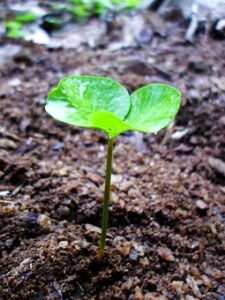 to things like mustard seeds and baking yeast. Both of these entities seem lowly at first. But both are filled with potential. Simple acts such as planting or kneading have the power to release their potential. But both seeds and yeast must be transformed to release their new life. And that transformation entails a dying.
The implication for us is simple: We too must be transformed so that new life may burst forth in us. But personal transformation always involves a form of dying—whether that means giving up bad habits, letting go of a prejudicial belief, growing in self-discipline, learning to share with others, or inconveniencing ourselves for the sake of someone else.
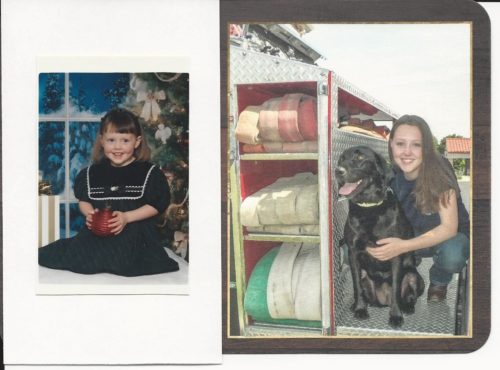
Sometimes our external transformation is obvious. Here’s an example. Below are two pictures of my grandniece, Rebecca. The one on the left was taken when she was 3. The one on the right is a current photo of her at 19. At age 3, her life consisted mostly of play and simple learning. At age 19, she is a college freshman studying nursing. She is also a certified EMT for the local fire department and she has soloed as a glider pilot. Imagine all the little “deaths” that went into making her the young woman she is today—the little deaths she herself embraced along the way as well as the countless little deaths her parents embraced in raising her.
God’s Reign comes, then, not through showy and extraordinary deeds, but through humble, everyday actions: preparing a meal, helping a child with her homework, going to Church, taking a course, making time to pray, giving another driver a break in traffic, shopping for groceries, recycling, paying attention to the news, voting, reading a book, feeding the birds, cleaning a bathroom.
 In addition to mustard seeds and baking yeast, the ravens and lilies have something to teach us too, Jesus says. Ravens do not plan for their survival nor do lilies design their own beauty. Rather, says Bergant, they both simply “live faithful to their natures, and God provides.” Though planning and designing may be natural to humans, anxiety should not be, says Jesus. The parable also raises the question of what we consider important. Ravens might seem unimportant in the grand scheme of things. After all, they are scavengers. Lilies too may seem insignificant, for their beauty is so short lived.
Yet, in God’s Great Design, ravens rid their locale of carrion that could spread disease. And lilies add beauty and fragrance wherever they may be. What’s more, ravens and lilies “contribute to their respective ecosystems” whether human beings are present or not. We humans need to remember that all of earth’s components (including ourselves) are part of a dynamic cosmic design, each component contributing to that overall design.
When have you experienced your oneness with all of creation? In other words, where were you and what were you doing when you had such an experience?
What ordinary, everyday activities seem “holy” to you? Why do you think this is so?
Which of Jesus’ parables is your favorite—and why?
This lovely song, “Sanctuary” by Carrie Newcomer, is something of a parable in music and visuals. It reminds us that, when life becomes cold and dark, we need individuals in our lives who are a refuge and a sanctuary for us. And we need to provide sanctuary for others too. Who is your sanctuary?… Always remember, our greatest sanctuary is God, is Jesus.
I invite you to respond to this reflection and/or song. My other readers and I would love to hear your thoughts!
"The Place Where Lost Things Go"
Last week I saw the new movie, Mary Poppins Returns. I loved it! Although nothing can replace the original Mary Poppins, I still loved this sequel with its beautiful music, lively dancing, and its array of memorable characters. I loved the creative scenes—swimming underwater, flying in the sky with a balloon, dancing in a topsy-turvy world with Meryl Streep, and watching the lamplighters dancing wildly with their lamps and doing acrobatics on their bikes.
 The new songs were wonderful too. But my favorite one was “The Place Where Lost Things Go.” It is a lullaby that Mary Poppins (Emily Blunt) sings as she is tucking the three Banks children into their beds. The children, John, Anabel, and Georgie, are missing their mother who died within the past year. Mary understands the pain of their loss, and sings the tender song to them.
This time of the year, we may be missing “lost things.” Perhaps at our holiday gatherings, we were missing a loved one who was no longer there. I know I was….Mary Poppins begins the song with these words: Do you ever lie awake at night, searching for the things you used to know?
I thought: such things can be people… places… memorable experiences… or perhaps just the way things used to be when the world seemed to be a simpler place.
She continues: Do you ever dream or reminisce, wondering where to find what you truly miss?
How many people today are truly missing things such as a slower pace to daily life… less “stuff” … greater unity… more civility in discourse… Or how many people are missing parents… children… grandparents… a sibling… a beloved friend… a dear pet… a cherished home… good health… or even energy and vitality?
Mary continues: though they’ve disappeared, nothing’s gone forever, only out of place…. Spring is like that now, far beneath the snow.
When I gaze out my window this time of year, everything looks dead. The trees are bare… the grass is covered with snow… many birds are gone… the chipmunks are hibernating… the insects have vanished. Sometimes it takes great faith to believe that spring will ever come.
Then she tells the children: Maybe all you’re missing lives inside of you!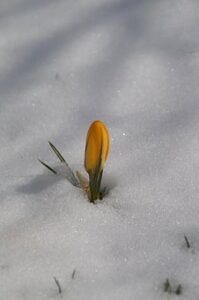
How true for those children. Their dear mother’s very DNA lives inside of them. And can’t we say the same thing about the loved ones we are missing? Those who played such significant roles in our lives are living inside of us in a very real way simply by the influence they have had on us.
Mary ends her song with these comforting words for the children about their mother: When you need to touch her… trust she’s always there, watching as you grow… Find her in the place where the lost things go.
As I watched the movie, hearing this song for the first time, my eyes filled with tears. At my age (74), so much of my life has already been lived. So much is behind me, in the past. So I have more “lost things” to miss, to grieve, to mourn. At the same time, I have more “lost things” to give thanks for!
Our Christian faith can help us deal with all the “lost things” in our life–especially loved ones. It tells us that death is not the end. It is a transition to a new and everlasting life. Death is not a wall separating us from those we love. It is a door through which we will pass one day and be reunited with our loved ones. The poet John Shea describes eternity in this way: it is the place where the laughter of reunion leaps on the far side of loss. He also says we must trust the larger Mystery that connects us beyond separations. That Mystery, of course, is God. In one very real way we can say that God is the place where lost things go.
Now let’s listen to Emily Blunt singing the song by Marc Shaiman and Scott Wittman, “The Place Where Lost Things Go.” Reflective questions will follow the song.
Reflective questions:
Are there any “lost things” that you are missing right now? Would you like to share any of them with us?
Do any specific words from the song catch your attention today?
What helps you grieve your losses?
I welcome your responses to this reflection below:
“The Place Where Lost Things Go”
Last week I saw the new movie, Mary Poppins Returns. I loved it! Although nothing can replace the original Mary Poppins, I still loved this sequel with its beautiful music, lively dancing, and its array of memorable characters. I loved the creative scenes—swimming underwater, flying in the sky with a balloon, dancing in a topsy-turvy world with Meryl Streep, and watching the lamplighters dancing wildly with their lamps and doing acrobatics on their bikes.
The new songs were wonderful too. But my favorite one was “The Place Where Lost Things Go.” It is a lullaby that Mary Poppins (Emily Blunt) sings as she is tucking the three Banks children into their beds. The children, John, Anabel, and Georgie, are missing their mother who died within the past year. Mary understands the pain of their loss, and sings the tender song to them.
This time of the year, we may be missing “lost things.” Perhaps at our holiday gatherings, we were missing a loved one who was no longer there. I know I was….Mary Poppins begins the song with these words: Do you ever lie awake at night, searching for the things you used to know?
I thought: such things can be people… places… memorable experiences… or perhaps just the way things used to be when the world seemed to be a simpler place.
She continues: Do you ever dream or reminisce, wondering where to find what you truly miss?
How many people today are truly missing things such as a slower pace to daily life… less “stuff” … greater unity… more civility in discourse… Or how many people are missing parents… children… grandparents… a sibling… a beloved friend… a dear pet… a cherished home… good health… or even energy and vitality?
Mary continues: though they’ve disappeared, nothing’s gone forever, only out of place…. Spring is like that now, far beneath the snow.
When I gaze out my window this time of year, everything looks dead. The trees are bare… the grass is covered with snow… many birds are gone… the chipmunks are hibernating… the insects have vanished. Sometimes it takes great faith to believe that spring will ever come.
Then she tells the children: Maybe all you’re missing lives inside of you!
How true for those children. Their dear mother’s very DNA lives inside of them. And can’t we say the same thing about the loved ones we are missing? Those who played such significant roles in our lives are living inside of us in a very real way simply by the influence they have had on us.
Mary ends her song with these comforting words for the children about their mother: When you need to touch her… trust she’s always there, watching as you grow… Find her in the place where the lost things go.
As I watched the movie, hearing this song for the first time, my eyes filled with tears. At my age (74), so much of my life has already been lived. So much is behind me, in the past. So I have more “lost things” to miss, to grieve, to mourn. At the same time, I have more “lost things” to give thanks for!
Our Christian faith can help us deal with all the “lost things” in our life–especially loved ones. It tells us that death is not the end. It is a transition to a new and everlasting life. Death is not a wall separating us from those we love. It is a door through which we will pass one day and be reunited with our loved ones. The poet John Shea describes eternity in this way: it is the place where the laughter of reunion leaps on the far side of loss. He also says we must trust the larger Mystery that connects us beyond separations. That Mystery, of course, is God. In one very real way we can say that God is the place where lost things go.
Now let’s listen to Emily Blunt singing the song by Marc Shaiman and Scott Wittman, “The Place Where Lost Things Go.” Reflective questions will follow the song.
Reflective questions:
Are there any “lost things” that you are missing right now? Would you like to share any of them with us?
Do any specific words from the song catch your attention today?
What helps you grieve your losses?
I welcome your responses to this reflection below:
A Few Fascinating Facts about the English Language
Several months ago on this blog, I mentioned that I once taught a course in the history of the English language. One of my readers, Maggie, suggested I write something about the English language. I am following her suggestion.
 First, what is language? Language is a system of sounds (speech), gestures (sign language), or graphic symbols (writing) by which people communicate. Linguists estimate there are roughly 5,000 to 7,000 different languages in the world. The three languages with the most users are (in this order): Chinese, Spanish, and English.
Language is powerful. It can bestow a group identity. Historically, various groups of people have had a language that so-called outsiders might not understand. Doctors, pilots, educators, gangs, filmmakers, deep-sea divers, farmers, carpenters, teenagers, and even nuns have their own jargon. Accent is interesting too. When I give talks and retreats in the East or South, I sometimes hear from a listener, “I love your Midwest accent.” Of course, I don’t think I have an accent! Language can also indicate “social stratification.” Remember how Eliza in My Fair Lady had to learn the “proper way” to say, “The rain in Spain falls mainly on the plain”?
Language is “a living thing”—unless it is a dead language, that is, a language no one speaks anymore. As such, language is always changing. Here is Matthew 8:20 from three different periods in the history of the English language:
Foxas habbao hol-u and heofonan fuglas nest. (Old English)
Foxis had dennes, and briddis of heuene had nestis. (Middle English)
Foxes have dens, and birds of the heaven have nests. (Modern English)
Remember, these are all English. So, if you were suddenly transported to 14th Century England, you would have a 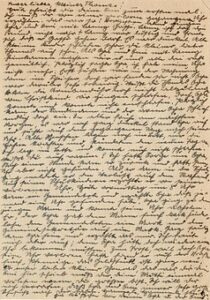 hard time communicating! The Middle English version shows that hol-u became dennes and fuglas became briddis. Contemporary English still has the words hole, den, and birds. English also has a history of borrowing from other languages. Notice these “English” words: cookie (Dutch), cigar (Spanish) klutz (Yiddish), cartoon (Italian), loot (Hindi), kindergarten (German), karaoke (Japanese), gung-ho (Chinese), and coffee (Arabic.)
If you live long enough, you become aware of some of the changes in the language you speak. In the word often, the “t” was originally silent. But then speakers began to pronounce the “t.” (Do you?) I imagine some day everyone will be pronouncing the “t.” Do you know the difference between lie (to recline) and lay (to put or place)? You lie down on the bed. You lay your keys on the table. How many people know that “rule” anymore? Just think how science and technology are changing the English language. In recent decades, thousands of new words have come into the language such as astronaut, earthrise, email, CD, google, podcast. And old words have taken on new or expanded meanings: the web, surf, gay, apple, text, cell. I’m wondering what effect text messaging is having on the English language, R U 2?
English, like many languages, is complex and often irrational—especially when it comes to spelling. In 1828 Noah Webster wrote the first dictionary of American English. It took him 26 years—and he first learned 28 languages! Webster tried to standardize the spelling of American English. In doing so, he often simplified spelling  too. So today Americans write color and center while Brits write colour and centre. Some of his changes in spelling, however, never caught on. For island he suggested iland and for tongue, tung. But one of his major contributions was this: he added two letters to our alphabet: j and v. Prior to Webster, these two letters had been listed merely as alternative forms of i and u. (The Latin inscription on the crucifix is INRI–which stands for Jesus of Nazareth Rex (King) of the Jews. Latin has no j.) Webster gave j and v their own sections in his dictionary. (Try singing the alphabet song without j and v.)
There’s so much more to say about language. For example, what role do stress, pitch, and juncture play in communicating? Or what about the power of words to heal, hurt, or start wars? And is being “politically correct” really a new thing? Also what about the language of animals? In future blogs, I hope to explore some of these topics.
What have been some of your blessings and struggles with language?
Do you know another language besides your first language? If so, when did you learn it? What was that experience like for you?
When do you most experience the power, beauty, and mystery of language?
Let us conclude this reflection with a short prayer: Ever-communicating God, I thank you for the wonderful gift of language. May I use this precious gift to join together and not divide, to build up and not tear down, to speak truth and not spread falsehoods. May I grow in my ability both to express myself and to listen to others. I ask for these graces through Jesus, the Word of God, and his Amazing Spirit. Amen.
Announcing Our Winners! Last week I promised to give away a copy of my little book, The Lord Is My Shepherd, to one person who responded in any way to last week’s blog, “How Much Can You Say in Six Words.” I had over 150 responses last week—the most ever! So I decided to give away TWO books. (Aren’t I a nice lady?) So I put all the names in a basket and had Sisters John Paul and Sandy (with whom I live) draw the lucky winners. And the winners are…(drum roll please!)… Rita Maglio and Ilene Renshaw! Rita, mother of 9 and grandmother of 19, hails from Merrimack, NH. She and her 5 sisters made a retreat I gave in St. Petersburg, FL a few years back. Ilene is from Pennington, NJ. She and her husband met me several years ago at a retreat I gave in her area. She’s happy to get the book because Ps. 23 was her father’s favorite psalm. So congratulations, Rita and Ilene! An autographed copy of my book is on its way to you! And thanks to all who responded last week with so many six-word gems!
What language do we use to communicate with God? One day the disciples of Jesus asked him to teach them to pray. Jesus proceeded to gave them a few words (Luke’s version has only 38 words in English, Matthew’s version, 52.) These words have become for millions of people the most powerful and meaningful of all prayers. Here is Andre Bocelli’s beautiful version of the Our Father…
Do you have any comment on this reflection or the song? We’d love to see your words below!