Interview with a Vegan
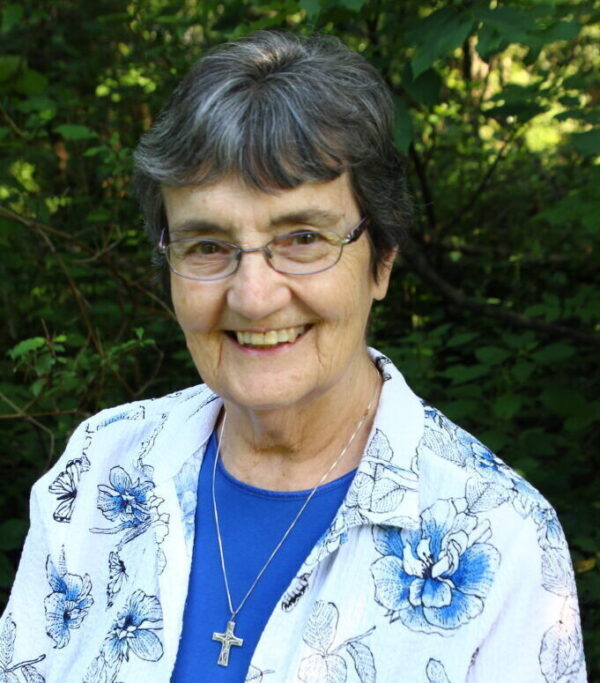
One of my good friends, Sister Ann Marie Teder, SND, is a vegan. Recently, she prepared a vegan meal for the two of us: lentil soup, tomato-basil-avocado sandwich, fruit salad, and eggless gingersnap cookies and non-dairy ice cream for dessert. It was delicious! Later, I interviewed her for this reflection. It seemed appropriate to post this reflection this week since October 4 is World Animal Day and the feast of St. Francis of Assisi, known for his love and respect for all creation.
What is a vegan?
A vegan is a person who does not eat or use animal products. (That means no meat, fish, eggs, cheese and no use of leather goods, etc.)
Why do people in general go vegan?
Most become vegan for their own health, for animal welfare, for the environmental impact, and for the poor.
Why did YOU make this choice?
I guess I’ve always had a heart for animals. I’m curious about them and what
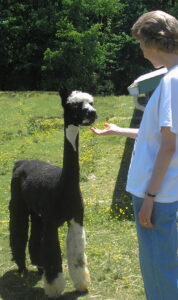
they possibly think of us. When I ate on our deck near the bird feeder, I used to wonder if the birds knew I was eating a bird (chicken). At one point, I decided if I loved animals, I had to stop eating them. So on Ash Wednesday 2016, I gave up meat for good.
Later that year I accidentally learned about “factory farming” while researching information about animals. After watching undercover videos and seeing the suffering of animals—including fish—I knew I needed to make a change. Most meat, dairy, and eggs sold in the U.S. come from factory farms. I felt a disconnect between my values and what I was eating. So in Lent 2017 I went vegan. What I didn’t expect was the peace I felt afterward. By this single decision, I can spare animals, help save the environment, lessen poverty, and improve my health. Another thing: It’s always easier to ask others to change—sign a petition, vote, etc. Going vegan means I change instead of asking animals to suffer and die for my sake.
You mentioned the suffering of animals. Don’t animal welfare laws (at least in this country) protect animals?
Animals used for food and other products are exempt from those laws. Birds aren’t even covered under “humane slaughter laws,” laws which are often not enforced.
Why not change the laws and raise animals humanely?
We should change the laws. But even if we cut down all the forests we wouldn’t have enough land to raise animals humanely. The real problem is our demand. Factory farms are not here by accident; they were created in response to our great demand for those foods.
Do you get proper nutrition eating vegan?
Yes. The health benefits of a vegan diet are well-documented. Eating animals and animal products is actually unhealthy. But if you decide to go vegetarian or vegan, tell your doctor. You may need a B-12 supplement, for example, or iron.
Are your eating choices expensive and/or time-consuming to implement?
Individual items can cost a bit more, but vegan meals are overall equivalent to or less expensive than non-vegan meals. Preparation time is about the same. If you live with omnivores, you need not make separate meals. You can make “accidentally vegan” dishes (like pasta with marinara sauce) or ones that you can remove portions for the vegans and then add the animal products afterward for the omnivores.
Do you have any regrets about going vegan?
I have only one. It’s summarized in this quote: “Dear animals, I’m sorry it took me so long.”
Is there anything else you would like to say about this choice you’ve made?
Being vegan has stretched me in a good way. I’m still learning about it and transitioning. I’ll leave you with some helpful links. And this quote by Colleen Patrick-Goudreau: “May our daily choices be a reflection of our deepest values, and may we use our voices to speak for those who need us most, those who have no voice, those who have no choice.”
Thank you for the opportunity to share, Melannie!
And thank you, Annie, for all you shared with us! You’ve given me much to reflect on and pray over.
PS: I will be giving an evening presentation in Racine, Wisconsin on Thursday, Oct. 25. Then I’ll be leading a weekend retreat Oct. 26-28. Both events are held at Siena Retreat Center. Click “events” at the top of this page or click on their website below and enter my name for details:
http://www.SienaRetreatCenter.org.
I’ll list the links Sr. Ann Marie suggested after today’s song. Today I chose an “oldie”: “Bless the Beasts and Children” by the Carpenters. The song seems to capture the spirit of this interview as well as the spirit of St. Francis:
Here are the links Sr. Annie recommended.
Videos:
“The Choice Is Yours” https://youtu.be/jBiBlCfSPby (1 min. 20 sec.)
“What the Dairy Industry Doesn’t Want You to Know” https://youtu.be/h3c D0s391Q (54 min. talk by Dr. Neal Banard on the health benefits of eating vegan. Based on the book The Cheese Trap)
“You Will Never Look at Your Life the Same Way Again” https//youtu.be/Z3u7hXpOm58 (32 min.)
“Draw My Life: A Hen in Today’s World” https:youtu.be/95OFylCCBU8 (short video using black and white drawings of how most of us get our eggs today)
Websites:
www.onegreenplanet.org
christianveg.org
mercyforanimals.org
Recipe sites:
minimalistbaker.com
www.peta2.com/vegan-life/the-ultimate-vegan-baking-cheat-sheet
Now it’s your turn… any responses about the interview?
Are any of you vegetarians or vegans? If so, why? I not, why not?
A 56-Year-Old Mystery Solved
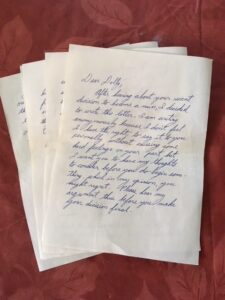
I entered the Sisters of Notre Dame on July 2, 1962. Several weeks before I left home, I received an anonymous letter. It was hand-written and five pages long. The person who wrote it tried to convince me to change my mind about becoming a nun. He/she wrote: “I want you to have my thoughts before you do something which, in my opinion, you might regret.” The rest of the letter gives several reasons why I should not enter the convent.
 First reason: I was too young to make such an important decision. (I wasn’t quite 18.) I should wait at least five years until I had more life experience. In becoming a nun, I would be giving up my basic freedoms—what to do with my life, where to live, what to wear, etc. I would also deprive my family of my companionship. (We nuns were not allowed to go home in those days, and our visits with family were very restricted.) And finally, I would be giving up marriage, “one of the most sacred relationships in life” and having children of my own. These were all arguments I myself had raised as I struggled with my decision. But the desire to enter was stronger than these arguments.
Since I couldn’t have a conversation with the person who sent the letter, I wrote a response in my diary to the letter. Then I tucked the mystery letter in my diary, put my diary in a box with a few other items, left the box in my parents’ attic, and entered the convent. I never saw the letter again until many years later. And I always wondered: WHO wrote it? Obviously, it was someone genuinely concerned about me—and my family. The person was a good Christian, because he/she made several references to Jesus and his teachings. Was it a neighbor? A relative? One of my girlfriends? A former boyfriend? I never knew. Until now 56 years later. Here’s how I discovered who the author was.
A little while ago, I happened to get in touch with a “boy” from my old neighborhood. (He’s 76 now!) I’ll call him Joe. I once thought that perhaps his mother had written the letter or his older sister, “Donna”—or even he did. So in one of my emails I told him about the letter. He assured me he didn’t write it, but he remembers that my entering the convent “was the topic of conversation at many family dinner tables in the neighborhood.” He suggested I send him a sample of the handwriting to see if it was his deceased mother’s. I did. He responded immediately. It was not his mother’s handwriting. But he would check with his sister.
Donna assured him (and me) that she didn’t write the letter. But as soon as she saw the handwriting, she knew who did: her sister-in-law! Donna’s sister-in-law “Edith” (now deceased) lived across the road from us and next to Joe and Donna’s family. She was a good friend of my mother’s. I picture my mother talking with Edith and saying, that although my parents had given their consent for me to enter the convent, my decision was very difficult for them and our whole family. It was very hard “losing Dolly” so soon after graduation. Edith, being the good Christian and good friend that she was, took it upon herself to pen that letter.
So finally the mystery is solved. But in the solving, I had several thoughts:
* I was reminded that I had grown up in a great neighborhood. Though our houses were far apart, I recall Edith and her husband “Stan” sometimes stopping in just to chat with my parents. And we four kids were always taking vegetables from my Dad’s large garden to the neighbors or a loaf of my mother’s homemade rye bread. In addition, my mother always took “Agnes,” our next door neighbor, grocery shopping with her on Friday mornings because Agnes didn’t drive. Back then, neighbors knew each other and did favors for each other. Do neighbors still do that?
* And we neighborhood kids did things together too: we’d stand and wait for the school bus together every morning, go for hikes in the woods, hunt for crayfish in the creek, walk a mile to Foster’s (called G & L’s back then) on Route 6 for an ice-cream cone, ice-skate on one of the three ponds in our neighborhood, and play baseball, croquet, or horseshoes—usually on our huge front lawn or in our back fields.
* And finally, after solving this mystery, I prayed to Edith, thanking her for taking the time to write that letter 56 years ago. Her last sentence was this: “I pray that you will consider these things and do what is God’s will, but that before you do anything, be sure that you know what God really wills for you.” I wanted to write back to her: “Dear Edith, Thank you for your love and concern. I entered the convent 56 years ago. And I’m still a happy nun. I think this life was God’s will for me! Love, Dolly.”
Have you ever solved a mystery in your life?
Do you have any mysteries in your life that remain unsolved?
Do you have good neighbors where you live? Are YOU a good neighbor?
PS: I ask for your prayers for a retreat I will be leading September 30 to October 6 for the Holy Cross Sisters at St. Mary’s College in South Bend, Indiana. Thank you very much!
Here is a beautiful song by Joy Zimmerman entitled “The Gift of Light.” (You can visit her website at www.joyzimmermanmusic.com.) She told me she asked people to submit images of hope and light and then she put them together for the video. The lyrics are not on the video, but here they are:
Every wondrous day may you pause to remember
All the gifts you have received,
The ones that you were given long before your birth,
And those that you receive each day on earth.
(Refrain) May you know the gift of love along the way
May you share the gift of peace this day
May you find the gift of hope to give away
May your spread the gift of light we pray.
Any responses to the story, the questions, the song?
The Wildness of God's Creative Love
I am a pretty orderly person. My clothes hang neatly in my closet. My underwear is carefully folded in my dresser drawers. The folders in my file cabinets are clearly labeled. And I clean my rooms on a fairly regular basis. (The operative word there is “fairly.”) But I am no neat freak. In fact, I’m one who never liked the maxim: “Order is heaven’s first law.” (Those words were penned by Alexander Pope in An Essay on Man.)
I don’t like that quote for two main reasons. First, I believe there are far  more important things in heaven (and on earth!) than order. What kind of things? People… love… freedom… mercy… forgiveness… creativity… fun… awe… to name a few. And secondly, too much order can lead to death. Historically, for example, the most tyrannical governments tend to be the most orderly. I remember my Old Testament professor, Father Demetrius Dumm, OSB, saying, “All the trains ran on time in Pharaoh’s Egypt.” All the trains ran on time in Nazi Germany too. Despotism tends to be more orderly than, for example, Democracy.
So when life seems chaotic—on a personal, national, or global level—we sometimes long for more order. Such longings are understandable. But we must never sacrifice other more important values just to insure more order.
In this regard, we can learn from Jesus. Jesus’ life was far from orderly. He was born of poor parents in a stable. Shortly after his birth, his parents were forced to flee with him into a foreign land because of Herod’s drastic means to insure the order of his rule. Jesus’ ministry had something of a serendipitous spirit. He taught those who came to hear him speak. He cured those brought to him or whom he happened to encounter along the way. He allowed his schedule to be interrupted, his plans to be changed. He never forced people to follow him or to accept his teachings. Instead he gently invited them. And finally he was put to death by a totalitarian regime who viewed him as a threat to their established order.
I was musing on these thoughts about order and I ended up writing this short prayer-poem. I call it “The Wildness of God’s Creative Love.”

Creating God,
I want to fix this situation. I want to tame this person.
I want to make things right or (at least) neater again.
As if order was the measure of Vitality, Goodness, and Righteousness.
After all, Genesis shows you bringing order out of chaos
Through the power of your spoken word: “Let there be…”
And, we are told, our first parents
were made in your image and likeness.
So, it’s easy for us to imagine Adam hoeing his straight little rows
Of beans, tomatoes, and cauliflower.
And we can picture Eve arranging her spice drawer
In alphabetical order, from allspice to za’atar.
But that’s our fantasy, our bias. It does not reflect your reality.
For how did the universe begin?
As a vast sea of exploding stars!
And the earth, in its infancy,
Was an orb of erupting volcanoes and torrential meteorites.
And so, order is not heaven’s first law.
Nor is neatness the hallmark of your modus operandi.
On the contrary, Wildness is. Exuberance is. And Sweet Surprise.
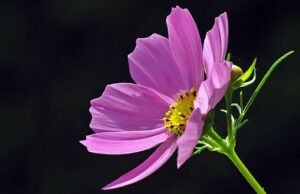
And so I pray: may I never forget
that beneath and within,
Between and around all things
there exists a life-giving untidiness,
A pleasureable disarray.
A charming unruliness—
All mere hints
Of the Wildness of your Ever Creating Love.
On a scale of 1 to 10 (1 being messy and 10 being orderly) where do you put yourself? Are you happy or dissatisfied with where you are?
Have you ever let go of order for the sake of a higher value?
How do you experience God’s wild and reckless love in your life?
I found a song that seems to capture today’s theme. It’s called “Reckless Love” and is sung by Cory Asbury.
I welcome your responses to today’s reflection, poem, or song.
The Wildness of God’s Creative Love
I am a pretty orderly person. My clothes hang neatly in my closet. My underwear is carefully folded in my dresser drawers. The folders in my file cabinets are clearly labeled. And I clean my rooms on a fairly regular basis. (The operative word there is “fairly.”) But I am no neat freak. In fact, I’m one who never liked the maxim: “Order is heaven’s first law.” (Those words were penned by Alexander Pope in An Essay on Man.)
I don’t like that quote for two main reasons. First, I believe there are far more important things in heaven (and on earth!) than order. What kind of things? People… love… freedom… mercy… forgiveness… creativity… fun… awe… to name a few. And secondly, too much order can lead to death. Historically, for example, the most tyrannical governments tend to be the most orderly. I remember my Old Testament professor, Father Demetrius Dumm, OSB, saying, “All the trains ran on time in Pharaoh’s Egypt.” All the trains ran on time in Nazi Germany too. Despotism tends to be more orderly than, for example, Democracy.
So when life seems chaotic—on a personal, national, or global level—we sometimes long for more order. Such longings are understandable. But we must never sacrifice other more important values just to insure more order.
In this regard, we can learn from Jesus. Jesus’ life was far from orderly. He was born of poor parents in a stable. Shortly after his birth, his parents were forced to flee with him into a foreign land because of Herod’s drastic means to insure the order of his rule. Jesus’ ministry had something of a serendipitous spirit. He taught those who came to hear him speak. He cured those brought to him or whom he happened to encounter along the way. He allowed his schedule to be interrupted, his plans to be changed. He never forced people to follow him or to accept his teachings. Instead he gently invited them. And finally he was put to death by a totalitarian regime who viewed him as a threat to their established order.
I was musing on these thoughts about order and I ended up writing this short prayer-poem. I call it “The Wildness of God’s Creative Love.”
Creating God,
I want to fix this situation. I want to tame this person.
I want to make things right or (at least) neater again.
As if order was the measure of Vitality, Goodness, and Righteousness.
After all, Genesis shows you bringing order out of chaos
Through the power of your spoken word: “Let there be…”
And, we are told, our first parents
were made in your image and likeness.
So, it’s easy for us to imagine Adam hoeing his straight little rows
Of beans, tomatoes, and cauliflower.
And we can picture Eve arranging her spice drawer
In alphabetical order, from allspice to za’atar.
But that’s our fantasy, our bias. It does not reflect your reality.
For how did the universe begin?
As a vast sea of exploding stars!
And the earth, in its infancy,
Was an orb of erupting volcanoes and torrential meteorites.
And so, order is not heaven’s first law.
Nor is neatness the hallmark of your modus operandi.
On the contrary, Wildness is. Exuberance is. And Sweet Surprise.
And so I pray: may I never forget
that beneath and within,
Between and around all things
there exists a life-giving untidiness,
A pleasureable disarray.
A charming unruliness—
All mere hints
Of the Wildness of your Ever Creating Love.
On a scale of 1 to 10 (1 being messy and 10 being orderly) where do you put yourself? Are you happy or dissatisfied with where you are?
Have you ever let go of order for the sake of a higher value?
How do you experience God’s wild and reckless love in your life?
I found a song that seems to capture today’s theme. It’s called “Reckless Love” and is sung by Cory Asbury.
I welcome your responses to today’s reflection, poem, or song.
Building the New House Next Door
A new house is being built on the lot next to our convent. Here are a few of my thoughts as I watch this new house going up.
First, a little background. The woman who is having the house built (I’ll call her Anne) is going to be a very nice neighbor. We three nuns concluded this because, the day before construction began, she came over to introduce herself and to give us a lovely card. The card apologized for the noise, dust, and dirt we were going to have to put up with for the next few months. How thoughtful of her, we thought. Anne also apologized for having a tall evergreen tree cut down where her house was going to be. She felt bad about that, but she was happy she was able to keep all the other trees on the lot.

What have I noticed as I watch the house go up?
Everyone is always measuring something. Even before construction began, surveyors came and surveyed (measured) the lot. They placed sticks with little orange flags all over the place. I, of course, didn’t know what the sticks meant. But the guy who operated the excavator knew. Using the sticks as his guide, he knew exactly where to dig the basement and foundation for that house.
When the bricklayers came, they too were always measuring their work with their tape measures. They also used a leveler to make sure the brick walls were perfectly straight. When the carpenters came and put up the frame and then the walls, they too were always measuring their work. So too did the men who laid the shingles on the roof. Their precision really impressed me!
Many people work really hard for a living. Every time I passed by the house or glanced out the window at the progress, I saw people working hard. Bricks are heavy. Being precise is hard. Sawing wood is dangerous. Walking across a narrow wall of cement blocks is demanding. Carrying long boards or a pack of shingles up a ladder is arduous. And doing most of these things in the hot sun only makes the labor more taxing. A friend said it is difficult to get young people interested in doing bricklaying, carpentry, plumbing, etc. Even though you can make a good living by doing such work, many young people are turned away by the hard work involved in those trades, he said.

Many people possess incredible skills. I was mesmerized by the work of the bricklayers. When they laid the cement blocks for the foundation, I kept wondering, “How do they know the proper consistency for the mortar? How do they keep the walls straight?” When they laid red bricks to cover up the cement blocks, I was even more intrigued. “The bricks are not all alike,” I thought. “How do they know which brick to choose next?” I was talking with one of our maintenance men who knows a thing or two about construction. As we gazed admiringly at the bricklayers, he said, “And what they are doing here today will last 100 years. Not many of us can say that about our work.”
Construction work takes a long time. The first few weeks of construction, we saw major progress every day. First the foundation. Then the brick walls. Next the first floor. Then the outer walls. Soon the roof. Then the gables. Next the shingles. But now the progress won’t be so obvious. The interior work will take considerable time. Anne says she hopes to move in by Thanksgiving.
It takes a long time to build a house. It takes a long time to build anything. How much easier it is to destroy or tear down than it is to build. I thought: If it takes this long to build a house, this much hard work, this much precision, this much skill, this much teamwork, then shouldn’t we be more patient with the building of other things in our life? Like trust… like family… like community… like peace… like a just society…. like love.
Did anything stand out for you in this reflection? If so, what? and why?
What “things” are you currently building in your life?
This song by Chris August is a simple prayer to Jesus: “Abide in Me.” It raises the question: is our heart a home for Jesus?
Do you have anything you’d like to say or add? Please do so below.