
G. K. Chesterton: "The Apostle of Common Sense"
I just finished a book entitled G. K. Chesterton: The Apostle of Common Sense, by Dale Ahlquist. I thought I would share a few thoughts on this fascinating writer with you today.
Gilbert Keith Chesterton (1874-1936) was a British writer, poet, philosopher, dramatist, art critic, and lay theologian. During his life, he produced 80 books, 200 short stories, 4,000 essays, and several plays. His most famous fictional character is the priest-detective Father Brown. His most prominent apologetic work is Orthodoxy.
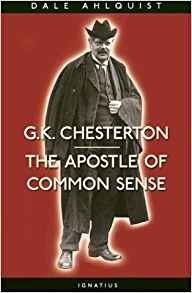 G. K. Chesterton (as he was called) was a large man: 6’ 4” and close to 300 pounds. He could make fun of his girth. During World War I, a woman asked him why he wasn’t “out at the front.” He replied, “If you go round to the side, you will see that I am.” He also claimed to be one of the most polite men in the country. After all, he said, on a bus he could stand up and give his seat to three ladies.
Chesterton often was draped in a cape and used a walking stick. He wore a crumpled hat and was frequently photographed with a cigar.
At birth, Chesterton was baptized in the Anglican Church, but as a youth he said he was an agnostic. In 1901 he married Frances Blogg who brought him back to the Anglican Church. The couple deeply desired to have children but, despite the medical help of their day, they were unable to conceive. Later, however, they adopted a daughter. Throughout his career, Frances was Gilbert’s literary assistant and manager. In 1922 Chesterton shocked many of his friends by becoming a Roman Catholic. Four years later, his wife followed him into the Catholic Church.
Chesterton not only loved to write, he also loved to debate publicly. George Bernard Shaw was one of his favorite “sparring partners.” Although the two men disagreed on practically everything, they somehow remained close friends. Chesterton also debated with H. G. Wells and Bertrand Russell. One of his closest friends was the writer Hilaire Belloc.
Chesterton made use of not only the printed word, but radio as well. From 1932 until his death he gave 40 radio talks a year, talks that were extremely popular. Chesterton’s writing and speaking are characterized by wit and humor even while discussing serious topics such as government, history, economics, politics, philosophy, art, and theology. He also frequently employed paradox to make a point. For example, he said, “Anything worth doing is worth doing badly.” In other words, don’t let perfectionism get in

the way of doing good.
Despite all his virtues, Chesterton had his faults. He has been criticized for being anti-Semitic in some of his writings. He could also be bombastic. But interestingly, the April 2015 issue of The Atlantic ran an article making the case for Chesterton’s canonization.
It seems fitting to conclude this brief description of Chesterton with a few of his memorable quotes. He has so many good ones, I had a hard time selecting these twelve:
1) An inconvenience is only an adventure wrongly considered; an adventure is an inconvenience rightly considered.
2) It is the test of a good religion whether you can joke about it.
3) Fallacies do not cease to be fallacies because they have become fashions.
4) To be clever enough to get all the money, one must be stupid enough to want it.
5) Love means loving the unlovable—or it is no virtue at all.
6) To have a right to do a thing is not at all the same as to be right in doing it.
7) Tradition means giving votes to the most obscure of all classes, our ancestors. It is the democracy of the dead.
8) All slang is metaphor, and all metaphor is poetry.
9) One can sometimes do good by being the right person in the wrong place.
10) The supreme adventure is being born.
11) The test of all happiness is gratitude.
12) The Christian ideal has not been tried and found wanting; it has been found difficult, and left untried.
Does anything in this reflection stand out for you?
Do any of Chesterton’s quotes touch you? Which one(s) and why?
Do you know any other Chesterton quotes that you would like to share with us today?
In honor of Chesterton’s heritage, I chose a 17th Century Anglican Hymn sung at a 2013 service at Westminster Abbey. As you will see, the royal family is in attendance. Some might find the song “old fashioned” or be annoyed by the gender exclusive language, but I still see beauty in these ancient hymns. The lyrics are not given on the video, but here are the first and final verses:
Praise to the Lord, the Almighty, the king of creation!
O my soul, praise him, for he is your health and salvation!
Come all who hear: now to his altar draw near,
Joining in glad adoration.
Praise to the Lord, O let all that is in us adore him!
All that has life and breath come now with praises before him.
Let the “Amen” sound from his people again,
Now as we worship before him.
Do you have a response you’d like to share below?
G. K. Chesterton: “The Apostle of Common Sense”
I just finished a book entitled G. K. Chesterton: The Apostle of Common Sense, by Dale Ahlquist. I thought I would share a few thoughts on this fascinating writer with you today.
Gilbert Keith Chesterton (1874-1936) was a British writer, poet, philosopher, dramatist, art critic, and lay theologian. During his life, he produced 80 books, 200 short stories, 4,000 essays, and several plays. His most famous fictional character is the priest-detective Father Brown. His most prominent apologetic work is Orthodoxy.
G. K. Chesterton (as he was called) was a large man: 6’ 4” and close to 300 pounds. He could make fun of his girth. During World War I, a woman asked him why he wasn’t “out at the front.” He replied, “If you go round to the side, you will see that I am.” He also claimed to be one of the most polite men in the country. After all, he said, on a bus he could stand up and give his seat to three ladies.
Chesterton often was draped in a cape and used a walking stick. He wore a crumpled hat and was frequently photographed with a cigar.
At birth, Chesterton was baptized in the Anglican Church, but as a youth he said he was an agnostic. In 1901 he married Frances Blogg who brought him back to the Anglican Church. The couple deeply desired to have children but, despite the medical help of their day, they were unable to conceive. Later, however, they adopted a daughter. Throughout his career, Frances was Gilbert’s literary assistant and manager. In 1922 Chesterton shocked many of his friends by becoming a Roman Catholic. Four years later, his wife followed him into the Catholic Church.
Chesterton not only loved to write, he also loved to debate publicly. George Bernard Shaw was one of his favorite “sparring partners.” Although the two men disagreed on practically everything, they somehow remained close friends. Chesterton also debated with H. G. Wells and Bertrand Russell. One of his closest friends was the writer Hilaire Belloc.
Chesterton made use of not only the printed word, but radio as well. From 1932 until his death he gave 40 radio talks a year, talks that were extremely popular. Chesterton’s writing and speaking are characterized by wit and humor even while discussing serious topics such as government, history, economics, politics, philosophy, art, and theology. He also frequently employed paradox to make a point. For example, he said, “Anything worth doing is worth doing badly.” In other words, don’t let perfectionism get in
the way of doing good.
Despite all his virtues, Chesterton had his faults. He has been criticized for being anti-Semitic in some of his writings. He could also be bombastic. But interestingly, the April 2015 issue of The Atlantic ran an article making the case for Chesterton’s canonization.
It seems fitting to conclude this brief description of Chesterton with a few of his memorable quotes. He has so many good ones, I had a hard time selecting these twelve:
1) An inconvenience is only an adventure wrongly considered; an adventure is an inconvenience rightly considered.
2) It is the test of a good religion whether you can joke about it.
3) Fallacies do not cease to be fallacies because they have become fashions.
4) To be clever enough to get all the money, one must be stupid enough to want it.
5) Love means loving the unlovable—or it is no virtue at all.
6) To have a right to do a thing is not at all the same as to be right in doing it.
7) Tradition means giving votes to the most obscure of all classes, our ancestors. It is the democracy of the dead.
8) All slang is metaphor, and all metaphor is poetry.
9) One can sometimes do good by being the right person in the wrong place.
10) The supreme adventure is being born.
11) The test of all happiness is gratitude.
12) The Christian ideal has not been tried and found wanting; it has been found difficult, and left untried.
Does anything in this reflection stand out for you?
Do any of Chesterton’s quotes touch you? Which one(s) and why?
Do you know any other Chesterton quotes that you would like to share with us today?
In honor of Chesterton’s heritage, I chose a 17th Century Anglican Hymn sung at a 2013 service at Westminster Abbey. As you will see, the royal family is in attendance. Some might find the song “old fashioned” or be annoyed by the gender exclusive language, but I still see beauty in these ancient hymns. The lyrics are not given on the video, but here are the first and final verses:
Praise to the Lord, the Almighty, the king of creation!
O my soul, praise him, for he is your health and salvation!
Come all who hear: now to his altar draw near,
Joining in glad adoration.
Praise to the Lord, O let all that is in us adore him!
All that has life and breath come now with praises before him.
Let the “Amen” sound from his people again,
Now as we worship before him.
Do you have a response you’d like to share below?
2018: The Year of the Bird
The spring issue of Audubon magazine says that 2018 has been designated as the year of the bird. So let’s celebrate birds today.
First, a bird alert. The Migratory Bird Treaty Act (MBTA) is one of the most important conservation laws in the world. It celebrates its 100th birthday  this year. This law creates incentives for people to protect birds when humans industrialize a landscape. Birds are killed, for example, when they mistake open tar pits for ponds. One simple solution: to cover open tar pits with nets. Companies work with wildlife agencies to make power lines more visible and to install flashing lights on communication towers so birds don’t fly into them. MBTA has saved many birds from extinction including the Snowy Egret, the Sandhill Crane, and the Bald Eagle.
Audubon warns that the Department of Interior announced it would no  longer hold industry responsible for bird deaths. Rep. Liz Cheney (R-WY) has introduced a bill that would “gut the MTBA.” Millions of Americans have signed a letter asking Congress to honor the MBTA. The magazine encourages you to contact your representatives and voice your opinion about this important issue. (I wrote to mine.)
Now some fun and interesting facts about birds.
1) There are 10,000 species of birds. They inhabit almost every place on earth from the frozen Antarctica to the humid rain forests of South America.
2) All birds and only birds have feathers. Feathers provide insulation, sunblock, waterproofing, camouflage, and reproductive success.
 3) The largest bird is the ostrich. The ostrich stands 9 feet tall, weighs about 350 pounds, and can run 60 miles per hour. Its egg is the size of a cantaloupe. The smallest bird is the bee hummingbird. It weighs 1.6 grams, less than a penny. Its egg is the size of a pea.
4) The first bird domesticated by humans was the goose. In some places, geese serve as “watch dogs,” alerting their owners to visitors or to danger.
5) When ducks sleep in a group, those in the center sleep with both eyes closed, while those on the perimeter sleep with one eye open, to watch for predators.
6) Chickens have 200 distinct noises they use to communicate. Chickens also have the honor of being the closet living relative to Tyrannosaurus Rex.
7) Pigeons have been used for thousands of years to carry messages—especially vital military information. In ancient Greece, pigeons were also used to report the outcome of the Olympic Games to outlying districts!
8) Penguins are dark on top making it harder for predators to see them from above against the darker ocean water. They are white on the bottom making it harder from predators to see them from below. On land their color doesn’t matter too much because they have so few land predators.
 9) Volunteer bird counters keep tabs on the bird populations all over the world. After hurricane Maria devastated Puerto Rico, dedicated birders kept their long-standing tradition of counting birds at Christmas time. In one area, Fajardo, birders counted 82 species and a total of 1,934 individuals—lower than last year’s 97 species and 2,597 birds. Sometimes we don’t appreciate the impact of a natural disaster on wildlife.
10) Why are birds important? Here are just a few reasons: Birds pollinate, disperse seeds, scavenge carcasses, and control insects. But beyond that, birds nourish our spirits. They even inspired us to fly! As naturalist and author Sy Montgomery has said, birds remind us that “life is larger than humankind alone.”

Today, notice the birds…and give thanks to God for them.
What role do birds play in your spiritual life? Do you have any interesting bird stories that you would like to share with us?
One of my favorite birds is the Puffin, sometimes called “the clown of the bird world” because of the unusual and colorful markings on its face. My sister and niece supported Puffin conservation, another reason the bird is dear to me. Today’s video shows a little Puffin emerging from its shell. Hatching is hard work! The mother Puffin tries to help a little, but it’s up to the baby bird to get out of its shell. Notice, the baby enters the world hungry! I hope you enjoy this “song.”
PS: Sunday morning CBS news ran a story called “A Children’s Puffin Rescue Squad” by Steve Hartman. It tells of some children on Heimaey Island in Iceland who are helping to rescue endangered young Puffins. You can read the article or watch the video by googling CBS news and the title of the story. I found it fascinating and uplifting!
Is there anything you’d like to say about birds, this reflection, or the video?
Yes, Toys ARE Us
Recently we learned that most of the “Toys R Us” stores are closing. This bit of news got me thinking about toys in general. How far back do they go? What were the first toys? What toys did I play with as a child? In addition to being fun to play with, do toys have a serious purpose? Here’s what I learned.
The origin of toys goes back to prehistoric times. Archeologists have discovered dolls over 4,000 years old. Animal toys and smaller versions of adult tools have been unearthed at excavation sites. Ancient Egypt even 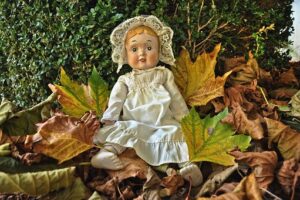 made dolls with moveable limbs, while Greece and Rome made dolls out of wax and terra cotta. In Rome children played with small bows and arrows and even yo-yos.
The 18th and 19th Centuries showed a development in toys. In the 18th Century, toys began to be manufactured as new attitudes toward childhood developed. The year 1767 saw the first jig saw puzzle. At the same time, the Rocking Horse was invented to help children learn to balance and eventually to ride a real horse. In the 19th Century, there was an emphasis on educational toys and toys with a religious theme—for example, a miniature Noah’s ark.
But it is the 20th Century that has been called “the golden age of toy development.” In the early decades children played not only with dolls and balls, but also with toy cars, trains, ships, and soldiers. World War II saw the invention of “Silly Putty” or “Play Doh” which was originally wallpaper cleaner. Post World War II saw the birth of the Barbie doll, Action man, Legos and Mr. Potato head.
What toys did you play with as a child? To jog your memory, here are some of the most popular toys for the following decades:
1940s – Crystal Radio Set, Gilbert Erector Set, Model Plane kits, Doctors’/Nurse’s kits, Kewpie Doll, Tiddlywinks, Steel Radio Flyer Wagon.
1950s – Play Doh, Magic 8 Ball, Frisbee, Slinky, Pogo Stick, Hula Hoop, BAS-KET (miniature basketball), doll furniture.
1960s – Chatty Cathy, Ken doll, Easy-Bake Oven, G.I. Joe, Lite-Brite, Suzy Homemaker, Wham-O-Super Ball.
1970s – Spirograph, Etch-a-Sketch, Stretch Armstrong, Atari 2600, Weeble.
1980s – Cabbage Patch Dolls, Care Bears, Strawberry Shortcake, My Little Pony, Transformers, Game Boy
1990s – Nintendo, Teenage Mutant Ninja Turtles, Nerf Guns, Hungry Hippos, Jenga, Twister, Uno, Teddy Ruxpin.
2000s – ZhuZhu pets, PlayStation, Nerf, Micro-machines, Little Pet Shop, IZ, K’s Kids, Buzz Bee Toys, Pillow Pets.
2010s – Nerf, Beanie Babies, X Box, Pokemon, Super Soaker, American Girl
 I grew up in the early 1950s. By far my favorite toy was my doll furniture set. I would save up my allowance and strawberry picking money and buy a piece of doll furniture at the local dime store. I had a baby grand piano, a refrigerator with removeable shelves, a desk with drawers that came out, and a sewing machine with a needle that actually went up and down. When I entered the convent, my mother stored my doll furniture for me and I forgot about it until we were cleaning things out. My niece has the doll furniture now. I hope a little girl in the future will be able to play with it and enjoy it as much as I did.

Now it’s your turn. What toys did you play with as a child? What toys did your children or grandchildren play with? Which toys have withstood the test of time with regard to popularity? Why?
This song is not about toys, but it’s about the children who play with toys. The song is “Slow Down” by Nichole Nordeman. It reminds us how fast children grow up… and it pleads with them (and with life itself) to slow down…please slow down. I hope you like this tender song.
Please share below your thoughts about toys or about this song with us. Thank you!
How Well Do You Know Planet Earth?
April 22, 2018 is Earth Day. In honor of this great day, I am giving you a little quiz. How well do you know planet earth? Here are 10 true or false statements about the planet we call home. Decide: Is the statement true or false? Then check the answers below.
TRUE or FALSE:
- Earth is the third planet from the sun.
- Earth formed about 4.5 million years ago.
- About 70% of the earth’s surface is covered in water.

- A year on earth is 365.2564 days.
- Earth has more than one moon.
- Only 3% of earth’s water is fresh; the rest is salted.
- The earth tilts at roughly 66 degrees.
- The rotation of the earth is gradually speeding up.
- An estimated 80% of the creatures on earth have four legs.
- There are more stars in the universe than there are grains of sand on earth.
* * * * *
Here are the answers:
- T
- F – Earth formed about 4.5 BILLION years ago.
- T – That’s why the astronauts dubbed earth the Blue Planet.
- T – That’s why we need a leap year every four years. We tack on an extra day in February.
- F – Earth has only one moon BUT earth has two asteroids locked
 into co-orbital orbits with it. Astronomers have even given them names: 3753 Cruithne and 2002 AA29! These asteroids do not orbit the earth. They orbit the sun with the earth.
 - T – And of the 3% of fresh water on earth, two-thirds of it is found in icecaps and glaciers. Another one-third is ground water. Only .3 of earth’s fresh water is found on the surface in the form of rivers, lakes, and swamps. I live in Chardon, OH which is 10 miles south of Lake Erie. Those of us living near the Great Lakes are living near a gold mine. Some historians say, “Today’s wars are being fought over oil. Future wars will be fought over water.”
- T – And the tilt of the earth gives us our four seasons. Depending how far you are from the equator, those seasons can be quite beautiful and dramatic.
- F – The rotation of the earth is slowing down—approximately 17 milliseconds per hundred years. Eventually our days will be longer, but it will take 140 million years before our day will increase from 24 to 25 hours!
- F – 80% of earth’s creatures have SIX legs. Yes, insects rule!

- T – There are more stars than grains of sand on earth. Earth has about 7 quintillion, 500 quadrillion grains of sand. The known universe contains about 70 thousand, million, million, million stars. That means there are approximately 10,000 stars for every grain of sand on earth! Whew! When God was making stars, God really got carried away!
Let us conclude our reflection with a short prayer:
Creator of our beautiful Blue Planet, thank you!
Thank you for this incredible home you have given us.
Thank you for the miracles we experience every day.
Thank you for the mysteries that surround us,
Mysteries waiting to be pondered, known, and appreciated.
Give us a greater love and respect for our earthly home.
Help us to be good stewards of all you have given us.
Give us a genuine respect for all human beings, our fellow earthlings.
Give us a greater respect for our fellow animals and all living things.
Help us to share the goods of earth with one another.
We ask these things through Jesus,
Who walked our dusty roads, drank our water, and gazed in wonderment at the stars.
Amen.
For reflection/sharing:
What aspect(s) of planet earth fascinate you the most? Why?
What are some of the ways you show your gratitude for our Blue Planet?
PS: Retreat Cruise: Speaking of our beautiful planet, I will be leading a retreat aboard a Royal Caribbean cruise ship, February 7-12, 2019. The ship leaves from Fort Lauderdale, FL and makes two stops in Mexico. During the cruise I will be giving four conferences and leading us in prayer as we sail the sea together. Although it says it’s a women’s retreat, men are welcome too! Cost starts at about $500. For more details click on the link below to see or print the 4-page brochure:
I chose an instrumental for today’s video. The 5 minute video is called “God’s Beautiful Creation” and features stunning photographs from all over the world. I hope you enjoy the music and the pictures.
Is there anything you would like to say today? We always love hearing from our readers!