
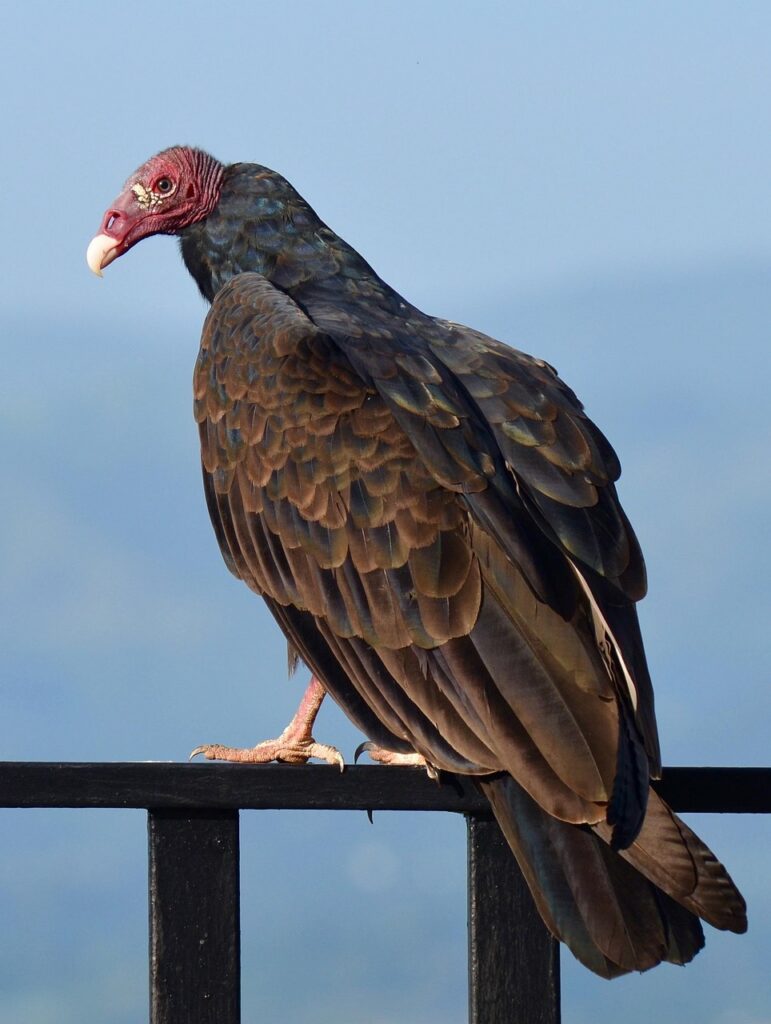
My sister and I were going out for a walk. It was a little chilly, so we both donned our jackets. That’s when I noticed the large round badge pinned to her coat. It was a colored photo of the head of a vulture! “Mary Ann!” I said. “Why are you wearing that badge with an ugly vulture on it?” She explained that her local zoo was seeking donations for food for their animals. If you donated money, you got to choose which animal you would like to support. Said my sister, “I figured everyone would pick the cute and cuddly animals–like koalas, penguins, baby tigers. So I decided to donate to the vultures. After all, they eat dead things, and that helps prevent the spread of disease!” She was 100% right, of course. In appreciation for her donation, the zoo gave her the vulture badge.
I thought of my sister when I saw an article in the July 2025 issue of National Geographic. It was entitled “Misshapes and Misfits,” with words by A.J. Jacobs and photos by Joel Sartore. The article focuses on certain “unloved animals” who “suffer from an image problem.” And the featured animal photo inside was (you guessed it!) a vulture. Vultures, with their bare heads, stooping posture, and beady eyes, rate low on the cuteness scale. Plus, they have the disgusting habit of eating rotting carcasses. They possess “stomachs of steel” that neutralize bacteria that could kill other animals. So, vultures are “nature’s cleaners” or garbage collectors. Because of this, they help prevent the spread of disease. If you don’t believe that, researchers have the data to prove it! Unfortunately, preserving vultures is not a top priority for most humans. That’s because vultures are the “polar opposites of the conservation icons” such a pandas, polar bears, penguins, whales and giraffes.
Here are three other “unloved” animals.
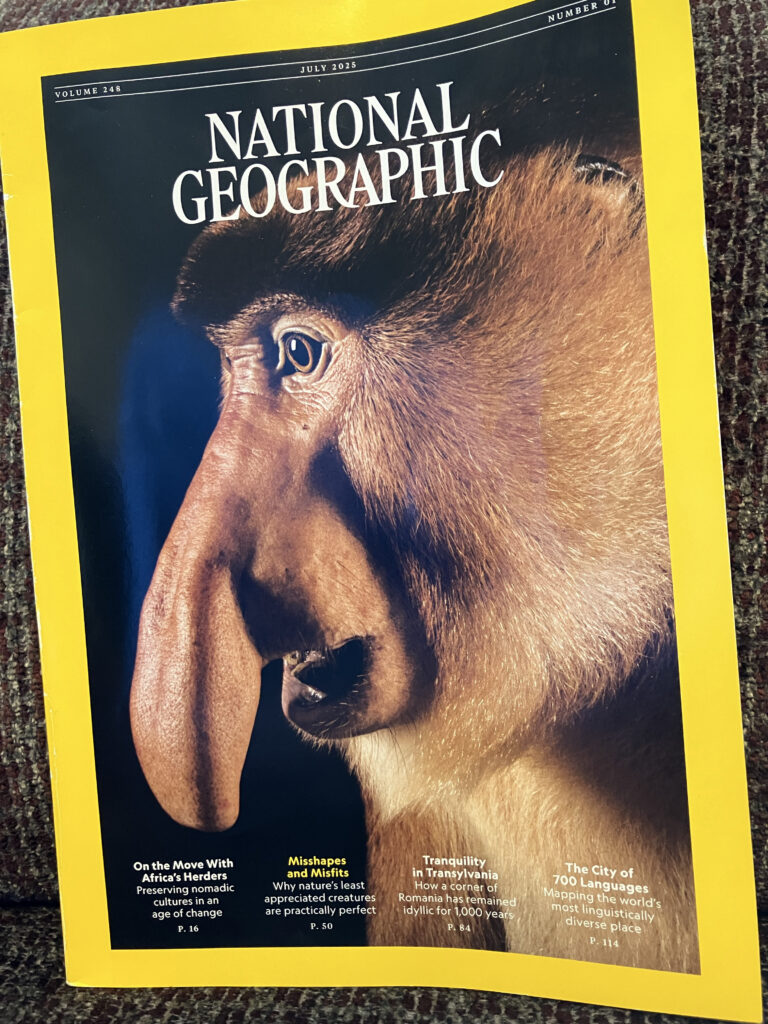
The proboscis monkey. The cover of that issue of National Geographic features this monkey, a male who has an exceptionally over-sized, fleshy snout. We might think his nose is comical. But the fact is, it comes in handy. That’s because competition for females is fierce among these monkeys. And, for some reason, female proboscis monkeys tend to prefer males with the largest sniffer. (Who knows what females find attractive in the males of their species?!) Besides attracting females, the male’s nose amplifies his “raucous vocalizations, a chorus of honks, howls, and roars.” This may give him an advantage in warding off enemies–including other male proboscis monkeys!
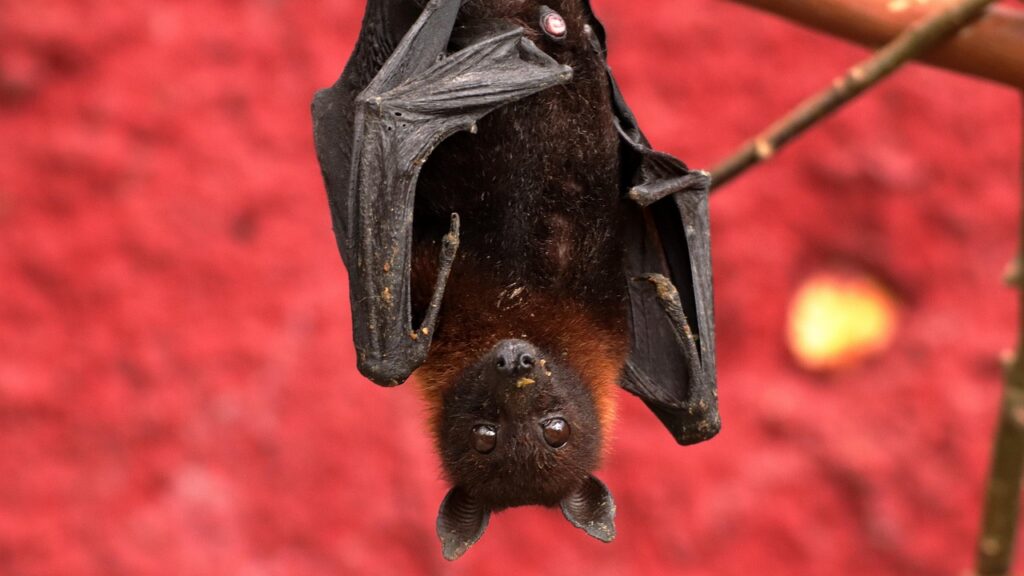
Bats are another animal with a poor image. They tend to have large eyes, sharp teeth, black wings, and they live in dark places such as caves. In Central America and other places, some species congregate in huge colonies that can exceed a thousand individuals. Their sheer numbers frighten humans. Another factor that makes them scary is their reputation for sucking blood and spreading rabies. Furthermore, because most species emerge only after dark, they are labeled “sinister” or “up to no good.” But many bats are really “up to doing good.” They are one of the world’s largest natural pollinators. Without them many crops would be in serious trouble–such as bananas, mangos, cashews, dates, primroses, and even your garden tomatoes. (Here’s a sobering fact: without bats there would be no agave plants–which are essential for making tequila!) Also, on their nightly foraging, bats devour hoards of insects–especially mosquitos. One bat can eat about 5,000 mosquitos in a single night!
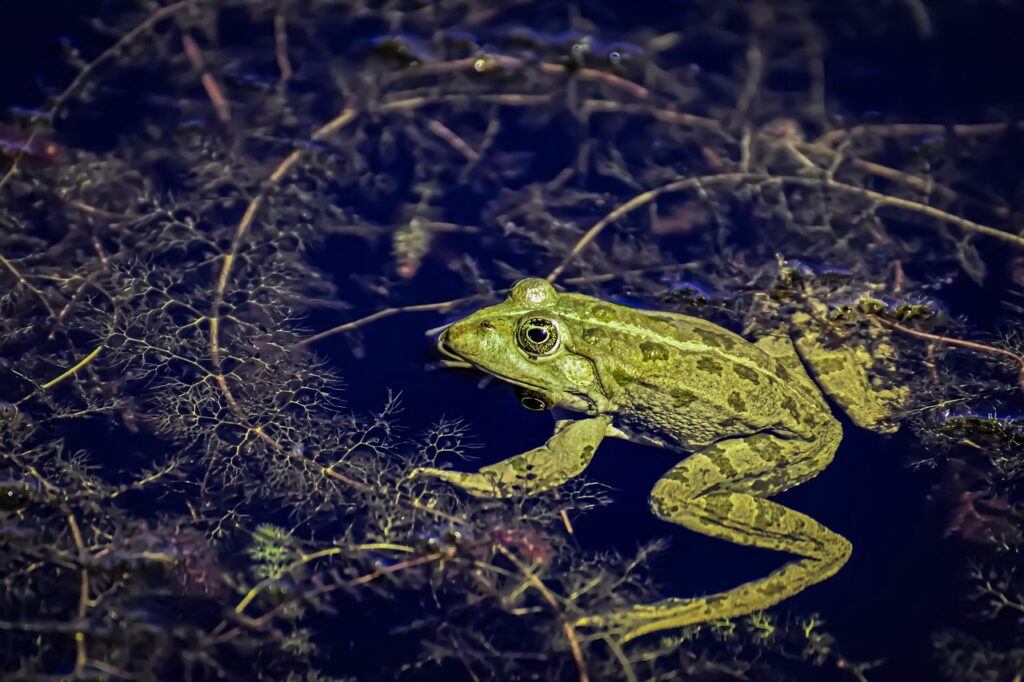
Slimy amphibians. We humans tend to prefer furry to slimy. That’s one reason frogs and salamanders raise little conservation money. This is a shame since many amphibians are threatened or even endangered. But often these species are anything but cute or attractive for humans. Take the African bullfrog. Males can be up to ten inches long and weigh as much as four pounds. But they look like one huge slimy, lumpy, bumpy, greenish-brownish blob. And when they feel threatened, they puff up their slimy, lumpy, bumpy blob to intimidate predators. But they manage to survive because nature gave them some advantages. They possess “super spit.” When their tongue shoots out, it latches onto the prey. Then their spit changes to a watery substance that coats their target, making it difficult for it to get away. Also, when a drought comes, the bullfrogs simply go dormant until the rains return again.
What does all of this have to do with “everyday spirituality.” I believe that one of the goals in life–incuding the spiritual life–is to broaden our perspective on things–on everything, really. As I like to say, God is the most broad-minded person of all. And because we believe we are made “in the image and likeness of God,” then we are to grow in “imitating” God’s broad-mindedness. How do we do this? By being open to life, that is, by being open to new information and new experiences that can alter our existing opinions or our understanding of things. This doesn’t mean we have to convince ourselves that vultures are cute and we should keep one in a big cage in our living room. That would certainly do violence to the poor vulture. No, but it does mean we can learn to appreciate their important “place” in the grand scheme of things. I think that broadminded people tend to be more grateful people. They see connections everywhere.
Such broadmindedness will spill over into our relations with that enigmatic animal known as homo sapiens. Let’s admit it, we all have people in our lives we struggle to see as lovable–individuals or even specific ethnic or religious groups who disturb us or scare us. Even Jesus experienced this as he struggled with the scribes and pharisees, with other peoples’ expectations of him, with his own hometown community, with the injustices of his contemporary politcial stuation, and even with his disciples who, at times, were incredibly narrow-minded. Why did Jesus say so many times: “Love one another… forgive one another… care for one another”? Because he knew how hard it was!
So, next time we are quick to label animals and people as unlovable… we refuse to be open to new information or a new attitude… we struggle to care for those in need or to forgive someone… let us turn to Jesus and simply say, “Jesus, help me to be as broad-minded, loving, caring, and forgiving as you!”
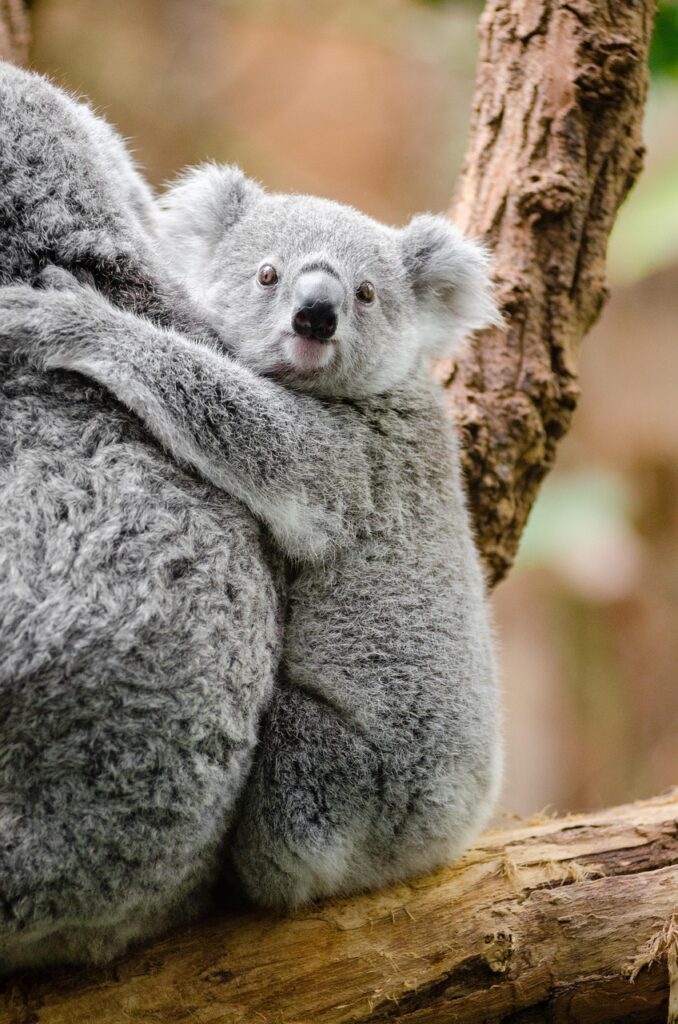
P.S. Because you persevered in reading this, here is a “kute, kuddly koala” to warm your heart!
For reflection:
Did anything in this brief reflection alter your perspective in any way? If so, how?
To grow in self-knowledge, finish these two sentences: 1) I like people who _______________. 2) I struggle with people who ___________________. Your answer to the first statement can identify individuals to whom you are naturally drawn. These people might be able to encourage you and support you. Your answer to the second, might indicate where you need further growth.
Can you think of a time when you grew in appreciation of something or someone you didn’t initially like or appreciate? What changed your mind?
Do you think broad-minded people tend to be happier and/or more grateful than narrow-minded people? Why or why not?
Soon countless individuals will be graduating from high schools, colleges, and universities everywhere. Perhaps you know someone who is graduating. I have two grandnephews graduating this year–Andrew from THE Ohio State University and Reece from Riverside High School. (I’m so proud of you, Drew and Reece!) Here’s a song dedicated to all graduates, “May You Walk Ever in the Lord.” It is written and sung by Sarah Hart. Let us pray the simple words of this song for all our graduates of 2026… and for those people–especially their parents, family, friends, and teachers–who supported and encouraged them along the way!
I look forward to reading your comments below!



47 Responses
I loved this one Melannie! Not fond of slimy frogs or vultures, but very fond of bats and have a boathouse for them at Bear Lake! And love the Koala. Broad minded, usually but intolerant of Trump supporters.
Finally two of my grandkids will graduate from college in May!
Anne, Glad you welcome bats at Bear Lake… Tolerance can be a slow process of growth process… and congratulations on those two graduates of yours! Thanks for writing! Melannie
I, too, am a lover of bats. My Girl Scout camp name is “Aunt Batty” because I am known for my first-day-of-camp introductions to the world of bats. By the time the lesson is over, every camper sees the bat as a hamster with wings and enjoys the scratching sound of the bats crawling under the tent over-covers early in the morning after a night of mosquito hunting. Too bad the mom volunteers don’t see with the eyes of their daughters. THEY still scream. LOL
That bat lesson often extends to seeing the uniqueness and value of fellow campers who are “different”.
“Aunt Batty,” Thanks for your unique perspective on bats–actually teaching your girl scouts to appreciate these animals! How fascinating that they actually “enjoy the sounds of the bats” coming in after a night of feeding on mosquitos. Thanks for your contribution to the discussion today! Melannie
Thank you for this reflection, Sr. Melannie! I have been gradually expanding my circle of friends and compassion to include creatures not loved by most humans. After all, we will be sharing heaven with all of them! The crows got me started. One day about five years ago, I was focused on a chipmunk when a crow landed beside him. (The. chipmunk was terrified since the crow was twice his size, so I now visit my bird friends in a different spot.) Many people don”t like crows, but they are such amazing and faithful friends. I’ve also rescued yellow jackets, spiders, ants, flies—I just read that they are pollinators too— stink bugs, etc. and usually take them outside and wish them a happy life. (I’ve let a tiny house spider have a corner in my bathroom now and then, though. They don’t usually stay long since few bugs come in.) But I admit, there are a number of species that I still need to learn to love and appreciate more. I think as long as we keep expanding that circle of compassion, we’re on the right track. Like Jesus said, “What we do to the least of these…” And St. Francis called all creatures his brothers and sisters.
Annie, It doesn’t surprise me that you have “befriended” many of God’s creatures who are NOT “conservation icons.” I too have learned to co-habit with a spider in my room… But, like you, I still need to keep expanding my circle of compassion… for all animals, including homo sapiens… Thanks for your great love for God’s creation. You inspire all who know you! Melannie
Sister Melanie, I always look forward to Monday mornings and reading your blog! Thank you for all of your hard work that you put in to your writing. My dad always said, We must accept people as they are.” This is broad mindedness like you say. His actions followed. One of my fondest memories of him is going with him to the inner city of Columbus and delivering bags of food at different apartment complexes. It was freezing cold outside but the warmth of serving others was all I really remember. And thank you for the video for graduates! My oldest grandson is graduating from high school this year and it is a proud family moment for sure. I believe he has inherited the trait of broad mindedness, as in the words of his younger cousin just yesterday, she said, “ I don’t think he will ever get into an argument with anyone!” He is very gentle natured, although he is a very big 18-year-old!
Again, thank you for the gift of this blog.
Mary, Thank you for sharing that tender story about your Dad… and your description of your oldest grandson who is graduating this year. You must be very proud of him! Melannie
Good morning, Melannie…
Good morning, all…
Loved every word! Especially your words about vultures, who are forever “making lazy circles in the sky” where I live. For 44 years I taught a species called “teenager,” a life form that quickly broadened my mind!
How very true, John! That “species” has taught many a teacher the lesson of being broad minded.
John, I smiled at your description of high school teaching–teaching “a species called ‘teenagers.'” I found that my students were always “broadening my mind” and heart too! Thanks for the memory! Melannie
I loved this essay, Sr. Melannie! I have come to appreciate the turkey vultures in my neighborhood when I see them “cleaning up” the streets. They are so bold, and will begrudgingly move only as far as necessary when a car approaches their dining area. I once saw a car actually stopped in the road because the vultures were in no hurry to move! Fun fact: I recently learned that a group of vultures feeding on a carcass is called a “wake!”
Love that!
Ellen, Thank you for sharing your experience–and appreciation–of vultures! And I really liked your fun fact: vultures feeding on a carcass is a “wake.” How fitting! One word for a group of crows is a “murder.” That term emerged in the 15th century when crows had a very bad press! Melannie
Another good one, Sr. Melannie! I just gave communion to someone who bugs me at times. I looked at him a little differently today as he switched to my line at Mass. We are all God’s children.
Kathleen, Your comment really touched me… I think your received a special grace this morning as you ministered the Eucharist to that particular man. Obviously, you were open to receiving that grace. Thank you… Melannie
Most people remember the scripture in which God speaks through a donkey. Many Native American traditions believe that animals are a connection between spiritual and physical world. Once aware and expectant of divine presence and communication in and through creation, one may be delightfully, unexpectedly surprised by an animal, insect, plant. My first experience with a very large turkey vulture, appearing in a most unexpected place directly in front of me, turned out to be a sacred encounter bringing me much needed wisdom.
Agnes, Thank you for sharing your sacred encounter with another animal, in this case, a turkey vulture.I imagne there are other readers who have had similar encounters–whether it was with a butterfly, a stately oak tree, a river, a beloved pet, or a whale… Nature has much wisdom to impart to us… Melannie
As a gardener, I have long appreciated the bats, frogs and snakes who help me. And also the vultures that migrate north to here for clean up duty! The last line of the last Psalm says “Let everything that breathes praise the Lord”. I do not believe that refers to only humans, but it refers to all creation. The creatures we don’t always see as beautiful- whether human, animal or plant- as well as the ones we do. Thanks Sister for another thoughtful writing!
Vicki, Thank you for expanding our understanding of that line in the psalm…. how it can refer to all of creation. I appreciate your perspective! Melannie
Great topic! I appreciate vultures after reading this. Thanks Sister.
You’re most welcome, Anita! Melannie
Sister, again you’ve got me thinking. This weekend, in order to enjoy my great niece’s performances in her school play, I had to be around people I don’t particularly care for. I usually tell myself, repeatedly, they are God’s children, too, but this weekend I just didn’t. It made the weekend a bit less fun than it should have been. On my way home yesterday, I had that conversation with myself and had to acknowledge I failed all weekend and was not open minded. I thank God that He gives second chances. I felt like an ugly vulture, but I have a better appreciation for them today after reading your blog. I thank God weekly for you and those who comment in your blog because I am challenged, inspired, and made to think every week by all of you.
Celeste, Yes, thank God we get “second chances” and even “fifth chances” and beyond! It takes humility and self-knowledge to keep growing. You give evidence of both in your comment today. Thank you for inspiring me and others! Melannie
I love this. I have a friend, in heaven now who would feed the vultures who came when she went out to feed the dogs in her kennel. she recognized them and they came every day.
Her love for animals was all incompassing.
She is very missed!
Therese, My sympathy to you on the loss of such a good friend whose “love for animals was all incompassing.”… I bet she’s enjoying eternal life! Melannie
Thank you sister for such a nice reflection. Its a reminder to me to appreciate everyone. It brings me to reflect deeply on people who are not attractive in the society example the autistic and celebralpalsy. Am supposed to love them and see something positive in them.
Br. Michael, Thank you for restating the core of our Christian faith–to love everyone. What a challenge Jesus gives us! Melannie
Good one: “sobering fact” that without bats there would be no tequila! Ha! Ha!
Em, I was hoping some of you would catch this! I made myself chuckle when I chose the word “sobering.”… Melannie
Thank you for the informative blog today. I’m not too found of the sight of turkey vultures either but will find a new appreciation for them.I must admit, I’m not sure I’m all that broadminded but appreciate people who are, especially all my sisters. I’ll have to work on that virtue. Funny thing, the one species I really don’t like or appreciate are ants, but I do remind myself they’re God’s creatures too. My great niece Livia is graduating from high school this June and we’re all so so proud of her. She and her younger sister lost their Dad suddenly and unexpectedly when they were quite young. Livia has grown into a very strong, loving and very smart young woman. Can’t wait to see what she accomplishes next. The video is beautiful, I wish all the sentiment contained for all graduates this year.
Loretta, my dear cousin, Thanks for being so “faithful” to this blog and often commenting on each reflection. You are obviously very proud of Livia–and have a right to be. With you I join in prayer for all graduates. Our world certainly needs their expertise, enthusiasm, and unselfish service! Melannie
Thank you for another thought provoking blog, Sr. Melannie. Today’s blog reminded me of a workshop I attended several years ago. Many of us who participated were complaining that the mosquito had no constructive part in nature. Now I know that mosquito’s role is to provide food for the bats of our world. I was also reminded that teachers in earlier grades would put students who were “different into my homeroom because they seemed to have an easier time with school. I’m not sure why that was true. Maybe my philosophy of live and let live. Yes, I scoop up the stink bug and put it outside! I have a grandniece graduating from Parma Normandy High in a few weeks. They just learned first hand what happens when someone is not accepted for who they are. I don’t know why we have to learn this lesson through tragedy instead of learning from our own need of acceptance. My prayers are for this young lady, her parents, her family and school community and all who have been affected by this incident. I know this lesson has made an impact on my grandniece. May God bless you Sr. Melannie and God bless us all!
Martha, The tragedy at Normandy touched all of us, I’m sure. (Readers: there was a suicide inside that school.) Your most powerful sentence for me was this: “I don’t know why we have to learn this lesson (of acceptance of each other) through tragedy instead of learning from our own need of acceptance…” Amen to that! Thank you for another wise comment rooted in your own experience–especially in the classroom. Melannie
My gosh. We just finished watching HGTV where a couple comes and fixes up a house. The house was infected with bats. In Mississippi it is illegal to just get rid of them —one has to give them a home. So Batman came to the rescue twice. Finally worked. If that ever happened here, I would say “Thanks Mellanie, but then go ahead and get rid of them probably with poison and to heck with releasing them to the wild blue yonder and not worry about what I did to save them. I’m not sure how they got the camerman into the attic. I figure I will cross that bridge whenever. I really do read your words and the comments as well. But I just drew the line. Please don’t ghost me and knock me off of your blog!!!!
Joni, I would never knock you off my blog! You can appreciate someone (like a bat) without having to fall madly in love with it… As usual, Joni, you are always honest in your responses! Honesty is a good basis for learning! Thanks! Melannie
This helps me to see that I’m not very broad minded. I mean this sincerely. I do have difficulty with people and I do set many aside this article has picked my interest tremendously, and I pray and hope that I can begin today to be more appreciative of all creations of God.
Sister Nancy, What a fine little prayer for all of us: to be more appreciative of all creations of God. Melannie
God loves all God’s creatures and so should we. Given the problem of evil, though, people have developed laws, police, penal systems and militaries to protect the innocent from the human predators we call law-breakers or enemies that wage war. Predators of other species need to be respected, from sharks to tigers, wolves to spiders. Science and faith teach us that predators like wolves or cougars help keep a balance in nature, lest too many elk or deer destroy the vegetation all need. When we render to Caesar what is due to Caesar, we support the justice system and the military. The kindom of God makes us kin to delinquents and dictators as well as snakes and foxes. This side of paradise, we need boundaries enforced.
George, Through watching countless nature shows, I have become more appreciative of the role of the “top predators” in an eco-system. Your example of deer destroying vegatation–especially our forests–is one example. … Yes, ideally our laws and enforcers of those laws should protect the innocent from the “human predators.” But, sadly, history is filled with examples of laws being formulated by the “human predators” themselves to take advantage of the innocent… So much to learn… so much to pray for… so much to do… Thanks for sharing your thoughts with us! Melannie
Thank you, Sister!
I encountered a bat on May 23, 2025 staying with friends overnight. Wow! What an experience waking up in the middle of the night 1:50 am to meet a bat as I rolled over in bed realizing that the bat was on my bat! We both escaped in two different directions! Knowing that bats protect us from many insects is a good factor, as long as we don’t closely encounter them.
On another note: I held “Harrison, a koala bear” in my visit to Australia. Grand experience!
Frances, Your incident with the bat must have been frightening for you. But, remember, it was terrifying for the bat, too! All he or she wanted was to escape the mysterious confines it found itself trapped in… I envy your experience of actually holding in your arms a koala named Harrison! Wish we all could have that experience! But through your words, we can all imagine it! Melannie
Thanks Melannie I have A Great Niece graduation from College and Great Nephew graduating from High School. they are both very special to me. God bless you for all that do.
Rita, How blessed are you to have that “very special” great niece and nephew in your family! And thank you, Rita, for all that YOU do too! Melannie
I have read several of Sy Montgomery’s books which have broadened my knowledge of several species that I might otherwise never have known about. But I must admit to having negative feelings about bats and spiders, although I do recognize that they serve a useful purpose in nature.
On the positive side, I recently observed an otter running, jumping and sliding on its belly across the ice on a local lake. It was a truly magical moment and I thanked God for being able to witness it.
Thank you for so many things to ponder.
Beverly, Concerning otters, I read once that otters are one of the few animals (that we known of) who take time out to play! That’s because their food supply is usually handy and abundant, so they have some spare time on their hands. Many other animals have to work VERY hard to find food. What you describe made me smile! Thanks for sharing your experience of otters playing! Melannie
At first I was disappointed at not being able to get a picture. But then I realized that no picture could have equaled the scene that was unfolding before my eyes. It will forever be in my memory. And it made me think about the importance of playfulness in our lives.
Thank you, Sr. Melannie, for the information you shared about otters.