“Lead, Kindly Light”: St. John Henry Newman
Today I’m sharing with you a famous prayer/poem/ written by St. John Henry Newman. But first, a few words about this saint canonized by Pope Francis in October 2019.
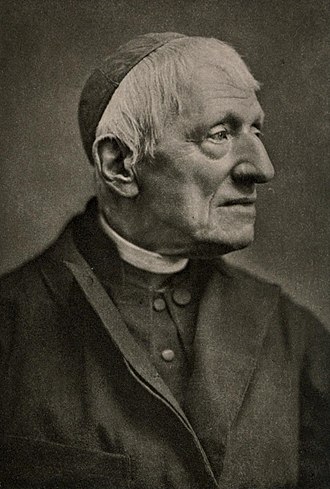
John Henry Newman (1801-1890) was born in London, England, the eldest of six children. His father was a banker. As a child, he loved to read and study. A devout young man, he was eventually ordained an Anglican priest in 1825. But Newman’s studies began to lead him to the Roman Catholic Church. He agonized over whether to become a Roman Catholic. He knew, in doing so, he would lose many of his close Anglican friends. But finally, in 1845, he became a Roman Catholic. A few years later, he was ordained a Catholic priest. Newman lived half of his long life as an Anglican and the other half as a Catholic.

Newman has been described as a theologian, philosopher, historian, writer, poet, and musician. He was not only an avid reader, but also a prolific writer. He wrote 40 books. In addition, 21,000 of his letters have survived. In his theology he emphasized a historical perspective and the lived experience of believers. When he was made a Cardinal in 1879, he took for his motto: Cor ad cor loquitur which means “heart speaks to heart.” The motto expresses his belief in the essence of prayer: it is one heart speaking to another heart. Later, his motto was used to describe how we pass on the faith to others–essentially by speaking heart to heart with them.
St. John Henry Newman has been called “the absent Father at Vatican Council II.” His writings had a profound influence upon the documents of the Council–especially his writings on conscience, religious liberty, scripture, the vocation of the lay people, and the relation between Church and State.
I became acquainted with Newman as a young Sister. In those “olden days,” the books we were permitted to read were few. But Newman (along with St. Teresa of Lisieux and some Trappist monks) were on the approved book list. As soon as I started reading Newman’s writings, I fell in love with him! This fact amazed me. I asked myself, “How can this dead old man ‘speak to the heart’ of me, a very alive young woman?” It was a mystery to me, but part of his attraction for me was his beautiful writing style–a little “old fashioned” in some places, yes, but so poetic and even magical at times. I also learned that this stellar scholar would take regular breaks from his books and his writing and go into London to visit the zoo! (A man after my own heart!)

One of my favorite Newman poems is “Lead, Kindly Light.” Some of you are probably familiar with it. In this poem he addresses God as “Kindly Light.” He describes the “encircling darkness and gloom”–something we experience at times in our personal lives as well as in some of our current news headlines… Then he says, “I do not ask to see the distant scene; one step enough for me.” Isn’t that how we live our lives–one step, one small decision, one tiny act of love, one day at a time? As a young man, Newman says in the poem, he did not want to be led. “Pride ruled my will.” But now he is asking God to lead him “o’er moor, o’er crag, o’er torrent… and finally home.”
This adapted version of the prayer/poem is sung by Audrey Assad. May these beautiful words to God become our own… as we pray: lead on, lead on, Kindly Light…
PS: Next Sunday afternoon, May 19th, from 1:30 – 4:00 (Central) I will be leading a zoom retreat entitled “Finding God in the Ordinary and Amazing.” It is sponsored by the Portiuncula Center for Prayer in Frankfurt, IL. I look forward to meeting the participants, and I ask for the support of your prayers for this event. Thank you!
I’d love to know what you thought or felt as you read this reflection and/or prayed Newman’s prayer… Please leave a comment below. We all would love to hear from you!
Acceptance Speech for the Gift of Life

We are nearing the end of the Easter season which culminates in the feast of Pentecost on May 19th. I think the celebrations of Eastertide and Pentecost are celebrations of life. And next Sunday is also Mother’s Day in the U.S. when we give special thanks to our mothers for conceiving us, bearing us, giving birth to us, and nourishing our lives in countless ways. In addition, while I watched parts of the award shows (Golden Globe, Grammy, Academy Awards) and listened to the acceptance speeches, I wondered: Do I thank God enough for being “awarded” the gift of life? I was praying about this one day when I felt the urge to write an acceptance speech for my personal gift of life. This is the speech I imagine I could have given to God right before I emerged from my mother’s womb…
“Acceptance Speech for the Gift of Life”
I wish to thank our Creator God for this precious gift of life.
I am truly honored to be the recipient of so great a gift.
I never expected to receive this gift of a single, unique human life.
I never asked for this gift. How could I? I didn’t exist yet.
I also assure you that I have done nothing to merit this priceless treasure.
So, I come before you today amazed… humbled… and extremely grateful.
Speaking of gratitude, I would like to thank my parents in a special way
for cooperating with Our Creator to share their own gift of life with me.
Mom, Dad, I wouldn’t be here today if it weren’t for both of you.
I also want to warn you: in raising me, you will have at least twenty-one years
of work, worry, and (hopefully!) some joy ahead of you!
So Thanks, Mom! Thanks, Dad!

In light of being entrusted with the gift of life,
I would like to make a few promises to God.
First, I promise never to take my life for granted. Never.
Second, I will respect the lives of my fellow recipients of this same precious gift:
Those who have gone before me.
Those who will walk this earth alongside me.
And those who will come after me.
Third, I will never use this gift in any way
that betrays the love with which it was entrusted to me.
Instead, I will endeavor to use my life as a life-long investment in loving,
in whatever form or length of time my loving may take,
thus imaging the Beloved One in whose likeness I am made.
And fourth, if I fall short of these promises (and I already sense I will),
I will seek our Creator God’s forgiveness,
for I know the Giver-of-all-Gifts is rich in mercy and over-flowing with loving kindness.

I now sense my birth is imminent. Finally.
I am about to squirm and wiggle from my mother’s warm and life-sustaining womb
and to venture out into the big and beautiful world awaiting me.
I sense there are people with my mother helping to deliver me safely.
One is even waiting to catch me in their open hands.
As I take my first breath, Beloved Creator God, know this:
My birth cry is my way of saying Thank you! Thank you!
I pray that these same words will be on my lips when I take my last earthly breath too.
Amen!
Happy Mother’s Day to all you mothers out there!
And thank you for your life-long investment in loving!
For reflection:
Name some individuals in your life who helped you to see that your life is a precious gift from God?
What are some of the ways we make our lives “a life-long investment in loving”?
How do we extend our love to those who came before us? to those who will come after us?
Would you add any things to your own “acceptance speech” for the gift of life?
Our video today is a song by the contemporary Christian musician/singer, J.J. Heller. The title is “One Wild and Precious Life” and it comes from the last lines of the poem “Summer Day” by Mary Oliver: “Tell me, what is it you plan to do with your one wild and precious life?”
I find the words of this song to be very beautiful. It begins with bringing a baby home from the hospital–and the fears involved. And the song concludes with that child’s wedding day. This song is sometimes played at wedding receptions for the father/daughter or mother/son dance. In between are words like these: “Sometimes a leap of faith is the best thing we can do, ’cause if we waited till we were ready, we would never move… We got some things wrong, we got some things right… we had lovely dreams and sleepless nights… but every sunrise brings another chance to be surprised… just listen to the music and take one step at a time… until we find we are dancing through this one wild and precious life…”
I invite you to comment below–on the reflection, the pictures, the song….
Praying with Isaiah 49: 8-15
Sometimes a scripture passage will speak to your soul. This passage from the prophet Isaiah (used this past Lent on March 13th) really spoke to me. I would like to share some of my prayer, my conversation with God, as I reflected on this passage. I will quote the words of Isaiah in regular type, and put my own words in italics. Notice, I don’t include the entire passage. I focus here on just the words that stood out for me. Also, my words may be a little disjointed at times. What follows is not a thesis, but a simple conversation with God.
Thus says the Lord: Hold it right there, Lord. I see great power in these four little words. It’s Isaiah’s way of saying, “Listen up, people.” (I’m a people!) “The Lord has something important to say to you”… That’s why I’m praying with these words today, my Lord. I’m listening for something–anything–you might be saying to me today in this passage.
In a time of favor: Let me stop there again, God. Isn’t every time a time of favor? My faith and experience tell me there is no time when you cannot pour your love and grace down upon us… upon me! In good times and bad… when things are going my way…and NOT! When I have clarity of vision and when I’m inching my way in the fog...anytime, every time can be a time of your favor.

In a time of favor I answer you. I hate to quibble with you, my Beloved One, but I don’t always hear you answering me… Or maybe (if I’m more honest) your answer is not the answer I want to hear, so I close my ears… Or maybe your answer does not come in words at all, but in silence… at least for now. And your silence demands humble waiting from me… or simple trusting… And, as you know very well, God, I am not always good at waiting or trusting. You can blame that on my Creator! (hee! hee!)

On the day of salvation I help you; and I have kept you and given you a covenant to the people, to restore the land… Restore… Let’s stop there for a moment. So you, my gracious God, are a restorer. In fact you are THE Great Restorer! How consoling is that? I watch HGTV sometimes (as you know) and I love to see these two guys in Detroit take a falling-apart old house (roof caving in, floor boards missing, windows broken, foundation in need of repair) and transform it into a beautiful new affordable home for some lucky family. Slowly, they’re restoring those neighborhoods one house at a time. I’ve learned from them that it’s much harder to restore an old home than to build a new one from scratch. An old house sets limitations. It also evokes greater creativity and ingenuity on the part of the restorer. And creativity and ingenuity are two of your strong suits, dear Lord. With any restoration project, so much painstaking work is involved. But that’s you, dear God. You restore our souls painstakingly!
Saying to the prisoners, Come out! When I read these words I see images of individuals being released from prison–those who had been in prison 10, 20, 30 years–especially those sentenced for a crime they didn’t commit! What joy is on their faces… tears… hugs from family and friends. Or, I see images of the Allied forces in WW II freeing the prisoners in those awful, awful death camps… The prisoners look like walking skeletons, too weak even to rejoice. That’s how your love is ready to free all of us, dear Lord, even me. Wow! Please free me from habits and attitudes that imprison me and restrict my true freedom as a child of God.
To those in darkness, Show yourselves! What are some of the darknesses I need to be freed from, God? The darkness of fear… ignorance… pain… the feeling of abandonment… my past injuries… the lies that masquerade as truth… my personal shame… my hopelessness. Where do I start?… Where do we start, Lord?

Along the way they shall find pasture… They shall not hunger or thirst… God, I thank you for the nourishment you have given me throughout my life… the nourishment of Mom and Dad and my precious siblings.. the nourishment of growing up on a small farm… of a good education… of the Sisters of Notre Dame… the nourishment of daily scripture and Mass… the many courses I’ve taken, the retreats I’ve been privileged to make and lead, the countless books I’ve read…the nourishment of the people I have been honored to serve and those who served along side of me… and especially the nourishment of my friends… God, there is no end to the nourishment you provide for us along our earthly journey! How lucky and blessed we are… and I’ve been.
Nor shall the scorching wind or sun strike them. Beloved One, you are my shelter… my shield… I take refuge in your presence and love throughout all my days and nights.
For he who pities them leads them and guides them. God, you are my GPS! always pointing me in the right direction. And when I stray, help me to recalibrate my steps that lead back to you and to my final home.
I will cut a road through all my mountains and make my highways level. Beloved one, you’re a civil engineer too! How crazy is that? You always clear the way before me whether with a bulldozer, a machete, or one of my good friends.

Can a mother forget her infant, be without tenderness for the child of her womb? We know that the answer to that question is sometimes (tragically, sadly) yes, she can. And we know that men too can forget the children they have fathered. But that doesn’t negate all the countless men and women who have welcomed children into their lives and have done the hard, hard 24/7 work of being a good parent. I thank you, God, for all of them! I thank you also for those individuals who display a strong maternal/paternal instinct toward our young whether they have children of their own or not.
Even should she forget, I will never forget you. Really God? Never? Even when I forget you? How precious are these words to me. They mean you can never un-remember me, or un-remember us! You can never ask, “Who are you again?” You can never lose sight of us! You can never stop loving us–because that’s who you are: Love. Simple and beautiful and eternal love!

Reflection questions:
Did any words or phrases stand out for you in today’s reflection?
Would you add anything?
PS: Last week’s video was “I’ve got Joy!” By King and Country. An alert reader (Sr. Renetta) called my attention to the website for St. Dominic Church in Shaker Heights, OH. Their kids sang this song at the end of their Mass on Friday April 26–and they sang it with motions! It’s wonderful! Go to the parish website, click on live streaming Masses, and click on the Mass for April 26. It’s the final song for the Mass.
Today’s song is “I Will Never Forget You, My People,” written by Carey Landry. It is sung here by the Sunday 7 p.m. Choir.
I invite you to comment below on anything in today’s reflection. We love hearing from you!
“The Book of Joy”: by the Dalai Lama and Desmond Tutu
Here’s another good book you might enjoy: The Book of Joy by the Dalai Lama and Desmond Tutu. These two Nobel Peace Prize Laureates and international spiritual leaders were also very close friends. In April 2015, Archbishop Tutu visited the Dalai Lama’s home in India to celebrate His Holiness’s 80th birthday. It was their last meeting. Tutu passed away on Dec. 26, 2021. Author and editor Douglas Abrams was invited to their meetings to create a book based on their week-long conversations which centered on this vital question: How do we find joy amid life’s inevitable sufferings?
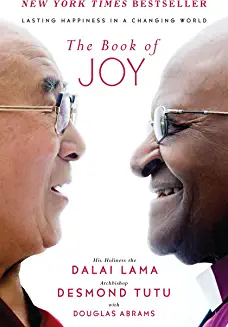
What struck we most about the book was the joyfulness of these two elderly men—despite the significant trials of their long lives. As Abrams says, “These two global heroes had stared into the abyss and despair of our times and revealed how to live a life brimming with joy.” Throughout the book, the men teased each other continually as they discussed the nature of true joy, the obstacles to joy, and shared their daily “practices of joy.”
As you probably know, the Dalai Lama is the spiritual leader of the Tibetan people, yet he has lived in exile for more than fifty years. Desmond Tutu, an Episcopal priest, worked tirelessly to deconstruct the evil policy of apartheid from his beloved country of South Africa. In 1994 he was appointed Chair of the Truth and Reconciliation Commission where he fashioned a new way for countries to move forward after experiencing civil conflict and oppression—a way that excluded retaliation and vengeance. (I wish we in the U.S. would learn from South Africa’s experience.)
I would like to share with you a few excerpts from this book:
Both men agree: the fastest way to being joyful is to start with love and compassion.
What is the solution to the intolerance and fanaticism we see flaring up all over the world? Says the Dalai Lama: “Education and wider contact are really the only solutions.”

What turns people into “bullies”? The archbishop described this chain reaction: With a self-centered attitude you become distanced from others, then you distrust, then feel insecure, then fear, then you feel anxiety, then frustration, then anger, then violence.
There is a Buddhist teaching that says what causes suffering is this pattern of how we relate to others: “Envy toward the above, competitiveness toward the equal, and contempt toward the lower.”
Archbishop Tutu calls his prayer room his “living room.” In that room he has a 7th Century Tibetan standing Buddha and a black Madonna from Mexico. He feels comfortable praying with both images even though neither image is from his Anglican tradition.
The two men converse on some of the obstacles to joy: fear, anxiety, sadness and grief, illness and fear of death. There’s also a chapter on each of the Eight Pillars of Joy: perspective, humility, humor, acceptance, forgiveness, gratitude, compassion, and generosity.
Perspective: Says the Dalai Lama, “For every event in life there are many different angles. When you look at the same event from a wider perspective, your sense of worry and anxiety reduces, and you have greater joy.”

Acceptance: Acceptance is not the same as resignation or defeat. Tutu worked against apartheid–but he first had to accept apartheid as a reality in his country. He says, “Acceptance is the only place where change can begin.”
Compassion: When we close our heart, we cannot be joyful. When we have the courage to live with an open heart, we are able to feel our pain and the pain of others, but we are also able to experience more joy. The bigger and warmer our heart, the stronger our sense of aliveness and resilience.
And finally, I’ll end this reflection with this quotation:
Gratitude: Says the Dalai Lama: “Every day, think as you wake up, ‘I am fortunate to be alive. I have a precious human life. I am not going to waste it.'”

For reflection:
Did anything in this reflection stand out for you? If so, what?
From your own lived experience, what helps you to be a joyful person?
What do you think is the greatest challenge to joy in today’s world?
If you have read this book, what was your opinion of it?
Earth Day, April 22, 2024
I cannot let Earth Day pass without sharing with you a few “earth quotes” to commemorate this important day:
The earth does not belong to us; we belong to the earth. Chief Seattle
There are no passengers on Spaceship Earth. We are all crew. Marshall McLuhan
Only when the last tree has died and the last river has been poisoned and the last fish been caught will we realize we cannot eat money. Cree Indian proverb
We do not inherit the earth from our ancestors, we borrow it from our children. Native American proverb
The universe, by definition, is a single gorgeous celebratory event. Thomas Berry
How will you celebrate Earth Day this year?
PS: A big Thank You to all who made the zoom retreat this past week in Great Bend, Kansas! I appreciated your presence, attentiveness, and participation. A special thank you to Sr. Renee and Ann, codirectors of the Heartland Retreat Center, for all the work they did to help make the retreat such a smooth-running and inspiring event!
Here’s an intriguing video called “Joy” by King and Country a contemporary Christian group with many popular Christian songs. I’m offering two videos. The first is the official music video–but it has no captions. I’ve listed a few lines from the song after the video. The second is a version of the song with just the lyrics. The song to me says, “Amid the gloom, look for the GOOD! The good IS present if we have the eyes to see! Choose JOY!”
Gotta get the fire, fire back in my bones
Before my heart, heart turns to stone
The time has come to make a choice and I choose joy.
Oh hear my prayer tonight, I’m singing to the sky.
Give me strength to raise my voice, let me testify…
Though I walk through the valley of the shadow of night,
Oh, with You by my side, I’m stepping into the light. I choose joy…
Here’s the lyric video:
I invite you to respond to today’s reflection. Even a sentence or two would be fine! We love hearing from you!
Like or Love?

A number of years ago I was struggling with someone, a co-worker who was about 15 years older than I was. I didn’t know him very well, but we rubbed shoulders at work from time to time. About once a month, for example, we were required to attend the same meeting with about eight others. It was at those meetings that I found myself getting increasingly annoyed with him. Why?
I thought he had a know-it-all attitude. (I was judging him, I know.) In addition, he took offense easily and sometimes responded with sarcastic barbs. On occasion, I thought he was rude to other members at the meeting. Including me. In short, he disrupted the peace that I sensed would prevail if only he weren’t present. I prayed about him. I reasoned, maybe what I saw as arrogance proceeded not from pride, but from hurt or fear. I told myself, maybe if I knew him better, I would be more understanding and less agitated. But I had no desire to get to know him better–and, I sensed, he had no desire to get to know me better either. So there! Even when he did nothing offensive at a meeting, I was on edge, because I sat there thinking, “When is he going to make some rude remark?”

I found myself struggling hard to be more tolerant of him. But nothing worked. One morning, on a day we had our meeting, I was praying about him again to God. I found myself blurting out, “But, Jesus, I just don’t like him!” Instantly I “heard” Jesus say to me, “So, Melannie, tell me: since when does your compassion extend only to individuals you like?”
Good question.
In the Gospels, Jesus didn’t say, “Like one another.” But he said, “Love one another”–many times too. Maybe he repeated it so often because he knew, from personal experience, how hard it was. Even Jesus got agitated with certain individuals, most noticeably with some of the religious leaders. But he also struggled with members of his own inner circle. On several occasions he must have found it difficult to like his disciples–especially when they were vying with each other for the highest places in his “organization.” Or when Peter ordered him not to go to Jerusalem to suffer and die. Or in his darkest hour in Gethsemane, when Peter, James, and John all fell asleep. And later, when his closest friends deserted him. One reason Jesus could still love them when they weren’t even likeable was this: He knew their stories. He understood their humanity, because he was so in touch with his own humanity.
(My co-worker ended up quitting his job with us and moving to another place many miles away, close to his original home. I thought, maybe his behavior with us was partially caused by being so far from family and friends. I could only hope he found some happiness in his new surroundings. Several years later, I heard he had passed away.)
We can’t possibly know the stories of every person we come in contact with. But during our lives, we may be privileged to know the stories of some individuals we interact with frequently–our spouse, our children, members of our religious community, good friends, individuals we work beside, and individuals we serve. Hopefully, those experiences will remind us that certain behaviors that would normally irk us, instead elicit patience and understanding from us precisely because we know the background stories of those individuals. It also helps if we are in touch with our own humanity–and with our behaviors that probably annoy the heck out of other people too! (ouch!)
God’s love is all-inclusive. That is why God is so understanding, patient, and forgiving. Each day God is calling us to expand the circle of our loving, a circle that goes beyond the circle of our liking. One way we do this is to remember that everyone has a story. We might not know that story, but God does. Because God knows everyone’s story. Including our own.

For reflection:
What do you do when you are struggling with someone who agitates you?
What is the difference between liking someone and loving someone?
Have you ever come to like someone that you initially didn’t like? If so, what accounted for the change?
What helps you to expand your circle of loving?
********************************************************
PS: I ask your prayers for a zoom retreat I will be leading this week for the Heartland Retreat Center in West Bend, Kansas. The theme of the retreat is “The Power and Mystery of God’s Extravagant Grace.” There are about 30 retreatants–Sisters and lay women. Some are at the retreat center and several are online. I received a list of their names and the list made me excited! They are “real” women and I’m looking forward to “meeting” them! Thank you for your prayers!
Our video today is the hymn “There’s a Wideness in God’s Mercy,” written in 1862 by Frederick William Fabor, produced here by Chet Valley Churches. As I look around our world today, the lines that struck me most were these: “For the love of God is broader than the measure of man’s mind… But we make his love too narrow by false limits of our own…”
I invite you to jot down a comment below about the reflection, the pictures, or the video…