Meet Scout, “Just a Perfect Dog”

Ordinarily, it is people who adopt pets. But this is the story of a dog who adopted some people… Scout was a stray mutt staying at the county Animal Shelter in Bellaire, Michigan. The staff guessed he was about 10 years old and he had been abused. He had BB pellets in his jaw and he feared strangers–especially men. But soon after his arrival, he started sneaking out of the shelter to Meadow Brook, a medical care facility across the street. How did he escape? Somehow he hoisted his 65 pound body over the six-foot solid viynl fence enclosure. (His story was told last September by Sydney Page in the The Washington Post.)

Scout’s first “break-in” to Meadow Brook was in 2017. He crawled over two fences, crossed a highway, and “sauntered into the nursing home lobby through an automatic revolving door.” Once inside he “parked himself on a brown-colored couch.” He was sound asleep there when a startled nurse spotted him and called the county sheriff. Scout was promptly returned to the animal shelter. But after a few nights, he escaped again. Following his third escape, a Meadow Brook staff member took him home, but he was not a good fit with her other dogs, so she brought him back. Eventually, the staff met and “collectively decided to adopt him.”
The Meadow Brook residents are mostly seniors with health issues. Why was Scout so drawn to this facility? No one knows for sure. Perhaps a previous owner resided in such a place. Or maybe Scout feels some kind of affinity with the residents. Whatever, he’s a resident now, having chosen to call Meadow Brook his forever home.

The Meadow Brook staff share the responsibility of taking care of Scout. Since his arrival, Scout has been living full time in one of the several units in the building. Each unit houses 20 residents. At night, although he has his own bed, he sometimes sleeps in a room of a resident whom he senses could use his comforting presence. Said one staff member, “He feels that he’s protecting everybody. He’s always on duty.” During the day he freely roams the entire facility. He sticks his head into residents’ rooms and senses if a resident is disinterested. “He does well with respecting boundaries.” Scout has warmed up even to the male residents, but he’s still a little leery of other men.
One 82-year-old resident named Shirley, says Scout is “just a perfect dog. You can pet him; you can talk to him. He comes in and lays down with you.” She adds that Scout makes Meadow Brook “more like a home.” Last year Meadow Brook launched a fundraiser called “Scout’s House Paws for the Pantry.” The fundraiser raised money and supplies for the animal shelter across the street. Scout’s story appeared on other news sources and soon donations poured in from all over the world.

One staff member summed up Scout’s presence at Meadow Brook in these words: Being here “gave him a better quality of life as much as it gave the residents a better quality of life. I couldn’t imagine this place without him.” For me, Scout’s story recalled the title of one of Henri Nouwen’s books: The Wounded Healer. Nouwen says that we can serve others from our strength and wholeness yes, but also from our weakness and brokenness. And the irony is, we often become more effective healers when we serve others from our own woundedness.
For reflection:
Did anything stand out for you from this story about Scout?
Has there ever been an animal in your life that somehow “gave you a better quality of life”?
*************************************************************************
PS: I want to thank you for your prayers for my retreat last week. In the months ahead, I hope to share with you a few of the insights I received during my special time of prayer, silence, solitude, reading, pondering, strolling in nature, and conversing with my fine retreat director, Fr. Bob, SJ. I also want to thank the Sisters of Notre Dame here in Covington for their warm hospitality and for providing me with a prayerful community and such lovely grounds–especially their Gazebo and pond–complete with croaking frogs, chirping birds, and a few resident geese!
Today’s video is called “Wounded Healer” by Audrey Assad. The song tells us that Jesus was the wounded healer par excellence. In his post resurrection appearances, his risen body still bore the wounds in his hands and side. It is not too far fetched to say that the BB pellets in Scout’s jaw were a sign of his past abusive treament. Yet this gentle stray mutt has given comfort and consolation to very many people.
You are invited to share your thoughts below. We all love hearing from you!
How Do We Become Holy? A Parable
Sometimes when we think of the word “holiness,” we picture a cloistered nun kneeling in chapel for prolonged hours, or St. Damien ministering to the lepers on Molokai, or St. Teresa of Kolkata tending to a dying man in the street. In other words, we tend to equate holiness with extraordinary religious practices, total selflessness, and journeying to faraway lands. But here is a parable I wrote several years ago about holiness.
*******************************************************

There once was a farmer who wanted to become holy. So he decided to leave his wife and children for a few days and go visit the holy man who lived on top of a nearby mountain. “The holy man will tell me the things I have to do to become holy,” said the farmer to his wife. He kissed his family goodbye and left on his journey. He had not gone very far when he thought, “I’m feeling holier already. Although I love my family, my wife’s nagging gets on my nerves at times. And my children’s constant clamoring for attention wears me out. And my neighbor’s frequent requests for help prevent me from praying as much as I would like.”

After walking for a day, the man came to the foot of the mountain and began to climb. After a little while he said, “Climbing this mountain is hard work. It is even harder than hoeing my fields and tending to my animals.” He concluded, “Surely the penance of this climb is making me more holy already.” After two days of climbing, the man ran out of food and was forced to eat the plants along the path. “I am half starved,” he said. “And these weeds are bitter. I already miss the good porridge my wife makes for me every morning. But surely this fasting is making me more holy.”
On the third day the farmer reached the top of the mountain where he met the holy man sitting in prayer outside his cave. While the farmer explained his reason for his visit, the holy man listened attentively. The farmer ended his story by saying, “So please tell me, Sir, what must I do to become holy?” Without hesitation, the holy man replied, “Go back to your family, your farm, your village… Be patient with your wife and appreciate her more… Be attentive to your children. Balance your firmness with kindness… Be helpful to your neighbor… Hoe your fields, tend to your animals, eat the foods you grow–and do all with gratitude. If you do these things well, you will indeed become a holy man.”
***********************************************************

The parable points out that while prayer, penance, and fasting are praiseworthy religious practices, they do not automatically lead to holiness. Rather, the path to geniune holiness passes through the ordinary circumstances of our everyday lives. True holiness is found in things such as these: in facing the challenges and joys of sustaining life-giving relationships… in dealing patiently with the normal tensions involved with living and working with others… in being faithful to our daily duties and responsibilties… in reaching out to our neighbors in need–even when inconvenient.

This truth is demonstrated in the lives of many saints–such as St. John Neumann (my fellow Czech!) Born in Bohemia in 1811, he was ordained a priest in New York. For years he ministered in immigrant parishes in Buffalo, Pittsburgh, and Balitmore. In 1852 he was named the fourth Bishop of Philadelphia, at that time the largest diocese in the United States. He died in 1860. During his beatification process, the Sacred Congregation in Rome declared that his life seemed “a series of ordinary everyday actions.” Years later, Pope Benedict XV would say regarding him, “Work, even the most simple, performed with constant love in the midst of inevitable difficulties, spells heroism.” It spells holiness too!
For reflection:
Did any words in the parable stand out for you? If so, why?
How did the farmer’s idea of holiness change from the beginning of the story to the end?
What specific aspects of your ordinary life elicit from you love, patience, generosity, kindness, courage, gratitude, heroism? In other words, what aspects of your ordinary life provide you with the “ingredients” for holiness?
*********************************************************
PS: This week I am making my annual retreat in the company of our SNDs in Covington, KY. I promise to pray very specially for all the readers of my blog. I thank God for your interest in spirituality, your wise comments, and your example of living your faith with love and hope! I ask for your prayers too. Thank you!
Today I chose a song by Bernadette Farrell called “Everyday God.” This contemplative song sings of God’s presence in our everyday lives. We believe that in the circumstances of our everyday, God provides all we need to become holy women and men. What circumstances? The song lists many of them: In our resting… rising… sorrow… laughter… working… hoping… waiting… sharing… dreaming… daring… searching.
Please share below any thoughts you might have on this reflection. We love hearing from you!
The Best Reasons to Have Children

Last year The Washington Post ran an article entitled “13 Parents Share the Best Reasons to Have Children” by Alyssa Rosenberg. Since I have no children of my own, I was interested in what these experts (actual parents) had to say. Though they all work in some capacity at The Post, “Their families come in all sizes,” and they have a wide range of religious and political perspectives. I’ll share a few of their thoughts and then open up this topic for your sharing.
“The best part of parenting is getting to be a kid again for them,” writes Mary Katharine Ham. She cites “the fun of coloring, Play Doh, Little League, bounce houses, and playgrounds.” She adds, that the hardest part of parenting is “you have to be an adult for them. Boundaries, guidelines, the very long curve of teaching kids to behave in public.”

Theodore Johnson says, “One of parenting’s first joys is the feeling of a little hand in your palm, that small gift representing a child’s trust and desire to learn from you in a world of pointy edges.” Amber Noelle Sparks notes that the best and hardest parts of parenting “all stem from the same thing: that you have literally created a new person, who is absolutely not you nor your partner and has a completely different brain and different personality.” This can be wonderful–when your daughter, for example, turns out to be an amazing artist and neither of her parents are. But it can be challenging when you butt heads over things.

Elizabeth Nolan Brown sums up the best reason for having kids is “how much more full it has made my life.” She enumerates: “More full of love. More full of activity. More full of noise, responsibility and pure joy… More laughter. More worry. More perspective.” She admits, some things “are not awesome” like more worry. “But they are more than offset by the amazing, joyous, and life-affirming elements.”
Leah Libresco Sargeant says, “I see more of the world, moving at my children’s pace and looking through their eyes.” And when she travels alone with her two children, ages 3 and 1, “I receive more kindness from strangers.” She adds, “My children make me visible to others and others visible to me.”
Emily Oyster sums up the best reason for having kids as “the joy of socks.” She recalled a time when she received an email with some very good professional news. She called her husband to tell him about it, and they agreed that “in terms of daily happiness, it ranked second only to our daughter figuring out how to remove her sock that morning.”

One of the reasons Alyssa Rosenberg wrote this article is because she felt that “Parenting needs better PR.” Sometimes young couples hear too many stories about the difficulties of having children. So, I invite you below to share some of the best reasons to have children–based on your experience and perspective.
For reflection:
Did any of the reasons above resonate with your thoughts and feelings about parenting? Can you think of any other reasons?
Would you like to share a few of those reasons below with all of us? (You need NOT be a parent to respond to this question. Sometimes “outsiders” can offer very worthwhile perspectives too!)
**************************************************************************
PS: Garden update: Two weeks ago I shared my struggles with my porch garden. Here’s an update: I’m sad to report that my bell pepper plant died–but not before giving me one marble-size red pepper. My pretty yellow petunia plant was infected by some sort of fungus. I had to dispose of it. The lone tomato on my beef steak plant continues to grow. It’s the size of a golf ball now. A small golf ball… My zinnia has 3 new green stalks with three buds! It is now out of intensive care. How’s your garden doing?
I am offering two videos today. The first is the song “We Are Children of God,” by Monica Scott. It reminds us that WE are sons and daughters of God–no matter how young or old we are. Hopefully our relationship with our children will give us a better understanding of our relationship with God. Also, this video celebrates young children. Just seeing their faces will probably make us smile. And finally, we remember that Jesus said, “Unless you become like little children, you will not enter the Kingdom of Heaven” (Mt. 18:3).
We are all shocked and disturbed by the attempted assassination of Donald Trump on Saturday and the death and serious injury of the others who were there. We pray for all involved. I chose this second video as a prayer for peace. It’s “Peace on Earth” based on Antonin Dvorak’s New World Symphony and adapted by Bob Hurd. We pray that we who are privileged to live in a democracy will once again realize that violence is not the way to preserve our democracy. Instead we must do the much harder labor of working for justice for all our citizens, of tending to the poor in our midst, of treating all people with respect, of striving to be a person of integrity and love, and of working endlessly for the common good.
I invite you to share below your thoughts on this reflection below…
Prayer Before Beginning a Project

These past few months I have been working on a new book based on this blog, “Sunflower Seeds.” When I began this project, I prayed to our Creator God for assistance. Here is an adaptation of that prayer for anyone beginning a new endeavor–whether it’s hosting a family get-together, planning a vacation, preparing a parish event, changing jobs, putting together a talk, beginning retirement, starting a new school year, moving to a new house, or even welcoming a new baby into the family. I’ve used the plural form because for many of our projects, we work with others. But you can modify the words to fit your project or endeavor.
Prayer Before Beginning a Project
Creator God, as we begin this new endeavor, we hear you asking us: “How can I help you?” Let us count the ways.
Please give us strength… give us direction… and give us patience from the beginning to the ending of this project.
Right now, we might look upon this endeavor as a mere duty… or a major chore. Help us to see this task before us as a privilege… a small way we can partner with you to bring more goodness into the world… When we get weighed down, help us to lighten up. Keep us in touch with the pleasure and genuine fun involved in this work.

Pour enthusiasm into our souls, a teensy portion of your own Divine Enthusiasm as you spoke those words of unimaginably far-reaching consequences: “Let there be light!”
Help us to balance control and letting go throughout this project. May our need to control be punctuated with regular periods of letting go and allowing the work to have a life and mind of its own.
May we respect the entire work process which includes starting… moving forward… trial and error… stalling out… back tracking… moving forward again… and bringing the project to completion.

Never let us forget the underlying purposes of our work: for your greater honor and glory… for the individuals who will benefit from this work… for our own personal growth and transformation. May we humbly delight in the small role we are playing in the coming of your Kingdom upon earth.
Any finally, our Beloved Creator God, help us to take regular breaks from our work… knowing you do not desire our total exhaustion, but rather you desire our joy-filled wholeness… And every time we begin to work on this endeavor, may we take a few moments once again to answer your question addressed to us: “How can I help you?” Amen.
***********************************************************

For reflection:
When you begin a new project, what gifts or graces do you ask for from God?
Is there anything in this prayer that really spoke to you?
Do you have any projects or endeavors you would like us to pray for? Let us know below.
My prayer today was addressed to our Creator God. This gentle and lovely song by Margaret Rizza celebrates our Creator God’s presence everywhere–in creation itself, in the current world situation, and in our personal lives.
I invite you to respond below to anything in today’s reflection:
Quotations on Rest, Leisure & Play
It’s summertime in the northern hemishpere. So, I decided to visit my quotation files and see what I have filed under rest, leisure, and play. I hope you find these quotes inspiring and fun!

1) Leisure time is a gift of God for being refreshed physically, mentally, and spiritually, a time to strengthen bonds, to enjoy God’s gifts. Anonymous
2) There is no music in a “rest,” that I know of: but there’s the making of music in it. And people are always missing that part of the life-melody. John Ruskin

3) Together with the culture of work, there must be a culture of leisure as gratification. To put it another way: people who work must take the time to relax, to be with their families, to enjoy themselves, read, listen to music, play a sport. Pope Francis
4) Play is the brain’s favorite way of learning. Diane Ackerman
5) The true object of all life is play. G. K. Chesterton (He also said that Heaven was a playground!)
6) What is life if full of care, we have no time to stand and stare. W. H. Davies

7) What do I want to take home from my summer vacation? Time. The wonderful luxury of being at rest. The days when we shut down the mental machinery that keeps life on track and let life simply wander. The days when you stop planning, analyzing, thinking and just are. Summer is my period of grace. Ellen Goodman
7) The highest form of research is essentially play. N. V. Scarfe
8) “Hurry sickness” is now a recognized phenomenon in medical circles. It includes high blood pressure, ulcers, tension headaches… It is rushing that takes the joy out of life.” Beatrice Bruteau
9) It is time for nappers to lie down and be counted! William Anthony, a professor of psychology at Boston University, who argues that more frequent napping could have “a positive effect on both mood and performance.”
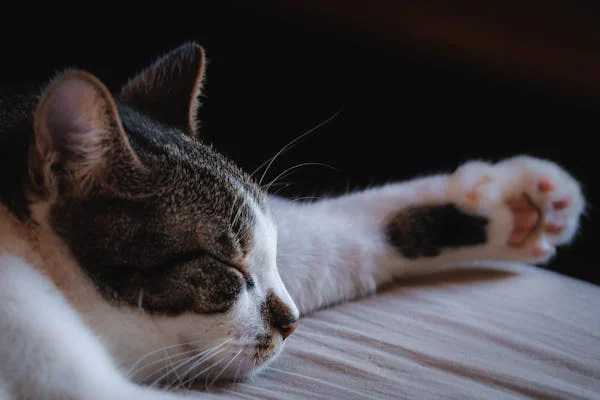
10) Some of us have made an idol out of exhaustion. The only time we know we have done enough is when we are running on empty and when the ones we love the most are the ones we see the least… I began to wonder if my human wholeness might be more useful to God than my exhausting goodness. Barbara Brown Taylor
11) We are never more fully alive, more completely ourselves, or more deeply engrossed in anything than when we are playing. Charles Schaefer
12. Necessity may be the mother of invention, but play is certainly the father. Rodger Von Oech
13) Without play, life just doesn’t taste good. Lucia Capocchione
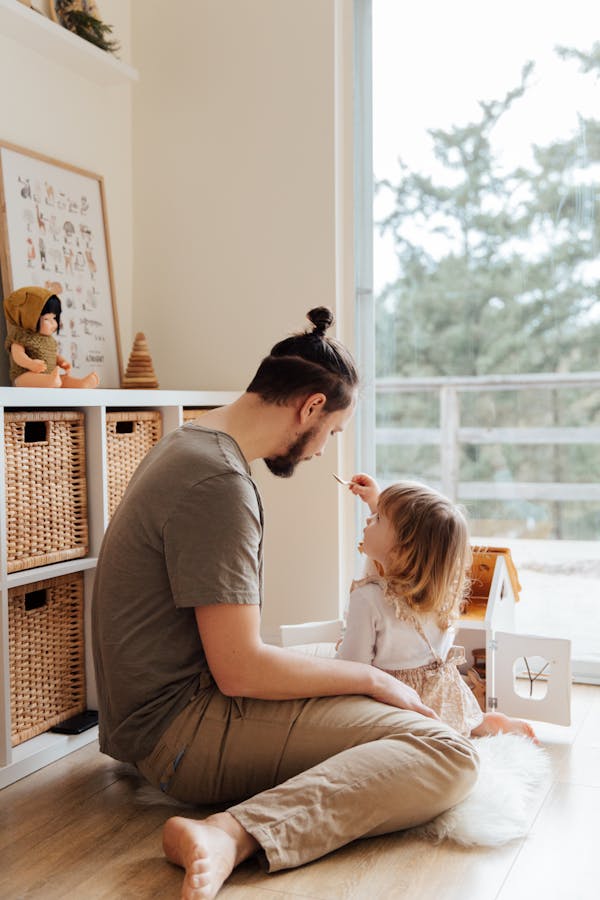
14) Time spent playing with children is never time wasted. Don Lantaro
15) St. Saturus was a 3rd Century Christian martyr. Just before his death, he had a vision of heaven. He saw intense light, a garden of lush flowers, tall majestic trees, angels in white robes, and heard the chanting of heavenly voices. He kissed God’s face; God touched his face with his hand and then said, “Go and play!”
And finally, here’s a short video of a baby laughing while playing with a sheet of paper. This video has been online for 13 years and people still seem to get a kick out of it. Who says you need expensive toys to have fun?
For reflection:
Did any of these quotes really speak to you? If so, which one(s)? Do you know why?
What helps you to balance work and leisure in your life?
What are some of your favorite ways to play?
PS: Last week I wrote about my struggles with my gardening. A friend, Sister Barbara, gave me some Miracle Gro and I must confess, my tomato plant is greener and healthier looking–but still has only a couple of yellow blossoms. While Sr. Sandy, on the other side of the building, just picked her first big red tomato! But my zinnia sprouted two new green shoots from its stem. And my petunias and impatiens seem happier. So things are looking up a bit!
Ps. 46:11 says, “Be still and know that I am God.” Some scripture scholars say that “be still” can be translated “have leisure and know that I am God.” We can afford to have leisure, rest, and play in our lives because we believe everything is in God’s hands. Our video is called “Rest” by Aaron Shust. I chose it because it reminds us that our faith in God is the foundation of our leisure and rest. Plus the winter images might cool you off in case you are experiencing hot temperatures right now where you live.
I invite you to comment below on the quotations, the pictures, the videos. Or add something of your own!