
Heal Us, Loving God

I’ve been doing some reflecting on healing these days–not merely the physical kind, but other kinds as well. Here’s a little prayer that arose from my reflecting…
“Heal Us, Loving God”
Heal us, Loving God, from our tendency to judge others. Remind us that we have no idea what burdens others may be bearing… Heal us from pettiness. It prevents us from seeing the bigger picture… Heal us from the need to win every argument. Remind us that losing an argument can be a blessing.
Heal us, Loving God, from taking life too flippantly–or too seriously… from thinking of ourselves only as consumers rather than givers and sharers… Heal us from the kind of constant worrying that prevents us from doing the good you are entrusting us to do.
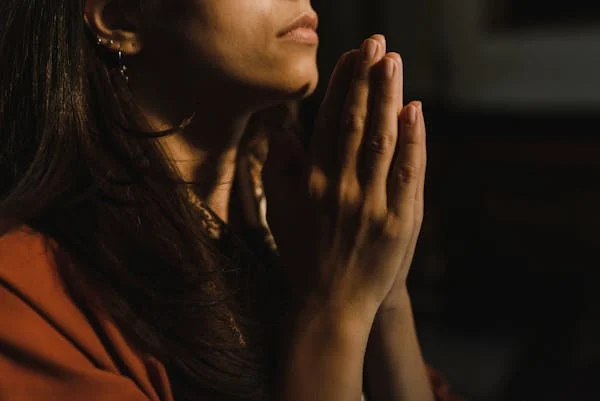
Heal us, Loving God, from taking the beauty and mystery of existence for granted… from a cynicism that insists, “No better world is possible!… Give up already!”… Heal us from rushing so much to get things done, that we miss seeing, appreciating, and connecting with the people you put into our everyday life.
Heal us, Loving God: from being slaves to the clock… from an incessant need to be in control… from criticizing others who are very different from ourselves–or who are very much like ourselves.

Heal us, Loving God: from the fear that prevents us from taking risks for justice and compassion for all… Heal us from thinking that the only way we show our love for you is by our total physical exhaustion. Rather help us to cherish the virtues of rest, play, and humor… Heal us from the need to have You and everyone else operate on our time schedule.
Heal us, Loving God: from the viciousness of jealousy… from the tyranny of greed… from the demon of revenge… Heal us from The Great Untruth that says we are all isolated individuals walking on this earth–rather than embracing The Blazing Truth: we are all one interconnected community of beings of the earth.
Heal us, Loving God: from thinking of our faith as a set of rules to follow rather than a personal, loving, life-long relationship with You… Heal us from the kind of certitude that slams the door on further growth, deeper undertsanding, and greater compassion… Heal us from a lack of trust in Your love and promises. Keep these words of yours alive always in our hearts: “I have loved you with an everlasting love… The Kingdom of Heaven is in your midst… Behold, I am with you always.”
Heal us, Loving God, heal us. Amen.

For reflection:
Did any request for healing stand out for you?
Did you find yourself anywhere in this prayer?
What other kinds of healing do you think we can we ask for from God? Would you like to share any of these with us below?
Our video is a simple song called “Heal Us Lord” by Keka Zucha. This version includes the lyrics plus simple arm and hand gestures that you might want to do (standing or seated) as you listen and pray along. I found the experience to be prayerful and calming.
I welcome your comments below. I always enjoy reading them!
Time for a Humor Break

Several times a year I devote my blog to humor. After all, humor is good for our physical health. Laughter enhances our intake of oxygen, stimulates our heart, lungs, and other muscles, and increases the endorphins that are released by our brain. Laughter is good for our spiritual health too. Even the book of Proverbs says, “A merry heart is health for the body” (Pr. 17:22). I hope these jokes, quips, riddles, stories , and pictures, will help put a smile on your face.
Let’s start with a few jokes for kids. If you have any little kids in your life, you might want to try out these riddles on them:
Why did the cookie go to the nurse? Because he felt crumby.
Why was 6 afraid of 7? Because 7 8 9.
What did the man say to his fingers? “I’m counting on you.”
What kind of a cat likes to live in water? An octo-puss.

Now here are three knock, knock jokes:
“Knock! Knock!” “Who’s there?”
“Howl.” “Howl who?”
“Howl you know unless you open the door!”
“Knock! Knock!” “Who’s there?”
“Figs.” “Figs who?”
“Figs the doorbell. I’ve been knocking for hours!”
“Knock! Knock!” “Who’s there?”
“Tank!” “Tank who?”
“You’re wlecome!”

Okay, let’s move this along with a few stories:
The lawyer opened the will of the deceased man in front of his eager family. He smiled and said, “This is a surprise! He left it all to me!”
A company owner was asked how she motivated her employees to be on time. She smiled and replied, “It’s simple. I have 30 employees and 29 free parking spaces. One is paid parking.”
A boy went into a toy store, selected a toy car, took it to the check out, and handed the cashier some Monopoly money. The cashier said, “This money isn’t real, kiddo.” Said the boy, “That’s okay. Neither is the car.”

My poor knowledge of Greek mythology has always been my Achilles’ elbow.
Dear Algebra, Please stop asking us to find your x. She’s never coming back and don’t ask y!
Fun fact: women spend more time wondering what men are thinking then men actually spend thinking.
My two children were watching me trying to assemble a swing set. Tightening the screws was hard for me, so I asked their father to help. He swaggered out and easily tightened the screws. My 3-year-old blurted out, “Mommy makes things, and then Daddy screws them up.”
What did one snowman say to the other snowman? “It smells like carrots over here.”
I invented a new word: plagiarism!

Words of wisdom:
When in doubt, look intelligent. (Garrison Keillor)
All you need is love. But a little chocolate every now and then doesn’t hurt. (Charles Schultz)
When kids become wild and unruly, I use a nice, safe playpen. When they’re finally finished, I climb out again. (Erma Bombeck)
You know you’re getting old when the candles cost more than the cake. (Bob Hope)
People can’t drive you crazy if you don’t give them the keys! (Mike Bechtle)
I love being married! It’s so great to find that one special person you want to annoy for the rest of your life. (Rita Rudner)

Once again, a few more stories:
Mom: Where are your dirty clothes?
10-year-old: On the floor.
Mom: Where should they be?
10-year-old: On the floor where you can’t see them!
My husband showed our 5-year-old son a picture of himself when he was 16 and asked if he knew who it was. Our son stared at the picture for a long time before saying, “It’s me when I get bigger.”
I told a chemistry joke once. I didn’t get much of a reaction.
A computer translated these words from English into Russian: “The spirit is willing but the flesh is weak” = “The whiskey is agreeable but the meat has gone bad.”
What did the termite say when he walked into the bar? “Where’s the bar tender?”
My girlfriend treats me like God. She ignores my existence and only talks to me when she needs something.
And last but not least:

For reflection:
Did any of these items make you smile?
Would you like to add a joke or riddle or humorous story below?
************************************************************************
Prayer for Veterans’ Day
God of Love, today we honor all our veterans, those unselfish men and women who responded courageously to the call to serve and protect our country. With grateful hearts, we thank them for their service. And we ask that we all may continue the unending struggle to preserve our cherished freedoms and to work continuously for lasting world peace. Amen.
****************************************************************
One of my favorite lines from the pslams is this: “Weeping may endure for a night, but joy cometh in the morning” (Ps. 30:5 KJV). In fact, I like those words so much, I chose it for the title for one of my books, With the Dawn Rejoicing: A Christian Perspective on Pain and Suffering. The words remind us that pain and sorrow do NOT have the last word! Joy and laughter do! That’s what Jesus’ resurrection is all about. In other words, we have hope not because everything is the way we want it to be–but because we believe in God’s power, grace, and promises… Here’s the song “Joy in the Morning” by Tauren Wells. I especally appreciate the lines: “If it’s not good then God isn’t done with it yet… Grace will be there when you’re at the end of your rope… The story’s not over.”
Please feel invited to share a comment below!
A Day in the Life of Jesus

I’m currently reading Into the Mess & Other Jesus Stories by Debie Thomas, a remarkable writer who currently serves as the Minister of Lifelong Formation at St. Mark’s Episcopal Church in Palo Alto, California. Her book is so rich, I’m not devouring it. Rather, I’m sipping it. Today I’m sharing this sip with you from her chapter “A Day in the Life.”
The writer Annie Dillard so wisely says, “How we spend our days is, of course, how we spend our life.” What was a “typical day” like in Jesus’ life? Thomas focuses on Mk. 1:29-39, the day Jesus cures Peter’s mother-in-law, a day very early in his public ministry. What does Jesus do on this particular day? Thomas suggests several things. Here are four of them.

Jesus makes home sacred. In Mark’s account, Jesus leaves the synagogue after Sabbath worship and enters the home of Simon and Andrew. He seems to spend the whole day there. In doing so, Jesus blesses “a humdrum location with his presence” and honors it as a “sacred site where the work of God goes forward.” Some of Jesus’ miracles and most significant encounters happen in homes. Says Thomas, “Holy things happen in places we call home. God’s power and presence are not limited to official sacred spaces.”

He heals.We might not have the power to work healing miracles in the same way as Jesus did, but can we, like Jesus, offer a compassionate presence as we go about our ordinary days? Jesus spent time with people. He didn’t consider hanging out with others a waste of his valuable time. He ate with people, listened to their stories, shared his own stories, encouraged them, laughed and cried with them, and offered a gentle touch. “In short,” says Thomas, “Jesus offers the sick and broken his steady presence, his warm embrace, and the good news of a kingdom that is coming.”

He prays. The next morning, Mark tells us, Jesus slips away in the dark to a deserted place to pray. This is a regular practice for Jesus. Says Thomas, “We see (Jesus’) need to withdraw, his hunger for solitary prayer, his inclination to rest, recuperate, reorient his heart.” He understands “the necessary and ongoing tension between compassion and self-protection in a world bursting with need.”

He moves on. This story ends with Jesus leaving Simon’s house so he can bring the good news to other towns, synagogues, and homes. This decision to move on is probably not an easy one for Jesus. There are “compelling reasons” to stay. But after his early morning prayer, Jesus “recognizes and trusts the voice that says, ‘It’s time to go.'” We can learn from Jesus that “sowing a seed and walking away is sometimes appropriate.” That there are times to set boundaries, to relinquish prestige and power, to hand things over to someone else, to withdraw, to retire.
Thomas concludes this chapter with these words: “How we spend our days is how we spend our lives. Let’s spend ours well.” I would add: And let us look to Jesus to see how we can spend our days well!
For reflection:
What are some of the sacred things that have happened in your home?
What does a “healing presence” look like?
Who has been a healing presence for you? How have they done this?
How do you balance the tension between your compassion for those in need and your need to reorient your heart through prayer on a regular basis?
Have you ever heard a voice say to you, “It’s time to move on”? What was that experience like for you?
PS: If you’re looking for a prayer for the U.S. national and local elections, I wrote one at the end of last week’s blog on grief…
Our vdeo today is “Healer” by Casting Crowns.” It’s a reminder of how much we need the person of Jesus in our lives…
I invite you to write a comment below. Thank you!
What I Know about Grief

In the liturgical year, November is the month we remember our deceased loved ones in a special way. November 1 commemorates All Saints, while on November 2 we remember all the faithful departed–not just the canonized saints. It is fitting, then, that we reflect on the experience known as grief, that is, the emotional pain or suffering that can accompany a significant loss in our lives. Here are a few things I know about grief.
Grief cannot be measured. But we are forever trying to measure it. A friend was burying her 94-year-old father who had lived with her the last three years of his life. At the wake I overheard someone say to her, “But, Ruthie, you had him so long!”–implying that Ruth’s grief should be lessoned by that fact. Ruth responded with, “I know, I know. But that’s what makes this even harder. Every day he gave me another reason to love him!”

Who can compare one person’s grief to another’s? And yet we say things like, “But my husband was so young,” as if losing an elderly husband is easier. Or “But he was my only son,” as if losing one son when you have two is less painful. And we try to convince ourselves that our grief really isn’t that bad after all. We say foolish things like, “I know I’ll get over this.” Or “At least she’s not suffering anymore.” These are all attempts to reduce our pain, to diminish our suffering. But they seldom work for very long.
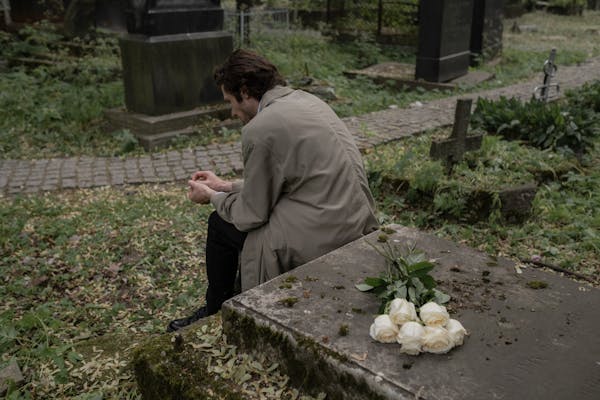
Grief is grief. It is not despair. It is not hunger. It is not paralysis. It is not fear. Yet it can sometimes feel like all of these things. But grief is unlike anything else in the world.
People grieve differently. Some weep profusely. Others barely. Some want to be alone. Others want to be with other people. Some become very angry. Others become calm and mild. Some throw themselves into their work. Others sit and stare out windows. Some hate God. Others become more religious.
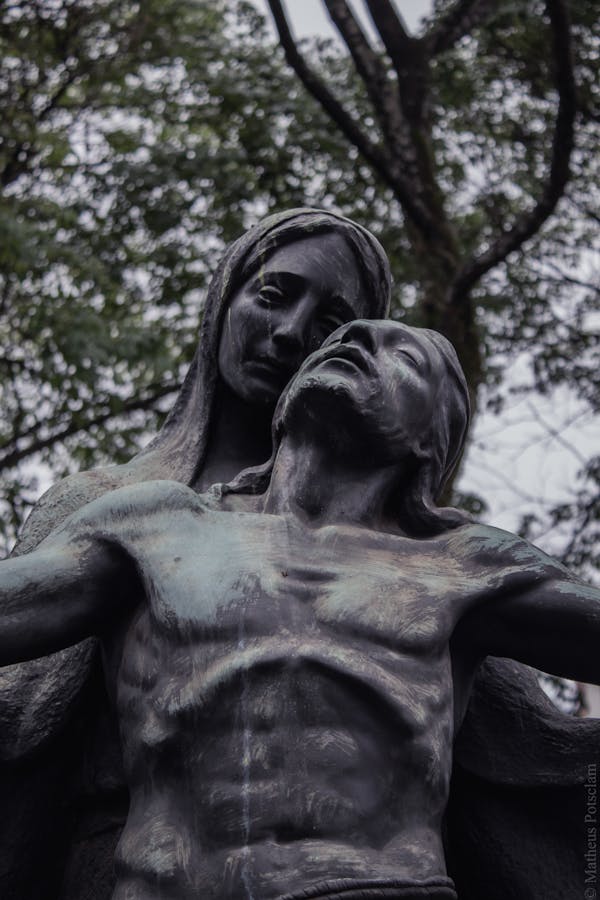
Grief finds us–sometimes when we least expect it. A few months after my dad died, I was using the drive-thru in the bank one day. While I waited for my transaction to be finished, I listened to the classical station. That’s when I heard the opening strains of “Poet and Peasant” by Franze von Suppe. Suddenly my eyes filled with tears–and I didn’t know why. It took me several moments to realize what was happening. “Poet and Peasant” was one of my dad’s favorite classical pieces. He played it often as I was growing up. My heart was grieving his loss even before my brain figured out what was going on. We can be flooded with grief anytime, anywhere, anyhow. The book, A Grief Observed, is a poignant journal C. S. Lewis wrote after his wife’s death. In it he says that grief “is not local,” that is, it is not restricted to one place. He says of his wife’s death: “Her absence is like the sky, spread over everything.”
Grief changes us. After the death of her father, Ann Lamott wrote: “I don’t think you really ever get over the death of the few people who matter most to you. It’s too big. Oh, you do, the badly broken leg does heal, and you walk again, but always with a limp.”
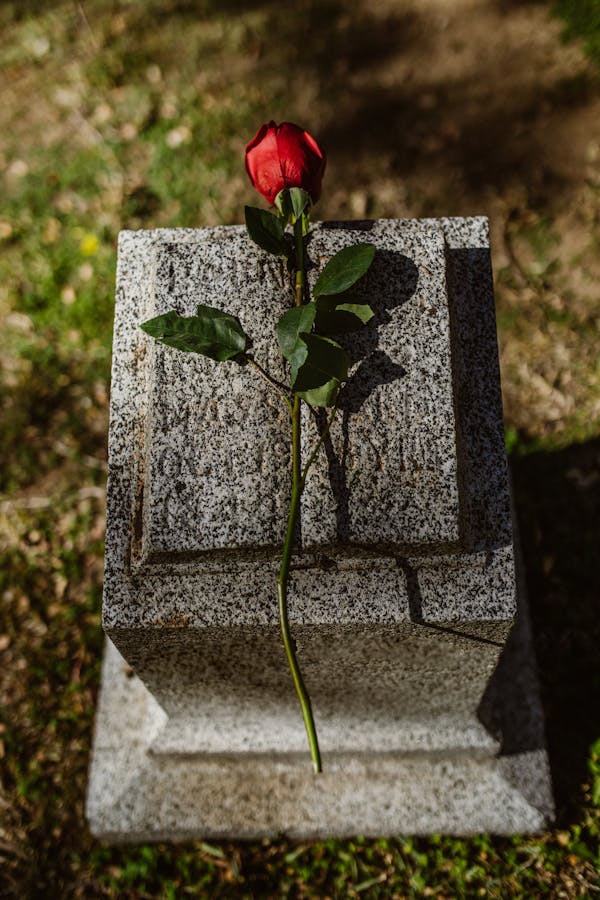
Grief is the underside of love. Perhaps there’s no greater proof of love’s greatness than the pain we feel when the object of our love is taken from us. I appreciate what Winnie the Pooh said about grief and love: “How lucky I am to have something (or someone) that makes saying goodbye so hard.”
For reflection:
Was there anything in this reflection that resonated with your experience of grief?
Is there anything else you know about grief that you’d like to share with us?
Was there anything or anyone who helped you during your time of grief? How?
******************************************************************
PS: Let us continue to pray for God’s blessings on our upcoming national and local elections. This prayer is loosely adapted from a prayer posted by our congregation’s “Justice, Peace, and Integrity of Creation” office:
Wise and loving God, you desire only good for all peoples. May our upcoming elections help to promote the common good of all of us. Give us a renewed appreciation of truth, honesty, and kindness. Free us from fear, hatred, and violence. Help us to choose leaders who see a political office as a form of service to others. May those who seek public office be willing to work with one another to promote human dignity, to correct injustice, to reach out to those who are poor and in need, to care for your beautiful creation, and to work unceasingly for lasting world peace. Good and merciful God, may we never take our freedom to vote for granted. Guide our politics as you guide our lives with your wisdom and love. Amen.
*****************************************************************
Our video is “Eye Has not Seen” by Marty Haugen. If earth is this beautiful, and love is this strong, then we can barely imagine what heaven must be like…
I invite you to share a comment below!
What Good Is It Anyway?

One of the disciples, Andrew, the brother of Simon Peter, said to Jesus, “There is a boy here who has five barley loaves and two fish; but what good are these for so many?”
“What good are these?” Andrew asks. What good are five barley loaves and two fish–when there are so many hungry people to feed? And so I ask:
What good is it to give food to the hungry who come to our food pantry, when they only keep coming back again and again?
What good is it to give shelter to the homeless, when many of them don’t seem to want it? When most of them have far greater needs than a place to sleep?
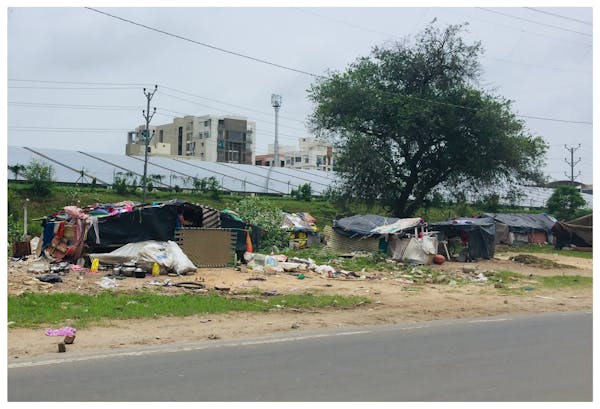
What good is it to provide an apartment for this single mother with two kids, when she also needs food, furniture, clothing, transportation, counseling, a GED, job training, then a job, and day care?
What good is it to try to be honest and to care about those in need, when others (even some of our heroes and idols) are living lives of luxury with seemingly little concern for the common good?
What good is it for me to vote when my vote counts only for one anyway?
What good is it for me to do my daily responsibilities and simple acts of love when the world’s needs are so far beyond my measly giving?
What good is it trying to save our planet, when some say the environmental crisis is all a big hoax anyway? When the few things I can do–recylce paper, plastic, glass, and cans–don’t make much of a difference? And when all our efforts may be too late anyway?

What good is prayer, when it doesn’t seem to change a thing? When I feel I keep knocking on God’s door and nobody’s home? When I feel I don’t even know how to pray?
What good is it trying to be a person of hope when, I see, in the news, so many reasons to lose all hope?
But…
But…
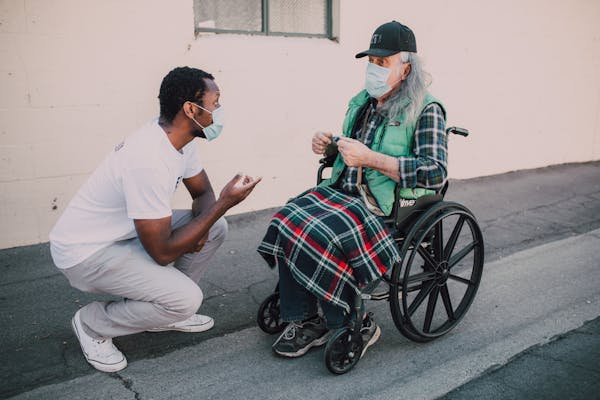
But then I remember how this Gospel story ends.
I remember how Jesus took the little that was offered him… the five barley loaves and two fish… and blessing them… and distributing them… they became enough to feed the crowd of thousands. And (here’s the kicker!) there were even leftovers! Twelve baskets full! How crazy is that?
And so I keep praying:
Jesus, take the few resources I have… my little gifts and talents…. my faithfulness to my daily responsibilities… my consistent small acts of attention, kindness, help, and love… my feeble but faithful attempts at prayer… and the little ember of hope that still flickers in my heart… I place all of these things into your hands… In fact, I place my whole self into your hands… and I ask for your continual guidance and direction to lead me to wherever you are calling me to go… Please use me and my gifts, together with the gifts of all your other disciples and people of good will… to help serve our brothers and sisters who, like us, are hungering for your mercy, peace, and love. Amen.

For reflection:
Did any of the words or phrases resonate with something in your own heart? If so, which one(s)?
What helps you to persevere in your efforts to live a good and loving life?
What helps you to hang on to hope?
Today’s song is “Fishes and Loaves” by Josiah Queen… a reminder that much of our life involves letting go of our need to be in control…
I welcome your responses below–to the reflection, pictures, song, whatever…