
Hope Shows
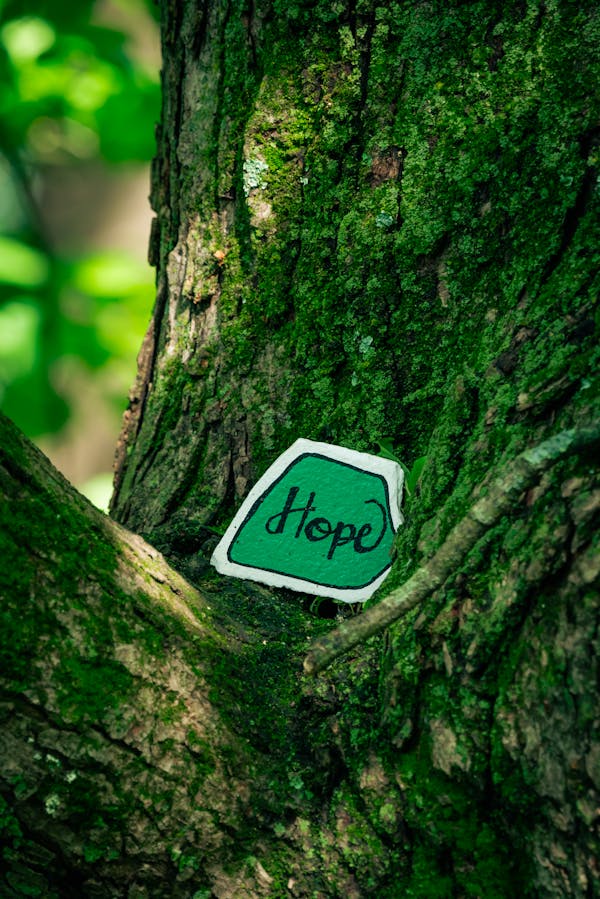
The virtue of hope makes a difference in our lives. If we have hope, we will think and act differently from those who have little or no hope. The essence of hope is the firm conviction that a better world is possible. Hope is rooted in the promises of Jesus: “I am with you always… the Kingdom of God is within you and among you…” If this is true, then what are some of the signs that we are people of hope? There are several. Here are five of them. (This reflection is adapted from chapter 18 in my book, Hanging onto Hope.)
People of hope believe that God loves us madly and desires only good for us. This conviction frees hopeful people from excessive worrying. I say “excessive worrying” because a certain amount of worrying is part of the human condition. But excessive worrying can fill us with anxiety and dread. It can even paralyze us, thus preventing us from doing the good God is asking us to do. I’m reminded of the Peanuts cartoon in which Linus and Charlie Brown are sitting on a log. Linus says to Charlie Brown, “You look kind of depressed,” and Charlie responds, “I worry about school a lot.” In the next frame he says, “I worry about worrying so much about school.” And in the final frame, he says, “My anxieties have anxieties!” If we have hope, our anxieties will not have anxieties. Instead we will remember those words from scripture, “Cast all your worries upon God because God cares for you” (1 Pet. 5:7).

If we have hope, we will be open and welcoming of life. Hopeful people believe that the primary way we encounter the Living God is through the “stuff” of our everyday lives. Therefore, we have a positive attitude towards the people, events, and experiences that comprise our daily lives. An image might help here. Hopeful people do not live in a house with doors bolted, windows shuttered, and a doormat that says, “Go Away!” Rather, hopeful people live in a house with the door unlocked, the windows wide open, and a bright doormat that says, “Welcome!” They know that our God is a God of surprises and can show up on our doorstep in amazing ways. (Obviously, I am NOT literally saying we should never lock our doors…)
Hopeful people remain open to life even when their hearts have been broken. I read a story about a 10-year-old girl who had a pet goldfish that she loved. But it died. So she got another one and loved it too. Eventually it died, so she got a third one. After the third goldfish died, the little girl wrote this poem:
After my third goldfish died,
I said, I’m through with goldfish.
But I didn’t mean it.
To me, that’s hope.

Hopeful peoeple live lives marked by generosity and service. They do not conserve their giving or hold back their loving. They are so in touch with the prodigality of God’s love, that they are eager to share this kind of love with others. They remember Jesus’ image of the sower who sowed the seed generously with a wide arc. And they recall St. Paul’s counsel to “sow bountifully” (2 Cor. 9:6), trusting the One who supplies rich seed for the harvest.
And finally, hopeful people are grateful people. It’s as simple as that. On any given day, they are quick to find reasons to be grateful. They are grateful for the gift of their own particular life… for their loved ones who enrich their life in countless ways… for their faith, for the life and teachings of Jesus, for God’s presence in our world… for the material blessings they have been entrusted with… for their ability to give and receive love… and for this beautiful planet we are privileged to call home.

For reflection:
Does your life show any of these signs that you are a person of hope?
Are any of these signs missing in your life?
Would you add any other signs that someone is a person of hope?
Here’s a nice gentle Amy Grant song called, “Don’t Try So Hard.” The lyrics reflect some of the thoughts in this reflection….
I hope you might take a minute and write a comment below. We all love hearing from one another…
15 Things Jesus Did NOT Say

Jesus said a lot of things in the Gospels. But sometimes we get so used to hearing or reading them, we can take them for granted. Or we can forget their “shock value.” One way to reclaim the power and significance of what Jesus said, is to rewrite some of his sayings. That’s what I’ve done today. Here are fifteen things Jesus did NOT say? Do you know what he did say instead? I’ve given the scripture references in case you need a little help.
1) “Judge others.” (Mt. 7:1)
2) “How many times should you forgive someone? Once seems like enough to me.” (Mt. 18:22)
3) “Thanks, guys, for shooing away those women with their little brats. I don’t have much use for kids.” (Lk. 18:15-17)
4) “Mom, saving this couple from embarrassment and making this party last a little longer is a big waste of my powers.” (Jn. 2:1-11)

5) “The Kingdom of Heaven is in Heaven. Where else could it be?” (Lk. 17:21)
6) “Love those who look like you, talk like you, act like you, pray like you, and believe exactly what you believe.” (Mt. 5:43)
8) “Seek ye first your own comfort.” (Mt. 6: 33)
9) “I came to be served. That should be your goal in life too.” (Mk. 10: 45)
10) “I have come to call the righteous.” (Lk. 5: 31-32)
11) “Whoever wants to be my disciple must have no questions, no doubts, no problems, no shortcomings, no pains, and no sorrows.” (Mk. 8: 34)
12) “Worry about everything.” (Mt. 6:25)
13) “Never take a break or rest. There’s too much work to do.” (Mk. 6: 31)
14) “I am the Head Honcho. You are my pawns.” (Jn. 15: 5)
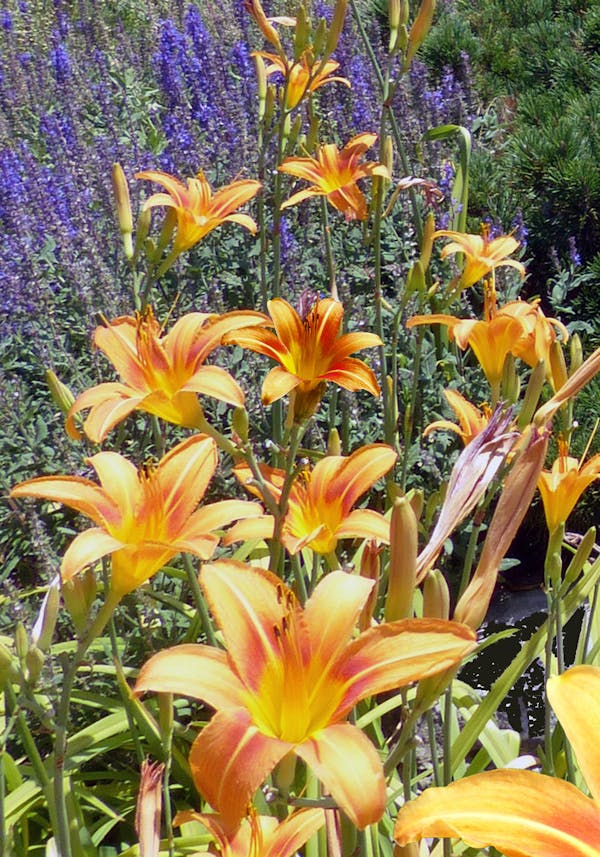
15) “Don’t waste your time staring at the lilies in the field.” (Mt. 6: 28-30)
For reflection:
Did any of these re-writes stand out for you today?
Did any give your a greater appreciation of what Jesus really said?
I invite you to add something else Jesus did NOT say to this list.
I chose a song based on some of the things we know Jesus said. It’s called “Love One Another” by Bob Dufford, SJ. This version is sung by an ordinary family Mass community. The visuals show how parish communities all over are trying to live these words of Jesus.
I hope you’ll have a minute to add a comment below!
What Writers Say about Writing

As most of you know, I love to write. In fact, I wrote my first “novel” in third grade. I wrote it by hand in a big red tablet with yellow pages. It was three pages long. But today I’m not going to talk about my writing. I’m going to share with you some things other writers have said about writing. I’d be interested in knowing what you think of these:
1) Planning to write is not writing… outlining… researching… talking to people about what you’re doing, none of that is writing. Writing is writing. E.L.Doctorow
2) I must confess, I have learned many things I never knew before, just by writing. St. Augustine
3) I think writers are basically seekers. That’s what drives them. Jayne Anne Phillips
4) How do I know what I think until I see what I say? E.M. Forster

5) The two most engaging powers of an author are to make new things familiar, and familiar things new. William Thachery
6) Writing is the hardest way to earn a living, with the exception of wrestling alligators. Olin Miller
7) The writer is only half a book–the reader is the other half. P.L. Travers author of Mary Poppins
8) The secret of a good sermon is a good beginning and a good ending. And having them as close together as possible. George Burns
9) Writing can give you what having a baby can give you: it can get you to start paying attention, can help you to soften, can wake you up. Anne Lamott
10) It is better to be a good pickle merchant than a poor poet. Harriet Moore
11) I’m writing a book. So far, I’ve got the page numbers done. Anonymous
12) A young man sent a manuscript to a famous author with a note saying, Please read this ms. and advise. Please answer me as quickly as possible, because I have other irons in the fire.” The noted writer sent back this note: “Remove irons. Insert ms.” (ouch!)

13) Good writing is the hardest form of thinking. Pat Conroy
14) Writing, which is my form of celebration and prayer, is also my form of inquiry. Diane Ackerman
15) Every adjective and adverb is worth 5 cents. Every verb is worth 50 cents. Mary Oliver
16) I wrote the books I should have liked to read. C.S. Lewis
17) Writing a book is hard work, because you are giving yourself away. Dorothy Day
18) When something can be read without effort, great effort has gone into its writing. Enrique Jardiel Poncela
19) Question: What kind of writing pays the best? Answer: Ransom notes.
20) If I were asked what I want to accomplish as a writer, I would say it’s to contribute to a literature of hope. Barry Lopez

For reflection:
Did any of these quotes stand out for you today? If so, which one(s) and why?
From your experience of trying to write something, what was your greatest challenge? What was your greatest delight?
Would you like to say anything else about writing–either as a writer or a reader or both?
P.S: Thank you for the support of your prayers for the retreat I gave last week at the beautiful Lial Renewal Center, a ministry of our SNDs in Toledo. I wish to thank also the staff at Lial, especially the director Sister Rosemary and the entire “creative kitchen crew,” who made the week a time for prayerful silence and physical and spiritual nourishment for all who participated! I’m most grateful to all!
Probably most of us reading this bog have a great love and respect for the Bible, the Word of God. Here’s a song by MercyMe called “Word of God.” It’s a favorite of mine and fits with the theme of this reflection. Sometimes God communicates with us in silence… and sometimes our prayer to God goes beyond words–and that’s okay…
I welcome you to write a comment below! I love hearing from you!
The Greatest Temptation in the Wilderness
While I was on retreat two weeks ago, I meditated on Jesus’ temptations in the desert. All three synoptic gospels tell the story. For this meditation, I used a marvelous book a good friend recommended to me: Into the Mess & Other Jesus Stories by Debie Thomas, a columnist for The Christian Century.

Thomas begins with Mark’s brief description of this important event in Jesus’ life: And the Spirit immediately drove him out into the wilderness. He was in the wilderness for forty days, tempted by Satan; and he was with the wild beasts; and angels waited on him. (Mk. 1:12-13) To put this incident in persective, we must remember what happened immediately before Jesus’ wilderness experience. He was baptized by John in the Jordan. And as he comes up out of the water, the heavens open up, a gentle dove descends upon him, and he hears God saying to him, “You are my beloved Son; with you I am well pleased.”
Wow! What an affirmation! Jesus knows he is God’s cherished child, because God himself tells him! What can be better than that? But immediatly afterwards, this same gentle affirming God drives him into the wilderness–a place of barrenness, emptiness, isolation, fear, and despair. What was Jesus’ greatest temptation in the desert? Writes Thomas, the wilderness was the place where Jesus had “to face down every vicious assault on his identity as God’s treasured child.” He had to stand firm in his conviction that God, indeed, still loves him–despite some of the terrible things he is experiencing. When we are having a “wilderness experience,” we too can be tempted to believe that God has forsaken us. We might even rage against God (as St. Teresa of Avila did), and cry out, “If this is the way you treat your friends, no wonder you have so few of them!”

Thomas describes a time she was in the wilderness. Her daughter, who was in middle school, developed anorexia. Thomas was filled with bewilderment, terror, anger, and a sense of complete failure as a mother. She and her husband, fearing for their daughter’s life, “hospitalized her for her own safety.” The day after her admission, the doctors told them they would not be able to see their daughter for several days as part of the treatment. Thomas fell into a “deep abyss.” She found herself driving her car aimlessly into a part of town she was unfamiliar with. In a daze, she pulled into the parking lot of a Catholic book store, a store she didn’t even know existed. As she wandered up and down the aisles, a Sister came up to her and asked, “Can I help you find anything?” Thomas burst into tears.
She writes, “For three or four minutes I cried so hard, I couldn’t speak.” The Sister took Thomas’ hands and let her cry. When she could breathe again, the nun said, “Wait here.” She disappeared for a few moments and then returned with a silver crucifix on a chain. Jesus’ broken body was clearly outlined on the cross. This surprised Thomas for her church had crosses, but without the body of Jesus on the cross. The Sister pressed the crucifix into Thomas’ hand, looked into her eyes, and said, “Keep this. Hang onto it. Only a suffering God can help.”

The temptation story reminds us that Jesus was not alone in the wilderness. Mark tells us that Satan and wild beasts were there. But also God the Spirit was present there as well as angels. God was present in the wilderness not as a wizard who would magically remove Thomas’ anguish, but as a God “who accompanies.” A God who “dwells in mystery, but never abandons us to face the mystery alone.” This same God sends us angels who don’t “fix” us or our circumstances. But rather they simply tend to us in our pain–as that Sister in the bookstore tended to the sobbing Thomas. These angels can take many forms: a good friend, a total stranger, a single paragraph from a spiritual book, a wide-eyed grandchild, a thoughtful neighbor, a kind receptionist in a doctor’s offce, a purring cat on our lap, or a field of sunflowers we just happen to pass along the way.
My prayer for all of us is this:
When we encounter the wilderness in our own lives, may we experience the companionship of Jesus “who knows the barren places better than we do.” When we are spending time with wild beasts–those circumstances beyond our control that terrorize us–may we recognize the angels God sends to minister to us in our pain and bewilderment. And may we always embrace the truth of who we really are: a “precious, beautiful, and wholly liberated” child of God.

For reflection:
Did any words in this reflection stand out for you today?
Who or what have been some of the “tending angels” for you when you were experiencing the wilderness?
Have you ever been a “tending angel” for someone else experiencing the wilderness in their lives?
*********************************************************************************
PS #1: This week I am directing a retreat for some Sisters of Notre Dame in Toledo, OH. I ask for the support of your prayers. Thank you very much!

PS# 2: Here’s the first ripe tomato from my porch garden. I know, I know, it’s not very big, but I’m sure it will be delicious! The plant has one more green tomato on it. So my total crop this year will be TWO tomatoes–if I’m lucky!
Our video today is “Gracious God” by Jesse Manibusan. Although it is a Lenten song, it is an appropriate song for those times we may feel we have been led into the desert, into the wilderness, by God. May we see such a time as a “sacred struggle” where God is with us, helping us to take one step at a time. May we be strengthened by our “suffering God” and “our longing to see God’s face.”
I welcome you to write a comment to this reflection below.
Dear Readers: I made a mistake this week and accidentally posted TWO reflections for today: this one and another on what writers say about writing. I realized my mistake at 5:00 AM and removed the post on writing–but the alert had already gone out to all of you. If you clicked it on, it said “page cannot be found.” But this is today’s reflection and next week you’ll get the one on writing. Sorry for the confusion! Melannie
The Prayers We Say During Mass

Many years ago, I had a retreat director who, at the beginning of every conference, read one of the prayers we say during Mass. Not the BIG prayers like the penitential rite, the Gloria, or the Eucharistic Prayers, but the small prayers–like the collect, the prayer over the offerings of the bread and wine, and the prayer after communion.
To be honest, I had never really payed much attention to these prayers. In preparing for Mass, I mostly focused on the readings and responsorial psalm. But some of these little prayers tucked into the Eucharistic rite can provide wholesome nourishment for our life of faith. You might want to check them out sometime. Here are three such prayers we prayed during July. I will offer a few words about each one. The words of the prayer are in bold print. My words in regular print:
July 1 -Collect: … grant, we pray, that we may not be wrapped in the darkness of error, but always be seen to stand in the bright light of truth. Wow! Isn’t this prayer especially relevant for our times when it seems to be getting increasingly more difficult to distinguish truth from fiction or lies or distortions? And isn’t this quest for the truth a life-long quest? And shouldn’t we be demanding honesty from our children, our friends, our church, our businesses, our elected officials, and ourselves? And isn’t it dangerous to believe that we alone have a monopoly on all truth? Years ago someone told me, “We all have a ‘piece of the truth.’ We need each other’s ‘truth’ to make our truth more whole.” That’s one thing I loved about teaching teenagers for over 20 years. Yes, I had truth to impart to them. That’s why they came to my class. But they had truth to give to me too! They needed my truth, yes, but I needed their truth too!

July 6 – Prayer after Communion… that we may profess Him (Jesus) in words and hold fast to him in deeds. This prayer captures the essence of our faith. Faith is expressed in both words and deeds. And let’s face it, it’s often easier to express our faith in words rather than in deeds. It’s easier to talk about love, for example, than it is to love… easier to talk about prayer than it is to actually pray… easier to talk about reaching out to the poor than to actually reach out. And we express our faith in words not simply when we talk about our faith. More importantly, we express our faith in words by the way we use the precious gift of speech throughout our day. Does our speech demonstrate our respect for others? Do our words encourage others and lift them up? And, very importantly, do we refrain from using our gift of speech when it is time to sit down and listen to others?

July 10 – Prayer over the offerings… day by day bring our conduct closer to the life of heaven. This little prayer raises the question: is my current conduct fit for heaven? Would I be comfortable in heaven being who I am today? Would my deepest values coincide with the values found and lived in heaven? Or am I clinging to behaviors that are not very “heavenly”? What behaviors? For example, am I unforgiving or revengeful? Am I so wrapped up in myself, I don’t even notice others? Am I constantly grumpy, pessimistic, impatient? Am I so addicted to my work that I have forgotten how to let go and have fun? Only individuals who know how to relax can enjoy the Heavenly Wedding Reception to which we have all been invited.
For Reflection:
Did anything in this reflection touch you?
Has anyone ever shared their “piece of truth” with you that enriched or broadened your own “piece of truth”?
Has the witness of someone’s deed(s) ever inspired you in a significant way?
How fit for heaven are you right now?
Our song today is Micah 6:8 by the Maranatha Singers. It sings of what God really asks of us: “To Act Justly, Love Mercy, Walk Humbly with God.” This scripture verse and song touch upon some of the themes in today’s reflection.
As usual, I invite you to comment below on anything about this refection. I love hearing from you–and so do all our readers!