A Little Humor… Again
Several times a year I like to pass on a few jokes to you. Some of the following are from The Ultimate Guide to Good Clean Humor by Bernard Brunsting. I hope some of these make you laugh or smile—or even groan. Remember: We are always close to God when we laugh!
Children being children:
When her mother put her blinker on to turn, little Candice was annoyed by the clicking sound. “Mom, why do you  have to turn that thing on?” Her mother said, “To let other drivers know I’m turning.” Candice replied, “But Mom, nobody can hear it but you and me.”
“Owww!” Screamed 6-year-old Olivia. “What’s wrong?” her mother called from the kitchen.” “The baby pulled my hair.”
“Don’t be angry at the baby,” her mother said. “He doesn’t understand that it hurts when he pulls your hair.”
A moment later, the mother heard another shriek, this time from the toddler. Going into the living room, she was met by Olivia who smiled and said, “Now he understands.”
* * * * * * * *
Wisdom from children:
“Always wear a hat when you’re feeding seagulls.” (Age 9)
 “Never confuse a brown crayon with a Tootsie Roll.” (Age 8)
“Remember the two places you are always welcome: Church and Grandma’s house.” (Age 11)
“When your Dad is mad at you and he asks, ‘Do I look stupid?’ don’t answer him.” (Age 16)
* * * * * * * *
Signs:
On a fence at a large motherhouse property: “Trespassers will be prosecuted to the full extent of the law. Sisters of Mercy.”
School cafeteria: “Shoes are required to eat in the cafeteria.” Handwritten underneath: “Socks can eat wherever they want.”
At a parking space in a church parking lot: “Reserved for the Pastor. You park here, you preach.”
* * * * * * * *
Sayings:
If it goes without saying, then let it go without saying.
How come time is such a wonderful healer—but such a lousy beautician?
All marriages are happy. It’s the trying to live together that causes all the problems.
First man: “My brother works for the IRS.” Second man: “Who doesn’t?”
For years he thought he was a failure. So he took a course in positive thinking. Now he’s positive that he’s a failure.
* * * * * *
Definitions:
Goblet: a young turkey
Laughing stock: cattle with a sense of humor
Money: a device by which parents stay in touch with their children in college
Inkwell: an accomplished tattooist
Eternity: the last two minutes of a football game
Spice: plural of spouse
Relief: what trees do in the spring
Coffee: a person on whom one coughs
Octopus: a cat with eight legs
For reflection:
Does humor play a significant role in your everyday life? Why or why not?
Why do you think we feel so good after a good laugh?
Do you have something humorous you’d like to share with us today?
BIG NEWS!
I will be giving a retreat on a cruise ship! That’s right, the retreat will be during a 5 night Western Caribbean cruise February 7-12, 2019. The Royal Caribbean ship, the Majesty of the Seas, will leave from Ft. Lauderdale, FL and make two stops in Mexico (Cozumel and Puerto Cost Maya, Mexico). Details are coming. But I wanted to plant a little seed… I’d love to sail, pray, and enjoy all the fun activities of a cruise with you! Why not give it your consideration…
We’ll close today with a light song by Joy Zimmerman entitled, “I Wish You’d Met Me when My Stomach Was Flat.” I want to thank my friend, Joni Dugan, for introducing me to Joy Zimmerman. In a future post, I will use one of Joy’s more serious songs. They’re beautiful!
You’re invited to share a few thoughts on this reflection, the song, or humor in general.
Chief Joseph and the Nez Perce People
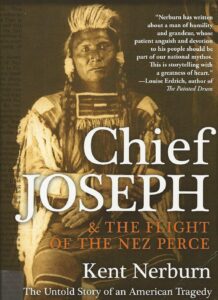
I just finished reading a beautiful though immensely sad book, Chief Joseph and the Flight of the Nez Perce by Kent Nerburn. The book covers a pivotal time in U.S. history. In the 1800’s, hordes of pioneers were pushing westward and settling on land already inhabited for centuries by Native Americans. One of those tribes was the Nez Perce, led by Chief Joseph.
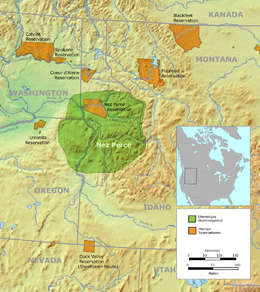
 Born in 1840, Chief Joseph was named Hin-mah-too-yah-lat-kekt, meaning “Thunder Rolling Down the Mountain.” Like his father, he was baptized Joseph. In the early 1870’s, he succeeded his father as leader of one of the bands of the Nez Perce, a tribe in the Northwest region of the U.S. A number of violent encounters with white settlers in 1877, culminated with the Nez Perce—including women and children—fleeing for their lives. Led by Joseph and others, they had hoped to reach Canada beyond the jurisdiction of the U.S. Army. Sitting Bull and some Lakotas were already there. About 700 members of the tribe were pursued for 1,170 miles (across present day Oregon, Washington, Idaho, Wyoming, and Montana) by the U.S. Army under General Oliver Howard. After months of resistance, the Nez Perce were cornered in Northern Montana territory, 40 miles from the Canadian border. Realizing that further fighting would obliterate the tribe, Joseph agreed to peace talks. In his mind, some say, he did not surrender. He simply stopped fighting when General Howard promised him that his people could safely return to the reservation in western Idaho.
But the U.S. government in Washington nullified Howard’s promise and ordered the army to transport what was left of the Nez Perce to “Indian Territory” (Oklahoma) where other tribes had already been “resettled.” Thus, Joseph and his people began a second excruciating trek. At Fort Leavenworth, Kansas they were treated as prisoners of war with little shelter and meager rations. During their 8-month encampment there, many died of disease, starvation, and exposure. By the time they reached Oklahoma, their number was down to 300, half of them having died en route. But in Oklahoma they were not welcome, for the land there was already claimed by other tribes. After seven years of pleading, Joseph and his people were finally transported to the Colville Indian Reservation in the state of Washington, still far from their native land. In 1904 Joseph died there (in the words of the attending doctor) “of a broken heart.”
What struck me while reading this book:
+ Chief Joseph was absolutely devoted to his people. He had promised his dying father two things: that he would take care of his people and he would never forsake the land of his ancestors. Historic circumstances decimated his people and prevented him from keeping his second promise too.
+ During the so called “Indian Wars,” Congress debated about what to do with the “Indian Problem.” Three options were discussed: 1) Exterminate the Indians. The U.S. could not afford to care for these “perpetual prisoners.” 2) Chase them into Mexico and Canada and let those countries deal with them. 3) Restrict them to reservations and force them to discard their native ways, that is, their traditions, religion, manner of dress, and even language. Educate them in white men’s schools. Turn them into farmers and thus assimilate them into the American way of life.
+ The U.S. Military did not want to care for the defeated Indians because it was draining their budget. So they eagerly handed over the tribes to the Department of Interior. Unfortunately, some of the “Indian Agents” were cruel and ruthless men, stealing provisions meant for the Indians and treating them inhumanely.
+ Communication with Native Americans was difficult. Few people understood their languages. History has shown that some translators were incompetent or even untrustworthy. The famous words attributed to Chief Joseph, “From where the sun now stands, I will fight no more forever,” may not have been what he actually said.
+ Chief Joseph made the long journey to Washington, D.C. several times to plead for fair treatment of his people. Over the years he met with three Presidents: Grant, Hayes, and Teddy Roosevelt. In the press, he became something of a celebrity. Unfortunately, people were more interested in his native dress than in his words.
Let me leave you with Chief Joseph’s plea to the U.S. government: “Treat all men alike. Give them the same law. Give them all an even chance to live and grow… For this time the Indian people are waiting and praying.”
Judging by recent headlines, Native Americans and some other Americans are still waiting for this plea to be fulfilled.
Let us conclude with a beautiful Native American Prayer Song:
What stands out for you in this brief reflection on Chief Joseph?
We cannot do anything about the sins and injustices of the past. But we can do something about the sins and injustices of the present. How are you involved in doing this—through prayer? volunteering? educating yourself on current issues? communicating with government officials? financial support? other things?
I welcome you to respond below:
The Lesson of the Afghan
It is 5:30 in the morning. And here I sit in my bedroom praying. Suddenly I feel chilly. So I get up and grab the afghan from the foot of my bed. It is the one my mother crocheted for me years ago. And it is beautiful. It is a herringbone pattern in bright yellow, oranges, and browns. I sit down and drape it over my lap, legs, and slippered feet. Immediately I begin to feel the warmth—as if the afghan were an electric blanket.

But, I remind myself, the warmth I am feeling is not coming from the afghan. It is coming from me. It is my body that is generating the warmth. The afghan is merely “trapping” my own heat and turning it back upon myself, thus preventing that heat from dissipating into the chilly room.
Conserving self-generated heat is a trick human beings have employed since prehistoric times. Humans used this little trick to stay alive in very cold weather or to be more comfortable in chilly places. In my mind’s eye, I can see people in a cave huddled together under animal hides, or a family in a mud hut curled up beneath a blanket woven of pliant grasses, or small children in a log cabin sleeping beneath a goose down quilt. This morning, huddled beneath my mother’s bright afghan, I feel I am one with all of them.
There are several lessons here. Here’s one: Sometimes we don’t appreciate what we have inside ourselves. Sometimes we don’t appreciate our own gifts, capabilities, or powers. When we are facing a difficult situation, for instance, often our first instinct is to reach out to someone else for help. Don’t get me wrong. It can be a good thing to seek help from others. But let us not forget the powers that reside within ourselves. Each of us has been

given gifts and abilities. Sometimes it is precisely the challenges in life that bring these gifts to the fore. The so-called “hard things” can reveal or develop our inherent powers and capabilities.
Jesus commanded us to love others. That is a difficult challenge to be sure. But Jesus also told us to love God and ourselves. My experience has shown that the more we love and appreciate ourselves, the freer we are to reach out to others in selfless loving. That’s a paradox, I know. But Christianity is filled with paradoxes.

Today we might ask ourselves: what are some of my gifts, abilities, or powers? How have they helped to sustain me in the past? How might these same gifts and powers help to sustain others as well?
Let us pray:
Gracious God, Source of all warmth,
give me a greater awareness of my inherent gifts and powers today.
When I encounter difficulties or hard times,
help me first to turn inward and see what gifts you have already given me
to face the challenges in my daily life.
Please remind me to carve out time to love You, others, and myself. Amen.
Today’s song is by Carrie Newcomer. I want to thank Justin Huyck, the pastoral minister at St. Michael’s in Canton, OH, for introducing her to me. This song is entitled “You Can Do This Hard Thing.” The first time I played this video, tears welled up in my eyes. It was the combination of the words, the music, her mellow voice, the images. The song recalled some of the “hard things” I have already faced in my life and the “hard things” I see coming in the future. It also recalled friends or loved ones who reassured me that I could do “this hard thing.” May this song bring you hope no matter what hard thing you may be facing at this time in your life.
Would you like to comment on this reflection or song? If so, please do so below.
PS: I have tried to response to all your responses, but I am having technical difficulties with my blog… I’ll try again later. Sorry.
Celebrating the Precious Gift of Life
On Monday, January 15, we Americans pay tribute to Martin Luther King, Jr., a man who gave his life working for the equality of all peoples. Friday, January 19 is the annual March for Life in Washington, DC. Both days celebrate the precious gift of life. Here are two true stories that also speak of the beauty, mystery, and sacredness of life.
“Piano Duets”: This first story comes from William Bausch’s book, The Word in and out of Season.

Margaret Patrick had just moved into the senior center and was being introduced to the other residents in the large dining room. Margaret, who is Black, noticed a piano in the room. She mentioned that she used to play the piano a lot before she had her stroke. Now her right hand was useless. One of the staff members said, “Wait here” and scurried away. In a few minutes, she returned followed by a white haired woman using a walker.
The staff member introduced Margaret to Ruth Eisenberg, explaining, “Ruth used to play the piano too, but like you, she’s not been able to play since her stroke. Ruth has a good right hand and you have a good left hand. I have the feeling the two of you can do something wonderful together.”
And the two women did. On that first day they sat down at the piano together and played Chopin’s waltz in D-flat. Bausch writes, “Side by side, the two sat on the piano bench. Two healthy hands—one with long, graceful black fingers, the other with short, plump white ones—moved rhythmically across the ebony and ivory keys.”
Soon they began to entertain audiences at churches, schools, rehabilitation places, and senior centers. They quickly learned they had more in common than music. Both were widows and great-grandmothers. Both had lost sons. But neither could give without the other. Margaret said, “My music was taken away from me, but God gave me Ruth.” Ruth said, “It was God’s miracle that brought us together.”
* * * * *
“Helping the Stranger”: this story, from the book Small Miracles by Halberstam and Leventhal, is attributed to Greg O’Leary which is a pseudonym.
Greg O’Leary, a middle aged man, was walking down a dark street in his neighborhood one evening when he heard muffled screams coming from behind some bushes. He slowed down and listened again. He froze in fear when he realized he was hearing the sounds of a struggle: grunting, panting, crying, the tearing of fabric. Someone was being assaulted.
“Should I get involved?” he wondered. He was not athletic, young, or brave. What if the attacker attacked him? Shouldn’t he just run for help? But something made him stop to help that night. Once he had made that decision, he says, “I became strangely transformed.” He ran behind the bushes and pulled the assailant off the woman. In doing so, he fell to the ground and the two men wrestled for a few moments until the attacker jumped up and ran away.
Out of breath, O’Leary could make out the outline of a woman crouched behind a tree sobbing. He got up slowly and said to her gently, “It’s okay. The man ran away. You’re safe now.”
There was a long pause and then he heard her words uttered in wonder and amazement.
“Dad, is that you?”
And from behind the tree stepped his youngest daughter, Katherine.

* * * * *
Some questions for reflection:
What factors enabled Margaret and Ruth to bridge the racial divide between them?
What factors enable some people to help total strangers despite their fears and feelings of inadequacy?
What are some of the divisions that need “bridging” in your personal life? Our country? Our world? What are some ways we can begin to bridge these divisions?
We give life to others in many ways. Margaret and Ruth gave life to each other through their love for music and their need for each other. O’Leary gave life to his daughter by daring to help a “stranger.” How might you give life to someone today?
I’m giving you a choice of two songs, both entitled “Thank You for My Life.” This first one is a simple song by Nashville Singer-Songwriter Ed Tossing. It’s 3 minutes long. The second, by Oksana Rus, is not a song per se, but rather beautiful piano music and the words of a prayer set against some gorgeous pictures. It’s 5 minutes long.
Ed Tossing song:
Oksana Rus prayer:
Would you like to share a thought or two below—about the stories… the questions… the songs? We’d love to hear from you!
Frequently Asked Questions about My Blog
Today I am responding to some questions people ask me about my blog:
How did you start writing your blog?
My friend and colleague, Sister Susan Wolf, SND, suggested I start writing a blog. She encouraged several other Notre Dames to do it too. Learning to post a blog was a big learning curve for me, I must admit. I am not very computer-savvy. The first few posts took me hours and hours to do, but with Sister Susan’s gentle nudging and ready help, I finally began to get the hang of it.
Why did you start writing a blog?

For several reasons. First, I have experienced the power of the written word in my personal life—so I believe in that power. Although I’ve been writing articles and books for over 40 years, I have never before had the immediate feedback that I get with my blog. I post something and right away a reader responds. That’s rewarding! That’s fun!
Sister Susan also convinced me that as educators, evangelizers, and “spiritual writers,” we must go where the people are. And many people today are online. When I learned that my blog has readers not only across the U.S. and Canada, but also from all over the world, all I could say was WOW!
Where do you get your ideas for your blog?
From everywhere! I read a lot, so sometimes I share something I’ve read—like a story or an insight or a person I have read about. I also draw from my personal prayer and experience. Good conversations with friends have also morphed into blogs. I have two manila folders on my desk labeled “blog ideas.” Both folders are stuffed with newspaper clippings, notes scribbled on small pieces of paper, 3 X 5 index cards with quotes, and such. Occasionally I’ll lift something from one of my books. Someone once asked, “Are you afraid of running out of ideas?” Not really. I think I’ll run out of LIFE before I run out of ideas for my blog!
How long does it take you to write a typical blog entry?
The time varies, but usually it takes me several hours. I rewrite a lot. I always have. I rewrite a lot so my readers won’t have to work so hard to read what I’ve written! I probably spend too much time looking for the songs I use—but I find that search rewarding and fun. There’s so much good music out there! In fact I have another folder labeled “blog music” with lists of songs for future blogs. It also takes me time to find appropriate pictures for my blog, ones that aren’t copyrighted.
How many people read your blog?

I have over 2,000 subscribers. Every Monday my blog gets about 1200 hits. I know there are some readers who share my blog with others too. One Sister says she makes copies of my blog each week for friends who do not or cannot use the computer. My writings in Living Faith, Living with Christ, and Give Us this Day have garnered new readers for me too.
What do you like best about writing your blog?
I like the whole process of posting a reflection—from getting an idea, to putting it into words, to finding music and pictures, and to designing the layout. After I post something, I eagerly wait for the responses to come in. I’m always interested in seeing what touched my readers or what new insights they add. When I give talks and retreats, I’m always happy to meet readers of my blog. I feel a bond with them, part of a beautiful “virtual community.”
Is there anything else you want to say about your blog?
I have been writing this blog since February 13, 2012. I have posted over 307 reflections and received over 5320 comments. I want to thank you for reading my blog and for responding to the posts. I am also grateful to the Sisters of Notre Dame for supporting my blog—financially and otherwise. I’m happy I can share my reflections with my readers for free!
Did anything strike you in this reflection?
How did you start reading my blog? How did you find me? If you’d like to share your story briefly, please respond below.
Here’s one of my favorite old Christian hymns: “How Can I Keep From Singing.” It was written in 1868 by Robert Wadsworth Lowry, a Baptist minister. This version is sung by Audrey Assad, the daughter of a Syrian refugee and American mother. Assad is an award winning Catholic singer and composer who even sang for Pope Francis when he visited the U.S. For this song, the background pictures of winter are appropriate for those of us living in the northern hemisphere. This hymn does not deny the “tumult, strife, and darkness” of life. But it says our singing is rooted in our trust in a loving and merciful God and in the supreme sacrifice of Jesus. When I hear this song, I am tempted to sing, “How can I keep from writing?… How can I keep from blogging?”
Would you like to share any thoughts with us today?