
Groupishness and Jesus
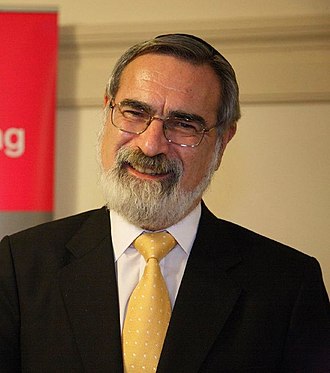
Rabbi Lord Jonathan Sacks, a much admired British leader, wrote a book entitled Not in My Name: Confronting Religious Violence (2015). Although I have not read the book (yet), I have come across it in other books I’ve read. Sacks maintains that at the heart of religious extremism is groupishness. (Some would call it tribalism.) He believes that humans are born with two primal instincts: “altruism toward those in our own group and aggression toward others.” We assign goodness to our group and badness to the other group. This saves us from having to deal with the badness in our group–as well as the badness in me personally. It also gives us permission to use violence against the other group. After all, they are bad
Too often violence has been blamed on religion. Heaven knows that throughout history and in our own day there’s been plenty of violence inflicted upon others by so-called religious people–or inflicted even in God’s name. We cannot deny that. But Sacks says violence is not restricted to religious people. He cites the wholesale violence dealt out to millions of people by essentially non-religious individuals such as Hitler and Stalin. He concludes, it is neither secularism nor religion that fuels our violence, but our fundamental groupishness.
Groupishness rears its ugly head in all kinds of places. Consider the 2014 Miss America pageant. That year the pageant was won by Nina Davuluri. Born in Syracuse, NY to Hindu parents, she was the first American of Indian descent to win the competition. Within moments of her crowning, Twitter erupted with comments such as these:
“I am soo mad right now that an ARAB won Miss America.”…
“So miss america is a terrorist…”
“Asian or Indian are you kidding this is america omg.”
What fuels such anger? Perhaps the anger is rooted in fear–fear that those people (people in other groups) are taking over our my group’s country!

(Photo by Pavel Danilyuk – Pexels)
Anytime we use words like “us/them” or “those people,” we know we’re succumbing to groupishness whether we’re dividing people into groups based on gender, age, race, religion, country of origin, occupation, sexual orientation, political leanings, and so forth.
Did Jesus say anything about groupishness? Yes! In fact, he demonstrated his own ability to engage with individuals NOT in his “group.” One of his apostles, Matthew, for example was a tax collector, an occupation considered treasonous by many of the Jews. Yet, Jesus welcomed him. Another time a Roman soldier, a member of the occupational force, asks Jesus to cure his servant. Jesus praises this “outsider,” saying he has never seen such faith even among his own people. Once a Phoenician women, a Gentile, begs him to cure her sick daughter. He not only praises her faith, he expands his own understanding of his mission because of her persistence and spunk. A Samaritan, an enemy of the Jews, returns to thank Jesus for curing him of his leprosy. Jesus tells him that it was his faith that had cured him. In addition, Jesus had many women who supported his mission and were his disciples. Women in first century Palestine were certainly not in Jesus’ “group.”
We are living in a time of great polarization in our country and in our world. May we take time to reflect on to what extent we are “buying into” this polarization, this groupishness.
+ Do we recognize the “groupishness” in ourselves?
+ Do we ever think or speak in terms of “us” and “them”?
+ If we do detect groupishness within ourselves, what is the underlying cause: fear? ignorance? a previous bad experience? ingrained prejudice? reluctance to do the hard work of getting to know individuals who are unlike us in many ways?
My prayer for all of us is this:
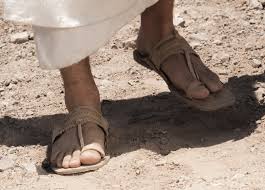
Loving Jesus, give us the strength to follow in your footsteps and to be open to all people. Help us to see the good in others. Remind us every day that we are all children of one Heavenly Father. Please give us the wisdom to see that we are one human family on our earth. And give us the courage to follow your persistent call: “Love one another… love one another… love one another.” Amen.
Our song for today is Marty Haugen’s “All Are Welcome in This Place.”
I invite you to comment below on this reflection, the pictures, or the song.
Coincidence or Providence?

I served as novice director for my community from 1982-1988. One of my “jobs” was to get a retreat director for the novitiate retreat in August. Back then, the director had to be a priest. I dutifully booked a wonderful Franciscan a year in advance. But two days before the retreat was to start, he called me with bad news. There was an emergency, a sudden death. He could no longer give the retreat–and his attempts to find a substitute were unsuccessful. I extended my sympathy to him and assured him not to worry. But when I hung up, I panicked, saying to myself, “Where in the heck am I going to find a decent priest at this late date?”
I began calling priests all over the place. Though everyone was sympathetic to my plight, no one could help me out on such short notice. But one Jesuit I called said, “Melannie, there’s a Jesuit new to the Cleveland diocese, Fr. Tim Shepherd. Perhaps he would be available.” I called Fr. Tim and had to leave a message for him. That evening, he called back. Yes, he could fill in for five of the eight days. I knew I could cover the other days, so I booked him on the spot. He came, he served, he was an instant success. But the real story is this: Through this chance encounter, Tim and I became very good friends.
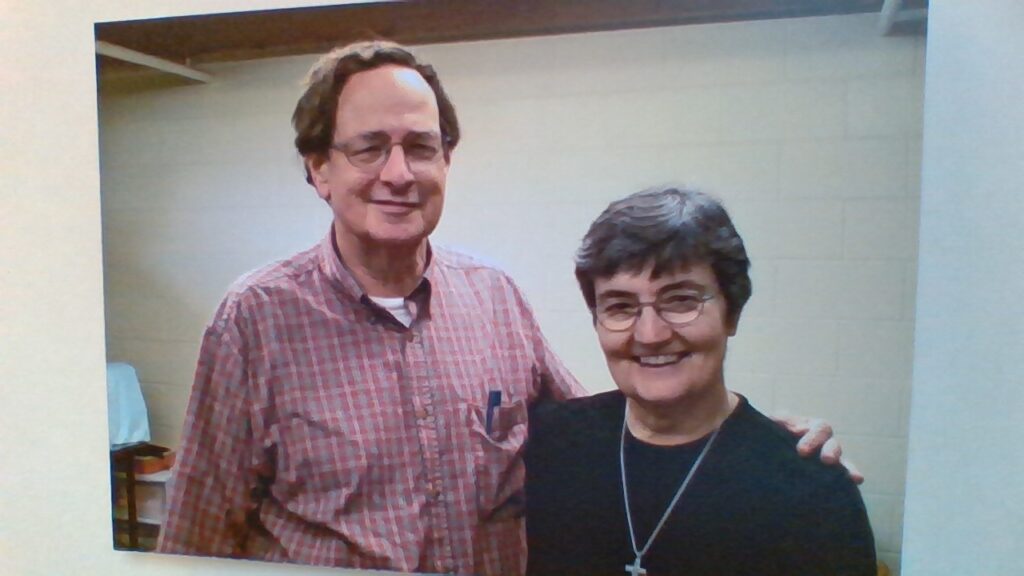
Was it coincidence that brought us together? Or was it divine providence? Certainly, coincidence was involved: that sudden death, his newness to the diocese, the Jesuit giving me his name, his availability that week. But I believe something more was involved, namely, something we Christians call Divine Providence.
I like what the writer Dennis Covington wrote about coincidence and providence in his 1995 memoir, Salvation on Sand Mountain: If “you accept the idea of a universe set in motion by an intelligent hand, then it seems to me you need to consider the possibility that the hand may still be at work in its movement.” I agree! And one way God’s hand is still at work is through events we call coincidence or providence. For example, we have a parent who imparts to us their love for classical music, a love we carry with us our entire lives… or we have a dynamic teacher who impacts the trajectory of our life… or we meet our future spouse at a party we almost didn’t go to… or a serious illness as a child leads us into the field of medicine… or we read a certain book, by chance, and find the very words we need to hear at that time in our life.
Coincidence doesn’t determine our lives, but it can open a door to possibility. Tim and I were not predetermined to become friends. But our chance meeting gave us the opportunity to establish a deeper relationship if we chose to. Fortunately, both of us chose to–and we were both greatly enriched by our friendship. As the writer James Silas Rogers wrote, “coincidence can open a window on providence.”

Not all coincidences have a profound meaning, of course. Some coincidences are just coincidences. But others can carry profound meaning for our lives. After describing a “chance encounter” with someone that led to a “transforming moment” in his life, Dennis Covington writes, “Things happen. But chance and coincidence don’t mean much to me anymore. I believe there was a reason I ran into him that day… Mystery, I’d read some where, is not the absence of meaning but the presence of more meaning than we can comprehend.” Maybe in heaven, we will discover profound meaning in mysterious events we had dismissed as insignificant.
I believe it is vital to the health of our spirituality to reflect regularly on our personal lives. In doing so we may realize that some of the coincidences in our lives were really providential. The Creator’s hand is still involved in the movement of the world and our individual lives. I suggest you take a few minutes this week to reflect on the role of coincidence and providence in your life. Here are a few reflective questions that might help:
Has a “chance encounter” ever led to a “transforming moment” in your life? That encounter can be with a person, an event, a place, a book, a song, a movie, an animal, etc.
Have you ever realized that a coincidence was really Divine Providence in your life?
Were there events in your life that initially appeared to be “bad luck,” but, in time, became a “blessing”?
Here’s something fun to reflect on: What role did coincidence and/or providence play in Jesus’ life?
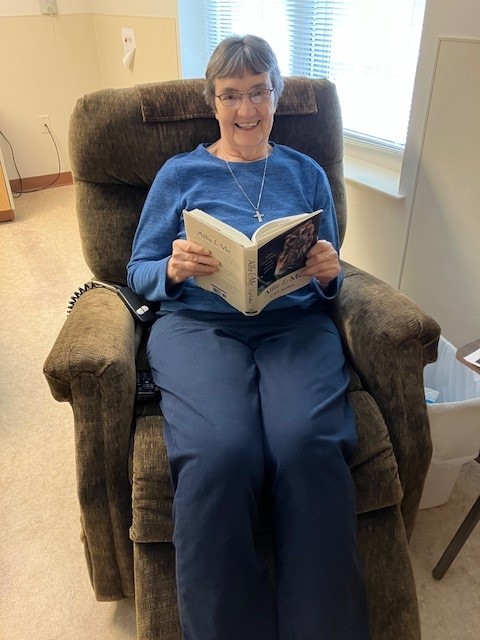
P.S. Thank you for your prayerful support for my recent hip replacement surgery last week. Everything went well, and I’m in our health care center here in Chardon recuperating. The experience gave me a greater appreciation of the gift of life, our health care professions, our compassionate care givers, and the support and encouragement of family and friends like you!
As I said earlier, I liked what Dennis Covington said about mystery: Mystery is not the absence of meaning; it can be the presence of more meaning than we can comprehend. When I searched for a music video, I found (by chance?) this hymn, “God Moves in a Mysterious Way,” written in 1773 by William Cowper. It is sung here by Graham Kendrick. I love the poetry of some of the lines: “God treasures up his bright designs… The clouds you dread are big with mercy and blessings… Judge not the Lord by feeble sense… the bud might have a bitter taste, but sweet will be the flower… I will trust and not be afraid, for all his ways are love.”
I invite you to respond below… You words enrich my blog!
Staying Put

Psychologists tell us when we encounter danger or trouble, we act out of one of two human impulses: fight or flight. This means we either engage in combat with the danger or we head for the hills. But in his book, Earth Works, Scott Russell Sanders says there is a third impulse out of which we can respond to danger: we can stay put. He writes, “when the power we face is overwhelming and neither fight nor flight will save us, there may be salvation in sitting still.”
By “sitting still” Sanders does not mean paralysis. “I mean something like reverence, respectful waiting, a deep attentiveness to forces greater than our own.” He gives the example of the Miller family he knew as a child growing up in Ohio. They lived on a nice parcel of land, but suffered through three tornadoes! The first one carried away their mobile home. With the insurance money, they built a small house on the same spot. Several years later, tornado #2 took off their roof. The Millers rebuilt again, adding a garage and second floor to the house. A few years later, the third tornado “reduced their upper floor to kindling” and sucked the water out of their pond. Soon after, Sanders moved from Ohio, but the last he heard, the Millers were planning to rebuild yet again.

The Millers’ devotion to their place might seem foolhardy to some. But Sanders notes: “I suspect that most human achievements worth admiring are the result of such devotion.” He asks, if “the shine goes off our marriage, our house, our car, our job, do we immediately trade it for a new one?” He acknowledges there are times we may choose to do so. For someone in a physically or psychologically abusive relationship, for example, the best option is often to “run.” But, says Sanders, there might be other times “for staying put, confronting the powers, learning the ground, going deeper.”
When I read this chapter in Sanders’ book, I immediately thought of St. Benedict, that wise 5th Century monk and the father of Western monasticism. To this day, Benedictines take a vow of “stability.” In short, this means they commit themselves to a particular monastic community for life. Evidently, Benedict had no use for some monks of his day who flitted from monastery to monastery in search of the perfect community into which to put down their roots. Benedict disapproved of this constant movement. As one Benedictine website puts it today: “Contentment and fulfillment do not exist in constant change.”

I have met a number of married couples who, when they encountered a “rough patch” in their marriage, stayed together and worked through their problems–sometimes with the help of a counselor or spiritual guide. Most told me their marriage was better because they BOTH had decided to “stay put” AND to do the HARD JOB of working things out. In the process, they learned invaluable knowledge about themselves, about each other, and about true love. Something similar can happen when individuals enter a particular religious community. At first they may be in awe of the members they meet. Everyone is so kind, so prayerful, so devoted to mission. But, sooner or later, they will see the failings in their fellow sisters or brothers and encounter the shortcomings in the community at large. When a second-year novice had become disillusioned with her community, she went to her novice director and complained about the other novices and vowed members as well as the ways things were being done in the community. Her novice director said jubilantly, “At last you see our shortcomings. Now finally you can begin to love us!”
Sometimes “staying put” can be the right choice when we are confronted with danger or serious trouble. It can be an invitation to go deeper, to gain greater self-knowledge, to grow in patience and compassion, to heighten our awareness of the Divine in our midst, and to channel our love into a life-long commitment to something (or Someone) greater than ourselves.
For reflection:
When you recall some of the difficult situations or serious “rough patches” in your life, did you ever opt for “staying put”? If so, are you better off for doing so? Why or why not?
Did you ever opt for fight or flight? Looking back, was that the best decision for yourself?
How do you prevent “staying put” from morphing into paralysis?
Do you agree or disagree with Sanders’ words that “most human achievements worth admiring” are the result of some form of “staying put”? Can you give any examples?
I’ve chosen a song by Carrie Newcomer, “I’m Learning to Sit Without Knowing.” Some of the words touch upon the themes of this reflection: “sitting without knowing… I cool my heels and start slowing… learning it’s a process… here’s the clear space that I’ve chosen… learning to live with what takes time.”
I invite you to write a comment below sharing your insights and ideas on the reflection itself, the photos, and the song. Thank you!
Time (Again!) for Some Humor

Beginning a new year is a good time to take stock of our sense of humor. As I have often said, a good sense of humor is a sign of a healthy spirituality! So, here are some humorous things (hopefully!) to make you smile, laugh, or groan!
Let’s start with children. Sometimes children’s vocabulary is limited. So they have to use the words they know to get by:
My daughter didn’t know the words “cough drop,” so she asked me for a “medicine bean.”
My son called the first president George Washingmachine.
My son referred to a little boy in school as “a double kid.” The little boy had a twin brother.
My kid called her ankles “foot wrists.”
When the 4-year-old took a nap in the car, she denied having fallen sleep. She said she just had a “long blink.”
Here are some examples of kids just being kids:

While getting my two kids ready for a long road trip, I asked them to please not ask, “How much longer until we get there?” I said we’d be traveling all day and wouldn’t arrive at our destination until dark. An hour into the trip, my 6-year-old piped up, “How much longer until it’s dark?”
My 3-year-old pulled a chess board from a storage box and said, “I haven’t played this in years!”
I overheard my 11-year-old daughter recording her voice mail greeting: “Hi, you’ve reached my voice mail. When you hear the beep, hang up an send me a text.”
My little girl said to me: “Mom, you were my very best friend–until I actually got friends.”
I was writing in my journal at the table while my 10-year-old grandson was eating his cereal. He began watching me writing in cursive and said, “Grandma, you should learn how to print. Nobody’s ever going to be able to read that.”
My 6-year-old said to her crying little brother, “It’s okay to be sad. Sometimes we need to let our feelings out.” I said to her, “O, Honey, that’s so lovely. Why is he crying?” She said, “I hit him.”
One day my 7-year-old announced, “Most inventors are smart, but not the ones who invented homework. They are the worst inventors of all!”
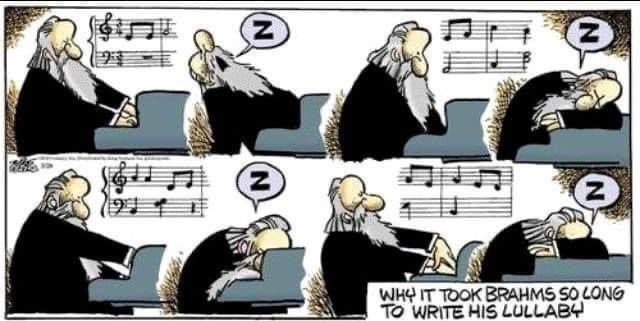
Have you heard the rumor about butter? Never mind. I shouldn’t be spreading it.
I have an inferiority complex, but it’s not a very good one.
I told my doctor I broke my arm in two places. He told me not to go to those two places.
What state is noted for its small drinks? Minnesota.
Two men were on opposite sides of a river. The first man shouted, “How do I get to the other side of the river?” The other man yelled back, “You are already on the other side of the river.”
Label on an actual milk carton: Sell by October 23, 1538.
A historian said this during an interview on BBC radio: “I don’t believe in apologies, I’m sorry.”
Game show host to contestant: Which chapel ceiling did Michelangelo famously paint?
Contestant: The sixteenth chapel.
A correction in a British newspaper: “Twig Fields, of the newly-opened Walk-in Wardrobe vintage clothes store… was incorrectly quoted in last week’s News as describing herself as a ‘kleptomaniac.’ This should have read ‘collector maniac’ and we apologize for the error.”
Worrying works! Case in point: 90% of the things I worry about never happen!
And finally, here are some “signs of the times”:
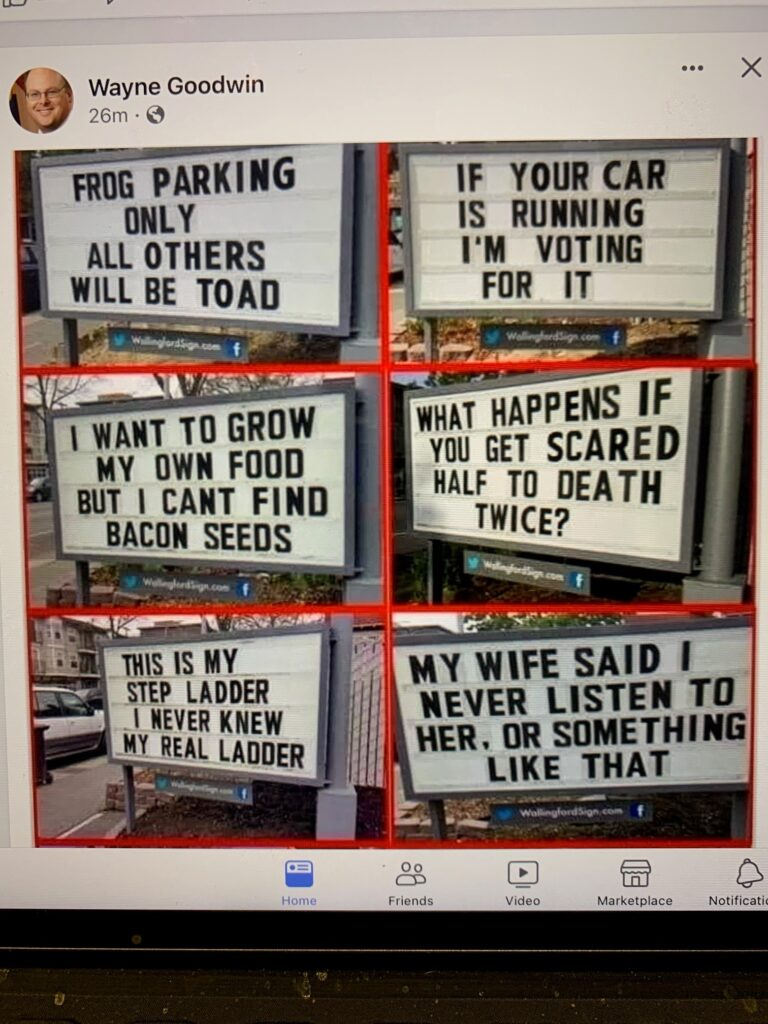
Did any of these tickle your funny bone?
Would you like to add anything humorous today?
P.S. This is NOT a joke: I will be having hip replacement surgery on Wednesday, January 17. I have been working ahead on my blog, though, so the reflections for the next several weeks are already written and set to go. I ask your prayers for the surgery and the rehab. Many thanks!
A friend sent me this cartoon…

Unlike this horse,
I hope I am VERY pleased
with my hip replacement!
Our song today is a fun song by the Okee Dokee Brothers, Joe Mailander and Justin Lansing. Childhood friends who grew up in Denver, Joe and Justin were always doing stuff together outdoors. Today they are a Grammy award winning duo who write and perform songs especially for families. The goal with their music is to inspire children and parents to step outside and get creative. They have been featured on PBS, in USA Today, and the Sierra Club. Here’s the song, “Can You Canoe?”
Some of my favorite lines are: “Let’s keep it simple… our prime time entertainment will be lightning bugs and fires… we need no outlet or wires… sound waves on the water don’t need to be amplified… we all need a friend… to live in this current moment instead of looking around the bend…”
If you’d like to comment on anything today, please do so below. We love hearing from you!
Humility: A Virtue for the New Year
For some of us, the beginning of a New Year is a time to make our annual resolutions. If you are looking for some ideas, might I suggest you take a look at the virtue of humility? I know, I know, some of you might be thinking, “How negative!” Or, “How depressing!” But please hear me out.
I admit, the virtue of humility gets a bad press in some religious circles. Some traditions would have you believe that humility means wearing a sign across your chest that says, “I am a door mat. Please walk all over me.” Just look at some of the synonyms suggested for humility in my Thesaurus: : shyness… unassertiveness… abasement… low view of one’s importance… submissiveness… sheepishness… timorousness. But that’s not what I think of when I speak of humility.

For me, humility is truth. It is accepting the truth about ourselves. And what is that truth? We are both saint and sinner. This means we are capable of doing great and good and beautiful things. It also means we are capable of doing bad and mean and ugly things. When we have humility, we accept the truth of our potential for goodness as well as our propensity for evil. Humility is also accepting the truth about ourselves in relationship to God and to others. As Christians, we believe we are all sons and daughters of God. There’s nothing abasing about that reality! On the contrary, being a child of God bestows upon us a value and worth beyond all imagining! We Christians also believe that all other human beings are our brothers and sisters and worthy of our respect. Imagine a world in which all humans lived out of that truth!

Spiritual writers and psychologists tell us that there are certain benefits of being humble. Being humble helps us to trust in God more. We believe that God’s ways are so far beyond our understanding, we cannot possibly comprehend them all the time. This truth moves us to trust in this Beloved Deity who loves us more than we will ever realize. Another benefit of humility is this: because we are aware of our own limitations and failings, we are more likely to develop compassion and empathy toward others. Humility also fosters a good sense of humor. Awareness of our shortcomings doesn’t discombobulate us. On the contrary, this awareness can actually promote self-growth. We know we can always work toward being a better human being, that is, a better spouse, a better parent, a better friend, a better employee, a better Christian.
I imagine most of you who are reading this already possess a fair amount of humility. You are probably in touch with your limitations (ouch!) and I hope with your goodness, that is, with all the ways you are sincerely striving to live Jesus’ mandate, “Love one another!” You are also interested in self-growth. How do I know that? Because you’re reading a blog that focuses on everyday spirituality! Another indication of humility is gratitude. I have a hunch, gratitude is one of your strong suits too. Your life experiences have probably taught you (as mine have taught me) that most of life is gift. Pure gift!
And finally, the word “humility” comes from the Latin word humus, which means ground. The humble person is grounded in the real world, in earthly life, in everyday life. But the humble person is also grounded in transcendent reality, that is, the reality that is far greater than our earthly existence–meaning ultimately THE Transcendent One, God. The other day, I came across this quotation by the 20th Century French writer and mystic, Simone Weil: “Only the light that falls continually from the sky gives the tree the energy to push powerful roots into the earth. The tree is really rooted in the sky.” It is the presence and power of the Transcendent in our lives that enables us to live with our own fragility amid the complexities of human existence–and to do so with great joy, undying hope, and lots and lots of humility.
For reflection:
Did anything catch your attention in this reflection on humility?
How would you define or describe humility?
Is there anyone you know who is humble–in the best sense of that word?
Think of a few instances when you were aware of the Transcendent in your life?
Happy New Year to All!
Here’s a song I think is appropriate for the beginning of a new year. It’s called “Open My Eyes, Lord” by Jesse Manibusan. In this song/prayer we ask of Jesus: to see your face… to hear your voice… to love like you. This is a fine little prayer for every day of 2024…
I invite you to write a comment below… Thank you!