“The Beauty of Dusk” by Frank Bruni
This is the first paragraph in Frank Bruni’s book The Beauty of Dusk:
They say that death comes like a thief in the night. Lesser vandals have the same MO. The affliction that stole my vision, or at least a big chunk of it, did so as I slept. I went to bed seeing the world one way. I woke up seeing it another.
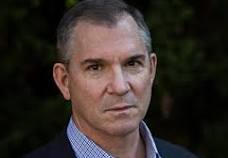
During that fateful night, Bruni suffered a stroke that cut off the blood supply to one of his optic nerves, severely damaging the sight in that eye. The medical term for his condition was NAION. It is very rare. He soon learned that people with NAION do not get better. And worse yet, they had a 40% chance of losing the sight in their other eye. Bruni was 52. He had been a prominent journalist for over thirty years, including twenty-five years at The New York Times. It is easy to see the irony and even cruelty of his situation. Here he was: an accomplished journalist, a best-selling author, a voracious reader, a world traveler, and he was on the verge of losing his sight.
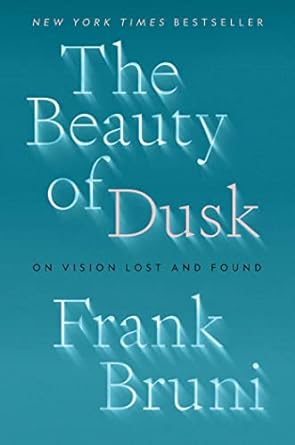
In refreshingly crisp prose, Bruni takes the reader through the specifics of his ordeal. But the book is so much more than an account of his personal trauma. It is the story of human resiliency against incredible odds–not merely Bruni’s resiliency, but the resiliency of dozens of other individuals whose stories he masterfully narrates.
The subtitle of Bruni’s book is On Vision Lost and Found. He describes how his “vision” of life was changed by this event: “I went to bed believing I was more or less in control of life.” He had assumed that failures and disappointments could be “redeemed with a fierce enough effort.” He woke up to “how ludicrous that was.” He went to bed “with more grievances than (he) could count. He woke up to more gratitude than (he) could measure.” He writes,”My story is one of loss. It’s also one of gain.”
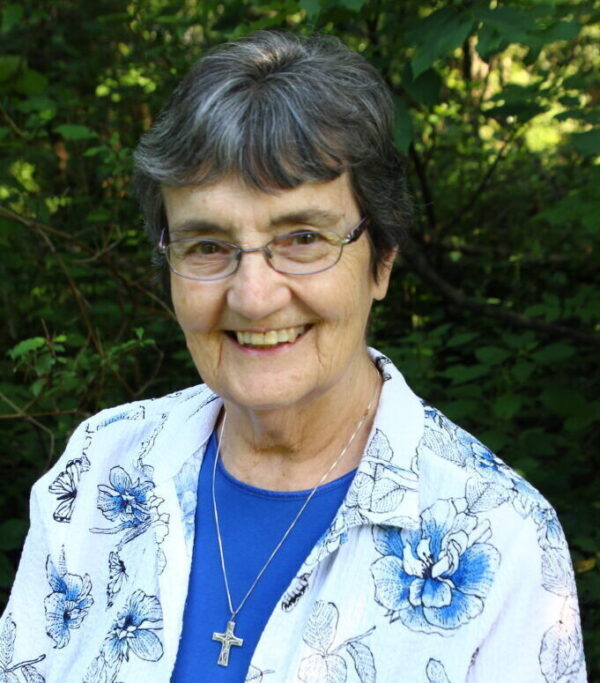
Being a nun, I was especially drawn to chapter four entitled “Flying Solo.” It’s in this chapter that Bruni speaks of God. Sort of. Bruni acknowledges he is an agnostic. But, he says, “I’ve never been able to say that I don’t believe in God, at least God in the sense of an organizing principle to things, a transcendent spirit, a code of conduct to which we are all called, a good and pure voice that’s both within and without us. If that all sounds like gobbledygook, well, my God is gobbledygook, almost by necessity. How could anything so omniscient and ambient not be?” His words sound amazingly similar to those of Christian, Jewish, and Muslim mystics when they are trying to describe their own experiences of the Divine.
During this time, Bruni does something “out of character.” He begins to pray, not even sure to what or to whom he was praying: “To the universe? To the serenest place inside of me? To my better angels which weren’t crowned with halos but cloaked in prudence, humility, hope?” I also appreciated his title of chapter five: “Hope Is Gnarly and Evergreen.” That’s one of the best descriptions of hope I’ve come across!
Bruni’s efforts to deal with his own sufferings, impelled him to formulate a theory. Maybe, he says, we all should wear sandwich boards listing some of the hardships we are bearing, hardships often “cloaked in the camouflage of normalcy.” He suggests a few inscriptions, some of them for the individuals he writes about in his book: “Cysts on my spine that produce constant pain. No end in sight.” “Lost a leg in small plane crash. I was the pilot. My only passenger was killed. He was my 8-year-old son. “Frequent migraines.” “Crushing infertility.” “Constant thoughts of suicide.” “Bike accident. Face shredded. Twenty surgeries. Can’t feel a kiss.” Bruni, the first openly gay columnist for the Times, imagines what the sandwich board might say for the college student he met who was disowned by his parents when he told them he was gay: “Parents’ love was conditional, ran afoul of the conditions.” Maybe such knowledge of peoples’ hardships would elicit greater compassion from all of us.
Bruni’s book is a treasure trove of wisdom gleaned from misfortune and suffering. Here are a few sentences that really spoke to me:
“If hope is a thing with feathers, envy is a thing with tentacles.”
Sight is the “unrivaled monarch of the senses.”
“Life is about adjusting to loss.”
“Putting off experiences often means not having them.”
Chapter 11 is entitled “The Trick Behind All Other Tricks.” That trick for dealing with hardship is perspective. Bruni lists the three overlapping pillars of perspective: 1) “put what you’re going through in context” 2) “recast limits, which aren’t merely limits,” and 3) “reconceptualize loss, the arithmetic of which isn’t a simple act of subtraction.”

One of my favorite parts of the book was Bruni’s interaction with his dog, Regan. This little pooch teaches Bruni many lessons–such as “attentiveness, openness, and humility.” She also teaches him “that something ordinary could be extraordinary. Without therapy or thought, Regan reveled in being alive. That helped me do the same.”
If you’re looking for a book that can help you “revel in being alive,” then Bruni’s book is for you!
20 Quotations on Life

As many of you know, I collect quotations. I have drawers of 3 X 5 cards filled with thousands of quotes from a wide variety of people. I started doing this as a college student. I file my quotes under topics such as adversity, beauty, happiness, Jesus, love, prayer, writing, etc. Today I will share 20 quotes filed under life. This category has the most quotations in my collection. I suggest you read these quotations slowly and prayerfully. As you do, ask yourself, does this quotation resonate with my experience and beliefs? Or do I disagree with it? Or would I modify it to more accurately reflect what I believe? I hope you have some fun and gather some inspiration from these!
(1) The supreme happiness of life is the conviction that we are loved: loved for ourselves, or rather loved is spite of ourselves. Victor Hugo
(2) No one can make you feel inferior without your consent. Eleanor Roosevelt
(3) When asked by an inquirer if he were God or a magician, the Buddha responded that he was neither. “What are you,” the person insisted. The Buddha said, “I am awake.”
(4) Lord, when we are wrong, make us willing to change. And when we are right, make us easy to live with. Peter Marshall
(5) Everything that happens to you is your teacher. The secret is to learn to sit at the feet of your life and be taught. Polly Berrien Berends
(6) Let us live that when we come to die, even the undertaker will be sorry. Mark Twain
(7) If you want an accounting of your worth, count your friends. Merry Browne
(8) All the art of living lies in the fine mingling of letting go and hanging on. Meister Eckhart
(9) Whether we are living or dying, what counts is being there. If we’ve set up permanent residence in the past or the future, the pain and joy of the present can’t bless us. Sr. Macrina Wiederkehr
(10) Who looks outside, dreams; who looks inside, awakes. Carl Jung
(11) There is no object that we see; no action that we do; no good that we enjoy; no evil that we feel or fear, but we may make some spiritual advantage of all. Anne Bradstreet
(12) Both what we run away from and yearn for are within us. Anthony de Mello, SJ

(13) There is so much good in the worst of us, and so much bad in the best of us, that it ill behooves any of us to find fault with the rest of us. James Truslow Adams
(14) Life does not have to be perfect to be wonderful. Annette Funicello
(15) Fortunately, psychoanalysis is not the only way to resolve inner conflicts. Life itself still remains a very effective therapist. Karen Horney
(16) Rules for the road: 1) What appears to be a detour may be the most important leg of the journey. 2) It’s okay to ask for directions. 3) Too much concern for safety is dangerous. 4) “Enemies” and “aliens” make the best travel companions. 5) Sometimes we travel farthest by sitting still. Anonymous
(17) Why wait? Life is not a dress rehearsal. Marilyn Grey
(18) Forget about productivity once in a while and give yourself permission to goof off. Amy Morin
(19) Here is the test to find whether your mission on earth is finished. If you are still alive, it isn’t. Richard Bach
(20) Our life is a faint tracing on the surface of mystery. Annie Dillard
For reflection:
Are there any quotes that touched you today? If so, which one(s)? Why?
Do you have a favorite quote that helps you to live your life well? If so, you can add it to the comments below.
Did any of the pictures in today’s reflection captivate you?
The video I chose is called “Wonderful Life” by Matthew West. It is a tribute to his friend, Ron, who struggled several years with ALS. I couldn’t find a version with the printed lyrics, so let me give you a few of the verses:
“Life can send you flying high… it can bring you to your knees… It’s filled with heartbreak and happiness and everything in between…
Life’s a mountain and a valley, a cradle and a grave…
You laugh until you cry, you cry until you hurt… can’t have one without the other…
Life isn’t always wonderful, but it’s a wonderful life… and this life isn’t all there is.
Life’s broken and beautiful, gone mad and magical, and awfully wonderful life.”
I invite you to comment below on the quotations… the pictures… the song…
What Jobs Have You Had in Your Life?

A good friend handed me a book the other day, saying, “Here, I think you might like this book.” The book is Inspiration Sandwich by an artist named SARK (Susan Ariel Rainbow Kennedy). My friend was right. I really enjoyed this unique and highly imaginative book.
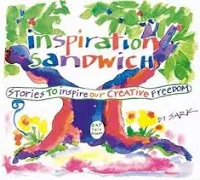
In one section SARK reflects on the 250 jobs she’s had in life. She says, “My first job was as the wakeup fairy in kindergarten.” Her words got me to thinking: What are some of the jobs I’ve had throughout my long life? In addition, I asked myself, “What did I like about each job, what didn’t I like, and what lesson(s) did I learn from each job?” I suggest you take a few minutes this week to do the same. Such a reflection can be fun as well as enlightening.
Here are a few of my early jobs. Probably my first job was doing the dishes with my sister. Since she was 5 years older, she always got to wash the dishes while I got stuck with drying them and putting them away. What I liked? Helping to make the dishes nice and clean again. And being with my sister (most times). What didn’t I like? Drying dishes was boring! And time consuming. There were plenty of interesting and fun things I could be doing with my time after supper. Lesson: some jobs are boring, but have to be done.
Another job I had as a little girl was picking strawberries with my siblings. What I liked? It was outside, we could eat some of the strawberries while we picked, I often had fun with my siblings, and (best of all) we got 10 cents a quart for the berries we picked. But it was the beginning of our summer vacation and was often hot when we picked. Lesson: earning money can be hard work.
Babysitting was another job I did a lot of. What I liked? The kids—at least most of them. I never had any younger siblings, so babysitting afforded me the chance to play with younger kids. And earning 50 cents an hour was good money back in the 1950s. Most customers gave me tips too. What didn’t I like? The late hours. And the responsibility for those kids. Lesson: Being responsible for other people is a BIG job.

For a couple of summers (age 14 to 16), I worked at Sorter’s fruit stand at the corner of Chardon Road (Route 6) and Bishop Road. What I liked? I got 50 cents an hour, Mr. Sorter let us eat some of the fruit in the back room, and all the other workers were boys! Granted, two of them were my brothers, but the others were Jimmy, Kenny, Fran, Eric, and others. I also enjoyed meeting a wide range of customers. I still remember my first customer, a truck driver who wanted 2 pounds of sweet cherries. He told me to keep the change for my tip. I also remember the students from the nearby Jewish Yeshiva and the Catholic seminary walking up to the stand in their black slacks and white shirts or their cassocks and buying our good fruit. What I didn’t like? I had to learn the names of 20 or so different kinds of apples and what each kind was best for: eating, baking, making applesauce, or making cider. Lessons: Your fellow workers can make or break a job. Jobs force you to meet new and different people and to learn many new skills.
I also had a wonderful waitressing job from age 16 to18. I loved almost everything about that job—especially generous tips! But I didn’t like my sore legs and feet at the end of an 8-hour shift. Then I entered the convent. As a novice, I learned other jobs like: washing the huge pots and pans in the main kitchen, mopping floors in rooms the size of basketball courts, operating the floor shiner in a narrow hall without banging it into the wall, sewing and mending things, peeling hundreds of potatoes by hand–until we got a potato peeling machine. Warning: If you leave potatoes in the potato machine too long, they come out the size of marbles! At another time, I plan to reflect on my jobs from age 21 to the present.
What about you? What are some of the jobs you’ve had in your life? What did you like, didn’t like, and learn from these jobs?
Our song today is “God Is Working” by Deon Kipping, an American Gospel Musician. Written in 2020, the song reminds us that God has a “job” too: loving us! God is at work in each one of us, in our family, in our country, and in our world as a whole…
I hope you will share a few thoughts with us about some of the jobs you’ve had in your life.
A Reflection for Autumn

I can’t let autumn fly by, without a few thoughts on this beautiful time of the year. So, today I’ve put together some brief reflections on this season by four writers—all happen to be women.
The first is a quote by George Eliot—whose real name was Mary Ann Evans. She used her masculine pen name for her famous books including Middlemarch, Silas Marner, and Mill on the Floss. Here’s what she wrote about Autumn:
Delicious Autumn!
My very soul is wedded to it, and if I were a bird
I would fly about the earth seeking successive autumns!
* * * * * * *
The next three reflections are from the book The Circle of Life: The Heart’s Journey Through the Seasons by Joyce Rupp and Macrina Wiederkehr:
From “Antiphons for Autumn”:
O seeds sprung loose from dying plants,
Come! Come teach us to be generative.
Carry us to places where we can take root.
Encourage the seed of our love to fall freely.
Gift us with the grace of surrender.
O Come!
***************************************
Macrina Wiederkehr:
“Autumn leads the seasons in modeling the sacred practice of recycling. What seems to die bespeaks a quiet truth: that which falls into the earth is never lost. The earth receives it and preserves it. Thus it becomes a nurturing source for new beginnings as another cycle of growth arises. This miracle of transformation is autumn’s prayer.”
********************************************
Joyce Rupp:
“My autumn memories as a child have deepened in me as I have grown older. They draw me into a season that engenders gratitude for both the material and spiritual harvests of years gone by. It is a season rich with wisdom, reminding me time and time again to treasure the beauty, appreciate what is, and then, let go when it is time.”
***********************************************

And finally, a poem by the 19th Century American poet, Edna St. Vincent Millay. (This poem is in the public domain.)
“God’s World”
O World, I cannot hold thee close enough!
Thy winds, the wide grey skies!
Thy mists, that roll and rise!
Thy woods, this autumn day, that ache and sag
And all but cry with colour! That gaunt crag
To crush! To lift the lean of that black bluff!
World, World, I cannot get thee close enough!
Long have I known a glory in it all,
But never knew I this;
Here such a passion is
As stretcheth me apart,–Lord I do fear
Thou’st made the world too beautiful this year;
My soul is all but out of me,–let fall
No burning leaf; prithee, let no bird call.

For reflection:
Did any of the above reflections stand out for you today? If so, which one(s)?
Did any photo catch your attention?
What would YOU say to the season of Autumn?
The video today is some drone footage of the autumn foliage in Canada and the U.S. The soft guitar music is a fitting accompaniment to the lovely sights you will see. (3 mins.)
I welcome you to write a comment below on the reflections, the photos, the video, or your own thoughts on fall. No matter how brief your comment may be, it is greatly appreciated by all our readers–and me!
Meditation by Father Timothy Radcliffe, OP
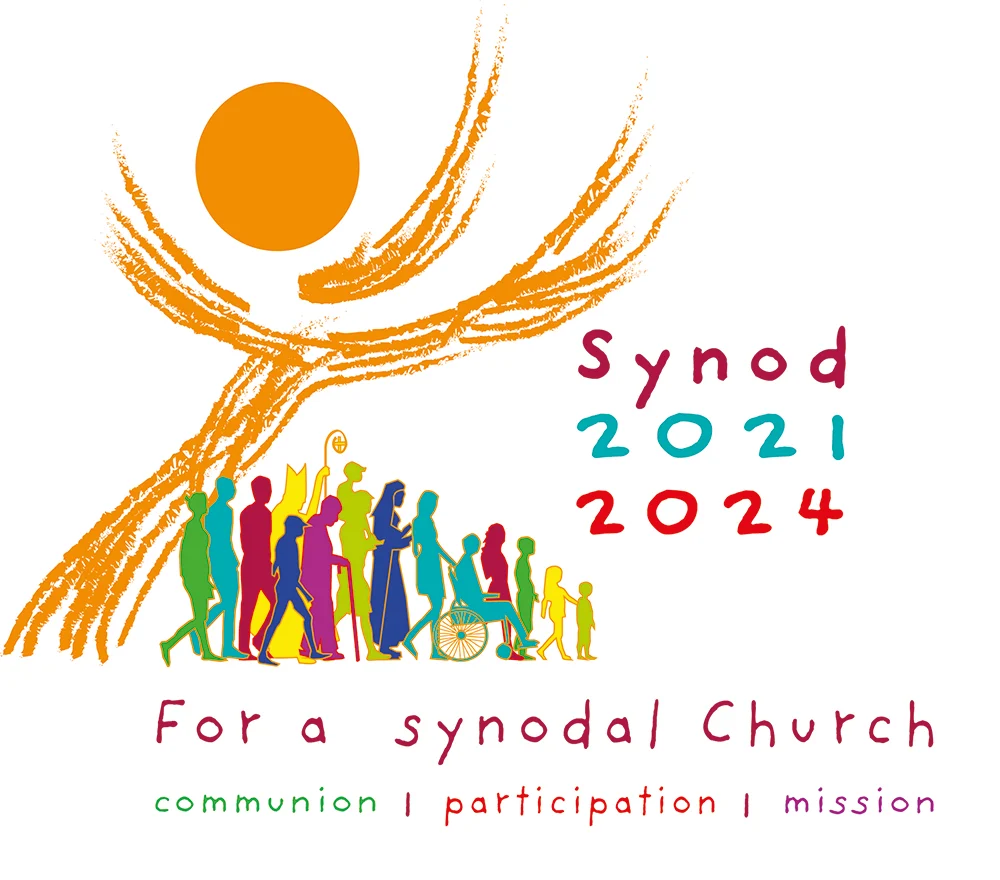
As we know, there’s a very important meeting taking place in Rome right now. It is the Synod on Synodality. I wrote something about it on my October 2 post. The Synod runs from October 4-29. But it began on October 1 with a three day retreat outside of Rome. Fr. Timothy Radcliffe, former Master of the Order of Preachers (the Dominicans), gave the reflections each day. His talks are available on YouTube as well as the Vatican website. When I scrolled down on Youtube, I found the complete talks in printable form too. I found Fr. Radcliffe’s reflections very worthwhile, so today I am offering you his first meditation.
The talk is only 31 minutes long and it’s in English. (Father is from the U.K.) Father begins with the account of the Transfiguration (Lk. 9:28-36). Throughout his talk he weaves together scripture and brief but incredible stories from his world travels, some stories from war-torn places such as Rwanda, Syria, and Iran. I jotted down some of his words and I’ll share them with you now:
Father begins by acknowledging that we come to this Synod with “contradictory hopes.” Some of us are hoping for change–for example, in the role of women in the Church. Others are hoping against such change. He raises the question: what kind of shared hope can we at this Synod? And he proceeds to offer some beautiful words on what our shared hope really is.
At one point he tells the story of a little girl he saw in a children’s home in Bagdad. She had no arms or legs, yet there she was feeding one of the younger children by holding the spoonful of food in her mouth. He asked, “What’s the use of such small acts of goodness in a war zone?” Then he answers this question by recalling Jesus’ words at the Last Supper.
A few more of his statements:
He tells the participants: “Your greatest gift from this Synod will come from those with whom you disagree.”
“Despair is the terror that nothing makes sense… Hope is the conviction that all our suffering, joys, and sorrows will have meaning.”
Father’s conviction: “The nonsense of violence will not have the last word.”
*************************************
News: Three of my books on Amazon are now available as ebooks: Traits of a Healthy Spirituality, When the Rain Speaks, and Picking Strawberries. Price is $6.99. (A big thank you to my fellow SND, fellow blogger, and good friend Sr. Kathleen Glavich for converting these books into ebooks so you now have a choice of format!)
I hope this brief reflection whets your appetite to listen to Father Radcliffe’s beautiful meditation. Here he is speaking to the Bishops, priests, laymen and laywomen of the Synod.
As usual, I invite you to offer a comment below…