Time for a Little Humor

To celebrate Labor Day, I am devoting today’s post to humor. I do this occasionally, because I firmly believe we must never lose our sense of humor. We can let go of many other things—our youth, our good looks, our dreams of winning the lottery, and even our perfect health—and we can still lead a basically happy life as long as we hang on to our sense of humor. So here are a few items to help make you smile (or groan).
First, a couple of pictures:


Fun with words:
My uncle named his pups Rolex and Timex. They’re his watch dogs!
Stealing someone’s coffee is called mugging.
Pasteurize: too far for you to see.
The other day I held the door open for a clown. It was a nice jester.
I’ve been to many places, but I’ve never been to Kahoots. Apparently, you can’t go there alone. You have to be in Kahoots with someone.
I’ve also never been in Cognito. I hear no one recognizes you there.
Sometimes I’m in Capable, and I go there more often as I’m getting older.
Okay, okay, I can hear you groaning, so let’s move on to some Fun Facts:
Only three countries don’t use the metric system: Myanmar, Liberia, and the U.S.
NFL Super Bowl referees also get Super Bowl rings.
Monaco’s orchestra is bigger than it’s army. (There’s something I really like about that fact… I wish other countries would follow their example!)
The word “strengths” is the longest word in the English language with only one vowel.
Candy Corn was originally called Chicken Feed.
One quarter of all your bones are located in your feet. (Let’s hear it for our feet—and for all those foot doctors! Rah! Rah!)
How about a few words of wisdom:
If you lend someone $20 and never see that person again, it was probably worth it.
A truly happy person is one who can enjoy the scenery on a detour.
Never buy a car you can’t push.
Save the earth. It’s the only planet with chocolate.
The world is full of kind people. If you can’t find one, be one.
And now, let’s hear from our children:
On Father’s Day, a single Mom received a card from her 8-year-old son who wrote: “Thank you for being the best 2 parents rolled into one!”
A father told his little girl that he had to go to work to get money for their vacation. The little girl ran into her bedroom and returned with her purse. She said to him, “I’ve been saving this money so you don’t have to go to work anymore!”
On her little boy’s first day of school, he was supposed to take a big yellow school bus. But his mother was leery of his being on that bus filled with all older kids. She told him she would drive him to school instead. But he told her, “Mommy, I’ve got to grow up and be a big boy one of these days.” She smiled and said to him, “Thank you.” A few minutes later, she watched her “big boy” get on the bus.
A little girl said, “If you want something expensive, ask your grandparents.”
At bedtime, a little boy told his mother, “The monster that lives under my bed wants another cookie.”
A mother was waiting to take her preschooler to school for the first time. She found him in the bathroom rubbing his arms and legs with her body lotion. He said to her, “I want to smell like you all day.”
And finally, some more pictures:




Did anything today make you smile? Do you want to add another smile to today’s blog? If so, comment below!
PS: I hope to have my blog updated and running soon! It will have a new look and hopefully our problems with subscribing will be resolved! Warning: my blog might be down for a few days as we make this transition.
As Christians, we can smile and laugh regularly because we believe the Good News of the Gospel. This song, by Marty Haugen, captures the basis of our joy: “We Walk by Faith.” This means we remember how much God loves us… and that God is with us always every step of our earthly journey:
You’re welcome to add a comment below:
A Daughter/Caregiver Recalls the Light in Her Mother’s Bedroom at Night…
Occasionally I like to showcase the writing of others on my blog, sometimes by name, sometimes anonymously. Here is a short piece by a friend who wishes to remain anonymous. She was the primary caregiver for her mother in her final years. When she shared with me this excerpt from her journal, I was very moved by it. Maybe it was because I had cared for my mother too in her final years, and I could relate to many of the little details: her utter exhaustion… her mother’s great strength… the little things that bonded them—like a special spoon… her mother gripping her hand… Here is the excerpt from my friend’s journal:
“The Light in My Mother’s Room”
For years now my eighty-year-old mother has slept with the lamp light on in her room. She says she keeps it on because she wakes up frequently during the night, and she reads to fall back to sleep. I, on the other hand, prefer pure darkness during the night. Even though my room is down the hall, when my mother closes her door almost all the way—leaving just enough room for our cat to meander in and out on nocturnal visitations—the mere crack of light seems to illumine my entire room.

But Mom was in the hospital this week, with pneumonia. Her battle with COPD makes this a more or less common occurrence throughout the year, and during these times I am always with her at her hospital bedside. But I could not be with her this time, for I was sick at home with bronchitis. I was too sick even to worry.
But Mom came home today. She looked small, a tad more frail. She came upstairs to rest, and we sat in her bed for a bit. She gripped my hand continually, which was unusual. She spoke with passion about what needs to be done in our society—with hospitals, health care, and the government. I laughed because even though she was recovering from what could have been her final illness on earth, she was able to fan those flames about all manner of current social issues.
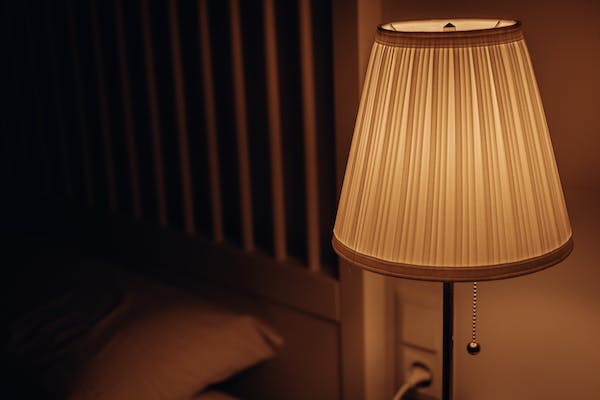
Later, she slept very soundly in her darkened room with the one lamp on.
In the evening when she came down for some broth, I asked her which spoon she preferred. She fumbled through the drawer until she selected the small stainless brushed-steel one with the roses on the stem. She reminded me that I had bought the set for her years before when I was a teenager, and that I had saved up and spent a lot of money on them. And it was true. It was the biggest and most expensive thing that, as a teen, I had ever bought.

Now I lay in bed, and the light from my mother’s room shines and spills into mine… spills over and through and into and around. And it is a light whose power comes from some Great Wonderful Source. And I delight in it, am overawed by it, and feel the unfathomable power of this treasure called Life… and Time.
***************************************************************************************************
For reflection: Is there anything in this journal entry that stands out for you?
Have you ever been a caregiver for someone? If so, what were some of the challenges for you? What were some of the joys or graces for you?
Reread the final paragraph. What is the “light from my mother’s room”?
Our song today is called “A Caregiver.” The words were written by Jerry Carney who was the caregiver for his wife Lucille who passed away with dementia in 2018. The music was written by Ruth Davis. The song is sung here by Laura Williams.
I encourage you to write a comment below… I love hearing from you!
Singing Is Good for You–Especially Singing with Others

I like to sing. I always have. As little girls, my sister and I used to sing duets in harmony. Our favorites were “Harbor Lights” and “You Belong to Me.” I sang in the children’s choir at our parish, in our high school glee club, and now in the choir at our provincial center. That’s why a recent article in The Washington Post by Alexandra Moe caught my attention. She said that recent research has shown that singing is good for you, especially singing with others.
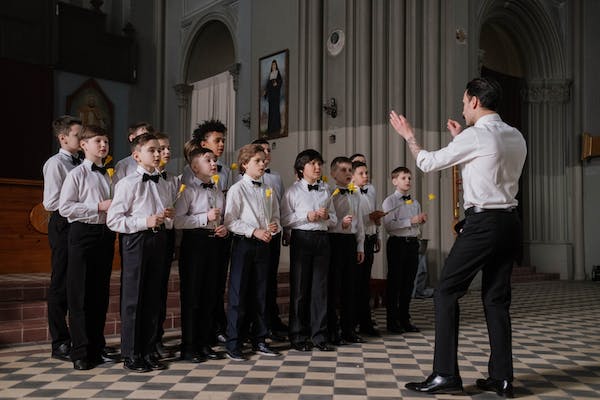
The article began with a woman in London named Hazel Hardy. Every Wednesday she travels for choir practice to a church on the other side of town. Her choir is not an ordinary choir though. All the members are individuals familiar with cancer—as patients (like Hazel), caregivers, and oncologists. They come together not to talk about cancer. But to sing and have a little fun.
After rehearsals, some singers provide a saliva sample to researchers studying whether singing affects the choir members’ health and mood. It does. In fact, there is a growing body of research that points to the physical and mental benefits of singing with others. Singing together can reduce stress hormones and increase cytokines, proteins that can boost the body’s ability to fight serious illness.
Other studies have shown that singing can lessen anxiety, stimulate memory for those with dementia, increase lung capacity, and ease postpartum depression. Stanley Thurston is the founder of the Heritage Signature Chorale in D.C. to preserve African American choral music. He says, “Choirs are large families.” They promote social bonding which contributes to a sense of belonging. They also can give the members a sense of achievement after months of working on a beautiful musical work.

In 2019, some 54 million Americans sang in choirs. By and large, those who did tended to be “more optimistic, more likely to vote, less lonely, possessed stronger relationships, and were more likely to contribute to their communities than non-singers.” Singing can be calming too. Lullabies calm the baby, yes, but they can also calm the singer.
But what if you can’t sing? “If you can breathe and make sound, you can sing and receive its benefits,” says researcher Suzi Zumpe. She incorporates music to help relieve breathlessness and anxiety for people with long Covid.
I’m wondering how many of you sing–perhaps in the shower, when you’re alone in your house or your car. Or when you pray. And how many of you sing in a choir or with another group—such as the congregation in church. Have you personally experienced any of the health benefits of singing?
The first song Hazel Hardy’s choir learned was “I Can See Clearly Now.” But their real “showstopper” was “I Will Survive” by Gloria Gaynor. The choir sings the words of that song to their cancer. And they sing with gusto: “Go on now go, walk out the door, just turn around now, ’cause you’re not welcome anymore.” Says Stanley Thurston, singing “affects the way you feel about being alive. It’s an expression of, ‘Yes, I am here.’ It feeds my soul.”

For reflection:
Did anything catch your attention in this reflection?
Do you sing in a choir, with another group, or at Mass? Have you experienced any benefits from signing with others?
Would you add any other benefits you’ve experienced by singing—either alone or with others?
A nice surprise: Do you remember the short British movie I posted, Two Strangers Who Meet Five Times ? I posted it on January 9, 2023. You can find it simply by going to the search box at the top on the right and typing in “two strangers.” I was surprised and delighted last week to find a comment from Marcus Markou himself–the man who made the film! Here’s what he said:
Hello there. I found this by accident. This is the filmmaker of Two Strangers Who Meet Five Times. Thank you for sharing it! I loved the comments!
Once again his words highlight how important your comments are! You never know who’s going to read this blog!
Our video is a special version of Gloria Gaynor’s song, “I Will Survive.” Here she sings the song with patients and supporters at Miami’s Children’s Hospital. She has adapted the words of her original song to: “I Will Survive Bald, Brave, and Beautiful.” I found this video very inspiring…
Please join in our conversation with a simple comment below:
Plan B

When I ask friends out to lunch, I ask them to pick a second date too. That way, in case something unexpected comes up for one of us, we have another date to fall back on. I learned long ago, when making plans, it’s always good to have a Plan B, just in case something makes Plan A impossible.
I have never kept track of how many times I’ve had to resort to Plan B (or even Plan C!), but it is fairly often. My plans don’t always go as I want them to—in both small and big ways. In high school I planned on eventually becoming a teacher, marrying some nice guy, and having four kids. Instead, I felt God leading me to become a Sister of Notre Dame. As an SND, I planned on teaching high school for most of my life, only to be asked to leave the classroom and to serve as novice director, then in leadership for my congregation, and eventually into retreat and writing ministries. As John Lennon supposedly remarked, “If you want to make God laugh, just tell God your plans.”

That’s not to say that we shouldn’t make plans, of course. After all, planning is one way we channel our time, energy, and talents into activities that are necessary, worthwhile, and helpful to others. We plan many things: our daily schedule, our work, meals, household chores, errands, parties, liturgical celebrations, vacations. But when we make plans, we should not be so wedded to them that we become totally discombobulated when things don’t go as we planned.
Scripture is filled with stories of individuals whom God asked to change their plans in major ways. In doing so, they were the better for it—and so were we! Sarah and Abram were an elderly couple in Ur, probably enjoying their retirement years. But God asked them to change their plans by uprooting their lives and trekking to an unknown land far away. Moses planned on hiding from the Egyptians, because he had killed one of them. But God asked him to go back not only to Egypt, but to Pharaoh himself and to eventually lead the Israelites out of their slavery. Mary was planning on marrying Joseph and living a quiet life in an ordinary town. But God asked her to radically alter her plans and become the mother of “the Most High.”
Jesus was someone whose plans seemed to change or evolve during his life. As a young man did he plan on becoming a carpenter like his dad? We can only imagine how his intimate relationship with Abba led him to embrace a life as an itinerant religious preacher instead. In Gethsemane, it’s clear that Jesus’ plan did NOT include crucifixion, yet he accepted even death on a cross as part of God’s plan for him.

What makes it so hard for us to change our plans at times? For one thing, being forced to change our plans reminds us how little control we have over our lives. And not being in control can be disturbing for many of us. But our faith reassures us that our lives are in God’s loving hands—whether we are enjoying Plan A, or whether we have had to resort to Plan B, C, D, or another letter of the alphabet!
Here are a few questions for your reflection:
List some aspects of your life that have gone as you planned.
List some aspects of your life that did not go as you planned.
Has a change in your plans ever been a real blessing for you?
PS: My blog is being updated with a new look soon! At the same, some of the problems with readers not being able to subscribe and/or leave comments will be fixed. The blog might be “down” for a few days soon to accomplish this—just so you know. Meanwhile, I’ll keep writing and posting these reflections every Monday. Thank you for reading “Sunflower Seeds.” I appreciate each one of you!
I chose a song by “Casting Crowns” called “The Change in Me.” I like the various and beautiful images of God’s Spirit in this song. God’s Spirit is a gentleman… a wrecking ball.. a whispering… a holy flame… the air I breathe… the life in me… the change in me.
I would love to hear from you below—especially some examples from your own life where you got Plan A and those times you had to resort to Plan B and beyond. Also, I’d love to know if a change in your plans ever proved to be a real blessing for you!
My Friend Judy Moore
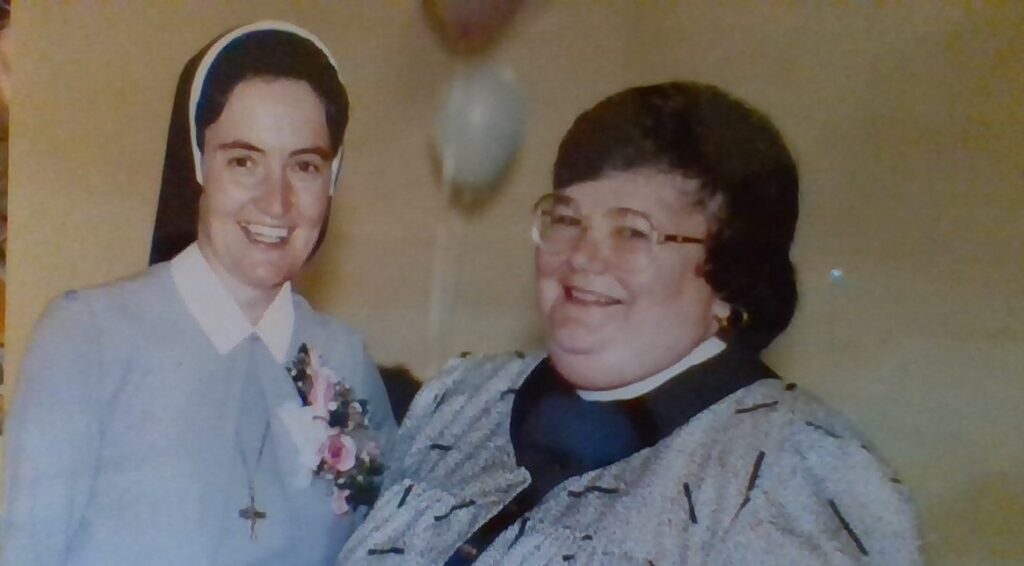
Recently I lost another friend. She was Judy Moore. Reverend Judy Moore, an Episcopal priest whose final years were spent ministering in Albuquerque, NM. My friendship with Judy goes way way back to 1951 when we first met in second grade at James A. Garfield School in Willoughby Hills, Ohio.
Judy was new to the school. Our teacher, Mrs. Toth, asked Jolie and me if we would show Judy “the ropes,” that is, introduce her to the other kids, take her to lunch and recess, and make sure she got on the right bus at dismissal. We did. And before long, Judy and I were best friends.

We had many things in common. We both loved school, we both liked to read, and we both had two brothers and one sister. In fact, her brothers, like mine, were named Johnny and Pauly! We soon learned we had differences too. For one thing, I was Catholic (a rarity at our school) and she was Protestant. At that time I had not yet learned the fine distinctions between mainstream Protestantism and the Episcopal church. In my second-grade brain, if you were Christian but not Catholic, you were Protestant. Simple.
Back then we were not allowed to go to each other’s church, except maybe for a funeral or wedding. But we soon learned we shared some religious practices—like prayer. I recall one summer staying overnight at her house. When it came time for bed, she announced, “I always say my prayers before I go to bed.” I was delighted and said, “I say my prayers too.” She added, “I like to say mine by the window where I can see the moon and stars.” I confessed that I mostly knelt beside my bed, but I liked her idea. Soon the two of us were kneeling side by side by the open window, talking to God.
A few years later, Judy told me she wished she could be a priest. It surprised me that she called her minister “priest” just as we Catholics called ours. As for my becoming a priest, the thought never crossed my mind. Only men were priests in both of our churches. Judy said that after their Sunday service when the church was almost empty, she would sometimes sneak into the pulpit and pretend she was giving a sermon. But back then, we pretty much assumed that neither of us would ever be preaching from a pulpit. (We were both wrong.)
In sixth grade, our parish, St. Felicitas, opened a new school. My parents said I was now going to this school. I was heart-broken—mostly because that meant leaving all my friends at Garfield—especially Judy. Throughout high school, we continued to keep in touch, but once I graduated and entered the Sisters of Notre Dame, we had no contact for years. Judy went on to receive a Masters of Arts in Theater from Kent State. Then, in the early 1980s, I heard a rumor that she was studying to be a priest. We connected again, and I was privileged to attend her first Mass at Grace Episcopal Church in Willoughby in 1986.
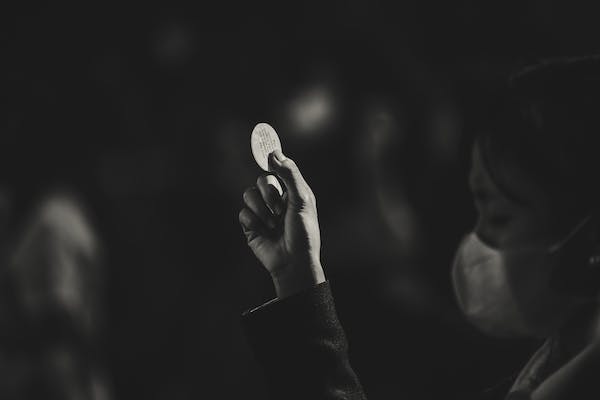
What do I remember most from that incredible event? I remember seeing Judy, fully vested, presiding at the altar. I remember her pronouncing the words of consecration in language very similar to the language our priests used. Before communion, I remember their Bishop explaining what this sacrament meant to them and then inviting us to receive communion if we so desired. One of the “peak experiences” of my life was receiving the host from Judy’s hand.
I was serving as novice director during this time. One evening I invited Reverend Judy over for supper to share with us the story of her discernment to the priesthood as well as some of the joys and challenges of being a priest—especially a woman priest—in her church. That sharing was rich and inspiring.
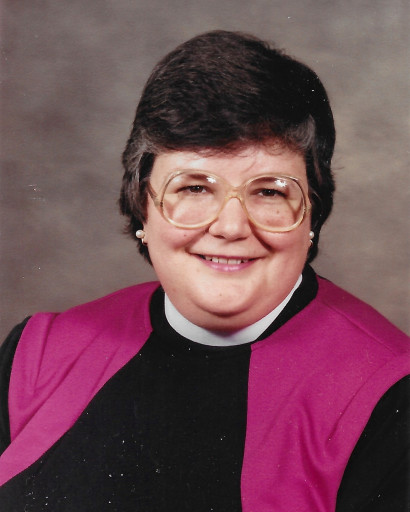
In her obituary, Judy was praised for her “lifelong calling to be a minister in her beloved Episcopal church.” She had great skills as a teacher and director, and her “love for storytelling made her sermons come alive.” She also possessed a gift “for celebrating others’ joys and supporting them in their troubles.” Judy’s many gifts were already in her—in “seed form”—when we two little girls met in second grade so many years ago. Over the years those gifts grew and flourished as she poured herself out in loving service as a priest. How blessed I am to have had Judy as my friend.
For reflection:
Did anything stand out for you in this reflection?
Do you have (or did you have) a good friend who has had a significant impact on your life?
This essay reflects some of the changes in the church over the past 70 years. What are some of the changes in your church that you have witnessed during your lifetime? Which ones do you welcome? Which do you resist?
Our song today is “Friends” written in 1983 by Michael W. Smith and his wife Deborah. Smith said he wrote this song for a good friend who was moving away. Whether you are missing a friend who has moved away or whether you are experiencing the loss of a friend through death, perhaps this song might give you comfort…
As usual, I welcome your comments below. Your words enrich my blog!