A Poetry Break…
Recently, Krista Tippett, on her podcast On Being, interviewed Tracy K. Smith, U.S. Poet Laureate from 2017-2019. They both agreed that poetry is more important than ever today when our public conversations are often so “fractious and strident.” Why is poetry so vital? Because poetry gets at “undergirding truth,” not just facts. Poetry can lead to the wisdom of the “inner voice” which we all have. Poetry does not rest in what seems to divide us, but goes deeper to those things that unite us.
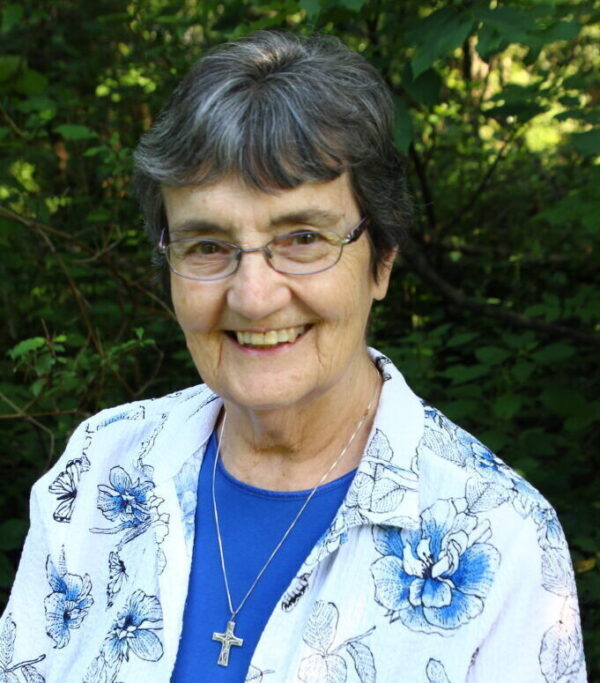
With those thoughts in mind, I am sharing four short poems today, written by one of my SND friends who wishes to remain anonymous. I find her poems to be simple, prayerful, gentle yet strong. May they help all of us to connect with our own inner voice and bring us peace today. As usual, I suggest you read each poem slowly and aloud, for poetry is meant to be heard. (All pictures are from Pexels.)
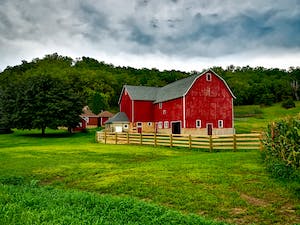
“That Farm”
Something there was about that farm
that loved the earth upon which it was born.
That once chased a dream long ago in the dawn
till it found a hill to be upon.
And a restless wind in the old oak tree
seemed anxious to say–
there’s room here for thee.
So day followed day, years sped on,
love grew around, above and within.
Voices roamed along pasture walk,
in and out, down the lane
as far as wood and back again.
But sudden as it saw the light–
the last dawn rose to say goodbye.
And night will bring shade a little too cold…
and lights will go out on a farm that’s
been sold.
*********************************************************
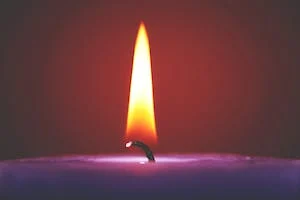
“Contemplation”
As dawn rises lowly,
as blossoms unfold,
as breezes gently whisper,
and rainbows lead to gold—
so gentle was He when He came to stay.
No thought or voice had I
to pray,
but resting silently
in His presence there,
He and I became one prayer.
***************************************************************
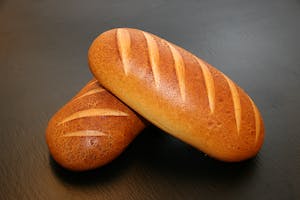
“Poor Simple Bread”
Poor simple bread,
to eyes unchanged,
but faith—transformed.
“This is my body…”
“This is the cup of my blood…”
Transcendent moment of Calvary’s pain
unwinding into the span of eternity,
glorious fruit of seed-bearing tree
gift of the Trinity
flowing into moments of measured destiny
to lift and heal and make new again.
“And I, if I be lifted up…”
Poor simple bread,
I hold out my hand again to you
not to give, but to receive,
not my life, but yours,
Come, Christ of the Eucharist,
Calvary’s Victor unvanquished,
challenge my life to be “gift” always.
***********************************************************
“Peace”
Sing your song
though tears be flowing.
Dream your dreams though
winds wisp them away.
Pray your prayer
in spite of dryness.
My Peace, it will be there.
Look for joy
though pain be wounding.
Search for light
though dark be the way.
Follow my steps
though long be the journey.
My Peace, it will be there.

For reflection:
Did any of these poems speak to you today?
Did any of the pictures speak to you today?
Do you agree that poetry gets at “undergirding truth,” and not just facts?
Do you ever take a poetry book out of the library or even buy a poetry book? If so, what are some poets or poetry books you like?
I chose a poem by Pop Artist Sean Be for our video today. It’s called “Still God.” I would be interested in what you think of his poem… his rap… his words… This poem urges me to ask the question: Who is God for me?
I encourage you to respond below to anything in today’s reflection…
Cousins and Other Layers of Love
I was thinking about my cousins lately. Maybe that’s because I recently had lunch with one of my cousins, Peggy. We hadn’t seen each other since her Dad’s funeral not too long ago. It was so enjoyable being with her. She is someone who shares much of my early history and went on to have a rich life of her own. As we know, first cousins are the children of our parents’ siblings. They are the same generation as we are. Second cousins are the children of our parents’ first cousins. They are of the same generation as we are too. Interesting (at least to me!) are these facts: Siblings share about 50% of their DNA; first cousins share about 12.5%; second cousins share about 3.13%.

I was blessed with many first cousins: 20 on my father’s side and 13 on my mother’s side. But I always include 9 second cousins when I think of the word “cousin.” Their family was so close to my family that I never even realized they were not my first cousins until I was a little older. My mother and their father were first cousins. So, including them, I had 42 cousins. Of those 42, 11 are deceased.
I hope I’m not boring you with these facts. Let me get to my main point: If we were lucky to know our cousins growing up, then some probably became instant playmates and later, perhaps friends. The way I see it, cousins are God’s way of expanding the layer of love many of us are wrapped in as children—and beyond. A personal note: My parents were the oldest child in their respective families. Consequently, many of my cousins are younger than I am. When you’re little kids, a 10 year age gap can seem huge, but as you age, that gap makes less of a difference.

This photo was taken at my parents’ 40th wedding anniversary celebration. I am wearing a white habit since I was teaching in North Carolina at the time. My parents are seated next to me. On my other side are two SND friends and my second cousin, Margaret, a Vincentian Sister. The picture was taken by my father’s first cousin, a professional photographer. Can you imagine what a feat it was to get everyone in the picture–yet we always managed to do so! I have pictures like this from several of our family celebrations. (In the background is our old “coop,” which housed our large incubators [when we were raising geese], provided storage for our grain, kept the tractor and lawn mower dry, and housed some of our chickens.)
When I was a kid, our extended family had frequent get togethers. We celebrated First Communions, high school graduations, weddings, and wedding anniversaries. In addition, we frequently had picnics together, often on our farm. With our expansive lawn, we had ample room to set up the croquette set, the badminton and volleyball nets, and horseshoes. Our large trees on the side of the house provided plentiful shade. Our fields assured lots of running space for the kids—many of whom lived in the city. Our dogs, cats, and flocks of geese provided more entertainment.
Cousins weren’t the only additional layer of love we had besides our parents and siblings. Our grandparents doted on us. Our aunts and uncles took a keen interest in us. As a child, I remember hearing about all the children in a place called Europe who were left orphaned by the war. I remember asking my older siblings, “If anything happens to Mommy and Daddy, who will take care of us?” They assured me: “Our aunts and uncles.”

I fully realize not everyone has had caring parents, doting grandparents, kind aunts and uncles, and a band of cousins to grow up with. But perhaps an additional layer of love for us were some of our neighbors, a babysitter, a teacher, a coach, a team we played on, a parish priest, a maintenance man, a bus driver, and the friends we made at school. I had a psychology professor in college, Sister Joseph, who always told us, “Don’t save your bouquets for a person’s funeral. Bestow your bouquets on people while they are still alive.” I would encourage you to take a few minutes this week to recall some of the people who made a positive impression on your life. Or maybe it’s time to reach out to an aunt or uncle, a cousin, a favorite teacher, a former coach and express your gratitude. In addition, today might be a good day to thank God for all the layers of love God has wrapped you in—and for the times you have been privileged to provide an additional layer of love for someone else.
For reflection:
Have any of your cousins played a significant role in your life? What about a grandparent or aunt or uncle?
Besides your extended family, who else paid attention to you as a child or cared for you?
Do you have any significant adults, besides your parents, who played a key positive role in your growing up?
Have you ever been part of an additional layer of love for someone else?
Our song today is “The Love of God” by MercyMe. It is a beautiful and comforting description of God’s great love for us.
You are invited to write a comment below on the reflection itself, the pictures, the video. Don’t be shy!
Sensitivity: The Art of the Small
Is sensitivity a cross or a gift? Sometimes we think of sensitivity as a cross we bear. We reason, “If I weren’t so sensitive, I wouldn’t feel all this pain—not only my own pain, but the pain of others.” Yet, we also know that sensitivity can be a great gift. The sensitive person is often a more caring and compassionate person.
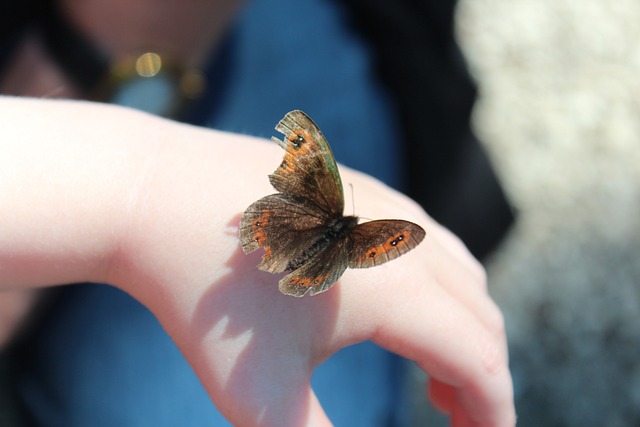
What is sensitivity—as we are using it here? Simply stated, sensitivity is the quality that makes us delicately aware of the attitudes and feelings of ourselves and others. The Golden Rule says, “Do unto others as you would have them do unto you.” That presupposes an awareness of our own needs so that we may “do unto others” what we ourselves need and desire.
There are certain advantages to being a sensitive person. It means we notice details that others may miss: a lovely sunset, a perfectly baked chocolate cake, an unassuming person’s generosity. It also means we read people well. We notice, for example, when someone is sad, embarrassed, happy, or angry. We’re good at picking up the “vibes” of a group which enables us to work well with others. Writer Cati Vanden Bruel says that another advantage of sensitivity “is finding wonder in the smallest things”: the giggling of a child, the subtle scent of honeysuckle in the breeze, the comforting presence of a loved one sitting near us, a small personal achievement.
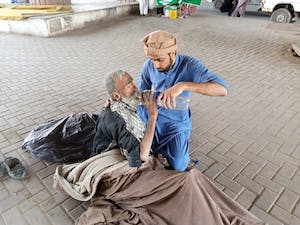
Where is sensitivity found in the Bible? From the opening pages of Genesis, our Heavenly Creator is shown as a sensitive person. As God creates the cosmos, Genesis tells us that, after every day of creation, God “saw that it was good.” In other words, God was sensitive to the beauty and wonder of all created things. After God creates Adam, God is sensitive to Adam’s loneliness and creates Eve, a suitable partner for him. In the book of Exodus, God is shown as being sensitive to the anguish of the Israelites in Egypt: “I have seen the affliction of my people in Egypt… I am aware of their sufferings” (Ex. 3:7). God takes action by appointing Moses to lead the people out of their bondage. Sensitivity often arouses concrete action to alleviate the suffering of others.
Throughout the Gospels, Jesus is portrayed as a highly sensitive person. He worked his first miracle at a wedding reception, for example, because he was sensitive to his mother’s request. Mary too was sensitive to the young couples’ possible embarrassment if the wine ran out (Jn. 2:1-11). While being mobbed by a crowd, Jesus was sensitive to the tassel-touching of the woman with the hemorrhage (Lk. 8:43-38). And of all the individuals standing outside the temple treasury, watching the people depositing their offerings, only Jesus seemed to notice the poor widow with her two small coins, and (what’s even more remarkable) was able to instantly realize her amazing generosity (Mk. 12:41-44).
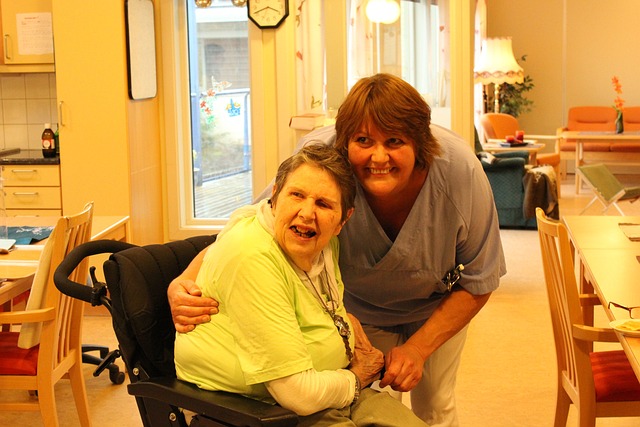
Writer Ted Zeff states, “The highly sensitive person has an important mission, which is to serve as a balance for some (insensitive individuals) who advocate a less than nurturing policy toward humans, animals, and Mother Nature.” If we are bothered by arrogant, cruel, heartless individuals, then we can respond by gracing our little corner of the world with a little of our own sensitivity. Carlos Valles, SJ, calls sensitivity “the art of the small.” Our sensitivity need not be expressed in wide, sweeping movements, but in simple little gestures: the attentive look, the kind interpretation, a smile, a “thank you,” the small token, the simple touch.
We never need apologize or feel bad for being sensitive. For Jesus himself was master of this “art of the small.”
For reflection:
Who or what helped you to grow in sensitivity?
Can you think of any other places in the Gospels where Jesus displays his sensitivity?
Think of a few times that you appreciated someone else’s sensitivity in a particular situation. How was this sensitivity expressed? What effect did this sensitivity have on the situation and the people involved?
PS: The past few weeks I have been picking up a number of new subscribers to my blog. But some of you may not actually receive my blog on Monday. The IT department and I are in the process of upgrading my blog and the blogs of the other SND sisters. Until this process is finished, you might have to search “Melannie Svoboda Sunflower Seeds” to get my blog each each week. I apologize for this inconvenience. Hopefully we will have the subscriptions up to date and running soon.
Our video today “The Little Things” and it’s sung by ForeverBeSure. The visuals elicited a vivid childhood memory for me: As a little girl, I played for hours and hours with my vast collection of doll furniture. Sometimes I played along with my girlfriends. And sometimes I played alone, composing plays in my head with the little plastic figures who lived in my imaginary little world. This delightful little song has a big spiritual message: Sometimes God loves us in the little things of daily life.
Please feel free to write a comment below to anything in today’s blog: words, pictures, reflective questions, video! Our readers LOVE to read the comments!
Are We Humans Programed for “Home”?
Years ago, when I was a young nun, I came into the side entrance of our provincial house one day and saw an elderly Sister sitting on the bench by the door. Sister Ferdinand (not her real name) had dementia at a time when we knew very little about the illness. I greeted her cheerfully and asked if she was waiting for someone. “Yes,” she said with enthusiasm. “I am waiting for someone to take me home—to see my mother.” Sister was in her late 80’s and her mother had been dead for many years. I eventually coaxed her to come with me, and I escorted her back to our “infirmary” where several nurses were frantically looking for her.
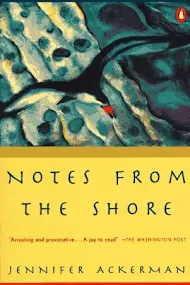
Recently I was reading Jennifer Ackerman’s book, Notes from the Shore, published in 1995. In it, she blends solid science with lyrical writing to give a vivid portrait of life at the edge of the sea—particularly the Delaware Shore at Cape Henlopen where she lived for three years. I thought of Sister Ferdinand as I read the section on the migration of birds—especially the ospreys who raise their young in that area. Ackerman makes clear that young ospreys are “programed” to migrate between two places on earth: the place where they were born (I’ll call it “home”) and the place where they “vacation” during the northern winter months—usually Venezuela or Peru, some 3,000 miles away. Says Ackerman, “Young birds travel both ways alone. The migration route they follow is not learned, but acquired in the egg, carried in them by the accident of ancestry.”

Ackerman continues, “I know the gift of being able to find home is not allotted merely to the birds.” Other animals have the natal homing instinct or natal philopatry instinct. Think moose, sea turtle, and (of course) salmon. Even some dogs and cats have returned “home” after being “lost” many miles away—even after several years. This “strong attachment to birthplace (or home) makes biological sense.” In a familiar landscape, animals have it easier to find nesting sites, food, and to avoid predators. Biologist Ernst Mayr once said that “birds have wings not so much for the purpose of getting away to a place but for the purpose of getting home.”

Do we humans have any of this natal homing/natal philopatry instinct? Ackerman says that studies of human preferences for landscapes world wide have shown that we tend “to favor savannalike land—flat, grass-covered land studded with trees, where we had our origins and earliest home.” But somewhere in time, we humans began gravitating toward the sea. Even today, property along a lake or the ocean shore is often the most coveted real estate on the planet. She wonders too “if the residues of old ancestral landscapes don’t ride up in our minds by the same deep grooves that make the scent of hay or sunlit ferns call up an episode from childhood.”
Which brings me back to Sister Ferdinand. This elderly and mentally confused nun was longing to return to her “ancestral home,” a place associated with images of her mother, now long dead. But I was thinking, maybe she was acting out of a long buried instinct, an instinct too deep for even dementia to erase. During my mother’s final month, after a year in a full-care facility, she too said more than once, “Maybe it’s time for me to go home.” At first I thought she meant back to her mobile home, her most recent home. I reminded her, “But, Mom, you know we’re getting ready to sell your mobile home.” And she said, “I don’t mean that home…” And her voice trailed off. Maybe my mother, like Sister Ferdinand, was speaking out of some deeply buried instinct engendered in all of us by God whose powerful and relentless loving is drawing us all to our eternal home.
Prayer: I thank you, loving God, for all the places I have been privileged to call “home” during my earthly journey. Please help me to keep alive my deep and endless longing for my final home which is you, my Ever-Beckoning Holy One. Amen.

For reflection:
Have you ever had an experience (such as a place, an aroma, a song) that conjured up images from your childhood? If so, would you be willing to share one of your experience(s) with us?
Have you ever been with someone who was close to death who spoke of going home?
Are you naturally attracted to bodies of water such as a lake, a river, the ocean? Do you know why you are attracted to water?
PS: From July 6 – 13, I will be leading a 6-day preached retreat entitled “A Celebration of Hope” at Villa Pauline Retreat and Spiritual Center, 352 Bernardsville Rd., Mendham, New Jersey 07945. I’d love to meet some of you in person there! Check out their website for details: https://sccus.org.
Today’s video is the song “Going Home” based on the Czech composer Antonin Dvorak’s Symphony no. 9—the Largo movement. The words were written by William Arms Fisher, one of Dvorak’s students. The piece is performed here by Libera, an all-boy vocal group drawn from students in South London. I dedicate this song today for all who are nearing death and for those who are keeping vigil with them.
I invite you to respond below to anything in today’s post: the words, the reflective questions, the video. We all love hearing from you!
Christian Joy
I’ve been doing some reading and reflecting on joy lately. After all, as Christians we believe in the Good News. Doesn’t that imply joy? For today’s post, I have strung together some of my favorite quotations about joy from a wide variety of writers. I would be interested in knowing if any of these resonate with your own experience or simply touch your heart.
1. “Joy is the inner sense of God’s presence and God’s abiding love for us. It is a profound belief that God will have the last word; it is a still point in the storm of life.” William Bausch
2. “If you do not convey joy in your demeanor and gestures and speech, you will not be an authentic witness for Jesus Christ. Delight in what God is doing is essential in our work.” Eugene Peterson
3. “Joy frees. Joy makes a person dangerous.” Joan Chittister, OSB

4. “In the early stages (of the spiritual life), one should strive to feel happy and free. There are some people who think that devotion will slip away if they relax a little.” St. Teresa of Avila
5. This was said by a professional mountaineer, but I think it also applies to living in general: “The best climber in the world is the one who’s having the most fun.” Alex Lowe
6. “At our best and wisest we just want joy, and when we are filled with grace we see rich thick joy in the simplest of things. Joy everywhere.” Brian Doyle
7. “The poor deserve not just service and dedication, but also the joy that belongs to human love.” St. Teresa of Calcutta
8. “The only condition for joy is the presence of God. Joy happens when God is present and people know it, which means it can erupt in a depressed economy, in the middle of a war, and in an intesive care waiting room.” Barbara Brown Taylor
9. Buddha said over 2,500 years ago: “Seeker, empty the boat, lighten the load, be free of craving and judgment and hatred, and feel the joy of the way.”
10. “Joy is the most infallible sign of the presence of God.” Pierre Teilhard de Chardin
11. “Joy is God in the marrow of our bones.” Eugenia Price
12. “Perhaps the most neglected line of the Gospels is the injunction of the Matthean Jesus, ‘Do not look dismal.’ … Jesus’ ministry was not distinguished by desert fasts but by table fellowship… And the foremost scriptural symbol for heaven is not beatific vision but a festive party… For Jesus, repentance itself is a joyous occasion and calls for celebration.” John Shea

13. “The foolish person seeks happiness in the distance; the wise grows happiness under his feet.” James Oppenheim
14. “We all should put this sign on our bathroom mirror: You are looking at the person who is primarily responsible for your happiness.” Anonymous
15. In 2014, Pope Francis gave an interview in which he gave his “Top Ten Tips for Happiness.” Here are four of them: 1) “Happiness lies in giving ourselves away to others.” 2) “Have a healthy sense of leisure. Never lose the pleasures of art, literature, and playing with children.” 3) “Respect and take care of nature. Our salvation is tied to the way we treat the earth.” and 4) “Stop being negative. Positive thoughts feed happiness and healthy self-esteem.”
16. “Rejoice in the Lord always; again I say rejoice.”(Phil. 4: 4). Remember: St. Paul wrote these words from prison. He was cut off from his community, his friends… he was cut off from his work, his ministry… and his heart was breaking. Yet, he could write these words!
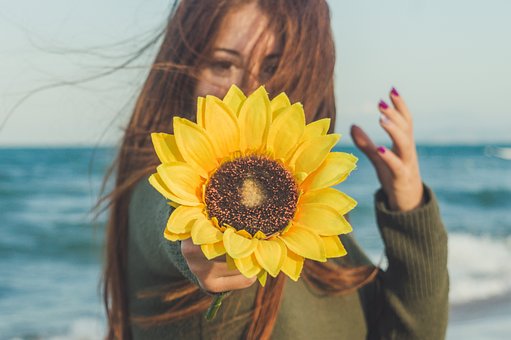
For reflection:
Did any of these quotes speak to you and your own experience? If so, which one(s)?
What are some things that help you to be a joyful person?
What are some of the greatest challenges to joy in today’s world?
Would you like to add anything to this reflection on Christian joy?
PS: Thank you for your prayers for the retreat I facilitated at St. Scholastica Monastery in Fort Smith, Arkansas. I thank the Sisters for their warm hospitality, their prayerfulness, their joy. It was a blessing walking with them last week. I thank especially Sr. Cecelia who helped me in so many ways throughout the week. A special joy for me personally was visiting the grave of Sr. Macrina Wiederkehr who passed away in 2020. She reached out to me years ago, saying, “We writers have to stick together.” I am most grateful for her example and the wisdom she shared with the world through her many writings.
PS: On this Memorial Day weekend, let us remember in prayer all those who gave their lives in service of our country. We must keep their memories alive. And I wish you and your loved ones a Happy Memorial Day celebration.
Here’s an intriguing video called “Joy” by King and Country, a popular contemporary Christian group. I’m offering two videos. The first is the official music video—but it has no captions. I’ve listed a few lines from the song after the video. The second version is just the song with the lyrics.
Gotta get the fire, fire back in my bones
Before my heart, my heart turns to stone.
The time has come to make a choice and I choose joy.
Oh hear my prayer tonight, I’m singing to the sky.
Give me strength to raise my voice, let me testify…
Though I walk through the valley of the shadow of the night,
Oh, with you by my side, I’m stepping into the light. I choose joy…
Here’s the lyric video:
I invite you to write a comment below… we all love hearing from our readers!