Mary: Woman of Hope and One of Us
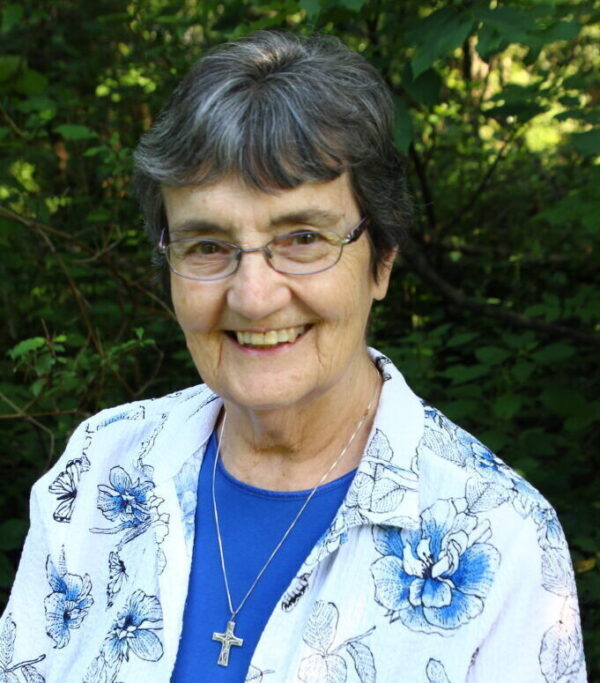
Last February, I gave a talk on Mary at St. Ladislas Parish in Westlake, Ohio. The talk was part of their Lenten Mission. The title of the talk was “Mary: Woman of Hope and One of Us.” The parish taped the presentation and sent it to me. Since the month of May is traditionally devoted to Mary, I am featuring the talk for my blog today. I am also including below a short version of the handout I used. It is essentially an outline of my presentation. Here is that outline:
Mary: Woman of Hope and One of Us
by Sister Melannie Svoboda, SND
Mary’s life from scripture and tradition:
- Annunciation: the angel Gabriel appears to Mary (Lk. 1:26-38)
- Visitation to her cousin Elizabeth (Lk. 1:39-56)
- Joseph’s dilemma: 2 options: have her stoned, divorce her (Mt. 1:18-25) Joseph chooses the third option: Marries Mary and raises the child as his own
- Birth in Bethlehem: Mary at the mercy of political forces beyond her control
- Flight into Egypt: (Mt. 2: 13-23) Holy Family becomes refugees, immigrants in a foreign land
- Finding Jesus in the Temple: (Lk. 2: 41-52): the anguish of a missing child
- Jesus’ ministry begins at a wedding reception: Mary’s “They have no wine.”
- Jesus’ arrest, crucifixion, death: Mary stands at the foot of the cross
- Jesus’ Resurrection: Is Mary the first one to see him alive again?
- Pentecost: Mary is with the disciples when the Hoy Spirit comes
How is Mary “one of us”?
- She was a real woman living in a real time and a real place—just as we are.
- She experienced times of joy and times of pain and struggle—as we do.
- She spoke to God in prayer every day—as we also try to do.
- She was a woman of hope. Her hope carried her faith and love into the future—just as our hope can do for us.
Here is the video of my talk on Mary. The talk is 50 minutes long, but the video also includes an opening Lenten prayer service and a closing prayer service. If you want to view just my talk, fast forward the video to 21 minutes. My talk ends 50 minutes later at 1 hr. and 8 min. Click below to start the video:
I welcome you comments below.
Morning Rituals
Do you have any morning rituals? Are there little things you do each morning to start your day? For example, do you hop into the shower right away? Or do you grab your cup of coffee or tea first? Do you check your email or do you sit quietly for a few moments? Do you talk to God or pray?
In his book, Earth Works, Scott Russell Sanders describes one of his morning rituals. In the chapter entitled, “A Private History of Awe,” he says he always begins his day with some form of meditation. He writes: “When I rise from meditation each morning, I gaze through an uncurtained window at the waking world, and I bow. The gesture is plain enough—hands drawn to my chest, palms pressed together, a slight bend at the waist—but its meaning is elusive. If you asked me to explain my little ritual, to say whom or what I honor with my bow, I would be hard put to answer.”

Since moving into this apartment in Notre Dame Village (which is attached to our provincial center) I have incorporated a new ritual into my morning. While still in my jammies, and before getting my coffee, I step out onto my second floor balcony each morning. (I prefer to call it my porch). I do this every morning no matter what the weather is doing outside. It’s usually about 5:00 AM (or even earlier) when I perform this ritual. I have yet to see any other human being outside when I do this—except a couple of times I have seen an ambulance below transporting someone to the nearby hospital. But most of the time as I stand there, I sense my utter aloneness.
If you were to ask me, why I do this ritual every morning, I could give you a couple of answers. First, I’m inquisitive. I want to know what kind of a day I am awakening to. What’s the temperature? Any precipitation, wind, clouds? But my reasons go beyond mere meteorological curiosity. I just love to be outdoors. And since I now live in an apartment complex and my main ministry of writing is done indoors, I have to make a conscious effort to get outside. This little ritual assures me that I will get outside every single day.
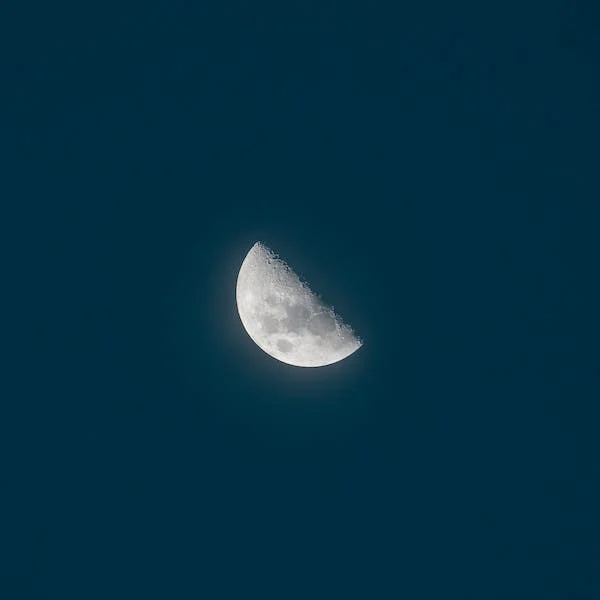
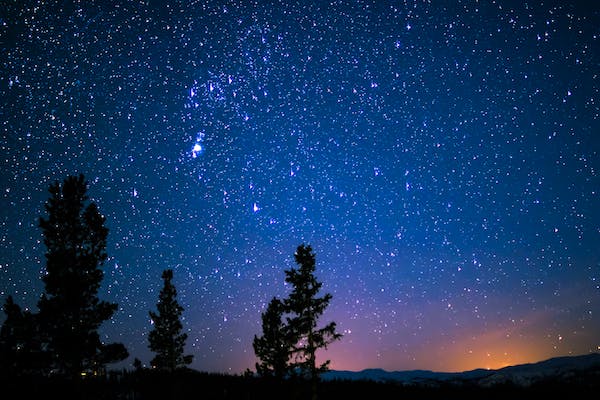
But perhaps the main reason I stand on my balcony every morning is because I feel so close to God when I do this. I find myself reveling in God’s handy work: the setting moon, the twinkling stars, the swaying trees, the fresh air, the silence. I often talk to these natural entities as if they were my old friends. I compliment the moon, I praise the stars, I breathe in the fresh air. The other day the moon was so big, so white, so bright, I wanted to shout to my sleeping neighbors, “Hey, Everybody! Wake up! Get out here! You gotta see this moon!” But, of course, I didn’t. But before I step back inside, I always say a big thank you to God for the gift of this new day. Then I go inside, grab my coffee, plop into my living room chair, and I’m ready to begin my “formal” prayer—and my new day.
Toward the end of Sanders’ chapter, he explains more clearly why he bows to his uncurtained window every morning. He describes how the natural world fills him with wonder and awe. Then he says, “I am not saying that nature is God, for at this time in my life, with my children grown and my beard turning white, I have given up all opinions about God. I am saying that what we call nature, this all-embracing power and pattern, fills me with joy and inspires me with profound respect for all that lives. I am saying that mountains and mosquitoes, rivers and rhododendrons, you and I are utterances of this power. I am saying that this persuasive, unnamable, shaping energy, glimpsed in the whorl of skin on a thumb or the spiral of stars in a distant nebula, is what compels me to bow at a brightening window each morning.”
And I would say that my few minutes outside on my porch each morning centers me. It connects me to nature and the greater pulsating world of which I am a small speck. It fills we with gratitude no matter what is going on in my personal life or in the larger world. It underscores for me the preciousness of every single day we are privileged to walk upon this beautiful earth. It leads me to say with deep joy, “Thank you, my dear, sweet God—for everything!”
For reflection:
Do you have any morning rituals? If so, what are they? Why do you do them?
In which situations or circumstances do you sense your connectedness with all things?
Does gratitude for the gift of existence ever well up in your heart? When?
P.S. I will be in Fort Smith, Arkansas from May 20-28 leading a retreat for the Benedictine Sisters and their associates at St. Scholastica Monastery. I ask your prayers that the Holy Spirit may shower many blessings upon us with during this time. Thank you very much!
I chose an old favorite, “Morning Has Broken” for our song today. This Christian hymn was first published by Eleanor Farjeon in 1931. British singer-songwriter, Cat Stevens, recorded his version of the hymn in 1971. Stevens, raised in the Greek Orthodox faith, converted to Islam in 1977, taking the name Yusuf. At age 74, he is still touring in Great Britain today.
I invite you to write a comment below on this reflection. You’ll make my day if you do!
Tippett and Taylor: Two Remarkable Women
One of my favorite podcasts is Krista Tippett’s On Being. She has interviewed a wide range of people including theologians, scientists, social activists, artists, poets, political leaders, and others from all over the world. Recently, she had one of my favorite writers on her show, Barbara Brown Taylor, an Episcopal priest whose best selling books include Leaving Church, The Preaching Life, and An Altar in the World. I have written about Taylor previously on this blog. (enter her name in the search box at the right and many posts will come up where I mention her.)

I listened to their conversation and found it so inspiring, I decided to share a few excerpts with you today. They begin by talking about holiness, quoting Teilhard de Chardin who said, what we need at this time “is a new definition of holiness.” Tippett asks Taylor how she would define holiness and Taylor says, holiness means “to keep one’s balance while the earth moves under our feet.” She adds, “to be holy is to be a seeker of the really real.”

Tippet notes that the word incarnation seems to be very important to Taylor. She even has a chapter in one of her books entitled, “The Practice of Wearing Skin.” Taylor says that early religions always involved the body. They included things such as dance, music, incense, tattoos, for example. She asks, “In our current church did the body vanish? Did faith go up into our head?” Taylor adds, Jesus emphasized loving the neighbor–which would include the neighbor’s body, the leper’s body, the orphan’s body. Jesus gave us a clear mandate “to care for the incarnate soul.” (See Mt. 25!) Taylor adds, that today we are to care also for “the body of the mountain… the body of the river…”
They discuss suffering. Taylor reminds us that someone once said, “Deep suffering makes theologians of us all.” She also says, “The questions people ask in Sunday School rarely compare to the questions we ask while we are in a hospital. This goes for those stuck in the waiting room as well as those in hospital beds.”
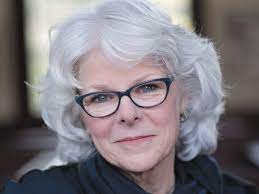
When Tippett asks Taylor about prayer, Taylor laughs and says, “I would rather show someone my checkbook stubs than talk about my prayer life.” But she compares prayer to hanging her laundry outside on the line… or filling a trough with water for a thirsty horse. She agrees with Brother Lawrence who wrote centuries ago that doing ordinary tasks with reverence is a kind of prayer—whether we’re sweeping a floor or flipping a pancake.
Taylor mentions that once she was asked to speak at a parish. She asked the priest, “What would you like me to talk about?” He said, “Why don’t you talk about what’s saving your life right now?” She finds herself reflecting on her current now. She’s in her early 70’s, she’s married to a man who is 86, and they are going to more funerals than baptisms. “Right now,” she says, “has become a place where I can find, every day, great joy if I don’t get too far ahead of myself. There is something in every single day that is worth staying alive for.” She talks about her endeavors to be a better spouse, grandmother, aunt, sister.
Taylor says she is “trying to stay in the present moment as best I can and being amazed at life as it unrolls every single day. Life is more than scenery as I rush from here to there. It’s the real deal…. God is as close to me as the heartbeat in my neck.”
If you’d like to check out “On Being” just click the word “Home” below.
Home
For reflection:
Is there anything that stood out for you in this interview?
How would you define “holiness”?
Do you feel the body is a part of your faith? If so, how? Or do you feel your faith is primarily in your head?
What is “saving your life right now?”
It’s time for another Carrie Newcomer song. Barbara Brown Taylor says that great suffering makes theologians of all of us. What saves us during such difficult times? Our personal relationship with God, with Jesus, yes. But sometimes God puts human beings in our lives that support us during trying times. This song is about providing sanctuary for people who are experiencing deep suffering… (The visual below shows that breath-taking phenomenon called “murmuring,” where a flock of birds form ever-changing patterns in the sky before settling down for the night. Researchers can’t explain how they manage to do this without crashing into each other… But researchers think they do “murmuring” to frighten predators away and to bond as one community.)
I invite you to write a comment below. Don’t be shy…
Folklore and Wisdom from Nature
A good friend recently gave me a book entitled Lore of the Wild: Folklore and Wisdom from Nature. The author is Claire Cock-Starkey and the illustrator goes by the name of Aitch. My friend said, “I thought you’d enjoy this, Melannie. You might even use it on your blog.” She was right on both counts!
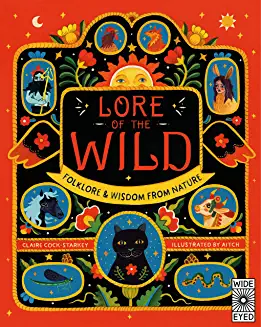
The 80 page book is a collection of folk tales, beliefs, and superstitions from all over the world. Most are gleaned from nature, that is, from animals, birds, bugs, flowers, trees, weather, etc. Some pages contain specific stories such as how clouds were invented and why the trees whisper. All the pages are filled with amazing artwork which one reviewer called, “Stunning. Lush. Beautiful.” Though the book is sometimes marketed as a children’s book, several reviewers cautioned that some of the stories and illustrations are on the “dark side” and might not be suitable for children under fourth grade.
Let me share some of the wisdom from this book. Then I’ll tell you why I enjoy reading folklore.
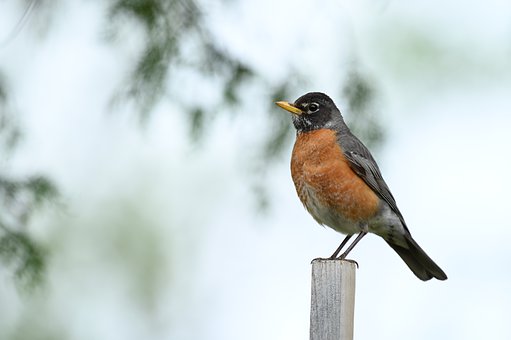
+ How did the robin get its red breast? One Christian tradition says that the robin burnt his chest while fanning the flames to keep baby Jesus warm in the manger. Another says the kindly robin tried to peck away the thorns from Jesus’ crown of thorns as he hung on the cross. The blood of Jesus forever stained his red breast.
+Who is the king of the birds? The birds decided that honor should go to the bird who flew the highest. At first it seemed the eagle had flown the highest. But the tiny wren had snuck a ride on the eagle’s back. When the eagle got tired, clever wren took off from his back and flew even higher! When they both came back down to earth, the wise owl declared the wren as king. The eagle got so mad he hurled the tiny wren to the ground, injuring its wing. That’s why today wrens cannot fly much higher than a hawthorn bush!
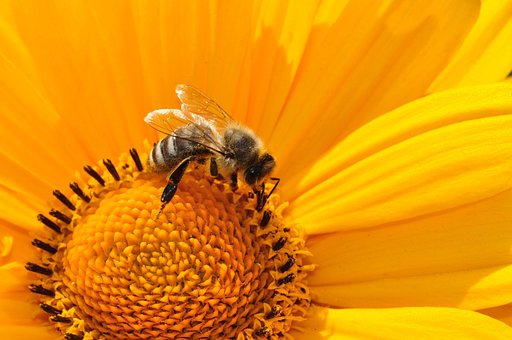
+ In ancient Greece, if a bee landed on your head, you were going to be a great success. If a bee landed on the lips of a baby, it meant the child would grow up to be a great speaker or writer.
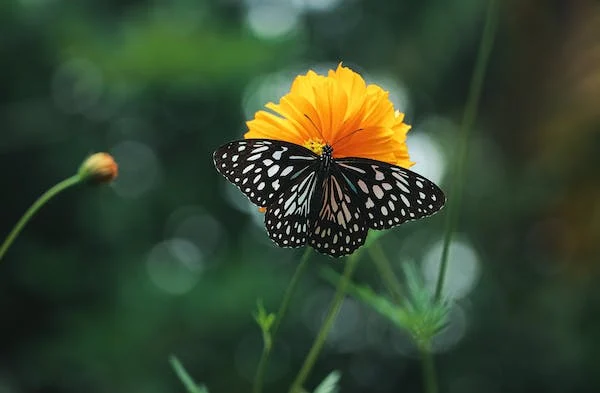
+ In the Native American Blackfoot tradition, butterflies are bringers of sleep. That’s why mothers embroidered butterfly symbols onto children’s blankets and clothing.
+ The thistle is the national symbol of Scotland. It became that after an invading Norse army, trying to sneak up on sleeping Scottish troops, took off their shoes. One unlucky invader, however, stepped on a thistle and cried out in pain, thus waking the Scots and saving them from attack.
+ Lilies of the Valley were thought to be created when fairies hung their tiny drinking cups on stalks while they danced.
+ Rosemary was known as the “friendship bush” in England. If you planted one in your garden, you were guaranteed many friends. (I have one in my living room where I often have my friends over!)
+ In Europe the oak tree was considered sacred and powerful. Sick people walked around the tree several times to be cured of their illness.
+ In Finland, if you needed courage, you were supposed to go and hug a pine tree. It was thought that pine trees had lots of courage to stay green all year long.
+ If you brought holly into your house before Christmas Eve, it would cause family arguments.
+ In Japan the cherry tree is sacred. Its lovely but short-lived blossoms remind everyone to cherish each passing moment.
+ If a cat’s whiskers stand out stiffly, good weather is expected; if they droop, it will rain… “Red sky at night, shepherd’s delight. Red sky in the morning, shepherd’s warning”… The woolly bear caterpillar can predict the winter weather. If the black stripes are wider than the brown, the winter will be cold. If the brown is wider, the winter will be mild.
+ Bad luck: In Mexico, it is bad luck to sweep your house at night… In the Philippines, people were told not to wear red during a storm, because red attracts lightning… In China sharing a pear with a friend spells the end of that friendship. That’s because the word for “pear” in Chinese sounds very similar to the word for “separate.”
+ Good luck: To actually see a hen lay an egg is good luck… In Germany, to see a weasel sitting on a roof is good luck… In many cultures, a cricket chirping inside your house is a good omen… Hearing a cat sneeze in Italy is good luck.

+ If you wanted to compel a person to tell the truth, just put a garland of bluebells around their neck.
Why do I enjoy reading folklore? Because folklore is so imaginative… It also reminds me how attentive to the natural world our ancestors really were… And like our ancestors, we too continue to: look for cures for illnesses, try to protect ourselves from invading armies, worry about droughts and storms, try to insure enough food for our families, sustain our courage to face life’s challenges, and hope our children will find success and happiness in the future. Many times our lore is intertwined with our religious beliefs too. The stories we tell help us to ponder the great mysteries that imbue all of creation.
For reflection:
Do you enjoy reading folklore? Why or why Not?
Can you add any folklore tales, wisdom, superstitions to today’s examples?
I picked a song from the vast collection of American folk music. Here’s Bob Dylan’s song from the 1970s called “Forever Young.” It’s a song I particularly like. It is sung here by his “good friend” Joan Baez with some lovely pictures for your inspiration.
I hope you will comment below or make additions to today’s reflection.
A Few Poems for April
As most of you know, April is National Poetry Month. Before this special month comes to an end, I’d like to share a few poems with you. I suggest you read these poems aloud… and slowly… and maybe even more than once…

(photo by Aron Visuals – Pexels)
The first two short poems are attributed to St. Francis of Assisi. They are from Daniel Ladinsky’s book, Love Poems from God, a book I have referred to before on this blog:
Dear God, please reveal to us your sublime beauty
that is everywhere, everywhere, everywhere,
so that we may never again
feel frightened.
My divine love, my love,
please let us touch
your face.
************************************************
The result of prayer is life.
Prayer irrigates the
earth and
heart.
********************************************
Our next poem is by one of our readers, John Hopkins, from his new poetry book Make My Heart a Pomegranate. I featured this book on my March 6 post. I chose the poem “Mend What Is Shattered, Lord.” This beautiful prayer is actually a sonnet. As you might recall from your high school years, a sonnet is a highly structured poem—a poem very challenging to write. John’s sonnet here consists of three 4-line stanzas with a rhyme scheme of a, b, a, b. It concludes with a couplet that rhymes too. It also has a definite rhythm—but I won’t go into that. For our purposes, just enjoy this heart-felt plea to God to “mend us…” A glance at our headlines shows us how much we need mending and healing in our world today….
Mend what is shattered, Lord. Enter the breach
and piece together the peace of lost days.
Gather the shards of broken we cannot reach.
Fire us to whole in the kiln of your grace.
(photo by Thirdman – Pexels)
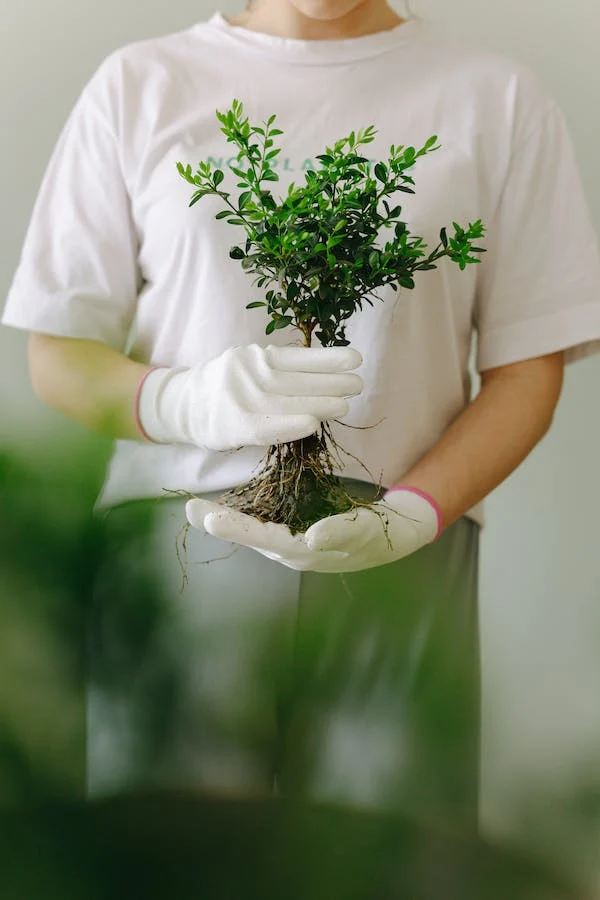
Tend to our roots, O Lord. Steady them strong
so we can bend like cedars in the wind,
catching your spirit to give our voice song
amid—within—this cacophonous din.
Rend our sin, dear Lord. Weave us into new,
for we, your garment, are torn, ripped, and frayed.
Send your bobbin, beat-bar us back to you,
no longer thread-bare, riven, or afraid.
Remind us, Lord, we are one with your earth,
where first you shaped us and breathed us to birth.
**************************************************
(Photo by Pille Kirsi – Pexels)
The fourth poem today is one of mine from my book Picking Strawberries. It’s called “If All I Ever Heard” and it celebrates creation—very fitting for spring…
If all I ever heard
was the chirping of a single robin,
If all I ever smelled
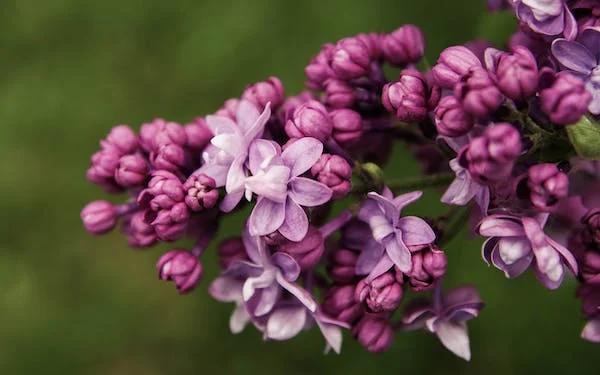
was the scent of one sprig of lilac,
If all I ever tasted
was the sweetness of one strawberry,
If all I ever touched
was the softness of one bunny’s ear,
If all I ever saw
was the vastness of one starry night,
I would have had reason enough
to fall hopelessly in love with Thee,
my Creator God.
*****************************************
Did any words or phrases from any of these poems catch your eye or heart? If so, which one(s)?
In John’s poem, he employs three main images. He asks God to 1) “mend what is shattered”… 2) “tend to our roots”… and “rend our sin and weave us into new.” Did you resonate with any of these? If so, which?
In reference to my poem, are there any small or huge aspects of creation that cause you to marvel at the Creator–or even fall more in love with our Beloved Creating God?
Let us conclude today’s reflection with a poem by Mary Oliver who passed away in 2019. She is one of my favorite poets. Here is her beautiful poem, “When I Am Among the Trees,” read by Amanda Palmer. In this poem, the trees seem to be telling her that life is simpler than we humans think it is. They direct her to become more like them… and to “go easy… be filled with light… shine…”
I invite you to comment on this blog… perhaps by sharing your thoughts on the poems presented… or sharing the names of some of your favorite poets or poems…