“Live and Learn and Pass It On”
In 1991 a writer named H. Jackson Brown, compiled a little book entitled Live and Learn and Pass It On. It became an instant bestseller. The premise of the book is simple. All of us, regardless of our age, have learned a lot about life that might be worthwhile to pass on to others. The book contains 159 pages of learned wisdom—most expressed in a single sentence. Here are four samples:
1. I’ve learned that the best way to appreciate something is to be without it for a while. (age 14)
2. I’ve learned that just because I have pain doesn’t mean I have to be a pain. (age 83)
3. I’ve learned that often worry is a substitute for action. (age 50)
4. I’ve learned that you can’t hide a piece of broccoli in a glass of milk. (age 7)
In 2001, I gave a talk using this book as my introduction. I then shared with the group several things I have learned about life and spoke about each one. Here are three:
I’ve learned that I am always a little more than any situation I find myself in. I am, for example, always more than a particular role I find myself in. Humorist Erma Bombeck once said, “No matter how old you are, when you go home you are 12 years old.” Our parents can sometimes see us only in the role of son or daughter, and they can fail to see us as the responsible adults we have become. Once, when I I was with a nun friend, 33, at a mall, we unexpectedly ran into her mother. It was early spring. As we chatted, her mother suddenly yanked the sleeve of her jacket and asked, “Is that jacket warm enough?”
Remembering we are more than any situation, can help us stay healthy and balanced. We are more than a son or daughter, wife or husband, mother or father, teacher, employee, citizen, a patient with cancer, a person of a certain sexual orientation, an immigrant, an inmate, a child, a teenager, a middle aged person, a senior citizen, etc. If we reduce ourselves to only one aspect of who we are, we might be neglecting other enriching aspects of our personhood.
I’ve learned that I am ultimately responsible for my own happiness–and everyone else is ultimately responsible for theirs. If we are unhappy, it is easy to blame our unhappiness on something or someone else. We can think things such as these: “my parents didn’t give me the love I needed… I had lousy teachers… I’m too short (too tall)… I never was given a break… nobody likes me… I was in the wrong place at the wrong time.” Anthony de Mello wrote: “We are not selfish when we live in such a way as to make ourselves happy, for that is our responsibility. Rather, we are selfish when we demand that others live their lives in such a way as to make us happy.”

The greatest act of love (especially as parents and as teachers!) is to help others assume personal responsibility for their own happiness. We can help them do this in many ways: by loving them… by giving them the freedom to love… by not rescuing them every time they are hurt, crabby, sad, or angry… by being honest with them… by admitting we cannot make them happy… and by entrusting them to God.
God is here—alive and acting. I’ve learned to trust that God is present in every situation—even the negative and unpleasant ones. This doesn’t mean I always see or feel God’s presence and actions in such situations. But my experience and my faith assure me of God’s presence always. Someone has said: “God endlessly communicates, ‘I am with you. And the way I am with you is love!'” I really believe that!
For reflection:
Do any of these bits of wisdom speak to you?
Now it’s YOUR turn. I invite you to share some of the things you’ve learned in life that are worth passing on to others. They can be serious, funny, or somewhere in between!
PS: We are still having a problem with my blog. Many of you subscribers are not receiving it in your email. Please simply search Sunflower Seeds Blog Svoboda and it should come up. I apologize for this inconvenience. Every reader is very precious to me!
One of the sisters who made the autumn retreat with me recently, reminded all of us of the beautiful song “Love Changes Everything” by Andrew Lloyd Webber. That song seems a fitting conclusion to today’s reflection. Here it is sung by Michael Ball and Il Divo.
I hope some of you will share below some of the things you’ve learned in life. I’d love to hear from you!
Retreat Reflections…
Last week, as you know, I facilitated a retreat for 21 Sisters of Notre Dame at Bethany, our retreat center on this campus. Thank you for your prayers for this endeavor. We had a whole week to enjoy all the colors of fall too! At the closing of our retreat Saturday afternoon, I asked the retreatants to write one insight, quote, spiritual truth they wanted to remember from this retreat. They submitted them anonymously. I then incorporated their thoughts into a prayer of gratitude. I would like to share some of these thoughts with you today.
1) My amazing God… Strong, gentle, most powerful… Encompassing me!
2) The best way to know God is to love many things (Van Gogh).
3) God’s hand holds all that happens.
4) I liked the use of Children’s literature. (I put out books like these: Old Turtle (Douglas Wood), You Are Special (Max Lucado), The Nativity (Julie Vivas), Children’s Letters to God (Hample and Marshall), Does God Know How to Tie Shoes? (Nancy White Carlstrom), God Thinks You’re Wonderful! (Max Lucado), and others.
5) To see a world in a grain of sand/ And heaven in a wild flower. (Blake)
6) From an Algerian Trappist: “When You fill my heart, my eyes overflow.”
7) How lucky I am to have something (someone) that makes saying goodbye so hard. (from Winnie the Pooh)
8) My voice is as valid and important as the voices of the “experts.”

9) From a song we sang at Mass this week: “Healing Spirit, bathe the wounds that living brings…”
10) Love God more… Walk in Nature daily.
11) Strive to love others as God loves us.
12) In heaven there are no secrets.
13) God thinks I am a good idea.
14) I really liked the opening song, “Drawn to You” by Sarah Hart. It’s beautiful!
15) Jesus, you are with me in difficult times, EMBRACING ME… You are with me in good times, LAUGHING WITH ME… Thank you for being with me ALWAYS, and for loving me SO MUCH!
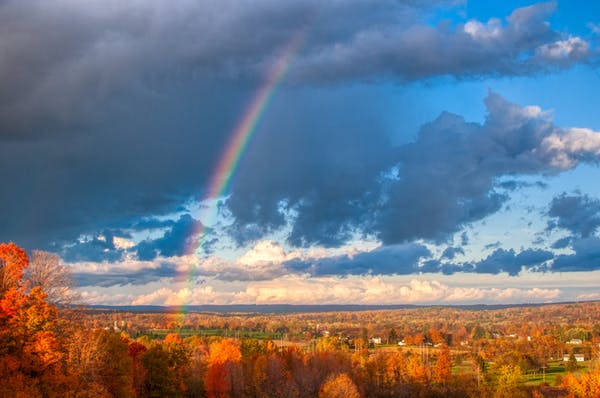
Did any of the reflections from the retreat speak to you today? If so, which one(s)… why?
Special treat: We have an “art room” at our retreat center. One sister who was on retreat, Sr. Valerie Sweeney, was inspired to creative these lovely cards based on some of the things we were exploring during the retreat. I thought they were so beautiful, I asked if I might post them here for you! Thanks for saying yes, Val!

One retreatant mentioned how much she liked the opening song of the retreat, “Drawn to You” by Sarah Hart. Here it is for you to enjoy:
I welcome your comments below! Thank you!
Oops!… Silly… and Odor: A Look at Words
It’s no secret. I like words. In fact, I get a kick out of keeping company with words. So today I thought I’d share a few words about a few words I find fascinating: oops, silly, and odor.
I was at Mass one Sunday. The congregation had just finished singing the entrance hymn. As people were putting their hymnals down, we heard a loud WHAM that resounded throughout the church. We all knew instantly what had happened. Someone had dropped their big fat hymnal on the wooden pew and WHAM! Immediately after the WHAM, a little child’s voice was heard to say, “OOPS!” The congregation chuckled.

Even though that little kid was only a few years old, he had already learned the meaning of the word oops. And what is that meaning? Oops is an exclamation uttered after making a mistake—usually a small mistake. But where does the word come from? Here’s one theory. Oops can be traced back to the 18th Century. When adults playfully lifted their children in the air and sometimes turned them upside down, they would say up-a-daisy which evolved into upsidaisy which was eventually shortened to oops. There are two accepted pronunciation of oops. One uses a short u (ups) and the other uses the long u (oops.) I’m curious, how do you pronounce oops? I say the long u. Of course, if you never make a mistake, you probably never have to say the word!
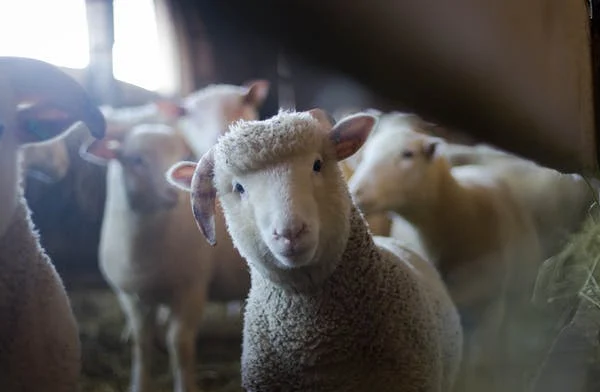
Now let’s look at the word silly. What do you think it means? Maybe you’d say, silly means foolish, senseless, absurd, or even stupid. But it didn’t always mean that. Years ago, when I was a novice, we learned a Medieval Christmas carol. One line was: “while shepherds watched their silly sheep.” We laughed when we sang it the first time. But the choir director, who was also an English teacher, explained the line. At the time this carol was written, the word silly meant innocent, simple, childlike. But through the centuries, the meaning changed, taking on a more negative connotation. The lesson here? The meanings of words can change over time. Language is a living thing.
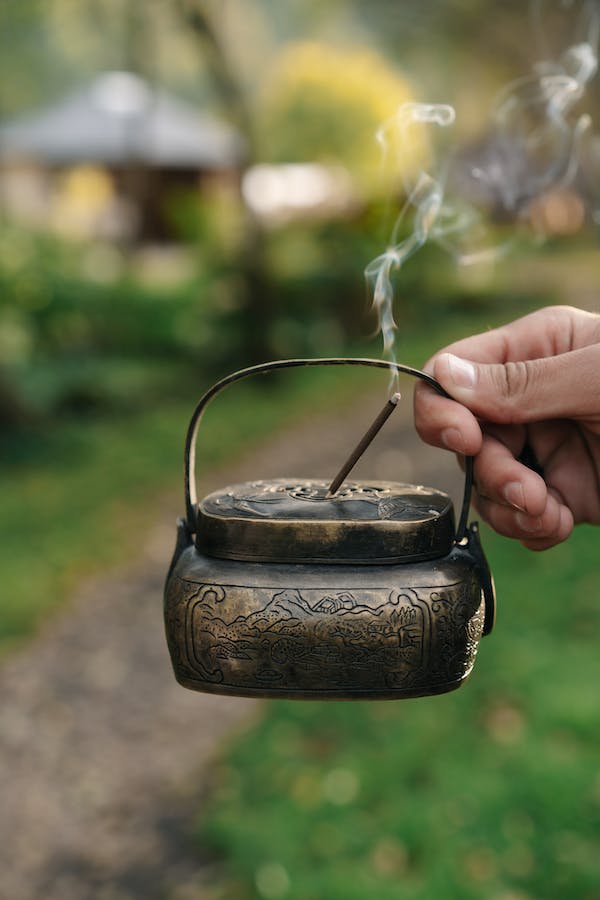
And now our third example, the word odor. Let’s say someone walks into the room where you are sitting, and asks, “What’s that odor?” Does the word odor in that sentence have a pleasant or unpleasant connotation? Most people today would say, unpleasant. In fact, that’s what the dictionary says. But centuries ago odor did not refer to an unpleasant smell. Have you ever heard the phrase, “The odor of sanctity”? Surely that odor would have been a pleasant one. Here’s the lesson: in English, connotations can change. Both odor and smell tend to be negative. So, when we want a word that connotes a pleasant emanation, we reach for words like aroma and fragrance. But someday, will these words refer to unpleasant smells? Who knows?
So what’s my point with all of this? I have several. First, language is not simple. Words have a history. Meanings, connotations, and pronunciations can change over time. When we are communicating with others, we must bear in mind the complexities of language—and be patient and careful. Second, language is a precious gift. Isn’t it amazing that I can utter sounds (or type squiggly lines) and convey my thoughts and feelings to you? Wow! And third, language is vital to life and community. Words have the power to unite us, to bring comfort, to heal. At the same time words can divide, hurt, or maim others. How important it is to use this precious gift wisely and with love.
For reflection:
Did anything stand out for you in this reflection?
Can you cite any words whose meaning or pronunciation has changed even in your lifetime?
This week, be mindful of your words and use them with care and patience.
PS: I ask your prayers for a retreat I will be leading Oct. 9 – 16 for 21 SND’s at Bethany, our retreat center here in Chardon. The theme of the retreat is “Exploring Other Voices and Finding My Own.” We will look at some major themes in the spiritual life—such as God, Jesus, prayer, pain and sorrow, love, death, beauty—and see what others have said about these things throughout the centuries. Then we will try to give voice to these experiences in our own lives, sharing with one another “our voice.” I think it should be enriching for all of us.
PPS: I know many of you are not getting my blog with your email anymore. All I can say is I’m sorry… I apologize… and I’m working on it (which means I keep informing our IT team about the problem.) Some readers offer a few suggestions in their comments below that may help you access my blog more easily. Meanwhile, I’ll keep writing and posting a reflection every week.
Our song today is one you might be singing in your parish. It’s “Your Words Are Spirit and Life, O Lord” by Bernadette Farrell.
I welcome your comments below!
“Canticles of the Earth”
Some books I can’t let go of. I tell myself it’s time to donate this book to our library here, but I just can’t move myself to do it. Such a book is Canticles of the Earth by F. Lynne Bachleda. Published by Loyola Press in 2004, this little book (it’s 5″ X 7″) “shows us how to look through a spiritual lens and see God in the natural world.” I was praying with this book the other day, and I decided to share a few excerpts for today’s blog.
First of all, let me mention that this book draws from a wide range of writers from William Wordsworth to Buddha, from Thomas Merton to Emily Dickinson, from Pierre Teilhard de Chardin to Julian of Norwich—and many, many others. Some excerpts might be a page or more. But most are brief paragraphs. Here are ten excerpts I thought you might find “nourishing.”
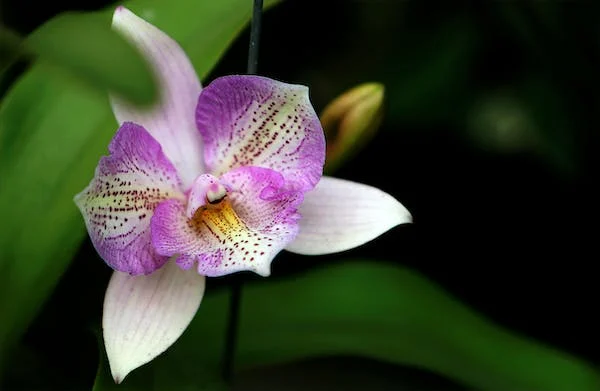
1. We humans think we are smart, but an orchid, for example, knows how to produce noble, symmetrical flowers, and a snail knows how to make a beautiful, well-proportioned shell… We should bow deeply before the orchid and the snail and join our palms reverently before the monarch butterfly and the magnolia tree. The feeling of respect for all species will help us recognize the noblest nature in ourselves. Thich Nhat Hanh
2. If you wish to know the divine, feel the wind on your face and the warm sun on your hand. Buddha

3. I must share with you a story about a particular barren time in my life when I used a tree for a spiritual director. I learned so much that year because I listened in silence… Because it was small, I couldn’t lean on it but could only sit beside it. That taught me a lot about what the role of a spiritual guide should be… Even though it was small, it had the ability to give a certain amount of shade… You don’t have to have a lot of leaves to give shade… Because it was silent I listened deeply… You don’t need a lot of words to connect with God. Sister Macrina Wiederkehr, OSB
4. In the name of God, stop a moment, close your work, look around you. Leo Tolstoy
5. Let mystery have its place in you; do not be always turning up your whole soil with the ploughshare of self-examination, but leave a little fallow corner in your heart for any seeds the wind may bring. Henri Frederic Amiel
6. When Jesus commanded people to “love their neighbor,” did he say all neighbors were necessarily two-legged ones? Matthew Fox

7. Don’t make lists, or explore ancient accounts.
Forget everything you know
and open. Dorothy Walters
8. Protect me, O Lord; my boat is so small, and your ocean so big. Breton Fisherman’s Prayer
9. Immediately when we see or experience any natural phenomenon, when we see a flower, a butterfly, a tree, when we feel the evening breeze flow over us or wade in a stream of clear water, our natural response is immediate, intuitive, transforming, ecstatic. Everywhere we find ourselves invaded by the world of the sacred. Thomas Berry
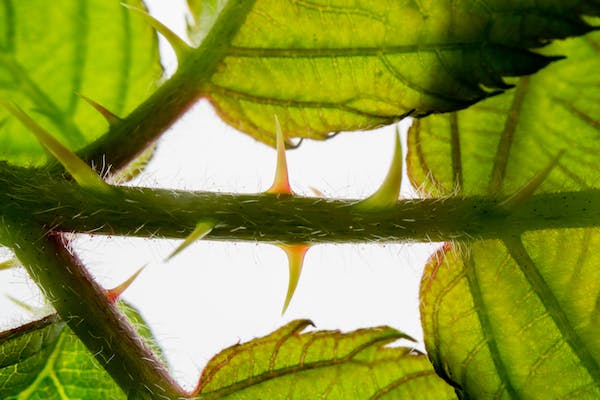
10. Grant us a heart wide open to all (earth’s) beauty; and save our souls from being so blind we pass unseeing when even the common thornbush is aflame with your Glory. Walter Rauschenbush
For reflection:
Do any of these excerpts speak to you today? If so, which one(s)… and why?
Do you have any books that you have held on to for years? If so, which book(s)… and why?
PS: When I chose this topic for today, I couldn’t help but think of all those millions of people suffering from natural disasters all over the world—especially the people who were in the path of Hurricane Ian. Let us continue to pray for all who are suffering from natural disasters of all kinds, and for the people who give them aid in whatever way they can—whether it is direct assistance, monetary contributions, prayers.
Our video today is the ancient prayer of St. Francis of Assisi called “Canticle of the Son” written in the 13th Century. This version is a recitation of his prayer with accompanying pictures of nature’s beauty.
I encourage you to respond below to today’s reflection. My readers always tell me how much they enjoy hearing from other readers!
Why Do I Love Fall?
I admit, I feel sad that summer is ending where I live (in northeast Ohio, USA). These past few weeks, I’ve watched the sun creeping down on the horizon. I’ve noticed that the house finches, swallows, and bluebirds have disappeared. And I miss them. When I’m out driving, I’ve spotted a few leaves turning brown, yellow, orange, and red. The night temperatures have fallen into the 50’s. And, saddest of all, the days are getting shorter.
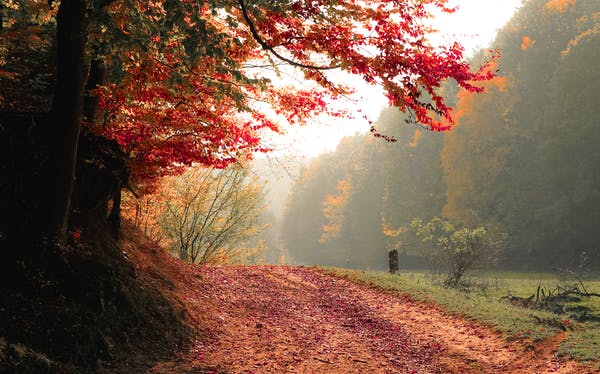
This changing into fall could have the power to put me into a deep funk. But it doesn’t—perhaps for two main reasons: 1) There’s so much beauty in fall, and 2) I know this dying is only temporary.
I love fall for its many beauties. First, there’s the beauty of harvesting. All that summer work of planting things and caring for them, rewards us in fall. This past summer, I had a teeny weeny, micro-mini, itsy-bitsy garden on my second floor balcony (which I prefer to call my “porch.”) I had two kinds of tomato plants, one basil plant, and one bell pepper plant. One of my tomato plants died. (I composted it in the woods.) But the other one produced a total of eight yummy cherry tomatoes! My pepper plant had three peppers at one time. But one morning when I went out on my porch to check on my garden, I saw (to my horror!) that the night winds had blown one of the peppers off. Despite that loss (one-third of my pepper crop!), the plant rewarded me with two perfectly formed red peppers—which I have already enjoyed. And I also had lots of fragrant basil. In addition, I enjoyed my bright red geranium plant and my pink and white impatiens all summer long.
Another beauty of fall is the sense of gratitude it instills in us. Yes, we may have worked hard to grow things, but we know we are certainly not responsible for the harvest. The work of sowing and caring for plants puts us in touch with the miracle of life itself. I always liked what Wendell Berry said about miracles. He said, “the miraculous is not the extraordinary but the common mode of existence. It is our daily bread.” He says that Jesus’ turning of water into wine was “a very small miracle.” He adds, “We forget the greater and still continuing miracle by which water (and soil and sunlight) is turned into grapes.”
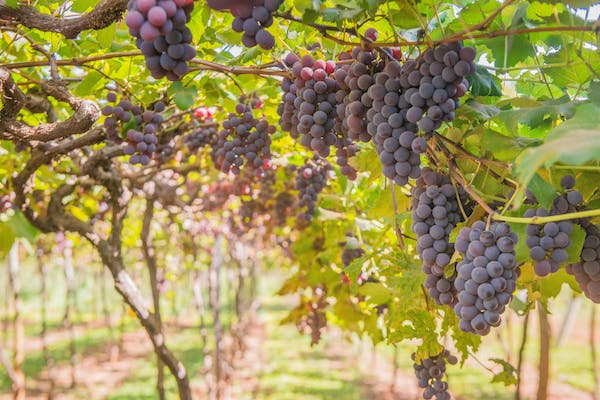
And finally, the most obvious beauty of fall are all those colorful trees. Instead of describing the trees, let me insert a few pictures, allowing the trees to speak for themselves:
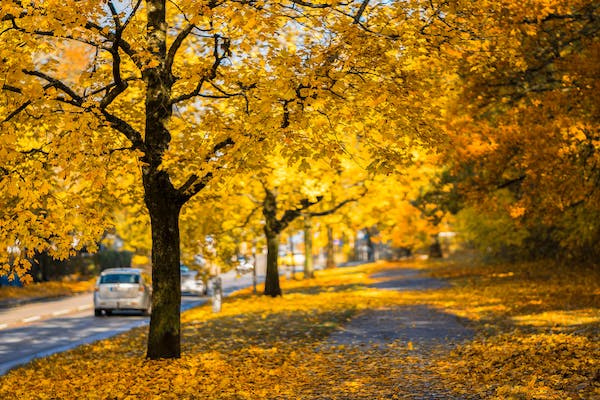
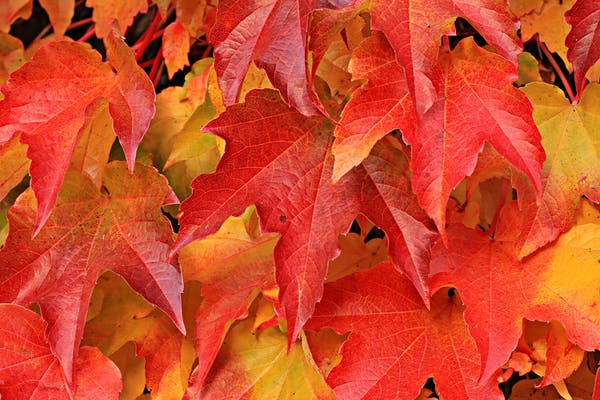
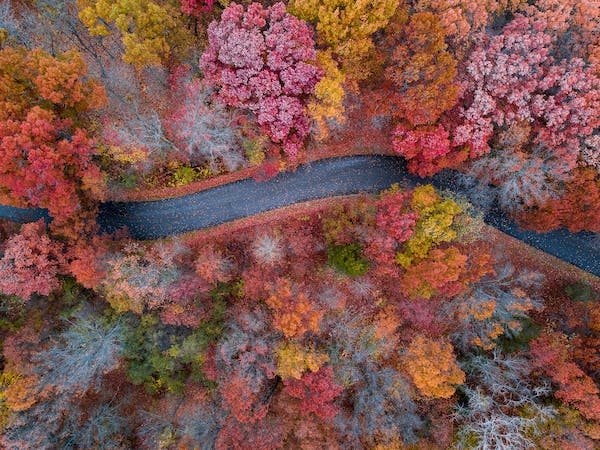
Fall is also a time of letting go, slowing down, diminishment, and apparent death. Those aspects of fall are a topic for a future reflection. For now, these are a few reasons why I love fall. What about you? Do you love fall? Why or why not? I hope you will share some of your thoughts below!
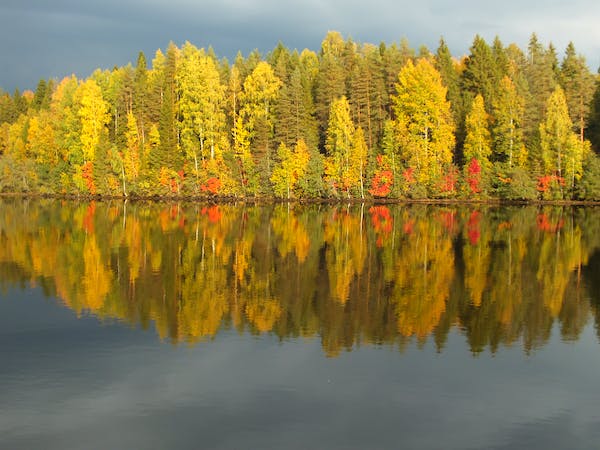
PS: A big thank you to the class of ’72 of Notre Dame Academy (now Notre Dame Cathedral Latin) for inviting the Sisters of Notre Dame to your Anniversary party Friday evening. We had a wonderful time! Readers, I taught this class my second year of teaching in the famous “Freshman Hall.” Then I had many of them again when they were seniors—so this class is special to me. It was a fun evening re-connecting with so many beautiful women. I’m grateful to God for putting these “girls” in my life those many years ago! I’m very proud of them!
Wendell Berry said miracles are our “common mode of existence.” I thought this song was appropriate. It’s “Ordinary Miracles” from the movie “Charlotte’s Web.” Here it is sung by Sarah McLachlan. I hope you enjoy the words as well as the lovely nature pictures.
Please share some of your thoughts on fall below. (I realize if you are living in the southern hemisphere, you might be enjoying the coming of spring. That just means you have to rely on your memory of the falls you have experienced!)