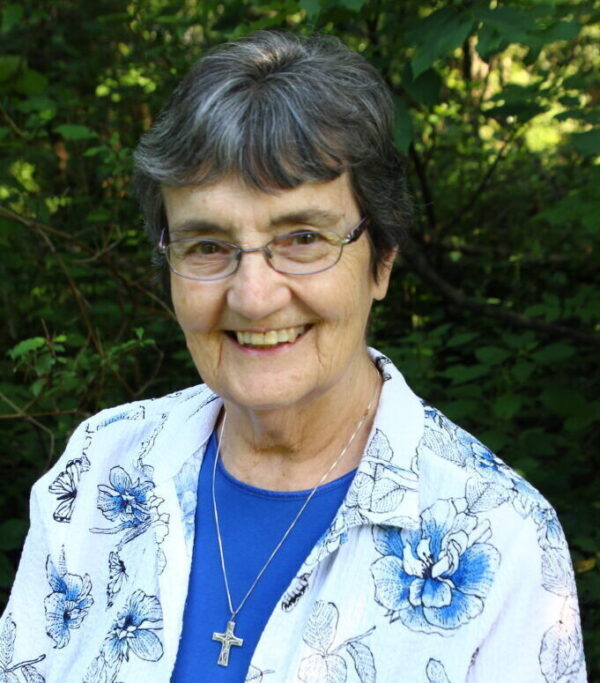
I Am Being Erased…What about You?
November is the month traditionally dedicated to those who have preceded us in death—whether canonized (Nov. 1 – All Saints) or uncanonized (Nov. 2 – All Souls). Those of us living in the northern hemisphere have only to look out our windows to see this emphasis on death reflected in nature: bare trees, increasing darkness, colder temperatures. All of this makes it easy to ponder our own mortality, something I have been doing a lot lately. In doing so, I have come to this conclusion: I am being erased.
After all, my childhood home is gone. In fact, the whole farm where I lived my first 18 years is gone, now a part of a golf course. The only thing that remains of the homestead is the driveway entrance, now used by golf carts. My first elementary school, James A. Garfield in Willoughby Hills, is gone too, the

victim of age and insufficient funds to revitalize it. When it was being torn down, my sister and I stopped by to pay our respects to a school we both loved.
My parish school is gone too, St. Felicitas in Euclid. In fact, my parish is “gone” too, merged with another parish and now called St. John of the Cross. My high school, Regina in South Euclid, is closed too, the beautiful building now a part of Notre Dame College.
At age 73, I have lost many family members and friends, and with each death a part of me was erased—the me who was known uniquely by each person. My nuclear family of six is down to two, my brother Paul and me. I have said goodbye to aunts and uncles, cousins, good friends. My religious congregation—at least in Europe and the United States—is being erased too. Over the years I have seen the median age of my province rise. When I made my vows in 1965 the median age was 38. When I celebrated my Golden Jubilee two years ago, the median age was 74.
The way I figure, within a few years, no one will know I ever existed. I have no direct descendants, a consequence of my vow of celibacy. Even though I have written a number of books, that fact certainly doesn’t insure remembrance. In fact, some of my books are already out of print. Yes, I am being erased. Definitely.
You might think I find this realization depressing. But it isn’t really, for on a deeper level, as I am being erased on earth, hopefully I am being “drawn” in eternity—whatever that will be like. I have seen a number of individuals die, and one thing I have learned is this: ordinarily, we do not die all at once. Death is a gradual process: hours, days, weeks, or even longer. This means we are actually dying a little bit each day. But here’s the upside: we are being born into eternity a little bit each day too. As we pass from this life, we are being born into the next.
The awareness of our own mortality is very important. It helps us to appreciate the gift of each day. It gives us a more authentic perspective on people and events. It helps us keep our priorities straight which can so easily get out of whack. The sense of our mortality tells us that we do not have all the time in the world. We won’t have our loved ones forever. This earthy home (as beautiful and meaningful and mysterious as it is) is not our final home.
This November I recall that I am being erased… What about you?

Do you ever have the sense that you are being erased?
Does the knowledge of your own mortality effect the way you live your life? If so, how?
I chose the song “Where I Belong” by Building 429. My favorite refrain is “I’m not home yet.” Although we should cherish our time on earth and work for a better world, we know we are “passing through.” (An interesting note: Baseball players sometimes have a certain song played as they step up to bat. Over the pass few years two different Cleveland Indians chose this song for their “walk up song.” Maybe they wanted to keep their work at “home” plate in perspective…)
I welcome your responses to this reflection and/or song below:
Should Catholics Celebrate the Protestant Reformation?
On October 31, 1517, a German monk named Martin Luther nailed his 95 Theses to the door of his Catholic Church. His Theses denounced some of the evils he saw in the Church. The Church excommunicated Luther and branded him a “heretic.” Thus began what is commonly called the “Protestant Reformation.” The Catholic Church responded to Luther’s accusations with a Counter Reformation of its own. These actions eventually led to religious wars that plagued Europe for centuries. On all sides, individuals were accused of heresy and, in some cases, imprisoned or burned at the stake.

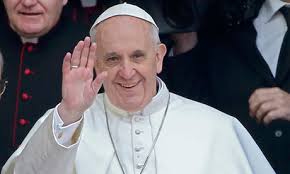
Fast forward 499 years to October 31, 2016. In Lund, Sweden, the World Federation of Lutheran Churches kicked off their year of celebrating the 500th anniversary of the Protestant Reformation. And who was present at their prayer service? None other than Pope Francis!
The Pope’s presence at this event was quite remarkable—both for the fact that he was invited and the fact that he accepted the invitation. His presence raised more than a few eyebrows—both Catholic and Lutheran! But it clearly demonstrated just how far Catholics and Lutherans have come toward reconciliation since those burnings-at-the-stake days. This movement toward reconciliation began in earnest in the 1960’s when the Second Vatican Council promoted ecumenism, that is, the dialogue among the various Christian Churches and among other faith traditions. Since then, both Catholic and Protestant theologians have been quietly working behind the scenes to address issues of division and issues of oneness.
In 2015, one such task force of Catholics and Lutherans produced a document called the “Declaration of the Way.” It established 32 points of agreement between Catholics and Lutherans. Jans-Martin Kruse, pastor of the Lutheran Church in Rome, says, “We find we have lots of things more in common than we thought before.” The Catholic Bishop Denis Madden of Baltimore underscored the importance of these meetings with one another: “We need the encounter of dialogue to understand that the other person has something of value for me to hear.”
What were some of the changes in the Church that Luther desired? He wanted “ordinary” people to read the Scriptures. But in his day the Catholic Church, afraid of private interpretation of the Bible, discouraged this practice. Luther also wanted the faithful to receive both the bread and wine of the Eucharist—not the practice at that time for the laity. He wanted a married clergy and the ordination of women. He had questions about papal authority.
In an informal interview, Pope Francis praised Martin Luther for being a “great reformer.” The Pope acknowledged that the Catholic Church of Luther’s day “was not a role model. There was corruption, worldliness, greed, and lust for power. Luther protested against these things.”
Bishop William Gafkjen, chair of the Evangelical Lutheran Conference in America, has been impressed by the tone of the Catholic-Lutheran dialogue. He said, “I see it as a profound witness to a troubled world that tends to shout at each other across great chasms, with accusations and innuendos.” But this group of Catholics and Lutherans who have deep differences, have moved beyond shouting at each other. He concludes, “We try to speak to the best and look for the best in each other, rather than misrepresenting or accusing each other.” This is certainly a lesson for all of us, not so?
Today let us pray for all Lutherans and Catholics and their attempts at reconciliation. And let us pray for all Christians that we may work to heal the divisions among us. And may we Christians reach out to our brothers and sisters of other faith traditions—Judaism, Islam, Hinduism, Buddhism, and others—as we join in praying and working together to build a better world.
Have you had any experience with ecumenism?
If you’re Catholic, have you seen in yourself a change in attitude toward non-Catholics over the years? If so, what change have you seen? What accounts for this change?
If you’re not Catholic, have you seen in yourself a change in attitude toward Catholics over the years? If so, what change have you seen? What accounts for this change?
I’m offering two short videos today. The first is the story behind the famous hymn, “The Church’s One Foundation” that many of us are familiar with. The second is the singing of the actual song with the lyrics. You can listen to either one or both!
Here is the hymn:
Please share your thoughts below. We’d love to hear from you!
PS: Coming Attractions… I’m giving a few talks soon that you might be interested in:
Nov. 11, Saturday: 10:00 – 2:00: “Wonder, Courage, Hope: Three Essential Virtues for the Spiritual Life”; at the Sisters of Notre Dame, Thousand Oaks, California. This day is for Sisters of Notre Dame, their Associates, and the Sisters of the L.A. diocese. For details call 805-496-3243 or check their website: https://sndca.org.
Dec. 2, Saturday: Advent Day of Prayer: Marillac Center, Leavenworth, KS: 913-680-2342; visit their website for details.
Dec. 11, Monday – 7:00 pm – 8:00 pm: Advent Talk on Courage, Love, and Hope; St. Paschal Baylon Parish, Highland Heights, OH; check website for details.
Feb. 24, 2018, Saturday: Retreat Day from 10:00-4:00; St. Peter Church, Naples, FL 239-775-9576; visit website for details.
Feb. 26, Monday evening: talk on hope at Espiritu Santo Parish, Safety Harbor, FL 727-726-8477. check website for details
Have You Read a Children's Book Lately?
When I finished my term in congregational leadership in 2005, I took a sabbatical. As part of my sabbatical I enrolled in two classes: a scripture course and a children’s literature course. The children’s lit course was taught by Sister Regina Alfonso, now semi-retired, who had taught children’s lit for many years at Notre Dame College. She and I met regularly in a small room in the Notre Dame College library. Just the two of us and our stacks of children’s books.
Children’s books aren’t just for children, you know. They can speak 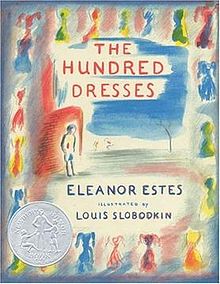 important truths to us adults as well, often very creatively, in simple language, and with stunning or fun illustrations. Here are some of the books I read in that class. I hope this list nudges you to go to a library or book store and treat yourself to a few children’s books.
- Nana Upstairs & Nana Downstairs by Tomie de Paola: a poignant story about a little boy and his affection for his grandmother and great-grandmother. It deals with intergenerational relationships and with death.
- The Hundred Dresses by Eleanor Estes: written over 50 years ago, this book is a classic about a girl, Wanda Pretonski, who wears the same dress to school every day. She is mocked by the other students, especially when she claims she has 100 dresses at home in her closet. The story, with an unusual twist at the end, explores bullying and the power of forgiveness.
- Miss Malarky Doesn’t Live in Room 10 by Judy Finchler: the story of a kindergartner who thinks his teacher actually lives in their classroom. In fact, he thinks all the teachers live at school. The illustrations contribute much to the delight of this story.
- Bull Run by Paul Fleischman: a slim volume that describes the first battle of the Civil War from 16 different points of view. Each of the characters tell their experience of the battle. Whether Northerner or Southerner, soldier or civilian, man or woman, rich or poor, free or slave, each person is quickly disillusioned with war.
- The Giver by Lois Lowry: a science fiction book that tells of Jonas, a young boy who lives in a perfect society where there is no war, no crime, no pain. But there are no choices either and no memories of the past. The only person who remembers the past and feels true
 pain is the Giver. When Jonas is selected to receive special training from the Giver, he will never be the same again.
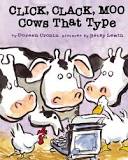
 - Click, Clack, Moo: Cows that Type by Doreen Cronin: when the cows in Farmer Brown’s barn find an old typewriter, they type him a letter requesting electric blankets for the cold nights—or else! Both the story and the illustrations will make you smile!
- Mufaro’s Beautiful Daughters: An African Tale by John Steptoe: this Cinderella-theme book earned the Coretta Scott King Award for illustrations. It tells of two daughters vying to become the wife of the king. One daughter is mean and vain; the other is good-natured and kind. The illustrations alone are well worth the trouble of finding this book.
- Uncle Willie and the Soup Kitchen by Ryan DiSalvo: a little boy goes with his Uncle Willie to help out at a soup kitchen where he learns firsthand about poverty, homelessness, diversity, and love.
- Old Turtle by Douglas Wood and Cheng-Khee Chee: all of creation
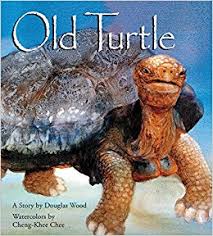 tries to answer the question: who is God? The wind, the stars, the stone, the lion, the robin, the fish and others set forth their answers until an argument ensues. It is Old Turtle who restores peace. The watercolor illustrations are lovely.
Questions for reflection/sharing.
- Have you read any of these books. If so, what do you think of them?
- Was there a book(s) you read as a child that made a big impact on you? Why?
- Are there other children’s books you would recommend? (I’m counting on all you elementary teachers, librarians, parents, and grandparents to recommend some books for our readers!)
Our song today is an old Church song, “Yes, Jesus Loves Me.” This rendition is sung by children for children. But that means it’s for adults too, for didn’t Jesus tell us we must all become as little children?
Any responses to this reflection and/or music?
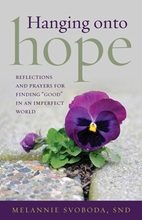
PS: Reminder: My new book on hope is now available at Amazon.com or Twenty-Third Publications. It’s called Hanging onto Hope: Reflections and Prayers for Finding Good in an Imperfect World.
Have You Read a Children’s Book Lately?
When I finished my term in congregational leadership in 2005, I took a sabbatical. As part of my sabbatical I enrolled in two classes: a scripture course and a children’s literature course. The children’s lit course was taught by Sister Regina Alfonso, now semi-retired, who had taught children’s lit for many years at Notre Dame College. She and I met regularly in a small room in the Notre Dame College library. Just the two of us and our stacks of children’s books.
Children’s books aren’t just for children, you know. They can speak important truths to us adults as well, often very creatively, in simple language, and with stunning or fun illustrations. Here are some of the books I read in that class. I hope this list nudges you to go to a library or book store and treat yourself to a few children’s books.
- Nana Upstairs & Nana Downstairs by Tomie de Paola: a poignant story about a little boy and his affection for his grandmother and great-grandmother. It deals with intergenerational relationships and with death.
- The Hundred Dresses by Eleanor Estes: written over 50 years ago, this book is a classic about a girl, Wanda Pretonski, who wears the same dress to school every day. She is mocked by the other students, especially when she claims she has 100 dresses at home in her closet. The story, with an unusual twist at the end, explores bullying and the power of forgiveness.
- Miss Malarky Doesn’t Live in Room 10 by Judy Finchler: the story of a kindergartner who thinks his teacher actually lives in their classroom. In fact, he thinks all the teachers live at school. The illustrations contribute much to the delight of this story.
- Bull Run by Paul Fleischman: a slim volume that describes the first battle of the Civil War from 16 different points of view. Each of the characters tell their experience of the battle. Whether Northerner or Southerner, soldier or civilian, man or woman, rich or poor, free or slave, each person is quickly disillusioned with war.
- The Giver by Lois Lowry: a science fiction book that tells of Jonas, a young boy who lives in a perfect society where there is no war, no crime, no pain. But there are no choices either and no memories of the past. The only person who remembers the past and feels true pain is the Giver. When Jonas is selected to receive special training from the Giver, he will never be the same again.
- Click, Clack, Moo: Cows that Type by Doreen Cronin: when the cows in Farmer Brown’s barn find an old typewriter, they type him a letter requesting electric blankets for the cold nights—or else! Both the story and the illustrations will make you smile!
- Mufaro’s Beautiful Daughters: An African Tale by John Steptoe: this Cinderella-theme book earned the Coretta Scott King Award for illustrations. It tells of two daughters vying to become the wife of the king. One daughter is mean and vain; the other is good-natured and kind. The illustrations alone are well worth the trouble of finding this book.
- Uncle Willie and the Soup Kitchen by Ryan DiSalvo: a little boy goes with his Uncle Willie to help out at a soup kitchen where he learns firsthand about poverty, homelessness, diversity, and love.
- Old Turtle by Douglas Wood and Cheng-Khee Chee: all of creation tries to answer the question: who is God? The wind, the stars, the stone, the lion, the robin, the fish and others set forth their answers until an argument ensues. It is Old Turtle who restores peace. The watercolor illustrations are lovely.
Questions for reflection/sharing.
- Have you read any of these books. If so, what do you think of them?
- Was there a book(s) you read as a child that made a big impact on you? Why?
- Are there other children’s books you would recommend? (I’m counting on all you elementary teachers, librarians, parents, and grandparents to recommend some books for our readers!)
Our song today is an old Church song, “Yes, Jesus Loves Me.” This rendition is sung by children for children. But that means it’s for adults too, for didn’t Jesus tell us we must all become as little children?
Any responses to this reflection and/or music?
PS: Reminder: My new book on hope is now available at Amazon.com or Twenty-Third Publications. It’s called Hanging onto Hope: Reflections and Prayers for Finding Good in an Imperfect World.
Quotations Filed under F
As I have said before, I collect quotations. I have thousands of them written or typed on 3 X 5 file cards. Today I’d like to share a few of these quotes with you. I randomly chose the letter F. So here are some quotations filed under F.
FAILURE:
1. Failure is just another way to learn to do something right. (Marian Wright Edelman)
2. The formula for failure: Try to please everybody. (Herbert Swope)
FAITH:
3. Strong faith in a weak plank will get you wet. Weak faith in a strong plank will get you across the river. (anonymous)
4. (In honor of the baseball playoffs!): Faith is living between first and
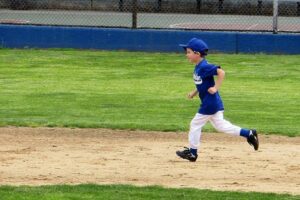
second base. Faith is the in-between space where you’re not sure you’ll make it to second base. You’ve let go of one thing and haven’t yet latched onto another. Most of us choose the security of first base. (Richard Rohr)
5. The opposite of faith is not doubt; it is certainty. (Anne Lamott)
FEAR:
6. People are shaped the most not by what they want but by what they fear. (anonymous)
7. Fear is not a bad place to start a spiritual journey. (Kathleen Norris)
8. We must constantly build dykes of courage to hold back the flood of fear. (Martin Luther King, Jr.)
9. What would I do if I were not afraid? (Martha Manglesdorf)
FLIGHT:
10. Aeronautics was neither an industry nor a science. It was a miracle.

(Igor Sikorsky)
11. Can the magic of flight ever be carried by words? I think not. (Michael Parfit)
FORGIVENESS:
12. The one who seeks revenge should dig two graves. (Chinese proverb)
13. Forgiveness is having given up all hope for a better past. (Anne Lamott)
14. When we forgive, we don’t deny the hurt that we have received. We don’t deny that it was wrong… But we acknowledge that there is more to the offender than the offense. (Archbishop Daniel Pilarczyk)
FREEDOM:
15. Every generation of Americans needs to know that freedom consists not in doing what we like, but in having the right to do what we ought. (Pope John Paul II)
16. Freedom’s just another word for nothing left to lose. (Janis Joplin song in the early 1970’s)
FREE PRESS:
17. A free press has a major function of keeping the government itself informed as to what the government is doing. (Walter Cronkite)
FRIENDSHIP:
18. Making up your mind is like making a bed; it usually helps to have
someone on the other side. (Gerald Horton Bath)
19. Between good friends, just drinking water is sweet enough. (Chinese proverb)
20. Friends are family you choose for yourself. (Jane Addams)
Some of us have heavy hearts… with the tragedy in Las Vegas… the devastation of the recent hurricanes and earthquakes… and other troubling news… The song today is “God Is Love” by Natalie Acciani. I find this song hauntingly beautiful. I especially love the lines: “only love can end the madness, only love can heal the pain.”
Did any of these quotes stand out for you? If so which one and why?
Do you have a quotation about one of these topics that you would like to share with us?
Any other thoughts about this reflection or song?