National Poetry Month: April 2026
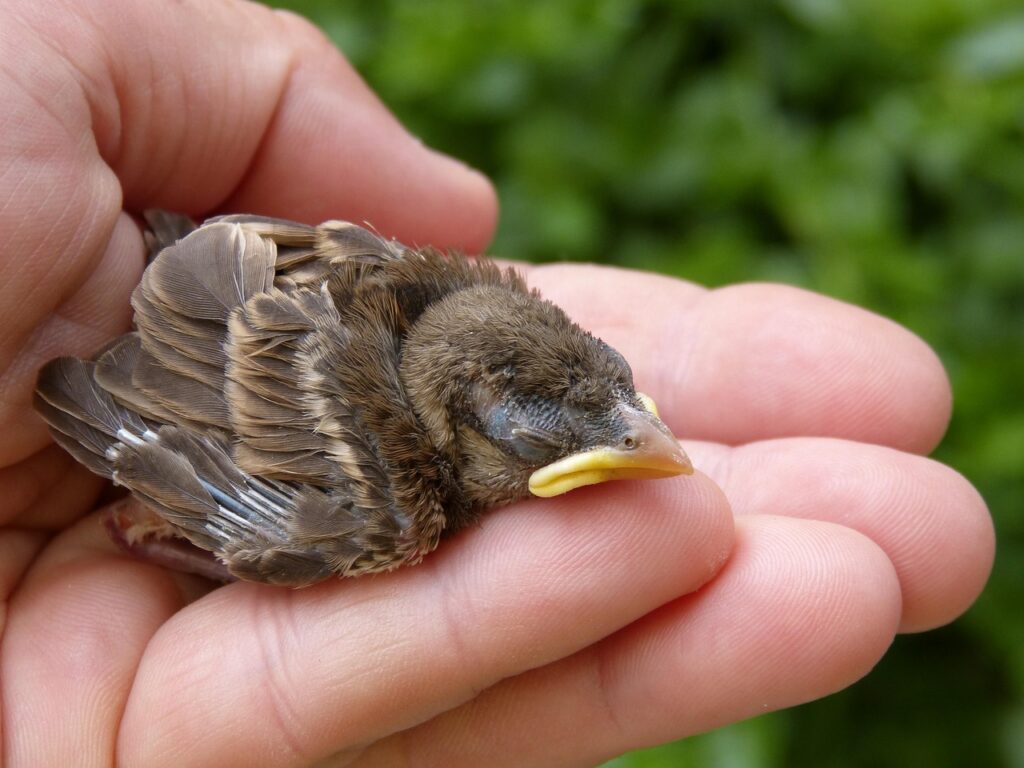
It’s National Poetry month. To celebrate, I am offering you four short poems–three by friends and one by me. All the poems have a spring theme. I suggest you read each poem aloud, as poetry is meant to be read. The first poem is by Bishop Robert Morneau of Green Bay, Wisconsin. When some of us think APRIL, we think BASEBALL! So here’s a poem that celebrates baseball, three boys and their dad, and more…
The Bat
Wrigley Field! Sammy Sosa Day! 30,000 bats given away!
A father and his three sons (ages 11, 9, 7) in attendence.
What a day: the field, the food, the fun, the BATS–three of them!
Heading home on the El Train, a young lad sat across the aisle
gazing intently and longingly at the three bats,
treasured and held tightly by the three boys.
As the El reached the fourth station,
the young lad stood up preparing to exit the train.
As the El came to a stop, one of the three sons
walked over and gave his bat to the young stranger.
The train moved on and the father asked
his nine-year-old son why he gave his bat away:
The response: “God told me to.”

What do you think of the father and his three sons? What do you think about the last line?
*********************************************************************
Our next poem is by John Hopkins, one of our readers whose poems I’ve featured before on this blog. John is the author of three books of poetry all available on Amazon: Celtic Nan, Make My Heart a Pomegranate, and With Caught Rain. This poem takes us to another place many of us associate with spring: a garden. The poem is entitled “Happy Are They.”
Happy Are They
Happy are they who do the will of God
without knowing it.
They are like that woman
with a broad-brimmed hat,
loose shirt, sleeves rolled to the elbow,
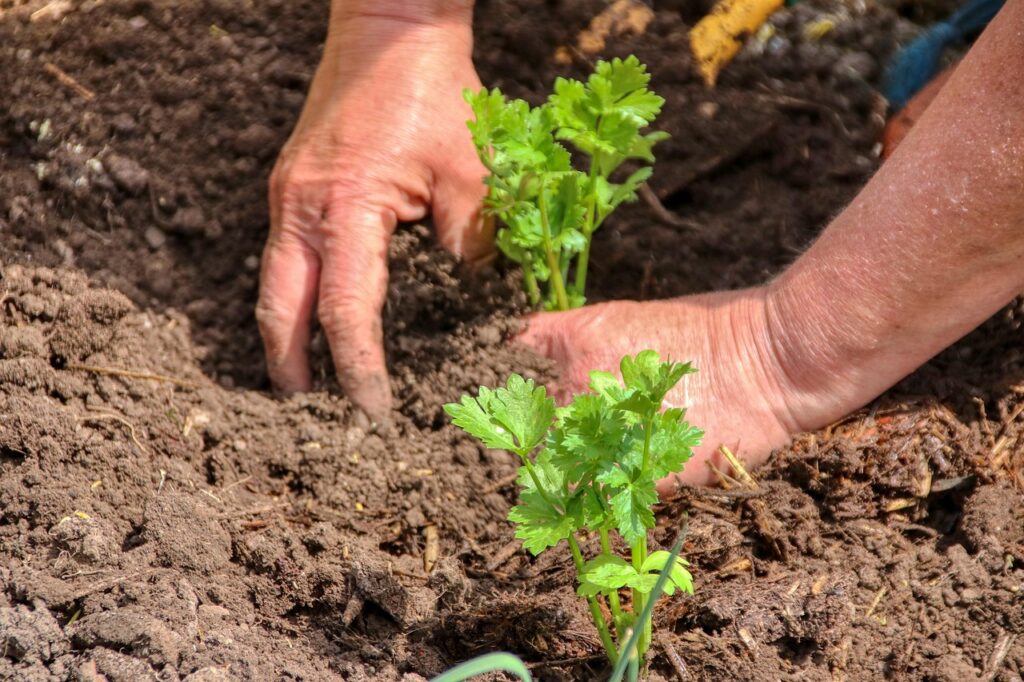
tending to her garden,
bucket and trowel by her side,
not letting her left hand know
what her right hand is planting.
She does not feel the butterfly on her shoulder
or fully know the mystery of seeds,
just the patient hope in things unseen.
Do you think we can be doing the will of God “without knowing it”? Explain your answer. If you are a gardener, why in the world do you garden?
*************************************************************************
Our third poem, is by my friend, Catherine. It is a reflecton on Ps. 46:11: “Be still and know that I am God.”
Be still
And be the best to all everywhere
Be still
And be there for all as one “allows, receives, surrenders, and trusts”*
Be still
And know what you are dedicated and committed to
Be still
And know when to fill one’s soul with energy
Be still
* the four words are from Richard Rohr’s book, Yes. And

Anything speak to your heart in this poem? If so, what? What does the photo above say to you today?
***********************************************************************
And finally, here’s a poem from my book Just Because: Prayer-Poems to Delight the Heart. Most of us associate spring with birds returning, making their nests, and raising their young. Here’s a poem that describes two little sparrows I happened to spot one afternoon “doing it”…
Two Little Sparrows
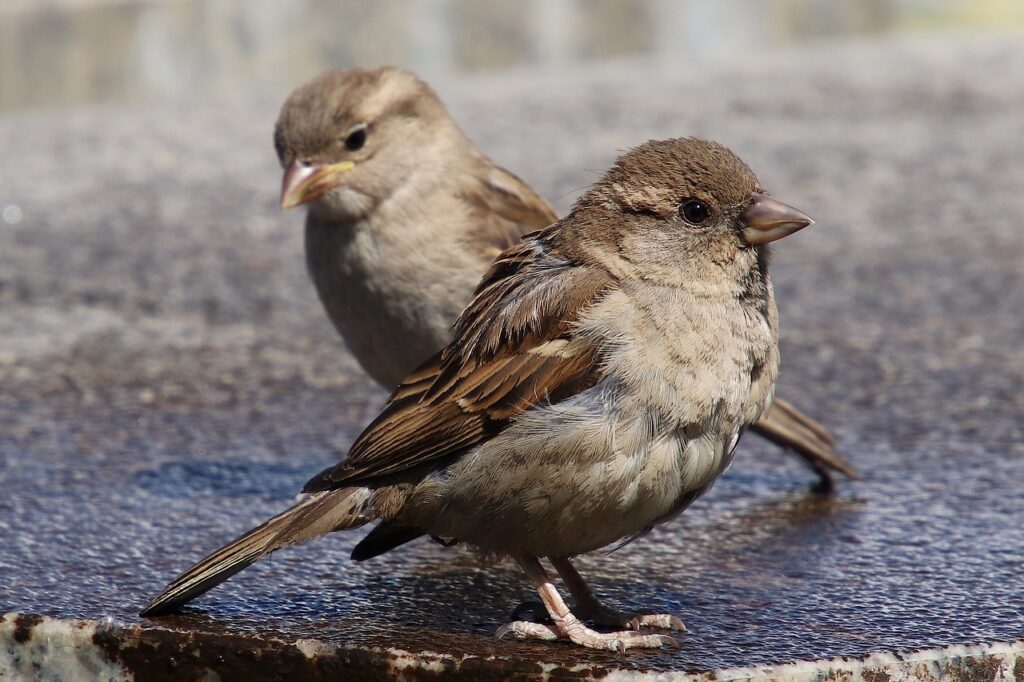
Outside my bedroom window on the roof of the porch,
two little sparrows were doing it.
He had trouble with balance at first.
Luckily, she was the epitome of patience.
The whole affair lasted but a moment,
and when they were through,
I clapped!
Why?
Simply because two little sparrows got together
to make new sparrows,
despite the toil of care,
potential storms,
droughts, cats,
and circling hawks everywhere.
What does this poem say to you?
**********************************************************************************
One of the themes of my little sparrows poem (and all the poems, really) is how the gift of life is incredibly precious and precarious. It demands a “leap of Faith” for us to pass on this gift to others or to nurture this gift in others through our caring, sharing, and love–whether we give our bat away, tend to our garden, or enter into prayer. For me, one song that captures this theme so beautifully is Elton John’s “The Circle of Life” from the movie The Lion King. My prayer for all of us consists of some of the words of this song: May we always remember: there’s more to be seen than can ever be seen… May we never take more than we give… May we recall that the circle of life is a leap of Faith and a band of Hope… May we rise from our falls, soar to the stars (or to the moon and back!), sail through our troubles, and live courageously with our scars… until we find our place on the path unwinding… into eternity.
Click on cc for the lyrics…
I welcome your comments below!
For Easter: The Saving Grace of Humor

Now that we’re celebrating the hope-filled feast of Easter, it is only fitting that we include a little humor in our festivities. For I believe that wholesome laughter can feed our virtue of hope. But I’ll say more about that on another day. For today, I hope these jokes, puns, and funny stories will add to our Easter joy! This blog is my Easter card to all of you. Happy, Happy Easter!
First, the children:
A firefighter was speaking to a first grade class about fire safety. As an introduction to the concept of “stop, drop, and roll,” he asked the children, “What would you do if your clothes were on fire?” One little boy said, “I wouldn’t put them on.”
A first grade teacher brought some well-known proverbs to class one day. She gave the first half of the proverbs to her students, and asked if they could finish them. Since most of the children were unfamiliar with the proverbs, they came up with some rather unique proverbs of their own:
- Better safe than … punch a fifth grader.
- Strike while the … bug is close.
- Don’t bite the hand that … looks dirty.
- Where there’s smoke there’s … pollution.
- A penny save is … not much.
The Sunday school teacher was teaching the story of the Prodigal Son. She asked, “And who was not happy that the prodigal son came back?” One little girl replied, “The fatted calf.”
A woman with two toddlers struggled to find a moment of privacy. One day she sought refuge in the bathroom. She was sitting quietly, enjoying a moment alone, when the door burst open. It was her 3-year-old. “Oh, I’m sorry, Mommy,” he said. “Do you want to be alone?” She said, “Yes, honey. That would be very nice.” With that, he walked into the bathroom and shut the door. “There,” he said. “Now no one can bother us!”
The pastor was talking to a class of second graders after Easter. He asked, “Does anyone know what the word Resurrection means?” One little boy raised his hand and said, “It means Jesus is on the loose.”
This and That:
I love it when people think they’re punishing me by not talking to me.
The first five days after the weekend are always the hardest.
I refuse to argue with anyone born after 1990. They don’t even know how to write in cursive.
I had the rudest, slowest cashier today. That’s the last time I’ll use self-checkout.

Judge: You’ve been charged with intent to sell or deliver a controlled substance.
Defendant: I wasn’t trying to sell it. I was trying to trade it for a truck.
Complaint from a tourist to a travel agency: We went on a canoe trip but were very disappointed that no one told us there would not be a bathroom onboard. It was very inconvenient.
Security notice: “All employees must wear ID badgers when entering.” (We miss the days when only ferrets were required.)
Question posted on X: “People who suffer from low shelf and steam, how do you deal with it in your day to day life?”
Seen on a parenting blog: Vintage Boy Names:
- Grady… Charles… Asher… Ellis… Miles… Graham… Henry… Chick-Fil-A… Elias… Franklin… (Someone added: How could they forget Pizza Hut?)
Three football fans were talking about the sorry state of their team. The first fan said, “I blame the general manager. If he signed better players, we’d have a great team.” The second fan said, “I blame the players. If they made more effort, we’d score more points.” Said the third, “I blame my parents. If I’d been born in Los Angeles, I’d be supporting a better team.”
Bill was having trouble with groundhogs digging up his flower garden. Not wanting to harm them, he went to the local hardware store and rented two live traps. He asked, “What do I do with the groundhogs after I catch them?” The store owner said, “I tell everyone to take them west out of town until the road turns to gravel and let them go.” Bill was appalled: “That’s where I live!”
If you ever have to use one of the bold words in a sentence, these examples might help you:
Candor: “When Lisa asked her manager for a raise, they candor instead.”
Meander: “Jill and I went for a winding walk. It was just meander.”
Rescind: “This morning I went to confession, but after I left the church. I immediately rescind.”
A high school teacher, trying to control the talking in her class, blurted out, “Why is it, every time I open my mouth, some fool speaks?”

Sign in a parking lot: “Parking available in empty spaces only.”
A man on trial for fraud (who was eventually convicted) attested, “As a general matter, I don’t lie. It’s something that I believe fairly strong in.”
And I’ll begin to end this refection with a few puns:
When fish are in schools, they sometimes take debate.
The batteries were given out free of charge.
A boiled egg is hard to beat.
A will is a dead givaway.
When the smog lifts in Los Angeles, U. C. L. A.
And finally, a true story about a friend of mine, Sister Barbara from Adrian, Michigan who recently passed away. At the funeral Mass her very good friend, Sister Carol, told this story. Barb was a regular lector at their parish. One Sunday, before Mass, she went up to the pulpit and wlecomed everyone and then announced, “Today is the 17th CENTURY in Ordinary time.” As the congregation erupted in laughter, she commended them for their alertness, and the presiding priest said, “I knew our Church has been accused of being behind the times, but I didn’t think it was THAT bad!”
For reflection:
Are there any of these that you particularily enjoyed?
Would you like to share another snippet of humor with us below?
I’m offering two videos this week. The first video ( 2. mins.) is a popular poem called “Footprints in the Sand.” The poem is attributed to Mary Stevenson who wrote it in the 1930’s after suffering several personal losses. For me, the poem says (among other things) that God has the “last laugh”– or at least the “last smile.” The second video is an 8. min. montage of laughing babies.
Video #1:
Video #2: Laughing babies… Notice the things that make them laugh… and notice the effect their laughter has on the adults!
I welcome your comments and additions below!
The Turtle Story: Reflection for Holy Week

(Eight years ago I posted a true story about a turtle, written by Barbara Brown Taylor. It’s from her book Learning to Walk in the Dark. Here is that story again with a few minor changes. I still believe this story is very fitting for what we celebrate in our rituals during Holy Week and on Easter Sunday.)
A few years back, Barbara Brown Taylor, an American Episcopal priest and theologian, and her husband were exploring the dunes on Cumberland Island off the coast of southern Georgia. Her husband was looking for fossilized shark teeth. She was looking for sand spurs so she wouldn’t step on one. This meant both were looking at their feet when suddenly they came upon a huge loggerhead turtle. She was alive–but barely. Her shell was almost too hot to touch. Immediately they knew what had happened.

During the night the turtle had come ashore to lay her eggs. When she finished her task, she looked around for the brightest horizon to lead her back to the sea. But she had mistaken the lights on the mainland for the sky reflected on the ocean, and she had gone the wrong way. Now her flippers were buried in the sand and she was stuck, half baked in the noonday sun. (Adult loggerhead turtles weigh between 200 and 300 pounds.)
Immediately the couple took action. Taylor began to bury the turtle in cool sand while her husband ran to the nearest ranger station. She writes, “An hour later the turtle was on her back with tire chains around her front legs, being dragged behind a park service Jeep back toward the ocean.” The poor turtle’s mouth was filled with sand and her head was so bent, Taylor feared her neck would break. But it didn’t. When they got to the edge of the water, the three undid the chains, gently flipped the turtle right side up, and “watched as she lay motionless in the surf.”

But gradually the waves began to bring her back to life. After a little while as the waves lifted her up, she pushed off with her back legs, and swam back “into the water that was her home.” Taylor concludes: “Watching her swim slowly away after a nightmare ride through the dunes, I noted that it is sometimes hard to tell whether you are being killed or saved by the hands that turn your life upside down.”
Some thoughts about this story… The paradoxes: in laying her eggs to bring new life into the world, the turtle almost loses her own life… in order to be saved, the turtle has to undergo a horrific journey that almost takes her life…
The story makes me reflect on people who have undergone nightmarish journeys of their own: refugees fleeing their war torn country with only the clothes they are wearing… cancer patients undergoing harsh painful treatments for weeks or months at a time… for all who face serious surgeries of all kinds… for ordinary people suffering major setbacks in their lives or grave financial insecurity… for people losing a loved one, someone they can’t imagine living without. During times like these, did they wonder: am I being killed or saved?
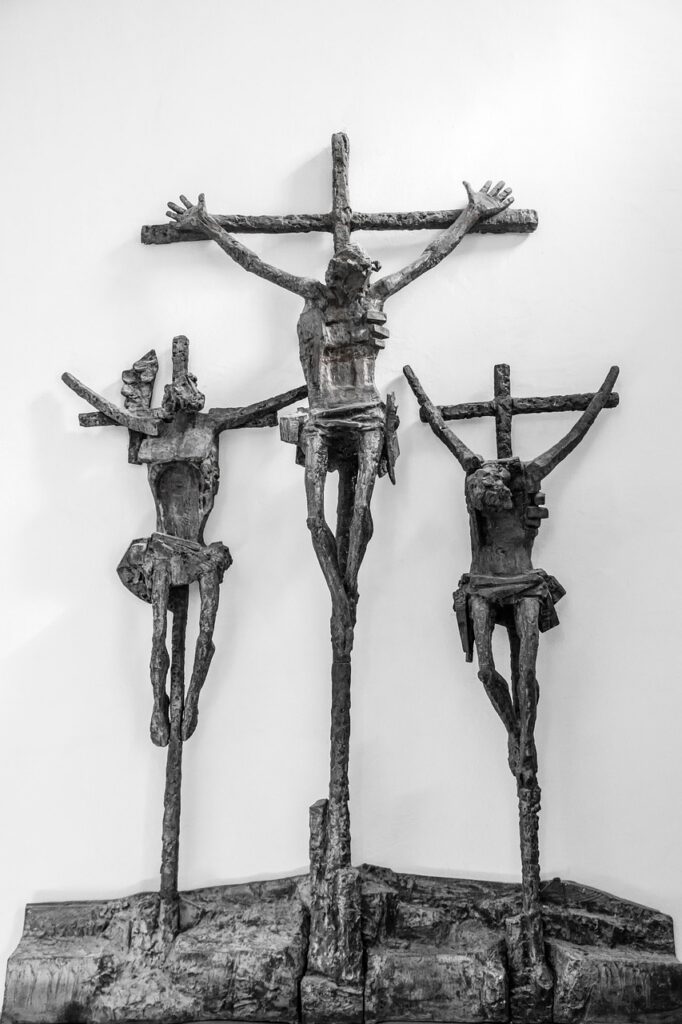
And what about Jesus? Wasn’t his life turned upside down in Gethsemane? Why did he have to die such an awful death? Why the beatings, torture, nailing to a cross, hanging for hours in the hot sun? And where was Abba during all of this? And what about all those individuals enduring their own passions at this time? I beg God to move the hearts of good, generous, and courageous individuals who notice them and are moved to compassion to bring them aid and provide comfort… and I ask God to move my own heart this Lent to reach out to someone in specific need–whether through direct service, a donation, a call or letter to my congressmen, joining a peaceful demonstration, or fasting for and holding this intention in my daily prayer.
And I pray for a greater realization of the Resurrection in our own lives… those glimpses we get of the love and beauty and goodness in our daily lives… those sights and sounds that give us hope and encouragement as we make our journey back to our true home, the open sea of God’s mercy and love…
For reflection:
Have you ever witnessed new life emerging from apparently death-like circumstances?
Or have you ever seen or experienced goodness being born from apparent evil?
What gives your courage to go on when your life is being turned upside down?
If you attend any of the Holy Week services, what is your favorite part of these rituals… and why?
Reflect on one of the pictures in today’s reflection… Allow it to draw you into prayer…

***************************************************
Announcement
I just saw that my retreat scheduled for July 13-20 at the Shrine of our Lady of Snows in Belleville, IL has been “sold out.” I hope a few of you, my readers, will be there. If you have any questions about this retreat, go to their website: https://snows.org
***********************************************************
Our video for this Holy Week is “Out of Darkness,” written by Tom Kendzia and sung here by the Sunday 7 pm Choir. This song was especially written for the Easter Vigil on Holy Saturday evening. It is a song of hope: the light of Christ WILL shine,” it says. We don’t yet experience the fullness of the Resurrection, but may we see glimmers of its presence in the darkness of today. May we contribute to Christ’s light by shining our single candle to help illuminate our own little corner of this world.
I welcome your comments below…as I wish you a blessed Holy Week…
20 Short, Short Quotes about God

One of the most important questions we can ask in life is this: Is there a God? But another more important question is this: What is God like? These are two questions we have to ponder for a lifetime as life presents new experiences for us that can deepen, challenge, modify, or radically alter our previous answers. Fortunately we are not alone in our quest to know God. We can get help from countless individuals–living now and living long ago–who pondered these same questions. So, today I reached into my vast collection of quotes and looked under the heading “God.” It’s by far one of the topics that has the most entries. (Some of the other topics are love, Jesus, adversity, and humor) One criteron for choosing these quotes about God was brevity. Only one sentence… or two max.
I suggest you resist the temptation to read these quickly. Maybe you’d like to read them aloud and pause for a few moments. When you’re finished with all of them, you might want to go back and read again the ones that consoled you, disturbed you, or found you saying, “I really agree with that!” or “I never looked at God that way before.”

1) The door to God, the door to any grace is very little, very ordinary. Jessica Powers, Carmelite poet
2) Pray to God, but row for shore. Russian proverb
3) I used to ask God to help me. Then I asked if I might help Him. Hudson Taylor
4) There is no way to find God apart from real life in the real world. Barbara Brown Taylor
5) My concern is not whether God is on our side; my greatest concern is to be on God’s side. Abraham Lincoln

6) If God is dead, all things are permitted. Dostoevsky, Russian Novelist
7) If you are seeking after God, you may be sure of this: God is seeking you much more. St. John of the Cross
8) God is of no importance, unless He is of supreme importance. Rabbi Abraham Heschel
9) Be a part of the evidence of God’s love in the world. Brennan Manning
10) God speaks to us in a thousand clear voices, each with the same clear message: “I love you. Please trust me on this one.” Hugh Prather

11) When I asked my God if I could stay with him for awhile, she said, “Yes, but don’t bring your god with you.” Edwina Gately
12) God almost never does things exactly as we expect. Demetrius Dumm, OSB
13) God hugs you. You are encircled by the arms of the mystery of God. Hildegard of Bingen, 12th Century German Abbess
14) God does not have problems. Only plans. Corrie ten Boom, Holocaust survivor
15) God works in strange ways, permitting an infinite number of itineraries on the way to Him. Doris Grumbach
16) We turn to God when our foundations are shaking, only to find that it is God who is shaking them. Charles West
17) God always throws a better party. Anonymous
18) Is your love for God secure enough that you can rage against him? Anthony deMello, SJ
19) There is no such thing as an expert on God. Leen E. Goodman, Jewish Theologian
20) We ask God, “What are you like?” and God gives us the story of Jesus. Jesus is the parable of God. James Martin, SJ

Did any of these quotes stand out for you? If so, let us know below. You don’t even have to say why they stood out for you–unless you want to.
Did any of these quotes console, encourage, puzzle, disturb, or stretch you? Which one(s)?
Did any of the pictures get your attention?
Would you like to share a quote below about God that is only one or two sentences? It could be from someone else or your own quote.
PS: I’m giving a retreat on hope at Our Lady of the Snows Shrine in Belleville, Illinois (near St. Louis) from July 13-19. I’d love to see some of you there! Check their website for details: https://snows.org.
For our video I chose this haunting song by Barbara Bridge, sung here by the Sunday 7 pm Choir. It is called “Be Still and Know,” and is based on a single line from Psalm 46, verse 11. I thought this song was especially appropriate for Lent, a time we may be focusing on unhurrying our lives… on renewing our prayer… and on deepening our trust in our Beloved God….
I look forward to reading your comments below…
“The Ruthless Elimination of Hurry” Part II

Last week I presented a summary of the first part of John Mark Comer’s book, The Ruthless Elimination of Hurry. Comer maintains that our current frenetic pace of daily living is having a detrimental effect on our physical, emotional and spiritual well-being. Continual busyness and hurry can harm our health, destroy relationships, and kill joy. He goes so far as to say, constant hurry is unchristian. Jesus’ basic message was love, and “love is painfully time-consuming.”
In the second half of Comer’s book, he suggests four practices or spiritual disciplines for “unhurrying your life.” Jesus himself not only taught these practices, he lived them.
Silence and Solitude: What’s the first thing Jesus does to launch his public ministry? He goes into the desert where he was tempted by the devil. That word “desert” doesn’t necessarily mean endless sand and boiling heat. It can also mean a deserted place, a solitary place, a wilderness, or even a quiet place. It was in this place that Jesus received the strength “to take on the devil.” What’s more, again and again in the Gospels we see Jesus, amid all his busyness, seeking quiet places to be alone, to pray, to renew his strength. Do we follow his example?

We don’t have to book a flight to the Majove Desert to do this. Instead we can find or (more accurately) create pockets of solitude and silence even in the midst of our busy lives. These pockets will be different at different stages of our lives. Finding solitide and silence for parents with three small children might mean walking the dog in the evening or soaking in the tub while your partner watches the kids. Or sitting quietly after the kids are in bed. A retiree may make time to pray in the morning, go to Mass during the week, crochet a baby blanket for Birthright, or putter in the yard. Says Comer, “Your relationship to God is no different than any other relationship–it takes time alone together.”
The Sabbath tradition: The tradition of keeping the Sabbath is rooted in God. After creating the world, God rests. He stops working. “He sets aside an entire day just to delight in his world.” Later, when God gives Moses the Ten Commandments, we notice that the third commandment is longer than all the others. It begins: “Remember the Sabbath day by keeping it holy.” When Jesus “breaks” the Sabbath law by curing on the Sabbath, he is reminding us that no law or tradition is greater than God’s primarly law: love God, love others, love yourself.

Simplicity: The French sociologist Jean Baudrillard says that, in the Western World, “materialism has become the new, dominant system of meaning.” He maintains “atheism hasn’t replaced cultural Christianity; shopping has.” Comer adds these sobering statements: ” Shopping is the number one leisire activity in the U.S.”… Most of us believe the lie: the more money and stuff we have, the happier we will be. But Jesus said things like this: “It is more blessed to give than to receive… You cannot serve both God and money… Do not store up for yourselves treasure on earth.”
Comer gives 12 ways to simplify our lives. Here are four: 1) Before you buy, ask: by buying this, am I oppressing the poor or harming the earth? 2) Recognize advertising for what it is–propaganda. Call out the lie. 3) Get in the habit of giving things away. 4) Learn to enjoy things without owning them.
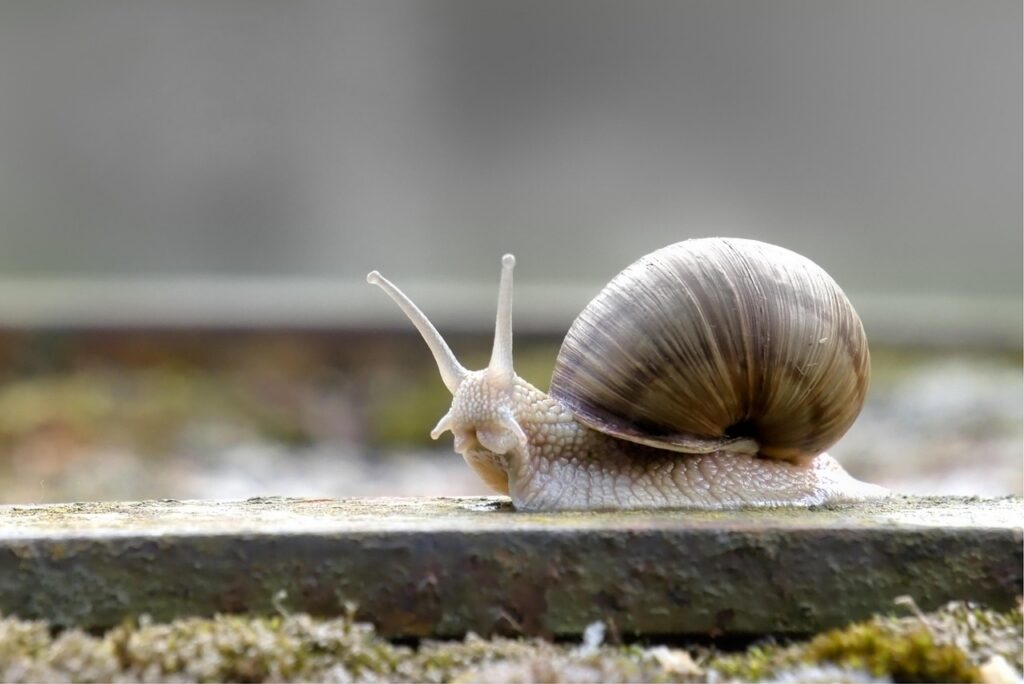
Slowing: Mahatma Ghandi said, “There is more to life than increasing its speed.” Comer suggests twenty ways to slow down. I’ll list six. 1) Drive the speed limit. 2) Show up ten minutes early for an appointment, and don’t use your phone during that time. 3) Get in the longest line at the checkout in the grocery store. 4) Set times for email and social media. Refuse to be available 24/7. (I regularly turn the volume off on my cellphone, landline, and laptop for an hour or so, figuring that the world should be able to get along without me for at least one hour…) 5) Walk slower. 6) single-task.
Comer concludes his book with the question he raised at the beginning. “How will you live?” Chances are, our world will go from fast to faster. Will you choose that road? Or will you remember, there’s another road. “Will you off-ramp onto the narrow path? Will you radically alter the pace of your life to take up the easy yoke of Jesus?”

For reflection:
On a scale of 1 to 10, 1 meaning “not hurried at all” and 10 meaning “extremely hurried life,” where do YOU fall?
Are there any words or phrases or pictures that touched your heart in today’s reflection?
Which of these spiritual disciplines do you already practice OR would you consider practicing to unhurry your life?
I chose two short videos today. The first is a short, short story (2 mins, 44 seconds) entitled “God is Speaking.” The second is a 5-minute walk through a Vermont forest.
After viewing “God Is Speaking,” let me know what you think about it. What did it say to you? Are you anything like the man in the story? Did any of “God’s post-it notes” speak to you?
Here is your 5-minute walk through a Vermont forest. No music, just the natural sounds of the forest and your own feet. After viewing it, did you find it beautiful? relaxing? magical? boring? Did you watch the entire video or did you fast forward it or cut it short?
I invite you to leave a comment below. We all love reading the comments!